Friday, May 6, 2022

Wimbledon Palace

 
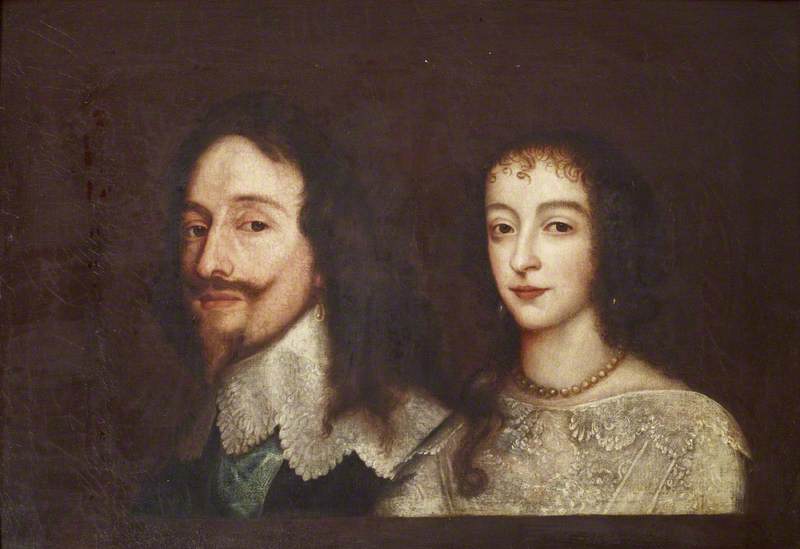
Wimbledon Palace no longer exists, and its village has been swallowed up by London, but it plays a part in my next book, so I was glad to find a picture of it. In the late 1630's Queen Henrietta Maria wanted a house of greater intimacy and privacy where she and King Charles could enjoy time together. Wimbledon was small enough to limit the size of the royal retinues, so that there were not  people everywhere as at the other palaces. From Lost City of London:

Wimbledon House or Palace was built in c. 1588 for William’s son Thomas Cecil, 1st Earl of Exeter.   It was subsequently rebuilt – by Inigo Jones and Nicholas Stone – in 1639,  for King Charles I’s  Queen, Henrietta Maria, taken away from her during the Civil War in 1642, and only given back after the Restoration in 1660, and sold – in a sorry state of repair – in 1661.  It was eventually demolished in 1717. (Read more.)
 

From Wikipedia:

The estate stood within a day's ride of Westminster, making it eminently suitable for an active courtier; there, the Cecils entertained Queen Elizabeth I of England for three days in 1599.[16] John Thorpe's undated plan of Wimbledon's ground floor and forecourts of ca 1609,[17] suggests that they were about twelve acres in extent, divided among eleven separate spaces, featuring plantations, walks, and parterres, laid out asymmetrically on the sloping site.[18] The house was damaged in 1628 by the accidental igniting of gunpowder stored there.[19] The glories of this house, after repairs had been effected, were concentrated in the long Gallery, one of two in the house, which was richly painted and marbleized, no doubt by Francis Cleyn, who was responsible also for the exterior that was painted en camaieu in tones of yellow and burnt ochre.[20]

Immediately after Viscount Wimbledon died, in 1638, the manor together with manor house was sold by his heirs to trustees for the queen of Charles I, who gave it to Queen Henrietta-Maria. Alterations and expansion were made in 1640–41, just at the outbreak of the English Civil War. Overseeing plans and construction was the court architect Inigo Jones, Surveyor of the King's Works, and on site was the prominent sculptor-builder Nicholas Stone.[21] The two-storey house with a flat balustraded roof was severe in outward aspect. Thomas Fuller calls Wimbledon manor house "a daring structure;" and says, that "by some it has been thought to equal Nonsuch, if not to exceed it."[22]

The magnificent gardens which were created for the Queen by French garden designer Andre Mollet, were later described in a Parliamentary inventory taken in 1649; after noting the lower court and the upper court, the survey reported its several ascents in detail, counting the very steps:[23]

The scite of this manor-house being placed on the side slipp of a rising ground, renders it to stand of that height that, betwixt the basis of the brick-wall of the sayd lower court, and the hall door of the sayd manor-house, there are five severall assents, consisting of three-score and ten stepps, which are distinguished in a very graceful manner....
(Read more.)


More on Wimbledon Palace, HERE. 

My Queen, My Love is now available from Amazon:

Share

Children of the Porn

 From Mary Eberstadt at The Washington Free Beacon:

If pandemic exhaustion, galloping inflation, and talk of World War III haven’t yet gotten you down, Rethinking Sex: A Provocation might do the trick. This is not the fault of author Christine Emba, whose prose in this short book is stylish, engaging, and, above all, earnest. No, what depresses is the fact that this manifesto should have to exist in the first place. But exist it must, for reasons that its pages make excruciatingly clear.

Based upon a 2017 #MeToo piece published in the Washington Post, where Emba is a columnist, Rethinking Sex performs the public service of wondering aloud whether everything done by "consenting adults" is by definition ducky. To the contrary, myopic focus on "consent," as the author observes, overlooks the sulfurous realities of today’s mating market. Once, noncriminal but still noxious sexual misdeeds would have resulted in social ostracism, or frontier justice meted out by male relatives—or both. Now, thanks to the slithering of pornography into young pockets everywhere, such acts have not only been normalized. Judging by an eye-opening number of the book’s anonymous stories, they have in some cases become the sine qua non of male company itself.

"She really didn’t like the choking, Kirsten explained, but she really liked him." This sentence, which ought to have been the book’s subtitle, captures the awfulness afoot in one swoop. Several recent studies cited by the author prove the nauseating point: More and more women consent to sex only to endure unexpected violence after saying yes. The example of choking is just for starters. Other grotesqueries won’t be shared in this publication. Suffice it to say that among some subset of today’s men, verbal and physical abuse have apparently become the new candy and flowers.

Emba performs another civic mitzvah in saying aloud that there is something wrong with this picture, thus giving permission to other women (and men) who think the same. The crux, as she writes, is that "consent" can be misused to justify anything, including nonconsensual sadism—because in the new order of things, "abuse can be hidden or left uninterrogated as someone’s private ‘kink.’" Assuming the book’s accounts are representative—and there is no reason to think otherwise—today’s mating scene makes Hugh Hefner & Co. look vanilla.

"We’re Liberated, and We’re Miserable," as the title of one chapter summarizes. Author Emba also transgresses by suggesting that right and wrong might apply even in the time of Tinder; in the words of another chapter title, "Some Desires are Worse than Others." Not surprisingly, the message has received pushback in the New York Times, and elsewhere, for menacing the holy bovine of "sex positivity"—as if "sex positivity" amounts to anything more than putting up with your guy watching porn and trying gross things out on you while you pretend not to care. (Read more.)
Share

Biggest Earthquake in Human History

 From LiveScience:

Archaeologists have found evidence of the largest known earthquake in human history — a terrifying magnitude-9.5 megaquake that caused a 5,000-mile-long (8,000 kilometers) tsunami and prompted human populations to abandon nearby coastlines for 1,000 years, a new study finds.

The earthquake struck about 3,800 years ago in what is now northern Chile when a tectonic plate rupture lifted the region's coastline. The subsequent tsunami was so powerful, it created waves as high as 66 feet (20 meters) and traveled all the way to New Zealand, where it hurled car-size boulders hundreds of miles inland, the researchers found.

Until now, the largest earthquake ever recorded was the 1960 Valdivia earthquake, which hit southern Chile with a magnitude between 9.4 and 9.6, killing up to 6,000 people and sending tsunamis barreling across the Pacific Ocean. The rupture that caused the Valdivia earthquake was enormous, extending as far as 500 miles (800 km) in length. But, as scientists detail in research published April 6 in the journal Science Advances, the newly discovered ancient megaquake was even bigger, coming from a rupture roughly 620 miles (1,000 km) long.  (Read more.)
Share

Thursday, May 5, 2022

Painting Furniture


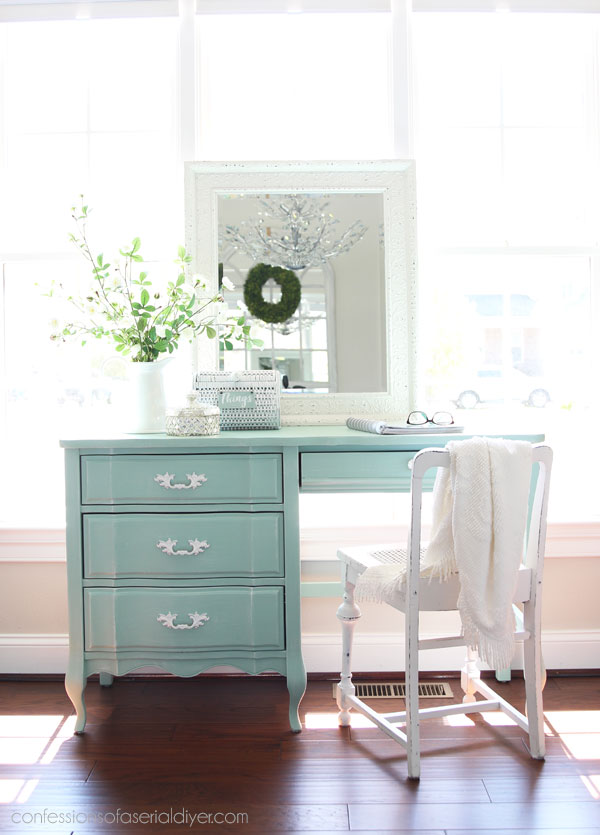
From Confessions of a Serial DIYer:
I’ve reshared a couple of pieces recently that I originally redid at the height of the pandemic, and I was surprised at how many people missed them on the first go round. It was a super crazy time, so I totally get it! I decided to pull another of those makeovers out today as these ones were super fun to bring back to life!

I rarely take on other people’s projects as I don’t like not having the freedom to just do whatever I want with a makeover. The stars aligned for this one though.

My neighbors had asked me for advice about painting some furniture that belonged to their daughter. I was just finishing up the haul I’d been working on at the time, so I asked them to send me photos of what they wanted to paint. When I saw those gorgeous French Provincial curves, I knew I wanted to take this project on! (Read more.)
Share

Make Catholicism Penitential Again

 From Crisis:

Jesus’ very first words in the Gospel of Mark are: “Repent, the kingdom of God is at hand!” (1:15). While Matthew and Luke expand upon Jesus’ infancy, His baptism, and the temptations in the desert, they also begin with a repentance motif. After all, John the Baptist is introduced as Christ’s herald, preaching a baptism of repentance. And, after the events listed above, Jesus inaugurates His own public ministry with a call to repentance (Matthew 4:17) and a campaign against evil, characterized by healings and exorcisms.

Repentance, then, is the very leitmotif of Jesus’ ministry. It is also the Church’s, for the Risen Christ commissions His Apostles to “preach repentance for the forgiveness of sins, beginning in Jerusalem” (Luke 24:46-48; see also John 20:21-23). (Read more.)
Share

Characters of Our Own Creation

 From Big Think:

Consider three strands of evidence. First, the neuroscience. The linguistic explanations we create of our own behavior are generated by the language centers in our left cerebral cortex. In people whose brains have been surgically split in two, by severing the corpus collosum that links the left and right cortex, this means that language-generating machinery in the left cortex is necessarily completely oblivious to the machinations of the right cortex. As it happens, the right cortex sees the left half of the visual field and controls the left hand. So, when people with split brains are asked verbally to explain the actions of their left hand, you might expect them to be utterly mystified. But not at all! They are all too ready to confabulate a credible-sounding (though entirely baseless) explanation. (Read more.)
Share

Wednesday, May 4, 2022

The Triumphs of Caesar


 From Royal Collection Trust:

This painting is one of nine canvases known as The Triumphs of Caesar, which can be counted amongst the finest achievements in Italian Renaissance art. They were probably painted for Franceso II Gonzaga (1466-1519), who became the 4th Marquis of Mantua in 1484. The nine paintings form a sequence, which should really be called the 'Triumph of Caesar', because it depicts a single procession, culminating in this final episode - the arrival of Julius Caesar borne on a chariot passing in front of a triumphal arch. The procession cannot be connected with a particular campaign, which is probably why it was seen more generally to celebrate the triumphs of Julius Caesar (c.102-44 BC), an ancient Roman soldier, statesman and historian revered during the Renaissance.

Mantegna could have consulted a number of writers, such as Suetonius, Plutarch and Appian, all of whom include descriptions of triumphs and were available during the Renaissance in manuscript or printed forms. He would have also referred to Roman antiquities, particularly monumental arches and columns, which he would have known through drawn sources.

Triumphs of Caesar were acquired by Charles I in 1629 when he purchased a large part of the collections formed by the Gonzaga family. They were clearly then considered to be the masterpiece of the collection. The canvases have been hung at Hampton Court since the probable date of their arrival in England in 1630, and tapestries based on some of the scenes were woven at the Mortlake factory. (Read more.)
 

More HERE.


Share

Normal Children

 From Crisis:

Yet, you cannot help but notice that people who read books are still able to operate a microwave and tie their own shoes. For kids growing up on smartphones, the outcome looks less promising. When children are plugged into iPads to keep them quiet during daily activities and hooked up to televisions suspended from the ceiling at the dentist’s office, what are the boring quotidian experiences that they are missing out on? And what are the consequences?

Writing in The Wall Street Journal about the challenges posed by Big Tech for little kids, Peggy Noonan captures the frustration of many parents. It is clear that popular apps negatively affect the emotional health of teenagers, especially teen girls. Perhaps the most damning evidence is that some of the very same people making money off such apps send their children to schools free of the taint of computer screens and smartphones. But how do you, the plebian, get off the treadmill and disconnect? Half-measures are difficult to enact, and banning technology renders children veritable social outcasts. Still, it seems worth it.

Noonan includes an anecdote about a mother with many children whose children used little technology. While at the grocery store, she was asked, “Do you homeschool?” Noonan explains, “The mother wasn’t sure of the spirit of the question but said, ‘Yes, I do. Why do you ask?’ The checkout woman said, ‘Because they have children’s eyes.’” If it is that obvious that children are being raised differently, there may be something there worth investigating. Sitting out the technology quagmire seems increasingly reasonable.

A full two years after Covid-19 brought normal social interaction to a grinding halt, you will still find stray signs affixed in waiting rooms, hanging so long they have been overlooked. Expressing the rallying cry of March 2020, they plead, “Stay Home. Stay Safe. Save Lives.”

Setting aside the question of whether isolating healthy people was ultimately a prudent decision for society at large, the forced closure of schools was a catalyst in many families. Brought together by the strange events in an increasingly strange world, many families discovered that homeschooling was not as far-fetched as they once imagined. Absent the grinding strain of institutional bureaucracy, some children’s migraines disappeared, their moods brightened, their sleep improved. Covid-19 or not, staying home might really be a good thing for some children. More than anything, what children stand to gain in home education is the ability to be real children, innocent and not yet deformed by antisocial technology. (Read more.)

Share

The Deceased Wife’s Sister’s Marriage Act

 From The Conversation:

It was once illegal in Britain for a woman to marry the husband of her dead sister. Legally, they were seen as brother and sister, making such marriages incestuous. While it might seem odd now, this was a hot issue for Victorians and many argued that it should be legal.

William Gladstone, prime minister and leader of the Liberal party, was among many Victorians who argued for the law’s repeal on the grounds that the ecclesiastical law it was based upon was open to interpretation. He argued that on this basis these marriages were already legal in the colonies and that the law which made the union illegal confirmed that in-law marriages made before 1835 were sanctioned, placing a disparity within the law. It also highlighted the way that the rich could circumvent the law by marrying on the continent, while the poor had no such recourse, making an intrinsic inequality within society.

Nevertheless, the law wasn’t finally repealed until 1907 – 72 years after the 1835 Marriage Act first brought it into effect. Part of the scandal inherent in this law was the suggestion that female desire could exist before marriage – that a woman could sexually desire her sister’s husband. This, combined with the implication of incest, meant that the Deceased Wife’s Sister’s Marriage Act became far more controversial and divisive than anybody anticipated when it was first passed.

Dinah Craik was one of many authors intrigued by this controversy and who wrote on the subject. Craik was a popular author of domestic fiction, which were books focused upon the home life of women, written by and for women. Craik had cultivated a reputation as a respectable, middle class and even matronly author. Although her writing was sometimes seen as old fashioned, this reputation allowed her to write about controversial issues without appearing to be too controversial herself. (Read more.)

Share