Showing posts with label Queens of England. Show all posts

Sunday, October 4, 2026

Queen Anna (Stuart Queens Trilogy Book 1)

 Amazon.com: Queen Anna (Stuart Queens Trilogy Book 1) eBook : Riches, Tony: Kindle Store

 From Amazon:

A crown won in the eye of a storm. A queen who refuses to be broken...

Princess Anna of Denmark sails for Scotland to marry King James VI, but storms ravage her fleet, igniting a deadly obsession with witchcraft in her new home. Arriving in a strange and paranoid court, Anna finds her new husband’s bed is a treacherous place.

Surrounded by whispering courtiers and shifting alliances, Anna refuses to remain a passive pawn. When the court takes her children to raise them away from her, the young queen draws her line in the sand. From the windswept castles of Scotland to the glittering, dangerous English court, Anna is restored to her rightful place in history.

 Once again, historical novelist Tony Riches proves that true events make the best stories, especially when based upon solid research, as well as loyalty to the original personalities of the actual characters. Anna of Denmark has been largely overlooked by novelists as dull and dutiful, a quiet presence in the background of the rollicking Jacobean court. Tony paints a vibrant portrait of a great Queen who left an indelible imprint on the art and culture of the era, in addition to mothering the Stuart dynasty. While not caving to anachronisms of the feminist interpretations of history, Tony's depiction of the Danish princess, who became the bride of the son of Mary Queen of Scots and Lord Darnley, respects the framework in which Anna found herself as a very young girl. She had no concept of the type of man she had married nor of the demons which tormented him. Nevertheless, she was expected to provide heirs along with the veneer of an amicable family life, all while her husband chased handsome young men, growing more obsessed with each passing lover. Realizing, after much disappointment, that she had to cultivate a life for herself, Anna remodeled the palace she renamed "Denmark House" as a refuge of order and beauty.

As an author of Stuart-themed novels myself, I would recommend Tony's Queen Anna as an introduction to seventeenth-century England for those who wish to explore it in either novels or biographies. The seeds for the calamitous Wars of the Three Kingdoms are sown in the reign of James I who, on one hand, was a scripture scholar and theologian, deeply conscious of his duties as the Lord's Anointed. On the other hand he could be highly intemperate, whether in his love of drink, in his overzealous hunting of witches or in his passion for his own sex. Anna brought dignity, glamor, and continental sophistication to the court, be it in Scotland or in England, as well as bearing the first royal princes and princesses seen in England since the days of Henry VIII. She could not save either her family or her kingdoms from James, though, and the repercussions of his behavior upon their youngest son Charles. All this and much more is shown, not told, in the novel, as the reader is invited to draw their own conclusions from such a lively yet heartbreaking rendition of the past.

This painting by Paul van Somer has an interesting role in the novel


Queen Anna by Tony Riches is available HERE.

Share

Thursday, October 1, 2026

Henrietta Maria’s Broken Dream

From The Catholic Herald:

Throughout the 1630s, Queen Henrietta Maria’s mission to re-establish the Catholic faith in England looked increasingly successful. The decade saw numerous high-profile conversions, growing crowds around the new centres of legal Catholic worship in London, and a relaxing of penalties against Catholics.

But none of this activity went unnoticed by Puritan detractors. By the end of the decade, parliamentarian unrest increasingly targeted the queen’s influence on the king.

To help Charles I prepare for the possibility of war, Henrietta Maria sailed to the Continent to raise funds and gather an army. Her letters to Charles during this period confirm parliamentary suspicions: the queen was her husband’s most hardline counsellor. She repeatedly urged him to defend his Crown, his family and his people against the rebels, threatening that if he did not take stronger action she would retreat to a nunnery. Such strong terms were necessary. Charles’s military decisions during the first years of the 1640s were halting and uncertain, and he sometimes appeared ready to submit to his opponents’ demands.

In early 1643 Henrietta Maria returned to England, landing in the small port of Bridlington, midway between the parliamentary strongholds of Hull and Scarborough. She had with her an army of 1,000 men and 300 officers, 1,000 saddles, £80,000 in cash and suits of armour for 20,000 men. Royalist hopes surged with her arrival and a series of victories against the rebels followed. The queen herself came under fire shortly after her return. Waking in the night to the sound of shot circling the house where she slept, she ran outside and hid in a ditch until morning.

While she was dodging cannonballs in the north, her houses in London were being ransacked. One of the Capuchin friars attending Henrietta Maria reported that John Clotworthy MP entered the chapel at Somerset House, where he climbed on top of the altar table and looked at Rubens’s The Crucifixion in its gilt frame. “Calling for a halberd, he struck Christ’s face in contempt with such offensive words it would be shocking to repeat them. His second blow was at the Virgin’s face, with more hateful blasphemies, and then, thrusting the hook of his halbert under the feet of the Crucified Christ, he ripped the painting to pieces.”

Clotworthy and his men then smashed sculptures of the Virgin and Child, cut up the remaining paintings, set the books alight and took off with the vestments. The Capuchins were arrested and deported. All this was done because Parliament “was greatly incensed against [the queen] … without [whose] encouragement and aid the king would never have put himself in a position to resist”.

After a slow and perilous journey south to Oxford, the queen was reunited with Charles in 1643 and was soon pregnant with their ninth and final child. Shortly after the baby girl was born, the ailing and disconsolate queen returned to France to gather more money and soldiers. But by the middle of the decade, Cromwell’s New Model Army was frustrating Cavalier military endeavours and the royalists suffered a series of defeats.

When the king was finally captured his letters from the queen were seized and published widely. Here, finally, the rebels could claim proof of their suspicions that the queen had seduced the king “under the royal curtains … to advance the plots of the Catholics”. Under her influence, the king had begun to “pray unto the Lady Mary and be ruled by his little Queen Mary”, who had convinced him that to do so was not “idolatry, but the way to increase his Royal Off-spring”.

Too ill to return to England, Henrietta Maria instead worked for the royalist cause from France; but in 1649 Charles was executed. The queen never recovered from the loss. Aged 39, she retreated with her youngest child to the Carmelite convent of her youth. A number of sources attest that, were it not for her children, she would have remained in enclosed prayer for the rest of her life. (Read more.)


From the great Leanda de Lisle at Historia:

Puritans came to see the deep love of the royal couple as a threat. They disliked the ceremonial style of Protestantism that Charles preferred over their stripped-down Calvinism, and they blamed the influence of the Queen. Yet this was quite untrue; for Charles, the Protestant Church of England was “the best in the world”.

When Charles’s religious reforms triggered rebellion in Presbyterian Scotland, the Scots’ allies in England used Henrietta Maria’s Catholic faith as a means of attacking the King. She was trolled from the pulpits as a “Popish brat of France” and, as hatred against Catholics fanned to new heights, so mobs were sent to attack her house.

The following October, a Catholic rebellion broke out in Ireland. News of massacres of Protestant settlers were used by Charles’s enemies to recruit to their cause, and the finger of blame was pointed at the innocent Queen. In February 1642, on the eve of the English Civil War, Henrietta Maria left for Holland. This was not to save her own skin, however, but to act as Charles’s chief diplomat and party leader in Europe, as well as his arms buyer.

She returned to England in February 1643 with men, money and arms. After a dangerous landing in Yorkshire, she spent months raising royalist morale in the north, eating in sight of the soldiers and recruiting men.

The royalists had gained superiority in Yorkshire by late June, when Charles called for her to join him in his wartime capital at Oxford. Parliament sent cavalry to intercept the Queen and her men, but she escaped again and, still en route to meet her husband, the “generalissima” (as she called herself) captured Burton-on-Trent in a “bloody” and “desperate” battle. (Read more.)

My novels about Queen Henrietta Maria available HERE and HERE.

Share

Wednesday, September 30, 2026

Evelyn Waugh’s Last Masterpiece

 From The New Criterion:

One novel that arose from the disastrous impact of the Second World War that will endure, I believe, is Evelyn Waugh’s last masterpiece, the trilogy Sword of Honour, which appeared between 1952 and 1961. He initially planned a single volume but found the story so compelling he produced three distinct novels built around the character Guy Crouchback, a figure not unlike himself in some ways.

The novels originated from what Waugh saw as a crisis of faith in Western values. He saw the enemy clearly—the war was nothing less than “the Modern Age in arms,” totalitarianism and secularism at their worst. The crisis of the times, the war and its aftermath, was also a personal one for Waugh. He believed he was witnessing the decline of the Catholic Church he had joined as a convert, a theme that dominated his writing after the war, and especially after Vatican II, which he distrusted.

The great success of Brideshead Revisited (1945), which was written towards the end of the war, had solidified Waugh’s reputation as not just the author of biting satires, but also the most significant writer of serious English prose. Yet he had written little of importance after Brideshead save for his savagely funny indictment of Hollywood and American values, The Loved One (1948), which was on par with his comic masterpieces of the 1930s as well as being a financial success. Interestingly, he offered the profits from The Loved One to the Catholic Church in England, only to have the offer declined on the grounds that the novel’s content was too scandalous to be associated with the Church. (Read more.)

Share

Friday, September 25, 2026

She Almost Won


 Henrietta Maria came very close to helping her husband and Prince Rupert win the English Civil Wars. From Atlas Obscura:

Around midday on July 4, 1643, in the countryside just north of Birmingham, Queen Henrietta Maria was in her battle tent. Outside, shells exploded. Musket balls* zoomed past. Anxiously, the Queen of England waited. Taking Burton-Upon-Trent, a strategic town with a river crossing connecting northern and southern England, was her army’s first real challenge. Defeat was not an option. But the fighting had already raged for five hours—how much longer would it take to deliver a victory? Three hours later, the queen got her answer. Her royalist army had finally broken through the town’s defenses. Victory was secured.

Eighteen years earlier, the queen had arrived on English shores as a 15-year-old French bride. And now, at 34, she was a warrior queen. The queen would jokingly call herself “she-majesty generalissima.” Lines from a contemporary poem, its author unknown, portrayed her as not just defeating but unmanning Parliament’s forces, literally: “Tis here a woman leads; but one would swear, the armies did consist of women there.” Her skill garnered wide respect from diplomatic elites; the Venetian ambassador observed, “Without [the queen’s] encouragement and aid the king would never have put himself into a position to resist.” During the English Civil War, Queen Henrietta Maria was, it seems, all that stood between King Charles’s sure defeat at the hands of Parliament. (Read more.)

Henrietta Maria and her household hiding in a ditch during the bombardments at Bridlington in 1643

Henrietta Maria hiding from Parliamentarians during her escape to France in 1644


The novel Generalissima is available HERE.

Share

Arthurian Legend for a Disenchanted Age

 From Express:

In a time of tech-bro billionaires, a meaning crisis among an anxious youth and questions surrounding national identity, where better to go than back to the old stories to have one’s heart reenchanted? That’s something poet, scholar and priest Malcolm Guite has become renowned for on his popular self-titled YouTube channel, which has 220,000 subscribers and counting. The real-life waistcoat-wearing hobbit, with wizard-like long silver hair and beard, has charmed millions around the world with his videos from the perspective of a visitor to his cosy, book-lined study. For each typical upload, Guite will settle into his wing armchair, light one of his many pipes, and usually read aloud from a chapter of JRR Tolkien or CS Lewis.

The 68-year-old author of several books, including five collections of poetry, realised that it’s been about a century since there was a proper re-telling of Britain’s great myth, the Arthurian legend. In what could well be his magnum opus, Guite has set about writing Merlin’s Isle: An Arthuriad, a four-volume epic ballad of King Arthur and the Knights of the Round Table.

Beautifully illustrated by Stephen Crotts, the first volume, Galahad and the Grail, is set in the 5th century, after the Romans have departed, leaving Britain in a chaotic mess of savage warlords before the Anglo-Saxon invasion. King Arthur seeks to unite the realm by establishing a kingdom of peace and stability, one led by his chivalric knights who are fierce in battle against the “might is right” pagans, while being gentle and kind to the weak and vulnerable they are sworn to protect. (Read more.)

Share

Thursday, September 24, 2026

The Mystery of the ‘Real’ Milady de Winter


Yet another descendant of Mary Boleyn. From History Extra:

In the preface to The Three Musketeers, Dumas claims that he was researching Louis XIV in the Bibliothéque nationale de France when he happened upon the first volume of The Memoirs of M. d’Artagnan. This is not entirely true: he found the book in the public library in Marseilles, borrowed it and never returned it.

The Memoirs of M. d’Artagnan is a first-person pseudo memoir written by a former soldier, Gatien de Courtilz de Sandras, and first published in 1700. It tells the story of d’Artagnan, a young man setting out on his journey to become a musketeer. As well as d’Artagnan, Dumas discovered Athos, Porthos and Aramis, who would eventually become major characters in The Three Musketeers. He also found Milady de Winter. Courtilz never gives Milady’s name. Instead, she is referred to simply as ‘Milady’ followed by a dash or asterisks where her name should be. She is introduced as a maid of honour to Henrietta Maria, queen to the executed Charles I of England, whose exile in France Milady shares.
The daughter of an English peer, Milady has as much wit as beauty, and d’Artagnan thinks her the most beautiful woman he has ever seen. He promptly falls in love with her. There then follows a complicated sexual intrigue, one of several for Courtilz’s d’Artagnan. Once it is over, Milady is never heard from again. This is the episode that Dumas adapted for The Three Musketeers. The affair of the queen’s diamonds is absent from Courtilz, but at least part of the story as Dumas told it is supported by several contemporary memoirs. Those of Françoise Bertaut de Motteville, Pierre de La Porte and Henri-Auguste de Loménie, Comte de Brienne – all of whom served at the royal court of France – each provide an account of the Duke of Buckingham’s visit to France in 1625. Buckingham had been sent to escort Henrietta Maria, then Charles I’s new queen, to England. While in France, he ostentatiously courted the queen, Anne of Austria.
None of these memoirs, however, mention the diamonds that Anne was said to have given to the duke. For this part of the story, it is necessary to consult the memoirs of Henri-Auguste's son, an obscure publication known as Recueil A, and the memoirs of François de La Rochefoucauld. Louis-Henri de Loménie, Comte de Brienne served Louis XIV as secretary of state, a position he inherited from his father. He left a memoir, which was published in the early 19th century. Certain editions, particularly that edited by Jean François Barrière, include an account of the queen’s diamonds.

It does not form part of Brienne’s original narrative – he was not even born at the time of the alleged diamond affair. Instead, it is mentioned in an introductory essay, written by the editor, explaining the manners and customs of 17th-century France. It is then related in full in an appendix, Éclaircissements historiques, or ‘historical clarifications’. In this version, the diamond thief is named as Lady Clarik. However, the story was lifted word-for-word from Recueil A, and inserted into the memoir. Recueil A is the first volume of a large collection published in the 18th century. It comprises an assortment of documents, including extracts of memoirs, concerning the history of France. The author of the account of the diamond affair is enigmatically identified as ‘M. le M. de T’. Behind these initials, according to the anonymous editor of the Recueil, is René de Froulay, Comte de Tessé.

The Comte de Tessé was a real person. Born in 1651, he was a military man, diplomat and courtier. He did indeed leave a memoir, but the diamond affair does not appear in it. The story as found in Recueil A and later inserted into the memoir by Brienne is, therefore, unreliable. What then of La Rochefoucauld? In his memoir, the lady who stole the diamonds was not Lady Clarik but the countess of Carlisle. In fact, Lady Clarik did not exist – but Lady Carlisle certainly did. (Read more.)


Read about the Countess of Carlisle in my Henrietta Maria novels, HERE and HERE.

Share

Wednesday, September 23, 2026

Queen Victoria, the Stuarts and Scotland

Victoria and Albert as Catherine of Braganza and Charles II by Winterhalter


Gown worn by Victoria at her Stuart Ball

Tartan dress of Queen Victoria

Royal Family in Highlands

Scotch air, Scotch people, Scotch hills, Scotch rivers, Scotch woods, are all far preferable to those of any other nation in or out of this world.~Queen Victoria, ca. 1849. 

 In the mid-18th century, in an uprising known as "The 45" Prince Charles Edward Stuart tried to reconquer the thrones of England and Scotland for his father James III, known as the "Old Pretender." The thrones had been usurped by the German and Protestant House of Hanover in spite of the fact that the legal Catholic sovereign was alive and well. The Scots in particular did not take well to their rightful sovereign being disinherited because of the English preference for German Protestants. The uprising failed miserably, bringing more hardship and tragedy to the Scottish people for the remainder of the century. Meanwhile many songs, tales and legends of that time imprinted themselves upon the land and the people. Many of those tales and legends found their way into the writings of Sir Walter Scott, one of the first historical novelists, whose Waverley novels of the early 19th century brought the lost Stuart rebellions and their heroes to life for a new generation. The prince Regent, the future George IV, rebelled against his Hanoverian patrimony after reading the Scott novels, and headed for Scotland.

From Peter Harrington:

The romanticisation of Scotland can be most definitively linked in literature with the Waverley novels of Sir Walter Scott. The first of the Waverley novels was published in 1814 and was set during the Jacobite uprising which took place almost a century earlier. The novels were so popular that Scott was propelled to fame, and was invited to dine with King George IV, (then Prince Regent). When, several years later, the Scottish ‘Radical War’ of 1820, inspired by the American and French Revolutions, caused King George to plan the first royal visit to Scotland in over two hundred years in an effort to quell unrest, it was Scott he called on to carefully stage manage the visit. By now a baronet with numerous valuable connections to Scottish nobility, Scott saw the opportunity both to avert an uprising and to promote highland culture. He reasoned that, because of George’s lineage, the king could legitimately claim as much Stuart heritage as Bonnie Prince Charlie and could thus present himself as a Jacobite prince, properly accoutred Royal Stuart tartan. Kilts at this time were no longer generally worn, having been banned by the Dress Act of 1746, which made the wearing of ‘Highland dress’ illegal. Though the act was repealed in 1782, kilts had only come back into fashion with the Scottish gentry, a number of whom set up ‘Highland Societies’.... For the king to appear so attired was not only an attempt to appeal to the heritage of the Scottish people but also to gloss over old wrongs.

George’s visit sparked an interest in Scottish dress, and, in its wake, the demand for kilts grew so high that Scottish weaving mills were unable to cope with the demand. It was in this period that (contrary to the generally assumed belief that individualised tartans are a much older tradition) many of the clan tartans were designated. (Read more.)

 George IV died and was succeeded by his brother William IV, who in turn left the throne to their niece Victoria in 1837. It was the Romantic Era, and Queen Victoria also loved the Waverley novels. In general she found the Stuarts far more romantic than her own Hanoverians and decided to fill her life with tokens of the Stuart homeland of Scotland. Her beloved husband Prince Albert shared her predilection, in spite of being German himself and in the 1840's they began spending as much time as possible in their northern kingdom.

From Quartermile Blog:

The first land to capture the Queen’s heart wasn’t Scotland, but Ireland. Early in her reign, Victoria spent her holidays in. Yet after the potato famine of 1845 irreparable damage was done to the relationship between the British government and the people of Ireland. Despite Victoria’s personal donation of £5,000 to the cause (nearly £600,000 in today’s money) and her visit to the country in 1849, the relationship never recovered....Scotland fared much better in Victoria’s eyes. In fact, Victoria made frequent visits north of the border during her reign despite the fact that Scotland had only been visited twice by reigning monarchs in the previous two centuries.

Victoria and Albert’s love for Scotland drove them to take out a long-term lease on the stunning Balmoral Castle in Deeside in 1848. Later, in 1852, the royal couple permanently purchased the property for £31,500 (£4million today) and had it significantly extended. From this point on, Victoria and Albert spent a section of each summer in Balmoral, thanks to the advances in British rail travel....Victoria’s ever growing affection for Scotland didn’t just stretch to the land itself, but to the culture and fashion too. Through their experience of Scotland, Victoria and Albert both became big fans of tartan, and helped to elevate the status and reputation of the pattern south of the border.

According to accounts from the time, Victoria and Albert enthusiastically redecorated Balmoral Castle with reams of “Balmoral tartan, in red and grey” furnishings. They even included “innumerable stags’ antlers” in their décor. For Victoria, the use of tartan was an outward sign of being connected to her favourite part of the world. (Read more.)

Victoria showed that she not only loved Scotland but cherished the memory of the Stuarts, masquerading as Catherine of Braganza, consort of Charles II, at a ball. She had an Italian sculptor create a marble statue of Princess Elizabeth Stuart, the daughter of Charles I who died in prison at age thirteen, reputedly with her head on her murdered father's Bible. She passed the interest on to her children, as can be seen from a water color of Mary Queen of Scots by the Princess Royal. The Stuarts must have fulfilled Victoria's vision of a monarchy in which the kings and queens did not only reign but ruled, had adventures, tragedies, romances and died for love.

Princess Elizabeth Stuart: "Go ... And see the tomb of Charles's child wet with Victoria's tears"

Carl Haag’s "Luncheon at Cairn Lochan" depicts the royal family picnicking in Scotland.

Balmoral today with flock wallpaper ordered by Queen Victoria

Painting of Mary Queen of Scots by Queen Victoria's daughter the Princess Royal


Share

Thursday, September 17, 2026

The Cost of John Dee’s Sorcery

 While Catholic practices were banned in England as being superstitious, Queen Elizabeth I consulted a wizard. From Sebastian Morello:

There is at present an entire revisionist historiography being developed which explains Henry VIII’s break from Rome not by reference to his desire for a divorce from Catherine of Aragon, but to his failure to secure for himself the Imperial throne of the Holy Roman Empire at the election in 1519. Instead, Charles Habsburg was elected, becoming Emperor Charles V, and Henry was intensely bitter about it. He thought he should be Emperor of Christendom, especially as he had demonstrated that he was a most loyal son of the Church amid the rise of Protestantism, even receiving from the pope the title ‘Defender of the Faith’. When he broke with Rome fifteen years later, he was already talking about his kingdom not as a region of a wider civilisation called Christendom, but as its own island empire over which he was both supreme temporal and spiritual lord.

It took the courtier, spy, and wizard John Dee to explain to Henry’s daughter, Queen Elizabeth I, that having broken with that great empire of Christendom, the Kingdom of England (which also included Wales and Ireland) had before it two possible futures: it could fizzle out into obscurity, or it could expand across the seas and make for itself its own empire, a counter-empire if you will. This counter-empire would expand across the whole world. It would be based not on the baptism of nations in fulfilment of the Great Commission (Matthew 28:19), but rather on the demands of Mammon. Dee came up with a name which would be lasting: he coined the term ‘the British Empire’.

Dee and the warlock, scryer, and speaker of the secret Enochian language Edward Kelly travelled through Europe. Together they stayed for considerable lengths of time at the Imperial court and other royal courts, uncovering the spiritual and temporal sources of the empire with which Dee’s future creation would compete.

Kelly claimed—and I have no reason to disbelieve him—to have been led by what he described as a ‘spiritual creature’ to a container of red powder hidden in the ruins of Glastonbury Abbey. From this powder, he made a tincture which gave him power to alchemically transmutate base metal into gold without any need of the Philosopher’s Stone. Kelly demonstrated the potency of this tincture on numerous occasions, and by it he deeply impressed Dee. (Read more.)

Share

Wednesday, September 16, 2026

Chloridia

 Image 

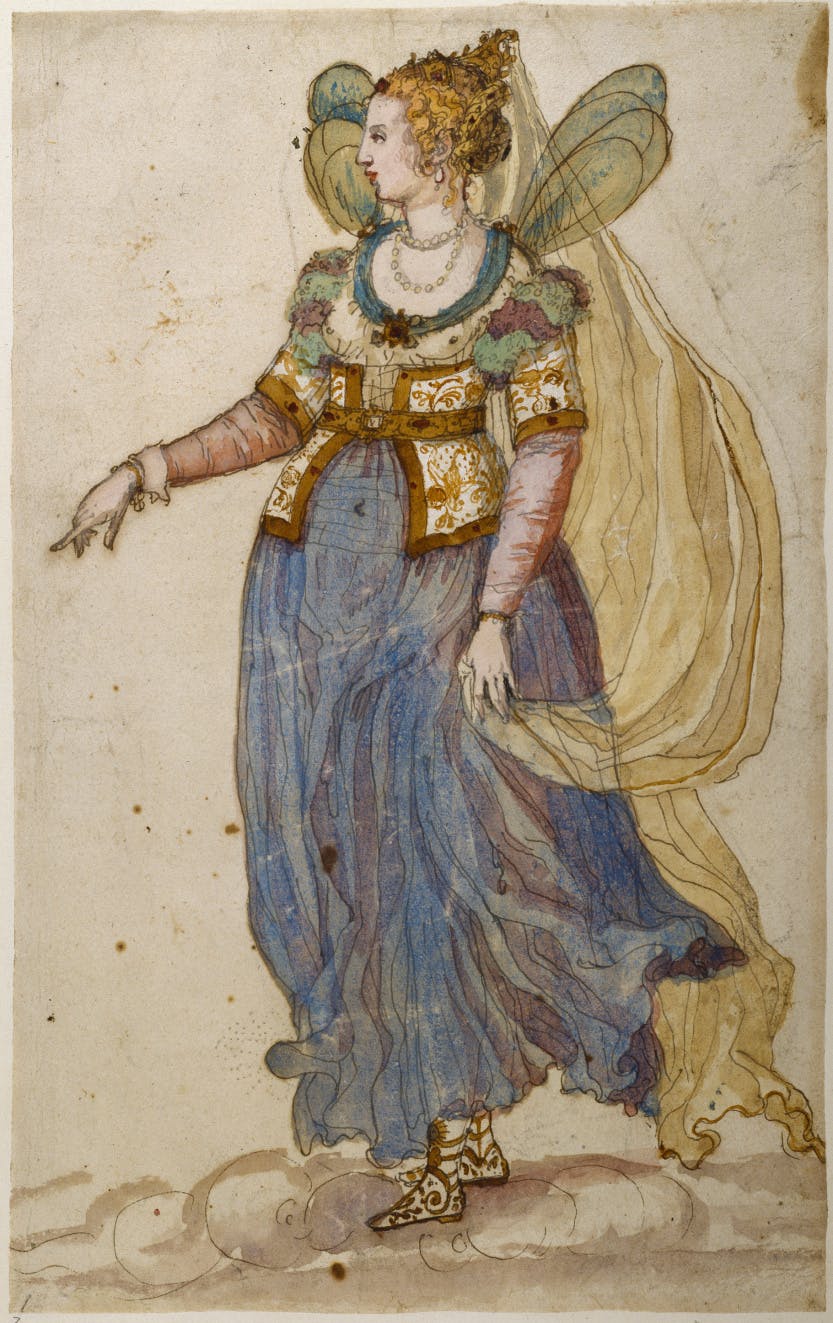
From Tony Riches: "Time travel back to the court of King Charles I with a glimpse of my research - the fascinating full text of Chloridia : rites to Chloris and her nymphs, a Shrovetide masque performed by the queen at Whitehall Palace." (Complete text HERE.)

Costume sketch for masque by Inigo Jones for Henrietta Maria

More on masques, HERE.

Queen Henrietta Maria


Share

Monday, September 14, 2026

Henrietta Maria and Her Mother, Marie de’ Medici


 My guest post for Tony Riches.

First of all, I would like to thank Tony Riches for opening his popular blog to other historical writers so that we may share our research. I am the author of a biography of Marie-Antoinette as well as six historical novels. The latest two novels are about Queen Henrietta Maria, wife of Charles I and they are entitled My Queen, My Love and Generalissima. They are part of an unfinished trilogy; the third installment Avalon will be out sometime in 2027 or 28. 

In my readings about Henrietta of France, I have found that her mother Marie de’ Medici played an enormous role not only in her upbringing but in her ongoing political decisions, as well as shaping her faith, her love of the arts, of music, theater, and architecture. Queen Marie has ended up playing a much larger role in my novels than I originally would ever have imagined, due to the sheer force of her personality as much as to her real adventures, which included leading rebellions against her son, climbing out of windows to escape the royal guards, and hiding with her entourage of dwarves in a German brewery. All of this followed a glittering career of being Queen Mother Regent of France. Most of the Queen’s life is captured in the spectacular series of twenty-four huge paintings by Rubens, now at the Louvre. (Read more.)


Books available HERE.

Share

Sunday, September 13, 2026

Our Lady of Scherpenheuvel


Marie de' Medici had great devotion to Mary under her title of Our Lady of Scherpenheuvel, giving a reproduction of the statue to her daughter Henrietta Maria for one of her chapels in London where it was used by the Confraternity of the Most Holy Rosary. From Wikipedia:

Even before the official approbation of the cult of Our Lady of Scherpenheuvel, pilgrims took particles of the oak tree with them as pious souvenirs. Several stories of miracles attributed to the intercession by the Virgin relate of the thaumaturgic power of this Scherpenheuvel or Montague wood. Following the approbation, Archbishop Hovius ordered the tree to be cut down. It was divided in several parts. Some remained with the sanctuary; one particularly large piece was given to Albert and Isabella. Most of this Montague wood was used to make images of the Virgin Mary. Distributed as gifts among princes, nobles and clergy, they helped to disseminate the cult of Scherpenheuvel.[13]

Quite a few Belgian churches and convents came to possess an image carved in Montague wood. Well known examples remain in the Church of St. Charles Borromeo in Antwerp, the Church of St. Hilonius in Izegem and the chapel of the Capuchins in Enghien. In the Grand Duchy of Luxembourg, the statue of the national patron saint, Our Lady Comforter of the Afflicted or Our Lady of Luxembourg, is believed to contain Montague wood. A smallish statue of the Virgin and Child in Montague wood was taken by St. Marguerite Bourgeoys to Montreal and stands presently on her tomb in the Notre-Dame-de-Bon-Secours Chapel.[14]

Some places of worship became closely associated with the cult of Scherpenheuvel. In the vicinity of their château of Mariemont, Albert and Isabella founded the priory of Montaigu in the present day municipality of Morlanwelz. In the town of Gray a statue of the Virgin made out of Montague wood became the object of a regional devotion. Likewise in the Franche-Comté, the statue donated to the priory of Bellefontaine in Brussey came to attract many pilgrims.[15] In the proximity of the Spanish Court, the Convent of Las Descalzas Reales obtained an altar dedicated to Nuestra Señora de Monteagudo.

The House of Lorraine had a particular devotion for Scherpenheuvel. Cardinal Charles of Lorraine, prince-bishop of Strasbourg, founded a chapel dedicated to Our Lady of Scherpenheuvel in the noviciate of the Jesuits at Nancy. After his death in 1607, his sister Antoinette completed the project with an altarpiece depicting the ducal family venerating Our Lady of Scherpenheuvel. The chapel served as the repository of the embalmed hearts of the members of the House of Lorraine until 1720.[16] The cult was also greatly favored by the French Queen Marie de' Medici. During her regency, the Discalced Augustinians obtained a statue in Montague wood at their church of Notre-Dame-des-Victoires. During her exile, she donated one statue in Montague wood to the city council of Cologne and another to the monastery of the Discalced Carmelites of that city. While serving the Catholic household of her daughter, Queen Henrietta Maria, the Queen's Chapel of St James's Palace likewise had an altar with a Madonna in Montague wood.[17] (Read more.)


(Image Source) 

A history of the original statue, HERE.

Share

Friday, September 11, 2026

Symbolism and Virtue in the Legend of Lancelot

 From Ancient Origins:

However, his love for Guinevere stood against all else. Lancelot gives himself entirely over into the service of the lady he loves, alas to the detriment of all his knightly ideals and goals. Also, in accordance to the popular trends of the time, Lancelot exhibits towards her the  fine amor , meaning a pure  love that was a major attribute of proper chivalric behavior. 

Nevertheless, throughout the Arthurian cycle, Lancelot is presented with numerous challenges that serve as tests to his chivalry. In one episode, he is seduced and tricked into sleeping with the daughter of the so-called Fisher King, Elaine - while she was pretending to be Guinevere. From this union is born Galahad, another great hero of the Arthurian cycle, who grows up to be an ideal and pure knight.

Throughout the development of the story of Lancelot, it becomes clear that increasingly important  Christian beliefs come to play a big role in the story. Purity, sinlessness, and penitence all come to characterize this tale. Galahad, sinless and pure, replaces his father who succumbed to his passions and love for Guinevere. As the story progresses, Lancelot’s affair with the king’s wife completely tears the royal court apart. The supporters of Lancelot and those of  King Arthur  descend into a bitter and bloody war. (Read more.)


Share

Thursday, September 10, 2026

The King's Pearl

Charles I as Prince of Wales

History of a pearl earring. In the 17th century men often wore jewelry. Above is the portrait of Charles which Henrietta Maria received as a betrothal gift. She kept it at her bedside until her death. To quote:
Today pearls are among the most common of precious "jewels." But before the development of cultured pearls and farming in the early 20th c., all pearls were natural pearls. These rare treasures could be discovered only by accident and at considerable peril. Natural pearls had great mystique and luminous beauty as well as value, which made them favorites of queens – and kings.

One of the most famous pearls of the 17th c. belonged to King Charles I of England (1600-1649). While the origins of this single pearl earring are unknown, Charles is first shown wearing it in a miniature...as the fifteen-year-old Prince of Wales. The pearl soon became what fashion-folk today call a "statement piece", and one that he was seldom without.

Charles's large teardrop-shaped pearl – an especially rare and desired shape –was made into a single dangling earring with a tiny gold crown as the cap, topped with an orb and cross that was most fitting for a future king. Since Queen Elizabeth's reign, fashionable English gentlemen had worn single earrings as a sign of courtly swagger and bravado, qualities that the young prince was woefully lacking: Charles was slight and short (only 5'3"), he limped from childhood rickets, he stammered, and he suffered from acute shyness. Perhaps the sizable jewel gave him the confidence that nature had not.


Share

Tuesday, September 8, 2026

A Guide to the Children of James VI and I and Anne of Denmark

The first Prince of Wales from the House of Stuart was named for his grandfather, Lord Darnley. (Yes, the Lord Darnley.) To quote author Linda Root:
Many historians wrongly refer to Henry Frederick Stuart as the Prince of Wales from the time he arrived in England in 1603.  This is incorrect.  He was not invested with that title until 1610.  His predecessor was Edward Tudor, the boy king Edward VI (1537-1553)  Upon Henry Frederick's  birth in Scotland he was given the customary title of a male Scottish heir apparent, Duke of Rothesay, as well as several lesser grants appropriate to the Scottish heir. However, when he arrived in England he was also conferred the English title Duke of Cornwall.  He had to wait seven more years to become Prince of Wales.  Referring to him as Prince of Wales during his early childhood should be a cause of embarrassment to a any historian or historical novelist who refers to him as Wales prior to 1610 and yet, it is a common mistake.  It is the way he is most often remembered although he only lived two years to enjoy the title. (Read more.)
Share

Sunday, September 6, 2026

Five Great-grandchildren of King Edward VII

 From Tatler:

Following the death of King Harald V on 28 August at the age of 89, the sprawling family tree of King Edward VII and Queen Alexandra has grown a little smaller. The late Norwegian monarch was a great-grandson of the British King and Queen, who reigned between 1901 and 1910. Now, just five of their great-grandchildren remain. Scattered across Britain and Norway, they are the last living members of a royal generation. So, who exactly are Edward VII’s surviving great-grandchildren? (Read more.)

Share

Tuesday, September 1, 2026

Ferne Park

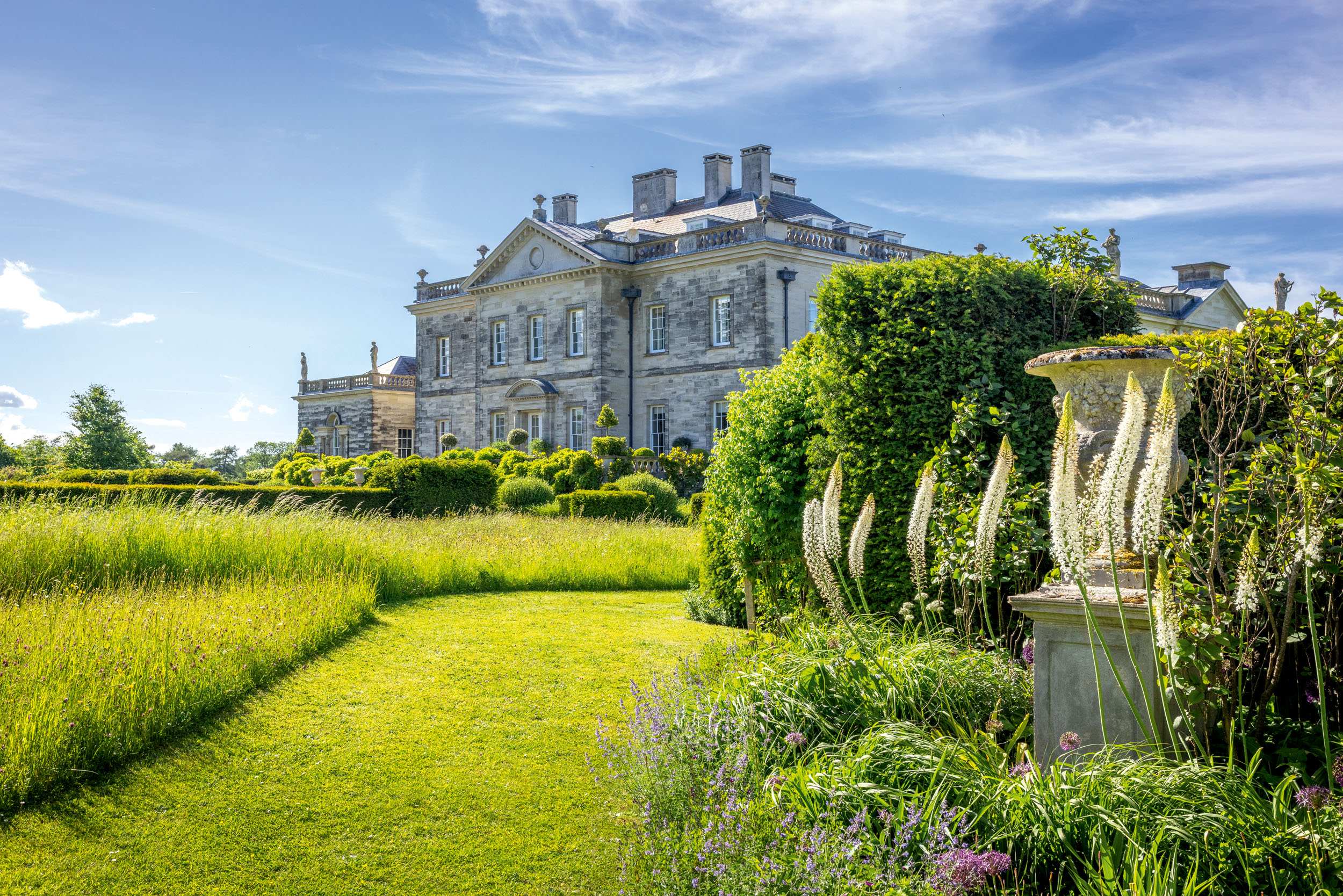
 Ferne Park, Wiltshire 

Ferne Park, Wiltshire 

From Country Life:

From the south terrace of Ferne Park, the double avenue of 400 lime trees lead out towards the hazy distance where, on the rise of Cranborne Chase, a stand of beeches marks the site of the Bronze Age Win Green bowl barrow. This is the highest point in the Cranborne Chase National Landscape, where the ancient ox drove runs east/west, linking the chase to Salisbury in Wiltshire and Shaftesbury in Dorset over the county border. Equally breathtaking is the view from the front steps of the house, which faces north to the rolling greensand hills in the Vale of Wardour. Little wonder that there has been a settlement here since 1225.

The surprise is that the house that commands this view and the gardens and parkland that surround it have only been here for 25 years. When Lord and Lady Rothermere bought the estate, it covered 200 acres and was derelict: there was no house and everything that could be sold had been. Today, the estate encompasses 2,000 acres, of which the garden covers about 28 acres, providing cut flowers, houseplants, vegetables, fruit and eggs. The 100-acre park surrounding the garden has been substantially replanted and is now home to a herd of White Park heritage cattle.

‘When I went with my husband to look at Ferne,’ recalls Lady Rothermere of her first sight of the estate in March 1999, ‘I had no desire to build a house. To create a garden certainly wasn’t in my future plans.’ Yet, as they rolled down the A30 and the landscape opened up before them, they could not help but be smitten. ‘Our decision to move was very impulsive, but we were young.’(Read more.)

 Ferne Park, Wiltshire

Share

The Best Film Ever?

In some recent Tudor novels and series there has been an emphasis on St. Thomas More's role in Henry VIII's persecution of religious dissenters. As Chancellor of England, St.Thomas had the morbid task of overseeing the execution of heretics according to the laws of the land. Most countries at the time saw heresy as a capital offense so St. Thomas was not doing anything unusual in carrying out the King's will in such matters. It is the mistake of our post-Enlightenment era to judge the past by our present way of doing things. Just as we are horrified by their burning of heretics, so would they be horrified by our massive numbers of aborted babies. From George Weigel at First Things:

I recently rewatched Fred Zinnemann’s riveting cinematic adaptation of Robert Bolt’s play for at least the sixth time, and the thought occurred: Is A Man for All Seasons the most perfect film ever made? Everything about it seems exactly right.

Bolt’s screenplay keeps the action moving, highlighting the story’s pivotal moments while losing nothing of consequence from the play’s script. Everyone in the cast is terrific, beginning with Paul Scofield’s Thomas More and continuing through Wendy Hiller’s Alice More, Robert Shaw’s Henry VIII (the young Renaissance hero, not the porcine lecher of later years), Orson Welles’s Cardinal Wolsey (embodiment of a Church crippled by its alliance with state power), Nigel Davenport’s rough-and-tumble Duke of Norfolk, Leo McKern’s cynically amoral Thomas Cromwell, and John Hurt’s Richard Rich, corrupted by intellectual arrogance and overweening ambition. Vanessa Redgrave’s lascivious, eighty-second cameo as Anne Boleyn hints at the sorry end awaiting the woman for whom King Henry broke with the Church of Rome.

Ted Moore’s cinematography is both gorgeous and true to history; I once looked out the window in More’s cell in the Tower of London and was struck by how cannily Zinnemann and his cinematographer used that view of the Thames embankment to convey the changing seasons during Sir Thomas’s lengthy imprisonment. Georges Delerue’s score is well-matched to the flow of the film and gives it an authentic Renaissance flavor.

If there is anything awry in A Man for All Seasons, I didn’t notice it. 

I’ve often taken exception to Bolt’s attempt, in the preface he wrote for the 1962 paperback edition of his play, to justify to his secularist peers his esteem for More, an ardent Catholic. In that apologia, the agnostic-bordering-on-atheist playwright positioned Thomas More as a proto-existentialist hero: one who died in defense of “an adamantine sense of his own self,” King Henry’s threat to which caused “this supple, humorous, unassuming, and sophisticated person [to] set like metal, [and be] overtaken by an absolutely primitive rigor”—a man who “could no more be budged than a cliff.” Yet in his screenplay, Bolt could not escape some decidedly Catholic facts: that the More family prayed together; that More, as a theologically knowledgeable consultant, helped Henry VIII win the title “Defender of the Faith” for a book defending the seven sacraments against Martin Luther; and that More, at his trial, insisted that the papacy was a divinely mandated institution. Then, at the end, Bolt’s More confesses that he dies “the King’s good servant, but God’s first”—the God who “will not refuse one who is so blithe to go to him.” (Read more.)

Share

Monday, August 31, 2026

How Medieval Literature Built the Arthurian Legend


From Medievalists:

Another story to emerge in the late twelfth century centres on the tragic and adulterous romance between the Cornish knight Tristan and the Irish princess Iseult. The tale survives in several versions, including those written by Béroul and Thomas of Britain, and quickly became one of the most popular romances of the Middle Ages. Early versions contain only limited connections to King Arthur and his court, but later writers increasingly integrated Tristan into the wider Arthurian world, often portraying him as one of the Knights of the Round Table. The legend became a major parallel tradition within medieval Arthurian literature, blending themes of love, loyalty, betrayal, and fate. (Read more.)


The changing myth of King Arthur. Also from Medievalists:

After appearing and disappearing for centuries, Arthur’s story is set down in its longest and most widely-read early form in Geoffrey of Monmouth’s The History of the Kings of Britain. In it, he stands for everything that was ideal in the author’s twelfth-century world: unity in a time of near-constant political instability, kingship with wisdom and fortitude, strength of arms with the courage to use it, and Christianity above all. As a historian, although widely discredited even in his own time, Geoffrey of Monmouth emphasized Arthur as worthy of legend because of his political acts: unifying warring kingdoms under one banner and ruling justly over all.

 At nearly the same time, courtly love was all the rage in the literary world. This ideal love was adulterous, courageous, and so passionate moderns might find it marginally embarrassing. It was at this moment that Lancelot rode into the Arthurian mythology, fainting with love over Guinevere, and pushing Arthur to the side as a stodgy, less hip cuckold. Arthur endured this romantic shift as a great but increasingly less-adventurous figure, who stayed behind boringly but brilliantly governing his realm while his knights risked life and limb on their glorious quests. Although this was also the moment in which the quest for the Holy Grail emerged, Arthur, ever-involved in worldly affairs and now tangled up in a love triangle, is not the one to find it. (Read more.)

Share

Remembering the Battle of Mohács

A brilliant article which shows how the European powers' fears over the growth of Habsburg hegemony contributed to the triumph of Islam. From Chronicles:

Hungary’s defeat coincided with larger European developments. The Habsburgs were then emerging as a major European power, considered by many players—and most dishonorably by the French—to be more threatening than the 100,000-strong devastating Turkish host advancing up the Danube Valley. The Habsburgs were able to establish control over the westernmost fifth of Hungary, and from there, 150 years later under the leadership of their brilliant commander Eugene of Savoy, to advance steadily south to the Military Frontier established along the northern banks of the Sava and the Danube east of Belgrade. In the Hungarian heartland under Turkish rule, however, and in  autonomous Transylvania in the east,  because so many Catholic hierarchs and priests died at Mohács, the Hungarian Reformation consolidated its territorial hold.

In 1526 there was a structural imbalance between Europe’s acute political fragmentation, while the Ottomans, under Suleiman, had achieved an impressive level of administrative centralization and military efficiency. The Turkish edifice would start crumbling only decades after Suleiman’s death in 1566, but in the meantime Europe faced immense danger from the east. It loomed just as Europe engaged—during the Thirty Years’ War—in the most destructive episode of self immolation until that time. The Ottoman threat finally retreateed after the second siege of Vienna in 1683.

The battle lost in 1526 has had a defining role in forming Hungarian historical consciousness. The “Mohács Trauma” appeared in the public discourse soon after the battle, and eventually became synonymous with continuing Hungarian misfortune in the public mind. For a long time that trauma was restricted mainly to the upper social stratum. This was in contrast to Serbia and other Serb lands, where the epic saga of the Battle of Kosovo and its mystical transformation of military defeat into moral victory lived on even among illiterate peasants, indeed especially among them. (Read more.)

Share

Sunday, August 30, 2026

Mary of Modena: James II's Dazzling Queen

 The Writing Desk: Book review: Mary of Modena: James II's Dazzling Queen,  by Justine Brown

There are several cases throughout history of arranged royal marriages in which it was as if God had chosen to favor a particular country by sending a bride who possessed not only virtue but great physical beauty to be the wife of the ruler and the mother of the heir. A few of those alliances ended catastrophically when, for certain reasons, the bride in question was rejected by her adopted people, even when loved by her husband. I am thinking in particular of Henrietta Maria of France, despised for her attachment to her Catholic faith. There is also Marie-Antoinette, hated for her Austrian heritage, made worse by a campaign of vicious slander. The tragic Empress Alexandra, whom Tsar Nicholas married for love, was falsely accused of betraying Russia to her German relatives. Among such consorts, noble and fair to behold, shines Mary Beatrice of Modena, the second wife of James II. Justine Brown, author of The Private Life of James II, has surpassed herself in this comprehensive biography of the last Catholic Queen of England, Scotland and Ireland. I found it engrossing for the detailed descriptions of the pageantry of the final years of the Stuart dynasty before the so-called "Glorious Revolution" in which the true monarch was overthrown by his own daughters. The evidence is compiled to show that James II was driven from his throne not for any tyranny, as is claimed by Whiggish historians, but because his wife had give birth to a Catholic heir. It was hatred of the Faith that disrupted the royal line and led to the weakening of the royal authority, so that in time British sovereigns reigned but no longer ruled.

From the Amazon page:

Mary Beatrice learns governance, defies scandal, and becomes a steadfast beacon for Jacobite resilience amid a turbulent Restoration era.

The 1688 “Glorious Revolution” that toppled James II and VII also veiled his consort in propaganda. Mary of Modena: James II’s Dazzling Queen reveals the extraordinary woman beneath. Lovely and spirited, Mary Beatrice Isabella d’Este is also England’s sole Italian queen. Her father came from an ancient line, while her mother was one of Cardinal Mazarin’s seven famed nieces (the “Mazarinettes”).

Mary Beatrice learned the rudiments of governance at her widowed mother’s knee, and would one day act as regent of the Stuart court-in-exile—first for King James, then for their son, James Francis Edward. “The Queen over the Water” would shine as a beacon for the Jacobite cause.

Once, Mary Beatrice longed to be a nun. Instead, the young woman had to accept a different mission—marriage to James Duke of York, heir to the thrones of England, Scotland, and Ireland. Although James’s conversion to Catholicism made their marriage possible, it set off a firestorm of controversy in the mysterious northern realm.

The story of the British Isles was romantic, but the reality was jarring. Thrown into the frenzy of Restoration politics, Mary Beatrice met each fresh episode courageously. Charles II adored his sister-in-law, but MPs strove to annul the “Italian match” before it could be consummated. She and James fell in love, but his philandering nearly broke her.

Building on Este tradition, Mary Beatrice won over the common folk, inspired poets and painters, introduced Italian opera, and drew talented ladies to court. She also attracted her flamboyant Mazarinette cousin Hortense Mancini to England, where she joined King Charles’s harem.

Ultimately, James and Mary Beatrice were coronated with great ceremony, but their troubles were only just beginning. For the first time in English history, it looked like the birth of a healthy prince might actually destroy the monarchy instead of strengthening it…
(Read more.)
In Justine's account, I found Mary of Modena to be inspiring not only as a brave and steadfast Queen but as a Catholic wife and mother dealing with adversity. As a teenage bride she was shattered to discover that the handsome husband she had fallen in love with was a chronic adulterer with a growing number of illegitimate offspring. And while the children of James' mistresses grew and thrived, Mary's children miscarried, or were stillborn or died young. But Mary, who had originally wanted to be a Visitandine nun, followed the teaching of the founder of the Visitation order, St. Francis de Sales. St. Francis de Sales emphasized a loving acceptance of trials as well as complete trust and confidence in God. Queen Mary's spiritual director was the Jesuit St. Claude La Colombière who brought to England the devotion to the Sacred Heart of Jesus, for he had been the confessor of  the Visitation nun who claimed to have visions of the Savior, known to history as St. Margaret Mary. Mary of Modena would help spread the devotion to the Heart of God throughout Europe in her later years of exile. Meanwhile, James II, whose childhood had been disrupted by war, imprisonment and exile, came to learn to live a devout life from his much younger wife, so that he gave up his transgressive lifestyle. I was particularly struck by the happiness of James and Mary when they had lost everything, but had each other and their children. I recommend this biography of a Queen of England who experienced a white martyrdom, yet the more she was diminished, the greater she became.
Share