Showing posts with label The Good Old Days. Show all posts

Sunday, June 14, 2026

40 Things Every House in the 70s Had That No One Sees Today

Memories light the corners of my mind....From Country Living:

The 70s—it sure does seem like it was a more laid-back, dare we say more mellow, time, doesn't it? Disco was king, Jaws menaced moviegoers, and everybody was on roller skates. Houses were one-story ranch-style, or split level and filled with never-before seen design choices (most of which have been never seen again). But whether good, bad, or just plain tacky, home interiors were certainly unique. A little nostalgia is never a bad thing, so let's step inside the time machine and into a typical 70s pad. Just a warning—you might want to put on your sunglasses first! (Read more.)

Share

Friday, May 15, 2026

A Generation Praised for Toughness

 From Indian Defence Review:

A generation praised for toughness may have been shaped by something far less comforting: the everyday absence adults rarely admit mattered. They were the kids who walked to school alone, settled their own playground disputes, and heard “be back by dinner” as the only rule. That kind of childhood has largely vanished, replaced by a world where parents can track their children’s location down to the driveway. Now a comprehensive meta-analysis published in Development and Psychopathology has put hard numbers behind what many have suspected: when parents hover too closely, their children’s mental health may pay a price. The study, led by Qi Zhang at the University of Wisconsin-Madison and Wongeun Ji at Handong Global University, examined 52 separate research articles spanning tens of thousands of participants. The researchers found small but statistically significant links between overparenting and depression, anxiety, and broader internalizing symptoms. The average age of participants was roughly 20 years old, meaning the findings largely reflect the mental health of teens and young adults. (Read more.)

Share

Sunday, September 7, 2025

The Spirit of Frugality

 From Jeffrey Tucker at Brownstone Institute:

America specializes in making trash and throwing things away. We see that as a symbol of how prosperous we are. Our ancestors did not think this way. They saw prosperity as linked with how much they could save and how little they spent unnecessarily. 

Economics teaches that savings requires deferred consumption. That means thinking about the future more than the present. Savings is also the foundation of investment. Investment is the basis of prosperity. Add it all up and you get this: sacrificing the comforts of today is the key to a better tomorrow. 

Hardly anyone would argue with the above. It is stated very plainly in ways that make it entirely logical and unobjectionable. 

And yet let’s add in one word: macroeconomics, especially as interpreted by John Maynard Keynes. He posited such a thing as the “paradox of thrift.” This happens when people save too much and don’t spend. Aggregate demand goes down and crushes producer hopes. 

Business dries up, so we fall into depression, in Keynes’s view, which requires the central bank to print money and Congress to spend even to the point of national indebtedness. That’s the real key to prosperity, said Keynes: running up big debts and printing your way out. Also, government should take over investment. 

I’m not going to explain the above further because it is wholly wrong. It is entirely based on fallacies punctuated by complicated language. That was Keynes’s specialty. He somehow managed to bamboozle generations of academics and lawmakers into setting their common sense on the shelf. 

A casualty of Keynesianism was the gradual deprecation of frugality in American culture. This is the theme of the third chapter of Eric Sloane’s book. He too begins with reflections on thrift stores as symbols of frugality and its abandonment.  (Read more.)


Share

Saturday, July 19, 2025

The Downton Abbey Auction

 From Elle Decor:

The Julian Fellowes-created show first aired in the UK in 2010. Following the lives of the Crawley family, headed by the Earl of Grantham, the drama unfolds the day after the RMS Titanic went down in 1912. The show ran for six seasons, with 52 episodes, ending in the year 1925. But it has since had the kind of long-tail interest that few other TV dramas get with two feature-length films, the first of which was released in 2019. Now, 15 years after the first episode aired, the final installment—and third film—is on the horizon, and titled, fittingly, The Grand Finale, premiering in September.

As if to confirm that it will, actually, be the end, 120 prop pieces are to be auctioned off at Bonhams, in London, starting on August 18th and running through September 16th. The pieces on the block comprise a spectrum of fan-enticing fodder. For example, the Grantham family car, a 1925 Sunbeam: "The 20/60 was considered by many to be far superior to the Rolls Royce,” reads the auction footnotes. “First seen in Season 2, the Sunbeam was used throughout Seasons 3, 4 and 5, and in all three films.” The estimated price is between £25,000 (roughly $33,000) and £35,000 (or $47,000).

The auction will also include wardrobe pieces like Jim Carter as Carson’s “three-piece morning suit” (£600 - £800) and Dame Maggie Smith as Violet Crawley’s blue dress (£1,000 - £1,500). (Read more.)

Share

Thursday, June 19, 2025

The Hot Shoppes


 I remember going to one late at night after a prayer meeting in Georgetown, back in the 70s. It was magical and the food was delicious. From Streets of Washington:

Of all the mid-20th-century icons of everyday life in Washington, Hot Shoppes ranks among the most memorable. The chain of casual drive-in restaurants founded by J. Willard "Bill" Marriott (1900-1985) in 1927 once had a commanding presence at dozens of sites across the metropolitan area, serving up thousands of fast, friendly meals every day. Beginning with a tiny root beer stand in Columbia Heights, the chain rose rapidly to prominence in the 1930s, expanded in the 1940s and 50s, and then almost as dramatically dwindled away in the 1970s and 80s, eventually slipping into history after winning the hearts and stomachs of several generations of Washingtonians.

The Marriott rags-to-riches story used to be one of the most oft told in the city. The son of a Utah sheep rancher, Bill Marriott was imbued at an early age with strong Mormon beliefs and an intense work ethic. As a teenager he experienced firsthand how hard it was to make a living raising livestock out west and resolved to get into a line of business less subject to market volatilities. In September 1921, after spending time in New York, Marriott passed through Washington on his way home to Utah. He spent a day sightseeing and noticed how vendors of ice cream, lemonade, and soda would sell out to the sweltering crowds practically as soon as they arrived on the scene with their carts. Six years later, when he was ready to start out on his own, Marriott decided to return to Washington to open a franchise selling A&W root beer. (Read more.)


Share

Friday, April 4, 2025

Why Do the Clocks Go Forward in Spring?

 From Country Life:

The idea of using different time during the summer is actually an ancient one, and Founding Father of the US Benjamin Franklin was among those. But a dual system of Greenwich Mean Time (GMT) in the winter and BST in the summer was first mooted by William Willett, in a pamphlet published in 1907, entitled The Waste of Daylight. Willett wasn’t a scientist, but a builder — and also, as it happens, great-great grandfather of Coldplay’s frontman, Chris Martin.

He was also a keen golfer, and it was this that prompted his idea: he resented the fact that the early onset of dusk curtailed his game. He was successful in lobbying Liberal MP Robert Pearce to introduce the Daylight Saving Bill in 1908. The bill, though, was rejected by the House of Commons and Willett, who died of influenza in 1915, was to miss out on seeing his dream come true by one year.

Ultimately, daylight saving was introduced in Britain in 1916 to conserve energy and help the war effort rather than to appease frustrated golfers. Taking their lead from the Germans, the British moved their clocks forward by one hour between May 21 and October 1. The move was so popular that BST has remained to this day, although the start and end dates — the last Sundays in March and October respectively — were only aligned across the European Union from October 22, 1995.

At the end of summer 1940, once more to conserve energy, clocks were not turned back. When the clocks were moved an hour forward in spring 1941, Britain operated a British Double Summer Time and continued to do so until the winter clock was realigned once more with GMT in the autumn of 1947. More radically, between February 1968 and November 1971, BST was adopted the whole year round on a trial basis. Due to its unpopularity, though, particularly among the farming community, the government abandoned the exercise in 1972 and reinstated the dual system. (Read more.)

Share

Tuesday, January 21, 2025

No, Americans Didn’t Have It Economically Better in the ‘Good Old Days’

 From Culturcidal;

On top of this, in the fifties, very few Americans had microwaves, dishwashers, or air conditioning. Back then, there were no computers, Playstations, Xbox, flat screen TVs, Uber, digital cameras, MP3 players, GPS, Amazon or cell phones. The point is we live a lifestyle that is orders of magnitude better than people did back then – and they did better than earlier generations of Americans. My dad grew up during the Depression and he told me stories about wearing shoes with holes in them, thinking soda and peanut butter were luxuries, and playing with a corncob that had feathers in it when he was a kid.

So, when people are like, “Why can’t we still support a family with 3 kids on one regular income like they used to be able to do back in the day?” Well, the reality is that you can if you’re willing to live like they did back then. Get a small house, 1 car, don’t go out to eat, and don’t grab Starbucks. Buy any “luxuries” and appliances in your house at yard sales, patch your clothes, etc., etc. If you have a bare-bones lifestyle, that single salary will stretch a lot further than you think.

However, the reality is that very few people outside of the Amish are willing to live like that. Of course, that’s understandable. I’ve used an outhouse before. I can’t say that I’d recommend it over indoor plumbing. I’m also sure my grandmother would have much rather bought her dinner at the store rather than feeding chickens, taking their eggs, and then wringing their neck one day so they’d have something for dinner. (Read more.)

Share

Thursday, January 16, 2025

Midlife Wasn’t Always a Crisis

 From Fast Company:

The history of middle age begins as far back as the eye can read. In classical Western literature, the middle of life is represented as a time to live and die magnificently. The heroes of Greek epics—Odysseus, Achilles, Ajax—are always middle-aged, and none of them loses sleep wondering about his life choices or whether his skills are falling off. Nor does Homer worry much about conveying how these men became who they are. Wily Odysseus, we can only assume, was wily pretty much from the cradle.

Beowulf, the hero of an early Anglo-Saxon poem, likewise does not show signs of slowing down until old age, when a dragon proves too much for him to kill without help from a much younger man. Embarrassing. The middle phase of life, these works imply, is the time when people are most themselves, with the greatest abundance of skill and purpose that life will ever confer.

Even Shakespeare saw midlife as little cause for anxiety. Among the “seven ages of man” described in As You Like It, middle age corresponds roughly to the part of “the justice,” a man with “fair round belly” and “wise saws” who sounds a little quaint, perhaps, but also content; it is only during the sixth age, with the approach of what Shakespeare calls “second childishness,” that a major shift occurs and quality of life starts to drop.

Then everything changed. The Industrial Revolution gave rise to a new bourgeois class that, when not reeling from the latest market crash, had time and money to burn. Middle-class leisure, unlike the aristocratic kind that greeted one at birth, required shifting gears, from a full-steam-ahead search for one’s place in the world to the relative stagnancy that came with having found it. This kind of whiplash was enough to make a crisis of midlife: a deep-seated feeling of anxiety about the value of one’s achievements, the meaning of existence and the proximity of death.

While the actual term “midlife crisis” was not born until 1965, thanks to 48-year-old Canadian psychoanalyst Elliot Jacques, its gestation stretched across the 18th and 19th centuries. Romantic poets such as John Keats and Percy Shelley, who died at 25 and 29, respectively, taught readers to covet the summer of life with almost desperate intensity, and even a slight chill in the air became cause for dread.

The Victorians, perhaps sensing that Britain’s empire could not stay young and virile forever, took this Romantic dread and ran with it. In the 1853 novel Little Dorrit, 41-year-old Charles Dickens portrays 41-year-old Arthur Clennam, who gloomily meditates on what he’s done with himself and how little it’s gotten him:

“‘From the unhappy suppression of my youngest days, through the rigid and unloving home that followed them, through my departure, my long exile, my return, my mother’s welcome, my intercourse with her since, down to the afternoon of this day with poor Flora,’ said Arthur Clennam, ‘what have I found!’”

For Clennam, a jaded merchant who recently vacated his position with the family firm in search of some greater purpose, taking stock of one’s life seems a painful but necessary exercise. He also takes another kind of stock, investing in a Ponzi scheme that plunges him, with most of London, into a state of financial crisis that mirrors his personal one. (Read more.)

Share

Monday, September 18, 2023

Old Fashioned Habits We Need To Bring Back

 From New Trader U:

This article will explore everyday frugal habits from the past and how reviving them can increase savings and reduce waste. Adopting a few of these time-tested skills can lead to impressive benefits. The old ways contain timeless wisdom – with creativity and purpose, households can spend less and live more frugally, like in generations past. In the past, people routinely mend, alter, and repair their possessions instead of replacing them. Even minor damage was fixed to extend the item’s use. For example, loose buttons were tightened, small holes were patched, frayed hems were re-stitched, and broken appliances were repaired. Taking up these habits again saves money compared to buying replacements. Set aside time for visible mending and repairs. Invest in a quality sewing kit and sewing machine. Watch online tutorials to learn sewing, darning, patching, and basic alterations. Repair shops can handle more complex fixes for appliances and electronics. You can give clothes, household goods, and gadgets new life with practice for a fraction of the replacement cost. (Read more.)

Share

Saturday, August 19, 2023

Two Englands: Albion and Logres

 From Charles Coulombe:

If Ireland is the spiritual home of many of the Catholics and Orangemen scattered around the Anglosphere, the next Kingdom, England, is surely still the centre of everything and one else. Open the popular imagination, and what comes tumbling out? A cavalcade of King Arthur, Robin Hood, Chaucer, Shakespeare, Dickens, Mummer’s Plays, Morris Dances, Jack in the Green, Foxhunting, Harvest Festivals, Lessons and Carols, Boar’s Head feasts dance in the head. As Orson Welles put it,

…I think there has always been an England, an older England, which was sweeter, purer, where the hay smelled better and the weather was always springtime and the daffodils blew in the gentle, warm breezes. You feel a nostalgia for it in Chaucer, and you feel it all through Shakespeare.

There are certainly two Englands – the one that Orson Welles described, and that Charles Williams and C.S. Lewis dubbed Logres, and the other, which they called Britain, and William Blake Albion. The former is the one that haunts the imagination, and is filled with Knights and Cavaliers, Saints and shrines. The other is the land of Henry VIII and Cromwell, of Puritanism and “dark satanic mills.” We sought the first. (Read more.)

Share

Thursday, April 20, 2023

Uranium Glassware


 From Lancaster Online:

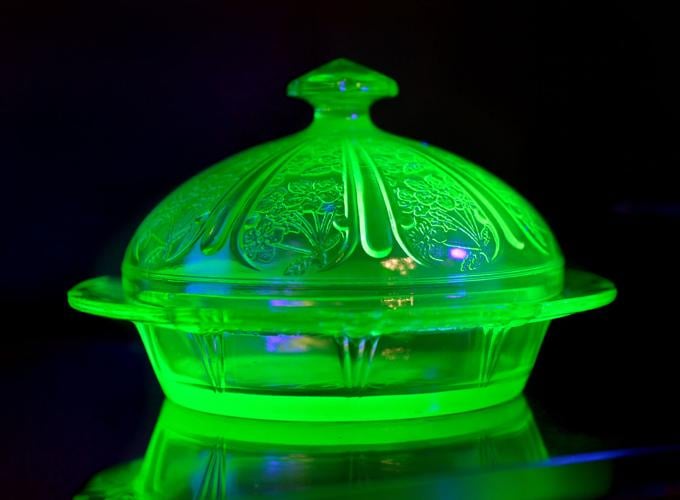
Geiger counters will click if you point them at this glass. There’s actual uranium in there — specifically, in most cases, uranium oxide. The amount varies by piece. The U.S. Nuclear Regulatory Commission has said there’s no danger to handling it. Lately the glass has been hot, says shop owner Connie Anderson.

“That’s been going on for the last 60 to 90 days,” she says. “Country Living always puts out its ‘most desirable collectibles’ and whatever they put on there (uranium glass, recently) is what people come in here looking for.”

Some vendors put black lights on their displays. “It glows neon green with purple in it,” she says. “It’s really cool to look at.”

Railroad items also draw shoppers. They’re a specialty of one of her vendors.“These are full-scale, big commercial railroad items like bells and lights,” Anderson says, adding they seem to be headed for an increasing number of homes. (Read more.)

Share

Saturday, March 18, 2023

Cotillion Class


Yes, I used to teach such classes in my home. From Southern Living:

For many who grow up in the South, cotillion classes are a rite of passage. Parents see them as a way for their children to learn social graces, while the children likely see them as a torturous excuse for wearing Sunday clothes on a weekday.

While different cotillion programs school their students in different things (some blend ballroom dance instruction with lessons in table etiquette, while others focus on dance), the overarching principle of cotillion classes is the same: Students are taught how to be respectful, polite members of their communities. It's about looking someone in the eye when you speak to them, holding the door for the person walking in behind you, and asking someone who's standing alone at a party to dance.

From who attends to social lessons learned along the way, here's the etiquette you can expect to learn at cotillion class.

What Is Cotillion?

It's this dedication to good manners and common courtesy, perhaps, that's made cotillion such a mainstay of Southern culture, where commitment to gracious behavior reigns supreme. For children, cotillion is another place where the manners and etiquette that parents teach at home can be publicly practiced and reinforced.

Who Attends and What Should You Wear?

From fourth through seventh grades, fall through spring, I spent my Wednesday evenings in a historic society hall downtown, clad in a tea-length dress, white gloves, and cream tights (going bare-legged was not allowed). Nowadays, dress codes are similar, though those tights may be optional. Boys wear long pants, collared shirts, a coat, and a tie. (Read more.)


And the difference between a cotillion dance and a debutante call, HERE.

Share

Saturday, January 21, 2023

Foot Warmers

 How people kept their feet warm in cold houses and coaches. From Home Things Past:

The Dutch used to be known for a certain kind of foot warmer found alongside other household furniture: a pierced box with an earthenware or metal pot holding glowing coals inside. They called it a stoof (stove) and you can see it in countless paintings from the 17th century on, like this one by Cornelis de Man c1670.

These foot stoves were also common in northern Germany. A stone slab was an alternative to the wooden top with holes. Similar foot-warming “boxes” were known in other countries too: see this French chaufferette. In Britain open fires were the most popular way of warming yourself indoors and foot warmers were not much used in the home, but some craftspeople had an earthenware pot of coals for heating their workshop, and this might be placed under a footstool. Foot warmers are visible in the paintings, but they could be completely hidden under a long skirt or cloak. They were used more by women than men. Did men’s boots keep them warmer? (Read more.)


From Jane Austen's World:

Bed warmers like the one depicted in the image above were made of brass tin or lined copper, and had long wood handles. The round metal pan was hinged so that it could be easily filled with hot coals. The pan would then be moved gently back and forth between the sheets to warm the beds on cold evenings. These bed warmers gradually fell into disuse in the 19th century after hot water bottles made of rubber became affordable and widespread.

Four poster beds

The thick hangings that surrounded a four poster or tester bed kept cold draughts out and body heat in. Popular since before the Elizabethan age, their design changed with the times: ornate in the 16th century, plain in the 18th century, and a rich but restrained neoclassical style in the 19th century. The bed and bedding materials varied according to wealth. Luxurious hanging made of velvet or brocade were often worth more than the wood bed frame, and in times past the rich would take the hangings with them as they traveled, leaving the wood bed behind. As improvements in insulation and draught exclusion were made, the four poster bed became more decorative than functional. (Read more.)


From Foot Warmers:

The stove or stoof in Dutch used a pierced wooden box with a metal or earthenware pot to hold the coals inside. This type of stove was also common in northern Germany. The Dutch also made foot stoves of elaborately ornamented brass. Some intricately decorated examples with carvings and piercings may occasionally be found.

By the eighteenth century, the use of foot stoves with a pierced tin and wood construction was essential in America, but sometimes it could prove to be dangerous. A third of the First Church of Roxbury was destroyed by the use of foot stoves in 1744. This use of foot stoves was prohibited after the fire.

The use of the word stow was often used the colonist's inventory prior to 1800. Agnes Lobdell of Boston suffered a fire 1760 and reports one of her losses as "1 Tin Stow" with a value of two pounds and five shillings. Easter Tinkom mentions "1 Stow & frame"; Rachel La Mottee, "Stove & pan," at three pounds ten shillings; and Jonathan Mason, "1 Tin Stove & Case."
(Read more.)

Share

Thursday, July 28, 2022

Victorian Jewelry

From Antique Trader:

AT: How do you determine a piece of jewelry is from the Victorian era?

RN: The Victorians had very distinctive styles when it came to their jewelry. Pieces tend to be larger, darker, ‘heavier,’ than the styles before or after the Victorian period. Large cameo brooches worn at the throat come to mind. Mourning jewelry in particular tends to be distinctive and identifiable because pieces are typically black, often with hair or photo compartments. Victorian jewelry can be extremely ornate, what we think of as gothic in style. Besides these aesthetic considerations, I identify Victorian jewelry based on its construction and the materials used.

AT: What advice do you have to help people avoid buying a fake or reproduction piece?

RN: It’s good to have a handle on what kinds of materials were used in the Victorian era as well as how pieces were constructed. Oftentimes simply looking at the back of a piece and its hardware can tell you a lot about when a piece was actually made. Brooches did not really have rollover locking clasps until the early 20th century, so if you look at the back of a brooch and see a rollover clasp, it’s probably not Victorian, unless you can see evidence that the clasp is a replacement of the original ‘C-clasp.’ When I am buying pieces online, I will usually avoid listings that don’t show the back of a piece. It is just too hard to tell from photographs what is genuine when you don’t have a complete picture of the piece and its construction or hardware. As you handle more and more pieces, you will develop a better instinct and notice patterns in construction. A celluloid cameo may look very detailed and beautiful, but with experience you will immediately know the difference between celluloid (an early plastic) and actual carved shell. (Read more.)

Share

Wednesday, July 13, 2022

Ailments, Complaints, and Diseases in the 1700 and 1800s

 From Geri Walton:

To help you understand the diseases people faced in the 1700 and 1800s, here is a list, in alphabetical order, of the more common diseases, ailments, and complaints.

AGUE was a type of malarial fever. It was usually characterized by regular intervals of chills, sweating, and fever, and depending on these intervals, sufferers were said to have quartan ague, quintan ague, quotidian ague, or tertian ague. AGUE was also known as chill fever, the shakes, Panama fever, or swamp fever.

BILIOUSNESS was a liver disease characterized by gastric pain and an undue amount of bile brought on by disorders of the liver or gallbladder.

BILIOUS FEVER was a term “loosely” applied to a patient that suffered from any fever, along with nausea, vomiting, or diarrhea and was thought to arise from disorders of the bile.

BOILS, also known as furuncle, are painful, bumpy, red-pus filled skin abscesses usually caused by bacteria, such as staphylococci. However, physicians of the 1700 and 1800s did not understand staphylococci were the cause of these eruptions. Egyptians used moldy bread to rid themselves of these bumps, and, during Medieval times, boils were feared because they were a sign of the Black Plague. Between 1840 and 1850 a severe furuncle epidemic, which may have been a mild case of the plague, occurred in Europe, America, and South Africa and resulted in some people dying.

CANCRUM OTIS was a destructive ulcer that could erode the cheek, lips, tongue, palate, or face and was often fatal. It was prevalent in children between the ages of two and five and was caused by poor hygiene and poor nutrition. It sometimes led to gangrene, often resulted in irreversible damage, and could be swift moving, wreaking havoc within a few days.

CATARRH was a disorder or inflammation of the mucous membranes in a body cavity or in the airways. There were several forms of this disease: bronchial catarrh was bronchitis, epidemic catarrh was influenza, suffocative catarrh was croup, urethral catarrh was gleet, and vaginal catarrh was leukorrhea. (Read more.)

Share

Thursday, June 30, 2022

The Disappointment of the Millennial

 From El Antiguo:

Imagine the dream of California represented in the Beach Boys and hippies confronted by homeless tent camps, giant corporations, and endless quinoa and acai bowl shops. Imagine loving New York or Paris only to find it overrun with tourists and unhappy people in hoodies. Imagine searching for the hard scrabble life of Appalachia, and finding meth labs and Wal-Marts. Imagine wanting England and finding nothing but kebabs, mosques, and football hooligans.

I’m not talking about a romanticized, idealized version of these places. If you come to Texas expecting nothing but cowboys, oilmen, and Indians, you will be sorely disappointed. But the fault is not in Texas; the vision you have of Texas has no basis in reality. Someone misrepresented Texas to you (in this case, and many others, the culprit is Hollywood). But in the examples above, I’m not talking about misrepresentation. These places really existed, and really were like this not that long ago. The sense of loss doesn’t happen when idealistic expectations meet gritty reality. The sense of loss occurs when gritty reality itself has shifted. And this reality has shifted recently.

This isn’t some fuming debate about authenticity. This is not nostalgia. This is not romanticism. This is not coming from hipsters. This is measurable, tragic change in the last decades of the twentieth century. (Read more.)
Share

Monday, March 28, 2022

The Western Reinvented. Again.

I actually thought The Power of the Dog was an excellent film, and not so much about a gay cowboy as about a brave young man who uses his intelligence to protect his mother from a bully. From Quillette:

Violent psychopaths are a mainstay of Old West fiction. The directors of classic Westerns like John Ford and Anthony Mann filled their films with morally ambivalent characters. Some reviewers seem to think that The Sisters Brothers is revolutionary simply because it treats the Old West with humor and irreverence, which suggests that they’ve never read Charles Portis’s True Grit, or Thomas Berger’s Little Big Man, or Darryl Ponicsan’s Tom Mix Died For Your Sins, or Clair Huffaker’s Flap, or, for that matter, any cowboy poetry.

In 2021, Tom Lin, a graduate student at UC Davis, published his first novel, The Thousand Crimes of Ming Tsu. In an interview for the Big Thrill website, Lin said, “The idea for the book came to me as a one-line pitch, intense and inchoate: a Western, except the protagonist is Chinese American.” In an interview with UCDavis magazine entitled “Reimagining the Outlaw,” Lin added, “I think the Western as a genre is so powerfully integrated with the United States and cultural concepts of Americanness. I decided to lean into it and see how the myth-making machine of the Western genre might be repurposed.”

Lin was born in Beijing in 1996, so he can be forgiven for the assumption that this is a new idea. Baby Boomers will recall the same concept from the TV series Kung Fu, which starred David Carradine and ran from 1972 to 1975, for a total of 63 episodes. It inspired several feature films and TV series re-boots, as well as a handful of tie-in novels. But even in the 1970s, this concept was not new. Asian characters, and even Asian protagonists, had been showing up in Western novels for years. One of the best-executed novels dealing with this theme is The Land of the Golden Mountain, published in 1967 and written by C.Y. Lee, better known for his novel, The Flower Drum Song, which became a Broadway (and then a Hollywood) musical. The Land of the Golden Mountain is the tale of a young Chinese woman who comes to California as an indentured servant during the Gold Rush era. She has to disguise herself as a boy to avoid sexual harassment. But even while she is passing as a boy, she attracts her share of sexual interest from other men—further evidence that the Western novel was dealing with race and gender issues long before anyone felt the need to repurpose it.

A nearly identical set-up gets a more frank treatment in Gillian Stone’s 1980 Western novel, also entitled Land of Golden Mountains (the Chinese referred to America by that name, so it appears in the titles of several novels about Chinese immigrants to the US). Li-Li, the protagonist of Stone’s novel, also comes to California during the Gold Rush, but she doesn’t hide her femininity and ends up employed in a brothel. Ching Yun Bezine’s excellent 1991 novel, Children of the Pearl, tells a similar tale about a group of Chinese indentured servants who come to California in 1911 and are forced to make their way in a hostile environment not much different from the one that awaited earlier arrivals. One of them ends up working as a prostitute. Sex work has long been a factor in Western fiction (one of the main characters in the long-running Western TV series Gunsmoke is a former prostitute). Red Lights on the Prairie, James H. Gray’s 1971 exploration of sex workers in the Old West, was published as a mass market paperback by Signet and sold on the same supermarket spinner racks as the works of Louis L’Amour and Elmore Leonard. The Asian-immigrant-comes-West theme existed long before anyone ever thought of re-inventing the Western. (Read more.)


Share

Tuesday, March 15, 2022

Entertaining Guests at Home 60 Years Ago


 From Delish:

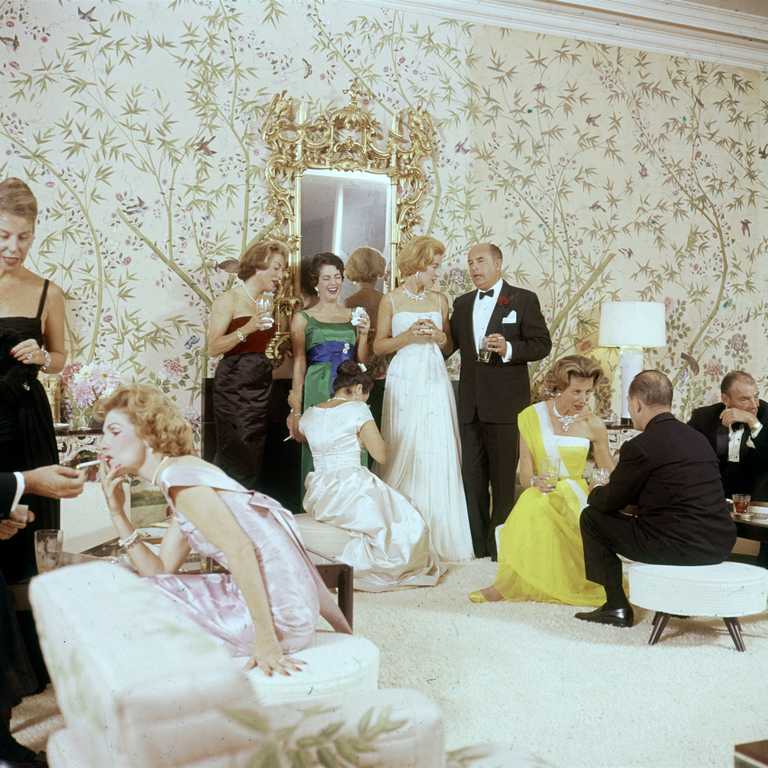
Dress codes were important. No one wants to show up to an occasion over- or under-dressed. So no matter the kind of event — from casual backyard gatherings to family-friendly birthday parties — including the dress code on the invite was very common. A lot of parties were formal. People dusted off their jewels and dressed up for parties back in the day. From formal black-tie dinners to cocktail soirées, partygoers were dressed to the nines. (Read more.)

Share

Tuesday, September 21, 2021

A Brief History of Depression Glass

 From Apartment Therapy:

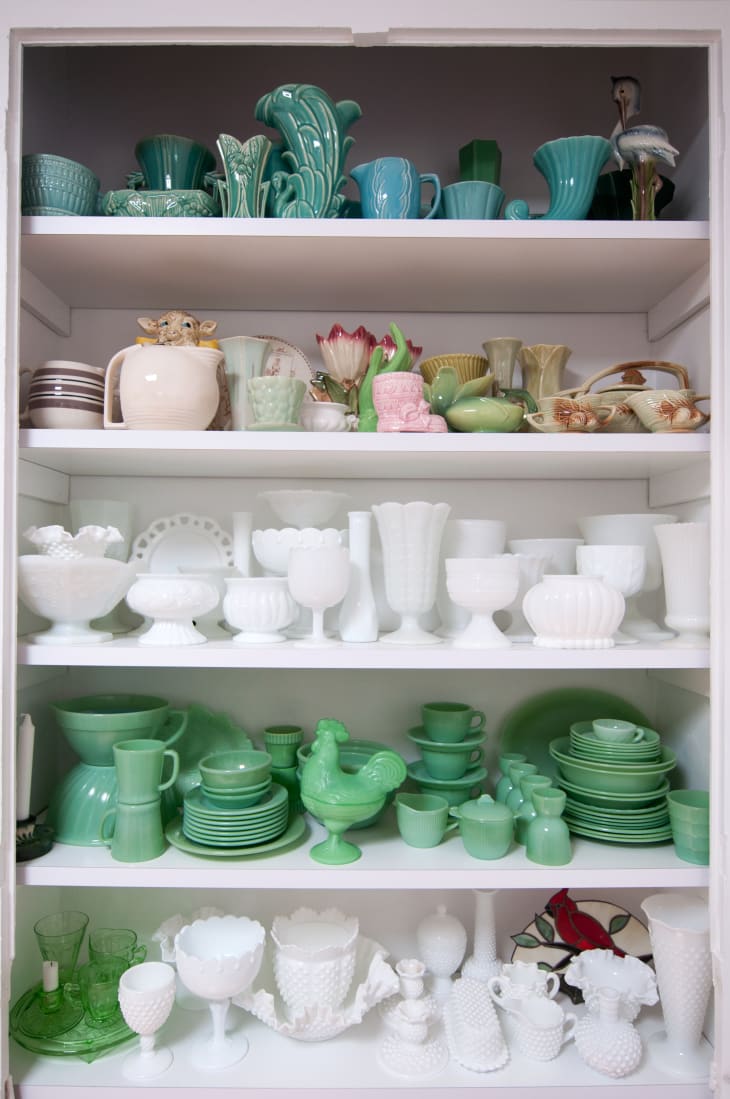
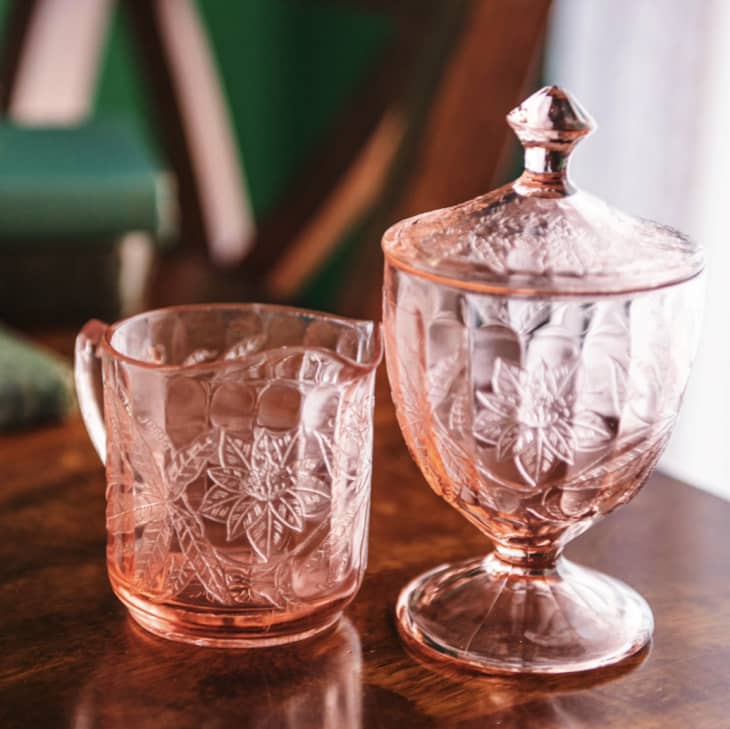
As the pandemic taught many people firsthand, little inexpensive indulgences can help to keep morale up, and that’s exactly the role Depression Glass played almost a century ago. Pieces came in a riot of hues, including pink, amber, jadeite (Martha Stewart’s favorite), royal ruby, and even uranium green. Color not only disguised the lesser quality of the glass, but it also provided a little bit of extra cheer. “Color was very important in Depression Glass because those were such dark days,” Dixie Davis, the president of the Arizona Depression Glass Club, told The Arizona Republic in 1986. “L.E. Smith made black glass. But my mother never let dark colors in our house. She thought color perked us up.”

Colored dishware may have also helped to make plain, meager meals look more appetizing. With economic strife often comes lackluster dishes, but even beans and bread looked almost restaurant-worthy on pink glass plates. “In the present era, with glass so pronounced a vogue, it is not difficult for the homemaker to have the dining table as refreshing in appearance as in substance,” the Lincoln Journal Star reported in 1931. “Color of glass serving dishes can lend zest to otherwise plain viands and aid in making them appeal to the appetite.” (Read more.)


Share

Wednesday, September 1, 2021

Second Hand Clothing in Medieval France

 From Medievalists:

Even when made of coarse fabric and unrefined, clothes were expensive in the Middle Ages. Dresses, stockings and cloaks were mended until they were too damaged to wear. People bought second-hand clothing from retailers and received clothes as bequests. This article sheds light on the circulation of second-hand clothing in the southern French city of Montpellier and its immediate surroundings in the late medieval period, by looking at the sale of used clothing and donations of second-hand clothes.

A dealer of used clothes was a “pelhier” in the local Vernacular (pelherius in vernacularized Latin), and sold pelhas, which the best English translation would probably be “rags,” without any negative connotation. The first statutes regulating the pelhiers’ labour were drafted in 1322 but yield few details about the profession, besides the fact that pelhiers sold “rags, clothes, and other things.” Their statutes were updated in 1351, in the aftermath of the Black Death, giving more information on the workers’ activities. They retailed second-hand raubas sive vestes, “vestments and clothes,” as well as rags (pelhas), house linens, and bedding (mattresses, pillows, and blankets).

At that time, the pelhiers of Montpellier were called pelhiers de Santa Cros, after the district of the Holy Cross where they resided and worked, a district populated by artisans and middle-class workers. Between c. 1410 and c. 1420, a new guild of pelhiers was created, whose workers laboured in the busy streets of St. Guilhem. The guild of St. Guilhem was short lived and was discontinued in the 1420s, maybe because it did not have enough members. In the 1450s, the pelhiers of Santa Cros merged with the guild of the hosiery makers/retailers (caussatiers). From that point onward, dealers of second-hand clothes and hose makers formed a joined guild. This merger may also suggest plummeting or stagnating headcounts in the profession of pelhier.

Indeed, it appears that few people worked in the second-hand clothes retail, or that few people were inclined to say that it was, in fact, their occupation. I only found 30 pelhiers and peliés in fiscal records spanning c. 1380–1480, among the more than 6,100 workers whose occupation was known (0.005%). Most of them lived in the 1380s and early 1400s and resided in the Holy Cross neighborhood. (Read more.)


Share