A place for friends to meet... with reflections on politics, history, art, music, books, morals, manners, and matters of faith.
A blog by Elena Maria Vidal.
"She was not a guilty woman, neither was she a saint; she was an upright, charming woman, a little frivolous, somewhat impulsive, but always pure; she was a queen, at times ardent in her fancies for her favourites and thoughtless in her policy, but proud and full of energy; a thorough woman in her winsome ways and tenderness of heart, until she became a martyr."
"We have followed the history of Marie Antoinette with the greatest diligence and scrupulosity. We have lived in those times. We have talked with some of her friends and some of her enemies; we have read, certainly not all, but hundreds of the libels written against her; and we have, in short, examined her life with– if we may be allowed to say so of ourselves– something of the accuracy of contemporaries, the diligence of inquirers, and the impartiality of historians, all combined; and we feel it our duty to declare, in as a solemn a manner as literature admits of, our well-matured opinion that every reproach against the morals of the queen was a gross calumny– that she was, as we have said, one of the purest of human beings."
"It is now sixteen or seventeen years since I saw the queen of France, then dauphiness, at Versailles; and surely there never lighted on this orb, which she hardly seemed to touch, a more delightful vision. I saw her just above the horizon, decorating and cheering the elevated sphere she had just begun to move in, glittering like a morning star full of life and splendor and joy. Oh, what a revolution....Little did I dream that I should have lived to see such disasters fall upon her, in a nation of gallant men, in a nation of men of honor and of cavaliers! I thought ten thousand swords must have leaped from their scabbards, to avenge even a look which threatened her with insult. But the age of chivalry is gone; that of sophisters, economists, and calculators has succeeded...."
~Edmund Burke, October 1790
A Note on Reviews
Unless otherwise noted, any books I review on this blog I have either purchased or borrowed from the library, and I do not receive any compensation (monetary or in-kind) for the reviews.
This second part (“Holy Mary, Mother of God, pray for us sinners
now, and at the hour of our death”) is believed by many to have been
added during the plague to ask for the Blessed Mother’s protection from
the fatal disease. Venerable Fulton J. Sheen explains this origin in his book The World’s First Love.
Since it seizes upon the two decisive moments of life: “now” and “at the hour of our death,” it suggests the spontaneous outcry of people in a great calamity. The Black Death, which ravaged all Europe and wiped out one-third of its population, prompted the faithful to cry out to the Mother of Our Lord to protect them at a time when the present moment and death were almost one.
An expert in Marian devotion, Fr. Donald H. Calloway, confirms this conclusion in his book Champions of the Rosary
and explains how, “After the Black Death, the second half of the Hail
Mary began to appear in the breviaries of religious communities,
especially those of the Mercedarians, Camaldolese, and Franciscans … the people of the 14th century greatly needed the ‘hope-filled’ dimension of the second half of the Hail Mary prayer.” (Read more.)
These questions are not foreign to me. I knew someone who took an SSRI,
developed suicidal thoughts that frightened him, and flushed the pills
down the toilet. Years ago, while driving for Uber, I met a veteran who
told me that he took a pill, blacked out, and awoke in handcuffs. He
later learned that he had wrecked his car and fought with police, but he
remembered none of it. Those stories cannot establish what caused the
reactions; I do not know the complete medical histories, diagnoses,
dosages, or other substances involved. They are anecdotes, not clinical
trials. Yet they explain why I cannot dismiss reports of sudden,
frightening behavioral change as imaginary simply because they are
unusual.
To explore these issues, I recently interviewed Dr. Josef Witt-Doerring,
a board-certified psychiatrist and former medical officer in the FDA’s
Division of Psychiatry who now works extensively with psychiatric-drug
adverse effects and withdrawal. His perspective deserves a hearing, but
it also needs to be placed within proper limits. He did not examine
Lindsay Clancy, he was not her treating physician, and an interview
cannot decide a criminal case. His value here is that he helps identify
medical possibilities that toxicology numbers and outward appearances do
not necessarily settle.
The prosecution in the Clancy case emphasized apparently organized
behavior: she arranged for her husband to leave the house, acted while
he was away, and took steps that can be described as planned. For many
observers, planning seems to end the insanity question. A person capable
of organizing means, they reason, must also understand the end toward
which those means are directed.
Dr. Witt-Doerring challenged
that assumption. A person experiencing psychosis may still speak
coherently, perform household tasks, conceal disturbing thoughts, and
appear outwardly composed. As he put it during our interview,
a person can look “really put together” while being driven by “bizarre,
delusional thoughts in the background.” The crucial distinction is
between the ability to reason instrumentally and the ability to judge
reality correctly. Someone may connect steps A, B, and C with terrible
efficiency while beginning from a premise that is entirely false. (Read more.)
A groundbreaking report has demolished a favorite rhetorical tactic
used by transgender activists to argue in favor of harmful procedures
for gender-confused minors.
For years, the left has emotionally
blackmailed the parents of gender-confused kids, insisting that families
must sign off on dangerous, irreversible drug regimens or even
surgeries, or else their child will surely commit suicide. But
independent researchers recently confirmed there is no proof that
restricting minors from this so-called “gender-affirming care” leads to
more suicides.
A favorite line of transgender activists and their
allies in the medical establishment is this: “Would you rather have a
dead son or a live daughter?”
Medical professionals and social workers will frighten parents with
some form of this bad-faith argument, claiming that “treatments” like
cross-sex hormones, puberty blockers, or surgeries that leave kids
permanently disfigured are “life-saving.” A compliant liberal media has
willfully repeated this lie in their own biased coverage of debates
about transgender drugs and surgeries.
But a comprehensive study
from Do No Harm looked at Centers for Disease Control and Prevention
data across 23 states that have banned transgender drugs and surgeries
for minors. Their conclusion? There is “no evidence that these bans have
increased suicide rates.”
Do No Harm is an advocacy group which
“represents physicians, nurses, medical students, patients, and
policymakers focused on keeping identity politics out of medical
education, research, and clinical practice.” It was founded in 2022 and
opposes transgender drugs and surgeries for minors.
“The alarmist
prediction that restricting medicalization of gender-distressed minors
would produce a spike in youth suicides is not supported by the data,”
Do No Harm scholars Jay Greene and Ian Kingsbury write in their new report. (Read more.)
Over time, we have done away with waiting,
boredom, and much of uncertainty. We have learned to plan our routes,
order food before we are hungry, know whether a restaurant is worth
going to before we step inside, check the weather before we look at the
sky. We can fill almost every empty minute, find an immediate answer to
almost any question, see a place before we have ever set foot there. All
of this is, of course, very convenient.
But I sometimes wonder whether, in
removing so many small frictions and in-between moments from our lives,
we have also removed, almost by accident, some of the conditions that
allowed the world to surprise us. Perhaps enchantment depends on some of
the very things we have spent years trying to eliminate: waiting,
uselessness, mystery, slowness, surprise, imagination, attention.
There is a concept that has stayed with me
since my student days: Max Weber’s idea of the “disenchantment of the
world.” Very roughly put, it describes the way modernity made the world
more rational, more explainable, more calculable. I would be
hard-pressed now to reproduce everything I learned about it then, but
the phrase itself has never quite left me.
What was passed down to me, first. And
then what I learned over time, through experience, curiosity, and a
conscious return to common sense. When I really thought about it, I
realised that my way of eating rests on three very simple principles.
I cook almost everything I eat, using mostly whole or minimally processed ingredients.
I very rarely buy ultra-processed foods.
And when I feel like eating something sweet, I make it myself.
My kitchen is therefore built around basic
ingredients: seasonal fruits and vegetables (organic when possible)
whole bread, cheeses, plain yogurts, eggs, butter, flour, sugar, milk
(often plant-based, oat milk for instance), pasta, fish, carefully
chosen meat, spices, herbs, garlic, onions, shallots, and always a good
dark chocolate for homemade cakes. With very little, you can do a great
deal. Endless variations, countless meals.
I believe this way of eating comes from my
mother, who has always cooked a lot, and from my grandmother before
her. When we were children, industrial biscuits were rarely allowed at
home. Instead, there was almost always a homemade cake: a chocolate
cake, an apple tart, chocolate mousse,
pastries made for no particular reason. My father grew a vegetable
garden. Seasonal fruits and vegetables were simply part of daily life. I
grew up this way, without it ever being framed as a rule or a
restriction. It was simply normal.
Even today, my meals follow a fairly
traditional structure. Two to three meals a day, depending on the day,
my mood, the rhythm of the week. I sometimes skip breakfast if I am not
hungry. Other days, especially on weekends, I take my time: pastries
from the day before, French toast, waffles, crêpes, chocolate cookies,
always homemade. There is something deeply reassuring in these
gestures: the anticipation of flavours, even before tasting them, the
smell of warm butter in the kitchen, a cake left to cool on the counter
while the house slowly grows quiet.
During the week, lunch is often simple,
sometimes eaten quickly. In the evenings and on weekends, I like to cook
more. Since my years living and working in London, I have lost the very
French habit of long lunch breaks, but dinner remains an important
moment. The one thing I very rarely do is snack between meals. I was
always taught that eating between meals dulls the appetite for the next
one. I kept this habit. If I am hungry earlier than expected, I simply
eat earlier. (Read more.)
For Hildegard of Bingen, the German mystic, scientist, composer, and
philosopher, women’s maternal bodies were not corrupting and degrading,
but strong, nurturing, and creative. Hildegard, who was born at the end
of the eleventh century, is the first known female medical writer in
Europe during the High Middle Ages. Most of the era’s discourse about
human generation came from monks and theologians who vowed never to have
any contact with women’s bodies. But Hildegard introduced into the
Christian medical tradition compassionate and celebratory theories about
physical maternity that were inspired by her own bodily experiences and
those of the women she cared for.
Hildegard was a Catholic abbess of the
Benedictine Order. The tenth child of a noble family, Hildegard was
tithed to the Disibodenberg, a monastery nestled between two rivers in
Germany’s Rhineland‑Palatinate region, when she was born. After being
cloistered when she was eight, she took her vows at fourteen and became a
nun. Hildegard prized virginity as the highest state of womanhood, and
she never experienced biological motherhood. But her commitment to
spiritual motherhood did not stop her from thinking seriously about
conceiving, bearing, and birthing. (Read more.)
A Catholic reflection on mental illness, psychiatric medication, moral responsibility, and the online appetite for condemnation
There
are crimes so terrible that words seem almost indecent beside them.
Children are dead. A husband or wife is left with a home emptied of the
people who made it a home. Grandparents bury grandchildren. Families who
expected ordinary joys instead spend the rest of their lives asking a
question that may never be answered: How could this have happened?
That is where any discussion of the Lindsay Clancy case must begin,
not with politics, pharmaceutical companies, courtroom personalities, or
social-media arguments, but with Cora, Dawson, and Callan Clancy. They
were innocent children whose lives were taken. Nothing said about their
mother’s mental condition can restore them or make what happened less
objectively horrific.
But beginning with the victims does not require us to end with vengeance.
The
recent mistrial in Lindsay Clancy’s case came after jurors were unable
to agree on whether she was criminally responsible when she killed her
three children in January 2023. Her defense maintained that postpartum
psychosis and bipolar disorder had deprived her of the ability to
appreciate the wrongfulness of her actions. Prosecutors argued that she
remained capable of planning, choosing, and understanding what she was
doing. The disagreement was not about whether the children died by her
hand. It was about the condition of the mind and will behind that hand. Associated Press
That distinction is uncomfortable. It is also profoundly Catholic.(Read more.)
The Santa Clara study
from April 2020 by Jay Bhattacharya found a 2.8% seroprevalence level.
It was far higher than the existing estimates. He was denounced and
hounded for daring to say what we know now: the infection fatality rate
was very low and prevalence was very high. The implication: we would get
through this with no great disruption necessary.
The attacks on the study were brutal but he was just doing science at a time when few others were making sense. Even BuzzFeed, a reliable venue for deep-state actors, slammed Jay and insinuated corruption.
Now,
in this new release, we find Gottlieb telling the CIA that the virus
spread is far higher than most anyone believed at the time. If the
R-naught is 3, that means every one person would infect three more,
which, according to the math, would mean a herd immunity level of 67
percent. At that rate of spread and resulting immunity, pandemic
conditions would turn endemic in a matter of weeks, certainly by the end
of summer if not sooner, all else equal. (Read more.)
Updated from a few days ago. I disagree that the Clancy murders can be compared to someone killing someone when high or when drinking and driving. Lindsay was taking medication not for recreation but so she could function. From Tierney's Real News:
Addiction to prescription psych meds is the biggest issue we have in
America right now and nobody talks about it. They start giving them to
toddlers at 2 years old. Ativan is booze in a pill, Adderall is Meth in a
pill, Oxy is heroin in a pill, anti-depressants are cocaine in a pill,
seroquel is a chemical lobotomy in a pill. A whole generation will be
like Lindsay if we don't wake up soon. Not kidding. I've been in
recovery for 30 years and the rooms are filled with pill heads like
Lindsay who have been medicated into insanity and violence. They are
taught to not use street drugs or alcohol but taking boat loads of
prescription psych meds is just fine. At treatment centers they hook
addicts and alcoholics on 5 different pills. Walk in with one addiction
and leave with 5! Creating a lifetime addiction to psych meds! I swear
they use psych meds to create all the MKULTRA psychotic "trans" killers
for false flags. Prove me wrong…(Read more.)
These
drugs (especially in combination or when rapidly started, stopped, or
dose-adjusted) can produce profound effects on brain chemistry. Benzodiazepines,
Seroquel, Ambien, Trazodone, and high doses of certain antidepressants
can cause heavy sedation, emotional blunting, dissociation, and a
flattened affect often described by patients and clinicians as a
“zombie-like” state—reduced emotional responsiveness, slowed thinking,
and a sense of detachment from one’s own actions or surroundings. (Read more.)
In high-immigration metro areas, demand
for housing has outstripped supply for years. Rents and home prices have
surged at a pace that outstrips increases in median incomes. A working
family in the suburbs now competes not only with other local buyers but
also with a growing population whose presence is the deliberate result
of immigration policy.
The same pattern appears in public schools
and hospitals. Districts with rapid demographic change face larger
class sizes, strained special-education budgets, and longer wait times
for everything from pediatric care to elective procedures. These are not
theories, but the daily realities of families who play by the rules and
still watch their children’s opportunities shrink.
Then there is inflation. More people
competing for the same finite goods and services—housing, medical
appointments, community college seats, even supermarket shelves—pushes
prices higher. The Federal Reserve may talk about aggregate demand, but
it hits the budget of a nurse, electrician, or mid-level office worker
as lost purchasing power.
Meanwhile, the billionaire class remains
insulated. They do not compete for jobs or public-school slots. They
profit from the expanded labor pool that keeps wages in check and from
the consumer base that buys the products their companies sell.
But can we count on political change?
“Vote the bums out!” becomes a much less effective strategy when the
voting rights of citizens are diluted. Rapid population growth through
immigration decreases over time the weight of existing citizens’ ballots
in congressional apportionment and in the Electoral College, as the
census which determines these numbers counts all residents, not just
citizens. Communities that once set their own priorities find those
priorities reordered by demographic shifts they never voted for. This is
not xenophobia; it is simple math.
And yet a powerful faction on the
left—especially those associated with the Democratic Socialists of
America (DSA)—insists that infinity migration is both a moral imperative
and a path to economic justice. The DSA platform and its most prominent
voices call for what amounts to open borders while simultaneously
promising to deliver higher wages, stronger unions, and redistribution
from the billionaire class to everyone else. These goals cannot coexist.
You cannot flood the low- and mid-skill labor market and then claim you
will raise the floor for native workers. You cannot expand the
population competing for housing, healthcare, and education while
claiming to prioritize the children already here. (Read more.)
Yesterday the Department of Health and Human Services released a report, Wolves in White Coats.
Along with surgeon and whistleblower Dr. Eithan Haim, I drafted the
first two chapters of the report, and my colleague Rachel Morrison at
EPPC drafted the third chapter. The report describe how hospitals and
clinics recklessly embraced sex-rejecting procedures on minors, despite
the lack of evidence
of safety and efficacy for these interventions. Our research on
insurance claims, presented in Chapter 2, highlights widespread false
billing practices that could implicate these institutions in criminal
fraud under the False Claims Act. In short, doctors lied about patients’
diagnoses to ensure insurance reimbursements from public and private
payers, and in some cases, to circumvent state laws that prohibited
these procedures on minors.
The full report and a shorter executive summary are available here.
For those who want a brief, high-level overview, I recommend this
12-minute film released in conjunction with the report. The testimonies
here from adolescents who were irreversibly harmed by these procedures
are particularly devastating....(Read more.)
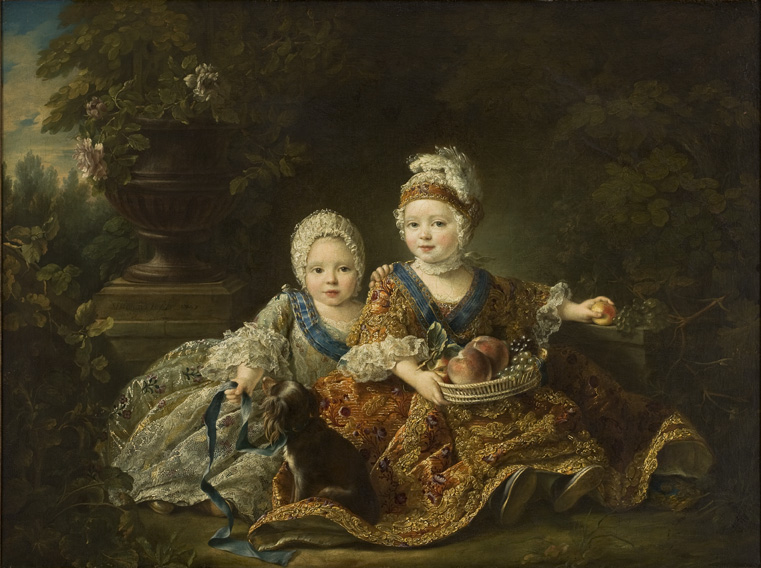
Louis-Auguste, Duc de Berry, the future Louis XVI, was born on August 23, 1754. August 25, the feast of St. Louis of France, was his name-day, and kept with special festivity after he became king in 1774. He was given the same exact baptismal name as his sainted ancestor. A few years ago on Catherine Delors' blog many interesting points were brought up in the comment box about the childhood traumas of Louis-Auguste and how those later affected his reactions to the events of the Revolution.
The tuberculosis would come back to haunt him, infecting his baby daughter Sophie and his oldest son. I think seeing Louis-Joseph die just as he had watched his older brother die long ago revived a lot of the childhood trauma. Death from tuberculosis is not pretty to watch. I am of the opinion that since the death of his oldest son, which coincided with the beginning of the Revolution in 1789, Louis XVI was suffering from clinical depression. In the past, he had acted with much more energy and decision. This is one of the reasons Marie-Antoinette had to become more involved in the political arena during the Revolution.
I think Louis struggled with "melancholy" at various times throughout his life, perhaps due to the childhood infection with tuberculosis. Louis was a man accustomed to strenuous exercise, especially hunting and riding, not to mention his labors as a locksmith. It is my belief that he needed the fresh air and the exertion for both his mental and physical health. With the regimen of exercise and his strictly adhered to routine he was able to keep melancholy from overwhelming him. He was deprived of much of his riding after October 1789 and it had a devastating effect upon his health and state of mind. Losing two of his children, his authority, his home, seeing his people and family suffer, and being deprived of the exercise and fresh air vital to his health, left him in a very bad condition.
If we consider the courage with which Louis XVI faced the worst moments of crisis, including his death, then he is to be admired, especially in the light of everything else. The Queen is to be admired as well, for she could have slipped out of the country with her surviving children and left Louis to his doom (there were many plans for her escape) but she refused to budge from Louis' side. She would not leave him to face the disasters alone.
A study was published entitled: “Closed but Not Protected: Excess
Deaths Among the Amish and Mennonites During the COVID-19 Pandemic.” It
appeared in the Journal of Religion and Health on June 11, 2021.
But I noticed serious flaws with the study and decided to challenge it. Among the problems I saw:
For their study population, the researchers grouped together a sample of Mennonite and Amish— even though Mennonites typically followed CDC guidelines while the Amish did not.
They excluded the largest Amish population in the US in Lancaster, the one that was actually the subject of the news reports.
And their study headline was at odds
with what their own data showed: even with their skewed sample, the
Amish fared no worse than the rest of the US for not having shut down.
After
examining the study, I tried to get further information to determine if
corrections were warranted. Among other things, I wanted to know:
Who were the peer reviewers who had signed off on a deeply flawed study?
What did the actually study notes and data show about why the most obvious study sample population was excluded?
What were some of the internal communications before and after publication?
With
scientific studies, all the data is supposed to be available for public
review and replication for obvious reasons. Studies aren’t considered
scientifically valid without this kind of transparency. And. in many
cases, we actually own the data because our tax money paid for the
study—or some of it— or pays the salaries of some of the people
involved.
But in this case, as with other with other times I’ve
pursued study information, the scientific establishment found a way to
exempt itself from the common sense oversight guidelines. (Read more.)
The 64-page report titled Wolves in White Coats: How Doctors and Hospitals Pushed and Profited from the Fraud of Gender Medicine reveals
that more than 225 hospitals and health systems made more than $50
MILLION in profit by building pediatric gender programs nationwide and
exploiting insurance billing codes. They used diagnoses like “endocrine
disorder, unspecified” and “precocious puberty” to get coverage to
perform these disgusting procedures in minors. In other words, they mutilated children for profit.
JD
VANCE: “It turns out that convincing vulnerable children to reject
their gender can create patients for life, earning hospitals tens of
thousands of dollars in additional revenue per child. For years now,
some hospitals and healthcare providers have been subjecting children to
horrific, experimental treatments in service of radical gender
ideologies.
Today, thanks to the Wolves in White Coats report
released by the HHS, we know why: profit. It turns out that convincing
vulnerable children to reject their gender can create patients for life,
earning hospitals tens of thousands of dollars in additional revenue
per child.
The report contains deeply disturbing allegations, and I
encourage every American and every parent, to read it. More than just
pushing these procedures on kids, hospitals and providers may have been
defrauding Medicaid and private insurers by using misleading or
fraudulent billing codes to get insurance to cover the costs.
People were getting wealthy by DOING these procedures on kids, LYING about medical implications, and collecting REWARDS!”
More
than 225 hospitals and health systems built pediatric gender programs.
Then they HID what they were doing to kids behind FALSE billing codes.
• $50 MILLION in puberty blockers were billed under E34.9 — “Endocrine Disorder, Unspecified”
• More than $11 MILLION found billed as “precocious puberty” for kids aged 13-17.
That’s not a paperwork error. That’s how you hide the abuse you inflicted on children.
These
providers created lifelong patients (hormones, surgeries, follow-up
care) - with average costs for such treatments far exceeding routine
pediatric care (tens of thousands to over $100,000 per patient in some
estimates cited). (Read more.)
Matchmaking was a common trade across early 19th-century England and
America, and matchmakers worked tirelessly to find new innovations in
match technology. Enter: white phosphorous. Though notoriously toxic, the chemical could be rendered
into a paste that could be lit on any surface with just a bit of
friction. These so-called “strike-anywhere” matches, also known as
lucifer matches, became incredibly popular — and the industry to create
them became equally profitable. Although factory owners knew that prolonged exposure to white
phosphorous could cause the necrosis of the human jaw, they continued to
use it anyway — and employed young women and girls in their factories
for 10 to 15-hour days. (Read more.)
For the whole story of the matchstick women, there's a little bit of background that's needed first — especially considering that today, it's nothing to strike a match (or flick a lighter) and make fire happen. It wasn't always that easy, though. For centuries, making fire was a pretty labor-intensive endeavor that, according to the Pitt Rivers Museum, required the use of flint and tinder. The idea of using a chemical reaction to kick-start a fire only really came about in the 17th century, and it wasn't until 1827 that John Walker accidentally invented something much, much better.
Walker had originally intended to become a surgeon, but it wasn't long into his study that he decided he wanted a life with considerably less blood in it. After opening his own chemist's shop in Stockton-on-Tees, he quickly realized that his background in chemistry and botanical studies gave him something of a unique perspective on things. In addition to making his own medicines (they were definitely different times), he also spent some of his spare time conducting various scientific experiments.
The breakthrough came when he was trying to develop a combustible paste. It would have been a big deal for the military, but when he scraped the stick he'd been using to stir his experimental paste with along his mantelpiece, he invented something that had a much wider appeal: the match. (Read more.)
Man, Wednesday was satisfying. You know Fauci was repeating to himself,
these doofuses won’t get anywhere near the real crime, I just have to
endure this, and the DC judiciary will prevent me going to jail. They
can needle at me but nothing will happen, I’m good, keep repeating the
noble lie, the noble lie, the noble lie. I am Dr. Science. I will be
remembered as the Great Man of the Trump Era. I’m good. Noble lie.
It’s who these people are and what they do. They believe themselves to
be our natural leaders and we the proles who are dumb as rocks and need
their guidance. “What is truth?” they say. It’s rhetorical. “Whatever I
say is truth is truth”, they answer. The Science is whatever I say it
is. White supremacy is the real evil. Men can have periods and babies,
the only thing holding back people of color is prejudice not incapacity
and culture. Climate change is catastrophic. We have to cap and pay and
pay and pay. The Sixth Great Extinction is happening before our eyes. No
other truth is allowed. Oh yeah, and whites are evil. White Anglo males
are the locus of pure evil.
Yeah, we believe nothing, buster. Nothing. ‘The Science’ is dead.
Trust in public institutions, especially health, is dead. We don’t
believe NOAA, we don’t believe the United Nations. We know the World
Economic Forum is filled with extractive demons. The rules-based order
was created with our money and is also garbage. All the institutions are
filled with unethical success-heads who would do anything to keep their
jobs. No one is noble. Everyone is corrupt. The Senate is corrupt. The
Judiciary is corrupt. The Democrats are corrupt. The Socials are fully
corrupt. The Science is whatever you need to prosecute your perverse
plans.
Luckily, there is the rough justice of nature. (Read more.)
On July 29th, Anthony Fauci sat in a Senate hearing room, surrounded
by lawyers, and invoked his Fifth Amendment right 111 times. He had been
subpoenaed by Senator Rand Paul, who two days earlier had released
1,141 pages of Fauci’s pandemic diaries. The man who spent three years
telling Americans that questioning him was questioning science declined
to answer questions about what he had done. That image is arresting on
its own. But it does not explain anything, and explanation is what has
been missing.
Consider the strange shape of the Fauci
controversy. For five years, investigators have accumulated an enormous
quantity of material. There are grant documents, emails, inspector
general findings, congressional depositions, failed predictions,
guidance that reversed itself without acknowledgment, and evidence of
pressure on dissenting scientists. What there has not been is a coherent
account of why. Critics have generally settled for one of two stories,
neither satisfying. Either Fauci was an ordinary bureaucrat who made
ordinary errors under pressure, which fails to explain the pattern in
those errors, or he was a cartoon villain executing a plot, which fails
because no document shows anyone planning anything of the kind. Jeffrey
Tucker has now supplied the missing piece, and it is worth understanding why his account deserves attention.
Tucker
is not a newcomer to this subject. He is the founder and president of
the Brownstone Institute, a research organization he established in 2021
specifically to document the consequences of pandemic policy. Before
that, he spent decades in economics publishing, working closely with
Murray Rothbard, running the Mises Institute’s book program, and writing
for the Epoch Times. In 2020, he helped organize the signing of the
Great Barrington Declaration at the American Institute for Economic
Research, which put him in the room with the scientists Fauci’s circle
set out to destroy. He has ten books to his name. More to the point, he
spent nearly a full week reading all 1,141 pages of the diaries before
writing about them, which is more than most commentators managed, and it
shows. (Read more.)
We recall the death of Charles X from cholera as told in the novel Madame Royale. From Geri Walton:
These 22 rules were then summed up by the author:
“By timely adoption of simple means such as these, Cholera or any
other epidemic will be made to lose its venom; so true is it that
‘internal sanatory arrangements, and not quarantine and sanatory lines,
are the safeguards of nations.'”
While Victorians may have thought this good advice, the bacterium
responsible for Cholera was not isolated until 1854 by an Italian
anatomist. Even then its exact nature was still unknown. Ultimately,
attempts at understanding cholera fell upon the shoulders of a German
physician and pioneering microbiologist named Robert Koch. Koch
determined in 1884 that the causative agent of cholera was Vibrio cholerae.
Despite his discovery and despite Cholera inoculations for humans
occurring in 1885 and a Cholera vaccine being developed in July of 1892,
Cholera pandemics continued to exist into the early twentieth century. (Read more.)
Recent polls show a clear shift toward healthier eating habits among Americans.
According to one 2025 survey, more people (57%) followed a specific
diet or eating pattern in the past year — up from just 36% in 2018 —
with high-protein diets leading the way at 23% (up from 4% in 2018).
Americans
are actively trying to eat more protein (70%) and fiber, while defining
“healthy food” by traits like “fresh,” “low in sugar,” “minimal
processing,” and “limited artificial ingredients.”
They’re also rating their own diets healthier than in 2020 and seeking benefits like more energy.
While
dramatic overnight bans haven’t materialized, noticeable changes are
appearing on store shelves, in school cafeterias, and even at some
restaurants—mostly through voluntary industry moves rather than strict
mandates. (Read more.)
The Centers for Disease Control and Prevention (CDC) is investigating
a multistate outbreak of Cyclospora, a microscopic parasite that has
sickened people across the United States.
Federal health officials
have not yet identified the source of the outbreak, though previous
investigations have frequently linked Cyclospora infections to
contaminated fresh herbs, leafy greens, berries, and other produce.
While
investigators continue searching for the source, the illness caused by
the parasite can produce severe gastrointestinal symptoms.
According
to the CDC, Cyclospora spreads through food or water contaminated with
human feces and causes the intestinal illness cyclosporiasis. Symptoms
include watery diarrhea, abdominal cramps, nausea, fatigue, loss of
appetite, low-grade fever, and vomiting. The agency notes that many
patients experience frequent—and sometimes explosive—bowel movements.
According to the CDC’s latest published figures, 145 cases have been identified across 17 states.
New
York, Texas, Illinois, and Michigan have reported the highest number of
infections. Additional cases have been reported in Alaska, Colorado,
Connecticut, Florida, Georgia, Louisiana, Massachusetts, New Jersey,
North Carolina, Ohio, Pennsylvania, Tennessee, Virginia, and Wisconsin.
State
health departments are now reporting additional cases beyond the CDC’s
latest national update, suggesting the outbreak continues to expand.
Michigan
health officials say they are investigating a large and growing
outbreak, with more than 300 cases reported since June 22—far above the
state’s typical annual total of roughly 50 cases.
New
York has also reported elevated activity, with more than 100 cases
identified since May 1. Officials in New York City say reported
infections during the first half of the year have roughly doubled
compared to the same period in 2025.
Marie-Antoinette "en gaulle" by Elisabeth Vigée-Lebrun
Generalissima: A Novel of Henrietta Maria
Book Two in the "Henrietta of France Trilogy"
#1 in Kindle Biographies of Royalty!
Marie-Antoinette, Daughter of the Caesars: Her Life, Her Times, Her Legacy
An Audible Bestseller
Marie-Antoinette, Daughter of the Caesars: Her Life, Her Times, Her Legacy
An Amazon Bestseller
Trianon: A Novel of Royal France
My Queen, My Love: A Novel of Henrietta Maria
Available from Amazon
The Saga of Marie-Antoinette's daughter, Marie-Thérèse of France
A Novel of the Restoration
In Kirkus Top 20 for 2014! And #1 in Kindle Historical Mystery, Thriller & Suspense Fiction
"In every Eden, there dwells a serpent . . . ."
#1 in Kindle History of France!
The Night's Dark Shade: A Novel of the Cathars
Join me on Facebook!
Elena Maria Vidal Author Page
Join me on X!
@emvidal
Visit My Tumblr!
East of the Sun, West of the Moon
St. Teresa of Avila, pray for us!
"...Bud forth as the rose planted by the brooks of waters. Give ye a sweet odor as frankincense. Send forth flowers, as the lily...and bring forth leaves in grace, and praise with canticles, and bless the Lord in his works." —Ecclesiasticus 39:17-19
The fact that a link is provided here in no way constitutes an endorsement of everything on the other end of the link.
Comments Policy
Comments are moderated. If a comment is not published, it may be due to a technical error. At any rate, do not take offense; it is nothing personal. Slanderous comments will not be published. Anonymity may be tolerated, but politeness is required.
I would like to respond to every comment but my schedule renders it impossible to do so. Please know that I appreciate those who take the time to share their thoughts.