Showing posts with label The Fersen Myth. Show all posts

Friday, March 13, 2026

Pets in Prison

Madame Royale in the Garden of the Temple Prison
From History Today:
The humanity with which Richard and his wife had behaved towards the queen during her first month at the Conciergerie, and the suspicion of their having collaborated in the Carnation Affair, had led to their being suspended. By the time they were reinstated in November 1793, Made Antoinette had perished on the guillotine. Given their previous acts of kindness they may well have taken pity on her pug, a breed to which she was famously attached. Whether this dog was the original Thisbee or the pet of another victim which she had adopted is impossible to gage.
The reticence of Madame Royale on the subject of her mother's dog at the Temple also applies to her own spaniel, Mignon, which her brother, the Dauphin, gave her before being finally separated from his sister on October 7th, 1793. In all probability he retained some of his earlier ambivalence towards dogs. The existence of Mignon is well documented: the eye-witness Hue, refers to 'a dog which was long the sole witness of her sorrows', and the dog features in many engravings of Madame Royale after her release on December 19th, 1795. When Mignon died in 1801, having fallen from a balcony of the Poniatowski Palace in Warsaw, Louis XVIII wrote to the poet Jacques Delille, then in England, asking for some lines to inscribe on the dog's tomb. In Malheur et Pitie, Delille incorporated an elegy to Mignon:
Be then the subject and the honour of my poems, Oh you! who consoling your royal mistress, Until your last breath proved to her your kindness, Who beguiled her misfortunes, enlivened her prison; Oh of the last farewell of a brother, unique and tragic gift ...
 If the Dauphin was wary of dogs, he was unequivocal in his liking for birds. At the Tuileries in 1792 he took care of the aviary and of the ducks in the pond, he also raised rabbits. At the Temple in 1795, in response to the boy's entreaties, one of the towers was transformed into a pigeonry and his gaoler, Simon, had a birdcage built in one of the window-recesses, even removing a plank from the hoarded-up casement-window 'in order to provide the birds with light'. Bills for supplying 'bird-seed for the little Capet's pigeons' are still in evidence. The Commune baulked, how- ever, when presented with a demand for 300 livres from a clock-maker, Bourdier, whom Simon had commissioned to repair a very beautiful bird- cage which he had found in the furniture-repository of the Prince de Conti, the former proprietor of the Temple. Simon had undertaken to pay this sum out of his own pocket but, by the time the work was completed, he too had been guillotined. (Read entire post.)
Share

Wednesday, May 28, 2025

Deciphering the Queen's Letters

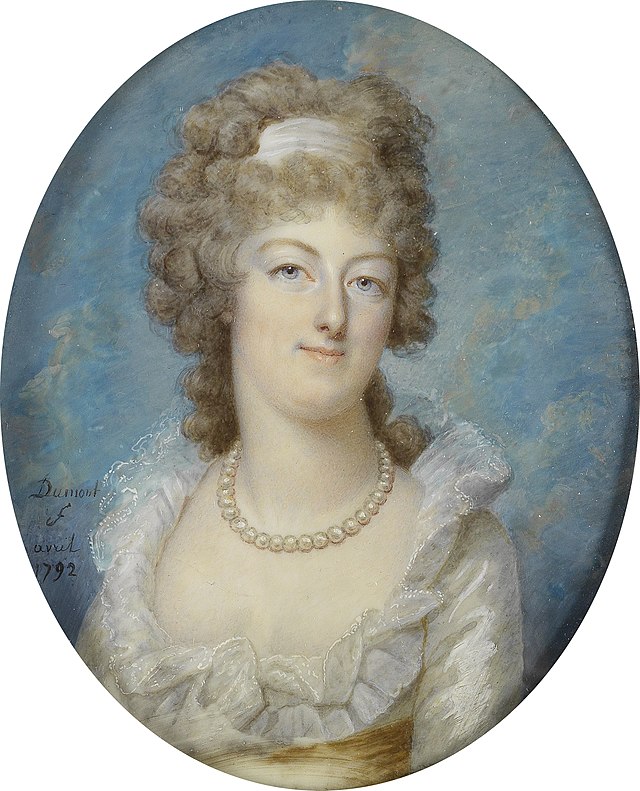
Russian portrait miniature of Marie-Antoinette
Fabien Pottier decrypts a letter of Marie-Antoinette
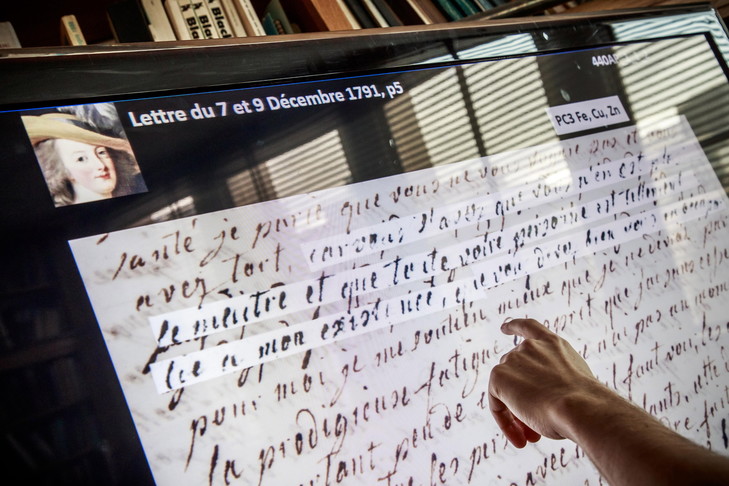
 A few scribbled passages in eight of Marie-Antoinette's letters to Count Axel von Fersen have been recently decrypted with the help of x-rays. Let us look at a typical news article on the topic and then examine it from a historical point of view. From Malay Mail:
Love letters between the ill-fated French queen Marie-Antoinette and her lover, which contain key passages rendered illegible by censor marks, have been deciphered using new techniques, the French National Archives said yesterday. The revealed passages are further confirmation of the steamy relationship between Marie-Antoinette and Count de Fersen, who were writing to each other two years after the 1789 French revolution. At the time, the queen and King Louis XVI were living under surveillance in the Parisian Tuileries palace and had just failed to escape their house arrest. Much of the lovers' correspondence had already been brought to light, but redacted lines remained illegible. Until now.

“For the first time we can read Fersen's writing using unambiguous sentences on his feelings for the queen, which had been carefully hidden,” said the REX project's leaders in a statement. “Marie-Antoinette and Fersen express themselves using the terminology of love, even if the majority of the content of the letters is political,” the statement added.

The 95-day project used a two-year-old scanning technique — the X-ray fluorescence system (XRS) — to analyse the composition of the inks used.

The principal conclusion of the REX project is less about sensational revelations on the relationship between Marie-Antoinette and Fersen, and more about the expression of feelings of hope, worry, confidence and terror, in a particular context of forced separation and imprisonment,” said the statement. Similarities between the ink used by the count and the ink of redaction suggest Fersen may have censored his own letters. Out of the 15 redacted letters written by Marie-Antoinette and Fersen, only the content of 8 was brought to light. For the others, the ink used to write and to censor was the same, rendering the task of revealing the redacted content impossible. (Read more.) [Bold text is mine.]
The first paragraph is full of falsehoods. Fersen has not been proven to have been Marie-Antoinette's "lover" in the full sense of the word, and the letters are not "steamy" but overwhelmingly political. It is indeed irresponsible and misleading to refer to them as "lovers." The Swedish nobleman was in the service of his sovereign King Gustavus III and Count Fersen’s presence at the French court needs to be seen in the light of that capacity. The Swedish King was a devoted friend of Louis XVI and Marie-Antoinette and Gustavus, even more than the Queen’s Austrian relatives, worked to aid the King and Queen of France in their time of trouble. Fersen was the go-between in the various top secret plans to help Louis XVI regain control of his kingdom and escape from the clutches of his political enemies. In fact, by late 1791, when the letters in question were written, Fersen had already helped the Royal Family escape, only to have them disastrously recaptured at Varennes in June of the same year. Fersen saw his failure as not only endangering the lives of his dear friends, but also the destruction of what would have been the glory of his career, to have been the one responsible for the rescue of the French royal family.

Although Marie-Antoinette might have been in love with Count Axel von Fersen at some point, there is no evidence of an extramarital affair, and to over-speculate on the Queen's personal feelings is to violate the sanctuary of the human heart. Whatever her sentiments, they did not interfere with her duties as wife, mother, and queen. Adultery for a queen of France was high treason and if any of her many enemies at court discovered such a situation, had it existed, Louis XVI would have been forced to take her children away from her and banish her to a convent. Even the most basic knowledge of her temperament suggests that she was devoted to her children and would never have risked being separated from them. What people need to understand is that the Queen stood in the way of those who wanted to destroy the Altar and the Throne in France, so every aspect of her life, every relationship, her friendships, her marriage, her motherhood, were smeared by those who wished to destroy her reputation and her influence. Marie-Antoinette stood in the way of the triumph of the Revolution and so she had to be obliterated. Fersen was scrupulous in excising anything in his correspondence with her that might be in the least compromising. But many of the redacted lines of the Queen's letters, those which are in her own hand, have been found to be of the same ink as the originals and therefore scribbled out by herself, as people often had to do when writing by hand and without whiteout.

 In her determination to save the lives of her family, restore the royal authority, and preserve the throne for her son, Marie-Antoinette wrote hundreds of letters, not only to Count Fersen, but to her relatives in Austria and Italy, to Comte Mercy the Austrian ambassador, to the Vatican, to fellow monarchs such as the Queens of Spain and Portugal, and to moderate revolutionaries such as Barnave. One must remember that from any careful study of her correspondence it appears that the Queen was balancing precipitously between opposing parties as she attempted to manipulate Fersen, Barnave, and Mercy into doing what she needed them to do. Apparently there are huge portions of the Queen's correspondence missing and so people tend to fill in the gaps with romance. They forget that the first person on her mind was not Axel von Fersen but the Dauphin Louis-Charles and saving the throne for him. 

Many of the letters were written in cipher, that is, in a secret code, which could be broken only by using certain key words. The complexity of the ciphers should destroy forever the myth that Marie-Antoinette was not intelligent; indeed, she must have been clever in order to adroitly master so many puzzles. Writing in code could be challenging. As Marie Antoinette wrote to the Comte de Provence: "At length I have succeeded in deciphering your letter, my dear Brother, but it was not without difficulty. There were so many mistakes [in the use of the cipher]. Still, it is not surprising, seeing that you are a beginner and that your letter was a long one...." (O. G. Heidenstam, ed. The Letters of Marie Antoinette, Fersen and Barnave, 1926, p.51, reprint at Google) Sometimes white or invisible ink was also used, about which the Queen complained, saying: "Little accustomed to writing in this manner, my writing will be indecipherable." (Marie-Antoinette to Mercy, 14 May 1791, Feuillet de Conches1, Vol.2, p.54)

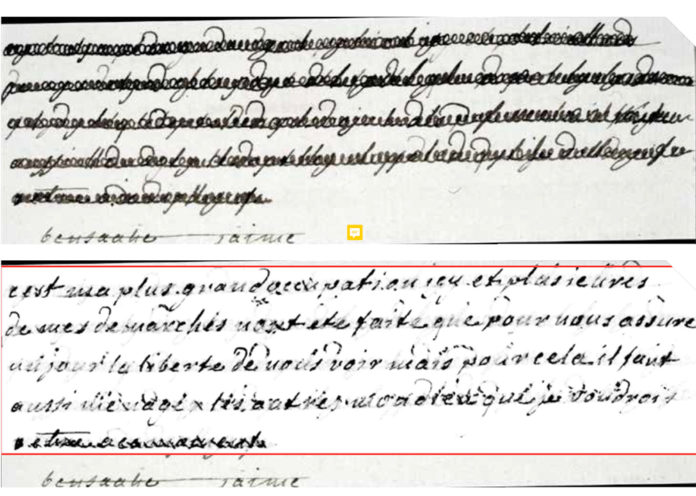
The Queen burned most of the letters she received but many of those she sent to others have been preserved. The relatives of Axel von Fersen  saved some original manuscripts of the letters from the Queen to Fersen, although not always in her hand-writing but in Fersen's after he had decoded it. Below is a letter of October 19, 1791 in the Queen's hand with parts scribbled out by Fersen. Newly deciphered, in English it roughly says: "It is my biggest occupation here and several endeavors have been made only to ensure the freedom to see us but for that it is also necessary to spare the others my God I wish I was right now." It is impossible to discern exactly what she means without the context of the entire letter, which I hope will be available when the researchers publish their book. One can only guess that it has to do with the conditions at the Tuileries where the Royal Family, and especially the Queen, were constantly watched by guards.
The deciphered text: «cest ma plus grand occupation icy et plusieures de mes demarches nont ete faite que pour nous assurer la liberte de nous voir mais pour cela il faut aussi menager les autres mon dieu que je voudrois etre a ce moment»

 The words are those of a woman in danger writing to the only person capable of rescuing her and her family, as he had done before but failed. As Isabelle Aristide-Hastir, archivist-paleographer, general curator of heritage at the National Archives, has commented:
You see, we are not at all in erotic vocabulary. Not at all. It is not simply because they are in different social conditions, she is the queen and he is a Swedish count, because we can see from their letters, even if there is a lot of respect one towards the other, that they are extremely united in thoughts, that is to say that they exchange in a very fluid way and even if they use the vocabulary of the time, of the 18th century, which is all quite charming, there is no stiffness in their correspondence. (Translated by Tea at Trianon.)
 It must be remembered that Marie-Antoinette had a passionate and exaggerated manner of writing to all of her friends and family. To her friend Madame de Polignac her words were as loving as any to Fersen, calling her "mon cher coeur" that is "my dear heart" and saying such things as "je vous embrasse très fort" which means "I kiss you hard." Such was her manner of expression with those of whom she was fond. It must also be kept in mind that Marie-Antoinette absolutely needed the help for the royal cause that only Fersen could give in the outside world; it should not be surprising if her words to him were especially tender. As a friend wrote to me: "It is the vocabulary of devotion, not of eroticism....as if they were heroes of chivalry...To me, it is the proof they never were actual lovers." I agree.

It should perhaps be pointed out that around the same time as Fersen was writing to the Queen he was having a passionate affair with an Italian lady named Eleonore Sullivan. Madame Sullivan was married to an Irishman but as of 1790 was the mistress of a Scotsman named Quintin Crawford. She was kept by Monsieur Crawford in an elegant house in Paris, where she had a hideaway for Fersen in the attic. It should also be remembered that after the deaths of Louis XVI and Marie-Antoinette, Fersen wrote to their orphaned daughter Marie-Thérèse Charlotte of France asking for recompense of the money spent on the aborted escape attempt in June 1791. Chivalry obviously had its limits as far as Fersen was concerned.
Share

Tuesday, April 22, 2025

Fake News and Salacious Rumors at Versailles

 
I am disappointed to hear that the PBS series Marie Antoinette depicts Count Fersen as the true father of the Queen's two youngest children. A book by Nancy Goldstone which came out a few years ago is filled with the same lies that the revolutionaries used to destroy her reputation. I so enjoyed Goldstone's books on Elizabeth Stuart and Marguerite de Valois. But to say that Marie-Antoinette's youngest children were illegitimate is utterly contrary to what we know about the Queen. And Louis XVI may have been high-functioning on the Asperger's/autism spectrum but that did not keep him from loving his wife and fathering children. So many old fallacies resurrected. What a shame! From Caroline Weber at The New York Times:

In her new biography, “In the Shadow of the Empress,” Nancy Goldstone seeks to tell “the story of a family of immensely strong women, beginning with Marie Antoinette’s formidable mother, the empress Maria Theresa … and three of her daughters, of whom the notorious queen of France was but the youngest.” (The other two are Queen Maria Carolina of Naples and Marie Christine, Duchess of Techsen.) Goldstone, the author of books about Catherine de Medici and Mary, Queen of Scots, is drawn to female royals who defy “tradition and stereotype,” and on that count her new subjects have much to offer. Regrettably, her book does not.

The problem starts with the “selected genealogy” that opens the book, where Goldstone lists the two youngest of Marie Antoinette and Louis XVI’s four children, Louis-Charles (later Louis XVII) and Sophie, as the illegitimate offspring of Count Axel von Fersen, a Swedish officer whom the queen undoubtedly loved, but with whom, as the scholar Susan Lanser wrote in 2003, “no one yet … has been able to establish whether she had a consummated relationship.” Indeed, historians and biographers generally agree that the evidentiary record cannot answer this question conclusively.

On the one hand, speculation about the nature of the pair’s involvement was rife at Versailles, where scabrous rumor-mongering — especially about the ladies of the court — had flourished for more than a century. On the other, Marie Antoinette’s rank subjected her to the round-the-clock company and scrutiny of countless attendants, domestics and (during the French Revolution) guards. So closely monitored was her existence that of her 15-year friendship with Fersen his own diary — which Goldstone includes in her bibliography, and which Stefan Zweig describes in his influential study of Marie Antoinette as “a record of incomparable value for those who love ‘hard facts’” — identifies just one specific date on which the pair may have spent the night alone together. That hypothetical tryst occurred in February 1792, nearly seven years after Louis-Charles’s birth and five and a half years after Sophie’s. Even so, Goldstone justifies her claim about the two children’s paternity by asserting without qualification that the “Nordic dreamboat” was “the queen’s lover” and “stayed with her many nights.” (Read more.)

I cannot even begin to say how ridiculous the idea of  a 1792 affair is, because the Queen was under house arrest at the Tuileries, with guards outside the door and coming into her rooms at all time of the day and night. I have written more about this HERE, HERE, and HERE. And in my bio of Marie-Antoinette, HERE.


Marie-Josèphe de Saxe, Dauphine of France, wife of Louis the Dauphin, was the mother of Louis XVI. It is said that her little grandson, the tragic Louis XVII, resembled her a great deal, as can be seen in the portrait below. It gives further lie to the ridiculous rumor that Count Axel von Fersen fathered Louis-Charles (Louis XVII).

Share

Friday, August 9, 2024

Marie-Antoinette's Gentlemen Friends

Charles Joseph de Ligne

 Two past broadcasts from Tea at Trianon Radio, Part 1 and Part 2.

Share

Thursday, August 18, 2022

Madame Sullivan


Eleonore Sullivan is the lady Axel von Fersen was involved with when he was supposedly exchanging "love letters" with Marie-Antoinette. She is the "El" or "elle" referred to in his letters to his sister. Mrs. Sullivan did play a part in the Royal Family's aborted escape attempt. More information at Le Boudoir. And HERE and HERE. Share

Monday, October 4, 2021

Redacted


None of this is new (see older post, HERE.) Marie-Antoinette wrote in a loving way to ALL her friends, male and female, and used terms that now we would consider strictly romantic. Henrietta Maria wrote in the same manner, one hundred and fifty years earlier! Our world has grown so cold that we see affection expressed between good friends as a sign of a romantic liaison. No doubt it was Count Fersen's nephew who crossed out certain passages because he did not want them to be misinterpreted, as they are being now. Fersen usually kept any scrap of paper that was evidence of the Queen's affection for him, and was not shy about letting people think they had been more than friends. As he grew older, he became more haunted by her death and more desperate to prove that she had really loved him. And there are people today who are as desperate to prove it as Fersen was. From Ars Technica:

Most people associate Marie Antoinette with the affair of the diamond necklace, "Let them eat cake!" and the onset of the French Revolution. The French queen and her royal husband, Louis XVI, were guillotined in 1793, 10 months apart. But her colorful life also included a possible clandestine love affair with a Swedish count, and historians have been diligently working to decipher the surviving letters between the two for years.

The letters were cyphered, as was the custom at the time for politically sensitive correspondence. Fifteen of the surviving letters in the collection of the French National Archives also have significant portions redacted, amounting to some 108 illegible lines in all. Thanks to cutting-edge x-ray imaging techniques and data processing methods, the redacted portions of eight of those letters have finally been revealed, according to a new paper published in the journal Science Advances. The research is a collaboration between the National Archives, the French Museum of Natural History, and the Fondation de France.

Marie Antoinette and Count Hans Axel von Fersen of Sweden met as teenagers at a masquerade ball, when she was still Dauphine of France, and he became a frequent visitor to Versailles thereafter. Her royal husband famously proved unable to consummate the marriage for the first seven years.

Some speculated that Louis XVI had a medical condition that made it difficult to perform, but the queen's brother, Holy Roman Emperor Joseph II, concluded during a visit that it was primarily due to the king's inexperience and the queen's lack of interest.  He described the pair as "complete bumblers".... Eventually the couple figured things out and Marie Antoinette went on to have four children, only one of whom lived to adulthood. But by then rumors were already swirling about her supposed infidelity, and von Fersen was among her rumored lovers. (Other candidates included the Duc d'Orleans and the Comte d'Artois.) They were certainly quite close. In 1780 von Fersen requested a transfer to America, as an aide-de-camp to General Rochambeau, and fought valiantly at the Siege of Yorktown. Eventually he returned to France as a Swedish ambassador to Versailles, and became part of the queen's private inner circle. (Read more.)

There are so many falsehoods in the above article, all I can do is ask people to please read my book, HERE. Louis XVI had no medical condition, as is evident from the doctor reports. The "fault" was with Antoinette whose immaturity made her physically and emotionally unable to be a wife until she grew older. Please read my past posts about the letters, HERE, HERE, and HERE. As the scientists themselves said of the Queen and Count Fersen: 

To read under the censorship does not make it possible to know the truth about the nature of their feelings as the interpretation of texts is always questionable...But for the historian, this correspondence remains a precious testimony of a troubled time, and of the way in which the tragic political events influence the transformation of the emotions and the exacerbation of the feelings visible, in particular in the personal writings here in these redaction sections.

More about the x-rays, HERE, HERE, and HERE.

Share

Friday, July 6, 2018

"Petit Trianon and Marie-Antoinette: Representation, Interpretation, Perception"

Here is the thesis "Petit Trianon and Marie-Antoinette: Representation, Interpretation, Perception" by Dr. Denise Maior-Barron for the University of Plymouth (U.K) in which I have the honor of being mentioned. Denise wrote to me years ago with questions concerning Marie-Antoinette and we had a wonderful exchange of ideas. She has a book coming out this month, HERE. Her paper is a must-read for any serious student of the French Revolution and especially of Louis XVI and Marie-Antoinette. To quote:
The thesis examines Petit Trianon and Marie Antoinette in the context of four major narratives that are relevant to the contemporary heritage interpretation of the Estate of Marie-Antoinette as well as its perception by the majority of its visitors. Fieldwork research has detected these to be the historical, cinematic, architectural and heritage narratives of Petit Trianon and Marie Antoinette. The Estate is part of the Château de Versailles UNESCO heritage site, and has recently been subjected to a restoration and renaming as the Estate of Marie-Antoinette, designed to strengthen its identity as home to the last Queen of France.

[...]

UNESCO inscribed the heritage site of the Palace of Versailles in 1979. The second most visited museum in the world after the Louvre (UNWTO 2013 Report), Versailles remains a symbol of the French Monarchy, mainly represented by two historical characters: Louis XIV or the Sun King, the founder of the Royal Court of Versailles since the end of the 17th century, and Marie-Antoinette, the last Queen of France who reigned at the end of the 18th century. Despite the fact that both figures belong to the Ancien Régime, the first is generally regarded in a positive light, whereas the latter is renowned as iniquitous. This ubiquitous cliché, deeply rooted in French collective memory, was the initial instigator to the present analysis which attempts to dispel many myths surrounding this  perception, by unpacking the narrative of Petit Trianon, the residence identified as the home par excellence to Marie Antoinette.
 

The controversy surrounding the historical character of the last Queen of France provided motivation for the research project. To fulfill the first aim of the analysis (see A1) - the thesis needs to analyse the representations of Marie-Antoinette (O1). In order to achieve this on a practical level, all collected data are filtered via assessment, in the final thesis chapters (Chapters 7, 8), against the impact of each of the four investigated narratives on the majority of visitors at Petit Trianon (O2), along with the emergent images of Marie Antoinette resulting in the commodification of this historical figure. The results of the assessment establish the ranked prevalence of these main narratives within the perception of the majority of visitors at Petit Trianon, enabling not only the detection of the range of contemporary images associated with Marie Antoinette (A1) but also an explanation for the existence of these images, which supports the second aim of the thesis and its objectives (see A2; O3; O4). (Read more.)
More HERE. Share

Monday, January 18, 2016

Those Ridiculous Stories

Anna Gibson brilliantly continues to take on the new claims of Evelyn Farr about Marie-Antoinette and Fersen. The words exchanged have to be seen in the context of the situation in which the Queen found herself. To quote:
Claims #3-4: '‘I love you madly" is something you don't say to a good friend and implies a physical relationship

The letter of January 4th, 1792 includes this phrase, which was later covered with ink: "I am going to close, but not without telling you, my dear and very tender friend, that I love you madly and never, ever could I exist moment without adoring you." (Or in French: Je vais finire, non pas sans vous dire mon bien cher et tendre ami que je vous aime a la folie et que jamais jamais je ne peu être un moment sans vous adorer.)

The phrase was covered with ink sometime after it was written. There is still debate about who, exactly, redacted these phrases; there is currently still work being done by researchers at the French archives regarding the blotted out phrases in Marie Antoinette's letters, and I do hope that they will be able to date the 'redacted' ink which may help in coming closer to discovering who actually covered them. Given the difference in copper concentration between the ink used to write the letters and the ink used to cover it, it is unlikely that Marie Antoinette herself covered the phrase.

To continue: Telegraph quotes Farr as saying: "‘I love you madly’ is a very strong phrase – you don’t say that to a good friend. It’s really telling; it implies a physical relationship. They were lovers."

There are actually two claims being made here: one, that "I love you madly" would not have been used for a good friend but only to a lover; two, that it implies a physical relationship existed between those two people.

In French, what Marie Antoinette wrote to Fersen was that she loved him 'à la folie.' This exact phrase (loving someone à la folie) was used by the queen several years earlier, when talking about her love for her son Louis-Charles, in a letter to the duchesse de 'Polignac dated December 1789: "The Chou d'amour is charming, and I love him madly." Madame Elisabeth, her sister-in-law, used that same phrase in letters describing the sister of Mirabeau's love for her brother: "I pity his unfortunate sister, who is very pious and loved him madly."

From these examples, we see that loving someone "madly" was not a phrasing which existed solely for lovers in the 18th century. And if "I love you madly" must imply physical relationship, then from these two examples--well, you get the idea.

Critically, the claim that "I love you madly" is for lovers only and that it implies a physical relationship does not hold up when you compare it to other contemporary letters from that time period. The claim also wavers when you take into consideration Marie Antoinette's personal style of writing.  "I love you madly" does not differ very much from phrases Marie Antoinette regularly wrote to people she genuinely adored.

The intensity with which Marie Antoinette wrote to people she considered her cherished companions cannot be overstated.  Her letters to these few--people she knew from childhood, people she brought into her intimate 'Trianon' circle, and those who remained loyal to her during the Revolution--are contain such gushing phrases as "I kiss you tenderly," "It would be a great pleasure for me to kiss you," "My feelings for you are tender and grow every day," "my tender heart," "my dear heart," "I kiss you with all my heart," "I embrace you with all my soul," "I will never cease to love you," "I kiss you hard," and other flourishes that would easily be considered romantic today. Marie Antoinette wrote to Yolande de Polignac saying that "nothing but death could make me stop loving you."

Could lovers have used the phrase? Of course. But in the context of Marie Antoinette and Fersen, it's not some outlier phrasing that is totally incongruous with Marie Antoinette's normal style. It shows that she considered him an intimate, loved companion who wasn't just loyal to her but was, by all her accounts, fighting for her life and the life of her family. If there was any point where Marie Antoinette was going to use her trademark tender, romantic phrases, the years where Fersen was an almost sole outside devotee when she was living in a country that was increasingly hostile to her is definitely that point.

And remember: "I love you madly" was not hidden by the queen. It was written plainly in her letter to Fersen, as were her romantic phrases in letters to her other cherished loved ones.

If this was a phrase reserved for lovers, it is extremely unlikely that Marie Antoinette would ever risk everything (her security, the future of her children, the stability of the monarchy, her reputation to the European powers, to name a few things) by so casually revealing something that was considered treasonous. So what does the phrase mean? The answer is genuinely simple: Marie Antoinette wrote passionately, romantically, gushingly to people she considered intimate friends. Before and after the revolution. And she knew how to use that flattering language to keep people on her side, when she needed to do so, and she definitely needed to bring Fersen back around after his recent criticisms and fears, which I will get more into below.

The role that Fersen played in the last years of Marie Antoinette's life was an intense one, that in all likelihood bonded them emotionally in a way that is difficult to imagine today. He was, in the queen's estimation, working to save their lives. He was one of the few people who was willing to take an active role in saving the royal family and the crown, beyond vague promises by foreign rulers or the dangerous behavior of the emigrated Artois and Provence elsewhere in Europe or the royal family's distrust of moderates who claimed to be working in their favor. Is it any wonder that Marie Antoinette wrote to him as she did other intimates like Polignac, so favored that she had to flee France? In my estimation, no.

As with the use of gossip as evidence, using this phrase and similar phrases as evidence that the two were physical lovers does not stand up to an extrapolating critical view. Marie Antoinette wrote this way--many women of that time period wrote this way.

If "I love you madly" proves that Marie Antoinette and Axel Fersen were physical lovers, then it stands to reason that "Nothing but death can make me stop loving you" should be used as proof that Marie Antoinette and Yolande de Polignac were also physical lovers. Yet once again, I doubt historians would claim that because the Queen wrote romantically to Polignac, they were lovers, physical or otherwise, due to the context of Marie Antoinette's personality and the general romantic writing style of her contemporaries.

The context of January 4th, 1792 

The context of the letter of January 1792 is important.

This was, politically speaking, a very tense time for Europe, France, and of course Marie Antoinette and Louis XVI. For the last several months, Marie Antoinette and Louis XVI had been embarking on course of action that none of their allies--Fersen included--had really approved. That course of action was to play both sides: ally themselves with Barnave and other constitutionals, all the while keeping up their correspondence with Fersen, Craufurd, Breteuil, and various European monarchs. In September of 1791, Louis XVI had also accepted the Constitution and the royal couple decided to outwardly support the Constitution, not just to appease the rumblings in the government but to, as Louis XVI put it, show the people that the Constitution could not work by following it to the letter.

Abroad, this had the effect of sending the emigres, the king's brothers and European monarchs into a war-minded frenzy. The king's brothers were stirring the pot by spear-heading the raising of emigre-based armies with the intention of sending those armies into France to take back control over the country.

On December 14th, 1791, Louis XVI--without consulting or notifying Fersen and the others in contact with the queen--addressed the Assembly and declared that any European powers which did not disband emigre-based troops by January 15th, 1792 would be considered enemies of France. Furthermore, he declared that the wrote to Leopold II and informed him that he was fully prepared to declare war on Austria if those troops were not disbanded.

Eight days later, Fersen wrote Marie Antoinette a lengthy letter which contained what the queen later referred to as 'scoldings.' In this letter, Fersen admonished the queen for not being openly affectionate towards people he was trying to get on their side. M. de Toulangeon was "hurt by the coldness with which his good intentions were received," which Fersen followed up with: "Do you not think that, without too highly distinguishing them, it would be well to show persons of good-feeling and good-will certain marks of kindness?" He wrote in a similar way regarding the queen's unease about attempting to win over the Duke of Brunswick: "[He] is a man of intelligence, talents, and a great ambition. Do you not think it is important to win him?"

Yet the 'scoldings' in this letter did not stop there. Fersen then wrote that he was astounded and grieved by the king's unsupported decision, and that he now saw only "embarrassment for you, additional dangers, and the bad effect that this will have in Europe." Fersen went on to suggest that Marie Antoinette should not have acted without consulting Fersen and Breteuil, and that by doing so she invited disastrous consequences.

He also questioned the queen's confidence in him, particularly in light of his own gushing devotion: "I have the vanity to think that my past conduct ought to take you from the possibility of doubting mine; it ought, rather, to convince you of their purity, and of the zeal, attachment, and devotion I have consecrated to your service. My sole desire is to serve you; my sweetest recompense, the only one to which I aspire, is the glory of succeeding in that--I want no other. I should be but too much rewarded if I could know you were happy and think that I had been happy enough to have contributed to it." 

Is it any wonder that Marie Antoinette, who had excelled at charming people from an early age, knew how to reassure Fersen--who, by the tone of this letter and those leading up to it, was becoming increasingly critical of her and wary of her decisions? Fersen himself said it best: "Do you not think that it would be well to show persons of good-feeling and good-will certain marks of kindness?" Fersen wanted reassurance that the queen trusted him, that she accepted his devotion, and that she considered his confidence worthy of respect. And she did just that, as she had throughout the last year to this years-long friend who she saw as fighting for the salvation of her family and, from her view, for her country. (Read more.)
Share

Monday, January 4, 2016

"Findings"

I agree with Anna about the alleged "findings" concerning Marie-Antoinette and Count von Fersen. To quote:
I debated even posting about it since I don’t feel like wading into potential arguments but this is just getting ridiculous....I honestly can’t believe that someone, especially someone who calls themselves a historian, is saying a diplomat spreading gossip is evidence that two of Louis XVI’s children are actually Fersen’s. Would she also argue that Marie Therese must be Artois’ child, since there were rumors circulating after her birth that said so? I mean, someone wrote it–therefore it’s damning evidence!
Anna is absolutely right. Since when did court "gossip" become proof of anything? There is plenty of evidence that the Queen was a faithful wife but people keep insisting upon believing a fairy tale. Also, I have seen the so-called "love letters" which allegedly have secret romantic messages embedded in them: the interpretations seem spurious to me. But even if love messages are there, none of it is proof that Marie-Antoinette was Fersen's mistress and that she bore him children. I will go into it more in my new book which hopefully will be out in about a month. Such romantic nonsense is a waste of time when there are so many more important things to think about.

For those interested, HERE is my talk on the subject and HERE. Share

Friday, September 18, 2015

Count Hans Axel von Fersen: A Short Bio

Although I do not believe that Fersen had an affair with Marie-Antoinette, which I have written and spoken about at length, he was devoted to the Queen and to her husband Louis XVI, and was one of the faithful friends who worked hard to rescue the Royal Family. Madame Gilflurt has a post about the Count's remarkable life. To quote:
Fersen remained fiercely loyal to Marie Antoinette and her family, remaining at court as the clouds of revolution gathered. With the worsening situation he began assisting with plans to get the family to safety, playing an important role in the ill-fated flight to Varennes. It was Fersen who commissioned the carriage that would carry the Marie Antoinette, Louis and their children and he even travelled with them on part of their unsuccessful journey to the border. One can only imagine the horror with which he must have greeted news of their capture and from that moment, there would be no more hope of escape for the doomed family.

With the  situation in France growing ever more dire, Fersen was dispatched to Austria to entreat Emperor Leopold to join a coalition in support of the French monarchy. When Leopold proved himself disinterested in the idea, Fersen requested that he be released from the pointless mission and returned to France. At great danger to himself, he presented himself in Paris under an assumed identity and stole into the Tuileries, where he was able to spend an evening with the king and queen discussing counterrevolutionary plans. He made further secret visits but his audacity was to prove unrewarded, the royal family utterly trapped. (Read more.)
Share

Monday, September 7, 2015

Marie Antoinette (1938)

From Anna Gibson:
In addition to changing the nature of Marie Antoinette's character, the revisions to the film resulted in the almost complete removal of two characters from the script: the duchesse de Polignac and Gamin, the locksmith. The duchesse de Polignac, shown only in the background and offhandedly mentioned by name in the gambling party scene, originally had a much larger role in the story. She was the contrast played against the princesse de Lamballe--whereas Polignac ditched the queen at the first sign of trouble, it was Lamballe who stayed behind, remarking poignantly that her "place was here." Gamin, again only mentioned in the final version of the film, had several scenes establishing his unique friendship with Louis XVI--who he ultimately sacrifices his life for during the scene where the mob invades the palace.

The revisions--cuts, reshoots, and added scenes--did not cease until the film was given a wide release in the fall of 1938. The first finished version of Marie Antoinette premiered in the spring of 1938 and had a running time of 170 minutes. This early screening was well received by test audiences; one comment card called the early cut "the most beautiful production that has ever come out of Hollywood." After this early screening, about 10 minutes were removed from the film and several scenes were reshot. (Read more.)
Share

Sunday, June 21, 2015

Death of Fersen

From Vive la Reine:
June 20th, 1810
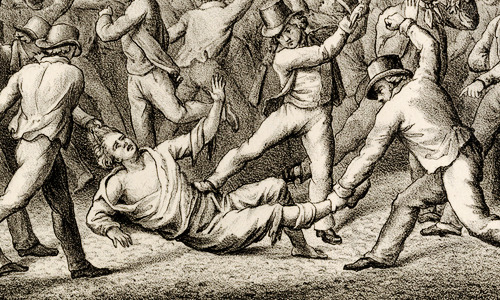
Axel Fersen, who had been falsely accused of poisoning the Crown Prince of Sweden, was attacked by a mob during the prince’s funeral procession. The guards and police riding with the procession did nothing to halt the attack, which grew from insults and rocks to a vicious assault. Fersen was ultimately beaten and stomped to death.
Share

Monday, January 12, 2009

Here we go again....


About a week or so ago, I received a comment from an anonymous, pseudonymous person arguing passionately in favor of the theory that Marie-Antoinette had an affair with Count Fersen. I have written several articles, most of which are on the blog sidebar, about why I think this theory to be false. The more I continue to read and learn about Marie-Antoinette, the more it becomes clear to me that the story of the Fersen affair is not credible. If people are determined to grasp at straws in an attempt to prove that the Queen and Count Fersen were lovers, then there is nothing I can do about it. I will, however, go over some of the points that the anonymous writer brought up, most of which I have already covered elsewhere.

It was claimed by the writer that Marie-Antoinette threw her husband out of bed and therefore was running off to sleep with Fersen. Simone Bertière mentions how Louis XVI and Marie-Antoinette refrained from marital relations after the birth of baby Sophie in 1786, probably due to the Queen's health and fragile emotional state. Jean Chalon relates what a difficult time it was for her - the year 1786 - Louis-Joseph's health was failing, the baby Sophie was not thriving. Marie-Antoinette, aware of the horrible calumnies being spread about herself in the wake of the Diamond Necklace scandal, declared to Madame Campan in September of 1786, "I want to die!" When Madame Campan brought her orange flower water for her nerves, she said, "No, do not love me, it is better to give me death!" She may have had post-partum depression or even suffering from a breakdown.

Chalon also shows how Marie-Antoinette became more pious following baby Sophie's death; she gave orders that the fasts of the Church be more carefully observed at her table than previously. She began making public devotions and prayers with her household in the royal chapel. Desmond Seward relates this as well. Abstaining from the marriage bed was how practicing Catholics, then as now, spaced pregnancies for reasons of grave necessity. It is not proof that she had exchanged Louis for Fersen. This has nothing to do with the earlier issues which occurred before Madame Royale was born, of the problems which Louis XVI and Marie-Antoinette had in consummating their marriage.
Madame Bertière explains the reasons why it took so long to consummate the marriage, which have been discussed here as well.

A passage written by Lady Elizabeth Foster in her diary, claiming that Marie-Antoinette and Fersen were lovers, has sometimes been used as proof of an affair, even in Lady Antonia Fraser's otherwise worthy biography. It is no proof at all; Bess Foster was not part of the Queen's inner circle. Furthermore, according to Amanda Foreman's acclaimed biography of Georgiana, Duchess of Devonshire, Bess' version of events in her diary "was more fantasy than truth." (p.177) Georgiana's daughter Harriet described Bess thus: "...More perverted than deceitful...I really believe she hardly knows herself the difference between right and wrong now." (p. 308) Bess is not a reliable source concerning Marie-Antoinette.

Neither is the Comte de Saint-Priest, one of the sources of the original slander. The origins of the legend of Marie-Antoinette’s affair with Fersen began not with her revolutionary foes, who certainly would have picked up on anything of that nature to discredit the Queen at her trial. Fersen’s name came up at the trial only in regard to the fact that he had driven the royal family’s coach out of Paris in June 1791 as they tried to escape. It was the courtier Saint-Priest, who made insinuations about the Queen and Fersen in his memoirs, probably to cover the humiliation that Fersen had slept with Madame de Saint-Priest, his wife.

If there had been any cause for concern about Count Fersen’s presence at the French court as regards the queen’s reputation, the Austrian ambassador Count Mercy-Argenteau would surely have mentioned it in one of the reams of letters to Marie-Antoinette’s mother Empress Maria Teresa, to whom he passed on every detail of the Queen’s life. Count Mercy was more concerned with the Polignac clan and their influence on both the King and Queen. Especially Madame de Polignac posed a threat to Mercy's own influence on the young Queen. (This is actually what Louis XVI wanted, to decrease Austrian influence on Marie-Antoinette.) Count Mercy had spies whom he paid well to gather information, but Fersen was not worth mentioning. Neither is Fersen mentioned in a romantic way by other people close to the queen in their memoirs, such as her maid Madame Campan and the Baron de Besenval, a family friend.

As for statements by political enemies of the Queen, there were many who sought to discredit her for their own advancement. There are are some who claimed she slept with Fersen at the Tuileries. There is much controversy over a certain night in February 1792, when some biographers, including Stanley Loomis and Vincent Cronin, think that Marie-Antoinette and Count Axel von Fersen may have finally consummated their love in her suite in the Tuileries palace. This theory has occurred over a smudged phrase in Fersen’s diary. However, no one knows for certain if the erased phrase was indeed Resté là, Fersen’s usual term indicating that he had slept with a lady. Also, the queen, following her escape attempt, was more closely guarded than ever, with a sentry keeping watch at her door all night, and checking every once in awhile to see if she was in her room – how could she have entertained a lover? The purpose of Count Fersen’s final visit to his friends Louis XVI and Marie-Antoinette was to discuss the dire political situation and persuade them to try to escape again, which Louis would not do. Fersen may have had to linger in the palace overnight in order to avoid the revolutionary authorities, but not in the queen’s bed. At his earliest convenience, he made his way to the welcoming arms of his mistress Eleonore Sullivan and stayed at her house in the attic hideaway.

According to Marie-Antoinette’s maid Madame Campan, the queen spent her nights at the Tuileries reading in order to calm her agitated mind. Madame Campan also writes in her Memoirs of how the Queen found a confessor who had not taken the constitutional oath, whom she would secretly receive. For Easter of 1792, she would not make her Easter duty in public but arranged to hear Mass privately with a non-juring priest. As Madame relates:
The Queen did perform her Easter devotions in 1792; but she went to the chapel attended only by myself. She desired me beforehand to request one of my relations, who was her chaplain, to celebrate a mass for her at five o’clock in the morning. It was still dark; she gave me her arm and I lighted her with a taper. I left her alone at the chapel door. She did not return to her room until the dawn of day.
So instead of liaisons with a lover, Marie-Antoinette was at that season of her life preparing her soul for the sufferings and death which lay ahead, of which her keen sense of the escalating events gave her a strong premonition. Nevertheless, descriptions of the Queen’s religious faith by Madame Campan are often interpreted by some authors as an attempt to win the favor of the queen’s daughter, the Duchesse d’Angoulême. Yet it is acceptable to draw conclusions as if from the air, when it comes to non-existent evidence of Fersen’s alleged romance with the anguished Queen. I see no reason why Madame Campan would have fabricated such events, which are similar to other reports of Marie-Antoinette’s religious beliefs and practices, especially her own final testament.

Furthermore, at the Tuileries, as at Versailles, a private passage linked the Queen’s room to her husband’s. According to Madame de Tourzel, the royal governess, in her Memoirs, one of the first things Marie-Antoinette did after being forcibly dragged to the Tuileries was to have a private staircase constructed between her room and the King’s. It would not be very convenient to dally with a lover when a husband might walk in at any moment from behind the hidden door in the paneling.

As the Duchesse de FitzJames, a great-niece of Fersen, is quoted by Nesta Webster from a 1893 French periodical La Vie Contemporaine:
I desire first of all to do away with the lying legend, based on a calumny, which distorted the relations between Marie-Antoinette and Fersen, relations consisting in absolute devotion, in complete abnegation on one side, and on the other in friendship, profound, trusting and grateful. People have wished to degrade to the vulgarities of a love novel, facts which were otherwise terrible, sentiments which were otherwise lofty.
Share

Wednesday, July 16, 2008

The Fersen Myth Revisited

Occasionally I receive anonymous, pseudonymous comments asserting that I am projecting my own religious beliefs upon Marie-Antoinette, which is why (it is claimed) that I refuse to acknowledge her "affair" with Count Fersen. As I have written before, just because I do not believe that there is any substantial evidence that Marie-Antoinette had an affair with Count Fersen, does not mean that I believe she was the Little Flower. She went overboard with her gambling and had many frivolities, especially as a young girl. While to all appearances she followed the tenets of her creed, partaking of the sacraments and giving generously to the poor, it was not until after her baby Sophie died in 1787 that she gradually became more devout, as biographers Desmond Seward and Jean Chalon have written.

The death of her seven year old son in 1789 and the disasters of the Revolution which followed made the Queen turn more and more to her Faith for consolation. She would not confess to a juring priest, demonstrating her loyalty to the papal authority. There is evidence that she made every effort to prepare to die a holy death. It is one of the intriguing aspects of her character that, in spite of many frailties, she endured extraordinary sufferings with fortitude and grace. As Maxime de la Rocheterie said: "She was...not a saint...until she became a martyr."

I believe that Marie-Antoinette and Fersen were not lovers because the reliable historical evidence indicates otherwise. When testimony of extant letters and diaries demonstrates that Marie-Antoinette was devoted to her family, and that she stayed at her husband's side at the cost of her own life, then she should be given the benefit of the doubt. I am not alone in questioning the historicity of the alleged affair; there have been many not particularly religious scholars and authors who have believed that the Queen was faithful to her husband. I know of Jewish historians who dispute the claim that there was an affair with Fersen. I know some atheists, too, who strongly object to the very idea as a romantic absurdity. The credence given to such a story has nothing to do with one's religion but with how carefully one sifts the data.

Since I am accused of allowing my beliefs to blind me to the fact of historical love affairs, then I must acknowledge the times I have written about various femmes fatales. I admire Eleanor of Aquitaine a great deal. I also find Louise de La Vallière, Catherine II, Emma Hamilton, and Germaine de Staël to be fascinating women, despite the fact that they all had lovers outside of marriage. It is not proven that Marie-Antoinette ever did.

As a friend wrote to me the other day: "I've come to the belief that when someone argues to the person rather than to the argument it raises at least the suspicion that their argument is weak." Good point. Share

Saturday, October 27, 2007

The Fersen Myth in Literature

Surfing the internet anyone can see that the Fersen myth is deeply entrenched in the public mind. This is due to major publishers yearly churning out sensational biographies and novels, which focus on the legend rather than on the facts, scouring letters and diaries for the slightest indication that Marie-Antoinette and Count Fersen may have slept together. At best, such books harbor the notion of a great and spiritual love between the Queen and the count, such as in Sena Jeter Naslund's Abundance. At worst, they are romance novels like Carolly Erickson's The Hidden Diary of Marie Antoinette, which has the Queen going on a journey to Sweden with Axel von Fersen. It is a fabrication which should qualify that particular novel as fantasy rather than as historical fiction.

Excellent books by serious French historians, which attempt to look at the cold unromantic facts of the matter, such as Marie-Antoinette l'insoumise by Simone Bertière and Marie-Antoinette: Epouse de Louis XVI, mere de Louis XVII by Philippe Delorme, are not translated into English. Instead biographies such as Evelyn Lever's Marie-Antoinette, which focus on the possibility of a romance with Fersen, are the ones which find their way into American book stores. Older books like those by Hilaire Belloc, Desmond Seward, and Nesta Webster, all of which present clear evidence that there was little possibility of an affair, are not reprinted. However, Stefan Zweig's Freudian analysis is continually on the bookshelves. There is no great conspiracy here. Publishers know that stories of adulterous love affairs sell more books than do stories of chaste and faithful marriages. And so they give the public what they think they want.

Antonia Fraser's popular biography, like Evelyn Lever's, both admit that there is no solid evidence of an affair. Nevertheless, Lady Fraser gives as her reason for thinking that there was indeed a liaison the fact that it is human nature to give into passion. This may be her theory but it is not historical evidence, especially since there have been many thwarted lovers in the history of the world who have resisted temptation.

Although Marie-Antoinette was always the subject of gossip and rumors, the myth of Axel von Fersen as her lover evolved after the deaths of both the count and the queen. According to Fersen’s biographer Francoise Kermina, the count himself carelessly sewed the seeds of the legend when once upon hearing an opera favored by the queen he sighed, “Ah, those memories….” In 1822 an Irishman named O’Meara published Napoleon in Exile in which he repeated gossip that had been rampant at Bonaparte’s court, about Fersen and the queen, which were attributed to the queen’s maid Madame Campan. The rumor was proved to be false by British historian John Wilson Croker, who in October 1822 wrote in the Quarterly Review that Madame Campan had not been present at court when certain allegations were said to have occurred.

For many years following, most historians and biographers, including Carlyle, the Goncourts, Imbert de Saint-Amand, de la Rocheterie, Bimbinet, Lenotre and de Nolhac did not take the Fersen story seriously and ignored it. When the letters of the queen and Count Fersen were published by his great nephew Baron de Klinckostrom in the late nineteenth century, they proved the nature of the queen and Fersen’s relationship to be principally a diplomatic one.

In certain of the letters, mainly those from the queen to Fersen, passages have been erased and are indicated by rows of dots in the printed text. The Coursacs, Webster, and Delorme believe that Fersen erased certain passages himself. The erasures of Fersen were most likely sensitive diplomatic issues, not declarations of love, as authors such as Lever have claimed. They concealed allusions to the queen’s disagreements with her brothers-in-law Artois and Provence, or references to the Duc d’Orleans and other revolutionaries, or even mentions of spies or persons whose families would have been compromised had the letters fallen into the wrong hands. We do not know.

In 1907 a certain Monsieur Lucien Maury published in Revue Bleue what he claimed to be a fragment of a love letter of the queen to Fersen. Lever quotes it in her biography: “Tell me to whom I should send my letters to you, for I cannot live without that. Farewell most loved and most loving of men. I embrace you with all my heart." The letter had no signature, was not in the queen’s handwriting, only in the cipher she used, jotted down by Fersen in cipher. There is no proof it was from the queen but could have been from one of the many ladies with whom Fersen dallied over the years. And yet Lever includes this fragment among verified letters of the queen, giving the impression that it is evidence of a great love. Webster, however, dismissed it.

Many authors scour Fersen's diary for every and any hint of his love for the Marie-Antoinette. While he may have loved the queen on some level, his diary, as pointed out by Francoise Kermina, shows him to be a rather shallow person. The Queen actually is mentioned very little compared to his accounts of his various adventures with many other women, especially his beloved Eleonore Sullivan, the lady with whom he was having an affair all the while the queen was suffering in the Tuileries and in prison.

In the 1930’s Alma Soderhjelm published the letters of Count Fersen to his sister Sophie, hoping to prove from those letters that the Count and the queen had had a love affair. It is upon Soderhjelm’s book that most of the modern romances about Marie-Antoinette are based. Now in the spring of 1790, Fersen was having his passionate affair with Eleonore. She was kept bya certain Monsieur Crawford in an elegant house in Paris, where she had a maid named Josephine, and a hideaway for Fersen in the attic. Later authors would fantasize that when Fersen mentioned “Josephine” in his letters, it was really a code name for Marie-Antoinette, which ignores the fact that Fersen gave “Josephine” menial instructions about a stove; he was more than likely referring to Mrs. Sullivan’s maid and the cold room in the attic.

Likewise, the woman Fersen writes ardently about to his sister at this time, who is honored by Sophie’s attentions, is most likely Mrs. Sullivan, whom he refers to as “El” or “elle.” Some try to make the queen the subject of his ecstatic passages, but why would the queen of France, in the midst of so many political intrigues, threatened by death, have wanted to ingratiate herself to Fersen’s sister? "Elle” (capitalized), however, is what Fersen uses when referring reverently to the queen, la Reine, whom he usually mentions in conjunction with the King. Baron Klinckowstrom quotes Fersen’s letter to his father in Feb 1791, in which he writes of his service to Louis XVI and Marie-Antoinette: “I am attached to the King and the Queen and I owe it to them for the kindness they showed me when they were able, and I should be vile and ungrateful if I deserted them now that they can do nothing for me….” (see Webster's Louis XVI and Marie-Antoinette During the Revolution)

The fact that Fersen was not mentioned at all at Marie-Antoinette's trial by her enemies, who were looking for anything to pin on her, except for his role in the royal escape, is quite telling. Instead, they trumped up the accusation of incest, which shows how desperate they were for charges against her, no matter how far-fetched. A queen has few secrets; her foes would have discovered a liaison, if one had existed.

There was a great nobility in Count Fersen, especially in his efforts to save the royal family. However, to make his friendship with Marie-Antoinette into a great and lofty romance is to ignore his reality and hers. For while Fersen was with his Eleonore, the Queen of France was losing her husband, from whom she refused to be parted even to save her life. She had to watch her children and sister-in-law being terrorized, as she herself had to prepare to die. For something much more powerful and glorious was going on than a love affair; it is called martyrdom.
Share