A place for friends to meet... with reflections on politics, history, art, music, books, morals, manners, and matters of faith.
A blog by Elena Maria Vidal.
"She was not a guilty woman, neither was she a saint; she was an upright, charming woman, a little frivolous, somewhat impulsive, but always pure; she was a queen, at times ardent in her fancies for her favourites and thoughtless in her policy, but proud and full of energy; a thorough woman in her winsome ways and tenderness of heart, until she became a martyr."
"We have followed the history of Marie Antoinette with the greatest diligence and scrupulosity. We have lived in those times. We have talked with some of her friends and some of her enemies; we have read, certainly not all, but hundreds of the libels written against her; and we have, in short, examined her life with– if we may be allowed to say so of ourselves– something of the accuracy of contemporaries, the diligence of inquirers, and the impartiality of historians, all combined; and we feel it our duty to declare, in as a solemn a manner as literature admits of, our well-matured opinion that every reproach against the morals of the queen was a gross calumny– that she was, as we have said, one of the purest of human beings."
"It is now sixteen or seventeen years since I saw the queen of France, then dauphiness, at Versailles; and surely there never lighted on this orb, which she hardly seemed to touch, a more delightful vision. I saw her just above the horizon, decorating and cheering the elevated sphere she had just begun to move in, glittering like a morning star full of life and splendor and joy. Oh, what a revolution....Little did I dream that I should have lived to see such disasters fall upon her, in a nation of gallant men, in a nation of men of honor and of cavaliers! I thought ten thousand swords must have leaped from their scabbards, to avenge even a look which threatened her with insult. But the age of chivalry is gone; that of sophisters, economists, and calculators has succeeded...."
~Edmund Burke, October 1790
A Note on Reviews
Unless otherwise noted, any books I review on this blog I have either purchased or borrowed from the library, and I do not receive any compensation (monetary or in-kind) for the reviews.
Unlike many other authors, we have explicit writings from Lewis
explaining what he was trying to portray. In the remainder of this
article, I presume that Rice is writing from a position of ignorance. To
cure his lack of knowledge, I invite him to acquire a copy of Lewis’sLetters to Childrenbefore
he writes about Narnia in the future. Lewis was transparent in his
explanations, and his actual letters to the children who wrote to him
explain why Christians are justly upset by this casting decision. You
mess with Jesus, and you mess with the literal foundations of the
Christian faith. Aslan is Jesus, in another world.
To truly understand Lewis, one must read Lewis; and more of his writings than just Narnia. Any claims on what he thought as he wrote the Narnia tales
need to be backed by primary source material to be valid, not by
opinion that fits one’s own personal narrative. Lewis’s replies to his
youngest readers provide helpful insight.
In a letter
written by Lewis from Magdalen College Oxford, 22nd. January 1952, Lewis
writes to a child named Carol about how to pronounce Aslan and who He
is:
Dear Carol,
It is a pleasure to answer your
question. I found the name in the notes to Lane’s Arabian Nights: it is
the Turkish for Lion. I pronounce it Ass-lan myself. And of course I
meant the Lion of Judah. I am so glad you liked The Lion, the Witch and
the Wardrobe. I hope you will like the sequel (Prince Caspian) which
came out in November.
Henrietta Maria came very close to helping her husband and Prince Rupert win the English Civil Wars. From Atlas Obscura:
Around midday on July 4, 1643, in the countryside just north of Birmingham,
Queen Henrietta Maria was in her battle tent. Outside, shells exploded.
Musket balls* zoomed past. Anxiously, the Queen of England waited.
Taking Burton-Upon-Trent, a strategic town with a river crossing
connecting northern and southern England,
was her army’s first real challenge. Defeat was not an option. But the
fighting had already raged for five hours—how much longer would it take
to deliver a victory? Three hours later, the queen got her answer. Her
royalist army had finally broken through the town’s defenses. Victory
was secured.
Eighteen years earlier, the queen had
arrived on English shores as a 15-year-old French bride. And now, at 34,
she was a warrior queen. The queen would jokingly call herself
“she-majesty generalissima.” Lines from a contemporary poem, its author
unknown, portrayed her as not just defeating but unmanning Parliament’s
forces, literally: “Tis here a woman leads; but one would swear, the
armies did consist of women there.” Her skill garnered wide respect from
diplomatic elites; the Venetian ambassador observed, “Without [the
queen’s] encouragement and aid the king would never have put himself
into a position to resist.” During the English Civil War, Queen
Henrietta Maria was, it seems, all that stood between King Charles’s
sure defeat at the hands of Parliament. (Read more.)
Henrietta Maria and her household hiding in a ditch during the bombardments at Bridlington in 1643
Henrietta Maria hiding from Parliamentarians during her escape to France in 1644
In
a time of tech-bro billionaires, a meaning crisis among an anxious
youth and questions surrounding national identity, where better to go
than back to the old stories to have one’s heart reenchanted? That’s
something poet, scholar and priest Malcolm Guite has become renowned for
on his popular self-titled YouTube channel, which has 220,000
subscribers and counting. The real-life waistcoat-wearing hobbit, with wizard-like long silver
hair and beard, has charmed millions around the world with his videos
from the perspective of a visitor to his cosy, book-lined study. For
each typical upload, Guite will settle into his wing armchair, light one
of his many pipes, and usually read aloud from a chapter of JRR Tolkien
or CS Lewis.
The 68-year-old author of several
books, including five collections of poetry, realised that it’s been
about a century since there was a proper re-telling of Britain’s great
myth, the Arthurian legend. In what could well be his magnum opus, Guite
has set about writing Merlin’s Isle: An Arthuriad, a four-volume epic
ballad of King Arthur and the Knights of the Round Table.
Beautifully
illustrated by Stephen Crotts, the first volume, Galahad and the Grail,
is set in the 5th century, after the Romans have departed, leaving
Britain in a chaotic mess of savage warlords before the Anglo-Saxon
invasion. King Arthur seeks to unite the realm by establishing a kingdom
of peace and stability, one led by his chivalric knights who are fierce
in battle against the “might is right” pagans, while being gentle and
kind to the weak and vulnerable they are sworn to protect. (Read more.)
Yet another descendant of Mary Boleyn. From History Extra:
In the preface to The Three Musketeers, Dumas claims that he was researching Louis XIV in the Bibliothéque nationale de France when he happened upon the first volume of The Memoirs of M. d’Artagnan. This is not entirely true: he found the book in the public library in Marseilles, borrowed it and never returned it.
The Memoirs of M. d’Artagnan is a first-person pseudo memoir written by a former soldier, Gatien de Courtilz de Sandras, and first published in 1700. It tells the story of d’Artagnan, a young man setting out on his journey to become a musketeer. As well as d’Artagnan, Dumas discovered Athos, Porthos and Aramis, who would eventually become major characters in The Three Musketeers. He also found Milady de Winter. Courtilz never gives Milady’s name. Instead, she is referred to simply as ‘Milady’ followed by a dash or asterisks where her name should be. She is introduced as a maid of honour to Henrietta Maria, queen to the executed Charles I of England, whose exile in France Milady shares.
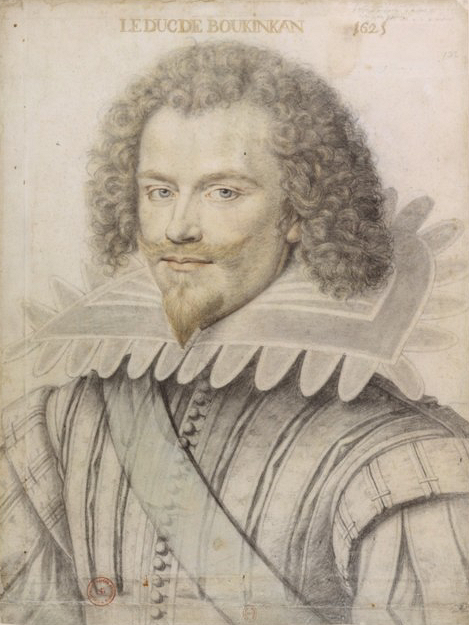
The daughter of an English peer, Milady has as much wit as beauty, and d’Artagnan thinks her the most beautiful woman he has ever seen. He promptly falls in love with her. There then follows a complicated sexual intrigue, one of several for Courtilz’s d’Artagnan. Once it is over, Milady is never heard from again. This is the episode that Dumas adapted for The Three Musketeers. The affair of the queen’s diamonds is absent from Courtilz, but at least part of the story as Dumas told it is supported by several contemporary memoirs. Those of Françoise Bertaut de Motteville, Pierre de La Porte and Henri-Auguste de Loménie, Comte de Brienne – all of whom served at the royal court of France – each provide an account of the Duke of Buckingham’s visit to France in 1625. Buckingham had been sent to escort Henrietta Maria, then Charles I’s new queen, to England. While in France, he ostentatiously courted the queen, Anne of Austria.
None of these memoirs, however, mention the diamonds that Anne was said to have given to the duke. For this part of the story, it is necessary to consult the memoirs of Henri-Auguste's son, an obscure publication known as Recueil A, and the memoirs of François de La Rochefoucauld. Louis-Henri de Loménie, Comte de Brienne served Louis XIV as secretary of state, a position he inherited from his father. He left a memoir, which was published in the early 19th century. Certain editions, particularly that edited by Jean François Barrière, include an account of the queen’s diamonds.
It does not form part of Brienne’s original narrative – he was not even born at the time of the alleged diamond affair. Instead, it is mentioned in an introductory essay, written by the editor, explaining the manners and customs of 17th-century France. It is then related in full in an appendix, Éclaircissements historiques, or ‘historical clarifications’. In this version, the diamond thief is named as Lady Clarik. However, the story was lifted word-for-word from Recueil A, and inserted into the memoir. Recueil A is the first volume of a large collection published in the 18th century. It comprises an assortment of documents, including extracts of memoirs, concerning the history of France. The author of the account of the diamond affair is enigmatically identified as ‘M. le M. de T’. Behind these initials, according to the anonymous editor of the Recueil, is René de Froulay, Comte de Tessé.
The Comte de Tessé was a real person. Born in 1651, he was a military man, diplomat and courtier. He did indeed leave a memoir, but the diamond affair does not appear in it. The story as found in Recueil A and later inserted into the memoir by Brienne is, therefore, unreliable. What then of La Rochefoucauld? In his memoir, the lady who stole the diamonds was not Lady Clarik but the countess of Carlisle. In fact, Lady Clarik did not exist – but Lady Carlisle certainly did. (Read more.)
Read about the Countess of Carlisle in my Henrietta Maria novels, HERE and HERE.
Over time, we have done away with waiting,
boredom, and much of uncertainty. We have learned to plan our routes,
order food before we are hungry, know whether a restaurant is worth
going to before we step inside, check the weather before we look at the
sky. We can fill almost every empty minute, find an immediate answer to
almost any question, see a place before we have ever set foot there. All
of this is, of course, very convenient.
But I sometimes wonder whether, in
removing so many small frictions and in-between moments from our lives,
we have also removed, almost by accident, some of the conditions that
allowed the world to surprise us. Perhaps enchantment depends on some of
the very things we have spent years trying to eliminate: waiting,
uselessness, mystery, slowness, surprise, imagination, attention.
There is a concept that has stayed with me
since my student days: Max Weber’s idea of the “disenchantment of the
world.” Very roughly put, it describes the way modernity made the world
more rational, more explainable, more calculable. I would be
hard-pressed now to reproduce everything I learned about it then, but
the phrase itself has never quite left me.
Thursday 9/17 Empire Magazine released their exclusive first look
at Greta Gerwig’s Magician’s Nephew film, confirming early rumors that
Meryl Streep will indeed voice Aslan, the Great Lion of Narnia.
Moreover, Gerwig’s "rock'n'roll" Aslan has “heterochromatic eyes”
inspired by David Bowie, feathered eyes, dragon-like skin, a lipstick
red nose, and rainbow whiskers. Everything about Gerwig's visualization
of Aslan speaks to breaking the gender binary and the celebration of
transgressive identities. Though the move to queer Aslan is hardly
surprising given Gerwig's politics and history of feminist filmmaking,
the idea of a queerily feminine Aslan is important to address. By
casting a woman as the voice of Aslan, Gerwig twists an icon of Christ
into a different form.
We love our favorite stories because they provide a frame
through which we can understand who we are and the world we live in. We
love C.S. Lewis and his Chronicles of Narnia
for the cosmic vision they give us—a re-enchanted way to imagine the
world as filled with divine presence, crammed with meaning, and bursting
with goodness, truth, and beauty. Lewis could
write such a world because his imagination was deeply sacramental. He
understood that created things like wardrobes, lamp posts, and lions are
formed with intrinsic meaning. (Read more.)
Long-dead Charlie Manson is back in the
news, thanks to a congressional investigation into the Central
Intelligence Agency’s MKUltra program. One of those testifying before
Congress was Tom O’Neill, who spent 20 years of his life trying to
follow an occasionally obvious and sometimes obscure trail of documents
describing the CIA’s mind-control experiments, which often involved the
use of the hallucinatory drug lysergic acid diethylamide (LSD). In his
book Chaos: Charles Manson, the CIA, and the Secret History of the Sixties,
O’Neill suggests Manson and his cult of followers were possibly a CIA
experiment gone bad. Another testifying to the evil of MKUltra was
Stephen Kinzer, author of Poisoner in Chief: Sidney Gottlieb and the CIA Search for Mind Control.
That O’Neill, Kinzer, and others were able
to piece together a history of MKUltra is a testament to their skills
as researchers, because in 1973 CIA Director Richard Helms
had all MKUltra files destroyed. However, thanks to typical
bureaucratic ineptitude, it was later discovered through FOIA requests
that thousands of MKUltra documents had been improperly stored elsewhere
and were not destroyed. O’Neill and Kinzer made other discoveries in
personal records and correspondence of those involved in MKUltra.
MKUltra was formally launched in April
1953 in response to North Korean, Chinese, and Soviet attempts to
“brainwash” captured Americans during the Korean War. Sidney Gottlieb,
the Bronx-born son of Jewish immigrants from Hungary, led this CIA
project. Gottlieb received an undergraduate degree from the University
of Wisconsin in 1940 and a doctorate in biochemistry from the California
Institute of Technology in 1943.
By the summer of 1951, Gottlieb was
working for the CIA as chief of the Chemical Division of the Technical
Services Staff. He thought that through experimentation with various
drugs he could find ways to alter brain chemistry and achieve mind
control. He tried using the active agent of marijuana,
tetrahydrocannabinol (THC), cocaine, heroin, and mescaline, before
settling on LSD as the most promising drug to alter the thinking and
perceptions of the experiment’s subjects. (Read more.)
The Directory, the regime which ruled France during the closing years
of the revolutionary decade, took its name from the five-man executive
body that was elected by a two-chamber legislature, according to the
Constitution of 1795. It has been disparaged as an uninspiring, corrupt,
and chaotic interlude between two far more dramatic periods, that of
the Terror, which preceded it, and the Bonapartist dictatorship that
followed. In the past, most historians simply ignored it, concluding
their accounts of the Revolution in 1794, with the fall of Robespierre,
but that is no longer the case. The Directory remained true to the
founding principles of 1789, and is now rightly regarded as an integral
part of a greater project to replace the ancien régime in France.
Although this experiment failed to end the Revolution by restoring
political stability as its leaders intended, they made an invaluable
contribution to that protracted process. Their achievements have often
been credited to Napoleon, who did bring the upheaval to a close, while
many of the individuals who served the Directory would continue to do so
under his Consulate and Empire.
Biancamaria Fontana has chosen to approach the Directory
from a biographical point of view, devoting the substantive chapters of
this book to seven of its leaders, six of whom (from a total of 13) held
the post of director for varying lengths of time between 1795 and 1799,
while the other was a minister of justice. Their appellation as ‘desk
revolutionaries’ might have been more convincingly addressed, though the
majority of these mostly lesser-known individuals worked diligently to
organise a French Republic which had barely survived its unexpected
inception in 1792. This perspective offers significant insight into the
regime’s operation, as well as the solid, if unspectacular, measures
that were adopted under the Directory, most notably in the realms of
finance and taxation. Success on the battlefield was also secured with
the annexation of additional territory to the Republic, yet continuing
warfare was hardly conducive to orderly progress, and deep-rooted
political divisions persisted. The recourse to purges of the
legislature, in 1797 and 1798, so as to preserve the system only served
to demonstrate its fragility.
The personnel examined here were all seasoned national
deputies who had voted for Louis XVI’s execution in 1793 and were thus
committed to creating a lasting Republic. Three of them, the directors
Reubell, Merlin de Douai, and François de Neufchâteau, were lawyers and
had acquired considerable experience of office-holding before the
Revolution. The task of legal codification progressed, government
finances were much improved, and the bureaucracy was streamlined.
Another director, Carnot, an army engineer, pursued the task of military
reform by integrating conscripts into the regular army, while the
dissolute ex-noble Barras, whose personal conduct gave the Directory
such a poor reputation, alone served in the post from beginning to end,
when he colluded in its downfall in Brumaire (November 1799). This
famous coup d’état was orchestrated by his short-lived fellow director,
the abbé Sieyès, who, having played a major role in the events of 1789,
now joined the executive with the aim of extending its powers. This
could only be done by overthrowing the regime. Outmanoeuvred by
Bonaparte, who supplied military support for the coup, Sieyès would
collaborate with the subsequent Napoleonic regime, to which Merlin de
Douai and Cambacérès in particular made outstanding contributions. (Read more.)
In 1763, two years before his
death, Louis-Ferdinand helped make a book for lay people, to help them
fit devotion around their duties according to their state’. The
translation of the Psalms was taken from Jean-Joseph Languet de Gergy,
while the Dauphin added his own composed meditations (or hymnes). The work was published by the Cardinal de Luynes, as Office divin abrégé pour tous les temps à l’usage des personnes pieuses.2
As the opening quote should show, the meditations could be quite
weighty given the stated intention of the book. It is noteworthy that a
prince would care so much to insert such passages into something whose
stated aim is speed.
In part one,
I introduced the obscure figure of Louis-Ferdinand, son of Louis XV,
father of Louis XVI, and Dauphin of France until his premature death in
1765. Using the standard modern scholarly study on his life, La vertu et le secret by Bernard Hours (2006),3
he emerged as a devout, conservative, and anti-radical figure, yet not a
mindless zealot. He was widely-read, well-educated, and a writer of
maxims and reflections in the ancient Stoic style. Now I turn to the
question: was he not merely a thinker, but a coherent one?
Hours
flags that quite a number of the sayings recorded by the Dauphin’s
posthumous biographers contain commonplaces typical of hagiographical
writing.4
This does not by itself invalidate them, for a Christian prince could
well have thought in these stock ideas gotten from devout literature.
But it does make them less secure as primary sources, since his
biographers may have shaped or embellished what they remembered, perhaps
without meaning to. Thus, in what follows I will focus only on those
maxims and sayings that Hours thinks most likely came from the man
himself. (Read more.)
Another story to emerge in the late twelfth century centres on the
tragic and adulterous romance between the Cornish knight Tristan and the
Irish princess Iseult. The tale survives in several versions, including
those written by Béroul and Thomas of Britain, and quickly became one
of the most popular romances of the Middle Ages. Early versions contain
only limited connections to King Arthur and his court, but later writers
increasingly integrated Tristan into the wider Arthurian world, often
portraying him as one of the Knights of the Round Table. The legend
became a major parallel tradition within medieval Arthurian literature,
blending themes of love, loyalty, betrayal, and fate. (Read more.)
The changing myth of King Arthur. Also from Medievalists:
After appearing and disappearing for centuries, Arthur’s story is set
down in its longest and most widely-read early form in Geoffrey of
Monmouth’s The History of the Kings of Britain. In it, he
stands for everything that was ideal in the author’s twelfth-century
world: unity in a time of near-constant political instability, kingship
with wisdom and fortitude, strength of arms with the courage to use it,
and Christianity above all. As a historian, although widely discredited
even in his own time, Geoffrey of Monmouth emphasized Arthur as worthy
of legend because of his political acts: unifying warring kingdoms under
one banner and ruling justly over all.
At nearly the same time, courtly love was all the rage in the literary
world. This ideal love was adulterous, courageous, and so passionate
moderns might find it marginally embarrassing. It was at this moment
that Lancelot rode into the Arthurian mythology, fainting with love over
Guinevere, and pushing Arthur to the side as a stodgy, less hip
cuckold. Arthur endured this romantic shift as a great but increasingly
less-adventurous figure, who stayed behind boringly but brilliantly
governing his realm while his knights risked life and limb on their
glorious quests. Although this was also the moment in which the quest
for the Holy Grail emerged, Arthur, ever-involved in worldly affairs and
now tangled up in a love triangle, is not the one to find it. (Read more.)
Sergio Infante, a professor at Yale, is on a mission from God. He’s
determined to make sure the new Catholic revival energizing Generation Z
is woke. Contra Professor Infante, it is essential that the new wave of
young Catholics be anti-communist. I’d like to encourage them to sign up
for the Anti-Communist Film Festival, which will be held at the Victims of Communism Museum in Washington, D.C. in October. Registration is free. Here is Professor Infante from his piece in Slate:
Around the United States, as you’ve probably heard, Gen Z Catholics are heading to the pews in eye-popping numbers. They meet up in pizzerias and follow one another on social media. They flock to Catholic student organizations, which are booming.
And at Yale University, where I teach Latin American and global
history, they attend classes and public lectures to learn about their
faith.
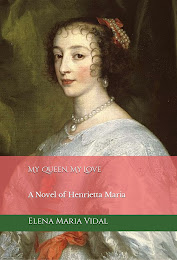
This Historical Fiction novel tells of the
tumultuous years in English history preceding the Civil War through the
eyes of Queen Henrietta Maria of France, the Catholic wife of King
Charles I. This book tells of Henrietta
Maria’s early years and her marriage to Charles. It also recounts her
rivalry with George Villiers, the Duke of Buckingham and the king’s best
friend. The Queen and the Duke vie for the king’s attention, ear, and
heart.
This book is a chess match between two formidable opponents who differ in personalities, religion, ideologies, and views. Henrietta
Maria is motivated by her history as a Medici and her Catholic faith.
Her family line taught her about palace intrigue, how to play the court
games, and to be wary of potential rivals for influence. Her faith not
only gives her solace but gives the British Catholics much longed for
representation.
Villiers also has his own
motivations. He had a history of developing connections with Charles’
family. He had been the friend and lover of Charles’ father James I. He
thinks of the younger king as a kid brother who needs his influence. He
also is incredibly ambitious and wants to move upwards in society. Henrietta Maria and George Villiers are equally matched opponents with Charles and the entire kingdom in the middle.
My Queen My Love is a very regal look at palace intrigue and the love and
loyalties of the monarch and those around them. It begins with a rivalry
between two individuals and eventually will escalate into a war that
will envelop the whole country. (Read more.)
If
you read this book, be prepared to obsess over the characters like you
would with any engrossing fictional story . . . only to be reminded that
they are, in fact, real. After doing so, you may just scour the
Internet for photos of your new "friends." Be prepared also to lie
awake wondering what REALLY happened regarding a matter of court
intrigue, asking your husband when you should be sleeping if he thinks
that so-and-so poisoned so-and-so before the story started. While you're
at it, you should also expect to wonder whether or not you should
really google the villain and behold his countenance.
But, of course, you will. After all, you HAVE to know if he really, truly existed.
Then,
once you know that he WAS, in fact, real, you will fervently wish for a
time machine so that you can go back to warn everyone about him.
. . . or maybe that's just me. ;) After all, I was crying over Giuliano de' Medici a few months ago.
MY
QUEEN, MY LOVE: A NOVEL OF HENRIETTA MARIA by Elena Maria Vidal
reminded me of why I love history (and even revitalized that love): that
is to say, it is not a simple list of dates and facts, but, rather, a
compelling story, alive with rich "characters" that have the power to
stay with you. Vidal masterfully wove together a literary tapestry that
tapped into real-life events in a way that inspired the reader to keep
turning the page. There was beauty, there was tragedy, there was romance
. . . and, much to my surprise, the plot was also layered with key
characteristics of a mystery novel. Since I didn't know much about this
particular "story" going in, it truly was similar to reading a
completely fictional work where there still exists uncertainty and
suspense.
Yet, despite the strong elements of intrigue and
mystery, at the center of the entire narrative is a love story: that of a
king and his queen and the Love that transcends their world.
From
early on in the novel, I fell in love with the love story of Henrietta
Maria and King Charles I. Rather than compose more coherent sentences, I
have decided to instead include my "freak-out" gushing below.
Unprofessional or not, it accurately reflects my state of mind when
delving into the story and may perhaps best inform potential readers: ------------------------------------------------ HE
FELL IN LOVE WITH HER WHEN SHE WAS DANCING---NOT ATTRACTION, BUT REAL
LOVE AT FIRST SIGHT WHERE HE SAW THE DEPTHS OF WHO SHE TRULY WAS.
BUT SHE DIDN'T KNOW HE WAS THERE AS HE WATCHED FROM AFAR.
And
then she fell in love with HIM through his letters, which is SO
BEAUTIFUL AND ROMANTIC, too!!! AHHHH. Because she has SUCH a pure heart,
like Cinderella and her prince when they first meet in the live action
movie.
AND THEN THERE IS THIS EMOTIONAL BUILD-UP OF STORY TENSION
because they have to still MEET. And the reader just needs it to happen
asap!
And then they meet . . . and it is a Moment with a capital M!
But there be villainy afoot. ;) ------------------------------------------------ Vidal's
writing skill shone through once again in her brilliant introduction of
the villain of the story through the eyes of one who regarded him as a
close friend. Without going into detail, he could have been mistaken as a
flawed comic relief, before his true nature became clear. Not only did
this make the story-line more compelling and unpredictable, but it served
as a rather profound commentary on evil relevant to today. In the
presence of some, evil masquerades as Cool Guy, charming everyone with
his jokes. But, when only some are watching, the mask just might come
off.
As a Catholic, I was particularly drawn to the historical
depiction of events as concerns the persecution those of my faith faced
in England at the time. It was important for me to learn more about
their plight, and my heart broke for those who suffered, much like that
of Henriette, just as it rejoiced at moments when they received better
treatment. Yet the pain and suffering is balanced also with Light, the
reason for which they are fighting. Through vivid and sometimes
ethereal descriptions, as well as profound reflections, Vidal was able
to illustrate what we love so dearly.
The writing style in
general is both detailed and engaging, rich with beautiful imagery that
is, at times, quite lyrical. I found a kindred spirit in the romantic
way that Vidal chose to describe figures, scenery, and events and
likewise enjoyed the sprinkling of Arthurian legend in the novel. It was
lovely to see Henrietta and Charles share a mutual love of these old
stories, which not only added depth to their relationship and to them as
individuals, but also seamlessly tied into the plot and foreshadowing
of future events.
In terms of the characters on an individual
level, I found myself bonding quite a lot with Henrietta, between her
innocent romanticism, deep love of her faith, and moments of wit and
humor. But, on another level, I wondered at times if she were a saint
and found her on the whole to be an inspiring figure. While there were
moments in which the reader was called to be frustrated with Charles for
being blinded as to certain individuals, I came to care a great deal
for him and deeply admire his nobility of heart and desire to do what
was right. The reader may also sympathize with the long-seated pain that
he experienced, which is slowly revealed within this man of a pure and
childlike nature yet confident, regal bearing.
While there were
difficult moments to read throughout the novel, beginning with the
tragic backstory of Henriette's mother, Marie de' Medici, the beauty of
the center characters continued to illuminate the pages. Without going
into detail, I will say that the intrigue of the novel also remains
until the very end. Just like with a true mystery story, there are
revelations at the conclusion that truly took me by surprise. At the
same time, the final pages served as a "bookend" in more than one way.
I'll leave it at that.
The reader should bear in mind that there
may be occasional phrasings or actions with which he or she may not
agree, even concerning supporting characters with a great deal of good.
However, such may also be found in real life, and it is likely that
Vidal wished to present people and events with as much historical
accuracy as possible while simultaneously putting forth a compelling
narrative. The meticulous research conducted for this book is
abundantly clear from the detailed historical facts imbued into the text
(as well as the lengthy works cited), although the novel format also
allows for some speculation and presumably fleshing out of characters
and situations. (Read more.)
The hard-left influencer debated Kirk in
2017 and was set to do so again before Kirk was murdered last year. Yet
now Piker is going around mocking Kirk’s assassination, leading a crowd
last weekend, during his live podcast tour, in a sarcastic singalong of
an AI-generated song called “We Are Charlie Kirk.”
“We are Charlie Kirk, we carry the flame.
We’ll fight for the Gospel, we’ll honor his name,” Piker sang off-key,
the crowd howling along, while the celebrity socialist’s co-hosts
guffawed and waved their arms in the air.
This wasn’t satirizing a political opponent—Kirk has been dead nearly a year. Why make him the subject of this derision?
It’s because Piker knows his audience, and
they’re not looking for thoughtful politics. They want a hatefest.
Readers of George Orwell’s Nineteen Eighty-Four might remember
the totalitarian leftist party that runs the dystopian state in that
novel regularly held events called a “Two Minutes Hate” to whip up
hostility against the regime’s enemies.
Piker has improved on that—his podcast and live events like this offer more than an hour’s hate.
And nobody stirs the Piker crowd into a frenzy like Charlie Kirk.
The slain Turning Point USA founder
represents everything they’re against, and not just because he was a
widely successful conservative organizer who won young Americans away
from socialism on the unfriendly campuses where he spoke—and where he
ultimately died for his beliefs.
Kirk’s faith in God, his devotion to his family, his happiness all infuriated his enemies. His
self-sacrifice did, too, and more than anything else: Kirk knew the
risks he took by going where he wasn’t welcome and speaking truths the
left didn’t want to hear—and was determined to prevent anyone else from
hearing. (Read more.)
Jean-Baptiste Poquelin (1622-1673) more commonly known as Molière, is a
titan of world literature. The French Shakespeare, his influence on the
development of early modern theatre, and his acerbic observations on the
human condition in his work have fascinated and enthralled audiences
for centuries. So great was his lasting influence on French literature
that in 2025 Melvyn Bragg would restate the claim that French: ‘…is the language of Molière.’
Jean Baptiste was born into a well-to-do Parisian family in 1622. Christened ‘Le Nez’ (The Nose) by a maid, it remained a family nickname for the rest of his life. His father purchased the rank of Valet de chambre ordinaire et tapissier du Roi
(Upholsterer to the King) in 1631 when the boy was just six. The title
provided a steady income and conferred respectability on the upwardly
mobile clan. After the death of his mother in 1632, Jean Baptiste was
educated at the elite Collège de Clermont run by the Jesuit order (now
the Lycée Louis-le-Grand). It is here that the young Parisian got his
first taste of the theatre and actors. The Church would never forgive
him.
The profession was not held in high regard in Seventeenth-Century
France. Actors were publicly shamed as sinners, ran the risk of
excommunication, and were forbidden from burial in consecrated ground.
It was not the career path for a scion of a respectable bourgeoisie
Parisian family. A decree by Louis XIII in 1641 stating that actors were
‘not to be considered worthy of blame nor prejudicial to their reputation’ did
little to improve matters, even as the public flocked to theatrical
performances. After completing his education, Jean Baptiste initially
succeeded his father as Upholsterer to the King and started training as a
lawyer. However, at the age of 21, he abandoned a respectable career
for a life on the stage. His father and wider family were predictably
appalled by the decision. (Read more.)
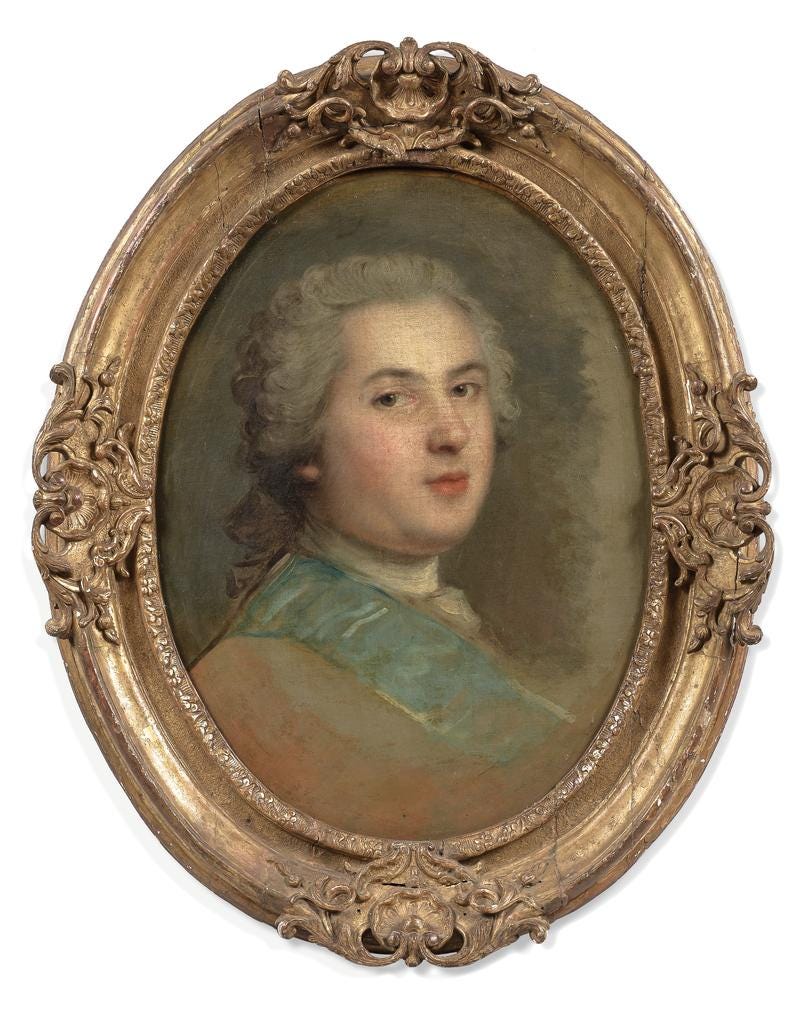
Louis-Auguste, Duc de Berry, the future Louis XVI, was born on August 23, 1754. August 25, the feast of St. Louis of France, was his name-day, and kept with special festivity after he became king in 1774. He was given the same exact baptismal name as his sainted ancestor. A few years ago on Catherine Delors' blog many interesting points were brought up in the comment box about the childhood traumas of Louis-Auguste and how those later affected his reactions to the events of the Revolution.
The tuberculosis would come back to haunt him, infecting his baby daughter Sophie and his oldest son. I think seeing Louis-Joseph die just as he had watched his older brother die long ago revived a lot of the childhood trauma. Death from tuberculosis is not pretty to watch. I am of the opinion that since the death of his oldest son, which coincided with the beginning of the Revolution in 1789, Louis XVI was suffering from clinical depression. In the past, he had acted with much more energy and decision. This is one of the reasons Marie-Antoinette had to become more involved in the political arena during the Revolution.
I think Louis struggled with "melancholy" at various times throughout his life, perhaps due to the childhood infection with tuberculosis. Louis was a man accustomed to strenuous exercise, especially hunting and riding, not to mention his labors as a locksmith. It is my belief that he needed the fresh air and the exertion for both his mental and physical health. With the regimen of exercise and his strictly adhered to routine he was able to keep melancholy from overwhelming him. He was deprived of much of his riding after October 1789 and it had a devastating effect upon his health and state of mind. Losing two of his children, his authority, his home, seeing his people and family suffer, and being deprived of the exercise and fresh air vital to his health, left him in a very bad condition.
If we consider the courage with which Louis XVI faced the worst moments of crisis, including his death, then he is to be admired, especially in the light of everything else. The Queen is to be admired as well, for she could have slipped out of the country with her surviving children and left Louis to his doom (there were many plans for her escape) but she refused to budge from Louis' side. She would not leave him to face the disasters alone.
One of the strangest stories to survive from the ancient world of the
Greeks tells of a mysterious voice heard across the sea announcing
something almost unthinkable. According to the voice, the Greek god Pan
was dead.
The story was recorded by the Greek philosopher and historian Plutarch in his work On the Obsolescence of Oracles,
written during the Roman period. Rather than recounting a familiar myth
about a god battling monsters or interfering in human affairs, Plutarch
presented the episode almost like a contemporary report. He included
named witnesses, specific geographical locations, and even an
investigation allegedly ordered by the Roman emperor.
The story raises an enduring mystery about what Plutarch believed had
happened and why the death of Pan would have been considered such a
remarkable event. It also offers a glimpse into how ancient Greeks
understood their gods, oracles, and the changing religious world around
them. (Read more.)
Acclaimed novelist Joyce Carol Oates had no issue tweeting that
“a friend who is a literary agent told me that he cannot even get
editors to read first novels by young white male writers, no matter how
good; they are just not interested.” And, without a hint of irony,
followed up that statement with “this is heartbreaking for writers who
may, in fact, be brilliant, & critical of their own ‘privilege.’”
Although she is willing to recognize that young white men may be
talented and barred from literary opportunities, she cannot help but
equalize the statement with ludicrous notions of “privilege” where there
is anything but.
None of this is especially controversial within the industry itself. By 2021, there was not a single white male millennial on the Times’s
“Notable Fiction” list; the same was true in 2022, and only one
appeared in each of the next two years. Demographic transformation of
American publishing is measured, publicized, and, in many quarters,
celebrated. The question is not whether the literary establishment has
changed, but whether its new priorities have altered the kind of
literature it is capable of producing. If the aspiring Roth or McCarthy
today finds fewer editors willing to take his manuscript seriously (not
because of its prose but because of the demographic profile of its
author), that represents more than an injustice to individual writers.
It represents a narrowing of the imaginative possibilities of American
literature itself.
Beyond the disparities in race among
novelists and literary agents lies the much more pervasive racial
disparity in short-form magazines where fiction writers can build a
portfolio. These magazines brazenly cater to just about every favored
identity group imaginable. They offer fee-free submissions for minority groups; they have exclusive windows to segregate who may submit; and they champion these groups
as combating historical overrepresentation from white men. This, of
course, can only go on so long before these identity groups, themselves,
become the overrepresented ones.
The most commonly offered explanation for this obvious discrimination against white men is that publishing is simply “correcting historical imbalances.”
An industry that once professed indifference to the identity of the
author increasingly treats identity as a meaningful criterion in and of
itself. Literary merit is now expected to coexist with representational
goals, institutional diversity targets, and a moral vocabulary inherited
from Marxist cultural theory. The result is a publishing culture that
increasingly evaluates fiction not as art but rather as an instrument of
social justice.
What does this mean for us? What does this mean for the West? (Read more.)
Queen Marie-Antoinette, wife of King Louis XVI of France and
Queen Henrietta Maria, wife of King Charles I of England were two of the
most notorious queens in European history. They both faced accusations
that they had transgressed social, gender and regional norms, and
attempted to defend themselves against negative reactions to their
behaviour. Each queen engaged with the debates of her time concerning
the place of women within their families, religion, politics, the public
sphere and court culture and attempted to counter criticism of her
foreign origins and political influence. The impeachment of Henrietta
Maria in 1643 and trial and execution of Marie Antoinette in 1793 were
also trials of monarchical government that shaped the English Civil Wars
and French Revolution.
I was lucky enough to receive a copy from Palgrave Macmillan of Queenship and Revolution in Early Modern Europe: Henrietta Maria and Marie Antoinette by Carolyn Harris, which is a part of their Queenship and Power series. Marie-Antoinette has had much written about her, while Henrietta Maria seems to have been quite forgotten. I only recently received a new biography about her.
The comparison between Marie-Antoinette and Henrietta Maria is
perhaps not one that immediately comes to mind, but both women lived in a
time of civil unrest, albeit over 100 years apart. Both women were
childless for the first part of their marriage and suffered for it. It’s
a rather interesting comparison, and I especially enjoyed reading about
Henrietta Maria’s impeachment, about which so little appears to
have been written. Henrietta Maria managed to escape to France, but
without her husband who was eventually executed in 1649. Marie-Antoinette and her family also attempted to escaped, but they were
caught, and both Marie-Antoinette and her husband were executed by
guillotine. (Read more.)
Philosophers use the terms “identity,” “self,” and “subject”
frequently, yet much less frequently do they define them adequately;
something similar is true for neuroscientists studying self-awareness.
In my historical work, I have shown that “identity” has meant three
distinct but related ideas in the history of philosophy and related
disciplines.[4]
The first meaning, or Identity1, is endurance through time. I am the
same person I was yesterday, and I will be the same person if I wake up
tomorrow. This is the most basic sense of identity, as well as the most
ancient meaning of the term. Identity2 concerns what the Platonic
schools called the “true self.” When I answer the Delphic Oracle’s
command to “know yourself,” what is it that I know? Identity2 is the
most central meaning of identity. Identity3 is how I experience
and know myself, both emotionally and cognitively. This is the realm of
consciousness, and it is the most accessible aspect of identity.
Here I will focus on the last meaning of identity, for the simple
reason that neuroscientists tend to reduce this multivalent term to this
one meaning. They are not alone in doing this; the whole trajectory of
modern thought on identity promotes this reduction, as I show in my book
Body and Identity. Like all reductions, however, much is lost, and it promotes many unnecessary confusions.
After surveying common patterns and specific proposals in the field
of consciousness studies (analytic philosophy, cognitive psychology, and
neuroscience), I will at a later time describe the various conceptual
problems that arise within it. There I will sketch a better account of
consciousness and bring us back to the topic of identity and draw a few
conclusions. (Read more.)
Marie-Antoinette "en gaulle" by Elisabeth Vigée-Lebrun
Generalissima: A Novel of Henrietta Maria
Book Two in the "Henrietta of France Trilogy"
#1 in Kindle Biographies of Royalty!
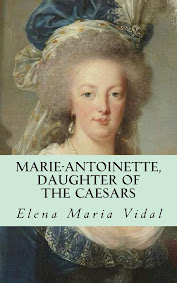
Marie-Antoinette, Daughter of the Caesars: Her Life, Her Times, Her Legacy
An Audible Bestseller
Marie-Antoinette, Daughter of the Caesars: Her Life, Her Times, Her Legacy
An Amazon Bestseller
Trianon: A Novel of Royal France
My Queen, My Love: A Novel of Henrietta Maria
Available from Amazon
The Saga of Marie-Antoinette's daughter, Marie-Thérèse of France
A Novel of the Restoration
In Kirkus Top 20 for 2014! And #1 in Kindle Historical Mystery, Thriller & Suspense Fiction
"In every Eden, there dwells a serpent . . . ."
#1 in Kindle History of France!
The Night's Dark Shade: A Novel of the Cathars
Join me on Facebook!
Elena Maria Vidal Author Page
Join me on X!
@emvidal
Visit My Tumblr!
East of the Sun, West of the Moon
St. Teresa of Avila, pray for us!
"...Bud forth as the rose planted by the brooks of waters. Give ye a sweet odor as frankincense. Send forth flowers, as the lily...and bring forth leaves in grace, and praise with canticles, and bless the Lord in his works." —Ecclesiasticus 39:17-19
The fact that a link is provided here in no way constitutes an endorsement of everything on the other end of the link.
Comments Policy
Comments are moderated. If a comment is not published, it may be due to a technical error. At any rate, do not take offense; it is nothing personal. Slanderous comments will not be published. Anonymity may be tolerated, but politeness is required.
I would like to respond to every comment but my schedule renders it impossible to do so. Please know that I appreciate those who take the time to share their thoughts.







 My books on the two Queens available