Share


The Little Arab
2 days ago


An indulgence is a remission before God of the temporal punishment due to sins whose guilt has already been forgiven, which the faithful Christian who is duly disposed gains under certain prescribed conditions through the action of the Church which, as the minister of redemption, dispenses and applies with authority the treasury of the satisfactions of Christ and the saints.The custom of gaining indulgences for the living and the dead goes back to the early Church. As explained by Fr. William Saunders:
An indulgence is partial or plenary according as it removes either part or all of the temporal punishment due to sin.The faithful can gain indulgences for themselves or apply them to the dead.” (CCC, 1471)
From the earliest days of the Church, individuals have offered prayers and good works for the salvation of sinners. In those times, absolution was not granted until both confession and penance had been performed (and the penances were very lengthy in duration, even lasting months). Penitents oftentimes asked martyrs facing death for aid (to offer their sufferings for the atonement of the penitents’ sins) so that full reconciliation with the Church and re-admission to the sacraments could be obtained more speedily. When a martyr offered his sufferings to expiate the sins of a penitent, the Church recognized this charitable act and granted absolution. For example, St. Cyprian (d. 258) stated, "Those who have received certificates from the martyrs and are able to be assisted by their privileged position before God" may be absolved and "come to the Lord with the peace which the martyrs, as indicated in letters sent to us, desired to be given them" ("Letter to the Clergy," 18 (12), 1). In such cases, the penitents received an indulgence which satisfied their penance. Herein lies part of the basis for our belief. (Fr. William Saunders, The Catholic Herald, January 27, 2005)However, it is not only on All Souls Day but on every day of the year that Holy Mother Church prays for her departed children. Every Mass is offered for both the living and the dead. According to the Council of Trent, the Holy Sacrifice of the Mass is the chief means of bringing succor to the souls in Purgatory. The prayers and good works of the faithful can also benefit the dead.
Blessed are they who are called to the marriage-supper of the Lamb! Blessed are we all, who have received in baptism the nuptial robe of holy charity, which entitles us to a seat at the heavenly banquet! Let us prepare ourselves for the unspeakable destiny reserved for us by love. To this end are directed all the labors of this life; toils, sufferings, struggles for God's sake, all adorn with priceless jewels the garment of grace, the clothing of the elect....Let us sing, then, with the psalmist: "I rejoiced at the things that were said to me: We shall go into the house of the Lord...." (Dom Gueranger's The Liturgical Year, Vol XV, p.58)The Little Flower greatly relied upon the intercession of the saints. In her autobiography, St Thérèse wrote:
Remembering the prayer of Eliseus to his Father Elias when he dared to ask him for his double spirit, I presented myself before the angels and saints and I said to them: 'I am the smallest of creatures; I know my misery and feebleness, but I know also how much noble and generous hearts love to do good. I beg you then, O Blessed Inhabitants of Heaven, I beg you to adopt me as your child. To you alone will be the glory which you will make me merit, but deign to answer my prayer. It is bold, I know; however, I dare to ask you to obtain for me your twofold spirit.' (The Story of a Soul, pp.195-196)Shortly before her death, St. Thérèse had a dream in which the Venerable Mother Anne of Jesus, one of the foundresses of the Carmelite reform in the sixteenth century, assured her that she would soon possess eternal beatitude. The saint of Lisieux was surprised because, as she penned:
I was, up until then, absolutely indifferent to Venerable Mother Anne of Jesus. I never invoked her in prayer and the thought of her never came to mind....And when I understood to what a degree she loved me, how indifferent I had been towards her, my heart was filled with love and gratitude, not only for the saint who visited me, but for all the blessed inhabitants of heaven. (The Story of a Soul, pp.191-192)We will never know in this life how individual saints, perhaps ones we have never heard of, have interceded for us. Through prayer and the Eucharist, we can draw upon the merits of our brothers and sisters in Paradise. Such richness is ours in the Communion of Saints, for all belong to Christ.

The everyday dress of women should work to their advantage and call to mind the inherent dignity of a child of God. There is tremendous latitude in style today, but few current fashions really flatter women. From the nearly indecent clothing once restricted to red-light districts to androgynous athletic gear, young women are pushed into choosing styles that make social statements that may be far from what they have in mind. (Kineke, Genevieve. The Authentic Catholic Woman, Servant Books, 2006)St. Paul enjoined his Christian women converts to cloth themselves modestly. "In like manner women also in decent apparel: adorning themselves with modesty and sobriety, not with plaited hair or gold, or pearls or costly attire."(1Timothy 2, 9) Two thousand years later, the Catechism of the Catholic Church echoes the words of the Apostle: “Modesty protects the mystery of persons and their love…. Modesty is decency. It inspires one’s choice of clothing.” (CCC, 2522)
Remember, it’s about moderation. Not too much one way, not too much the other. Take, for example, someone who purposely 'dresses down.' This person ignores everyday decorum and dresses in a sloppy, careless manner. Maybe this is done on purpose in an attempt to show disregard for vanity, but what people like this end up doing is drawing undue attention to themselves, which is a lack of humility. ‘Dressing down’ or looking frumpy is not a sign of holiness! (Hammond, Colleen. Dressing With Dignity, TAN Books and Publishers, 2005, p.80)In the thirteenth century, St Thomas Aquinas tackled the various issues of women’s attire in his Summa Theologica. Exploring the question of whether devout women could lawfully use cosmetics and wear pretty clothes, the saint and Doctor of the Church stated:
A woman may use means to please her husband, lest through despising her he fall into adultery. Hence it is written (1 Cor. 7:34) that the woman ‘that is married thinketh on the things of the world, how she may please her husband.’ Wherefore if a married woman adorn herself in order to please her husband she can do this without sin….(Summa Theologica, Question 169, Article 2)St. Thomas reflects in the same article that unmarried women, who feel called to the vocation of marriage, may also “lawfully adorn themselves,” as long as they, like their married sisters, avoid immodesty and vanity.
St. Francis de Sales does tell us that pious women should be well-dressed, but this doesn’t mean they must become slaves of fashion. There’s a way of dressing which is attractive, even elegant, but at the same time modest and simple. More importantly, attractiveness shouldn’t be reserved for guests and those you meet outside the home, while you ‘let yourself go’ when you’re alone with [your husband.] (Von Hildebrand, Dr. Alice. By Love Refined: Letters to Young Bride. Sophia Institute Press, 1989, p.116)I look at it this way-- what would it say to our daughters if we who stay home with them looked like drudges all the time? It says that being a stay-at-home wife and mother is boring, tedious, dehumanizing and slavish. It would make any girl want to run screaming from motherhood. And while it is difficult, tedious and challenging at times, it is also a joyous, creative, God-given vocation. Being a Christian wife and mother has a certain dignity; it is a gift and privilege and the girls (and boys) need to be shown it as such. How we dress can say how we feel about what we are doing, that keeping our houses going for our families is of value, and that our husbands are worth looking nice for. And the children then a get a sense of their own Christian dignity, as well.

Here is an article of mine originally published in the May/June 2007 Canticle Magazine.
"A Gentle Witness"
Some of the greatest souls are those unknown to the world, whose loving influence has, nevertheless, far-reaching effects. There is a painting of the Visitation showing Saint Elizabeth with arms open wide to welcome the Blessed Virgin. The representation of Elizabeth always reminded me of a Visitandine nun, Mother Mary Paula, a petite, slightly bent frame, shrouded with a veil, vibrant with the Holy Spirit.
My first teaching job was at the Visitation Academy in Frederick, Maryland. I would come to regard Mother as a spiritual mentor, from the simple truths she imparted in her words and by her life. I learned by example the power of gentleness, as promoted by the teaching of Saint Frances de Sales, founder of the Visitation Order, who said: “Honey catches more flies than vinegar.”
“Do you see this chapel, Mary?” she asked. “The sisters who built this chapel did not even have money for food. But they had faith, great faith. All we have to do is pay a few bills; out of nothing they built this masterpiece which gives glory to God.”
Dear Jesus, please help us with our lessons. Help us to use our lessons for you, and everything else we do. And make us grow in wisdom, age, and grace like you. And make our hearts like yours. And make us good housekeepers like Our Blessed Mother, and grant us your peace. Amen.
But to what shall I liken this generation? It is like children sitting down in the markets who, calling to other children, say, “We played the flute for you and you did not dance; We sang a dirge and you did not beat yourselves” (Matthew 11: 16-24).
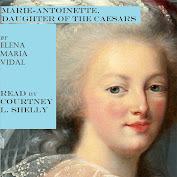
This Scripture came to mind as I waded through the tragic story of Marie-Antoinette, Queen of France, and her only surviving child, Marie-Thérèse, known as Madame Royale. What fragments we know of the former are brief and almost wholly negative, so we must be grateful to Elena Maria Vidal, who has provided two beautiful books, exhaustively researched and yet completely accessible for those who wish to understand the events from a very personal perspective.
So many fundamental questions are raised by the events surrounding these heroic women. What is the justification for a hereditary monarchy? What is the relationship between the Church and secular authority? What are the responsibilities of the rich in the face of poverty? What is the relationship between patriotism and Christian duty? Can authentic charity and humility adequately counteract lies and innuendo? How does hypocrisy undermine the ability to evangelize? What is the Christian response to depravity and evil – and how does one protect children from it? Why do people take glee in the suffering of others – even when that suffering will not change their own status?
And yet the most important question is simply this: how does a woman embrace authentic femininity and motherhood in the most trying of circumstances?
Marie-Antoinette, an Austrian princess was wed to the Dauphin of France in 1770, and each, being conscientious and well-formed Catholics, strived to serve the other and France according to the will of God. Forces were already combining against them, stirring the masses to despise a foreign influence on the throne, to question the monarchy as an institution, to envy the nobility for their money and influence, and to rebel against the Church as a “repressive” structure. These forces represented various and competing interests – the Masons who despised the Church, the poor who wanted food and jobs, and various rival factions within the nobility who simply wanted more power.
The result was the unleashing of years of tumultuous fury – a fury which ultimately swallowed many of its own instigators, and which has not subsided to the present. With such enemies conspiring against the institutions of Church and crown, there was nothing the royal family could have done to change events. Marie-Antoinette was exasperated over accusations of extravagance for her silk gowns, yet likewise was attacked for putting the silk manufacturers at risk if she wore muslin. When she attempted to live a life of dignified transparency, she was accused of promoting opulence, yet when she retired to a preferred life of simplicity and shelter, she was suspected of subversive decadence – for why else would she avoid the public eye?
Her trials underscore one basic tenet in life – that one cannot choose a course of action to please others, rather all decisions must be made solely to please God. The changing winds of public opinion and unpredictable responses of others are hardly stable indicators of anything. Conversely, we are thus reminded not to impugn the motives of others, for we cannot know them, nor can we truly understand their trials and challenges. We must presume that all operate in good faith, according to the lights available to them – and we are called to respond consistently with love. God alone will judge in the end.
The overarching backdrop of this heartrending story is that none of us can choose the circumstances into which we are born, and yet those unique circumstances are the very proving ground of virtue, our own gymnasium of charity. All married women are called to support their husbands – whether princes or private citizens, to form their children to be saints according to their state in life, and to create sanctuaries of holiness amidst the this “vale of tears.” Marie-Antoinette and Marie-Thérèse each did that in the most trying of settings. They clung to the sacraments, prayed diligently for the cup of suffering to pass, and yet drank it dry rather than deny God or family. While the Church in France was reviled and bled, they stood firm as living icons of the martyred bride.
The answer to the most important question stated above is simply: only with God’s grace. Both women were faithful to that in desperate and tragic circumstances. Their lamps shone brightly in the contemporary gloom, consoling their own husbands who endured scorn and political intrigue, and well as Jesus, the Bridegroom, Who was defiled on every altar. Their success was ultimately in fidelity – despite the visible outcome, and stands as a stark lesson to all of us. Since they didn’t stoop to dance to capricious pipes out of season, they will, no doubt, rejoice to celestial hymns of praise at the nuptial feast. That we could all be so blessed.