Monday, February 9, 2026

On the Waterfront (1954)

 On The Waterfront - Hollywood's "Real Contenda" 

From Word on Fire:

The film became the definitive work of “actors’ director” Elia Kazan, inspiring countless artists, including Martin Scorsese and Robert De Niro, who called Kazan “a master of a new kind of psychological and behavioral faith in acting.” Marlon Brando’s powerful, complex, and vulnerable performance as Terry Malloy set the standard for acting in the generations to come, with Kazan concluding, “If there is a better performance by a man in the history of film in America, I don’t know what it is.”

As On the Waterfront was included in the Vatican’s 1995 Alcuni film importanti list, here are some of the Catholic themes woven throughout the film. 

Elia Kazan (1909–2003) was a Greek-American filmmaker, producer, screenwriter, and actor, described by Stanley Kubrick as “without question, the best director we have in America, and capable of performing miracles with the actors he uses.” Kazan started his career in acting and was an early adherent to the new “method acting” school under the direction of Lee Strasberg. From the outset, Kazan had a particular attraction to stories exploring personal and social issues, including racial prejudice, domestic violence, and union corruption: “I don’t move unless I have some empathy with the basic theme.”

He acted in a few films but found acclaim for his directorial work at the helm of classics like Gentlemen’s Agreement, Pinky, A Streetcar Named Desire, East of Eden, and On the Waterfront. Kazan and the young Marlon Brando first worked together on the Broadway adaptation—and subsequent film adaptation—of Tennessee Williams’s play A Streetcar Named Desire, the story of Blanche DuBois who leaves her wealth to live in the working-class apartment of sister Stella and brother-in-law Stanley (Marlon Brando).

Brando later wrote: 

I have worked with many movie directors. . . . Kazan was the best actors’ director by far of any I’ve worked for . . . the only one who ever really stimulated me, got into a part with me and virtually acted it with me. . . . He was an arch-manipulator of actors’ feelings, and he was extraordinarily talented; perhaps we will never see his like again. 

After the success of Streetcar, Kazan and Brando collaborated again on Viva Zapata! before embarking on their most ambitious project to date, On the Waterfront. The film was inspired by the 1948 New York Sun article series “Crime on the Waterfront” by Malcolm Johnson, which outlined corruption on the New Jersey waterfront. (Read more.)

Amazon.com: On The Waterfront [DVD] : Movies & TV

 Marlon Brando and Eva Marie Saint Embrace Photograph - MARLON BRANDO and EVA MARIE SAINT in ON THE WATERFRONT -1954-. by Album

Share

HUGE WIN on Deportation

 From Tierney's Real News:

The Fifth Circuit affirmed the Trump administration’s policy of detaining illegals arrested in the interior of the United States without a bond hearing to challenge the detention, effectively allowing mandatory detention. Illegals can now be detained for longer periods without release on bond and mass deported quickly....For over thirty years, when ICE arrested illegal aliens living inside the country - not on the border, but in places like Minneapolis or Milwaukee - those detainees could slow deportation down to glacial speed by requesting a “bond hearing” to argue for their release on bail.

Nobody really knew why; it was just how things were done. Norms and customs.

But the Trump Administration took a fresh look at the statute and said, hey, wait a minute, the law says people “seeking admission” to the United States don’t get bond hearings. It just says “shall detain.” Shall.

It also says that, if you’re here illegally, you’re still considered to be ‘seeking admission’— you just skipped the line.

In other words, a person who never bothered to apply for citizenship doesn’t magically get more rights than someone who at least tried.

So, the Trump administration took it to court and the Fifth Circuit agreed, 2-1.

Judge Edith Jones essentially ruled that thirty years of doing it wrong doesn’t automatically make it right.

The decision might sound technical, but the practical implications were huge.

NOW, if an alien crossed illegally and ICE finds them - wherever they are - they’re done. They won’t walk American streets freely again unless they win in their removal proceeding (which is highly unlikely).

In the meantime, they must stay in detention. They can’t go home to get their things. They are simply done, and the longer they fight, the longer they remain in detention.

Their choice now is to either agree to deportation, or cool it in detention while their lawyers waste time on futile filings. Then they get deported anyway when they lose. (Read more.)


Share

The West Must Restore Christendom to Survive

 From TFP:

Dom Bertrand’s lineage reads like a panorama of some of Europe’s most prominent monarchs. Besides all the Portuguese royals, his family tree includes Emperor Maximilian I of Austria, Charlemagne and Charles V of Spain. He is especially proud to descend from canonized saints, including Saint Elizabeth, Queen of Portugal, Saint Nuno of Saint Mary, Saint Vladimir the Great and Saint Louis IX of France.

In 1807, as Napoleon conquered vast portions of Europe, Portugal found itself under imminent threat. To outmaneuver the French, the Prince Regent of Portugal, Dom João VI—also a direct ancestor of Dom Bertrand—transferred the capital of the sprawling, four-continent Portuguese Empire to Brazil in 1808. The move ensured the monarchy’s survival and ushered in a new era in the Americas.

From that moment on, Brazil became the seat of the Portuguese Empire, with the city of Rio de Janeiro as its capital. The arrival of the Portuguese court transformed Brazil, which, until then, had been a colony with no national unity beyond its geography and was composed of nearly autonomous provinces. The country’s cohesion as a nation grew stronger, leading to a notable period of progress in which libraries, schools, industries and urban development initiatives, among other advancements, flourished.

In 1822, Dom João VI’s son, Dom Pedro I, proclaimed Brazil’s independence, turning it into a new and thriving empire itself with one of the world’s most powerful navies, the first long-distance submarine telegraph cable connecting South America to Europe, the world’s first modern postal systems, one of the highest literacy growth rates in the Western Hemisphere, and the biggest industrial park in Latin America. (Read more.)

Share

Sunday, February 8, 2026

The Execution of Mary Queen of Scots


February 8 is the anniversary of the execution of Mary Stuart in 1587. The Queen of Scots, having been unjustly imprisoned by her cousin Queen Elizabeth of England for twenty years, was beheaded after a sham trial. According to an eye-witness account:
Then she, being stripped of all her apparel saving her petticoat and kirtle, her two women beholding her made great lamentation, and crying and crossing themselves prayed in Latin. She, turning herself to them, embracing them, said these words in French, 'Ne crie vous, j'ay prome pour vous', and so crossing and kissing them, bad them pray for her and rejoice and not weep, for that now they should see an end of all their mistress's troubles.

Then she, with a smiling countenance, turning to her men servants, as Melvin and the rest, standing upon a bench nigh the scaffold, who sometime weeping, sometime crying out aloud, and continually crossing themselves, prayed in Latin, crossing them with her hand bade them farewell, and wishing them to pray for her even until the last hour.

This done, one of the women have a Corpus Christi cloth lapped up three-corner-ways, kissing it, put it over the Queen of Scots' face, and pinned it fast to the caule of her head. Then the two women departed from her, and she kneeling down upon the cushion most resolutely, and without any token or fear of death, she spake aloud this Psalm in Latin, In Te Domine confido, non confundar in eternam, etc. Then, groping for the block, she laid down her head, putting her chin over the block with both her hands, which, holding there still, had been cut off had they not been espied. Then lying upon the block most quietly, and stretching out her arms cried, In manus tuas, Domine, etc., three or four times. Then she, lying very still upon the block, one of the executioners holding her slightly with one of his hands, she endured two strokes of the other executioner with an axe, she making very small noise or none at all, and not stirring any part of her from the place where she lay: and so the executioner cut off her head, saving one little gristle, which being cut asunder, he lift up her head to the view of all the assembly and bade God save the Queen. Then, her dress of lawn [i.e. wig] from off her head, it appeared as grey as one of threescore and ten years old, polled very short, her face in a moment being so much altered from the form she had when she was alive, as few could remember her by her dead face. Her lips stirred up and a down a quarter of an hour after her head was cut off.
There is a great deal of similarity between Mary of Scotland and her descendant, Marie-Antoinette. Both possessed immense beauty, charm, and joie de vivre, along with the ability of inspiring either great love or great hatred. Both are icons of romance and passion, when, in all probability, they had very little actual romance or passion in their personal lives, especially when compared to the sorrows they had to bear. Mary and her first husband, Francis II of France, seemed to have a deep and genuine affection for each other, in spite of the fact that he was afflicted with health problems (like many of the Valois.) Her other two husbands, however, were total and complete wretches, who made Mary's life a living hell. Antonia Fraser, in her stellar biography of Mary, conjectures that the Scottish queen fell in love with her cousin Darnley, before she found out what he was. Other biographers, such as Alison Weir and John Guy, believe that she married Darnley not out of love but to solidify her claim to the English throne, since Henry Stewart was also an heir. At any rate, Darnley was abusive in every way, and unfaithful. He plotted against her, threatening to declare her child illegitimate, telling the Pope and the King of France that she was a bad Catholic, while participating in the murder of her secretary David Rizzio before her eyes. (I might have been tempted to put gun powder under his bed, too.) However, there is overwhelming proof that Mary had nothing to do with Darnley's death, as Fraser, Guy, and Weir all describe in detail. I would especially recommend Alison Weir's excellent Mary Queen of Scots and the Murder of Lord Darnley, in which the events of Kirk o'Field are retraced with precision, exonerating Mary beyond all doubt. Weir shows how Mary was planning to reconcile with Darnley and live with him again, for their son's sake, when the Scottish lords had Darnley strangled, before blowing up his house. As for the marriage with Bothwell, all three biographers mentioned above believe that Mary was kidnapped and raped by him; when she discovered that she was pregnant she assented to a wedding. There was no great romance. She later tried to have the marriage annulled. 
 
 Mary should have returned to France after the defeat at Carberry Hill and her subsequent escape from her initial captivity. In France, she had lands as Dowager Queen, and her grandmother was still alive. Instead, she chose England and throwing herself upon Elizabeth's mercy. Big mistake. But I think she did not want to be too far from her infant son James, with whom she hoped to be reunited, as only a mother can hope. Mary, like Marie-Antoinette, is often dismissed as being stupid. She did make some imprudent choices, that's for certain. John Guy's biography carefully offers proofs that, in spite of everything, Mary often showed herself to be an astute politician, who successfully played her enemies against each other, avoiding some potential disasters early in her rule. The fact that her personal reign lasted as long as it did, in the turbulent era of the Scottish Reformation, when she was surrounded by those who believed she was Jezebel just because she was Catholic, is remarkable. She would have had to have been more ruthless and cruel, less merciful and tolerant, to have been a successful monarch in that particular time and place. Her abdication, and many of the disastrous decisions she made in those fateful months, happened when she was recovering from assault and a miscarriage/stillbirth. She was obviously going through some kind of breakdown. Almost half of Mary's life was spent as a prisoner, separated from her only surviving child, who was taught to despise his mother as a harlot. When accused of plotting Elizabeth's murder, forged letters were used against her, and she was deprived of counsel. As she declared at her trial:
I do not recognize the laws of England nor do I understand them, as I have often asserted. I am alone without counsel or anyone to speak on my behalf. My papers and notes have been taken from me, so that I am destitute of all aid, taken at a disadvantage.
Before her execution, Mary was told that her life would be the death of the Protestant religion, but her death would be its life. The ultimate reason for her demise was the fact that she was a Catholic queen. With that in mind, she approached the scaffold.
Share

How George Soros Built the Empire Without Ever Taking the Throne

 From Alexander Muse at Amuse on X:

There is a comfortable way to think about political influence in a democracy. Candidates make arguments. Voters choose. The winners pass laws. The losers regroup. Money matters, of course, but in the familiar way, it buys ads, staff, and the occasional glossy mailer. On this picture, a billionaire donor is a loud person with a megaphone. He can amplify a message, but he cannot rewrite the terms of the conversation.

George Soros does not fit that picture. The best way to understand him is not as a rich man with opinions, and not as a philanthropist with a large heart, but as a strategist of systems. He has not merely pushed particular policies. He has built an infrastructure designed to decide, in advance, which policies are even thinkable, which institutions are trusted, which officials are promoted, and which forms of social disorder are excused as “the work of justice.” This is not ordinary politics. It is meta politics.

Start with a simple distinction. There is influence over outcomes, and there is influence over the mechanisms that generate outcomes. The first is visible. It shows up in campaigns, headlines, and election night returns. The second is often invisible. It lives in the training programs, the grant pipelines, the professional associations, the litigation shops, the media “watchdogs,” the academic credentialing, the philanthropic laundries, and the low salience offices that quietly control enforcement. The second kind of influence is vastly more durable. It survives a news cycle, an election, and sometimes an entire generation.

Soros has invested, for decades, in that second kind of influence. He does not need to “control” the world in a literal, comic book sense. A man can be a puppet master without pulling every string. He needs only to fund the stage, hire the lighting crew, select the scripts, and ensure that the critics all review the same play. At that point, the actors and audience can congratulate themselves on their freedom while walking through corridors that have been built for them. (Read more.)

Share

The Medieval Powerhouse That Was the Kingdom of Bohemia

 From The Collector:

In the 13th century, Emperor Frederick II and his allies were determined to control as much of the Mediterranean as possible. Additionally, the empire faced internal chaos during the Great Interregnum after Frederick’s death. As a result, the Bohemians were  emboldened to take as much territory from their neighbors as possible. They hoped to build a buffer zone between their territory and the Mongols invading from the east. In 1241, King Wenceslaus I, Ottokar I’s son, repelled a Mongol attack on Bohemia, ensuring the kingdom’s security.

Wenceslaus’s son, Ottokar II, became king in 1253 and ruled until his death in 1278. He had clashed with his father, even trying to overthrow him in a revolt that failed. As a result of his marriage to Emperor Frederick’s sister Margaret, he became the Duke of Austria, adding this territory to the Bohemian kingdom. Ottokar II was a warrior king who vowed to expand Bohemia’s borders, earning himself the nickname “The Iron and Golden King.” He even sent expeditions to the Baltic Sea, defeating the Old Prussians and establishing a settlement called Královec, now known as Kaliningrad. At the height of his rule, Bohemian territory stretched from Austria to the Adriatic Sea.

However, King Rudolf I, a member of the Habsburg family who prevailed in the Great Interregnum, began to seize Ottokar II’s possessions. He seized much of the territory in Austria conquered by Ottokar and destroyed his army at the Battle of the Marchfield. However, this did not end the Bohemians’ power. Kings Wenceslaus II and III extended their power to Poland and Hungary, setting up the kingdom for its Golden Age in the 14th century. (Read more.)
Share

Saturday, February 7, 2026

Nicholas and Alexandra (1971)

 Nothing is Written: Nicholas and Alexandra 

The portrayal of the chief murderer of the Imperial Family, Yakov Yurovsky, as a reluctant and humane executioner, has always disgusted me. From Paul Gilbert:

The year 2021 marked the 50th anniversary of the release of the film adaptation of Robert K. Massie’s (1929-2019) classic book Nicholas and Alexandra. Published in 1967, it remained on the New York Times Bestseller List for 46 weeks, and has never gone out of print! Selling more than 4.5 million copies, it is regarded as one of the most popular historical studies ever published. Praised in The New York Times as a “long-needed and balanced account” of the last tsar and his family. In Massie’s study, Nicholas comes across not as the “stupid, weak or bloodthirsty” monarch, as he is often been portrayed by his Western counterparts.

The film version was released on 13th December 1971, and nominated for numerous awards. At the 44th Academy Awards (1972), Nicholas and Alexandra won two awards of six nominations; at the 25th British Academy Film Awards (1972), Nicholas and Alexandra received three nominations; at the 29th Golden Globe Awards (1972), Nicholas and Alexandra received three nominations; and at the 15th Annual Grammy Awards (1973), Richard Rodney Bennett was nominated for Best Original Score Written for a Motion Picture or a Television Special.

The film featured a star-studded cast of notable British actors and actresses: Michael Jayston (1935-2024) as Nicholas II; Janet Suzman [b. 1939] as Alexandra Feodorovna; Irene Worth [1916-2022] as the Dowager Empress Maria Feodorovna; Tom Baker [b. 1934] as Grigori Rasputin; Jack Hawkins [1910-1973] as Count Vladimir Frederiks, the Minister of the Imperial Court; Timothy West [1934-2024] as Dr. Botkin, the court physician; Jean-Claude Drouot [b. 1938] as Pierre Gilliard, the children’s Swiss tutor; Laurence Olivier [1907-1989] as Count Witte, the Prime Minister; Michael Redgrave [1908-1985] as Sazonov, the Foreign Minister; Eric Porter [1928-1995] as Pyotr Stolypin, the Prime Minister after Witte; John McEnery [1943-2019] as Kerensky, leader of the Russian Provisional Government; Michael Bryant [1928-2002] as Lenin; Martin Potter [b. 1944] as Prince Felix Yusupov; Richard Warwick [1945-1997] as Grand Duke Dmitri Pavlovich; among many others.

Personally, I greatly disliked this film for a number of reasons. It is due to the popularity and cult-like status of this film which compelled me to address some of the many factual errors of this film, and that it will serve as a resource for those who have viewed it for the first time. (Read more.)


Share

Virginia Democrats Are Not Playing Beanbag

 From Chronicles:

The election, inauguration, and first 48 hours of the Abigail Spanberger administration in Virginia were a case study in this stark contrast between the two parties and their respective approaches to political power. While Indiana Republicans fought a “principled” battle against giving themselves an edge in the redistricting war, Democrats in Virginia solidified their choke hold on power. Indeed, Virginia Democrats chalked up more wins for their base in that short time than Republicans have for theirs in more than 10 years. 

Legislation promising leftists things such as massive tax hikes, state-funded “gender affirming care,” restoring voting rights to felons, and, yes, gun control, is now working its way through the Democratic-controlled legislature, where most of it is sure to pass and then be signed into law by the new governor. While Trump similarly bombarded the left with a slew of executive orders during his first days in office, it is telling that, even with ostensible majorities in the House and Senate, he had to resort to temporary EOs rather than codified legislation that will outlast his presidency. He had to work alone. 

The Democrats in Virginia instead are working together to pass actual legislation that won’t be so easily undone if Republicans ever retake the governor’s mansion. And, about that, readers should spend some time reading the list of Virginia Democrats’ proposals. Most of them—from gerrymandering to legislation making it illegal to hand-count ballots—are designed to make the prospect of future Republican control of Virginia impossible. (Read more.)

Share

Nancy Guthrie

From Tierney's Real News:

Nancy had limited mobility, many health issues, allegedly did not drive often, had help with housework, yard work and pool work and was reported missing Sunday, February 1, 2026 at noon when she didn’t show up for church. Nancy Guthrie, 84, was last seen on the night of January 31, 2026, at her home in the Catalina Foothills area near Tucson (around Skyline Drive and Campbell Avenue). The home appears large and isolated. Apparently it is a single family home on a large lot in an nice neighborhood near Tucson about 60 miles from the Mexican border.

She was reported missing around noon on Sunday, February 1. According to the Pima County Sheriff’s Department, who is leading the investigation, she was last seen Saturday night around 9:48 p.m. local time at her home in Catalina Foothills. IMHO, I’ve said from the beginning that someone could have stalked her and profiled her for months. Savannah often had her mother on her TV show. They do not know (or they are not saying) if she was targeted because she is Savannah Guthrie’s mother. Savannah Guthrie is also good friends with one of the Bush daughters and they attend the same New York church - so she is well-connected on both sides of the aisle. (Read more.)

Share

Friday, February 6, 2026

Gabrielle d'Estrées and Marie-Antoinette

Vive Henri IV
Vive ce roi vaillant !
Vive Henri IV
Vive ce roi vaillant !
Ce diable à quatre
A le triple talent
De boire de battre
Et d'être un vers galant.
The royalist anthem Vive Henri IV was from Collé's 1770 opera La partie de chasse d'Henri IV. In 1774 it was often sung to honor Louis XVI, became popular again during the Restoration in 1814, as is told in the novel Madame Royale. The lyrics which celebrate the monarch who was seen by the French people as the epitome of justice, kindness, and virility. It was an attempt to identify the Bourbon dynasty with the popular first Bourbon monarch, Henri IV. Louis XVI had also been seen as sharing with the King from Navarre an easy manner with the common folk, as well as a strong sense of justice and love of the hunt. Early in their reign, the King and Queen held a costume ball where everyone came in dress from the era of le bon roi Henri, with Marie-Antoinette herself garbed as Henri's beloved mistress, Gabrielle d'Estrées. It was part of the Queen's attempt to show that she was loved by her husband, and that she was his mistress as well as his wife. During the Restoration, members of the Bourbon family, especially the daughter of Louis XVI, the Duchess of Angoulême, were frequently welcomed with the anthem. After the fall of the Bourbons in 1830, the anthem was no longer played, and soon became a relic of the past. Share

AFI Theater Declines Journalist Mark Judge’s Anti-Communist Film Festival Without Explanation

 From Breitbart:

The AFI Silver Theatre and Cultural Center in Silver Spring, Maryland, has declined journalist Mark Judge’s upcoming Anti-Communist Film Festival without explanation.

As Breitbart News reported last year, Mark Judge, whose book The Devil’s Triangle chronicled his life’s derailment during the Brett Kavanaugh confirmation hearing, launched the anti-communist film festival in Washington, D.C., to commemorate the 20th anniversary of The Lives of Others – winner of the 2006 Oscar for Best Foreign Language Film. After generating significant grassroots support with his GoFundMe and even some interested sponsors, Judge set his sights on the AFI Silver as a potential venue due to its reputation for being a curator of high quality cinematic arts as well as for its mission statement to educate and enrich the community as a 501C3 non-profit.

Starting in October of last year, emails shared with Breitbart News showed that Judge’s correspondence with the AFI had been amicable and professional, with little to no pushback from the event manager about his desired event. In one email, dated in November 2025, the AFI proposed hosting the festival in August due to September being a relatively busy month.

“September is definitely busier for us than August, so the change to August is a good idea, especially if you are considering expanding the scope of the event,” the event manager said. “Are you interested in Silver I, the 400-seat theater, for both days, or would you like to explore renting multiple theaters? This can be challenging for us at any time of the year, but I am happy to find out what’s possible.”

“For every rental, regardless of the scope, we offer technical support and a dedicated stage manager who will be on site throughout your event, so staffing should not be an issue,” the event manager later added.

As the months unfolded, Judge worked on securing sponsorships while correspondence with the AFI remained amicable. However, in January, when Judge informed the AFI that he stood on the verge of securing the Victims of Communism Memorial (VOC) Foundation as a potential sponsor, the event manager suddenly informed him that prices had increased – the first since it opened in 2003.

“I look forward to learning more about what you and VOC are planning for the Silver. I want to ensure we’re all aligned and confirm what’s feasible on our end before your internal planning progresses too much further. I haven’t yet asked our Programming Director for availability, as I’m waiting for more details from you,” the event manager said.

“Additionally, I’ve just learned that our rental rates will increase for events booked after May, marking our first increase since we opened in 2003,” the manager added. “In September, I quoted you $3,900 for a 2.5-hour event in Silver I, and this will now be $4,400. I apologize for the bad news, but I wanted to give you a heads-up so you can notify VOC if needed.”

That correspondence occurred in early January of this year; nearly three weeks later, after Judge secured the VOC as an official sponsor, the AFI informed Judge it would not be able to host his event. (Read more.)


Share

Tocqueville: A Thinker for Uncertain Times

 From Villa Albertine:

First published in 1835, Alexis de Tocqueville’s Democracy in America became an instant classic in the U.S.—but in his native France, the author was met with suspicion. Branded “Tocqueville the American,” he wrote a bestselling book that was praised and doubted in equal measure. Historian Françoise Mélonio, whose new biography Tocqueville was published in France in September 2025, argues that his vision of democracy, rooted in civic participation and shared responsibility, remains vital today for both the U.S. and France.

STATES Who was Tocqueville when he left for America in 1831, and what were his motivations for going there? 

FRANÇOISE MÉLONIO In my biography, I want the reader to be able to understand this multifaceted politician and thinker and emphasize that a person’s ideas are inseparable from the events of their life. Tocqueville’s trip to America can be explained first and foremost by his family background. Tocqueville was the great-grandson of Malesherbes, a major Enlightenment figure and a magistrate of the noblesse de robe (nobles of the robe), French aristocrats whose rank came from holding judicial or administrative posts. Malesherbes was a defender of the people against the tax-hungry monarchy, and he was director of the Librairie (the royal administration responsible for regulating and censoring printed works). He championed Diderot’s Encyclopédie even though he was tasked with policing its publication. When his own subordinates threatened to seize the proofs for it, he went so far as to move them to his own home. Malesherbes defended Louis XVI before the National Convention and was guillotined in 1794 as a result. He was a constant role model in Tocqueville’s life as a liberal, independent thinker. 

On his mother’s side, Tocqueville’s family had a history of intellectual brilliance, but they were deeply scarred by revolution. After both Malesherbes and an uncle were guillotined, Tocqueville’s parents narrowly escaped execution thanks to the fall of Robespierre. All this fueled his persistent dread of revolutions, which would be rekindled in France in 1830 and 1848. It was this trauma that drove him to pursue a nonrevolutionary model of democratic (and republican) society—one that could strike a balance between freedom and order. 

Tocqueville was a judicial magistrate, like his ancestor Malesherbes, when he set off in 1831 at age twenty-six. Entry-level magistrates were unpaid at the time, meaning they invariably came from wealthy backgrounds. After the July Revolution of 1830, Tocqueville no longer saw a future in the judiciary, so he turned to politics and found a solution in the form of a trip to America. He planned to examine the country and its relatively stable democracy and return with an understanding that would benefit France. This trip was an urgent quest to find answers that would be of use to his home country. (Read more.)


Share

Thursday, February 5, 2026

"Dramatic and Compelling"


From the Historical Novel Society:

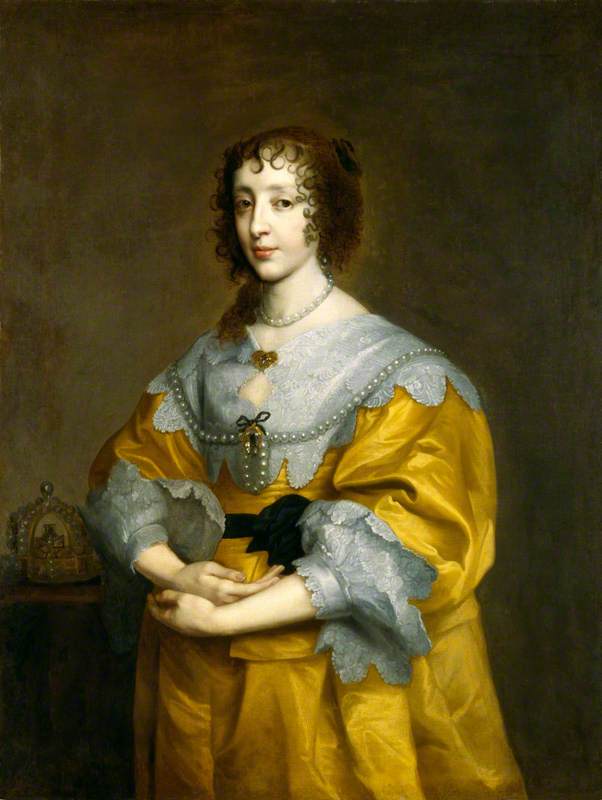
Generalissima is the second volume in Vidal’s trilogy on Queen Henrietta Maria, wife of King Charles I of England and sister to Louis XIII of France. This installment traces her life from the unrest that sparked the civil wars of the Three Kingdoms to her dramatic flight to France in 1644.

The novel is divided into two parts. The first centres on the queen’s twin obsessions: converting Charles and their family to Roman Catholicism and preventing the marriage of their eldest daughter to the Prince of Orange. But as the Puritans gain strength, Charles refuses decisive action and Henrietta departs with their older children, carrying her jewels and valuables to sell for arms and munitions in Europe. The second part follows Henrietta in her role as Generalissima, revealing a resolve and strategic boldness that Charles lacks. She is willing to take the risks that might have preserved the monarchy, yet as a French, Catholic woman, she is not heeded. By 1644, after a series of dramatic events, the stage is set for the trilogy’s final volume. (Read more.)
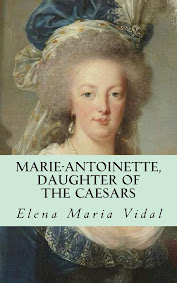
 

Generalissima available, HERE.

Share

How the Senate Can Pass the SAVE Act Today, Despite the Filibuster

 From Amuse on X:

The modern US Senate operates under a belief that is nearly universal and almost entirely false. Major legislation, we are told, requires 60 votes to pass. Without those votes, the chamber is paralyzed. Bills stall. Leaders shrug. The minority is said to have spoken. This belief is repeated so often that it has taken on the status of constitutional fact. I assumed it was true. It is nothing of the kind.

There is no rule of the Senate, no clause of the Constitution, and no settled historical practice that requires 60 votes for the passage of ordinary legislation. The 60 vote threshold is not law. It is not structure. It is not even tradition in any deep sense. It is a managerial norm that arose from convenience, risk aversion, and a post Reid Senate that prefers predictability to deliberation. It persists only because leaders choose to treat it as binding.

 This matters now because Senate Republican leadership has an opportunity to prove otherwise. Majority Leader John Thune has promised to give the SAVE Act an up or down vote. Under the actual rules of the Senate, that vote requires only a simple majority. If leadership is willing to govern under the rules as written, the SAVE Act can pass. No rule changes are required. No nuclear option is necessary. No reconciliation gimmicks are involved. What is required is stamina and the willingness to abandon a fiction. (Read more.)
Share

‘When the Queen Should Have Taken Her Chamber’

 From Down the Cobbled Path:

On the first occasion, Mary and her physicians were so sure of her condition that in late April 1555 she did indeed ‘take to her chamber’. The royal nursery was prepared, but heartbreakingly for Mary there was no baby. In August of that year, she reluctantly re-entered public life. Similarly, in 1557, Mary’s pregnancy was once again announced, but by the spring of the following year it was clear that the queen was not expecting new life but that rather her own was ebbing away. Mary died on 17 November 1558 aged 42 and was succeeded by her half-sister, Elizabeth. The word ‘shoulde’ then, I think, is a poignant embodiment of Mary’s greatest hopes and her shattered dreams.

More broadly and less sentimentally, this account provides a revelatory window into Mary’s household and royal protocol around a Tudor queen ‘taking to her chamber’. Presumably the roles listed came into direct contact with the queen or at the very least required access to her private apartments, which is why women were assigned to them for this period. The fact that this information was considered a useful precedent is also revealing. Of course, Elizabeth’s court expected her to marry and provide the realm with heirs, but did Elizabeth herself in the opening days of her reign envisage that this would be her path? I think we best leave that question for another day! (Read more.)

Share

Wednesday, February 4, 2026

Petrushka


Stravinky's 0riginal costume design for Petrushka


Original 1911 set design for Petrushka

When I was a child my grandmother gave us a record with stories from famous ballets, including musical excerpts from Petrushka. We were entranced by it; my sister and I tried dancing to Petrushka when we were very small; from what I have read since, we were not alone in being swept up into the drama. Composed by Igor Stravinsky (1882-1971) for Sergei Diaghilev's Ballets Russes, Petrushka debuted in 1911 at the Théâtre du Chatelet in Paris. The mysterious, magical tale of love and revenge unfolds at a Russian Shrovetide fair, centering around a puppet called "Petrushka," who in Pinocchio-style comes to life. To summarize:
Petrushka ("Petey") is the story of three puppets - the forlorn and homely Petrushka, a beautiful ballerina, and a mysterious and gaudily dressed Moor - brought to life by their showman master at a Russian Shrovetide fair. Petrushka tries to express his love for the ballerina, but she has eyes only for the Moor. The frustrated Petrushka is subdued by the scimitar-wielding Moor, but the puppet's ghost has the last laugh by thumbing his nose at everyone. All this takes place within the context of the fair, full of dances by nannies, coachmen, masqueraders, crowds and even a dancing bear.
In Russian culture, the puppet character of "Petrushka" was rather like "Punch," a rude, comic Everyman, the butt of every joke. Stravinsky endows him with human feelings; as Petrushka attempts to rise from his baseness, his strivings lead to his destruction, only to gain immortality in the end.
Stravinsky's music captures the carnival atmosphere of Maslenitsa, the Russian version of Mardi Gras, with all its color and passion. As one commentator describes:
Subject and music appear to reflect the Russian nature. Gogol and Mussorgsky are there. Everything is reflected in the score with a sure and reckless mastery —the movement and tumult of the crowd; the gait and aspect of each leading figure; and the grotesque agonies of the helpless one. A shriek of...trumpets in different keys is the motto of Petrouchka's protest. The composition is permeated with Russian folk-melodies and also street songs marvelously treated.
"Fair"
In his day, Stravinsky was considered avant-garde since his music was a bit different from what had gone before. His work was part of the explosion of creativity that brightened the last days of imperial Russia, called the "Silver Age." On one level, Petrushka is an echo of a time that is gone; on another, it conveys the spirit of the Russian people which Communism was not able to destroy. I enjoy listening to Petrushka more than ever, especially during Shrovetide. 

Listen HERE.

Share

Minneapolis: America's Destruction Lab

 From Candeloro's Substack:

To understand the fire, meet the arsonist.

Saul Alinsky wasn’t merely a “community organizer” — that label functioned as cover for an architect of modern political guerrilla warfare. In Rules for Radicals, he laid out a worldview that now plays out on American streets: morality is disposable; the only real objective is POWER.

Minneapolis isn’t an accident. It’s the manual in operation.

Forget “spontaneous outrage.” What you’re watching is calibrated social engineering: a provocation, a verdict delivered before the investigation, emotional hysteria replacing evidence. The goal is to force institutions to violate their own rules under the banner of “compassion.” Once they yield, the violation becomes precedent. When they resist, the pressure escalates. Compromise doesn’t resolve it — it accelerates it.

Look at the post-2020 policing climate: in many major cities, proactive enforcement pulled back — not because crime vanished, but because the political cost of doing the job exploded. Officers don’t act from duty; they operate under the threat of professional annihilation. Exactly as Alinsky prescribed: “Pick the target, freeze it, personalize it, polarize it.”

And who runs this laboratory?

Tim Walz, Minnesota’s governor — the same figure Kamala Harris tapped as her running mate in 2024. During the George Floyd unrest, Walz signed an order activating the National Guard on May 28, 2020 — yet the core criticism was never “did he sign a paper,” but whether the response matched the speed and scale of the collapse on the ground.

Jacob Frey, Minneapolis’ mayor, provided the city’s most revealing image: publicly kneeling and weeping at George Floyd’s casket while precincts burned and civic authority disintegrated.

This wasn’t mere incompetence.

It looked like managed permissiveness — a posture where the state hesitates just long enough for chaos to rewrite the rules. (Read more.)

Share

Should Queen Isabella I of Castile be Canonized?

 From The Catholic Herald:

Cardinal Carlos Aguiar Retes, Archbishop of Mexico City and Primate of Mexico, has publicly defended the cause for the beatification of Queen Isabella I of Castile during a formal visit to Spain.

Speaking in Valladolid during a meeting with the diocesan commission overseeing the cause, Cardinal Aguiar said that sustained historical and spiritual study had led him to a firm conviction about the personal sanctity of the Spanish queen and the importance of making her legacy better understood. “We want the essential facts of her life and spirituality to be known,” he said, stressing that the process required time, seriousness and balance rather than polemic or nostalgia.

The Mexican cardinal highlighted in particular Isabella’s Royal Decree of 1503, which stated that the indigenous peoples of the newly encountered territories in the Americas were to enjoy the same rights as subjects of the Spanish Crown. He described the decree as “an extraordinary position for its time”, arguing that it reflected a deeper moral vision rooted in Christian anthropology rather than political expediency.

The meeting in Valladolid brought together senior figures from the Spanish and Mexican Churches. Cardinal Aguiar was received by Archbishop Luis Argüello García, who is also president of the Spanish Bishops’ Conference, alongside members of the commission for Isabella’s cause. The gathering was held at the Archdiocese of Valladolid’s spirituality centre and was described by participants as both cordial and substantive.

Archbishop Argüello said that Isabella’s life was marked by fidelity to Christ and the Church’s missionary mandate, which in turn shaped her political vision and her concern for unity rooted in shared faith. The Valladolid visit also formed part of the Intercontinental Guadalupan Novena, an initiative launched in 2022 to promote devotion to Our Lady of Guadalupe while encouraging renewed reflection on evangelisation and social renewal across the Ibero-American world. (Read more.)

Share

Tuesday, February 3, 2026

"A Woman Determined to Protect Her Family"


 From Amy at Novels Alive:

A woman determined to protect her family must make calculated decisions amid turmoil in 17th-century England.

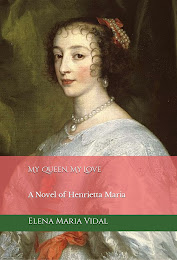
Author Elena Maria Vidal delivers a compelling look at Queen Henrietta-Maria in Generalissima, marking the second installment of the Henrietta of France Trilogy.

The author applies a layer of historical fiction to enhance the challenges faced by the royal family, most notably the civil wars. Through historical detail, the author recreates a time period of unrest, not limited to the anti-Catholic movement.

As the second in a series, it is challenging to fully appreciate the author’s work without reading it in sequence. Queen Henrietta appears to be a sympathetic character, especially pertaining to her children. The scene involving Mary’s wedding night at age 9 is only one example.

Generalissima expounds upon the complexity of Queen Henrietta-Maria and the mark she leaves behind. (Read more.)
Share

Senator Kennedy on Who Really Controls the Democrat Party

 From The Vigilant Fox:

Kennedy argues that moderate Democrats are no longer in charge but are being controlled by the radical “Karen” wing of the party.

The Gateway Pundit reported that in January, the House of Representatives voted 220-207 to pass a Department of Homeland funding bill, which funds the TSA and ICE.

Fox News reported that the seven Democrats who voted with Republicans did so “despite opposition from their own leadership over unmet demands for additional guardrails on Immigration and Customs Enforcement (ICE) operations.”

The DHS bill will be bundled alongside three other spending bills, totaling a combined $1.2 trillion in federal spending. The entire package’s passing is a significant step toward averting a government shutdown come Jan. 30.

Lawmakers in the House of Representatives voted on two separate packages on Thursday afternoon. One groups together three spending bills to fund the departments of War, Education, Labor, Transportation and Health and Human Services. The second is a standalone bill funding DHS, which includes ICE.

Jacqui Heinrich asked Kennedy about Democrats who opposed leadership, including Congressman Tom Suozzi (D-NY), after sharing a clip of Suozzi being heckled at a town hall by an anti-ICE activist.

“So, Tom Suozzi was one of seven Democrats who voted with Republicans, and that’s the reception he’s getting at home. What does that tell you?” Heinrich asked.

Senator Kennedy replied, “It tells me that the Karen wing, the Loon wing, Bolshevik wing, whatever you want to call it, Jackie, is firmly in control of the Democratic Party.”

“And whether we ever pass a bill, a budget for the Department of Homeland Security will require our Democratic leadership to embrace adulthood, because that’s what this discussion is all about.”

“It’s not, as it should be, a discussion of the efficient use of taxpayer money and funding ICE and DHS. It’s just the Karen wing of the Democratic Party wants to defund ICE.”

“They believe in open borders.”

“They also wanted to defund the cops, defund police.”

“We know how that vampire movie turned out. Now they’ve moved on to defunding ICE, and the Democrats, the leadership anyway, not people like John Fetterman, but the Democrats are scared of them.” (Read more.)

Share

Is Romance Dead or Delayed?

Courtship was once an almost ritualized part of society. It enabled romance to flourish while protecting virtue. Our young people now have nothing. From Public Discourse:

This gap between desire and ability points to a deeper issue, I believe: one that goes beyond individual willpower and speaks to the zeitgeist of 2026 and how we learn (or don’t learn) about relationships in the first place. According to social learning theory, we develop behaviors by observing and imitating others. But what happens when the examples we see are few and often unhealthy? Many young adults today have grown up without witnessing strong, enduring relationships, leaving them with no blueprint for how to sustain loving, intimate ones themselves. Add social messages that prioritize careers over connection (especially in the college and postgrad years), the influence of the digital age where it’s easier to DM than to initiate a real-life conversation, and choice overload that makes it feel like there’s always someone better just a swipe away, and it’s no wonder that young adults feel anxious when it comes to love, romance, and relationship formation.  

Are we surprised then, by the rise of “situationships” and hook-ups (words our grandparents never heard of)? In a culture that views dependence as weakness, no one wants to ask, “What are we?” for fear of seeming too needy or serious. So casually engaging in one-night stands and having “stayovers” without commitment has become the norm for many young adults. The problem? When we just show up in our bodies, we are dodging vulnerability and visibility; authentic intimacy requires that we show up with our whole selves.  (Read more.)

Share

Monday, February 2, 2026

Virgin of the Rose Bower

The enclosed garden: “Thou art all fair, O my love, and there is not a spot in thee.”

 From Hilary White at The Sacred Images Project:

The painting by Stefan Lochner is among the most concentrated visual expressions of the western iconographic prototype we call the “hortus conclusus”. The phrase is drawn from the Bible’s Song of Songs that begins, “A garden enclosed is my sister, my spouse…” It has always functioned in Christian spiritual theology as a Marian title, signifying virginity, purity and the inviolate womb in which the Incarnation took place.

In the later Middle Ages, the hortus conclusus prototype was increasingly visualised using the forms of fashionable private pleasure gardens familiar to the aristocracy and urban elite. This convergence allowed Marian images to appropriate the language of cultivated leisure: enclosure, refinement, ordered nature, while reorienting it toward chastity, contemplation and sacred presence.

Our word “paradise” derives from the Old Persian pairidaeza, meaning an enclosed garden or walled park, a term that entered Greek as paradeisos and then Latin as paradisus. Originally denoting royal pleasure gardens, the word was adopted in the Septuagint to translate the Garden of Eden, permanently linking enclosure, order, and cultivated beauty with the biblical vision of divine dwelling. (Read more.)


Share

10 Great Justice Alito Quotes

 From The Federalist:

During an interview with the Hoover Institution’s Peter Robinson last year, Alito affirmed that it’s the duty of all judges to ignore the politics of the day and instead focus on properly adhering to the Constitution — even if doing so may yield an unpopular result.

“We are not supposed to do what is popular, we’re supposed to do what is right. We’re supposed to interpret the Constitution and figure out what it means and then apply the Constitution,” Alito said. “We’re basically a democratic country, but the framers want to put some restraint on things that people might do during a particular area because they’re caught up in the emotions that are triggered by the events of the day. So, we have to stand firm on this, and I think we have done a pretty good job on it, but we have to keep it up because challenges will … continue to come.”

When the Supreme Court dismissed a legal challenge to the Biden administration’s collusion with Big Tech to censor Americans in Murthy v. Missouri (2024), it was Alito who offered a full-throated defense of these challengers’ free speech rights. (Read more.)

Share

When Sex is Detached from Love, Life, and Responsibility

 From Elizabeth Stone at The Feminist Turned Housewife:

Every single culture all throughout time has built itself around assumptions it no longer questions.

In Ancient Rome it was assumed that some humans were just naturally meant to be owned. During the Aztec empire it was just assumed that the gods required human sacrifice. In medieval Europe social hierarchy wasn’t questioned, etc…

And in our times, one of those givens we don’t question anymore is that sex is primarily suppose to be about pleasure. Everything else is optional.

And this assumption is so embedded that I’ve probably upset some of you for simply mentioning this in the tone that makes it seem like I disagree.

Which btw, I do.

But I am here to explain why this assumption is not only wrong, but has also opened the doors to some of the greatest moral evils of our times.

Zoom out for one minute, and honestly take a look at the cultural landscape all around. Pornography is everywhere, commitment is low, children are treated as accidents, and abortion is framed as healthcare. Something clearly is not right.

And I argue, that all of this has come about because we have separated sex from its core purposes.

Sex has never been historically understood as a one purpose act. Sex carries three inseparable meanings, it bonded two people, it was open to creating life, and it was pleasurable. None of these things should be seen as competing goods, but remove one from the three and the entire house collapses.

So how did we get here?

It all began, when we started elevating autonomy above all else. (Read more.)

Share

Sunday, February 1, 2026

Pro Ecclesia et Pontifice


In March of 1966
, my great grandfather Dr. Fergus O’Connor received the medal of the Holy Cross Pro Ecclesia et Pontifice from Pope Paul VI in recognition of his contributions to medicine for over sixty years. The papal nuncio came to the house at 193 Earl Street in Kingston, Ontario to bestow the medal, due to the advanced age of the recipient, celebrating Mass there as well. In March of 2008, when my late Aunt Mary's belongings were being distributed among the relatives, I happened to come across the certificate that accompanied the medal from the pope. (See photo above.) According to the Catholic Encyclopedia:
The medal Pro Ecclesia et Pontifice was instituted by Pope Leo XIII (17 July, 1888, "Quod Singulari") in memory of his golden sacerdotal jubilee, and bestowed on those women and men who had merited well by aiding and promoting, and by other excellent ways and means assisted in making the jubilee and the Vatican Exposition successful. This decoration was made a permanent distinction only in October, 1898 (Giobbio, see below). Its object is to reward those who in a general way deserve well of the pope on account of services done for the Church and its head. The medal is of gold, silver or bronze. The decoration is not subject to chancery fees. The medal is a cross made octangular in form by fleurs-de-lis fixed in the angles of the cross in a special manner. The extremities of the cross are of a slightly patonce form. In the centre of the cross is a small medal with an image of its founder, and encircling the image are the words LEO XIII P. M. ANNO X (tenth year of his pontificate). On the obverse side are the papal emblems in the centre, and in the circle surrounding the emblems the motto PRO DEO ET PONTIFICE is stamped. On the obverse surface of the branches of the cross are comets — which with the fleurs-de-lis form the coat of arms of the Pecci family. On the reverse side are stamped the words, PRIDIE (left branch); KAL. (top branch); JANUAR. (right branch); 1888 (at the foot). The ribbon is purple, with delicate lines of white and yellow on each border. The decoration is worn on the right side of breast.
Fergus Joseph O'Connor was the son of Charles and Emily O'Connor of Long Point Farm, born on April 1, 1879, Easter Sunday. As Fergus' second son and namesake wrote of him: "It's hard to describe a man with such integrity of character. He was the perfect son to his parents -- the brother to his only sister and complete support to his family." (Dr. Fergus James O'Connor, Because You asked For It)

Fergus loved horses and wanted to become a jockey, for which he was suited due to his stocky stature. His mother, however, encouraged him to seek as much education as possible. He went to high school in Athens, Ontario, and then went to the “Normal School” for teachers' training in Ottawa. It was around that time that he decided to study medicine. His father had wanted Fergus to help him maintain the homestead, but accepted his decision to become a doctor. He taught school to earn his tuition for medical school at Queen's University in Kingston. In his third year, he missed classes the first term because his funds had run out and he had to teach school again to make more money, but his roommate took notes for him, so he was able to pass anyway. He did not have much recreation, and only went to one football game all the time he was at Queen's.

In the summer of 1902, when Fergus first registered at Queen’s he rode his bicycle the 32 miles into Kingston. After finishing his business at the university, he became lost. He drove past three young ladies playing croquet on the front lawn and asked them for directions. One of them was Frances Keating. Frances Margaret Keating was of Norman-Irish stock on her father’s side; her mother was an O’Neill.
Fergus and Frank were married at the dawn Mass at Saint Mary’s Cathedral in Kingston on September 3, 1907. The Mass was followed by a simple wedding breakfast. The new Dr. and Mrs. O’Connor moved to Gananoque in the Thousand Islands area where Fergus set up a practice and built a house.

Fergus' practice involved house calls, as was the custom in those days. He was often called out at night to deliver a baby, and often had to travel unlit roads into remote areas. It was vital for a country doctor to have a reliable horse so as to get him to his patients; my great grandfather had many stories about horse traders. After tending to a patient in the countryside, he could doze in the buggy or sleigh, since the horse knew the way home.

In December of 1916, Fergus was elected mayor of Gananoque. His election was a tribute to the respect generated by his professional dedication and personal integrity. It was remarkable given the local history of conflict between the few Irish Catholics settlers and the Protestant majority, especially the Irish Protestants, called “Orangeman.” Fergus, without compromising any of his beliefs and principles, was able to overcome a great deal of anti-Catholic prejudice, and became the popular “little mayor.”

In 1918, my great-grandparents moved to 193 Earl Street in Kingston, Ontario, with seven of their soon-to-be eight children. They decided to move into Kingston so that their children could go to the Catholic schools available there. A white rose bush from the original that old Daniel had brought over from Ireland was planted outside the front door. Fergus slowly built up a new practice. He taught medicine at Queen’s University, and continued on the faculty for forty years. His close friend, Monsignor J.G. Hanley said of him:
His concern for his students was not limited to their professional development. Working in an area fraught with deep moral implications, he instilled in future obstetricians sound ethical principles to guide them in making crucial decisions which would crucially affect the lives of their patients. Moreover, he was not merely a professor to his students; they all regarded him as a personal friend, and so he was.
By the late 1930’s he was delivering one third of all the babies in Kingston. He had many poor patients who could not pay, but to Fergus being a doctor was a vocation, not a career. However, he would gratefully accept an offering such as a bag of potatoes in the place of money, so that he could feed his family. He eventually became Chief of Obstetrics at the Hotel Dieu Hospital in Kingston and remained so for almost half a century. He delivered his last baby at age eighty-four.

Fergus was also active in the community and the church. He was o
n the Separate School Board for many year
s, as well as being a city alderman. He belonged to the Knights of Columbus and in 1945 founded the Queen’s chapter of the Newman Club.

Fergus died on April 21, 1971. I am grateful for the few memories I have of this wonderful man, a true patriarch. I recall how approachable he was, how kindly and gentle with small children. A Kingston newspaper article described him in his nineties as being “still active and spry…his eyes twinkling….with short quick steps“ and that is exactly as he appears in my memory. One of the main characters in The Paradise Tree is based upon him.
 

Share