Showing posts with label Philippines. Show all posts

Tuesday, September 16, 2025

On Corruption in the Philippines

 From my cousin's blog, Sensible Surgery and the Classical Physician:

 The worst thing the (first) Marcos administration did was that they made corruption a standard practice. In any government agency where bids are made and contracts are awarded, it is “SOP” (standard operating procedure) that a certain percent of the contract amount will go back to the congressman, to the governor, to the head of the office, etc. Only around 30% is spent on the actual project. Corruption is normalized and expected. No need for whispers or back room deals. 

[...]

Corruption is so enmeshed in our system that it would be near impossible to find a leader that has not benefitted from it or is not participating in it. But I do believe that they do so in varying degrees as well. A leader who has never been accused of corruption is a start (or if they have, only to a minimal degree). Not having any proven connections to corruption, pending court cases, or criminal convictions is another (albeit a low bar). Such leaders and politicians do exist. Jessie Robredo and his widow Leni was certainly among those people. Vico and a few handful other Mayors fit the criteria. NONE of the sitting senators do with the exception of Risa Hontiveros. Bam and Kiko by sheer family connection and length of career have probably benefited from the system, but certainly not to the degree of a Jinggoy Estrada.

As for policies, there are many good ones in isolation, but what’s more important is to support and enact policies that go toward the same direction and which fit a unified vision. Rolling back the VAT to 10% is a good idea, so is putting the budget on a blockchain. Both policies lead to a smaller more transparent government. In contrast, a policy that gives more budget to such and such an agency or a law the approves the construction of new infrastructure may NOT always be good, because it only leads to the government getting bigger, requiring more resources, and ultimately going deeper in debt. (Read more.)


Share

Sunday, August 27, 2023

A Voyage Into the Past


 In which I am interviewed by my Alma Mater in Frederick, Maryland. From Hood College:

You publish under the nom de plume “Elena Maria Vidal.” How did you choose your pen name?

I took as my pen name a variation of the name of my Spanish grandmother, Maria Magdalena Vidal, to honor her. She was in the Philippines during WW2, and while her husband was captive in a Japanese concentration camp, she worked with the underground, hiding guerrilla soldiers from the invaders. She is one of the bravest people I have ever known.

In 1998, you came Home to Hood to host a book signing for your first Trianon book; had the campus changed much since 1984? What memories were conjured when you stepped back on campus?

Yes, the campus had changed dramatically. Everything was very elegant. Not that it wasn’t elegant before, just more upscale. It was 1998, and I graduated in 1984. There was a brand-new library, a student center with a coffee shop, a huge new bookstore and other new buildings. At the time, I could not help remembering that my first public speech occurred while I was a senior at Hood, at a Learning Lunch arranged by my history professor Dr. Len Latkovski. I spoke on the murder of the Russian imperial family and the mystery of Anastasia. So, returning there as a published author was a thrill as well as a way of validating the confidence that my professors had placed in me.

You shared in an earlier email that your French and history professors were your “favorites.” Who were they and what made them so special to you?

I was a psych major, but I received better grades in history and French, so I began taking more classes in those subjects to boost my average. My favorite professor was Dr. Latkovski, who did a lot to encourage me to change my course of studies to history. I also am grateful to Dr. Mindel, another history professor, who wrote many recommendation letters for me. And I will forever be grateful for the superb training in French I received from Dr. Kantor and Mademoiselle Moran. Knowledge of French has been indispensable in my travels and my research; I would not have accomplished anything without it. (Read more.)

Share

Saturday, August 12, 2023

The Last French Invasion of Spain

 From Atalayar:

If not the most majestic, the Trocadero Square in Paris is certainly the most grandiose, due to its size and its location in front of the immensity of the Eiffel Tower and the river Seine flowing between them. It is also certain that few of the many millions of Spaniards who visit it know both its origins and the history of what it commemorates.  

Trocadero Island, four kilometres long and one kilometre wide, is located in the Bay of Cadiz, leaving between it and the mainland a tongue of water, known there as the Caño, of the same name as the island. It was the last stronghold of the Spanish liberals who, following the pronunciamiento of Lieutenant Rafael Riego in 1820, had re-established the Constitution approved by the Cortes of Cadiz in 1812, and abolished in 1814 by Ferdinand VII on his return from his exile-captivity in France.  

The invasion of Spain by Napoleon's troops and the corresponding War of Independence, in addition to the immense destruction and looting of the country, would lead to the cornering of Spain in the European concert, enshrined in the Congress of Vienna (1815) following Napoleon's defeat at Waterloo, the cascade of uprisings by Creole leaders in the Spanish viceroyalties of America, and the consequent impoverishment of the country and the withdrawal of its society into itself, giving rise to a century plagued by military pronunciamientos and three civil wars. The 19th century began badly for Spain with the naval defeat by the British at Trafalgar (1805), commemorated in another great square in London. It ended with the 1898 disaster in Santiago de Cuba and the corresponding loss of that island, Puerto Rico and the Philippines. (Read more.)

Share

Friday, February 21, 2020

Manila House

From Boundary Stones:
2422 K St. NW, nestled in the Foggy Bottom neighborhood just down the street from the George Washington University, looks like any other D.C. row house. But for the Filipino community in D.C. during the 1930s through the 1950s, it was a haven - a source of culture, community, and comfort. As those who remember it fondly today can testify, 2422 K St. NW wasn’t just a row house; it was the Manila House. 
Although today there are only a couple of Filipino-Americans still living who visited the Manila House in its heyday, stories of the house have been documented by Filipino writers and have been passed down in families. “I first learned about Manila House 24 years ago, in 1993, when I interviewed my father Clemente Cacas and his friends, Fernando Aguilar and Mateo Perez,” recalled Rita Cacas, writer and archivist of D.C. Filipino history.[1] “They described the house as a place for taxicab drivers like themselves to hang out, play cards and attend dances for ten cents on weekends.”[2]
It was a place of leisure for certain, but the Manila House was also much more than that. It provided Filipino-Americans a unique space to connect with each other and with their culture in a city that could be isolating. 
Filipinos began to settle in and around D.C. as early as 1900, but their numbers were small.[3] According to U.S. Census data, there were only 294 Filipinos living in D.C., 327 in Maryland, and 126 in Virginia as of 1930.[4] The Asian population at large in D.C. was only 780, or 0.2% of D.C.’s total population.[5] Many Filipinos came to the D.C. area to work as government workers in the office of the Philippine Resident Commissioner, as cab drivers, or as officers in the military[6]. Many Filipino men enlisted in the U.S. Navy in particular. Since Washington was the center of government work and Annapolis housed the U.S. Naval Academy, the D.C., Maryland, Virginia area was attractive to Filipino immigrants who sought work in those fields. Still, Filipinos found themselves just one small part of a large metropolitan area. 
The city was still largely segregated, with African-American communities in the southeast and southwest quadrants of Washington and white communities in the northwest and northeast quadrants.[7] Nila Toribio-Straka was just a child during the 1940s, but she remembers how her parents had to navigate the racial dynamics of the city. “[They] would be walking down Pennsylvania Ave, or wherever… and if a Caucasian person walked toward them, they had to cross the street and walk to the other side,” she explains.[8] “If they were on a bus, and again if a Caucasian came, they had to go to the back of the bus.”[9] (Read more.)
Share

Thursday, January 30, 2020

King Philip's Pride

I stayed on the island of Limasawa a few years ago and will never forget it. I enjoyed the lush tropical gardens around the memorial to the first Mass in the Philippines. From Crisis:
If one had to guess where Catholicism first took root on the Filipino Archipelago and where the first Catholic Mass was celebrated, one would probably suggest a big city like Manila or Cebu. However, the first Mass was celebrated on Easter Sunday in 1521 in Limasawa in Southern Leyte, located in what is now the Diocese of Maasin (formally erected by Pope Saint Paul VI only in 1968). In 2021, the Diocese will mark the 500th anniversary of that historic event with a special Mass and Eucharistic procession to take place on March 31.

The Diocese of Maasin belongs to the ecclesiastical province of Cebu, which is the country’s seventh-largest city. Somewhat counter-intuitively, we must say that Cebu, not Manila, is considered the spiritual heart and soul of the Catholic Church in the Philippines, given the plethora of pilgrimage sites and sacred shrines located there. The Cathedral of Maasin, which dates back to the early eighteenth century, is striking for its cool stone and airy feel. Near the Cathedral is a spacious complex encompassing the bishop’s residence and the diocesan seminary, one of two in the diocese.

The Diocese of Maasin is definitely on the Church’s missionary map. Bishop Precioso Cantillas, the Salesian Ordinary, known for his beautiful singing voice (a characteristic trait of many Filipinos for whom karaoke is a national pastime of sorts), generously shares priests with dioceses less blessed with vocations, thus manifestly expressing the diocese’s “catholicity” or “universality” in keeping with the missionary nature of the Church, as defined in the documents of the Second Vatican Council (see Lumen Gentium and Ad Gentes). Indeed, it has been said that the Filipino clergy are “the new Irish,” inasmuch as they are as prevalent in dioceses around the world today as were the Irish clergy of yore.

As the economically poor and remote Diocese of Maasin engages in three years of celebratory preparations for the 500th anniversary of the First Mass in the Philippines—a Mass attended by the crew of the explorer Ferdinand Magellan—the local Church is seeking to raise not only awareness of its vibrant presence in Southeast Asia but also much-needed funds for such projects as the renovation of a parish sanctuary, the construction of a light tower, the erection of lamp posts in secluded and dimly lit areas of the island, the formation on behalf of the Limasawa locals of a Housing Village, and the implementation of plans to improve living conditions and the environment on the island.
(Read more.)
Share

Friday, January 3, 2020

Archbishop Teofilo Camomot

From Aleteia:
Teofilo (the name means “Lover of God”) Camomot was born on March 3, 1914, in Talisay, Cebu, which is located in the center of the Philippines. He was the third child of Luis Camomot and Angela Bastida, who would eventually have eight children together. Teofilo was baptized the day after his birth and received his Confirmation one year later, on March 4, 1915.
Teofilo grew up in an environment supervised by gentle, loving, and religious parents. He was liked by almost everyone who met him, and his kind and caring manner left an impression on people. Upon finishing elementary school, Teofilo decided he wanted to work on his father’s farm. He also chose to attend school to become an agriculturist. But his mom was sure this was not his calling. She recognized something spiritual within her son and wanted him to nurture it. He showed a natural and empathetic love and compassion toward the poor and downtrodden, and she thought he might consider religious life. He was frequently gathering food and rice to give to those in need. Her prayers and the fact that Teofilo’s older brother was already a priest helped direct Teofilo to the seminary. The young man entered the Seminary of San Carlos in Cebu in 1932. He was ordained to the priesthood on December 14, 1941, one week after the attack on Pearl Harbor. Because of the outbreak of the war, he had to celebrate his first Mass at home instead of in his parish.
Father Camomot was assigned to St. Teresa Parish in Talisay, Cebu, in 1943. He lived very simply, only using the basics to get by. His austerity was an example for all the parishioners, and so were his actions. Each day, before celebrating Mass, he would visit the sick, and in addition to giving them Holy Communion, would tend to their personal needs the best he could. They all came to love the young priest. (Read more.)
Share

Thursday, December 19, 2019

Falooda

From Atlas Obscura:
On hot summer days, friends and families gathered at Indian cafes slurp down tall glasses of falooda using long, slender spoons. In any assemblage of this icy drink-meets-dessert, diners will find a tangle of rice vermicelli and basil seeds sitting in frosty, rose syrup–tinted milk. Pistachios, almonds, and ice cream often finish off the parfait, adding crunchy and creamy elements to the gooey, fragrant combination. As with many of the frozen hodgepodges made from locally-available goodies (see: Filipino halo-haloTaiwanese bao bing, and Colombian cholado), variations abound. Aside from rose syrup, flavors such as grape, orange, pineapple, and black currant are just a few of the other options found in cafes across the country.

Locals in Mumbai are often credited with the modern iteration of this signature sweet, but the creation is beloved by Indians all over the world. Today, falooda stalls selling plastic to-go containers line the country’s beaches, but many believe it descended from royalty. According to one food historian, a 17th-century Mughal emperor had a particular penchant for “faluda, a rich jelly-like drink made from the strainings of boiled wheat mixed with fruit juices and cream.” (Read more.)
Share

Monday, December 2, 2019

King Tut’s Death

One of the best-known Egyptologists believes that he has finally solved the mystery of the death of Tutankhamun. He claims that the young pharaoh died after his leg became infected after an accident. The expert claims that he has conclusive evidence that Tutankhamun was not murdered, a theory that is popular among some specialists. Tutankhamun of the 18th dynasty is perhaps the best-known of all pharaohs thanks to the discovery of his tomb in the Valley of the Kings , despite his brief reign. He was the son of Akhenaten, the notorious heretic pharaoh, who married his own sister. As a result, Tutankhamun is believed to have been born with a number of deformities, including an elongated skull .
Tutankhamun died while he was very young. Because of damage to his mummified corpse, it has been very difficult to officially establish the cause of death, reports the Tutankhamun.com London website. There are several theories about the cause of death of the young monarch. One theory holds that he was murdered, which was developed in the 1960s after a loose piece of bone was found in his skull. This was believed to have been the result of “a hard blow to the head” according to Tutankhamun.com London . (Read more.)
Share

Thursday, November 21, 2019

Our Lady of the Rosary and the Philippines

From Aleteia:
In 1593, Don Luis Perez Dasmarinas was appointed the Spanish governor in the Philippines. Soon after his appointment, his father passed away, and he asked his trusted assistant, Captain Hernando Coronel, to have a sculpture made in his honor. Captain Coronel commissioned an immigrant Chinese artist to do the job. The man was also a convert to Christianity and had a sincere love for the Blessed Virgin.
The sculptor (whose name, unfortunately, has been lost to history) carved the statue out of hardwood. It was four feet, eight inches tall. He crafted the face and hands of the Blessed Virgin and the entire Child Jesus from solid ivory. The features of Our Lady’s face and the Child Jesus’ face reflect the sculptor’s ethnicity. Governor Dasmarinas loved the statue and dedicated it to his late father. The statue was called Our Lady of the Most Holy Rosary. Not long after, it was given to the Dominicans, and it was placed in the Church at Santo Domingo.

Some years later, the Dutch Republic wanted to establish a quicker trade route to Asia. The most direct route would be through the Philippines, and so they wanted to conquer the country. This would require a formidable naval fleet, which they formed. The Dutch began their attacks in 1646.
The Filipino forces had only two galleons to go against the enormous Dutch fleet. They prayed before the statue of the Blessed Virgin, requesting that she intercede for them in their impending battle. Having placed themselves under the protection of Our Lady of the Rosary, they began to pray the Rosary over and over. They promised that if they were victorious they would make a barefoot pilgrimage toward her shrine in Santo Domingo church in Manila.
Five major naval battles ensued, and the tiny Philippine naval force, a combination of Spanish and Filipino sailors, turned the Dutch forces back each time. Only 15 members of the Spanish navy were lost. When the Dutch finally surrendered, the remaining Filipino and Spanish sailors, fulfilling the vow they had made, walked barefoot in gratitude to the Shrine of Our Lady in Manila. The Blessed Mother was given the name of La Naval and from then on was known as Our Lady of the Most Holy Rosary of La Naval of Manila. (Read more.)
Share

Saturday, August 24, 2019

How the Philippines Saved 1,200 Jews During the Holocaust

From CNN:
This little known chapter of history about Jewish refugees in the Philippines has inspired two documentaries and talk of a possible movie. 
"We know about stories like Anne Frank, 'Schindler's List' -- the things that grab popular imagination," said Michelle Ephraim, whose father, Frank Ephraim escaped to the Philippines after Kristallnacht in 1938. "Once you bring an Asia element, it becomes so complicated, interesting and surprising." 
About 40 of the Philippines refugees are alive today, according to documentary filmmakers. They were children when they arrived in the Philippines over 70 years ago. "That was like a rebirth," said Noel Izon, the filmmaker of the documentary, "An Open Door: Jewish Rescue in the Philippines," in which he interviewed several Jewish refugees. "They went from certain death to this life." (Read more.)
Share

Friday, November 30, 2018

Under Obama, Border Patrol Used Pepper Spray or Tear Gas More than 500 Times

People wonder how can I be Spanish and against immigration. I am not against immigration. I am against illegal immigration. I do not understand why three of my grandparents and both of my parents were required to follow the law but other people are not. My abuela came here in great hardship, with nothing but the clothes on her back and a pillow case containing her Bible, her mantilla, and pictures of her children. But she followed all the laws of the USA even at great cost and inconvenience to herself. From Dan Bongino:
US. Border Patrol have come under fire from the left for using tear gas on Sunday afternoon to defend themselves after hundreds of members of the migrant caravan attempted to rush the U.S. border near San Diego, while hurling rocks and projectiles at border officials. Senator Dianne Feinstein of California called the use of tear gas “horrifying.” Senator Brian Schatz of Hawaii compared the use of tear gas to “chemical weapons.” Actress Alyssa Milano issued a foul twitter tirade against President Trump over the gas. 
It turns out that the Obama Administration also used tear gas and pepper spray at the border, over 500 times from 2012-2016. However, liberals remained silent during that time. According to numbers given to the Daily Caller by the Department of Homeland Security, tear gas was used by border agents 79 times between 2012 and 2016. Meanwhile, pepper spray was used 434 times between 2012 and 2016. 
Both President Trump and Homeland Security Secretary Kirstjen Nielsen defended Border Patrol’s use of tear gas. “They were being rushed by some very tough people and they used tear gas,” said the President on Monday. “Here’s the bottom line: Nobody is coming into our country unless they come in legally.” 
Nielsen slammed the migrants for hurling rocks and projectiles at border agents. In a statement, she said, “This caravan, unlike previous caravans, had already entered Mexico violently and attacked border police in two other countries. I refuse to believe that anyone honestly maintains that attacking law enforcement with rocks and projectiles is acceptable. It is shocking that I have to explain this, but officers can be seriously or fatally injured in such attacks. Self-defense isn’t debatable for most law-abiding Americans.” Nielsen also stated that the small number of women and children involved in the caravan were being used as “human shields” in confrontations with law enforcement. 
“The caravan members are predominately male,” she said. “It appears in some cases that the limited number of women and children in the caravan are being used by the organizers as ‘human shields’ when they confront law enforcement. They are being put at risk by the caravan organizers as we saw at the Mexico-Guatemala border. This is putting vulnerable people in harms way.” (Read more.)

Meanwhile, from Lifezette:
Migrants who came with the caravan are suffering from respiratory infections, tuberculosis, chickenpox and other serious health issues, Tijuana’s Health Department warned on Thursday morning. The spokesman told Fox News that out of 6,000 migrants currently residing in the city, over a third of them (2,267) are being treated for health-related issues. There are three confirmed cases of tuberculosis, four cases of HIV/AIDS and four separate cases of chickenpox, the spokesman said. 
At least 101 migrants have lice and multiple instances of skin infections, the department’s data shows. There’s also a threat of Hepatitis outbreak due to unsanitary conditions, the spokesman said. The thousands of migrants are being sheltered at the Benito Juarez Sports Complex near the San Ysidro U.S.-Mexico Port of Entry, even though the place is capable of providing for 1,000 people. 
The location also has only 35 portable bathrooms. A sign reading “No Spitting” was put up, as coughing and spitting by caravan migrants are rampant in the shelter. Tijuana Mayor Juan Manuel Gastelum said Tuesday that the city has enough money to assist the migrants only for a few more days, with the city saying it’s spending around $30,000 a day. (Read more.) 
Share

Thursday, May 17, 2018

The Philippines: 700,000 Years Ago

From CNN:
About 709,000 years ago, someone butchered a rhinoceros using stone tools on the Philippine island of Luzon. That may not seem remarkable -- except that humans weren't supposed to be in the Philippines so long ago. Before this discovery, the earliest indicator that early humans, or hominins, were even on those islands had been a single foot bone from 67,000 years ago, uncovered in the Callao Cave on Luzon. That's quite a time jump.
Research says that the new findings push back the date for humans inhabiting the Philippines by hundreds of thousands of years. A study published Wednesday in the journal Nature also says that this securely dated evidence pushes back the date for humans living in the wider South East Asian islands region. Researchers came close to figuring out that Luzon may have been inhabited by early humans when stone tools and the fossils of large animals were discovered there in the 1950s. But they weren't able to securely date those findings to the Middle Pleistocene, which spans 126,000 to 781,000 years ago. But recent excavations in the Kalinga province of northern Luzon uncovered 57 stone tools and more than 400 bones of animals like monitor lizard, Philippine brown deer, freshwater turtles and stegodons, a now-extinct animal in the same family as elephants and mammoths. (Read more.)
Share

Tuesday, March 20, 2018

Coconut Oil: Miracle Product or Beauty Fad?

From the Trianon Health and Beauty Blog:
Coconut oil is one of the main ingredients in my creams and in the cleanser. It fights aging by tightening the skin and helping it to stay firm. It helps to heal blemishes by increasing the collagen and by the antioxidant and antibacterial activity. (Read more.)
Share

Friday, February 16, 2018

Lola's Story

A heartrendingly honest article which provides a great deal of insight into the psychology of slavery. From The Atlantic:
Her name was Eudocia Tomas Pulido. We called her Lola. She was 4 foot 11, with mocha-brown skin and almond eyes that I can still see looking into mine—my first memory. She was 18 years old when my grandfather gave her to my mother as a gift, and when my family moved to the United States, we brought her with us. No other word but slave encompassed the life she lived. Her days began before everyone else woke and ended after we went to bed. She prepared three meals a day, cleaned the house, waited on my parents, and took care of my four siblings and me. My parents never paid her, and they scolded her constantly. She wasn’t kept in leg irons, but she might as well have been. So many nights, on my way to the bathroom, I’d spot her sleeping in a corner, slumped against a mound of laundry, her fingers clutching a garment she was in the middle of folding. (Read more.)
Share

Wednesday, February 7, 2018

3 Filipino Bishops

Servants of God. From Aleteia:
Born in 1889 in Lipa City, Batangas, Obviar started out life as an orphan, being taken care of by relatives. Nevertheless, his faith was nurtured throughout his childhood, and he pursued the priesthood at an early age. Obviar was ordained a priest in 1919 and possessed “an extraordinary charism for organizing catechists as well as for teaching catechism most especially to the old folks. In Lipa City, where he became also the Parish Priest, he established many catechetical centers in the poblacion and in the barrios.” When he was ordained a bishop, this charism followed him and he made it a priority to form rural catechists. After several decades as a faithful bishop who guided his flock, Obviar died on October 1, 1978. His cause for canonization was opened in 2001 and has since been named a “Servant of God.”(Read more.)
Share

Thursday, October 19, 2017

Corregidor Island

From Historical Nonfiction:
Corregidor Island, a small island at the entrance to Manila Bay. It is an important strategic point – whoever controls the island, controls Manila. And with it the Philippines. Since the Spanish first built a base on the island in 1570, Corregidor has been captured, and held, by the Dutch, the British, the Americans, the Japanese, and the Americans again. It was taken in May 1942 by Japanese forces after months of near-constant bombardment. Corregidor marked the fall of the Philippines to the Japanese Empire. When American forces retook Corregidor in February 1945, it was another marker of the long, slow, and inexorable island-hopping campaign to push the Japanese back into Japan. That 1945 battle was the last action that Corregidor saw. Today, it is an open-air museum. All across Corregidor are the ruins of the World War II military base, with bomb-ravaged buildings left as they were and many large guns still in place. (Read more.)
Share

Wednesday, September 20, 2017

Health Benefits of Coconut Oil

From the Trianon Health and Beauty Blog:
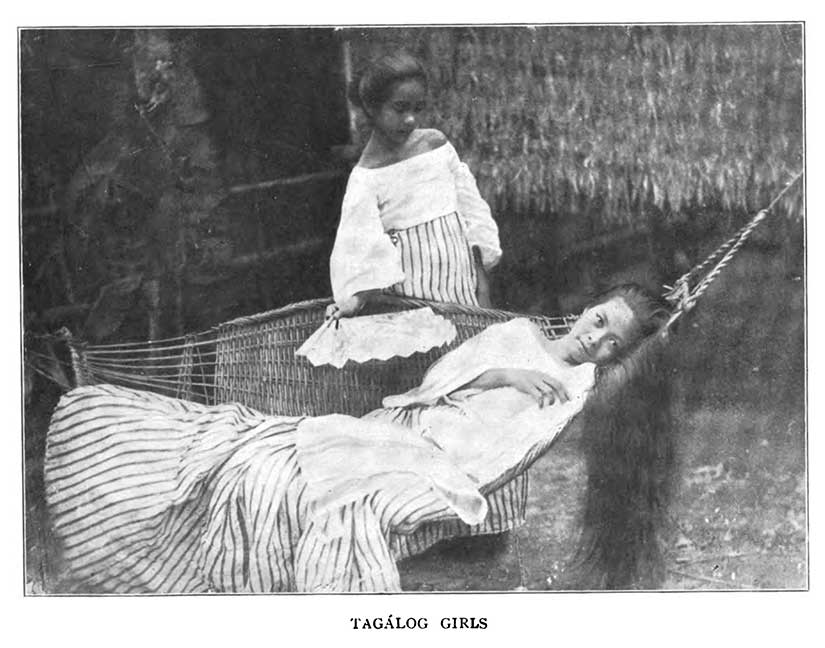
In the 70's and 80's we were told to avoid coconut oil because it caused cellulite. However, since then, a great deal of research has been done. Coconut oil has been proven to do wonders for the skin and hair. I fell in love with coconut oil during my trip to the Philippines. I found out that my great grandmother used it in her famously beautiful hair. When I created my face creams I made coconut oil a main ingredient. (Read more.)
Share

Monday, July 31, 2017

Encarnacion Alzona

From Aleteia:
Encarnacion was the first Filipina to complete her doctoral studies; she was a national scientist, and a pioneering advocate of women’s suffrage. Born in southern Luzon, she completed an undergraduate and master’s degree in history from the University of the Philippines (U.P.), and then went on to pursue further studies as a pensionado scholar in the U.S. There, she completed a second master’s degree at Radcliffe College, and a Ph.D. at Columbia University, both in history. After Columbia, she returned to the Philippines, and became a history professor at U.P. Interestingly, she graduated from Columbia the same year John Paul II was born. There must have been something in their milieu that caused both to write about the dignity of women.

In 1919, Encarnacion wrote an article arguing for a woman’s right to vote. At this time, the Philippines was still a U.S. territory with a young democracy. The first local elections were held three years earlier, but only men were permitted to vote, as part of the U.S. government’s policy to gradually educate Filipinos into a functioning democracy. In her article, Encarnacion pointed out that women also need civic education, “they being what we proudly term the first teachers of men.” She explained that if women are permitted to vote, men’s respect for them would likely increase because “a person enjoying full political rights deserves greater respect and esteem than a disenfranchised one.” These ideas show that like John Paul II, she believed that society and history needed the contribution and participation of both men and women. (Read more.)
Share

Saturday, June 10, 2017

The Water Cure

From Edwardian Promenade:
In 1902, almost seventy years before Vietnam and one hundred years before Iraq, there was a national conversation about how America should exercise its authority abroad, including how we should treat prisoners of war. It all began in America’s first overseas colony, the Philippines. At the conclusion of the Spanish-American War, the US purchased these islands from Spain for twenty million dollars, but America would spend twenty times that fighting the Filipinos, who did not want to simply exchange one colonial power for another. Occupation is ugly. The Senate Committee on the Philippines launched a detailed investigation into actions that “covered with a foul blot the flag which we all love and honor.” What were these actions? (Read more.)
Share

Saturday, April 22, 2017

Research Notes on the History of the Philippines

From Edwardian Promenade:
Today, I (virtually) paged through an original 1900 copy of Harper’s History of the War in the Philippines to bring you some of the original images that you cannot find anywhere else. For example, you may know that almost every village in the Philippines—no matter how remote or small—had a band of some sort, whether woodwind, brass, or bamboo. In fact, these musicians learned American ragtime songs so quickly and so enthusiastically that many Filipinos thought “There’ll Be a Hot Time in the Old Town Tonight” was the American national anthem. (Read more.)
Share