Showing posts with label The House of Austria. Show all posts

Thursday, July 2, 2026

I Think I Am Finally Beginning to Understand the Thirty Years War

 From Gruntled History Teacher:

Before the war, Germany was one of the richest and most developed regions of Europe, with an extraordinary medieval network of towns and trade networks that had grown up throughout the Middle Ages, and a convoluted constitutional system that defies explanation (then or now), but which actually worked better than is generally credited. But the Thirty Years War devastated large parts of the country so badly that, in German cultural memory, the 17th century is nearly as dark as the 20th.

It’s the war that tore Germany apart, and laid the seeds for later German national history, with all its accompanying baggage. But it also played a pivotal role in the nationalist histories of Germany, France, Spain, Denmark, Sweden, and the Netherlands. For the Enlightenment, it was the war that delegitimized Christendom and allowed science and reason to supplant religion. American religious freedom, pluralism, and toleration, have long been contrasted with the devastation of Europe’s wars of religion.

For military historians, the Thirty Years War has been the war that crystallized the military revolution and the rise of the fiscal-military state. International Relations theorists still describe the modern world as Westphalian, referring to the Peace of Westphalia that ended the war and established a system of sovereign states as the default international order. Catholic and Protestant historiographies naturally championed their respective sides, and all the major figures of the war have long been cast as heroes or villains according to whoever held the pen. The history of the Thirty Years War has been fought over and contested almost as much as the war itself. (Read more.)


Share

Monday, June 29, 2026

Petit Trianon and the Hamlet Revisited


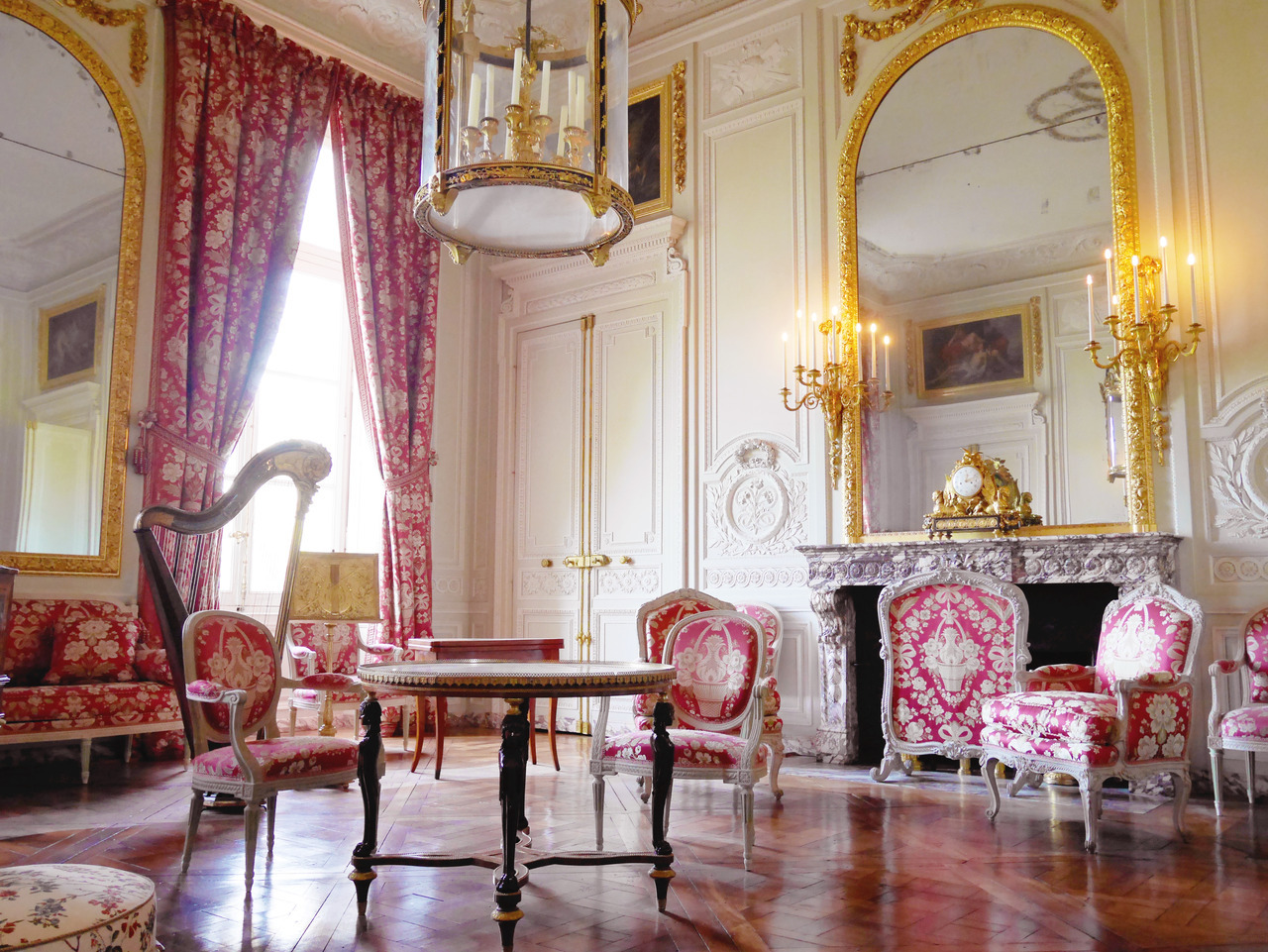
 The grand salon at Petit Trianon from East of the Sun, West of the Moon.

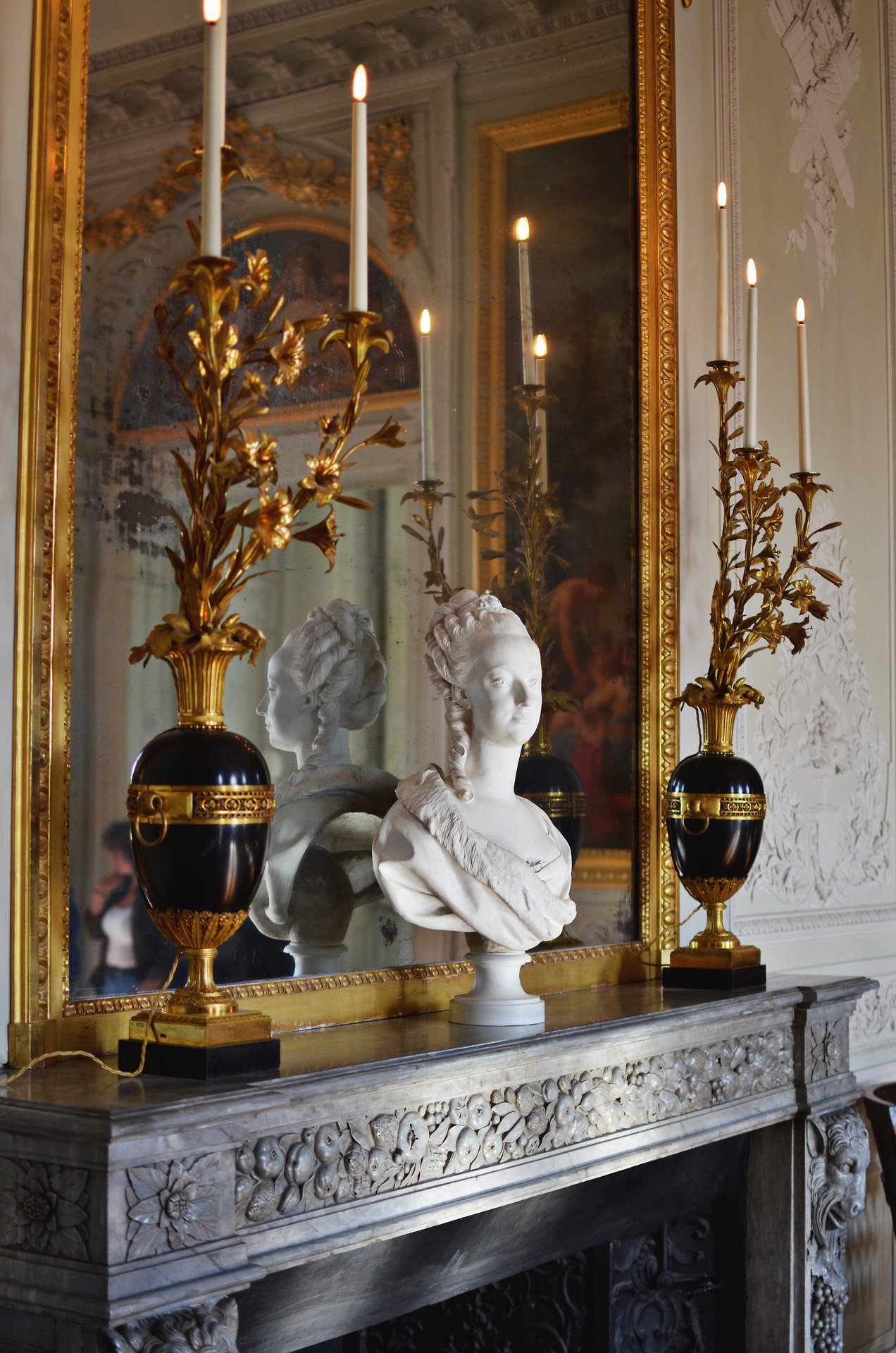
 More pictures, HERE.

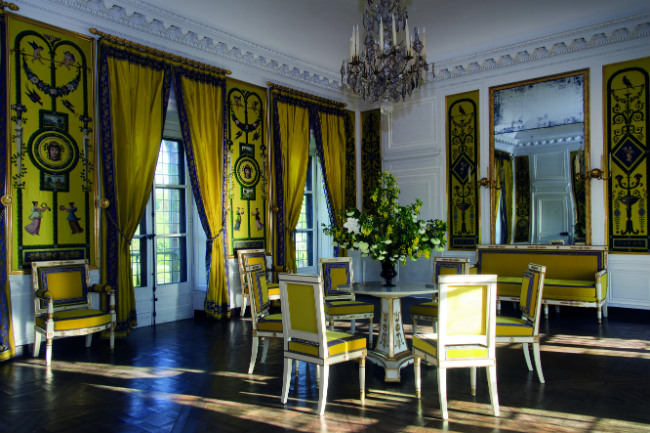
From the dining room at Petit Trianon
 The Queen's house at the hameau has been restored. It is interesting to me that Napoleon gave the hamlet to his second wife Marie-Louise, who was the Queen's great niece. He was really unabashed in his fascination with Marie-Antoinette. From France Today:
Left to rack and ruin for the best part of two centuries, the Maison de la Reine, Marie Antoinette’s country retreat on the fringes of the Château de Versailles, has finally been restored to its former glory, thanks to a major £326 million renovation. Built between 1783 and 1787 as the extravagant centrepiece of the Hameau de la Reine, a model ‘village’ and folly of epic scale complete with a (decorative) windmill, sheep trussed up in silk ribbons, a cluster of farmers’ cottages and working farm, the Queen’s House had lain empty since 1848 when the Dior Foundation stepped in three years ago intent on rescuing it from certain ruin and giving it the regal makeover it so begged for.

Secreted in the sprawling gardens of the Petit Trianon, away from fawning courtiers’ prying eyes, the Hameau was Marie Antoinette’s refuge from Versailles’s folderol – for the two short years she got to enjoy it – and only a handful of her closest confidantes were allowed in its inner sanctum, the Maison de la Reine. Conceived with little thought for longevity, the hamlet fared poorly in the post-Revolution years and was all but a crumbling heap when Napoleon ordered a full restoration in 1810. Never one for sentimentalism, the emperor had the most ramshackle structures summarily torn down. Another renovation followed in the 1930s, courtesy of John Rockefeller. Part of the complex was refurbished in the late 20th century and the farm rebuilt in 2006. (Read more.)
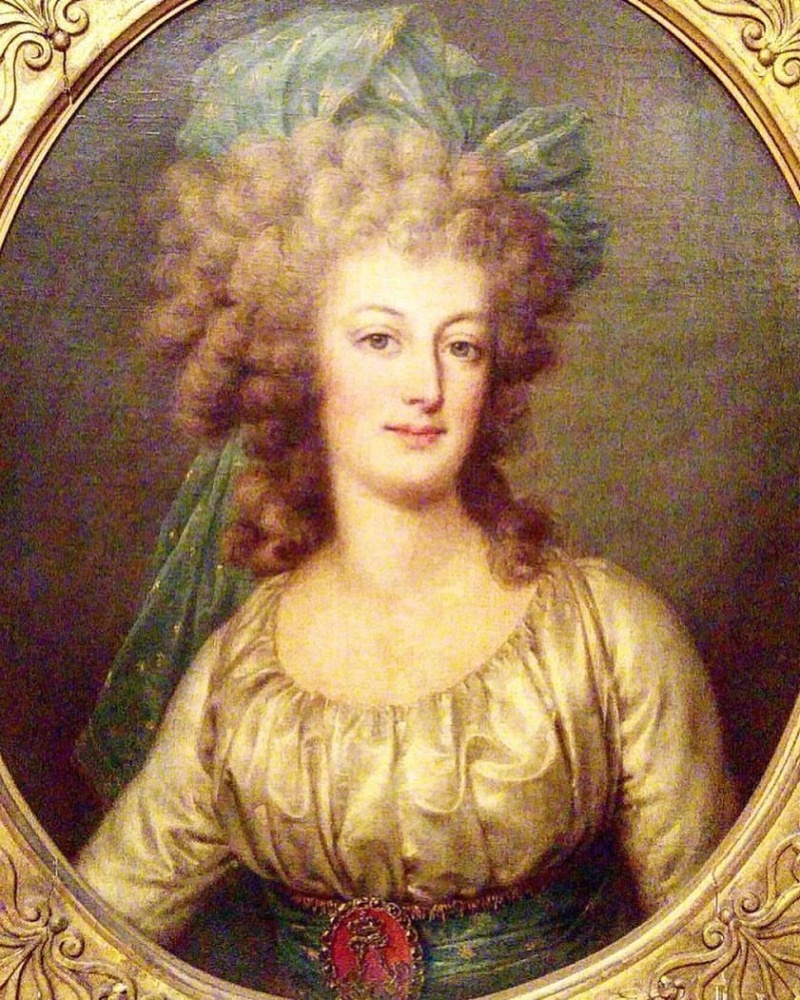
From the Queen's house at the hameau
  Share

Thursday, June 18, 2026

Marie-Antoinette à la Rose


From the time I first started to write about Queen Marie-Antoinette, I have received comments from devout people about the low-cut gowns that she wore. Let me explain once again that, in the decadent old world, it was etiquette in most of the courts of Europe for ladies' formal attire to include a plunging décolletage. It was considered perfectly correct as long as the proper corset was worn.

The gown which evoked some disapproval for Marie-Antoinette was not one of the low-cut court gowns (shown above) but the simple white linen dress which she favored for her leisure time at Petit Trianon. The portrait in which she is shown thus had to be withdrawn from the public gaze because people took offense at seeing their Queen painted in casual attire. Now to us, the white dress is perfectly modest, but to people of the eighteenth century, it looked as if she were in her chemise, without the stiff corset prescribed for ladies of the royal family. Furthermore, it was interpreted as being a pro-Austrian picture, since linen came from Flanders, one of the Habsburg territories, and the rose the Queen held was seen as a symbol of the House of Austria.

In order to quell the outrage, Madame Vigée-Lebrun had to quickly come up with another painting. In 1783 the artist completed the portrait above, called "Marie-Antoinette à la rose" showing the Queen appropriately garbed in a silk court gown and headdress, trimmed with lace, ribbons and plumes. She is wearing pearls, as befits a Queen, with hair powdered and face rouged, in accord with court etiquette. She looks as if she has just stepped into her garden on a summer evening, bathed in moonlight. The nocturnal quality of the portrait softens the formality of her attire, alluding to Marie-Antoinette's love of nature, and the fact that she was much more at ease in her gardens than she was in the Hall of Mirrors.
Share

Wednesday, June 17, 2026

Rare Portraits of Marie-Antoinette


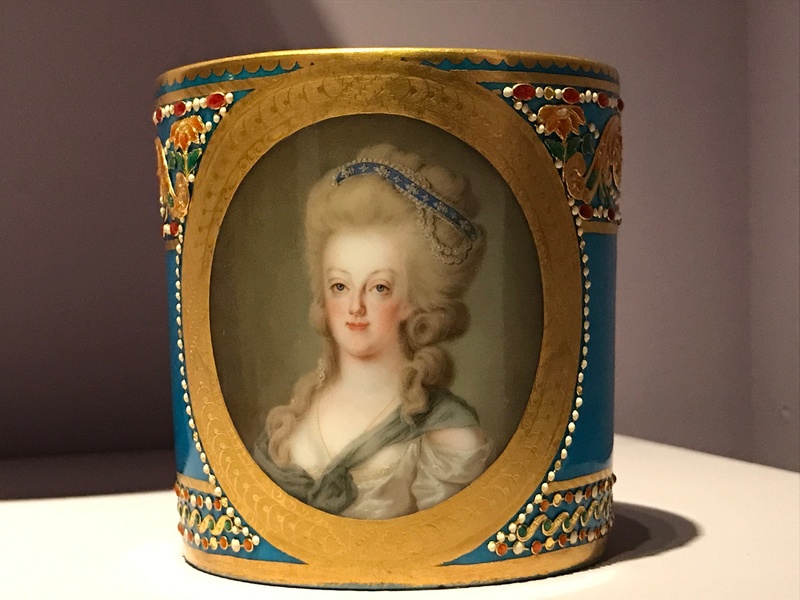
From Le Boudoir de Marie-Antoinette, HERE, HERE, and HERE

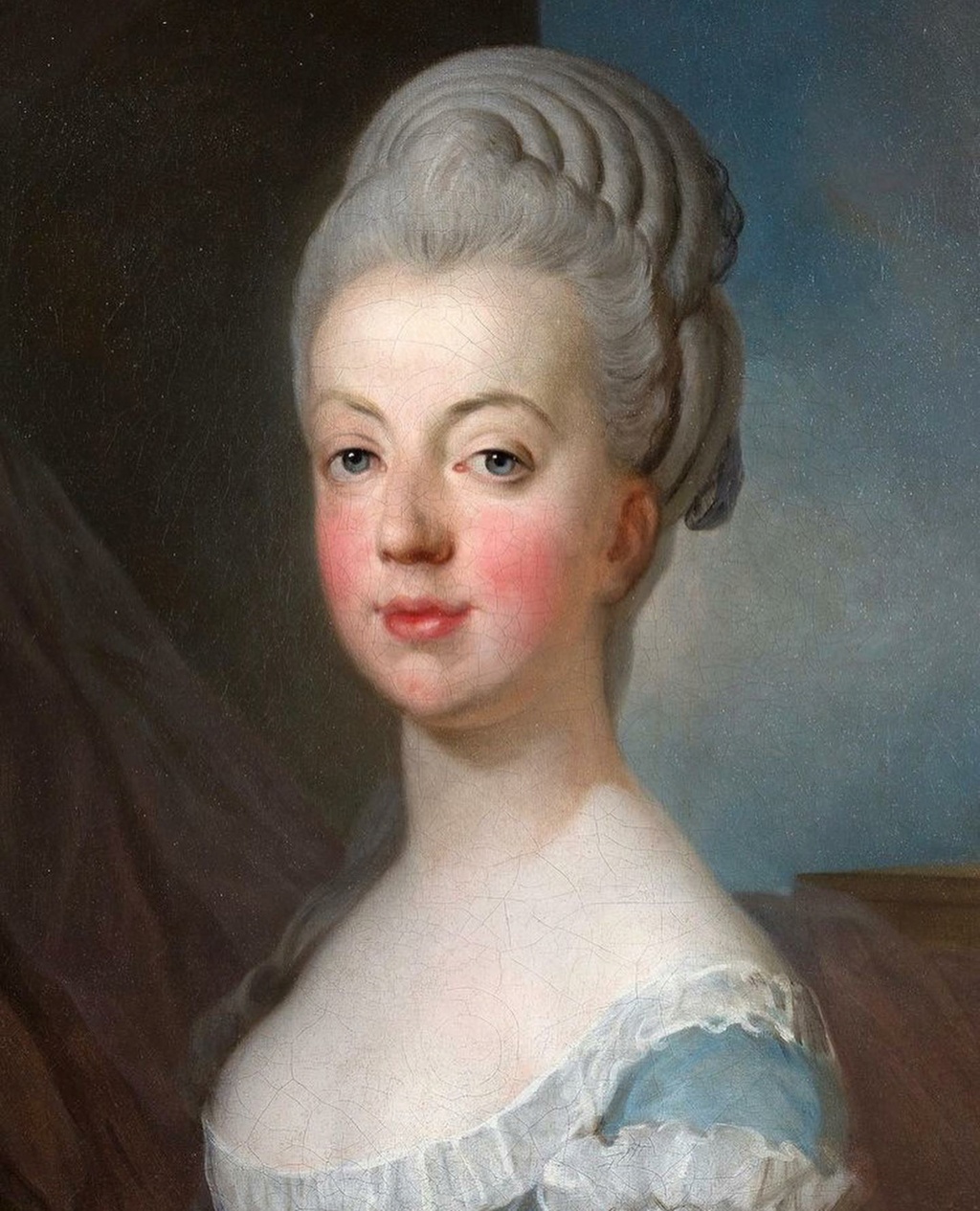
The Dauphine painted by Duplessis in 1773, for her mother the Empress.

And from around the web, it seems that one of the the popular "diary" novels written in the last twenty years was mistaken for a genuine diary of Marie-Antoinette by a researcher. From Anna Gibson:

Reminder to check the sources of your sources!

So an article by a fashion historian in a peer-reviewed journal thought that Kathryn Lasky’s The Royal Diaries novel was real and cited the information in it for an article about the evolution of the chemise dress. (Marie Antoinette had no diary, and she certainly didn’t somehow write in 1769 about dresses that start showing up in fashion journals in the late 1770s; nor did Rose Bertin time travel to meet Marie Antoinette when she was just an archduchess, or design her wedding dress, etc.)

So far I’ve uncovered two articles that cited this historian’s article while repeating the false information regarding Marie Antoinette’s diary and the robes à la créole. Completely understandable that these second writers would take this historian at their word because one would assume they know their stuff, but not understandable that the historian behind the original article found Lasky’s book, read the page in question, and then cited it as fact.(Read more.)

Share

Thursday, June 4, 2026

The Great Feast: The Hapsburgs And Corpus Christi

Hapsburgs Corpus Christi 

From The War for Christendom:

 In 1264, Pope Urban IV issued the Papal Bull Transiturus de Hoc Mundo, promulgating to the Latin Rite the Solemn Feast of the Body and Blood of Christ, to be celebrated on the first Thursday after Trinity Sunday. Around this same time, Rudolf the eighth Count of Hapsburg aided and protected a priest bringing the Viaticum to a dying farmer, giving the priest his horse and guiding him across a raging torrent, walking bareheaded. The priest then prophesied that the humble Count and his descendents would receive the Imperium of the Holy Roman Empire.

This veneration of the Holy Eucharist was continued by all the descendants of the Noble House, and the Feast of Corpus Christi in the Hapsburg realms became second only to the Solemn Feasts of Easter and Christmas. The Family indeed owed all to Rudolf’s great devotion to the Holy Eucharist, and the special Eucharist blessing bestowed on him, thus it was most fitting that the Feast of Christ’s Body should become the greatest feast of the Empire. So long as the Family remained devoted to the Cross and the Eucharist, God would bless and protect them (and He still does, even though they have been cast from the throne).

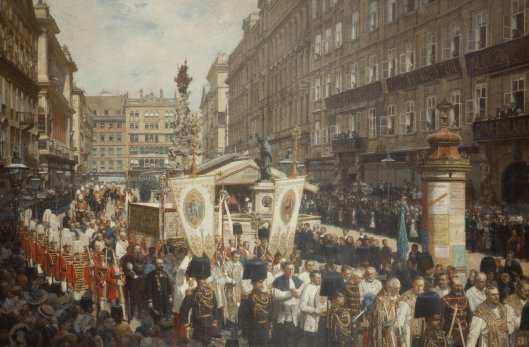
First in the great procession in the Imperial City of Vienna came three priests in splendid vestments like heralds to the city. Then came the Court officials in full Court dress, and the Court Clergy vested in gold and white vestments, followed by dignitaries of every rank. Before the gilded canopy marched the Archdukes of the House, carrying candles, and the acolytes carrying forward the Cross, the golden banners swaying in the wind, the swinging thuribles sending into the air clouds of incense, and the ever ringing bells. The great canopy itself was carried by four noble chamberlains in Imperial livery, upheld over the Hofburg Parish Priest who held up in benediction the golden Monstrance with radiating rays like the sun, in which resided the truly present Most Sacred Body of the Son of God, while the Emperor of Christendom walked behind bareheaded and flanked by the Imperial Guard, humbly worshiping his Divine King. (Read more.)


Share

Tuesday, June 2, 2026

Legendary Crown Jewels

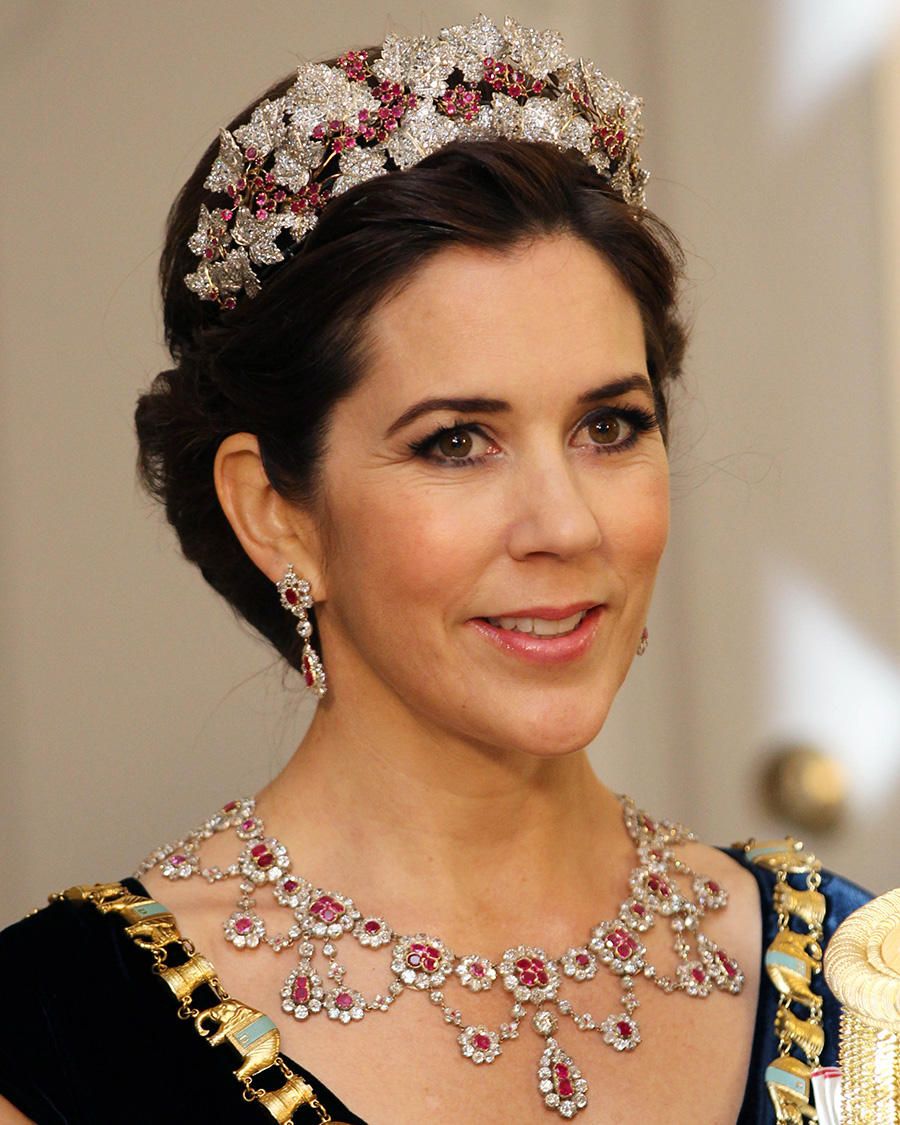
Princess Mary of Denmark attends a Gala Dinner to celebrate Queen Margrethe II of Denmark’s 40 years on the throne at Christiansborg Palace Chapel on January 15, 2012 in Copenhagen, Denmark. (Photo by Chris Jackson/WireImage)
 

From Only Natural Diamonds:

According to Daughters, the Danish Crown Jewels came very close to taking the top spot because they are among the clearest examples of uninterrupted monarchical continuity in Europe. The collection remains remarkably intact and exceptionally well preserved, offering a rare glimpse into how royal regalia can survive centuries of political and cultural change while remaining deeply tied to national identity.

Daughters notes that the Danish Crown Jewels are especially significant because of their extraordinary continuity and preservation. “The British and Danish crown jewels are perhaps the strongest examples of monarchical continuity in Europe,” he says. While Britain’s regalia reflects both continuity and reinvention following the destruction of the original Crown Jewels during the English Civil War, Denmark’s collection “has remained almost entirely intact,” creating what he describes as “a rare sense of unbroken cultural identity.”

He also explained that Denmark’s regalia functions differently than many other royal collections in Europe. “In Denmark, the regalia feels more closely tied to national heritage and cultural continuity, serving as an enduring public symbol of Danish history,” he says. That connection between the monarchy and national identity has helped transform the jewels from historical treasures into living cultural artefacts still woven into modern royal life. (Read more.)

Share

Friday, May 22, 2026

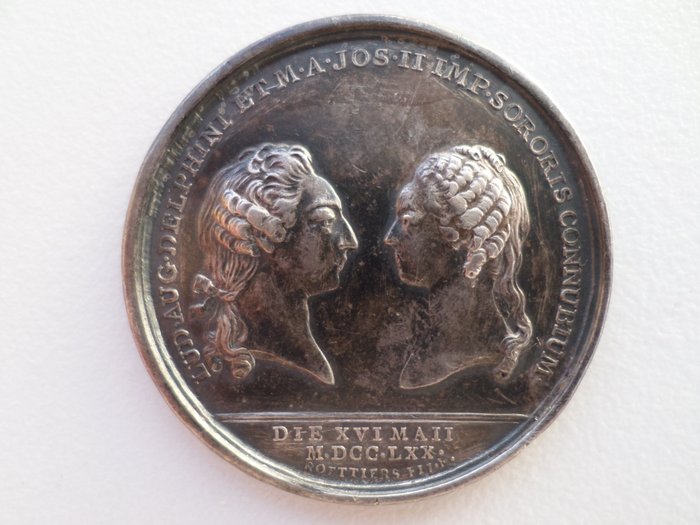
'Mariage de Louis XVI et Marie-Antoinette'

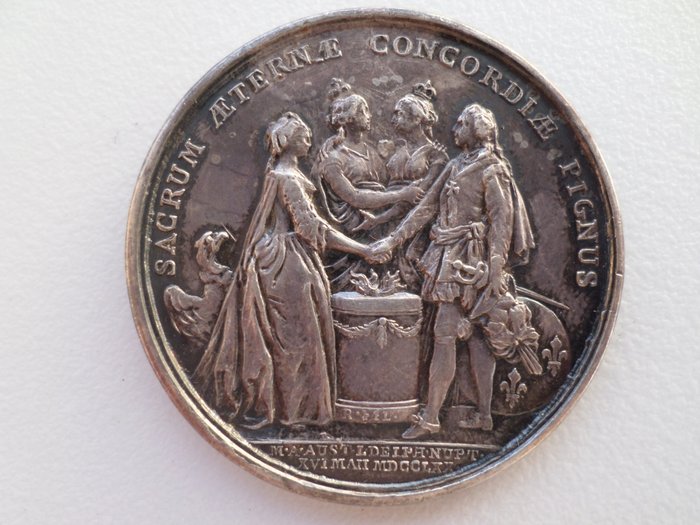
An April 1770 Austrian medal minted by Roettiers, on the marriage of Marie-Antoinette the "sister of Emperor Joseph II" by proxy with the future Louis XVI in the Augustinerkirche of Vienna. The actual, "second" wedding ceremony took place on May 16, 1770 at Versailles.

Here the young couple (who had not yet met) are shown at the altar of Vesta with goddesses representing their countries.

Share

Sunday, May 10, 2026

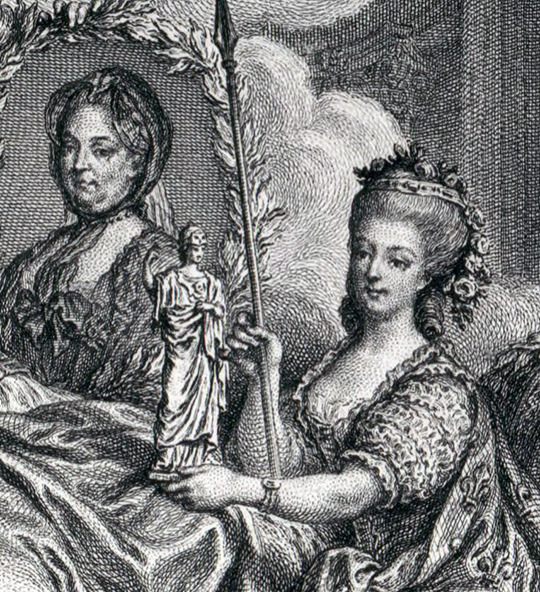
Marie-Antoinette with a Portrait of Her Mother

Marie-Antoinette with a portrait of her mother Empress Maria Theresa, via Vive la Reine. The  portrait is being held by a female figure known as "Eugenia" or "Nobility" to whom the Queen of France is offering a statue of Minerva, the Roman goddess of Wisdom. "Eugenia" is holding a shield with the Habsburg imperial eagle. The Queen is wearing a crown of roses. It is interesting that there is a legend of a St. Eugenia who disguised herself as a man in order to join a monastery, similar to the Pope Joan story. But I do not know if any connection with St. Eugenia is intended by the female personage garbed as a soldier. The print is dated 1780, the year of the death of the great Maria Theresa, who had to assume the responsibilities of a male ruler throughout her adult life.


Share

Monday, May 4, 2026

How the Thirty Years’ War Ravaged Europe

 From The Collector:

The Thirty Years’ War (1618–1648) was one of the most destructive conflicts in European history. What began as a religious struggle in the Holy Roman Empire soon expanded into a continent-wide power struggle involving nearly every major state. Entire regions were depopulated, armies grew to unprecedented size, and the war changed how Europe understood sovereignty and statehood. By the time peace finally arrived in 1648, the war had not only shattered old medieval structures but helped lay the foundations of the modern nation-state.

The Holy Roman Empire in the early seventeenth century was a fragmented and decentralized political entity, composed of hundreds of independent kingdoms, principalities, bishoprics, free cities, and minor lordships. While these territories owed nominal loyalty to the Emperor, real power rested with local rulers, many of whom guarded their autonomy jealously.

This loose structure had endured for centuries, but it was placed under immense strain by the religious divisions unleashed by the Reformation. By 1600, the empire was split between Catholic, Lutheran, and Calvinist states. Although the Peace of Augsburg (1555) had attempted to stabilize relations by allowing rulers to choose between Catholicism and Lutheranism, it excluded Calvinists and failed to resolve underlying tensions.

Religious identity became closely tied to political authority, with rulers using confessional allegiance to assert independence from imperial control. The Habsburg emperors were staunch Catholics and increasingly sought to reverse Protestant gains and strengthen central authority within the empire.

These pressures erupted in Bohemia in 1618. Protestant nobles, alarmed by perceived Habsburg encroachments on their religious and political rights, threw imperial officials out of a castle window in Prague, in the Defenestration of Prague. The initial rebellion was against Habsburg rule rather than a purely religious uprising. Although framed in confessional terms, the conflict centred on resistance to imperial centralization. (Read more.)

Share

Thursday, April 23, 2026

The Second Partition of Poland

 From Charles Coulombe:

THE First Partition of Poland was a dreadful blow, not just to Polish morale, but that of the Lithuanians, Belarusians, and Ukrainians with whom they shared the Commonwealth. The Allied Powers — Russia, Prussia, and Austria — that had undertaken the First Partition were watchful over any signs of independence that the Polish King and government might exert. Russia in particular supervised both the meeting of the Sejm and the Permanent Council made up of pro-Russian nobles and now deputed to carry on most of the business of governing. Stanislaus’ royal prerogative was restricted, so that he lost the right to confer noble titles, and military promotions and to appoint ministers and senators. Provincial Governorships, and Crown lands would be auctioned off. With the King reduced to seeming impotence, and the government firmly in pro-Russian hands, it seemed that the Commonwealth was now a complete puppet.

But King Stanislaus was a wily man. There was strong Conservative opposition to the Council, made up of nobility who feared loss of their own powers to a resurgent central government. The King became adept at playing the two sides off against each other and creating his own King’s party. Moreover, although his own powers had been severely clipped, his ability to influence and cajole became if anything ever stronger. He became very adept at mitigating or frustrating the worst of legislation that the Russians favoured. In secret, with trusted advisers, he created a reform programme. But while the King was able to slow the rate of decay, his opponents in the Sejm were able to block his reforms.

This standoff would continue for almost two decades. But on the wider world, things were happening. In 1781, Austria and Russia allied as a means of countering — and, they hoped, eventually conquering — the Ottomans (Catherine the Great had one of her grandsons named Constantine, in hopes that he would reign over a new Byzantine Empire). Stanislaus attempted to join this alliance, reasoning that it would strengthen Poland-Lithuania, and buy the country some independence. They were unable to agree on terms, but in 1787, the two Christian Empires went to war with the Muslim one. In response, Stanislaus convoked the “Great Sejm” the following year, which would sit for four years. Then in 1789, the revolution in France began, and that country created a constitution. (Read more.)
Share

Thursday, April 2, 2026

Franz Joseph Washing the Feet of the Poor

In accord with the ancient custom.
In 1850, Franz Joseph participated for the first time as emperor in the second of the traditional Habsburg expressions of dynastic piety: the Holy Thursday foot-washing ceremony, part of the four-day court observance of Easter. The master of the staff and the court prelates chose twelve poor elderly men, transported them to the Hofburg, and positioned them in the ceremonial hall on a raised dais. There, before an invited audience observing the scene from tribunes, the emperor served the men a symbolic meal and archdukes cleared the dishes. As a priest read aloud in Latin the words of the New Testament (John 3:15), “And he began to wash the feet of the disciples,” Franz Joseph knelt and, without rising from his knees, washed the feet of the twelve old men in imitation of Christ. Finally, the emperor placed a bag of twenty silver coins around the necks of each before the men were led away and returned to their homes in imperial coaches.(Read more.)
Share

Blessed Karl, Clericalism and Lay Church Governance

 From Charles Coulombe at One Peter 5:

In many ways, Austro-Hungarian Emperor-King Franz Joseph epitomised the traditional relationship between the lay and clerical powers of the Church. As with the other Crowned Heads of Europe, he had inherited a particular style of Catholic devotion peculiar to his own dynasty – the Pietas Austriaca. Bound up with a veneration of the True Cross and the Passion, the Blessed Sacrament and the Sacred Heart, the Blessed Virgin and St. Joseph (the family patron), this religiosity had led to the tremendous collection of relics at the Hofburg, the Imperial Palace in Vienna. The Maundy Thursday Footwashing and the Corpus Christi procession were highlights of court life in Vienna, and in 1898 Franz Joseph led the Imperial Family in observing the Consecration of All Mankind to the Sacred Heart, led by Leo XIII in Rome. In the canon of the Mass, the Good Friday Collects, and the Holy Saturday Exsultet, the Emperor was prayed for by name.

Franz Joseph was crowned and anointed King of Hungary in 1867. As Emperor-King he appointed the Cardinals, Archbishops, and Bishops, subject to Papal approval. Exempt from this were Salzburg and Olomouc, their metropolitans being elected by the cathedral chapters, and the former ‘Salzburg dioceses’ of Seckau, Lavant, and Gurk. The Archbishop of Salzburg had the right of appointment for Seckau and Lavant, the occupation of Gurk was regulated in a mixed manner, that is, the Emperor proposed two candidates, the subsequent nomination was made by the Archbishop of Salzburg. The Nuncio had to be consulted to make sure that the choice was not obnoxious to the Pope – either disapproval would derail the process; the separate Austrian and Hungarian ministries of Worship and Education would do the research, but it was Franz Joseph who had to approve the choices, both for Latin and Eastern Rite Catholic Bishops. Moreover, he had to bear in mind that some of his appointees would sit in one or more legislatures within the Monarchy.

There were three national parliaments. In the Upper House – House of Lords (Herrenhaus) of the Austrian Parliament could be found the prince-archbishops of Vienna, Prague, Salzburg, Görz, and Olmütz, the archbishops of Lemberg and Zara, the Byzantine Catholic archbishop of Lemberg, the Armenian Catholic archbishop of Lemberg, and the Greek Orthodox archbishop of Czernowitz, as well as the prince-bishops of Brixen, Breslau (although located in what was then Germany, for the diocesan territory in Austrian Silesia), Krakau, Seckau, Trient, Laibach, Lavant, and Gurk. In the Hungarian Upper House, the Főrendiház or “House of Magnates,” had an even higher proportion of ecclesiastical members – although it was also more interfaith than Austria’s: forty-two dignitaries of the Catholic and Orthodox Churches, including the Primate, Archbishops, Bishops, Abbots, and various other high officials, and thirteen representatives of the Protestant confessions. The annexation of Bosnia in 1908 presented a challenge in creating representative institutions for a region that had never known them. But while Bosnian diet (Sabor) would only one have one house, it would also have religious representatives appointed by the Monarch. These were, in deference to the Muslim majority, the Reis, who was the principal of Muslims’ granted lands, and the Muslims’ regional leader from Mostar; four Metropolitans and the president of the Orthodox community; the Catholic archbishop and two province members of Franciscan order of Bosnia and Herzegovina; and the Sephardic rabbi of the higher order. The various provincial diets in the Austrian half of the Monarchy also numbered the local Catholic bishops in their number.

Another religious duty that Franz Joseph took very seriously was that of funding missions – even though Austria-Hungary had no colonies. The Catholic Church in Scandinavia, Albania, and Bulgaria (Latin and Byzantine in that case) was heavily funded by the Emperor, as was the Church in the Holy Land and Egypt (the Coptic Catholic Church was funded from its beginning thereby, and Franz Joseph paid for the building of the Latin Catholic Cathedral of St. Catherine in Alexandria, where, ironically, the remains of  his wartime enemy King Victor Emmanuel III would rest until their recent repatriation to Italy). But since 1826, very largely out of funds given by both Franz Joseph and his two immediate predecessors, a large amount of this largesse went to the Church in the United States. Through an organisation called the Leopoldinenstiftung – the “Leopoldine Foundation” – the Habsburgs and many of their subjects poured millions of dollars into the American Church, founding 400 parishes, subsidising wholly or partly 300 missionaries (such as St. John Neumann and Ven. Bishop Baraga), and sending an endless flow of vestments, statues, stained glass, liturgical implements, and the like. A great deal of dynastic money went to Eastern Rite churches in the United States as well. Unfortunately, the outbreak of war in 1914 ended the flow of generosity – which, of course, would be repaid by Woodrow Wilson’s insistence of the deposition of Franz Jospeh’s successor, his exile, and the partition of his domains. (Read more.)

Share

Monday, March 30, 2026

Marie-Antoinette's Gambling Addiction

I have many times been accused of making Marie-Antoinette into a saint. Just because I believe, as most of the evidence indicates, that Marie-Antoinette was faithful to her husband, does not mean I think she was the Little Flower. Endeavoring to observe the sixth commandment is a basic duty which does not mean automatic sanctity. We all know many faithful spouses who are not saints (at least, not yet.) The New Advent article presents a fairly balanced view of Marie-Antoinette:
In her private life, Marie Antoinette may justly be blamed for her prodigality, for having, between 1774 and 1777 -- by certain notorious escapades (sleigh racing, opera balls, hunting in the Bois de Boulogne, gambling) and by her amusements at the Trianon -- given occasion for calumnious reports. But she confessed to Mercy that she indulged in this dissipation to console herself for having no children; and the tales of Besenval, Lauzun, and Soulavie, about the amours of Marie Antoinette, cannot stand against the testimony of the Prince de Ligne: "Her pretended gallantry was never any more than a very deep friendship for one or two individuals, and the ordinary coquetry of a woman, or a queen, trying to please everyone." De Goltz, the Prussian minister, also wrote that though a malicious person might interpret the queen's conduct unfavourably there was nothing in it beyond a desire to please everybody. Besides, the queen continued to give edification by her regular practice of her religious duties....
Her historian, M. de la Rocheterie, says of her: "She was not a guilty woman, neither was she a saint; she was an upright, charming woman, a little frivolous, somewhat impulsive, but always pure; she was a queen, at times ardent in her fancies for her favourites and thoughtless in her policy, but proud and full of energy; a thorough woman in her winsome ways and tenderness of heart, until she became a martyr."
 The "notorious" escapades of sleigh-riding, going incognito to the opera ball, hunting and watching the horse races in the Bois de Boulogne, were fairly innocent past-times for a twenty year old queen. The gambling, however, became a serious addiction. It must be kept in mind, however, that she was not the not the only one. Gambling was an entrenched part of court life from the days of Louis XIV. As scholar Ross Hamilton describes it:
Gambling obsessed all levels of French society during the Enlightenment. Louis XIV held appartements du roi given over to gambling three times a week at Versailles, the queen hosted a nightly game, and courtiers scheduled additional occasions for play. Hosts so frequently acted as bankers for games to entertain their guests that satirists, chroniclers, and moralists complained that compulsive gambling had destroyed other forms of social entertainment. In Paris ten authorized maisons de jeux operated games involving some degree of skill (jeux de commerce) but essentially they served as fronts for more lucrative chance-driven games (jeux de hasard). Gambling also took place at the two great Paris fairs during almost four months of the year, all year long at foreign embassies, and eventually at gambling houses at the Hotel de Gesvres and later at the Hotel de Soissons. In addition to these legal venues, the large number of clandestine Parisian gaming rooms, lighted by tripots, made one visitor comment that "flaming pots set Paris ablaze," and gambling was by no means restricted to Paris. (2) The "Age des Lumieres" was lighted by gambling. Although official prohibitions referred to both religious and sociological dangers from gambling, within the context of the period, risking large sums at play became an analogy for risking one's life in battle. Having the courage to risk and winning or losing with equal equanimity demonstrated indifference to material gain and thus served as a means of displaying hereditary status.
 Author Lisa Hilton in the biography Athenais (Back Bay, 2004) explains how gambling was one of the only "honorable" ways in which the often cash-strapped aristocrats, who were forbidden to engage in trade, could make money. It also replaced the thrill of war. As Hilton says:
Psychologically, gambling can be seen as a rebellion against logic, intelligence, moderation and renunciation, amorally appealing to those who in some way feel their lives constricted, and yet containing its own penance from the guilt it provokes from the losses it entails.
It required a certain amount of discipline to gamble well; one had to have mastery over facial expressions so as not to reveal one's thoughts about winning or losing, or one's strategy. A noble had to be able to lose with grace and promptly pay debts.

Marie-Antoinette had been taught as a child by her own mother to gamble, because the Empress knew that a princess who could not play well would soon be separated from her money. Futhermore, the stakes at the court of Austria were much higher than at the court of France, which made Antoinette an intrepid player. As a teenager, she became inordinately attached to the practice. As she began to have gambling debts, Louis XVI, who was trying to save the government finances and give an example of thrift, forbade her to play anymore games of chance. She begged her husband to let her have one last game. He gave permission, and naughty Antoinette made sure the game went on for three days. Louis was disgusted.

Gambling in France did not disappear with the fall of the monarchy. The revolutionaries who replaced Louis and Antoinette had their own share of gambling debts. According to historian Russell T. Barnhart:
The mania for gambling had been transferred from defunct, monarchical Versailles to the thriving, bourgeois Palais Royal, where the five main gaming clubs throbbed from noon till midnight. During the Revolution, Prince Talleyrand won 30,000 francs at one club, and after Waterloo in 1815, Marshal Blucher lost 1,500,000 francs in one night at another. To bring the situation under control and raise taxes for the state, in 1806 Napoleon legalized the main clubs, which from 1819 to 1837 grossed an enormous 137 million francs.
Gambling took up only a short period of Marie-Antoinette's life, and yet it is something for which she is remembered, even before her numerous charities. In order for the excesses of the Revolution to be justified, the failings of a teenage queen are held up for posterity.

Share

Sunday, March 22, 2026

Remembering the Past in Restoration France: An Expiatory Chapel for Marie-Antoinette

The recreated prison cell of the Queen
The actual prison cell of the Queen
 From Nineteenth-Century Art Worldwide:
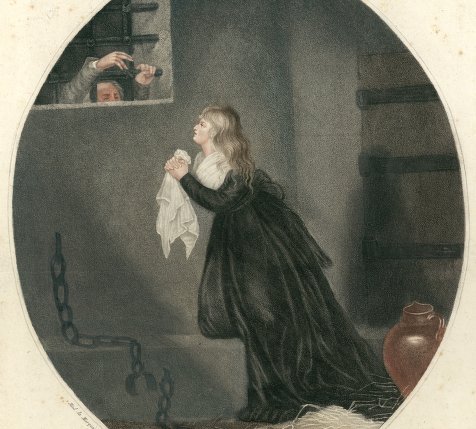
After its restoration, the Conciergerie in Paris w­­­­­as reopened to the public in 1989, the year of the "Bicentenaire" celebrating the 200th anniversary of the French Revolution.[1] The new historical museum of the Conciergerie, formerly the most famous prison in France, offers visitors an almost authentic look at the conditions of living—or rather dying—during the revolutionary Terreur, the period of violence and mass executions that started in September 1793 and ended in July 1794 with the "Thermidorian Reaction." Visiting the Conciergerie today, one enters the gloomy atmosphere of 18th-century crime, grim with punishment and death, reminiscent of Madame Tussaud's Chamber of Horrors. Visitors are faced with life-sized figures of incarcerated men in small dark cells recalling some well-known and, in addition, thousands of nameless victims of the Terror. The representation of one of the most famous inmates of the Conciergerie is especially striking. Marie-Antoinette, Queen of France, spent the final two months of her life in this prison, before her execution on October 16th, 1793. Her figure, which can only be seen from behind, is shown sitting in a cell at a small wooden desk, guarded by a member of the National Guard (fig. 1). Contrary to its appearance, this scene is not set in the cell in which the queen was actually imprisoned, but is only meant to be an accurate reconstruction.[2] The cell in which Marie-Antoinette was imprisoned still exists, but not as a cell. In 1816, during the French Restoration era, it was transformed into a chapelle expiatoire—expiatory chapel (fig. 2). Unchanged during the Conciergerie's restoration before its reopening in 1989, it can still be visited within the prison complex. This small chapel that the newly restored Bourbon monarchy built in honor of Marie-Antoinette confronts the visitor with a staging of history that differs considerably from that of the reconstructed cell. Marie-Antoinette's chapelle expiatoire is in fact a true chapel. It consists of a very small room painted entirely in dark blue, a colored glass window reminding one of ordinary church windows, a cenotaph on one side of the room, and an altar on the other. Here we see the queen again, this time not "in person," but appearing on three paintings representing memorable events of her last days.

In the Conciergerie, the fate of Marie-Antoinette is therefore recalled in two very different ways. On the one hand, we are confronted with a setting that seems to be authentic when in fact it is not; on the other hand, the original queen's cell has been so radically changed that it no longer appears as an authentic historical site. The commemoration of the queen within the prison complex of the Conciergerie is hence somewhat contradictory: the lines between authenticity and historical falsity, between fact and fiction are not as clear as they seem to be at first glance. This deliberate delusion especially draws one's attention to the queen's expiatory chapel of 1816, which is the main subject of this article. This slightly kitsch memorial raises questions that not only concern the construction, political context, and iconography of the chapel, but also consider the notion of authenticity and the ways in which history has been staged and commemorated throughout the ages. Therefore, the focus of my article is twofold: first, I will put the queen's expiatory chapel in the political and cultural context of its creation and discuss its iconography and propaganda content. In doing so, I will also consider some other expiatory monuments of the Restoration era. Then, I will focus on the queen's chapel as a memorial and historical site. I will especially raise the question as to whether notions of authenticity had been accounted for by the authorities and artists who were involved in the chapel's construction. With this twofold approach I particularly want to broaden the art-history research perspective which until now has been focused on the iconography and political relevance of the Restoration's expiatory monuments.[3] (Read more.)


Share

Monday, February 16, 2026

Marie-Antoinette and Carnival


I usually do not use photos from the 1938 Marie Antoinette film; the costumes were glitzy and the wigs, too platinum. However, Norma Shearer's portrayal of Marie-Antoinette was soulfully authentic; the photo above captures the zest of the young Dauphine taking Paris by storm at Carnival. As a young girl, Marie-Antoinette embraced the festivities of Carnival with alacrity, especially the masked balls. Since members of the royal family were constantly surrounded by semi-liturgical ceremonies, at the masked ball the princes and princesses could engage in something vaguely resembling normal human interaction. The wearing of a mask, although it did not always endow total anonymity, lightened the tight protocol so that royals could mingle and converse with others in society.

In February of 1773, Marie-Antoinette wrote to her mother Empress Maria Theresa, relating how she went with her husband the Dauphin Louis to the Opera ball in Paris:
We went- M. le Dauphin, the comte, and comtesse de Provence and I- last Thursday to the Opera Ball in Paris; we kept the utmost secret. We were all masked; still, we were recognized after half an hour. The duc de Chartres and the duc de Bourbon, who were dancing at the Palais Royal right next door came to meet us and asked us pressingly to go and dance at Madame de Chartres's; but I excused myself from it as I had the King's permission for the Opera only. We returned here at seven and heard Mass before going to bed. Everybody is delighted with M. le Dauphin's willingness to have this outing since he was believed to be averse to it. (Secrets of Marie Antoinette: A Collection of Letters, edited by Olivier Bernier. New York: Fromm International, 1986, p. 102)
In January of 1774, Louis and Antoinette once again ventured incognito into Paris to the Opera ball, accompanied by Louis' two brothers and their wives. Here is Comte Mercy's description of the event in a letter to Empress Maria Theresa:
The three Princes and Princesses came on the 30th of January to the masked ball at the Opera; measures had been so well taken that they remained a long while without being recognized by anyone. M. le Dauphin [Louis] behaved splendidly; he went about the ball talking indiscriminately to all those he met on his path, in a very gay and decorous manner introducing the kind of jests suited to the occasion. The public was enchanted with this conduct on the part of M. le Dauphin, it made a great sensation in Paris and they did not fail, as always happens in these cases, to attribute to Madame la Dauphine the improvement they noticed in her consort's way of showing himself....

The Princes and Princesses came back a second time to the Opera ball on Sunday, the 6th of this month [February]; but this time their presence was less well concealed and consequently there was a greater influx of people to the theater. However, nothing improper or embarrassing resulted, and Madame la Dauphine, who did not unmask, drew on herself all the applause and admiration with which all the public always hastens to do homage to her, both owing to the people to whom she spoke and the things she said to them. (Louis XVI and Marie-Antoinette before the Revolution by Nesta Webster, p. 21)
It was at the Opera ball on January 30 that Marie-Antoinette chatted with Count Fersen behind her mask, in the presence of her husband and in-laws, but no eyebrows were raised by this playful incident. The Empress Maria Theresa was more concerned with her daughter getting sick from exhaustion than with anything else, and at the end of the 1773 Carnival wrote: "Thank God it is all over...." (Secrets of Marie Antoinette, p. 104) Later, she expressed reservations about the young Queen's taste in fashion. On March 5, 1775, after Louis XVI had ascended the throne of France, the Empress penned:
Thank God the endless Carnival is over! That exclamation will make me look very old, but I must admit that all those late evenings were too tiring; I feared for the Court's health and for the order of it's usual habits, which is an essential point....In the same way I can't prevent myself raising a point which many gazettes repeat all too often; it is the coiffure you use; they say that from the forehead it is thirty-six inches high, and with so many feathers and ribbons to adorn it! (Ibid.,p.159)
Marie-Antoinette responded by saying:
Although Carnival did amuse me a great deal, I agree that it was time it was ended. We are now back to our usual routine....It is true that I take some care of the way I dress; and, as for feathers, everyone wears them, and it would be extraordinary not to wear them. Their height has been much curtailed since the end of the balls....(Ibid., 160)
After Marie-Antoinette became a mother in December of 1778, her participation in Carnival was greatly mitigated, since she preferred not be too far away from her babies at night. It is sad that the enjoyment of the masquerade balls during her teenage years would later lead to many false rumors about her lifestyle. Share

Thursday, February 12, 2026

Marie-Antoinette and Music

File:Antoinette at the spinet.jpg

From Royal Central:
Whilst musical talent in the eighteenth century was judged to be an appropriate feminine accomplishment, Marie Antoinette’s personal relationship with music was a special one, which reached far beyond mere natural inclination. Music proved to be in many ways, perpetually present, like a main character in her life story, giving parallel to key events or lending them at least, poignant expression. Her love and patronage of the music of the composer Christoph Willibald Glück, whose works she did much to promote in France, reaches back even further than Marie Antoinette’s birth, because the composer’s official inauguration in the role of composer of “theatrical and chamber music” took place in 1755 at a court ball at the summer palace of Laxenburg, when her mother, Maria Theresia, was roughly three months pregnant with her, the Empress’s fifteenth child.

When Archduchess Maria Antonia (“Antoine”) of Austria, the future Marie Antoinette was recorded as singing a French song as early as three-years-old, for the name day of her father, the Holy Roman Emperor Franz I, in 1759. She also met the young Wolfgang Amadeus Mozart, who gave his first concert at Schönbrunn Palace, the magnificent Habsburg summer residence on the outskirts of Vienna, in 1762, in the presence of the Empress and the Imperial Family, with the boy prodigy from Salzburg performing on the harpsichord. As Austrian Archduchess, Marie Antoinette’s young love of music was expressed in the painting of her at the spinet by Franz Xaver Wagenschön, a delightful image now part of the Kunsthistorisches Museum collections. The art is arresting, showing Marie Antoinette poised to turn the pages of her music, with one hand delicately resting on the keys. She is dressed in a day dress of blue satin, trimmed with fur, possibly of sable. It is proof, in any was needed, of her early commitment to what would be, a lifelong relationship. (Read more.)

Share

Sunday, February 8, 2026

The Medieval Powerhouse That Was the Kingdom of Bohemia

 From The Collector:

In the 13th century, Emperor Frederick II and his allies were determined to control as much of the Mediterranean as possible. Additionally, the empire faced internal chaos during the Great Interregnum after Frederick’s death. As a result, the Bohemians were  emboldened to take as much territory from their neighbors as possible. They hoped to build a buffer zone between their territory and the Mongols invading from the east. In 1241, King Wenceslaus I, Ottokar I’s son, repelled a Mongol attack on Bohemia, ensuring the kingdom’s security.

Wenceslaus’s son, Ottokar II, became king in 1253 and ruled until his death in 1278. He had clashed with his father, even trying to overthrow him in a revolt that failed. As a result of his marriage to Emperor Frederick’s sister Margaret, he became the Duke of Austria, adding this territory to the Bohemian kingdom. Ottokar II was a warrior king who vowed to expand Bohemia’s borders, earning himself the nickname “The Iron and Golden King.” He even sent expeditions to the Baltic Sea, defeating the Old Prussians and establishing a settlement called Královec, now known as Kaliningrad. At the height of his rule, Bohemian territory stretched from Austria to the Adriatic Sea.

However, King Rudolf I, a member of the Habsburg family who prevailed in the Great Interregnum, began to seize Ottokar II’s possessions. He seized much of the territory in Austria conquered by Ottokar and destroyed his army at the Battle of the Marchfield. However, this did not end the Bohemians’ power. Kings Wenceslaus II and III extended their power to Poland and Hungary, setting up the kingdom for its Golden Age in the 14th century. (Read more.)
Share

Friday, January 9, 2026

Masquerade

A Lady
Masquerades in the past were usually associated with the Carnival season which started at Epiphany and ended on Mardi Gras. From Reading Treasure:
While modern masquerades are usually reserved for Halloween, in the 18th century masquerades were much more frequent occasions. Marie Antoinette's fondness for masquerades was no small thing: her frequent appearances at Paris masquerades at first endeared her to Parisians, who became enchanted with the smiling new dauphine that contrasted too wonderfully with the decrepit Louis XV; but after she became queen, Marie Antoinette's love for donning a mask and dancing the night away began to take a more infamous turn.

After she and her husband ascended to the throne, the propaganda wheels that had previously only caused bumps in the road began to turn in full force. Every little action by the queen, however harmless it may have been, was ripe for gossip and inflation.

Once, the queen and her entourage were on their way--fully masked--to a ball, when the carriage broke down. It was decided that because their faces were well hidden by the masks, they would take a fiacre--otherwise known as a carriage for hire. For the queen of all France to take what amounts to a common taxi was inconceivable in French society, and perhaps nothing would have come of the situation if Marie Antoinette had kept mum. However, the queen gaily brought up the incident to others, thinking nothing of sharing what she perceived as a fun adventure.

To the gossip mill that hounded her, however, that "fun adventure" was surely the sign of more serious transgressions. The 'fiacre' incident sparked rumors that the queen was visiting the private homes of men in secret, and that she frequently disguised herself to take private rides in fiacres with her lovers. As Madame Campan succinctly summarized: "
a single instance of levity gives room for the suspicion of others." (Read more.)
The Aunts
Share

Tuesday, December 16, 2025

O Christmas Tree


Kaiser Franz Josef with Empress Sisi and family

The Habsburgs and the Christmas tree. From the World of Habsburgs:

A festively decked tree with candles is today the foremost symbol of Christmas. However, this has not always been the case. It was not least the Habsburgs themselves who were responsible for introducing this custom in the lands of the Habsburg Monarchy.

Christmas trees as we know them today first arrived in Vienna during the Biedermeier, evidently from northern Germany. In Protestant countries Christmas had long been celebrated as a festivity of the middle-class family, as an intimate, emotional experience of the birth of Jesus – in contrast to the publicly celebrated, convivial church festivity of the Catholic tradition. The ‘new’ tranquil Christmas celebration round the Christmas tree came to epitomize a pious sense of family and bourgeois domesticity in the Habsburg monarchy during the Biedermeier era.

This rapid change of emphasis and its ready acceptance in Vienna can be explained by the profound social changes taking place in the capital during the reign of Joseph II and the Biedermeier era: the new economically flourishing patrician class began to assume a leading role during the time of the industrial revolution and was seeking new modes of expression for its sense of family values.

In 1814 reports compiled by Metternich’s state police contain the first mention of a Christmas tree festivity held in the salon of the Arnsteins, a Jewish banking family. Those attending were given lavish gifts, a custom that was not usual on Christmas Eve in Vienna at the time. The mistress of the house, Fanny von Arnstein, was from Berlin and had brought the custom with her from her native city.

However, it was via court circles in Vienna that the Christmas tree spread rapidly to the living rooms of the middle classes. The wife of Archduke Karl, Henriette of Nassau-Weilburg, who came from a Protestant family, brought the custom from her German home. Christmas 1816 saw the first Christmas tree, festively decked with candles, in the Habsburg family. Emperor Franz I attended this celebration and was so taken with the magical aura of the Christmas tree that he ordered a tree to be put up in the Hofburg at Christmas from then on. Subsequently it became the norm in Catholic families to celebrate Christmas round the tree: contemporary accounts record that while it was still almost impossible to procure a Christmas tree in 1821, by 1829 there were already street vendors selling trees at the Schottentor, the city’s north gate, and in 1851 the Am Hof square is said to have resembled a forest in the run-up to Christmas. (Read more.)

Share

Thursday, December 11, 2025

Europe’s Unending Tragedy

 From Chronicles:

There are times when Europe succumbs to an urge for self-destruction that defies rational explanation. The Thirty Years’ War provides a particularly tragic example. It went on long after its early instigators and key participants were all dead. Rational actors could have brought it to a close well before it entered its most destructive phase in the 1630s, yet the leaders’ ability to strike a balance between ends and means was lost to audacity, fear, greed, and fanaticism. 

That war became infamous for its violence even before the Peace of Westphalia. In subsequent decades, Europe experienced several armed conflicts, but they were limited wars for limited objectives, fought within the balance-of-power system by adversaries of similar temper and mindset. 

A new pancontinental carnage played out to the beat of “La Marseillaise” in 1792. Revolutionary levée en masse produced the first million-strong army—turning France into a veritable “nation at arms”—and the first modern-era genocide, in the Vendée. The mayhem took at least 7 million lives before it ended at Waterloo, 13 years later. 

The ensuing peace lasted, with some adjustments and five localized wars, until 1914. Thanks to the skill of the four key players at the Congress of Vienna, the long 19th century brought Europe 99 years of unprecedented flourishing across all fields of human endeavor. It was truly the golden age of European civilization, perhaps of all civilization in all times. It ended, abruptly, in a new nightmare. 

The “Second Thirty Years’ War” started with the lights going out all over Europe in 1914. It ended in 1945, with the continent in ruins, physically and spiritually. Its subsequent economic recovery was impressive, but the old intellectual and moral vigor was gone. This is especially evident in the low quality of the political class. No European leader of our time comes even close to the stature and vision of Charles De Gaulle or Konrad Adenauer, or even of their early successors. As a result, eight decades after the Red Army marched into Berlin, Europe’s politicians are displaying the same old mix of audacity, fear, greed, and fanaticism. It has the potential to result in a new, truly final, catastrophe. (Read more.)
Share