Showing posts with label Gardens. Show all posts

Friday, June 19, 2026

The Queen's Market

Marie-Antoinette is frequently associated with shopping, but how did she shop? It is often forgotten that Versailles, being open to the public, was a place of commerce; vendors set up their stalls in the courtyards and galleries of the palace. As for the Queen, she would usually receive tradesmen in the morning while her hair was being dressed. However, she always sought ways to celebrate the life of the ordinary French people, particularly the peasants whose industry fed the nation. In September, 1777 Marie-Antoinette had a farmers' market in the park at Trianon to inaugurate the opening of her new gardens. The Queen wore peasant attire and served at an outdoor "tavern." Pierre de Nolhac describes the market thus:
A market-place was set up on the lawn...where the baker, the confectioner, and the purveyor of charcuterie dispensed their wares...and even the cook's shop was busy in the open air. All these stalls were connected by a garland of roses....

There were shows of all sorts....Actors...gave several performances on an improvised stage....The avenues leading to Trianon were lined with the booths of Paris shopkeepers who had been engaged to come, their expenses being paid.
(Pierre de Nolhac's Marie-Antoinette, 1905, pp.226-227)
Share

Thursday, June 18, 2026

Marie-Antoinette à la Rose


From the time I first started to write about Queen Marie-Antoinette, I have received comments from devout people about the low-cut gowns that she wore. Let me explain once again that, in the decadent old world, it was etiquette in most of the courts of Europe for ladies' formal attire to include a plunging décolletage. It was considered perfectly correct as long as the proper corset was worn.

The gown which evoked some disapproval for Marie-Antoinette was not one of the low-cut court gowns (shown above) but the simple white linen dress which she favored for her leisure time at Petit Trianon. The portrait in which she is shown thus had to be withdrawn from the public gaze because people took offense at seeing their Queen painted in casual attire. Now to us, the white dress is perfectly modest, but to people of the eighteenth century, it looked as if she were in her chemise, without the stiff corset prescribed for ladies of the royal family. Furthermore, it was interpreted as being a pro-Austrian picture, since linen came from Flanders, one of the Habsburg territories, and the rose the Queen held was seen as a symbol of the House of Austria.

In order to quell the outrage, Madame Vigée-Lebrun had to quickly come up with another painting. In 1783 the artist completed the portrait above, called "Marie-Antoinette à la rose" showing the Queen appropriately garbed in a silk court gown and headdress, trimmed with lace, ribbons and plumes. She is wearing pearls, as befits a Queen, with hair powdered and face rouged, in accord with court etiquette. She looks as if she has just stepped into her garden on a summer evening, bathed in moonlight. The nocturnal quality of the portrait softens the formality of her attire, alluding to Marie-Antoinette's love of nature, and the fact that she was much more at ease in her gardens than she was in the Hall of Mirrors.
Share

Monday, June 15, 2026

Gardening in French

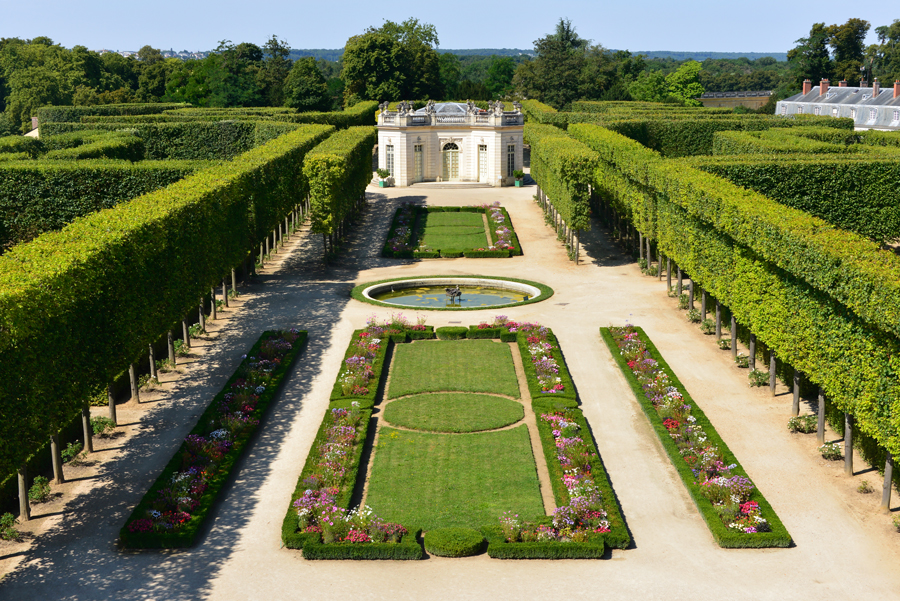
The jardin français of Marie-Antoinette at Trianon

Some great ideas here, although Marie-Antoinette never pretended to be a milkmaid. Of course she would wear simple clothes and an apron when she visited the farm. From Frenchly:

The ‘French garden,” or jardin français, is a concept dating back to the seventeenth and eighteenth centuries, when the Enlightenment was at its peak, and new discoveries in science and technology produced an ideology formatted around reason, above all else. Everything in nature could be bent to the human will, or so it was believed… including gardens.

While ‘English gardens’ of the time were treatises on romanticism, cobbled together from different themes to create a meandering experience left to each viewer’s interpretation, the French garden was formal, exacting, and precise. Picture Versailles from above: its distinctive curlicues and segmented pathways and flowerbeds and shrubberies, which must be meticulously maintained in order to retain their shape. (Though Versailles did have an English garden, the very one where Marie Antoinette built a miniature hamlet and pretended to be a milkmaid.) Louis XIV commissioned the gardens from André le Nôtre in 1661, personally overseeing every detail, in a process that took 40 years to complete, a fit comparison to the King’s ruling style. (Read more.)


Share

Saturday, June 13, 2026

Garden Party at Trianon


 As has been described before on this blog, Marie-Antoinette loved gardens and nature. She wanted her domain at Petit Trianon to be like a natural landscape, albeit a fabricated one. As consort of the most powerful monarch in Europe, it was expected that the queen entertain foreign visitors in grand style. Entertaining heads of state was an expensive enterprise, however, even when they visited incognito, as did Emperor Joseph II and the Grand Duke Paul and Grand Duchess Maria of Russia. The French government was nearly bankrupt due to the help given by King Louis XVI to the American colonists in their war for independence from Britain. To save money, Marie-Antoinette would use her private gardens as the site of the entertainments by illuminating the gardens and having everyone wear white. She would have musicians playing amid the shrubbery, so that it seemed that the music was wafting through the gardens in an ethereal manner.

In May, 1782, the Russian Grand Duke and Grand Duchess visited as the "Comte and Comtesse du Nord." Madame Campan wrote of their visit in her Memoirs:
They were presented on the 20th of May, 1782. The Queen received them with grace and dignity. On the day of their arrival at Versailles they dined in private with the King and Queen.

The plain, unassuming appearance of Paul I. pleased Louis XVI. He spoke to him with more confidence and cheerfulness than he had spoken to Joseph II. The Comtesse du Nord was not at first so successful with the Queen. This lady was of a fine height, very fat for her age, with all the German stiffness, well informed, and perhaps displaying her acquirements with rather too much confidence. When the Comte and Comtesse du Nord were presented the Queen was exceedingly nervous. She withdrew into her closet before she went into the room where she was to dine with the illustrious travellers, and asked for a glass of water, confessing “she had just experienced how much more difficult it was to play the part of a queen in the presence of other sovereigns, or of princes born to become so, than before courtiers.” She soon recovered from her confusion, and reappeared with ease and confidence. The dinner was tolerably cheerful, and the conversation very animated.

Brilliant entertainments were given at Court in honour of the King of Sweden and the Comte du Nord. They were received in private by the King and Queen, but they were treated with much more ceremony than the Emperor, and their Majesties always appeared to me to be very cautious before these personages. However, the King one day asked the Russian Grand Duke if it were true that he could not rely on the fidelity of any one of those who accompanied him. The Prince answered him without hesitation, and before a considerable number of persons, that he should be very sorry to have with him even a poodle that was much attached to him, because his mother would take care to have it thrown into the Seine, with a stone round its neck, before he should leave Paris. This reply, which I myself heard, horrified me, whether it depicted the disposition of Catherine, or only expressed the Prince’s prejudice against her.

The Queen gave the Grand Duke a supper at Trianon, and had the gardens illuminated as they had been for the Emperor. The Cardinal de Rohan very indiscreetly ventured to introduce himself there without the Queen’s knowledge. Having been treated with the utmost coolness ever since his return from Vienna, he had not dared to ask her himself for permission to see the illumination; but he persuaded the porter of Trianon to admit him as soon as the Queen should have set off for Versailles, and his Eminence engaged to remain in the porter’s lodge until all the carriages should have left the chateau. He did not keep his word, and while the porter was busy in the discharge of his duty, the Cardinal, who wore his red stockings and had merely thrown on a greatcoat, went down into the garden, and, with an air of mystery, drew up in two different places to see the royal family and suite pass by.

Her Majesty was highly offended at this piece of boldness, and next day ordered the porter to be discharged. There was a general feeling of disgust at the Cardinal’s conduct, and of commiseration towards the porter for the loss of his place. Affected at the misfortune of the father of a family, I obtained his forgiveness; and since that time I have often regretted the feeling which induced me to interfere. The notoriety of the discharge of the porter of Trianon, and the odium that circumstance would have fixed upon the Cardinal, would have made the Queen’s dislike to him still more publicly known, and would probably have prevented the scandalous and notorious intrigue of the necklace.

In June of 1784, King Gustav III of Sweden arrived under the alias of the "Comte de Haga." Marie-Antoinette did not care for him, because of what she had heard concerning his private life. As Madame Campan relates:
The Queen, who was much prejudiced against the King of Sweden, received him very coldly.All that was said of the private character of that sovereign, his connection with the Comte de Vergennes, from the time of the Revolution of Sweden, in 1772, the character of his favourite Armfeldt, and the prejudices of the monarch himself against the Swedes who were well received at the Court of Versailles, formed the grounds of this dislike. He came one day uninvited and unexpected, and requested to dine with the Queen. The Queen received him in the little closet, and desired me to send for her clerk of the kitchen, that she might be informed whether there was a proper dinner to set before Comte d’Haga, and add to it if necessary. The King of Sweden assured her that there would be enough for him; and I could not help smiling when I thought of the length of the menu of the dinner of the King and Queen, not half of which would have made its appearance had they dined in private. The Queen looked significantly at me, and I withdrew. In the evening she asked me why I had seemed so astonished when she ordered me to add to her dinner, saying that I ought instantly to have seen that she was giving the King of Sweden a lesson for his presumption. I owned to her that the scene had appeared to me so much in the bourgeois style, that I involuntarily thought of the cutlets on the gridiron, and the omelette, which in families in humble circumstances serve to piece out short commons. She was highly diverted with my answer, and repeated it to the King, who also laughed heartily at it.
As Baroness Oberkirch relates in her Memoirs, the Swedish king was charmed with both Louis XVI and Marie-Antoinette, in spite of various misunderstandings. Especially he was enchanted by the illuminated gardens of Trianon, which he thought resembled the Elysian fields. A Swedish scholar once told me that the because of Louis and Antoinette, Gustav was seriously considering becoming a Catholic; I have not yet substantiated that information myself, but it would not surprise me. He certainly did all he could to save their lives, especially through his delegate, Count Fersen. Gustav said of the French king: "Louis XVI is the best and most benevolent prince in existence. His soul radiates serenity. I am filled with admiration."

(Sources: Vincent Cronin's Louis and Antoinette, Madame Campan's Memoirs, Nesta Webster's Louis XVI and Marie-Antoinette before the Revolution, Baroness Oberkirch's Memoirs and Antonia Fraser's Marie-Antoinette:The Journey) Share

Thursday, May 28, 2026

Modern Americans Work More than Medieval Peasants

From Nancy Bilyeau at the Vintage News:
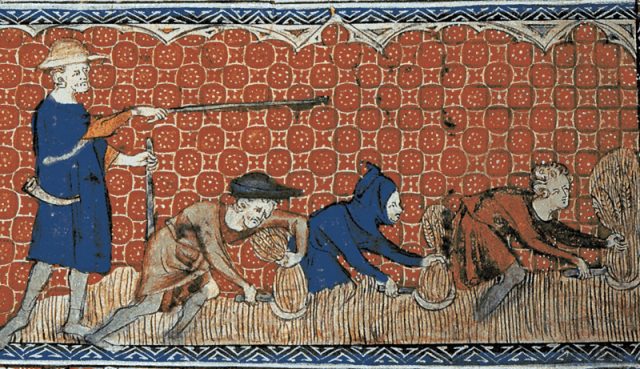
“Before capitalism, most people did not work very long hours at all,” wrote Schor in her book. “Consider a typical working day in the medieval period. It stretched from dawn to dusk (sixteen hours in summer and eight in winter), but, as the Bishop Pilkington has noted, work was intermittent – called to a halt for breakfast, lunch, the customary afternoon nap, and dinner.” 
Depending on time and place, there were also midmorning and midafternoon refreshment breaks. These rest periods were the traditional rights of laborers, which they enjoyed even during peak harvest times. During slack periods, which accounted for a large part of the year, adherence to regular working hours was not usual. According to Oxford Professor James E. Thorold Rogers, the medieval workday was not more than eight hours. 
Plowing and harvesting were backbreaking toil, no doubt, but the peasant enjoyed anywhere from eight weeks to half the year off. 
The Catholic Church, mindful of how to keep a population from rebelling, enforced frequent mandatory holidays. Weddings, wakes, and births might mean a week off to celebrate, “and when wandering jugglers or sporting events came to town, the peasant expected time off for entertainment,” according to Business Insider. “There were labor-free Sundays, and when the plowing and harvesting seasons were over, the peasant got time to rest, too.” 
In fact, Schor found that during periods of particularly high wages, such as 14th-century England, peasants might put in no more than 150 days a year. “All told, holiday leisure time in medieval England took up probably about one-third of the year,” she wrote in her book. “And the English were apparently working harder than their neighbors. The ancien règime in France is reported to have guaranteed fifty-two Sundays, ninety rest days, and thirty-eight holidays. In Spain, travelers noted that holidays totaled five months per year.” (Read more.)
Share

Saturday, May 16, 2026

Bellister Castle

Property for Sale 

From Country Life:

There is nothing more romantic than the idea of living in a castle.

But if you talk to someone who actually does live in a castle — as we did when we spoke to Cosmo Linzee Gordon a while ago — you'll find that as well as being dramatic and wonderful, it's can also be cold, damp, ruinously expensive, and a constant stream of problems to solve. Not for nothing did we headline that particular Country Life Podcast as 'Epic beauty, sweeping grandeur and water pouring through the ceiling.'

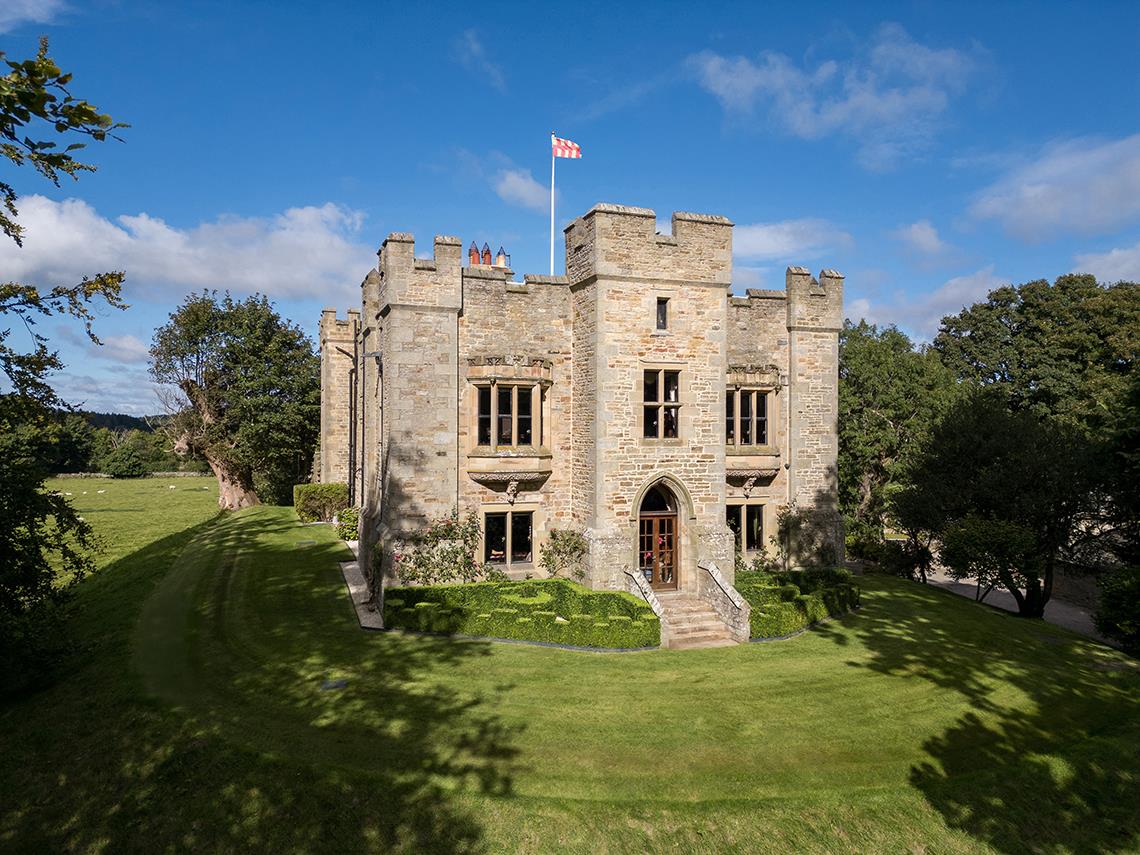
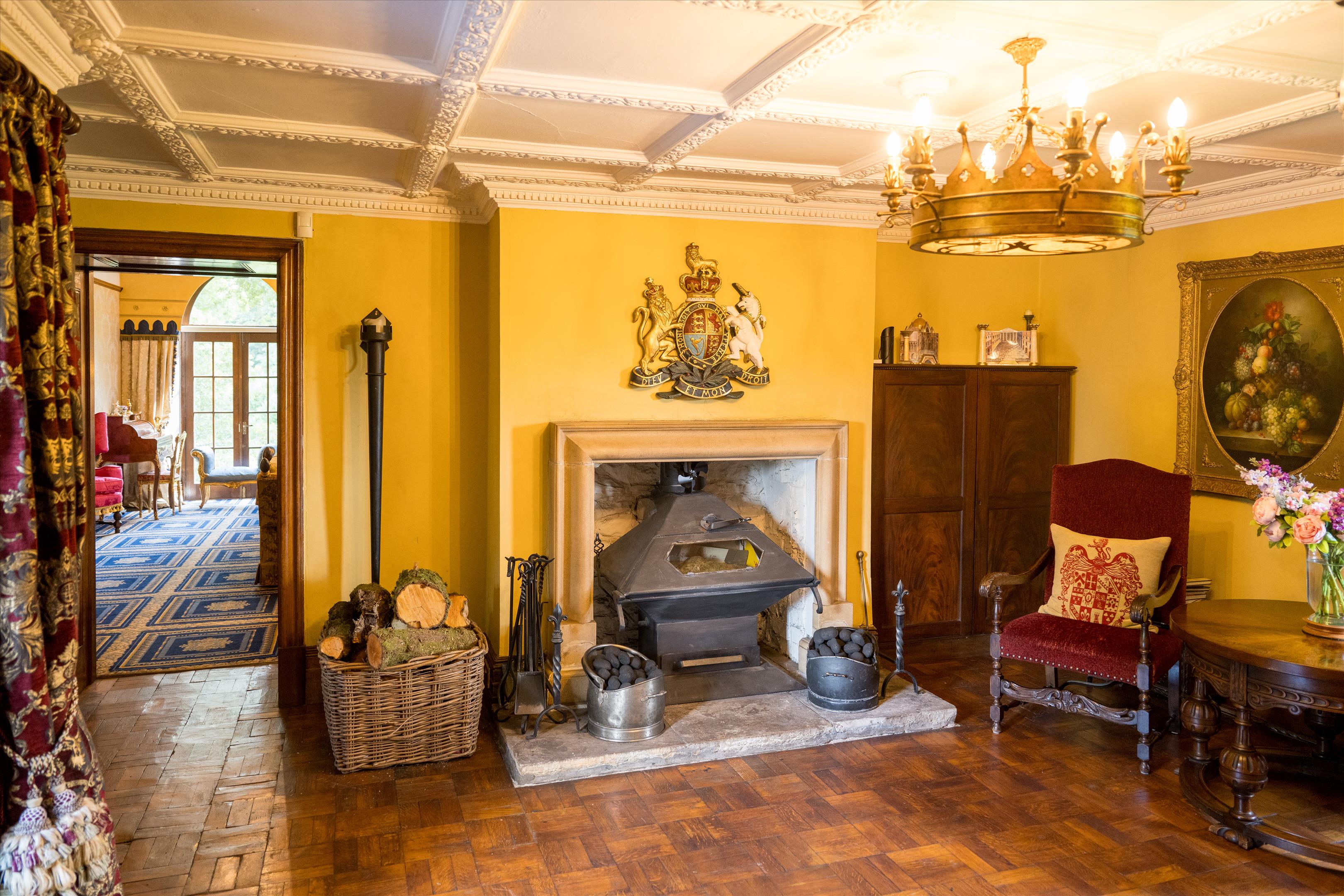
Just occasionally, though, a castle comes up for sale which shows that it doesn't always have to be this way. Bellister Castle, set beside a sweep of the River Tyne on the edge of the Northumberland village of Haltwhistle, is just such a castle — and it's for sale through Knight Frank at £2.5 million. From afar, Bellister is the very image of the medieval castle: a towering, castellated and imposing presence that looks over this green and rolling landscape, almost exactly half-way along Hadrian's Wall. And more than that, Hadrian's Wall is actually a part of the castle in a very literal way: the early portions are believed to have been built using stone that was, er, 'borrowed' from the wall itself. (Read more.)

Property for Sale

Share

Thursday, May 14, 2026

Highest of All Kings

 From A Clerk of Oxford:

The idea that gods dwell in the heights, in the sky and on the mountains, is one of the most ancient religious impulses. It's hardly difficult to see a connection between that and Christ's Ascension, and going on about 'rockets, haha!' feels like a deliberate attempt not to see it. Those silly people of the olden days found poetry in the feast rather more easily than their clever modern descendants do: in Ascension Day folklore there was 'a strong connection between the day and all things pertaining to the sky, such as clouds, rain, and birds' (Roud). Rain which fell on Ascension Day was said to be blessed - 'neither eaves' drip nor tree-drip, but straight from the sky'. The day was connected with holy water in other ways, including the custom of well-dressing and visiting sacred springs. This expresses a sense that the heavens and the earth are interconnected at the most essential level - as of course they are, whether you think of that power as physical or spiritual or both. The kind of preacher who apologises for Ascension Day is likely to call that faith superstitious, but it's infinitely grander, really, than a worldview which finds no wonder in the heavens. We are earthbound, tied to this sublunary world and its many sorrows - but this is one day when the imagination can soar to the sky. (Read more.)


More HERE

(Image source.

Share

Saturday, May 9, 2026

A Quirky Garden in Rural Wiltshire

Image may contain Garden Nature Outdoors Architecture Building Cottage House Housing Backyard Yard and Grass 

Image may contain Garden Nature Outdoors Architecture Building Cottage House Housing Plant Potted Plant and Herbal 

From House and Garden:

How, as a landscape designer, do you let go of the disciplines you have adhered to for many years to create your own, less formal domain? This was the challenge faced by Catherine FitzGerald when she moved to a former Victorian brewery in rural Wiltshire in 2018 with her husband, actor Dominic West and their four children. Catherine’s masterplan for her own garden was to respond to the spirit of the place.

The previous owners had lovingly cared for the house and garden for over 50 years, but Catherine was keen to create something atmospheric among the quirky spaces that lay between the ancient cottage on the lane and the adjoining brewery building. Set in the middle of a Cotswold village dotted with old mills, she wanted it to look as if it had always been there: whimsical Arts and Crafts topiary, roses and clematis on hazel structures, giant cardoons – nothing too ‘imposed’. ‘I wanted it to be relaxed – a place of experimentation and change, where random plant associations and self-seeding could happen without it mattering,’ she says.

 With its thin, free-draining and brashy soil, it is a far cry from Catherine’s family home at Glin Castle, in County Limerick on the west coast of Ireland, where she grew up and has now taken over the garden. There, the soil is heavy clay and acidic, and the Gulf Stream climate is mild and damp. ‘It has been quite a tussle to grow some of the plants I love, such as the roses, in what was essentially once a brewery yard. The ground was hard and compacted, and needed lots of manure and compost to build it up.’ (Read more.)

 Image may contain Garden Nature Outdoors Grass Park Plant Vegetation Herbal Herbs Tree Flower Backyard and Yard

Share

Thursday, April 30, 2026

5 Early-spring Garden Tasks


From Homes and Gardens:

March 20th marks the Spring Equinox, the first day of spring. As sunnier days arrive, our backyards begin to wake up and thaw out. It marks the beginning of long days spent in outdoors, and a reminder there is much to do for us gardeners.

Whether you have already put together a spring gardening checklist or you feel lost with where to get started, there are a few tasks to prioritize for early-spring. Getting your outdoor space prepared for the growing season is key to creating the thriving garden, and there is limited time to get this preparation done.

No matter the spring garden you envisage, horticultural experts say to start by getting these early-spring gardening tasks ticked off. We promise they're all easy to do and will leave you with an immaculate space ready for spring and summer gardening. (Read more.)

Share

Tuesday, April 28, 2026

Chinoiserie in Architecture

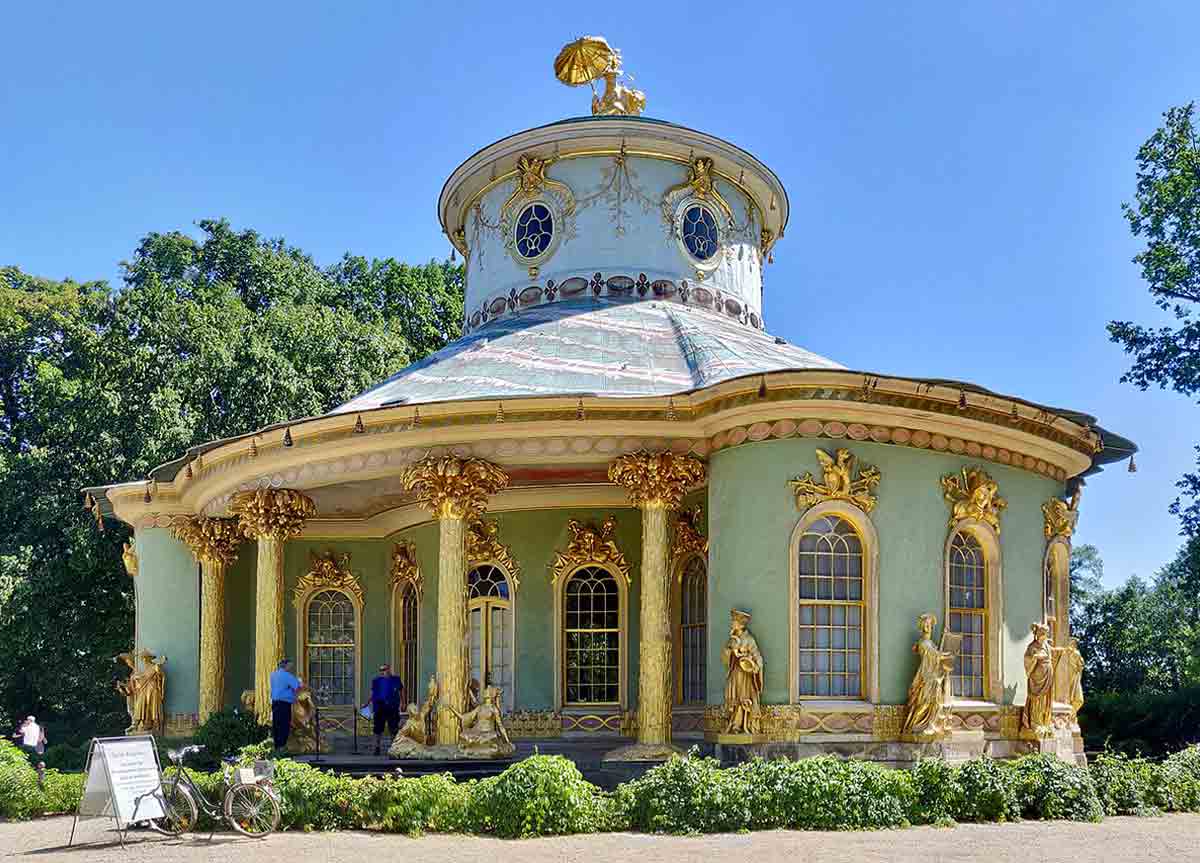
chinesisches haus chinese house sanssouci park potsdam 2019 

From The Collector:

Located in the Sanssouci Park, the Chinesisches Haus (“Chinese House”) in Potsdam, Germany, was built between 1755 and 1764. Commissioned by Prussian king Frederick the Great, the project was headed by German master builder Johann Gottfried Büring. The Chinese House is characterized by its trefoil shape, which was inspired by the Maison du Trèfle at the Palace of Lunéville in Lorraine. Its exteriors feature four prominent gilded sandstone columns alongside several playful, life-sized gilded sculptures of Chinese musicians and tea drinkers. These were the works of German sculptors Johann Melchior Kambly, Johann Gottlieb Heymüller, and Johann Peter Benckert.

The Chinoiserie style continues in the building’s interiors with a vast collection of 18th-century porcelain and a large fresco depicting a whimsical gathering. It features numerous Chinese men standing behind a balustrade, some glancing around and others engaged in conversation. In the surroundings, there are peacocks, parrots, monkeys, statues of Buddha, and many other Chinoiserie motifs. Frederick the Great, as a fervent admirer of Chinoiserie, would later follow up with two additional Chinese-style structures. One was the Chinese Kitchen, located just a stone’s throw from the Chinese House, and the other was the Drachenhaus (“Dragon House”), located at the northern part of the Sanssouci Park. (Read more.)


Share

Sunday, April 26, 2026

Ashington Manor in Somerset

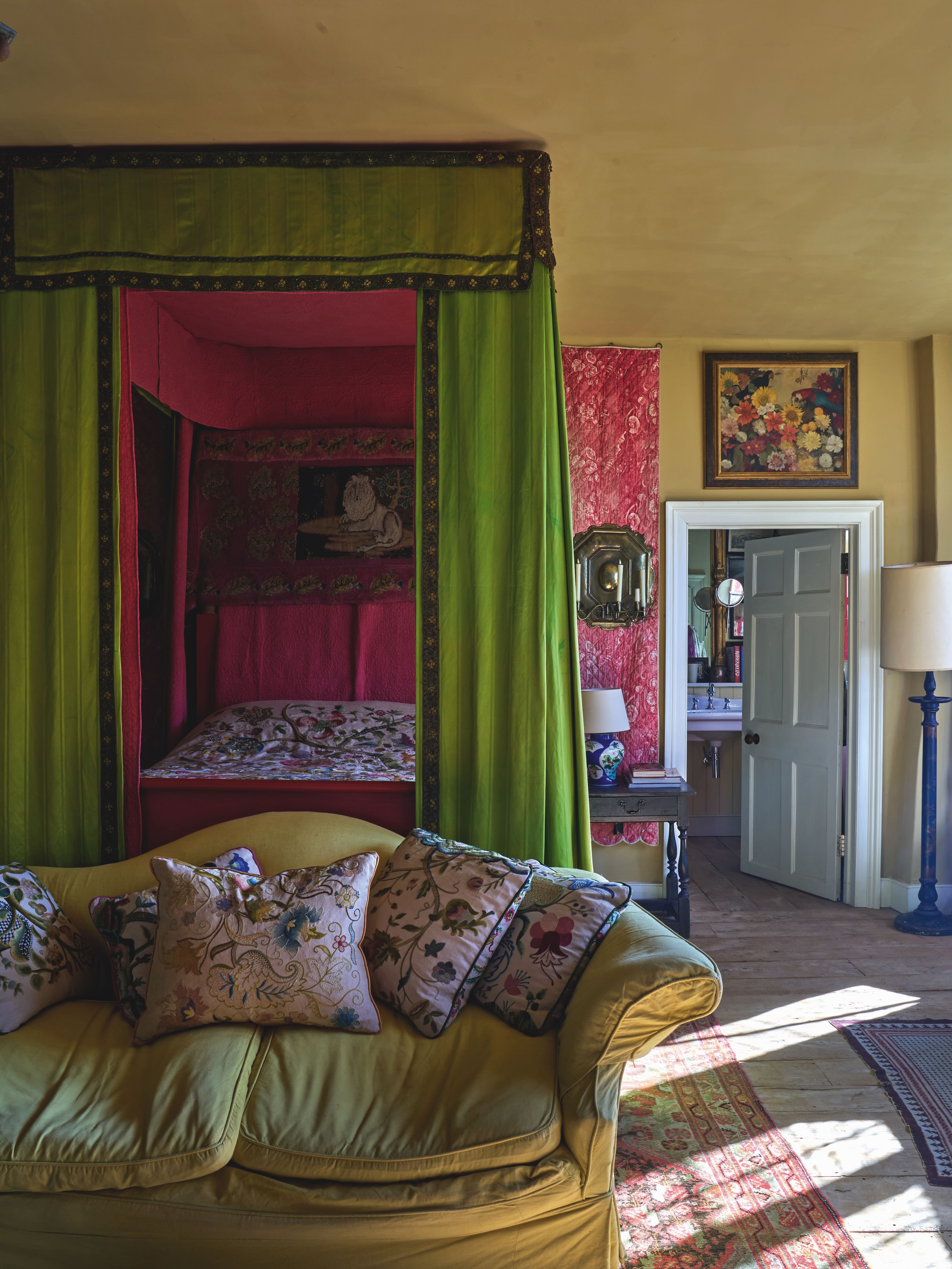
 A bedroom at Ashington, featuring a yellow sofa and a green four-poster bed 

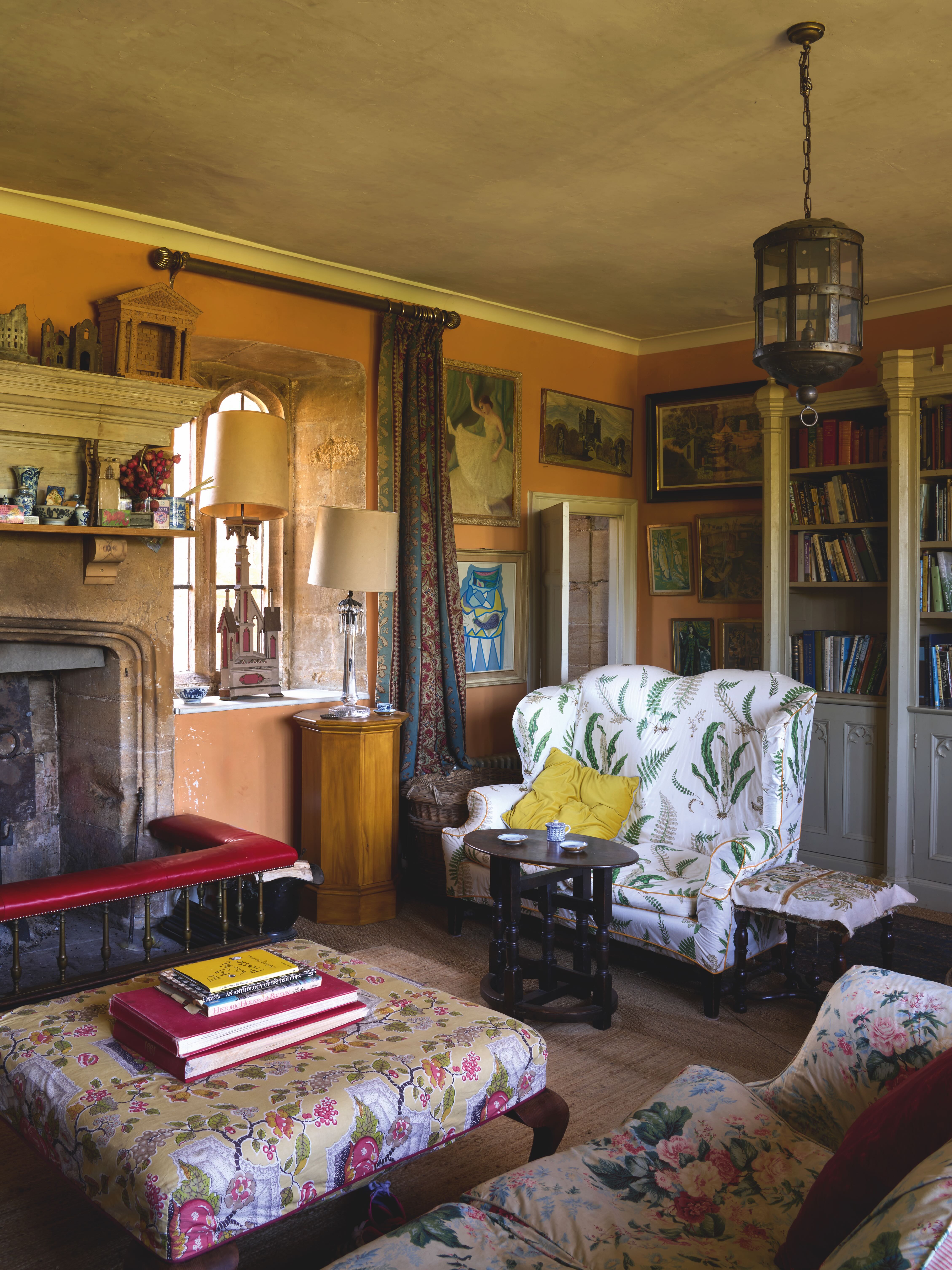
The sitting room, featuring a fireplace, and lots of furniture dressed in floral fabrics 

From Country Life:

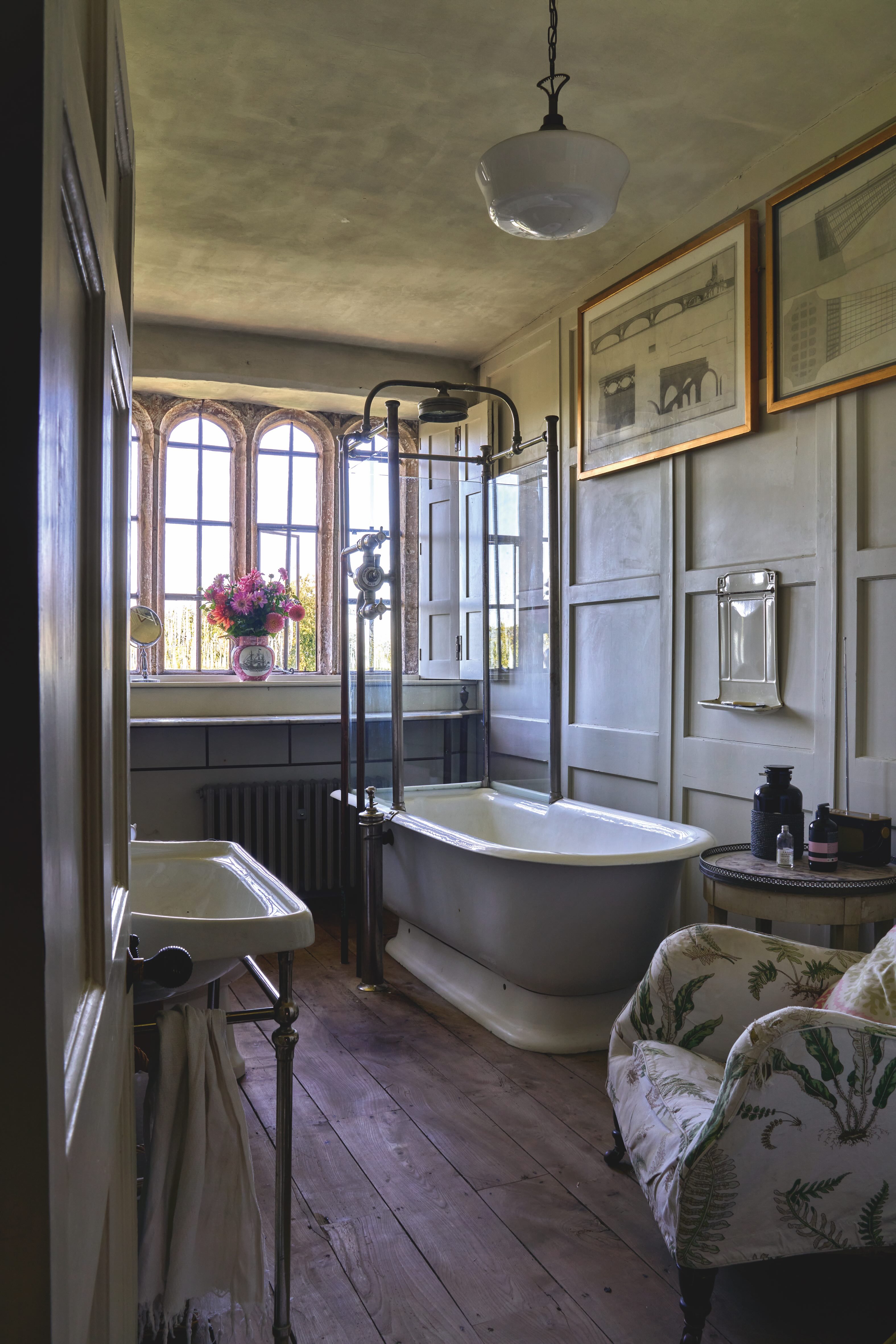
There are many things to note about Ashington Manor in Somerset, not least that, in the 16th century, it was the home of Ursula St Barbe, wife of Sir Francis Walsingham, Elizabeth I’s chief fixer, whose machinations precipitated the gruesome end of Mary, Queen of Scots.

Although she primped it up with a fancy new façade and oriel windows, it had mixed fortunes in the following centuries until it was stumbled upon by Isabel and Julian Bannerman. The couple are makers of magical gardens, who have cast their spell for The King, Sting and Trudie Styler, Jasper Conran and Keith Tyson, as well as further afield, including in Lower Manhattan, New York, where a garden they designed commemorates the British and Commonwealth victims of the attack on the World Trade Centre in 2001. However, what is remarkable on a crisp morning beneath the mullioned windows of Ashington’s double-height great hall is that it is almost toastily warm, in a way that could never be achieved by even the most generously proportioned hearth.

Most people who spend time in leaky, historic piles resign themselves to the fact that if they want to enjoy the heady smell of old oak, the texture of worn stone and the gentle creak of mortise and tenon joints tapped together three or four centuries ago, the price they must pay is wearing thick socks and a gilet all day (and night). They cling to the Aga like a limpet and feel pathetically grateful when handed a hot-water bottle or find, to their delight, that someone has remembered to flick the switch on one of the world’s least expensive luxuries — an electric blanket.  (Read more.)

 A bathroom with a vintage bathtub and shower. There is also a chair

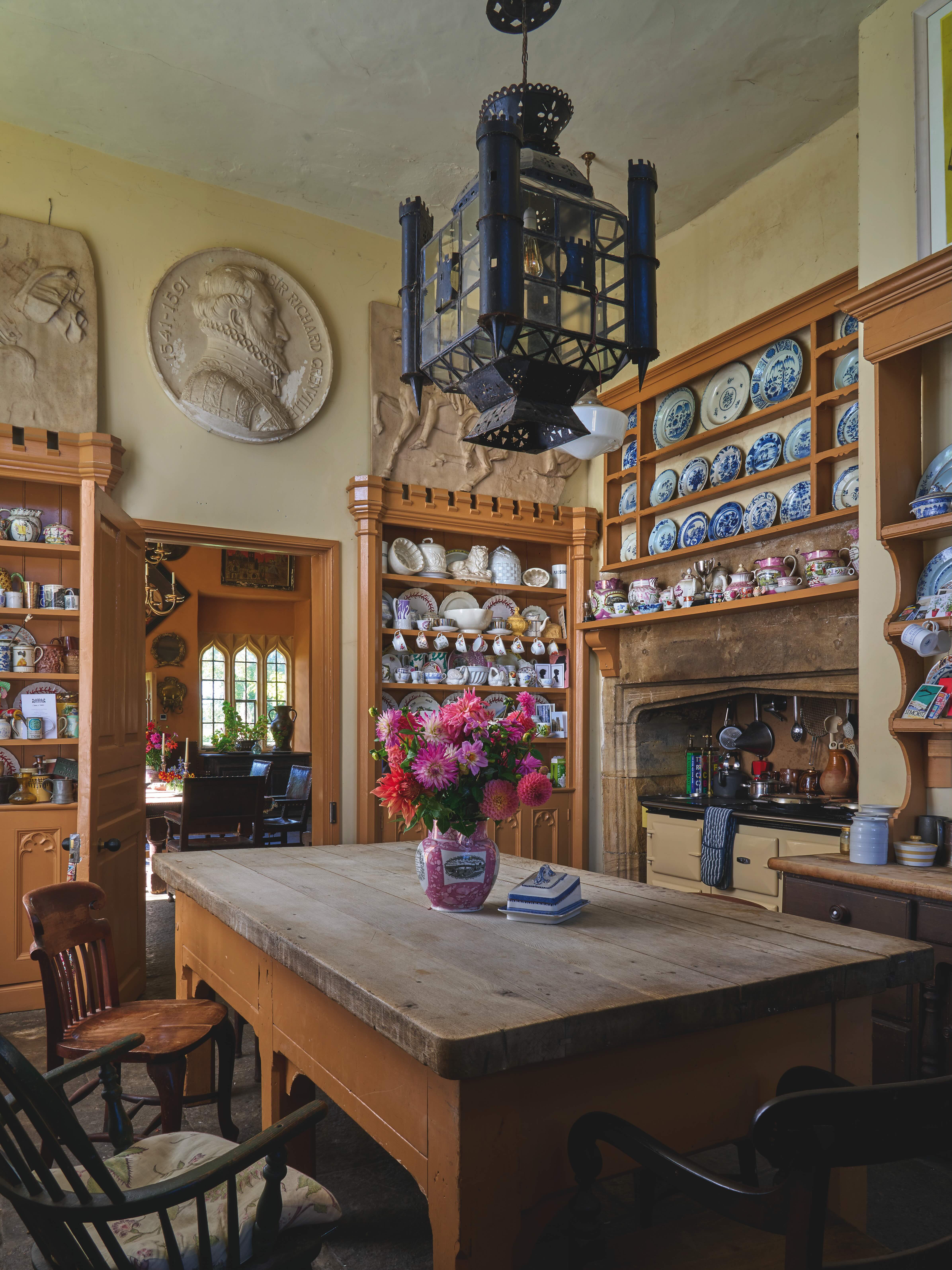
The kitchen. Above a large wooden table is a cast-iron lamp, reliefs can be seen on the walls and dressers are packed with plates.

Share

Monday, April 6, 2026

Lilacs

Lilacs by Pierre-Joseph Redouté


Lilacs by Mary Cassatt
 

Our lilacs are blooming in Maryland. Here is an article on the history of lilacs. Lilacs were much loved by Marie-Antoinette. And here is an excerpt from the poem "Lilacs" by Amy Lowell:

Lilacs in dooryards
Holding quiet conversations with an early moon;
Lilacs watching a deserted house
Settling sideways into the grass of an old road;
Lilacs, wind-beaten, staggering under a lopsided shock of bloom
Above a cellar dug into a hill.
You are everywhere.
You were everywhere.
You tapped the window when the preacher preached his sermon,
And ran along the road beside the boy going to school.
You stood by the pasture-bars to give the cows good milking,
You persuaded the housewife that her dishpan was of silver.
And her husband an image of pure gold.
You flaunted the fragrance of your blossoms
Through the wide doors of Custom Houses—
You, and sandal-wood, and tea,
Charging the noses of quill-driving clerks
When a ship was in from China.

 (Read more.)


More lilacs at East of the Sun, West of the Moon

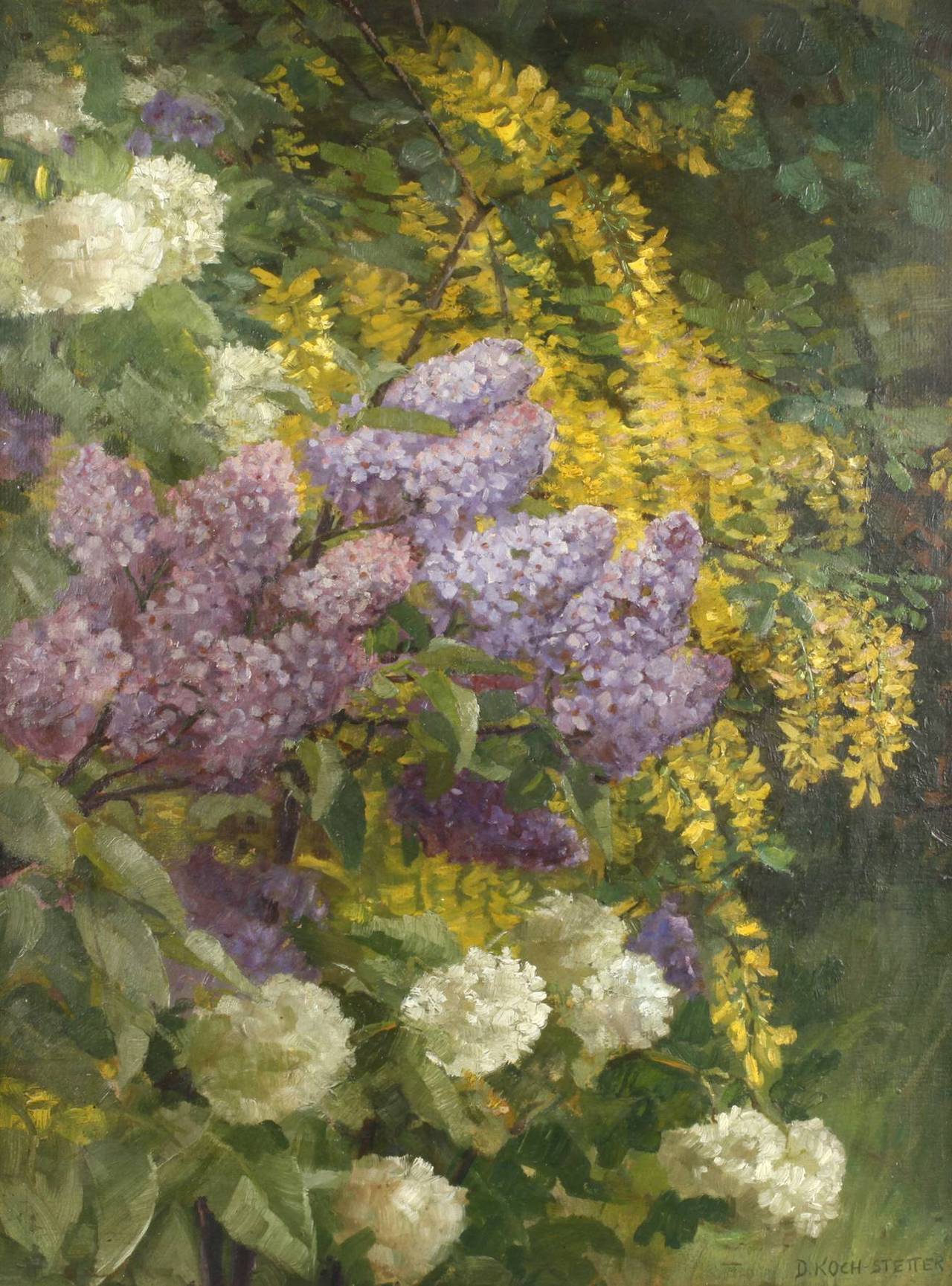
Lilacs by Dora Koch-Stetter

Share

Thursday, March 12, 2026

Essential Lavender


Meanwhile, in Frederick County... From Virginia at Chartreuse and Company:

Treasured Roots Farm is a multi-generational family farm right here in Frederick County, Maryland. Laura and her husband are building it with her parents and three young daughters. We bonded instantly over raising kids while building a business, homeschooling, and shared dreams of creating something lasting on family land. 
Laura, with her family and truffle-hunting puppy, on their farm in Frederick County, MD.

I have a deep love for design. Laura has a deep love for food. But at the heart of it, we share the same passion for family and creating beautiful things that invite people in. Things that feel like home. 

In addition to lavender, Treasured Roots Farm is also home to a young truffle orchard and honeybees. They have a vision to create products that are meant to be used and enjoyed, not saved for a special occasion. Elevated ingredients that are simple, honest, and really well done. (Read more.)


Share

Tuesday, February 24, 2026

Roundup

 From Tierney's Real News:

In simple terms, spraying glyphosate at the end of the season works like a chemical “off switch” to kill the crop and help it dry down more quickly so it can be harvested on schedule. This practice is called pre‑harvest application. It is used on some wheat acres, especially in cooler or wetter northern climates, but it is not universal on all U.S. wheat.

Why do farmers do this?

  • In cold or wet years, wheat can stay green and “wet” too long. Killing the plant helps it dry faster so the farmer can harvest before rain, frost, or snow.

  • Sometimes part of a field is ripe while another part is still green. Spraying helps the entire field reach a similar dryness so the combine doesn’t plug with green stems.

  • Late‑season green weeds can tangle in machinery and slow everything down. A pre‑harvest spray helps “burn down” those weeds and smooths out harvest.

Farmers wait until the wheat is mature – meaning the grain is fully formed and the moisture in the kernels has dropped to around 30% or less. A common “thumbnail test” is pressing a fingernail into a kernel; if the dent stays, the grain is mature enough for a pre‑harvest treatment.

At that point, a sprayer applies either true desiccants like diquat or systemic herbicides like glyphosate over the field. Contact desiccants kill green growth very quickly and dry the crop in a few days; glyphosate works more slowly and is technically labeled for weed control, but in practice it also helps the crop finish drying and ripening in bad conditions.

Once the plants are brown and brittle and grain moisture is down near storage levels (around 14%), the combine goes in and harvests.

Glyphosate has been around since the mid‑1970s, but its use as a late‑season tool became more common in the late 1980s and 1990s and expanded in the 2000s in places like Canada, the northern U.S., and the U.K., where early cold and wet weather can shut down the season fast. (Read more.)

Share

Monday, February 2, 2026

Virgin of the Rose Bower

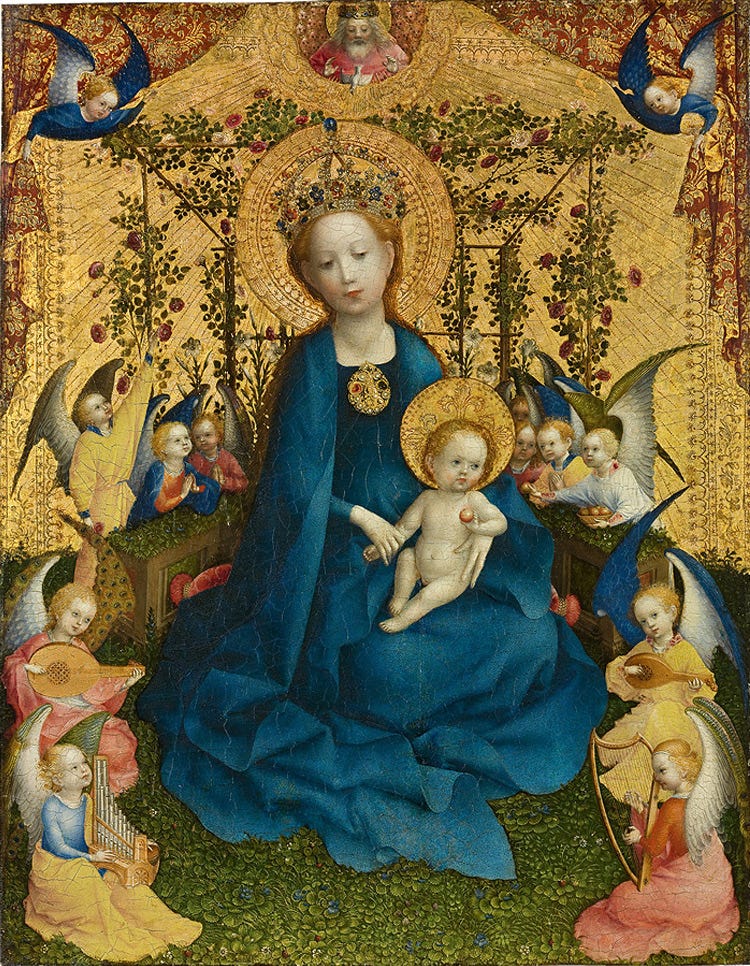
The enclosed garden: “Thou art all fair, O my love, and there is not a spot in thee.”

 From Hilary White at The Sacred Images Project:

The painting by Stefan Lochner is among the most concentrated visual expressions of the western iconographic prototype we call the “hortus conclusus”. The phrase is drawn from the Bible’s Song of Songs that begins, “A garden enclosed is my sister, my spouse…” It has always functioned in Christian spiritual theology as a Marian title, signifying virginity, purity and the inviolate womb in which the Incarnation took place.

In the later Middle Ages, the hortus conclusus prototype was increasingly visualised using the forms of fashionable private pleasure gardens familiar to the aristocracy and urban elite. This convergence allowed Marian images to appropriate the language of cultivated leisure: enclosure, refinement, ordered nature, while reorienting it toward chastity, contemplation and sacred presence.

Our word “paradise” derives from the Old Persian pairidaeza, meaning an enclosed garden or walled park, a term that entered Greek as paradeisos and then Latin as paradisus. Originally denoting royal pleasure gardens, the word was adopted in the Septuagint to translate the Garden of Eden, permanently linking enclosure, order, and cultivated beauty with the biblical vision of divine dwelling. (Read more.)


Share

Friday, January 30, 2026

The Potato Famine: A Modern Catastrophe

 From Chronicles:

Sometimes great matters depend upon… vegetables. Ancient civilization was founded on the simple discovery that grasses could become grains, reliable and storable, allowing the emergence of fixed Fertile Crescent cities with rulers and philosophers. But vegetables can also yield disaster. The failure of the Irish potato crop in the mid-1840s not only brought terrible suffering to that island but has blighted Anglo-Irish relations ever since. Few other episodes have left such a toxic aftertaste, with over 100 memorials around the world and countless cultural references.

Canadian historian Padraic X. Scanlan has Irish antecedents, and generally left-of-center views. Still, he writes a careful analysis of an episode that is far from England’s finest hour. He has steeped himself not only in the cultivation, mythology, and natural history of the potato, but also in the cultural, economic, industrial, mercantile, and political currents which together heaped horrors on the Irish. He shows that what is often portrayed as a medieval-style catastrophe was in fact a modern one, a predictable product of the dynamic 19th century—and, furthermore, offers insights for our world regarding economic insecurities, environmental destruction, and ever-evolving pathogens. 

Sometime in 1844 or 1845, a cargo of seed potatoes from America was offloaded somewhere in Europe. Unfortunately, that cargo contained an unobtrusive mold called Phytophthora infestans, which launched itself onto the Old World with alacrity. Potato crops from Spain to Sweden were affected, causing dearth and deaths, but the direst effects were felt in Ireland, where the population was uniquely dependent on the potato. In 1841, there were some 8.2 million people in Ireland; by 1851, that number decreased to 6.5 million, through death by starvation or disease, or forced emigration. Such was the culture shock that for almost a century afterwards the population of Ireland would continue to decline. The Irish government still issues annual warnings to farmers about the likelihood of blight. 

Although Ireland had much fertile land and was famous for dairy and meat products, millions had been perilously reliant on the potato as early as the 1730s. There had been crop failures before; in 1740–41, the harvest was ruined by weather, and 300,000 died, a proportionally higher number than would die during the famine. Since its arrival in Tudor times, the potato had proved its worth as a cheap, easily cultivated, and highly nutritious staple. Grown and eaten close to home, the potato was largely insulated from market vagaries that were just becoming important with the rise of industry and commodity capitalism. Landlords encouraged it because it could feed more workers on less land, leaving acreages open to more lucrative grain or livestock. (Read more.)

Share

Thursday, December 25, 2025

Christmas Scenes


From East of the Sun, West of the Moon. And Christmas trees, HERE.


And scenes of winter, too. Happy New Year!


Share

Friday, December 19, 2025

"The Holly and the Ivy"


The holly and the ivy, when they are both full grown,
Of all the trees that are in the wood, the holly bears the crown.
Refrain:
Oh, the rising of the sun and the running of the deer,
The playing of the merry organ, sweet singing in the choir.
The holly bears a blossom as white as lily flower,
And Mary bore sweet Jesus Christ to be our sweet saviour
Refrain
The holly bears a berry as red as any blood,
And Mary bore sweet Jesus Christ to do poor sinners good.
Refrain
The holly bears a prickle as sharp as any thorn,
And Mary bore sweet Jesus Christ on Christmas Day in the morn.
Refrain
The holly bears a bark as bitter as any gall,
And Mary bore sweet Jesus Christ for to redeem us all.
Refrain
It is an old English carol, the original of which was a song about the complexity of male and female relationships. David Beaulieu of About.com explains:
So where does the ivy come into play in the song, "The Holly and the Ivy?" Except for its appearance alongside holly in the opening stanza, it isn't even mentioned in the song. If this one, insignificant reference to ivy were struck from the lyrics, in what way would the song suffer? And if your answer is, "Not at all," then the next logical question to ask is: Why is the carol not titled simply, "The Holly," instead of, "The Holly and the Ivy?"
....The answer may lie in the fact that "The Holly and the Ivy" is based on older songs, such as "The Contest of the Holly and the Ivy" ....
In "The Contest of the Holly and the Ivy," ivy plays a role equally important to that of holly. The mention of ivy in the first stanza (and the last stanza, which merely repeats the first) in "The Holly and the Ivy" is therefore a hold-over, a remnant from an earlier era, a fragment pointing to music with a very different meaning. The influence of the earlier songs about the holly and the ivy was apparently so strong that the ivy was given a cameo appearance in this one, too -- despite the fact that only the holly has any major role to play in it.
What we see played out in "The Contest of the Holly and the Ivy" and similar songs (perhaps dating back to medieval times) is the rivalry between men and women, thinly disguised as a contest between the holly and ivy. Holly was conceived of as being masculine in the plant symbology of the time, probably because it is more rigid and prickly; while the softer ivy is associated with the feminine in this tradition.
According to an article at Dave's Garden:
Using ivy as decoration also dates back to the time of the Romans, who associated it with Bacchus (the Roman equivalent of the Greek Dionysus, god of wine and intoxication). Ivy was a symbol of fidelity and marriage, and was often wound into a crown, wreath or garland.[3] It also served as a symbol of prosperity and charity, and thus it was adopted by the early Christians, for whom it was a reminder to help the less fortunate. In early England, it was considered bad luck to use ivy alone in decorating for Christmas, and would give the woman of the house the upper hand.
The same site explains the symbolism of holly:
The practice of ornamenting the home with holly began with the Romans, who regarded it as an omen of good fortune and a symbol of immortality. They sent congratulatory wreaths of holly to newlyweds, and also used it as a gift during the festival of Saturnalia (a celebration which itself is based partly on Greek and Egyptian solstice observances). As early Christians adopted the practice of decorating with the plant, holly took on religious associations--namely, that the spiky leaves represented Christ’s crown of thorns, and the red berries his blood....
The Christmas carol “The Holly and The Ivy is an example of how ancient beliefs were absorbed by the Christian church. The song we sing today was recorded by a folk song collector named Cecil Sharp, who heard it sung in Chipping Camden, Gloucestershire, in 1909:[5]

The holly and the ivy,
When both are full well grown.
Of all the trees that are in the wood,
The holly bears the crown.

Oh, the rising of the sun,
The running of the deer.
The playing of the merry organ,
Sweet singing in the choir.
Subsequent verses transform the carol into a Christian song. Dr. Ian Bradley, of the St. Andrews University School of Divinity in Scotland, writes that the although the lyrics focus on the holly as a symbol of Christ, ivy is also mentioned because of the carol’s basis on an older medieval song in which the plants personify men and women. In the earlier song, holly and ivy were equals, with holly representing goodness and masculinity; ivy standing for evil (or at least weakness) and femininity.[6]
To the medieval mind, the male was considered the dominant sex, and a support for the weaker and more delicate female, thus the rigid holly shrub and the twining ivy vine must have seemed like natural embodiments of those traits. The original meaning of “The Holly and the Ivy” is a reminder that there has always been a subtle and humorous (sometimes not so subtle and humorous) competition between men and women for dominance. These two tough plants may represent the struggle between the sexes, but they can also be seen as a celebration of male and female cooperation and interdependence. (Read more.)

(Artwork from Karen) Share

Monday, November 24, 2025

Behind the Scenes at Mapperton House

Mapperton House, Dorset 

From Discover Britain:

Luke Montagu took over the running of Mapperton in 2016, but it wasn’t until the Covid-19 pandemic hit that the reality kicked in for his wife Julie, who grew up in Illinois. “That’s when I realised, ‘Wow,’” she says. “This is a business but it’s a family business and it needs a lot of inner strength.” Luckily, she was excited by the prospect. “I have a real interest in the family’s history – probably because the history of the USA as we know it today pales in comparison to the thousands of years of history that Britain has.”

Mapperton, once dubbed the finest manor house in England, has belonged to the Montagu family since 1955, when Luke’s grandfather ‘Hinch’ Montagu downsized from the family’s Cambridgeshire home of Hinchingbrooke House. Begun in the 1540s, it was extended in the 17th and 18th centuries, giving what the art historian Nikolaus Pevsner described as an “enchanting” look about it – helped, naturally, by its position in a lovely Dorset valley with its 19th-century parkland and Italianate gardens laid out in the 1930s by its then-owner Ethel Labouchere. (Read more.)

Inside Mapperton House, Dorset

Share

Thursday, November 20, 2025

Ripley Castle in Yorkshire

 Ripley Castle  

From Country Life:

If every Englishman’s home is his castle, then the opportunity to snap up Ripley Castle could fulfil the ideal for some. This property near Harrogate, ancestral seat of the Ingilby family for the last seven centuries, came onto the market in January at £21 million. Perhaps unsurprisingly considering the size and variety of the 445-acre estate, the family are happy to split things into lots; but the bulk of the asking price was the £15 million for the castle itself, including 166 acres of parkland, woodland, lakes and a temple.

Since then, the asking price for the Grade I-listed, 14th-century Ripley Castle been slashed by £7.5 million — something which might set alarm bells ringing, especially as the reduction ‘is principally down to market conditions’, points out Mark Granger, consultant at Carter Jonas. The other eight lots — including a pub, village store, woodland and cricket ground — have apparently generated a good deal of interest at or above their original guide price. So why the price cut for the main attraction?

Part of it is the market. Evidence suggests that demand for country houses is slowing, and buyers are becoming picky: ‘in 2025, among homes priced above £3 million, more than 43% of listings have seen a price reduction, and you are now three times more likely to withdraw from the market than to secure a buyer’, says Jonathan Handford, managing director at Fine & Country, and ‘while the market has not collapsed, it has become highly selective.’ (Read more.)

 Ripley Castle


Share