Showing posts with label Enfants de France. Show all posts

Monday, August 3, 2026

A Romantic Manor House in Normandy

Image may contain Door Home Decor Architecture Building Housing House Indoors Interior Design Furniture and Couch 

 Image may contain Architecture Building Dining Room Dining Table Furniture Indoors Room Table Chandelier and Lamp

 Image may contain Christine Neubauer Architecture Building Cottage House Housing Grass Plant Garden and Nature

From House and Garden:

'It’s one of the most beautiful places in France,’ says Cordelia de Castellane of the Normandy village of Beaumont-en-Auge, situated a few miles south of the coastal town of Deauville. And just beyond the boundaries of this picture-postcard commune, set against the bucolic backdrop of the region’s farms, orchards and medieval fortresses, the Greek-French designer has recently completed the decoration of a charming country retreat, with parts of the distinctive building dating back to the 17th century.

The striking three-storey manoir has a traditional half-timber colombage façade and belongs to a literary couple who are longtime friends of Cordelia. ‘We share a love of dance and literature, particularly the works of Marcel Proust,’ explains Cordelia, who serves as artistic director of Dior Maison and Baby Dior. The 150-square-foot property unfolds across a trio of structures: alongside the main manor house – the interiors of which Cordelia describes as ‘super French’ – is a four-bedroom guest house with a more contemporary look, and a former rotisserie that now contains a palatial, beamed dining room.

Before making a decision to change a single thing, Cordelia spent some time staying alone in the house. This luxurious period of solitude proved fruitful. Immersing herself in the original spirit of the interiors and observing the movement of light across its rooms guided her approach to the layout and to the decoration, which is by turns calm and characterful. It is typical of Cordelia’s method. ‘I see the people, I feel the house – and it just comes to me,’ she says of how she brought this scheme to life. (Read more.)

Image may contain Window Bay Window Chair and Furniture

Image may contain Indoors Interior Design Bathing Chandelier Lamp Bathtub Person Tub and Home Decor

Share

Sunday, August 2, 2026

The American Revolution in Louisiana and West Florida

From Fellowship and Fairydust:

A few years ago, I was having lunch with my uncle when he said he had joined the Sons of the American Revolution. “But in the 1770s, our ancestors were already in Louisiana,” I said. “It belonged to Spain. How did we have an ancestor who fought for America?”

It turns out, we didn’t. We had an ancestor—a French immigrant to Louisiana—who fought for Spain. From 1779-1781, Spain aided the American cause by ousting the British from their holdings in West Florida, which included Pensacola and Mobile as well as the eastern bank of the Mississippi River from Manchac to Natchez. The name of the colony still resonates today in the “Florida Parishes,” the eight parishes of the State of Louisiana that were once part of West Florida. 

After the outbreak of the American Revolution in 1775, the fledgling United States campaigned to secure the support of European allies, especially Britain’s longtime enemies, France and Spain. Though the King of Spain was unwilling to form an alliance, the Spanish governor of Louisiana, Bernardo de Galvez, privately supported the American cause. He granted loans to American traders shipping military provisions northward from New Orleans and provided covert support to their convoys, which had to pass the British-held settlements on the eastern bank in order to reach American territory.

In 1777, the U.S. Congress rejected a plan to launch a full-scale assault against West Florida. But the Committee of Commerce (formerly the Secret Committee, the first American organization devoted to espionage) knew they had the tacit support of Governor Galvez in New Orleans. So they decided to send a small party of men down the Mississippi under the command of Captain James Willing, ostensibly to convey “public dispatches” to officials in Louisiana.

His real mission was to secure the river. (Read more.)

Share

Friday, July 31, 2026

"Beautiful Love Story"

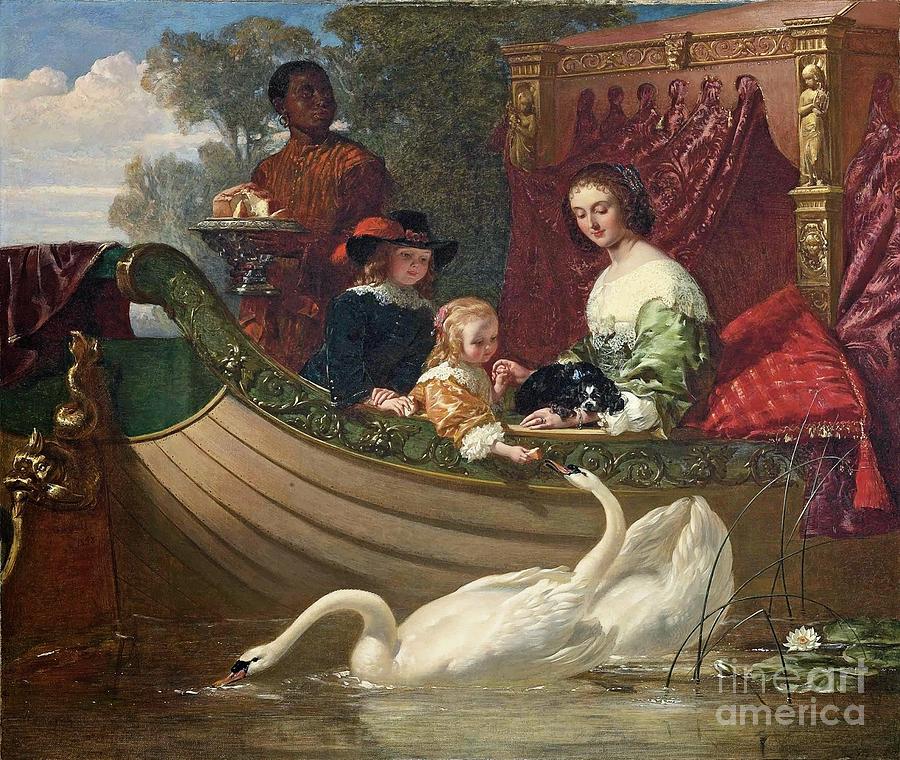
Henrietta Maria with two of her Children

Charles I and Henrietta Maria with Charles Prince of Wales and Mary the Princess Royal

The Queen doing Penance at Tyburn

A glowing review from Pursuing Stacie:
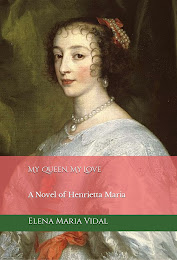
I have a huge love for classics. Little Women, Jane Eyre, Anne of Green of Gables…I will reach for these novels again and again, and then sigh happily about 3, 428 times throughout the story. This was exactly my experience while reading My Queen, My Love: A Novel of Henrietta Maria. It just has that rare classic, cozy, wholesome feel. Mind you, there’s plenty of suspense and intrigue. But the story is just so good!

The author skillfully fleshes out the characters and story of Charles and Henrietta, allowing her readers to sink into the novel. When I was about three chapters in, I realized with a start that I had not only completely missed my bedtime, but had forgotten altogether that I was reading a book, so engrossed was I in the story. (Have you ever read a book that feels like a movie?) (You’re about to.)

While the author set a scene masterfully, she also brought these historical characters to life in rich detail. (Might I suggest Googling their names as you meet them, by the way? So fun to put a face to the new friend that you’ve just made.) I adored Henrietta and will carry her with me always. But truly, each character was dynamic and real. From the beautiful love story to the suspense that only villainy can bring, this novel is perfect from beginning to end. (Read more.)

Because the two of them worked hard to make their marriage work, they ended up deeply in love with each other which made it satisfying. There is plenty of drama, politics, and courtly intrigue that will engage the reader to keep turning the page! I can’t wait to read the next book in the series to learn what comes next for Queen Henrietta Maria of England! I recommend this for fans of Jean Plaidy, Alison Weir, and Philippa Gregory! My Queen, My Love is a promising start to an enthralling series on one of England’s most tragic queens! (Read more.)

My Queen, My Love and Generalissima are available from Amazon.
Share

Wednesday, July 29, 2026

Henrietta Maria: Constructing and Reconstructing Early Modern Royal Motherhood and Confessional Identity

 
From Dr. Amy Saunders:

This article examines representations of Henrietta Maria’s (1609-1669) Catholicism and motherhood in a variety of artistic mediums and analyses how these objects are now reinterpreted within heritage sites and museum spaces in England. Henrietta Maria’s patronage, agency, motherhood, pregnancy, and confessional and foreign identity are often omitted from these heritage reconstructions despite the centrality of these themes within the artworks themselves. Her confessional and foreign identity places her in a liminal position within heritage spaces, where she is situated in opposition to Protestant queen regnants and queen consorts who are represented as more admirable or ‘successful’, due to their politics, identities, and activities. Furthermore, this article suggests that the continuation of a Protestant monarchy in England into the twenty-first century has influenced these representations with Henrietta Maria’s narrative not aligning to retrospectively applied ideals of the later royal family. (Read more.)

My novels on Henrietta Maria, HERE and HERE.

Share

Tuesday, July 28, 2026

Bellevue

Bellevue was a country estate originally built by Louis XV for Madame de Pompadour. It was on a hill overlooking the Seine and the forest of Meudon; the view was said to be truly magnificent. In 1775, after he had become king, Louis XVI gave Bellevue to his maiden aunts Adélaïde, Victoire, and Sophie, the surviving daughters of Louis XV, known as Mesdames Tantes. Madame Louise having already entered the Carmelite monastery, Louis thought it would be good for his other aunts to have a retreat from the court, a house they could call their own. For all their genuine piety, Mesdames Tantes had manipulated and gossiped about Marie-Antoinette in the early years of her marriage, coining the term L'Autrichienne, an epithet that would later be taken up by the Revolutionaries. It probably helped maintain the peace at court for Antoinette to be at her Trianon while the aunts were at their Bellevue.

According to the Comte d'Hézecques, who in his capacity as a page at Versailles witnessed the inner workings of the court:

The position of Mesdames at Court being obscure and unsatisfactory, they were seldom seen there. They spent the chief part of the year either at Bellevue, on that splendid height that commands the proud city and the charming country around it; or at the Hermitage, a little garden at the other end of Versailles, by the road leading to Marly.

Madame Adelaide and Madame Victoire were the only survivors of the four daughters of Louis XV who outlived their father. The third, Madame Sophie, had died two years before ; and the other, Madame Louise, had quitted the world in one of those sudden resolutions that can only be inspired by great religious fervour, or by a quick and ardent spirit that will not be satisfied by smaller sacrifices—resolutions that always cause astonishment to men of the world, whatever be their cause....

Mesdames the Aunts only came to Paris in the winter, as they had been able to stay at Bellevue up to the 5th of October. Seeing that they were of very little use to their nephew, unable to enjoy his confidence, and fearing measures opposed to their religious opinions, they at last decided on going to Rome. Possibly in their solitude, standing in a position whence they could form a better judgment of the course of events, theirs was the surer presentiment of all the trouble that hung over their family; therefore, they separated themselves from it for life, but they could not prevail on Madame Elizabeth to leave her brother and accompany them. . . . No doubt Mesdames did not find themselves happy at Rome. The news of the fall of the throne of their fathers and the sorrows of their family came to disturb the peace they might have enjoyed in the Eternal City. They could at least carry their tears and prayers for their guilty country to the foot of the altar, till the day when they were forced to quit the hospitable city that had received them, by conquests that the noble head of the Church could neither arrest nor foresee. So they left Rome to retire to Naples; and, after several changes of their place of refuge, Madame Adelaide had the sorrow of seeing her younger sister die at Trieste. Her own mournful existence was shortened by grief, and she soon died herself at Klagenfurth.—Recollections of a Page, by Comte d'Hézecques, pp. 79-82.


Here is furniture, originally from Bellevue, that once belonged to Madame Adélaïde.

Here is a view of the orangerie and formal terrace at Bellevue. The palace was looted during the Revolution. In 1823, it was demolished.

In the 1780's Mesdames Tantes had Mique create an English-style garden at Bellevue, complete with a tower, a lake, a mill, a dairy and a grotto, similar to what Marie-Antoinette had at Trianon. It is fascinating that they were so censorious of the Queen and yet imitated her in that for which she was greatly criticized, the creation of fanciful gardens. The tower and some other structures of the gardens of Bellevue survived well into the twentieth century; little is left of it today.


Here is a picture of the grotto of Mesdame Tantes, which is just about all that is left of the Bellevue estate. Sic transit gloria mundi.

(Photos from Le Boudoir de Marie-Antoinette) Share

Thursday, July 23, 2026

French Royal Family on Porcelain

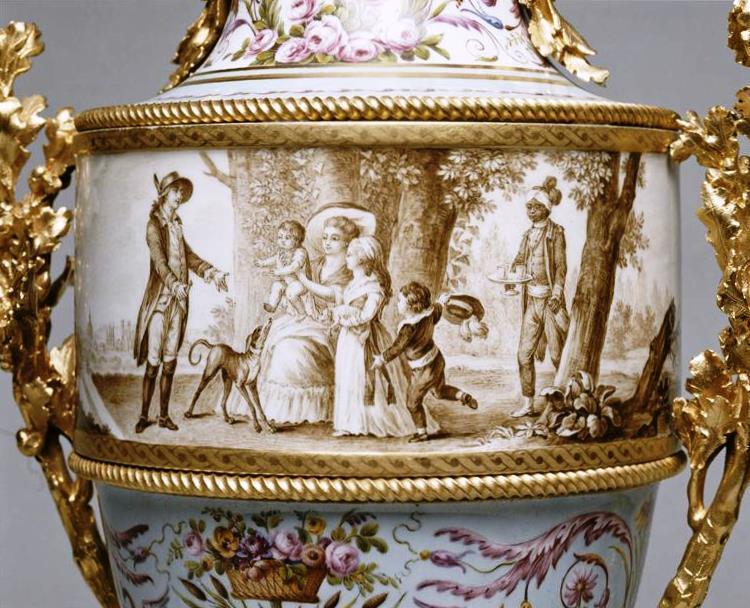
A 1788  vase with painting by Pierre-Philippe Thomire from the Château de Versailles. From left to right are Louis XVI, Louis-Charles, Duc de Normandie, Marie-Antoinette, Madame Royale, the Dauphin Louis-Joseph and probably Jean Amilcar, the African boy brought up  and educated by Marie-Antoinette. Share

Wednesday, July 22, 2026

Restoring a House in Saint-Antonin-Noble-Val

How Jinny Blom restored her mother's house in South of France with colour pattern and joy Architecture Building City... 

How Jinny Blom restored her mother's house in South of France with colour pattern and joy Home Decor Lamp Couch... 

How Jinny Blom restored her mother's house in South of France with colour pattern and joy Indoors Interior Design Wood... 

From Home and Garden:

‘I am very loyal,’ says the landscape gardener Jinny Blom. ‘If I make a promise, I’ll keep it.’ That is precisely how she ended up being the custodian of a house in a small village in south west France. Before Jinny’s mother Françoise died in 2013, she asked her daughter to look after her home in Saint-Antonin-Noble-Val. ‘It meant a huge amount to her,’ Jinny adds. ‘I feel she belonged there and so it became somewhere with real resonance for me.’

Her mother moved to the historic village, which is surrounded by a rugged limestone plateau at the bottom of a gorge on the Aveyron River, on something of a whim in the early 1990s. ‘It was a funny choice,’ says Jinny, ‘as she was very gregarious, and it was desolate and parochial back then.’ Things have, however, changed significantly since. Today, the inhabitants of the charming village include a Parisian interior designer and a former member of Yohji Yamamoto’s fashion design studio. As Jinny puts it, ‘There is a lot of nice stuff happening.’

Françoise sounds like a very wonderful character. Born in Madagascar, where her French father was a spice and timber trader, she was sent to school in England during the Blitz: she arriving speaking only Malagasy patois and didn’t see her parents again until she was an adult. ‘My mother was more English than anyone you’ve ever met,’ notes Jinny. ‘She spoke like the Queen and had her hair done like her. She was, to all intents and purposes, the Queen, except that she was – without a shadow of a doubt – French, because she wore couture, which nobody else did in Royal Leamington Spa, where we lived.’ (Read more.)

 How Jinny Blom restored her mother's house in South of France with colour pattern and joy Indoors Interior Design...

Image may contain Cushion Home Decor Indoors Interior Design Pillow Chair Furniture Bed Bedroom and Room

Share

Sunday, July 19, 2026

My Guest Post for Tony Riches


 My thanks to Tony for such a wonderful opportunity! From The Writing Desk:

Wife of the ill-fated Charles I, the colony named for her was intended to be a refuge for Roman Catholics, the Catholic religion being forbidden in the Three Kingdoms. In my room as a teenager there was a print of the Van Dyck portrait of Henrietta Maria, the original of which is in the National Gallery of Art in Washington, D.C. Called “Mary” by her subjects, the second Stuart queen of England peers down from the portrait with her black eyes, which contemporaries described as large, sparkling and beautiful. Her dark curls with auburn highlights contrast against the deep marine blue shimmer of a silk dress, with the salmon-pink bows and elaborate white cuffs and high starched collar. A wide-brimmed plumed black hat was of the type made famous by the cavaliers who later fought for her husband in the English Civil Wars. 

The white plumes are reminiscent of the one made famous by her father Henri IV of France, which he wore into battle so that his men could always find him. Like her father, Henrietta Maria was not afraid to stand out, remaining a devoted Catholic in a land where her faith was banned, becoming the number one lawbreaker, while also striving to be a traditionally obedient wife, as was expected. But the expectations placed upon her made her life a tightrope walk which almost broke her.

The life of Henrietta Maria of France (1609-1669) was turbulent from the beginning. Half-Bourbon and half-Medici, her father, the famous Henri IV, was assassinated when she was an infant. Brought up by her mother, the Queen Regent Marie de’ Medici, to be a devout Catholic, she also mastered ballet, singing, and acting, skills which she would use in masques to entertain the Bourbon Court and later the Stuart Court. At fifteen she was sent to marry Charles Stuart, grandson of Mary Queen of Scots, who had just succeeded his father James I to the throne of the Three Kingdoms. 

While Charles I never converted to Catholicism, as had been hoped by many, his relationship with his wife was profoundly spiritual, enhancing the intense physical passion between them. After the initial clashing of cultures and personalities, theirs became one of the most devoted in the history of royal marriages, and was blessed with nine children. During the troubles which led to the English Civil War, Henrietta Maria became a liability to Charles because of her religion and her meddling, both perceived and actual. But her courage and her devotion fuelled the royalist cause, as she sold her jewels to raise money for arms and led soldiers to aid her husband. 

The challenges the royal couple faced in their early years of marriage are told in Book 1 of the Henrietta of France trilogy, My Queen, My Love. Book 2 will deal with the Civil Wars and Book 3 will be about the Queen’s widowhood as well as the adventures of her surviving children.

My view of historical fiction is that the author attempts to paint a portrait of the past with words. A historical novel is like a portrait come to life, allowing the reader to step into the past. Authenticity is vital, and that comes only from thorough research. While it is not always possible to visit the historical places that play a part in the novel, it helps. 

The internet has been a gift to historical fiction writers, making accessible old documents, manuscripts, pictures and books that one once had to travel far to find. I found the original program of the 1623 masque performed by Anne of Austria and Henrietta of France at the Louvre during Shrovetide. It was at the rehearsal of the masque that Charles Stuart first saw Henrietta during his incognito visit to Paris. Such primary sources, like the Queen’s letters, are indispensable for creating a living portrait.

So much of what people think they know about Henrietta Maria has been filtered secondhand through multiple writers, some of whom view her as a frothy but tiresome fanatic who led her husband into ruin. This is often accompanied by the perception of the Queen as a dangerous seductress, who used her French wiles in the boudoir to subject Charles to her will. 

And others decide that Charles was not enough for her but she had lovers such as Henry Jermyn who actually told her what to do, while fathering her children. Just as her enemies called her the “popish brat of France,” she has been portrayed erroneously either as a sex fiend soaked with crazed religiosity, or as a shy, pious pawn. (Read more.)

Novel available HERE.
Share

Saturday, July 18, 2026

The Tragic Life of Marie-Thérèse of France


From Salon Privé Magazine:
As Marie-Thérèse Charlotte of France grew older, the French Revolution threatened. Because the country supported the American Revolution, funds were very low and France was borderline bankrupt. Attacks on the royal family became more vicious and the monarchy’s popularity plummeted. Within the Court of Versailles, xenophobia and jealousy were the primary causes of resentment towards Marie Antoinette, and due to her unpopularity with high-ranking officials within the court, she became the target of a vicious smear campaign. Pamphlets and leaflets were printed accusing her of a wide range of sexual deviancies and of sending France into financial ruin. Now, experts agree that Marie Antoinette was unfairly victimised and did little to deserve such treatment. At the time, however, this smear campaign worked and the public turned on her. (Read more.)

Madame Royale is one of the only novels about the life of Marie-Thérèse Charlotte.


Share

Wednesday, July 15, 2026

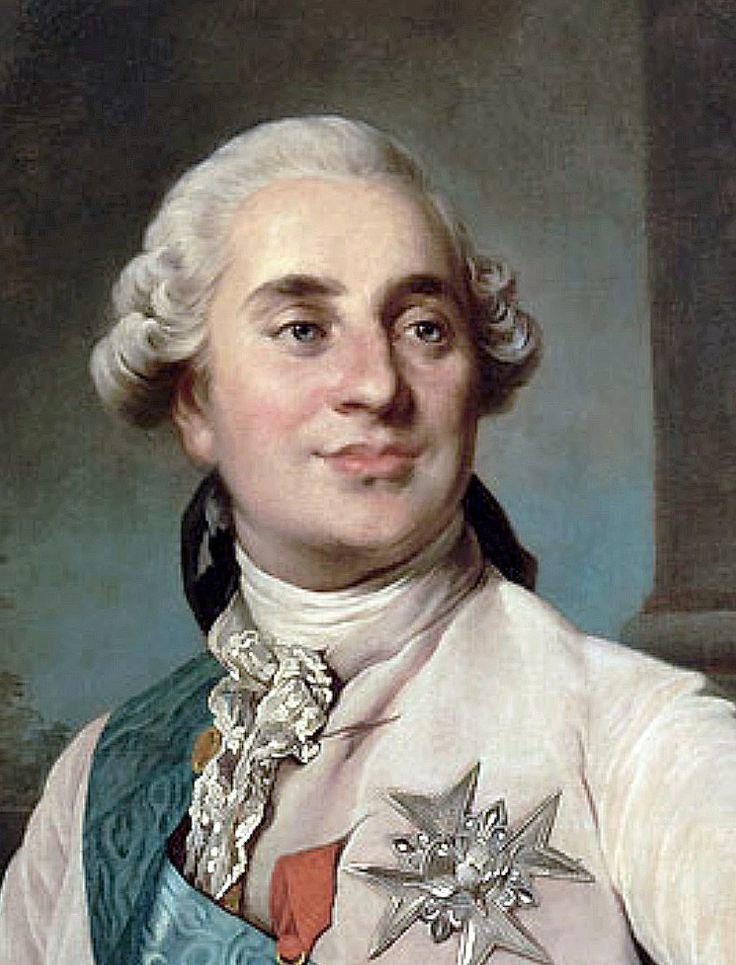
Augustinian Traces in Louis XVI

Louis XVI of France - Alchetron, The Free Social Encyclopedia 

There is some amazing new scholarship about Louis XVI. Here is a paper about Louis XVI's spirituality as formed by his education, which influenced his future actions. From Dr. Philip Diaz-Lewis via the History of European Ideas:

This article argues that Louis XVI’s student notes, the Réflexions sur mes Entretiens avec M. le duc de la Vauguyon reveal a coherent Augustinian Platonist ethics derived from Fénelon, in which humanité functions as a divine exemplar idea through which moral principles are known and royal virtues specified. Against existing interpretations that oppose Louis’s reformism to his attachment to sacral monarchy, it proposes that the same philosophical framework can be used to interpret both his constitutional initiatives and his maintenance of traditional court ritual. The argument proceeds by reconstructing the Dauphin’s formation under La Vauguyon, Moreau, and Berthier, then by a close reading of key Réflexions passages on God, natural law and humanité, interpreted with the aid of the Dictionnaire de Trévoux lexicon. (Read more.)

Share

Tuesday, July 14, 2026

Bastille Day and the French Revolution Were Not Caused by Marie-Antoinette

From The New American:
July 14 marks another anniversary of Bastille Day, the day the Paris mob rioted and stormed the Bastille, a prison fortress in the city. The popular image of the incident is that of the French Revolution itself, which is that the liberty-loving French folk in Paris spontaneously rose up against a tyrannical king and his arrogant wife, and heroically stormed the symbol of the Old Regime — liberating hundreds of political prisoners. This led to an abolition of the monarchy and the establishment of a government dedicated to liberty for all the people of France.

Nothing could be further from the truth.

Almost everyone has heard that Queen Marie Antoinette said, “Let them eat cake,” in haughty response to the plea of the poor starving masses of France: “We have no bread.”

That is also untrue.

And it is widely believed that Antoinette caused or at least was the principal cause — of the entire French Revolution.

That is ridiculous.

Whereas Louis XVI and his wife, Marie, are usually pictured in the history books and in the popular culture as tyrants of the worst sort, the truth is quite different. The real Marie Antoinette was a charitable woman, who lodged and fed 12 poor families, at her own expense, at Trianon. She founded the Society of Ladies of Maternal Charity. She even once stopped her carriage for over an hour to aid an injured person, waiting until a surgeon was located.

Historian Antonia Fraser disputed the cruel libel in her book Marie Antoinette, the Journey. “As a handy journalistic cliché, [“Let them eat cake”] it may never die,” Fraser wrote, adding “such ignorant behavior would have been quite out of character. The unfashionably philanthropic Marie Antoinette would have been far more likely to bestow her own cake impulsively upon the starving people before her.”

If the Revolution was not caused by Marie Antoinette, then just who did cause it? (Read more.)
Share

The Shot Heard ‘Round the World

 From Gettysburg Connection:

By the mid-1700s, the ideas of the Enlightenment – social contract, natural rights, freedom of speech, religious toleration – had been in circulation for nearly 100 years. But the Declaration of Independence was the first time these thoughts had been translated into action. Within a few months of its adoption by the Continental Congress, the Declaration had spread throughout Europe. In Spanish-America, publication and circulation of the Declaration and other revolutionary documents was banned, but it was still translated into Spanish and continued to spread.

Veterans of the Revolution also spread the word. Tadeusz Kosciusko is a national hero in Poland for his efforts to promote human liberties and the end of feudal practices in that country. With the help of America’s ambassador to France, Thomas Jefferson, the Marquis de Lafayette drafted the Declaration of the Rights of Man and of the Citizen, which was eventually approved by the French National Assembly and King Louis XVI. The two “Declarations” were read throughout the world and inspired independence movements. (Read more.)

Share

Sunday, July 12, 2026

The Power of Francis Poulenc’s “Dialogues of the Carmelites”

The nuns were martyred on July 17, 1794. From The Voegelin View:

The 1957 opera is based on the true story of the Martyrs of Compiègne, a community of sixteen Carmelite nuns who were guillotined during the French Revolution’s Reign of Terror. The libretto is the work of Georges Bernanos, the French Catholic author best known for his novel The Diary of a Country Priest.
Dialogues balances the sweep of historical events with the inner spiritual journey of Blanche de la Force, a young woman from an aristocratic family who fears the oncoming Revolution. Blanche’s fear impels her to join the Carmelite order, but in doing so she goes straight into the target of the revolutionary mob. Arrested and cast out of their convent, the nuns take a vow of martyrdom rather than renounce their vocation. Blanche initially panics and runs away, but at the last moment she finds her courage, steps out from the crowd, and joins her sisters at the guillotine. Many hold Dialogues in high esteem as one of the twentieth century’s greatest operas, even for its subject alone. The intolerant repression of religion by the architects of the French Revolution—ironically carried out in the name of “liberty,” “fraternity,” and “equality”—is a story that must be told, with heroic themes befitting grand opera.
If I have reservations about the piece, it is largely because its first half is filled with abstract spiritual discussions that are poorly suited to musical treatment. This portion of the opera feels static and verbose—not to mention overlong—with Poulenc having little to do but spin exquisite filigree around the text, between increasingly powerful orchestral interludes. The opera’s second half livens up considerably, though, as the revolutionary forces close in on the convent and the nuns take their vow of martyrdom. This is a spiritual, even intellectual opera, one that examines themes of fear and grace—particularly what Poulenc termed “transfer of grace” by which one human death can redeem another. (Read more.)
Share

Les Dragonnades

 From LBV:

In reality, those Protestants first called themselves les inspirés (“the inspired”) and later les Raiòus (“the Royals”), whether because that was the unofficial demonym of the region or to make clear that they were not rising against the king but against the intendant of Languedoc. Jean Cavalier, Pierre Rolland Laporte, Nicolas Jouanny, and Abdias Maurel, alias Catinat—ironically a former dragoon—were their main leaders, but there were many more local leaders, prophets who proclaimed a spiritual awakening under divine inspiration, urging their followers to free their imprisoned companions.

But the camisards displayed brutality comparable to their adversaries. In September 1703, for example, they massacred the sixty Catholic inhabitants of Saturargues, and it was not an isolated case, as they repeated the atrocity in Brenoux, killing another fifty-two people, as well as in Fraissinet-de-Fourques, where they murdered forty Catholic women and children. To be fair, not all behaved the same; there were Protestant communities like Fraissinet-de-Lozère that preferred not to join the rebellion and even opposed it (which did not prevent them from suffering later reprisals as well). (Read more.)


Share

Saturday, July 11, 2026

"A Lush, Passionate Portrait"


  From BookLife:

In the first of her Henrietta of France trilogy, Vidal (Marie-Antoinette, Daughter of the Caesars) paints a lush, passionate portrait of the life of Henriette-Marie, a seventeenth century French princess descended from the Bourbons and Medicis. Wed to King Charles I of England at the tender age of fifteen, Henriette is determined to bring Catholicism back to England, despite her Protestant husband and the country’s “hatred of Catholicism.” Often buffeted by political and social forces beyond her control, Henriette, known in England as Queen Mary, faces the challenges she encounters with the courage and resolve that she draws from her deep Catholic faith.

Firmly grounded in real historical events and settings, Vidal breathes life into Henriette’s era through extensive, evocative descriptions of its clothing, food, and palaces. This attention to detail offers a tantalizing immersion in this royal world, from the elaborately-costumed “masques” she and courtiers create to entertain the King at holiday celebrations to her beloved spaniel, Hebe. Vidal also illustrates the complexity of royal life through her careful elaboration of the complicated web of marriages, kinships, and associations. Some readers will be overwhelmed by the many branches of the royal family tree, but the text’s clear exposition and strong narrative arc offer clarity and guidance.

Vidal highlights the most important characters through her vivid depiction of their personalities and motivations. Antagonist George Villiers, the Duke of Buckingham, creates a true sense of menace as he threatens Henriette and works to disempower her. Although she is pure and steadfast in her intentions, Henriette’s struggles to balance her devotion to her husband and to her faith will earn readers’ respect and sympathy, even if they do not share her allegiance to the Catholic church. Offering insight into the passions behind the protocols, My Queen, My Love infuses these historical figures with humanity.

Takeaway: Readers of historical fiction will appreciate the depth and nuance Vidal brings to this often overlooked historical figure. (Read more.)


"Elena Maria Vidal brings history to life again with the story of Queen Henriette Marie, complete with an unlikely but true love story of the Queen and King Charles I of England, a formidable personal enemy in the menacing Duke of Buckingham, lots of well-researched period details, and the matters of Christian faith behind many of the conflicts. An antidote to the Whiggish story that is often passed off as history in America, with its anti-monarchical bias. Though Henriette Marie is not nearly as well known as another maligned consort, Marie Antoinette, Americans should learn her story because, coming after Jamestown's founding, she was their queen." —John Beeler, A Conservative Blog for Peace


Available HERE.

Share

Thursday, July 9, 2026

Death of Baby Sophie

Vive La Reine reminds us of the death of Louis XVI and Marie-Antoinette's youngest child, HERE. The portrait below was originally supposed to be a happy one, of the Queen and her children preparing the cradle for the new baby. The Queen is wearing a maternity dress. However, by the time the painting was completed the baby, Madame Sophie, had died and so the artist, Madame Lebrun, had to cover the cradle with black crêpe. Here is a quote from a letter of Madame Elizabeth's:
The queen is very kind to me just now; we are going together to Saint-Cyr, which she calls my cradle. She calls Montreuil my little Trianon. I have been to hers the last few days with her, without any consequences, and there was no attention she did not show me. She prepared for me one of those surprises in which she excels; but what we did most was to weep over the death of my poor little niece [Madame Sophie.]
The Empty Cradle 
Share

“Animalia"

 From Galerie:

When Sheikh Hamad Bin Abdullah Al Thani sold off the Hotel Lambert in Paris and its extraordinary contents in 2022, the depth and extent of his collecting became a thing of legend. A soup tureen gifted to Catherine the Great by Count Orloff; a gilded candelabra commissioned by Marie Antoinette; a hand-painted screen of the Bay of Naples that had belonged to Coco Chanel… it took five distinctive lots to deliver this unparalleled treasure trove of decorative arts to the market. The sale made $76.56 million, and the house—an early baroque palace by architect Louis Le Vau with interiors by Charles le Brun and Eustache Le Sueur—sold for $226 million to the French businessman and art collector Xavier Niel. Actually not bad for a mini-Versailles: the same design team went on to make the most famous palace in the world.

But Sheikh Hamad, a key member of the Qatari royal family who is now in his mid-40s, has not stopped collecting. Since 2021, carefully curated exhibitions at the Hôtel de la Marine in Paris have shown highlights from The Al Thani Collection, which now contains over 5,000 works of art, including very contemporary paintings by artists including Issy Wood and Adrian Ghenie. The latest exhibition, called “Animalia,” offers a look at man’s relationship to animals through the medium of finely crafted objects, from Neolithic times to 1900.

“Sheik Hamad has the mind and the eyes of a falcon,” Giambatista Valli, the couturier who is a friend of the prince, told me at the time of the Hotel Lambert sale. “He is passionate about beauty first and foremost. He is driven by a curiosity which is backed up by incredible knowledge.” (Read more.)


Share

Saturday, July 4, 2026

Louis XVI and American Independence


It is fairly well-known that without the military and financial aid given by Louis XVI to the American colonists in their struggle for independence from Great Britain, our nation may never have arisen. The King of France was reluctant to go to war, recoiling from both the expense and the shedding of blood; he did so only when convinced that it would benefit France in the long run. Marie-Antoinette was initially against assisting the Americans; she thought it set a dangerous precedent to help the colonists rebel against their king. Nevertheless, once war was declared, she did not hesitate to embrace the joint cause of France and America. According to Lafayette she once greeted him by saying: "Give me news of our good Americans, of our dear Republicans!"

Lafayette may have colored her words with his own enthusiasm for the cause. However, the general repartee in the French court over the American revolt is rather humorous, or at least it would be, had the consequences for France not been so tragic. When Marie-Antoinette's brother, Emperor Joseph II, was visiting Versailles, some pro-American French lady kept badgering him about the colonists' revolt. Finally, the Holy Roman Emperor curtly replied: "Madame, I am a royalist by profession." When Lafayette joined the followers of Mesmer, Louis XVI asked him, ironically: "What will Washington think when he hears that you have become the first apothecary of Mesmer?"

The King and Queen graciously received Benjamin Franklin, Thomas Jefferson, John Adams and other Americans at Versailles. Louis XVI was depicted in art with Benjamin Franklin and George Washington. Sadly, the bankruptcy France incurred by the war caused the political crisis in France to escalate, leading to a bloody revolution and to the deaths of Louis XVI and Marie-Antoinette. But Louis XVI did indeed show foresight in his decision to help the colonies. Twice the new nation would come to the aid of France when France was in dire need. I always have thought that in addition to saying "Lafayette, we are here," General Pershing should have said "Louis XVI, we are here" since without the King's help America may never have become a nation.

(Quotations from Marie-Antoinette, Daughter of the Caesars)

Share

Why the American Revolution Brought Liberty — And the French Revolution a Reign of Terror

 From The National Catholic Register:

People are wrong to compare the two revolutions,” historian Reynald Sécher, one of France’s foremost scholars of the counterrevolutionary movements and author of A French Genocide: the Vendée, told the Register. “The American Revolution had for its sole aim to free itself from the tutelage of the king of England — a tutelage that expressed itself almost exclusively through fiscal obligations. Fundamentally, the insurgents did not call into question the nature of society.”

France was a very different matter, Sécher said.

“The revolutionaries had a specific program,” he explained, “which consisted of destroying the divine right monarchy and the traditional, ordered society, to replace them with a new world, a new order, a new man.”

He argued, moreover, that the American Revolution was political in nature — aimed at breaking away from a distant crown that had overstepped its rights — while the French Revolution was purely ideological. In Sécher’s view, it was a project of fundamental transformation that targeted everything beyond its control, including the faith of ordinary people. (Read more.)


Why France helped America. From France 24:

French support for the American Revolution began well before the Declaration of Independence on July 4, 1776. King Louis XVI saw the rebellion in North America as an opportunity to weaken his British rival and avenge past defeats. FRANCE 24 looks back at how European colonial rivalry and Enlightenment ideals forged a decisive alliance between the nascent United States and its "oldest ally".

On July 4, 1776, 13 British colonies in North America broke with the British Crown and declared their independence in a momentous act of rebellion that would change the course of history. As the United States celebrates its 250th birthday, FRANCE 24 looks back at France’s decisive – and often overlooked – role in the American Revolution.

Behind the fight for independence lies another story: that of a long-standing rivalry between Great Britain and France, the two great European powers at the time. When the Thirteen Colonies proclaimed their independence, they were still a long way from winning the war. Across the Atlantic, France watched the brewing rebellion with increasing interest. (Read more.)


Share

Wednesday, July 1, 2026

Socialist Locusts

 From Unlicensed Punditry:

Almost everything that makes Paris instantly recognizable predates modern socialism by centuries. Notre-Dame was built by the Catholic Church beginning in the twelfth century. The Louvre began life as a royal fortress under the French monarchy. The Arc de Triomphe was commissioned by Napoleon. The grand boulevards of Paris were carved through the city under Napoleon III. Even the Eiffel Tower—the youngest landmark in the cartoon—was built by Gustave Eiffel’s private engineering company for the 1889 World’s Fair, decades before democratic socialism became a meaningful political force in France.

Socialists did not build Paris. They inherited it.

They are like a swarm of locusts - or those aliens from the Independence Day movies.

They flock in, consume the crops, and move on to the next field.

More importantly, they inherited the wealth that made Paris possible. The city’s monuments, museums, churches, bridges, and boulevards were financed by centuries of commerce, manufacturing, private enterprise, skilled craftsmen, merchants, engineers, architects, religious institutions, and, yes, governments taxing an increasingly productive economy. Whether one admires monarchies or not, the wealth that produced these works was created long before the modern welfare state existed.

This illustrates a common rhetorical sleight of hand. Advocates of socialism frequently point to prosperous Western nations with generous welfare systems as evidence that socialism works, while quietly overlooking the fact that those societies became wealthy before they dramatically expanded redistribution. The prosperity came first. The welfare state came later. (Read more.)

Share