Showing posts with label Chivalry. Show all posts

Tuesday, June 16, 2026

Femininity Used To Rule The World

 From Of Home and Womanhood:

Before this modern version of feminism that expects in all ways that women should be, work, talk, have sex, and act like men, before all of this, women used to inspire men not by being like them, we used to instead inspire men by being different from them. Women used to move men, not with these tired cringe slogans, not with shaming. Instead we did it with a force of feminine virtue, the kind that only a woman could ever possess, the kind that only a woman could understand.

Look at any civilization, men are driven by conquest, by power, by risk. This instinct that men carry is a lot of times raw, it is aggressive, and it is untamed, but as we all know, conquest alone does not civilize. What transformed this manly power into order, what gave it direction, what civilized men, was a woman. Men build civilizations, but women civilize men.

We see this all throughout history, and we see it even today. (Read more.)

Share

Monday, June 15, 2026

Drive-Thru Intimacy

 From Of Home and Womanhood:

Fast food, we all know is crap nutrition for the most part, it fills you for a moment, satisfies a craving, scratches an itch, it is quick, it is cheap, it is accessible, engineered to be desirable, easy to consume, and it is everywhere.

But you can’t live on it, not really if you care about your long term wellbeing. You will be full but you’ll end up malnourished, and casual sex does the same thing to your soul.

It gives you the illusion of being wanted without any of the real substance that comes when you are actually loved. It gives warmth to the body, but it gives you no safety, it gives you attention, but it will never give you devotion, it can give you pleasure, but it will never give you sacrifice and meaning. It gives us the feeling of being chosen for a night only to wake up the next morning feeling like trash.

Sound familiar? Yeah. Sounds like all the fast food we eat out of convenience and hunger for something real, hoping it fills the need only to then feel even worse after.

This is the part that hurts to say, but women are hungry, and we are hungry because human being are hungry. As humans, we hunger to be known, to be desired, to be cherished, and loved. The problem is that our culture has taken this real hunger, this real desire, and handed women, and men, it has handed us the worst cheapest possible substitute. (Read more.)

Share

Tuesday, June 9, 2026

1,300 Years of History Preserved in Ancient Parchments

From Archaeology News:

The study appeared in the journal Manuscript Studies. Researchers examined 91 parchment manuscripts preserved at Duke University’s David M. Rubenstein Rare Book & Manuscript Library. The collection included religious texts, scrolls, legal records, fragments, and manuscripts written in several languages. The documents came from England, different parts of Europe, the Middle East, and northeastern Africa.

For more than a thousand years, parchment served as the main writing material across Europe and much of the Mediterranean region. Unlike paper, parchment came from animal hides, usually sheep, goats, or cattle. Millions of parchment documents still survive in libraries and museums today. Researchers involved in the study describe those collections as a large biological archive preserved across centuries.

Scientists faced a major obstacle for years. Traditional ancient DNA studies often require researchers to cut, scrape, or drill into material samples. Archivists and conservation experts rarely allow such methods on rare manuscripts because even small damage matters when dealing with cultural heritage objects.

The team used a different technique. Researchers gently rubbed the parchment with small cytology brushes, the same type often used in medical testing. The brushes collected tiny traces of cells from the surface without leaving visible damage.

After sampling, scientists extracted DNA from the brushes and analyzed the material with next-generation sequencing technology. These sequencing methods work well with old and fragmented DNA, which often survives in poor condition inside ancient material. (Read more.)


Share

Sunday, June 7, 2026

Victory of the Leper King

 From The Collector:

In his short 24-year life, Baldwin IV celebrated many victories against his long-standing rival, Saladin. But his victory at the Battle of Montgisard is undoubtedly his most famous victory. Still recalled by witnesses 80 years later, Baldwin faced impossible odds. Yet his courage and fortitude ensured the 16-year-old Leper King delivered a crushing blow to his opponent.

King Baldwin IV came to the throne in 1174, a mere 13-year-old boy following the death of his father, King Amalric. Like the other Crusader States, the Kingdom of Jerusalem was a frontier kingdom, surrounded by hostile Muslim enemies. Warfare and conflict were a fundamental part of life, and kings were required to lead their troops into battle regularly.

King Amalric had offered the kingdom strong leadership and had been, in many ways, an ideal king. The accession of a boy untested in warfare was a huge blow to the kingdom. But youth was not the only hindrance to Baldwin’s reign. Shortly after his coronation, Baldwin was diagnosed with leprosy, his illness discovered by his tutor and friend, the chronicler William, Archbishop of Tyre. (Read more.)


The Fall of the Kingdom of Jerusalem. Also from The Collector:

Crippled by leprosy since his teens, Baldwin IV had been a surprisingly effective king. His illness elicited compassion from his subjects, and their loyalty to their sick king was a key factor in the success of his kingship. In 1185, Baldwin finally succumbed to his illness and died. He was buried close to his father in the Church of the Holy Sepulchre. Within two years of Baldwin’s death, the kingdom he had striven so hard to defend had fallen into the hands of his longstanding Muslim rival, Saladin. Events leading up to the Leper King’s death help explain why, after his passing, the kingdom fell, and the city was lost to Christendom forever.

Baldwin IV, the Leper King who defied a death sentence, was diagnosed shortly after his coronation in 1174. It was understood that he would not father any children to succeed him. His elder sister, Sybilla, and his younger half-sister, Isabella, were therefore central to the succession.

Sybilla married William of Montferrat in 1177, and by him she bore a son named Baldwin. Montferrat died shortly before the child’s birth, and Sybilla later married a second husband, Guy of Lusignan. By 1183, Baldwin became too ill to rule and needed a regent to govern alongside him. Guy, as his brother-in-law and the husband of the heiress to the kingdom, was the natural choice. Guy proved to be a poor military commander whom the nobles refused to follow, and Baldwin removed him from his post within weeks of his appointment.

Guy’s unpopularity meant that the prospect of him succeeding to his brother-in-law’s throne was deeply contentious. Most vocal amongst those in opposition to Guy was Raymond III of Tripoli, a cousin of Baldwin IV and a man who served as his regent on several occasions. To ensure Guy would not succeed him and thus tear the kingdom apart, Baldwin attempted to have Guy’s marriage to Sybilla annulled. But Guy’s disobedience, along with Sybilla’s refusal to leave the husband she loved, thwarted Baldwin’s plans. (Read more.)

Share

Thursday, June 4, 2026

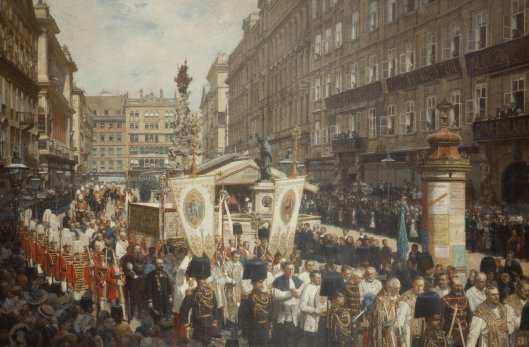
The Great Feast: The Hapsburgs And Corpus Christi

Hapsburgs Corpus Christi 

From The War for Christendom:

 In 1264, Pope Urban IV issued the Papal Bull Transiturus de Hoc Mundo, promulgating to the Latin Rite the Solemn Feast of the Body and Blood of Christ, to be celebrated on the first Thursday after Trinity Sunday. Around this same time, Rudolf the eighth Count of Hapsburg aided and protected a priest bringing the Viaticum to a dying farmer, giving the priest his horse and guiding him across a raging torrent, walking bareheaded. The priest then prophesied that the humble Count and his descendents would receive the Imperium of the Holy Roman Empire.

This veneration of the Holy Eucharist was continued by all the descendants of the Noble House, and the Feast of Corpus Christi in the Hapsburg realms became second only to the Solemn Feasts of Easter and Christmas. The Family indeed owed all to Rudolf’s great devotion to the Holy Eucharist, and the special Eucharist blessing bestowed on him, thus it was most fitting that the Feast of Christ’s Body should become the greatest feast of the Empire. So long as the Family remained devoted to the Cross and the Eucharist, God would bless and protect them (and He still does, even though they have been cast from the throne).

First in the great procession in the Imperial City of Vienna came three priests in splendid vestments like heralds to the city. Then came the Court officials in full Court dress, and the Court Clergy vested in gold and white vestments, followed by dignitaries of every rank. Before the gilded canopy marched the Archdukes of the House, carrying candles, and the acolytes carrying forward the Cross, the golden banners swaying in the wind, the swinging thuribles sending into the air clouds of incense, and the ever ringing bells. The great canopy itself was carried by four noble chamberlains in Imperial livery, upheld over the Hofburg Parish Priest who held up in benediction the golden Monstrance with radiating rays like the sun, in which resided the truly present Most Sacred Body of the Son of God, while the Emperor of Christendom walked behind bareheaded and flanked by the Imperial Guard, humbly worshiping his Divine King. (Read more.)


Share

Thursday, May 28, 2026

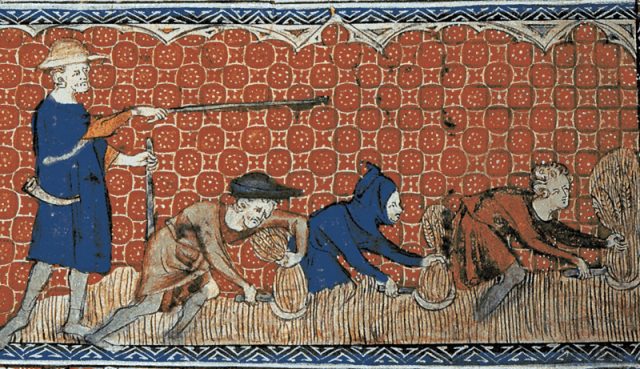
Modern Americans Work More than Medieval Peasants

From Nancy Bilyeau at the Vintage News:
“Before capitalism, most people did not work very long hours at all,” wrote Schor in her book. “Consider a typical working day in the medieval period. It stretched from dawn to dusk (sixteen hours in summer and eight in winter), but, as the Bishop Pilkington has noted, work was intermittent – called to a halt for breakfast, lunch, the customary afternoon nap, and dinner.” 
Depending on time and place, there were also midmorning and midafternoon refreshment breaks. These rest periods were the traditional rights of laborers, which they enjoyed even during peak harvest times. During slack periods, which accounted for a large part of the year, adherence to regular working hours was not usual. According to Oxford Professor James E. Thorold Rogers, the medieval workday was not more than eight hours. 
Plowing and harvesting were backbreaking toil, no doubt, but the peasant enjoyed anywhere from eight weeks to half the year off. 
The Catholic Church, mindful of how to keep a population from rebelling, enforced frequent mandatory holidays. Weddings, wakes, and births might mean a week off to celebrate, “and when wandering jugglers or sporting events came to town, the peasant expected time off for entertainment,” according to Business Insider. “There were labor-free Sundays, and when the plowing and harvesting seasons were over, the peasant got time to rest, too.” 
In fact, Schor found that during periods of particularly high wages, such as 14th-century England, peasants might put in no more than 150 days a year. “All told, holiday leisure time in medieval England took up probably about one-third of the year,” she wrote in her book. “And the English were apparently working harder than their neighbors. The ancien règime in France is reported to have guaranteed fifty-two Sundays, ninety rest days, and thirty-eight holidays. In Spain, travelers noted that holidays totaled five months per year.” (Read more.)
Share

Medieval Lepers

 From Archaeology Magazine:

Phys.org reports that Elena Fiorin of Sapienza University of Rome and her colleagues looked for mercury in samples of dental calculus taken from the remains of people buried at two medieval lepers’ hospitals, or leprosaria—Peterborough Abbey in England, which was founded in 1125, and Saint-Thomas-d’Aizier, built in the late eleventh century in Normandy, France. During the medieval period, the toxic metal was used to treat syphilis and leprosy in the form of ointments that were rubbed onto the skin. Samples of bones, teeth, and hair are usually used to test mercury levels in human remains. “Dental calculus offers a new and complementary perspective,” Fiorin said. “Because it forms in the mouth during life, it can capture substances that enter the body more directly, including medical treatments applied in or around the mouth,” she explained. The researchers also tested soil from the graves to see if mercury could have entered the dental calculus after burial, and analyzed the dental calculus of people who had been buried in non-leprosaria cemeteries in England and France. “Individuals buried in leprosaria show significantly higher mercury levels than those from other cemeteries, and our analyses indicate that this mercury was incorporated during life rather from the soil,” Fiorin said. “In addition, there is no evidence of local environmental sources, such as mining, that could explain these patterns.” Mercury detected in the soil at the leprosaria likely leached from contaminated bodies, since the levels of mercury in the dental calculus tended to be higher than those in the soil samples. The highest levels of mercury were found in the remains of two individuals who had been buried in a leprosarium chapel, perhaps indicating that they were elites with access to more medical treatment. Read the original scholarly article about this research in the Journal of Archaeological Science. To read more about chemical sampling of soil around burials, go to "Secrets of Life in the Soil." (Read more.)

Share

Sunday, May 24, 2026

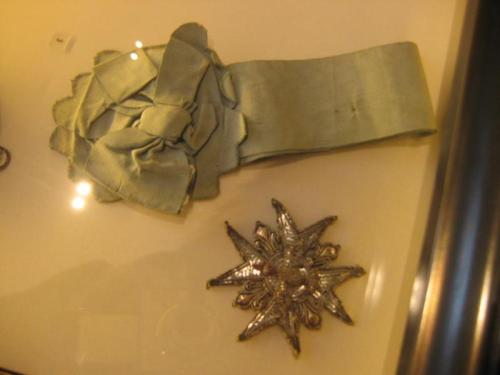
L'Ordre du Saint-Esprit

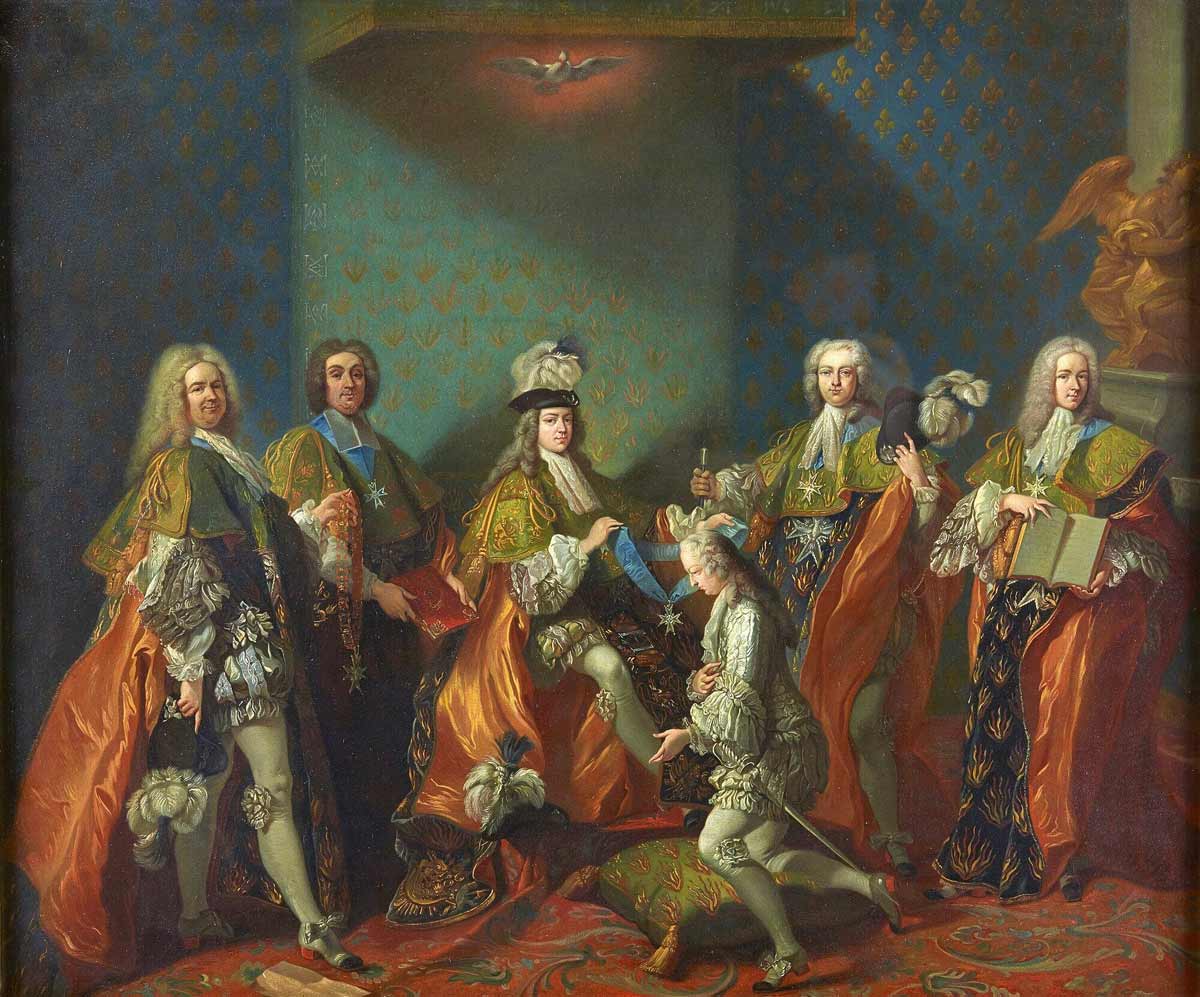
Louis XV conferring the cordon bleu

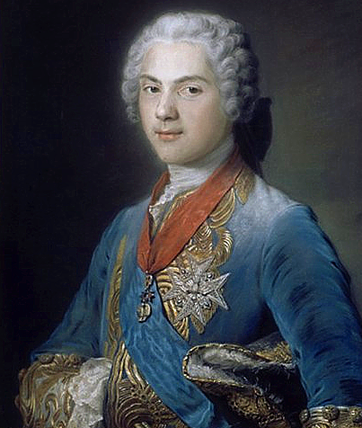
Louis the Dauphin wearing the Saint-Esprit

No photo description available.
The Pentecost, depicted in the Royal Chapel

 The Order of the Holy Spirit was the highest of French orders of chivalry. The Ordre du Saint-Esprit was founded by Henri III in 1578 to celebrate his succession to the throne on Pentecost Sunday. According to Heraldica:

The main [orders of chivalry] under the Old Regime were the Ordre de Saint-Michel (created in the 15th c. by Louis XI) and the Ordre du Saint-Esprit (Holy Ghost), created in 1578 with a limit of 100 on the number of knights: it was the most prestigious order in France, usually forbidden to foreigners (but the Spanish Borbons were often made knights in the 18th c.). Both were abolished in 1789, recreated in 1815 and abolished in 1830. A recipient of the Saint-Esprit always received Saint-Michel at the same time (they were collectively known as les ordres du Roi) though the converse was not true, of course. There was no requirement of nobility for Saint-Michel, but there were stringent ones for Saint-Esprit. The pendant of the Saint-Esprit was a Maltese cross azure, bordered argent, with a dove displayed pointing downward, and fleurs-de-lis between the branches of the cross. The necklace is made of alternating elements all shown surrounded by flames: the letter H surrounded by royal crowns (for Henri III, founder), a fleur-de-lis, and a military trophy. The sash of the Saint-Esprit was blue, and it was called in French le cordon bleu, though how the expression came to mean a first-rate cook I do not know.

Princes of the royal family were given the cordon bleu at birth but were not formally received into the Order until age twelve. The King of France was the Grand Master; below is a picture of young Louis XVI receiving the homage of the Chevaliers du Saint-Esprit, among whom unfortunately were his Orleanist cousins. How ironic, since the purpose of the Order was to unite the princes to their king.

The sash and badge of the boy-king, Louis XVII.

Share

Tuesday, May 19, 2026

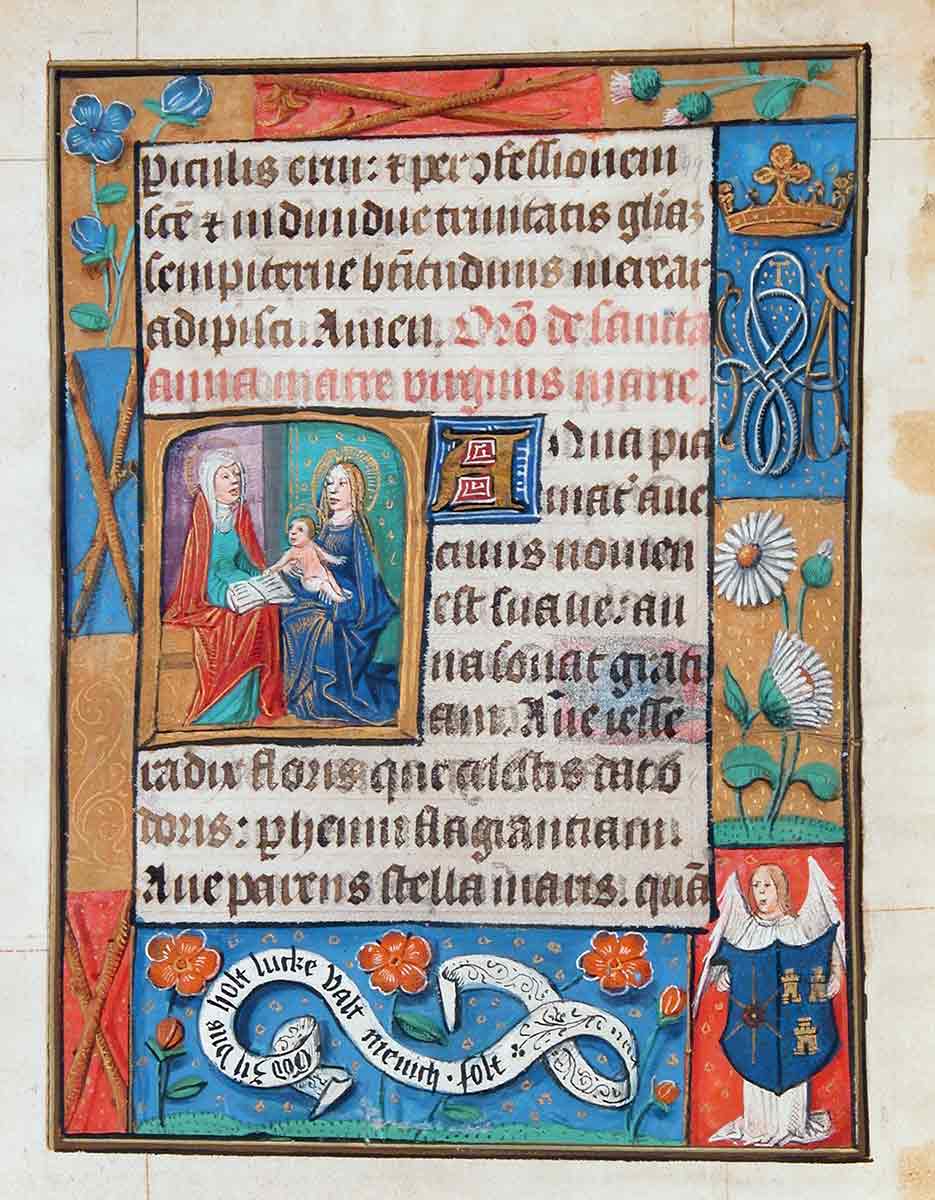
A Day in the Laborious Life of a Medieval Scribe

 medieval scribe book of hours 

From The Collector:

Before we wrote things down on paper, we passed them down through oral tradition. Ancestral lineages, mythologies, folk tales, and songs were the sort of thing you might expect to hear recited around the hearth each night. Eventually, trade records were inscribed on stone or papyrus: the very first receipts. As cultures began to create more symbols representing phonetic sounds, more things were recorded. By the 14th century, a wealth of information was available in the form of a book. But who wrote them? Let’s learn about medieval scribes. 

So, what is a scribe? “Scribe,” a contemporary word derivative of the medieval scrībere, or “to write,” was a person whose entire life’s work consisted of copying texts. The beauty of the scribe is in its diversity: a monk or nun could be one as an act of devotion, a literate tradesperson could be one for commission, even a creative courtesan could become a scribe if they had the means.

Where you were writing and who the work was commissioned for largely dictated the content of the work. For example, a monastery would likely be commissioned to write a large religious text, whereas a private scribe could be commissioned to copy secular works, such as Roman de la Rose, one of the most popular stories of the period. In some unique cases, the scribe had complete creative liberty over the content as well as the style of the manuscript. (Read more.)

Share

Monday, May 18, 2026

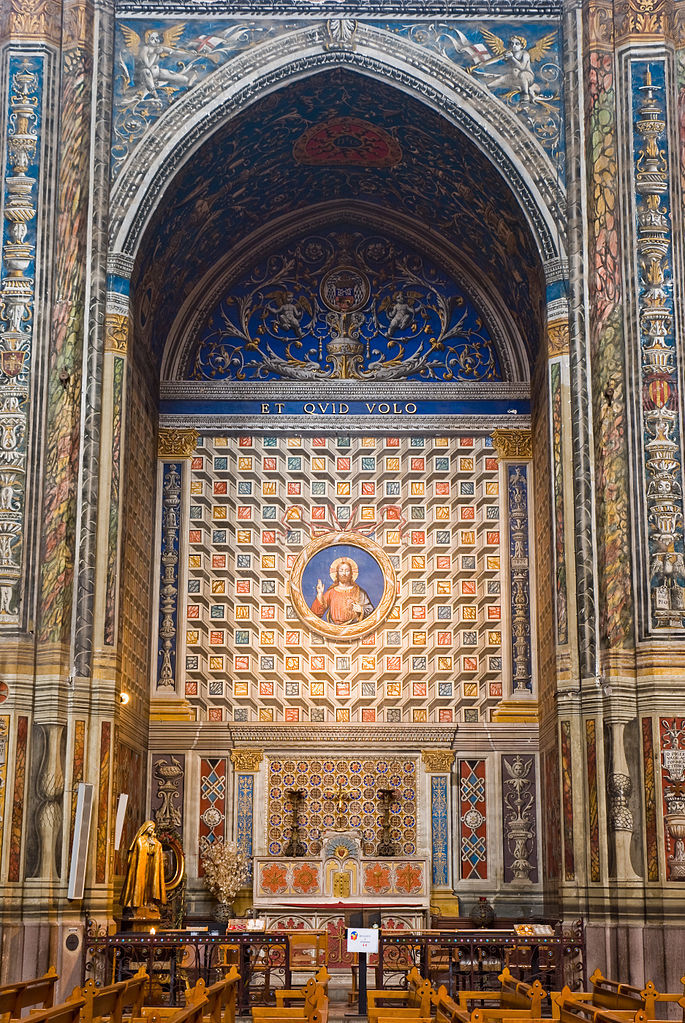
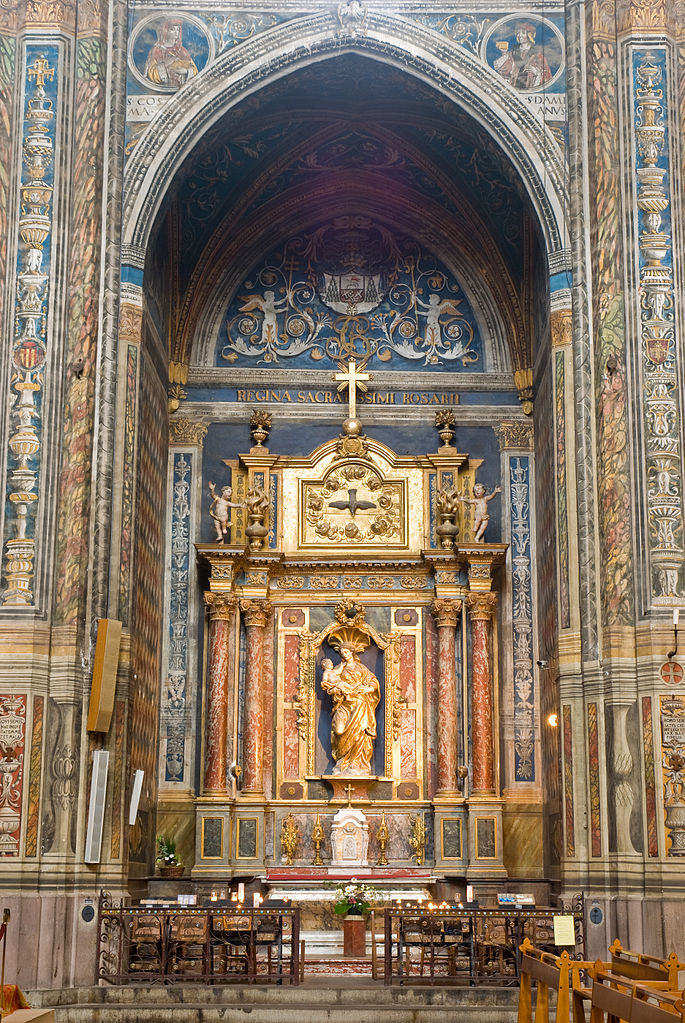
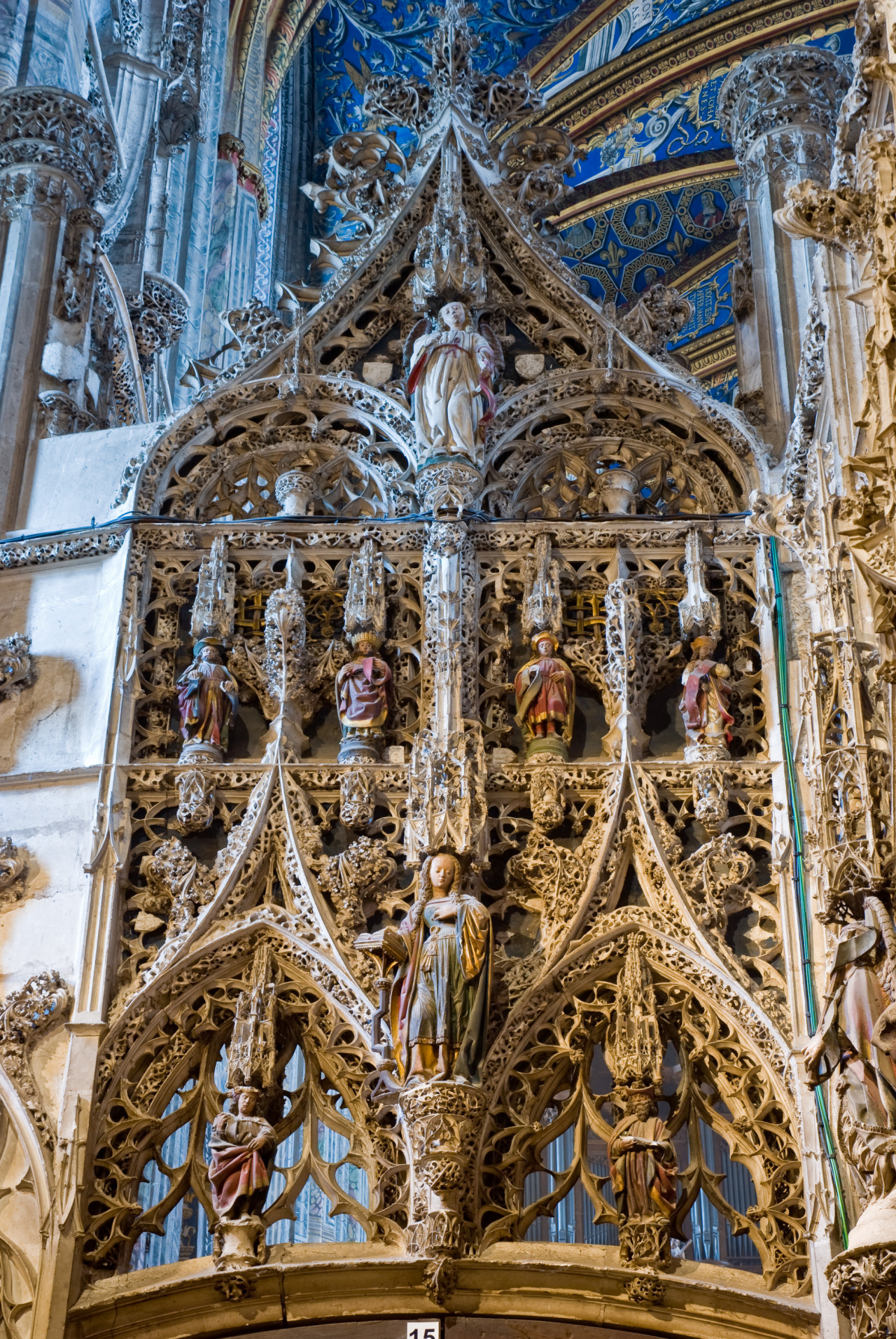
Cathédrale Sainte-Cécile d’Albi


Interior views via East of the Sun, West of the Moon. The cathedral is featured in my novel The Night's Dark Shade.


Share

Sunday, May 17, 2026

5 Historical Figures Who May Have Inspired King Arthur

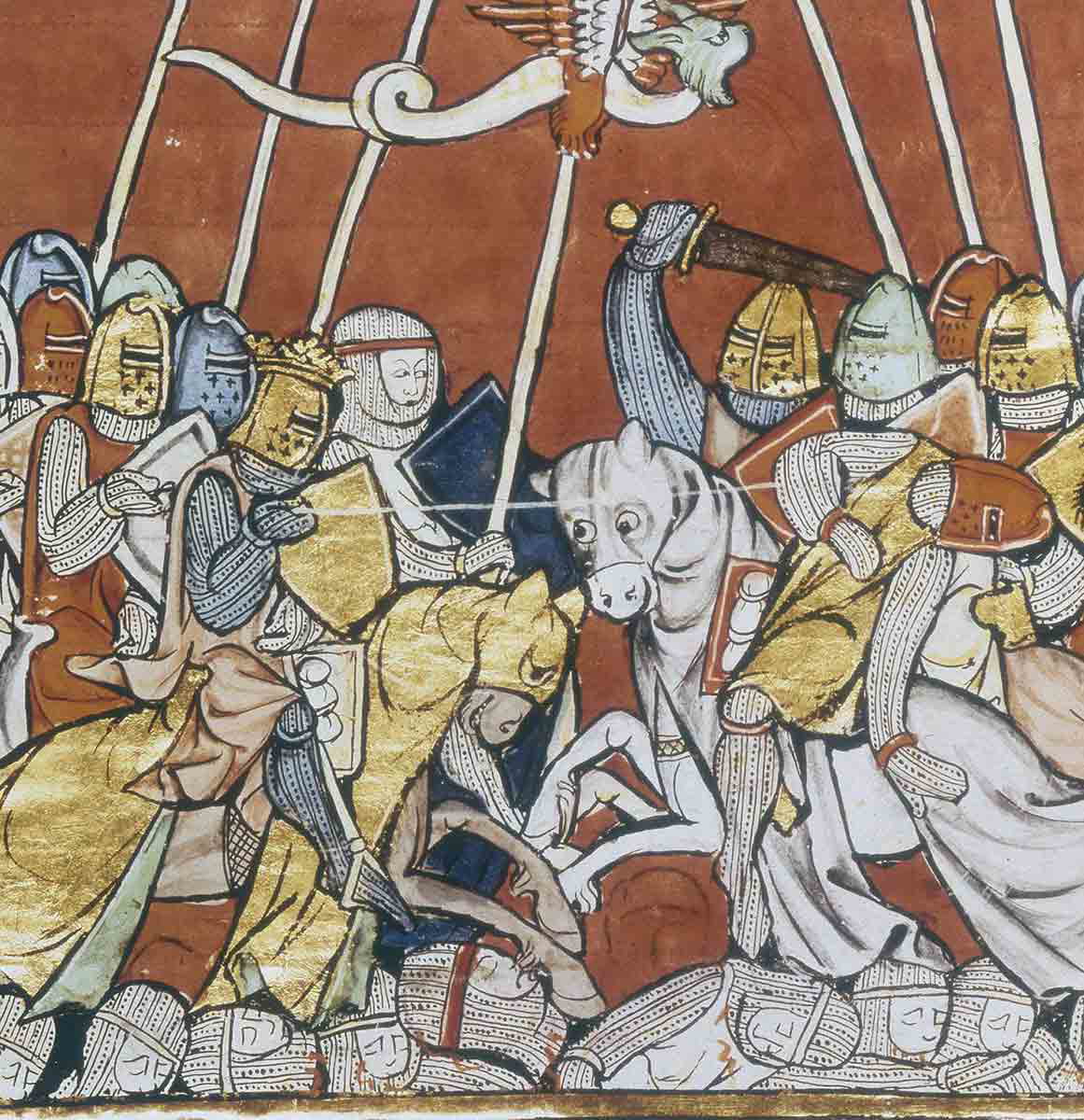
real king arthur battle illustration
Notice the dragon pennant. It went back to the Romano-British legions and was like a small Chinese dragon. It whistled when the wind blew through it. It became the symbol of the Pendragons.

I would happily do nothing all day but study Arthurian legend. One thing to keep in mind is that many of the names are not proper names but titles. "Riothamus," for instance, in the ancient British language means "high king." From The Collector:

Another warlord from Dark Age Britain, who is one of the prime historical candidates for the real King Arthur, is Riothamus. He is known from two Roman sources, one from the 5th century and one from the 6th century. The more important of these two is the account by the 6th-century historian Jordanes.

He described how Riothamus, the king of the Britons, assisted the Romans in a battle against Euric of the Visigoths in the year 470. This idea of a king of the Britons travelling from Britain to Gaul to fight a battle in association with the Romans is fascinating for its similarities to the Arthurian legends. In the account of Arthur’s life by Geoffrey of Monmouth, Arthur is said to have travelled to Gaul with a large army to fight against the Romans.

In addition to this overall similarity, Riothamus is said by Jordanes to have fled to the territory of the Burgundians. It is argued that, given the location of the battle in the territory of the Bituriges, his route while fleeing would have brought him near a town called Avallon. This is then connected to the tradition of Arthur being taken to the Isle of Avalon after being betrayed by his nephew, Mordred. (Read more.)

Share

Saturday, May 16, 2026

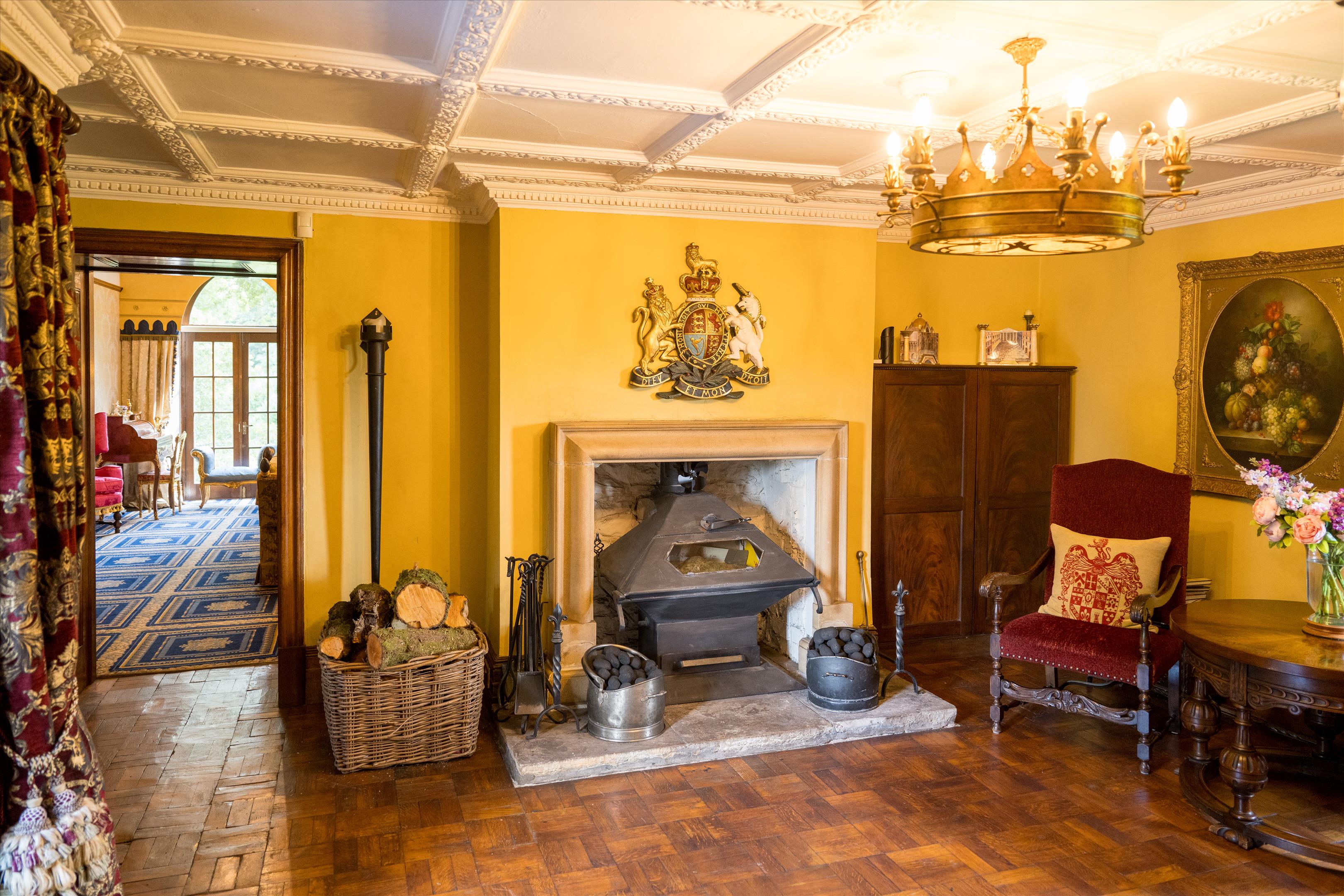
Bellister Castle

Property for Sale 

From Country Life:

There is nothing more romantic than the idea of living in a castle.

But if you talk to someone who actually does live in a castle — as we did when we spoke to Cosmo Linzee Gordon a while ago — you'll find that as well as being dramatic and wonderful, it's can also be cold, damp, ruinously expensive, and a constant stream of problems to solve. Not for nothing did we headline that particular Country Life Podcast as 'Epic beauty, sweeping grandeur and water pouring through the ceiling.'

Just occasionally, though, a castle comes up for sale which shows that it doesn't always have to be this way. Bellister Castle, set beside a sweep of the River Tyne on the edge of the Northumberland village of Haltwhistle, is just such a castle — and it's for sale through Knight Frank at £2.5 million. From afar, Bellister is the very image of the medieval castle: a towering, castellated and imposing presence that looks over this green and rolling landscape, almost exactly half-way along Hadrian's Wall. And more than that, Hadrian's Wall is actually a part of the castle in a very literal way: the early portions are believed to have been built using stone that was, er, 'borrowed' from the wall itself. (Read more.)

Property for Sale

Share

Thursday, May 14, 2026

Highest of All Kings

 From A Clerk of Oxford:

The idea that gods dwell in the heights, in the sky and on the mountains, is one of the most ancient religious impulses. It's hardly difficult to see a connection between that and Christ's Ascension, and going on about 'rockets, haha!' feels like a deliberate attempt not to see it. Those silly people of the olden days found poetry in the feast rather more easily than their clever modern descendants do: in Ascension Day folklore there was 'a strong connection between the day and all things pertaining to the sky, such as clouds, rain, and birds' (Roud). Rain which fell on Ascension Day was said to be blessed - 'neither eaves' drip nor tree-drip, but straight from the sky'. The day was connected with holy water in other ways, including the custom of well-dressing and visiting sacred springs. This expresses a sense that the heavens and the earth are interconnected at the most essential level - as of course they are, whether you think of that power as physical or spiritual or both. The kind of preacher who apologises for Ascension Day is likely to call that faith superstitious, but it's infinitely grander, really, than a worldview which finds no wonder in the heavens. We are earthbound, tied to this sublunary world and its many sorrows - but this is one day when the imagination can soar to the sky. (Read more.)


More HERE

(Image source.

Share

Tuesday, May 12, 2026

When the Royal Family Visits

From Country Life:

Any self-respecting country house numbers among its bedrooms one distinguished from all others. Details may differ — the size of the bed, the fanciness of the tassels, the richness of the silks (which may well now be in shreds) — but it matters not. What counts is that a royal personage once slept there. Even if it happened 700 years ago and your house has been rebuilt three times since, a room in which royalty once reposed is enshrined ever after.

This doesn’t mean that the visit was at all pleasurable for either host or guest. The presence of a royal bedchamber celebrates less the awe of majesty than the family’s ability to survive the often appalling jeopardy of welcoming a royal, which could all too easily result in financial ruin, social disgrace and even death. Unlike modern royals, who might show up with a maid or valet and the odd bodyguard, royal visits once meant vast retinues landing on your doorstep, including high-ranking courtiers and domestic staff, who all had to be accommodated according to their station. Edward I would even bring along a keeper of the royal cows, to ensure a supply of fresh milk.

 Hosts effectively handed over their house to their royal guests, who were attended by their own staff and would often eat in a separate room with food prepared by their own cooks. Medieval manners lingered; at their coronation banquet in 1685, James II and his wife, Mary of Modena, sat alone at a table of about 170 dishes, including 24 cold puffins and four fawns, ‘two larded’. Lord Burghley had to double the size of Theobald’s, his house in Hertfordshire, all too conveniently situated a day’s ride north out of London, to accommodate Elizabeth I and her vast entourage on her annual summer progresses. Luckily for him, he was compensated by a high and lucrative office that allowed him to pay for it all. (Read more.)


Share

Monday, May 11, 2026

Madame Elisabeth on the Way to Execution

This is Versailles: Execution of Madame Élisabeth

Madame Élisabeth of France and her companions leave the Conciergerie for the final journey to the guillotine on May 10, 1794. Madame Élisabeth was the last to die, which means she had to watch all the others decapitated before her. They each begged for her blessing before approaching the scaffold. From This is Versailles:

Once the condemned were removed, Madame Élisabeth once again exerted herself to the comfort of her fellow-condemned. She had always been a fervently religious woman and now she encouraged those who were to die with her. She chose to rejoice in the fact that the Tribunal had not asked them to renounce their faith "only their miserable lives".

There appears to be some conjecture about when Madame Élisabeth was definitely informed of the death of Marie Antoinette. Later, Marie Thérèse would recall that they had heard her mother's sentence being cried out from the people walking beneath their windows but that they had refused to believe it. One account claims that Élisabeth had asked to see her sister-in-law after her sentencing only to be told that she had suffered the same fate. Another claims that it was only at the foot of the guillotine that she overheard a callous remark. Once it was noticed that the condemned bowed to her before their deaths, a spectator allegedly remarked that that they could "make their salaams to her all they wanted, she will share the fate of the Austrian". (Read more.)


From European Royal History:

She reportedly successfully comforted and strengthened the morale of her fellow prisoners before their impending execution with religious arguments, and by her own example of calmness.

Élisabeth was executed along with the 23 men and women who had been tried and condemned at the same time as she, and reportedly conversed with Mme de Senozan and Mme de Crussol on the way. In the cart taking them to their execution, and while waiting her turn, she helped several of them through the ordeal, encouraging them and reciting the De profundis until her time came. Near the Pont Neuf, the white kerchief which covered her head was blown off, and thus being the only person with bare head, she attracted special attention by the spectators, and witnesses attested that she was calm during the whole process.

 At the foot of the guillotine, there was a bench for the condemned who were to depart the cart and wait on the bench before their execution. Élisabeth departed the cart first, refusing the help of the executioner, but was to be the last to be called upon, which resulted in her witnessing the death of all the others.

Reportedly, she considerably strengthened the morale of her fellow prisoners, who all behaved with courage. When the last person before her, a man, gave her his bow, she said, “courage, and faith in the mercy of God!” and then rose to be ready for her own turn. While she was being strapped to the board, her fichu (a sort of shawl) fell off, exposing her shoulders, and she cried to the executioner “Au nom de votre mère, monsieur, couvrez-moi. (In the name of your mother, sir, cover me)”

Reportedly, her execution caused some emotion by the bystanders, who did not cry “Vive la Republique” at this occasion, which was otherwise common. The respect Élisabeth had enjoyed among the public caused concern with Robespierre, who had never wished to have her executed and who “dreaded the effect” of her death.

Her body was buried in a common grave at the Errancis Cemetery in Paris. At the time of the Restoration, her brother, Louis-Stanislas, Comte de Provence, now King Louis XVIII of France and Navarre, searched for her remains, only to discover that the bodies interred there had decomposed to a state where they could no longer be identified. Élisabeth’s remains, with that of other victims of the guillotine (including Robespierre, also buried at the Errancis Cemetery) were later placed in the Catacombs of Paris. A medallion represents her at the Basilica of Saint Denis.

Beatification

The Cause of Beatification of Élisabeth was introduced in 1924, but has not yet been completed. In 1953, she was declared a Servant of God, and in 2016, her Cause was re-opened. (Read more.)

Share

Friday, May 8, 2026

Loverboy Chivalry vs Martial Chivalry


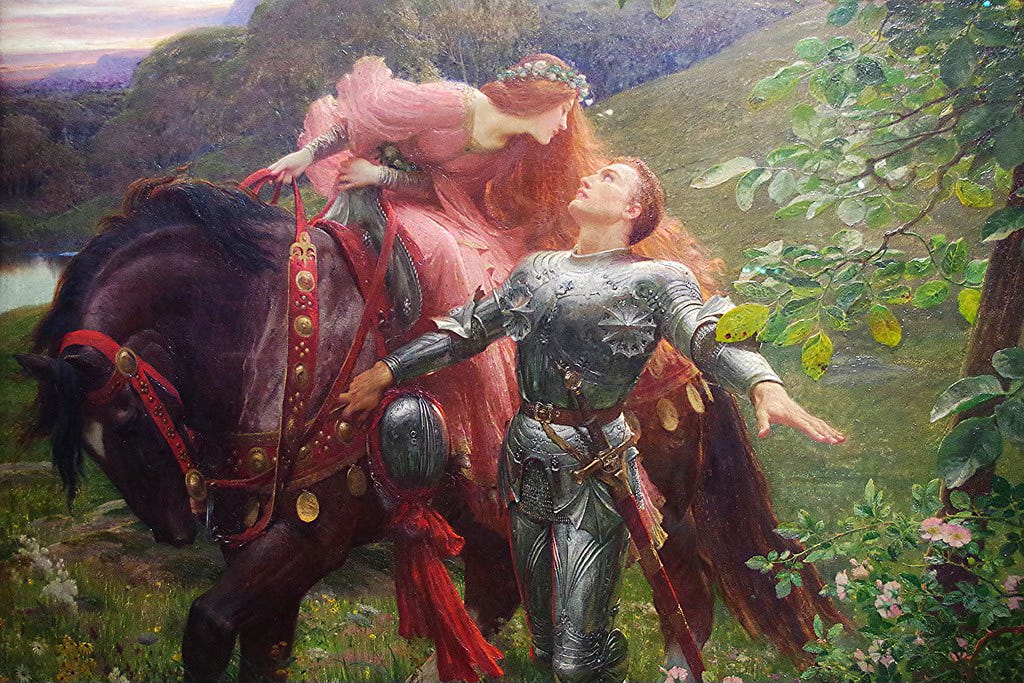
I love Arthurian legend, the basis for "courtly love" which the article refers to as "Arthurian" chivalry or "loverboy" chivalry. Courtly love was essentially invented by Eleanor of Aquitaine, inspired by the troubadour culture of the south of France, cultivated by her grandfather Duke William of Aquitaine. Queen Eleanor founded the "courts of love" in which great ladies would play lawyers and debate the highly romanticized and highly idealized manners and general behavior of their knighted admirers. It allowed women to hold forth upon matters of deportment and courtesy as well as discussing poems,songs and ballads. The bottom line was the respect and reverence which noble men were expected to show to noble ladies. It gave agency to women in an era of arranged marriages, when people did not marry for love. Women of all classes could be beaten by their husbands and mistreated in any number of ways. There was always the danger of both men and women finding love outside of marriage. Courtly culture acknowledged that such forbidden love happened but channeled it into chaste manifestations, because when actual adultery occurred it could lead to war, imprisonment or corporal punishment,  depending upon the rank of the lady and her husband. Not a Christian ideal but then many think it was influenced by the Cathars, as I explore in my novel The Night's Dark Shade. From The Chivalry Guild Letters:

Carolingian chivalry is the essentially French version, and its mythos is the chansons de geste (“songs of great deeds”) involving Charlemagne and his paladins—the most famous of which is The Song of Roland. Carolingianism is about war and God. It is the chivalry, Gautier writes, of the “11th and 12th centuries—that of the crusades, that of our [epic poetry]. It will appear rude and barbarous to some people, but in truth is strong and healthy, and has formed for us the powerful race whose glory has filled the world.” Roland and company don’t have much time for the finer points of etiquette and don’t dedicate themselves to idealized romantic love; they are too busy fighting Saracens and protecting Christian civilization.

As for the more popular Arthurian or English chivalry, Gautier has less fond things to say. He writes:

The romance of the Round Table spread amongst us the taste for a less wild but also a less manly chivalry. The elegancies of love in them occupied the place formally reserved for the brutality of war and the spirit of adventure in them extinguished the spirit of the crusades. One will never know how much harm this cycle of the Round Table inflicted on us. It’s civilized us no doubt; but effeminated us. It took away from us our old aim, which was the tomb of Christ gained by blood in battle. For the austerities of the Supernatural it substituted the tinsel of the Marvelous. It is to this dangerous but charming literature that we owe for theatrical, the boastful, rash chivalry which proves so fatal during the Thirty Years’ War.

This kind of chivalry also gives birth to the satires of Cervantes and company, which aren’t making fun of paladins defending Christendom but instead the errant knights roaming the countryside looking for damsels to rescue. “And we must confess,” Gautier notes, “that some complaints of the great satirist are not without foundation.” (Read more.)


 From Becoming Noble:

Modern discourse offers only impoverished models for women. Feminism dismantled an older understanding of womanhood without replacing it with a sustainable alternative. It treats the household as a prison, motherhood as an obstacle to self-realisation, and the virtues historically cultivated by women as instruments of oppression. Ironically, in so doing, it foreclosed many of the domains by which women wielded substantial influence over civilization.

The reaction is equally impoverished despite its superficial conservatism. The trad-wife thing, to take the obvious example, is a performance of homemaking that lacks any serious theological or historical foundation. It reduces womanhood to a visual display of domestic labour, detached from the actual structures of authority, education, and spiritual responsibility that characterised the aristocratic household. At bottom, it is a reaction to feminism conducted on feminism’s own materialist terms.

The home-schooling mother model is a significant improvement but still shares a visceral and fatal error which precludes its wider adoption. These approaches treat the domestic as something small. None advances the majesty of the Christian aristocratic tradition: that the household is the foundational unit of civilisation, that its proper ordering is a matter of cosmic significance, and that the woman who presides over it wields a form of distinct and profound authority. (Read more.)


Share

Thursday, May 7, 2026

Defending Hereditary Titles

 From Tatler:

Charles Courtenay, the 19th Earl of Devon, is the latest member of his family to sit in the House of Lords, a tradition that has passed through the generations from father to son for 900 years. He will also be the last.

Share

Monday, May 4, 2026

The Daily Life of a Medieval King


The great Charles V of France. From Medievalists:

A medieval king’s day was carefully structured, balancing prayer, governance, and moments of rest. Thanks to Christine de Pizan, we can follow the daily routine of Charles V of France in remarkable detail, offering a rare glimpse into how a ruler lived and worked in the late Middle Ages.

Around the year 1404 Christine de Pizan finished her work, Livre des faits et bonnes mœurs du sage roy Charles V, which was both a biography of the French king who reigned from 1364 to 1380, and a guide to how an ideal monarch should live and rule. Christine had a good vantage point to tell this story, as her father, Tommaso di Pizano, was a personal physician and astrologer at Charles’ court, so one can assume that she was sometimes at the court herself. Moreover, in later years she was able to consult other men and women who served the king, including his chamberlain and valet.

Her section on the daily life of Charles V begins with him rising from bed in the morning, typically between six and seven o’clock. After saying a prayer, the king would chat and joke with his servants. Christine writes:

 When he had been combed, dressed, and outfitted according to the demands of the day’s program, his chaplain, a distinguished person and honourable priest, brought him his breviary and helped him to say his hours, according to the canonical day of the calendar. Around eight o’clock he would go to mass, which was celebrated each day with glorious, solemn singing.

(Read more.)


Share

Sunday, May 3, 2026

Raymond Ibrahim's Trilogy

undefined
Baucent of the Templars


 "Not to us, O Lord, not to us; but to thy name give glory." Psalm 113 (Vulgate), motto of the Templars

Once in a discussion with a fellow historical novelist I was informed that the crusades are the earliest examples of genocide. I was surprised that the novelist, being Jewish, seemed unaware of the various ancient persecutions against her own people, including that of the Greeks in the days of the Maccabees, that might be considered genocidal. I reminded her of that, as well as of the fact that there were twelve major crusades, taking place over nearly three hundred years. They were led by different people, with the principle goal of liberating the Holy Land from Muslim rule and thus delivering the Christian population from slavery and oppression. Some were more successful than others. Some, like the Fourth Crusade, were total disasters. In fact, the Fourth Crusade is the one which most people think of when they view the crusades as orgies of mass murder. In that case, those being killed were other Christians. Did other massacres of the innocent occur during the course of the various crusades? Yes. So, did the crusaders journey hundreds of miles to the Middle East, braving fatal diseases, pirates, brigands and an ocean of foes, just for the joy of killing people? That is one of the questions answered by Raymond Ibrahim in his brilliant trilogy about the centuries-long conflict between Christianity and Islam. Ibrahim's books are The Sword and the Scimitar, Defenders of the West, and The Two Swords of Christ. The books present a background to the crusades, containing detailed information of which most contemporary people are unaware, as well as the histories of heroes like El Cid and the rise of the two greatest military orders, the Templars and the Hospitallers.

In the early Church the practice of Christians was, even in the era of persecution, to visit the places where Jesus Christ had been born, lived, died and risen. Pilgrimages were regarded as highly penitential, in which the pilgrim would not only risk life and health, but leave behind property, home, family, occupation and offices. The Romans built pagan shrines over the venerable spots like the stable at Bethlehem and the Holy Sepulcher but those temples only served to remind everyone where the sacred sites were hidden. When Emperor Constantine legalized Christianity in the Fourth Century, his mother Empress St. Helena went on pilgrimage to the Holy Land, where she discovered not only the True Cross, but found and reopened many of the other places sacred to the memory of the Savior. This ignited centuries of pilgrimage to the Middle East. Rich and poor would go, often in parish-sponsored groups as now. Special costumes were worn when on pilgrimage, and one was often regarded as being temporarily in religious life when journeying to a holy site. For Jerusalem was not the only destination; there were shrines throughout Europe, including Rome and Compostela. But the pilgrimage to the Holy Land remained the ultimate of penitential practices, with many indulgences attached. People would go for themselves and for loved ones who were sick or who had died.

All this changed with the rise of Islam in the 7th century, meticulously described by Ibrahim in his book Sword and Scimitar. Founded by Mohammed, an Arabian who claimed to be a prophet of the One True God, Islam combined elements of Nestorian Christianity and Judaism with the prophet's own inspirations, many of which included teachings abhorrent to Judeo-Christian morality. One such teaching permits Muslim men to take a non-Muslim "infidel" woman by force. Mohammed commanded his followers to spread Islam by warfare. Within 200 years, the Christian lands in North Africa, Spain, Arabia, and the Middle East were conquered. Great Christian cities like Antioch and Alexandria, which had been Apostolic sees, fell to Islam, with the churches and basilicas becoming mosques. Christians, especially children, young men and young women, were made into sex slaves and concubines, including monks and nuns. Many boys were castrated to be eunuchs in the harems of the various Muslim elites. Hatred in the form of desecration was lavished upon Christian shrines, churches, monasteries, and cathedrals, with special contempt reserved for icons, church bells and crosses. The latter were dragged upside down through the streets, to be spat and urinated upon by the disciples of the prophet. Altars were sometimes desecrated by the gang-rape a Christian virgin. Those Christians and Jews who were not killed or sold were subject to oppressive laws and taxes in their own lands. This is documented in Muslim sources which repeatedly rejoice when describing the oppression of "infidels" and especially the defilement of Christian women.

A war-like, nomadic people called the Turks embraced Islam; they eventually overran the old Roman province of Anatolia so it became "Turkey." In the late 11th century, Jerusalem, which had fallen into Muslim hands before, was captured by the Seljuk Turks, who tortured, raped, and sold into slavery the Christians of the region. Those who were killed were regarded as lucky. The violence disrupted the flow of pilgrimages from Europe to the Holy Land. The Muslims made a point of harassing and robbing pilgrims, sometimes capturing them to be sold into slavery. Blond and red-haired girls and boys with blue, gray or green eyes were especially favored for the slave markets. Although one beautiful abbess from Germany, traveling with a group of pilgrims to Jerusalem, was waylaid by Muslim bandits and raped to death in front of her fellow Christians, who were also mistreated in various horrific ways. This led Pope Urban II at the Council of Clermont in 1095 to call for a crusade of Christian soldiers to deliver the Christians in the Holy Land. Thus began the era of the crusades. Defenders of the West describes some of the great heroes of Christendom who kept Islam out of Europe, including at least one from Albania whom I had never heard of before. My opinion of Richard I "Lionheart" had suffered in the past but in Defenders he is revealed as among the bravest of the brave. The Two Swords of Christ traces the history of the two great military orders in a deeply inspiring way. For when the weak and innocent are attacked, it is unquestionably the duty of Christians who are able to defend them.

From The Chivalry Guild:

If I had to pick the best way to describe the recent works of Raymond Ibrahim—Sword and Scimitar (2018) and Defenders of the West (2022)—I’d call them no-going-back books. The equally chilling and invigorating experience of his histories cannot be undone and you cannot see the world the same way afterwards—especially since it’s not just history, but a forgotten prelude to what we’re living with today. Reality looks different post-Ibrahim.

Sword and Scimitar takes the reader through fourteen centuries of warfare between Islam and the West, with emphasis on eight great battles within that conflict. Better than any book I know, it dynamites the old public school narrative about the Crusades as a brutal act of Christian aggression against those poor, peaceful, tolerant Muslims. Ibrahim tells a much darker story about our ancient adversaries, documenting the scale of their conquests and the horrors that followed pretty much everywhere the armies of the prophet went. What we call “the West,” he writes, is but “the last and most redoubtable bastion of Christendom not to be conquered by Islam. Simply put, the West is actually the westernmost remnant of what was a much more extensive civilizational block that Islam permanently severed.” Three-quarters of the formerly Christian world was conquered by these people. It is both chilling and invigorating, like I noted, to think about how much danger we were in—and what kind of virtue was required to meet that danger and triumph over it, at least for a time.

Defenders of the West is an even more important book. It’s personal and compelling, and it reverses a long trend of hiding Christian heroes from those of us who need to learn about them. Thanks to Enlightenment propagandists, a vague narrative persists that heroism basically died out after the assassination of Julius Caesar and wasn’t revived again until Napoleon and George Washington walked the earth. The intent is a broadside against the Faith, leaving you with the vague impression that the teachings of Christ and his Church effectively snuff out all martial virtue, as though heroics cannot co-exist with the Gospel. Ibrahim shows this to be absolute nonsense. With his chronicles of Godfrey of Bouillon, El Cid, Richard the Lionheart, Fernando III, Louis IX, John Hunyadi, Scanderbeg, and Vlad Dracula, he brings to life eight legends whose deeds rival or exceed those of any heroes of any age.

These works are, in my humble opinion, on the shortlist for books of the century. So it was with special interest that I anticipated his follow-up effort. The Two Swords of Christ (published November ’25) continues with his major theme but looks at a different aspect of the conflict: the crucial work done by the Templars and the Hospitallers, basically the special forces of Christendom.

Ibrahim’s title comes from Luke 22, in which Jesus tells his disciples to buy a sword. When they reply, “Look, there are two swords here,” Jesus says, “It is enough!” What’s fascinating is his use of the singular pronoun it rather than the plural they. It suggests not the swords, but a way of life that employs “a spiritual sword against spiritual enemies, and a physical sword against physical enemies.” If your religious education was anything like mine, your teachers blithely passed over this and similar passages in favor of all the nicer-sounding directives about loving everybody and just being nice, along with never fighting—because fighting is unchristian. For those looking for simplistic formulas for life, it’s far easier to reduce the character of the Lord to that of a harmless meditation instructor, rather than wrestling with the much more challenging and dynamic truth.

The two swords also work as a metonymy for the knightly orders, filled with men whose particular way of serving God and their neighbors was with weapons. (Read more.)

  All three books are so detailed in citing source material that one comes away with a refreshed world-view, for a deeper understanding of history leads to a more profound comprehension of the present. Plus Raymond Ibrahim is an engaging and descriptive writer so that I often felt I was watching a film of the events he has so richly described. I recommend this excellent trilogy for every home library and every college history class.

Share

Thursday, April 30, 2026

What's Wrong with Modern Dating

 From Elizabeth Stone:

There are many things wrong with modern dating, between the constant need for validation, our inability to wait, our uncontrolled lust, the fact that we treat sex as something casual, and that we use chemistry and feelings as the main guidance for love, you would think these things alone would be enough to explain why so many people feel lost, hurt, detached, and unable to form anything lasting, but honestly, I think there are two deeper things beneath all of it that make the whole situation far worse.

Dating now isn’t just more shallow, dating now has completely changed the way we see people altogether. Somehow, and somewhere along the way we stopped people as someone we want to know, someone to honor, pursue, discern and maybe even possibly fall in love with, instead now we approach others not as a person, but as an experience to be had. I mean even in our language this is obvious, we talk about others like they were some lesson, a story, just a chapter, a fling, an adventure, a waste of time… but the problem is that once another human person becomes just an experience, well it becomes very easy to just consume them and move along.

The second problem is that we have totally inverted the natural order of love, we have given others access to us and our bodies before we even know them, before we are even able to trust them, before commitment before anything that would protect us. We are trying to begin with things that are meant to be the fruit of love, we don’t plant a seed anymore and wait for it to grow, we take the fruit, never plant, and then sit and wonder why nothing ever seems to grow. (Read more.)

Share