Showing posts with label Etiquette. Show all posts

Wednesday, July 29, 2026

The Art of Conversation

 From Return to Order:

Conversation is a vast theme. Outlining some principles that should guide our conversations can help us better understand the topic. This will help us see the true value and scope of this important art. I hope our discussion will not be a lecture but a conversation about how to converse.

First, the principle that should guide our choice of topics and our comments should be the good of others. We must seek to do good for those with whom we converse. In other words, conversation is a precious means of apostolate, that is, a means of spreading the Faith to others. Thus, our attitude towards conversation must be like that of an apostle who acts with zeal and passion.

 Second, we have a vast field to work in since the characteristics of the Church are unfathomable. God is infinite, so we have always had much to say about the Church and God. Conversations aimed at spreading our thinking are an important part of our mission as Catholics. We converse to bring souls closer to the Catholic Church and Christian civilization. (Read more.)

Share

Saturday, July 11, 2026

"A Lush, Passionate Portrait"


  From BookLife:

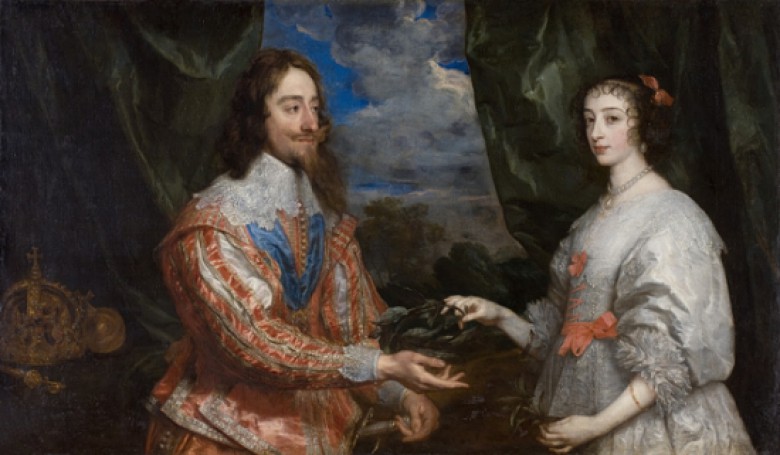
In the first of her Henrietta of France trilogy, Vidal (Marie-Antoinette, Daughter of the Caesars) paints a lush, passionate portrait of the life of Henriette-Marie, a seventeenth century French princess descended from the Bourbons and Medicis. Wed to King Charles I of England at the tender age of fifteen, Henriette is determined to bring Catholicism back to England, despite her Protestant husband and the country’s “hatred of Catholicism.” Often buffeted by political and social forces beyond her control, Henriette, known in England as Queen Mary, faces the challenges she encounters with the courage and resolve that she draws from her deep Catholic faith.

Firmly grounded in real historical events and settings, Vidal breathes life into Henriette’s era through extensive, evocative descriptions of its clothing, food, and palaces. This attention to detail offers a tantalizing immersion in this royal world, from the elaborately-costumed “masques” she and courtiers create to entertain the King at holiday celebrations to her beloved spaniel, Hebe. Vidal also illustrates the complexity of royal life through her careful elaboration of the complicated web of marriages, kinships, and associations. Some readers will be overwhelmed by the many branches of the royal family tree, but the text’s clear exposition and strong narrative arc offer clarity and guidance.

Vidal highlights the most important characters through her vivid depiction of their personalities and motivations. Antagonist George Villiers, the Duke of Buckingham, creates a true sense of menace as he threatens Henriette and works to disempower her. Although she is pure and steadfast in her intentions, Henriette’s struggles to balance her devotion to her husband and to her faith will earn readers’ respect and sympathy, even if they do not share her allegiance to the Catholic church. Offering insight into the passions behind the protocols, My Queen, My Love infuses these historical figures with humanity.

Takeaway: Readers of historical fiction will appreciate the depth and nuance Vidal brings to this often overlooked historical figure. (Read more.)


"Elena Maria Vidal brings history to life again with the story of Queen Henriette Marie, complete with an unlikely but true love story of the Queen and King Charles I of England, a formidable personal enemy in the menacing Duke of Buckingham, lots of well-researched period details, and the matters of Christian faith behind many of the conflicts. An antidote to the Whiggish story that is often passed off as history in America, with its anti-monarchical bias. Though Henriette Marie is not nearly as well known as another maligned consort, Marie Antoinette, Americans should learn her story because, coming after Jamestown's founding, she was their queen." —John Beeler, A Conservative Blog for Peace


Available HERE.

Share

Wednesday, June 24, 2026

Decline of Civility

From Townhall:
Starting in the 1960s, the values that made for civility came under attack. Corporal punishment was banned. This was the time when the education establishment and liberals launched their agenda that undermined lessons children learned from their parents and the church. Sex education classes undermined family/church strictures against premarital sex. Lessons of abstinence were ridiculed, considered passe, and replaced with lessons about condoms, birth control pills and abortion. Further undermining of parental authority came with legal and extralegal measures to assist teenage abortions, often with neither parental knowledge nor parental consent.

Customs, traditions, moral values and rules of etiquette are behavioral norms, transmitted mostly by example, word of mouth and religious teachings. As such, they represent a body of wisdom distilled through the ages by experience and trial and error. The nation's liberals -- along with the education establishment, pseudo-intellectuals and the courts -- have waged war on traditions, customs and moral values. Many people have been counseled to believe that there are no moral absolutes. Instead, what's moral or immoral is a matter of personal convenience, personal opinion, what feels good or what is or is not criminal.

We no longer condemn or shame self-destructive and rude behavior, such as out-of-wedlock pregnancies, dependency, cheating and lying. We have replaced what worked with what sounds good. The abandonment of traditional values has negatively affected the nation as a whole, but blacks have borne the greater burden. This is seen by the decline in the percentage of black two-parent families. Today a little over 30 percent of black children live in an intact family, where as early as the late 1800s, over 70 percent did. Black illegitimacy in 1938 was 11 percent, and that for whites was 3 percent. Today it's respectively 73 percent and 30 percent. (Read more.)
Share

Tuesday, June 23, 2026

Courtship Etiquette for Gentlemen

From Geri Walton:
Before a gentleman could even consider courting a woman, he had to have already met her or finagled an introduction through society’s proper channels. This might be accomplished through a mutual friend. If not, then his first consideration was how to get acquainted with the young woman, and this is where a gentleman’s investigative skills came into use. He would have to ascertain where she lived and then make discreet inquiries, respecting her family and avoiding compromising her name by not even mentioning it in the course of his inquiry. Then, hopefully, he could somehow work towards an introduction.

If that proved unproductive, his only other option was to get the lady to notice him by attending places she frequented and judging for himself “without speaking to his fair conqueror, — whether his further attentions would be distasteful to her.” If his advances appeared acceptable, he could make “the first deliberate step on the Ladder of Matrimony,” by writing to the woman’s father or guardian and stating “his position in life and prospects, as well as mention his family, [and] request permission … to visit the family as a preliminary to paying his addresses to the object of his admiration.” (Read more.)
Share

Saturday, June 13, 2026

Little Social Etiquette Rules Everyone Should Follow

 From Country Living:

Etiquette is not just about which fork to use. It’s showing respect for yourself and everyone else in your little corner of the planet. In a world where rudeness often reigns, why not stand out for being polite and thoughtful? You don’t even have to go to charm school or binge-watch Downton Abbey to learn the rules! Here are 50 easy ways to share more kindness and less saltiness this year. (Read more.)

Share

Friday, May 29, 2026

A Republic Requires Restraint

From Unlicensed Punditry:

I consider myself a traditional American. I’m neither special nor exceptional because tens (maybe even hundreds) of millions of people of my age are just as traditional as I am. It isn’t so much about us, it is about what we were taught.

Of the many things I learned as I matured, one of which was manners--but what we casually call “manners” are something much more important. They are the small acts of voluntary self-restraint that make a free society possible. Standing in line without cutting, not standing up in front of others at a concert or ballgame, cleaning up after yourself in public places, obeying rules at public gatherings, yielding space to others, lowering your voice in shared environments, and simply saying “excuse me” or “thank you” are not meaningless social rituals. They are evidence that a person understands he is not the center of the universe.

So, what are we to make of the videos of subsets of black Americans twerking at college graduations, black parents blocking the views of seated attendees at these graduations and then basically telling other people to get F’ed when asked to sit down, teens doing violent “takeovers”, violent fights breaking out between patrons and employees at restaurants?

Behavior is not racial, it is cultural—and these are cultures antithetical to the legitimate culture of America.

What we are seeing now goes well beyond simple bad manners. People blast music and videos in restaurants, airports, and public transit as though everyone else has been conscripted into their personal world. Airline passengers melt down over minor inconveniences, restaurant patrons scream at employees or assault them over trivial disputes, and “prank culture” increasingly consists of harassing strangers for internet clicks. Public spaces that once operated on a basic expectation of mutual respect are increasingly treated as stages for attention-seeking, grievance, and performative outrage. Even youth sporting events, which are supposed to teach discipline and teamwork, now sometimes devolve into adults fighting referees, coaches, and one another in front of children. (Read more.)

Share

Wednesday, May 20, 2026

14 Common Etiquette Mistakes

 From Good Housekeeping:

We've all had our share of cringeworthy social interactions. While it's common to make a social misstep, it's not a great feeling. We tapped Diane Gottsman, a national etiquette expert, author and speaker to fill us in on the most common etiquette mistakes. She shared that some things you might think are polite, like addressing someone as "ma'am" or putting your pinky up while you're drinking tea, can actually come across as impolite.

Avoiding these etiquette mistakes will help you relax and have a better time next time you're a wedding guest, houseguest, or attending a party.

Using Sir and Ma’am

Many people were raised to respectfully address others as sir and ma’am. Although this was polite to do as children addressing adults, it’s not the best etiquette once we leave childhood, because it can carry connotations of submissiveness or older age.

"As we age, it's much more appropriate to use someone's name," Gottsman explains. If a first-name basis feels too informal, you can address people with their title and last name to show respect.

Clinking Glasses

This is a surprising one! After a toast, you shouldn’t clink glasses. This is because your dinner host may be serving you in their best glassware. You don’t want to spill your drink on their nice linens from thrusting your cup around, and you certainly don’t want to chip or shatter your host’s fine glasses.

If somebody tries to clink with you, you should of course graciously oblige rather than correct or ignore them. But the preferred response to a toast is raising your glass and nodding to your fellow guests, no clinking required. (Read more.)
Share

Wednesday, May 13, 2026

The Absolute Rudest Things You Can Do at a Wedding

 One reason I am fascinated with etiquette is that I am aware that my own manners are not always what they should be. I am certainly guilty of the second faux pas. From Elle Decor:

1. You arrive too early.

Yes, being punctual is polite, but arriving to the ceremony more than 30 minutes early can get in the way of final touches and ultimately cause more stress for the couple. "It's better to wait in your car than go into the venue and risk stressing out the bride by seeing her before the ceremony," says the founder of Perfectly Posh Events, Holly Patton Olsen.

2. Or you arrive too late.

The general rule of thumb for arriving to the ceremony is that you should be in your seat 10 minutes before it is supposed to start. "Walking in as the bride (or groom) is walking down the aisle is incredibly rude and ruins video and photos that are being taken," shares Brand Hamerstone, owner of All Events Planned. (Read more.)
Share

Friday, May 8, 2026

Loverboy Chivalry vs Martial Chivalry


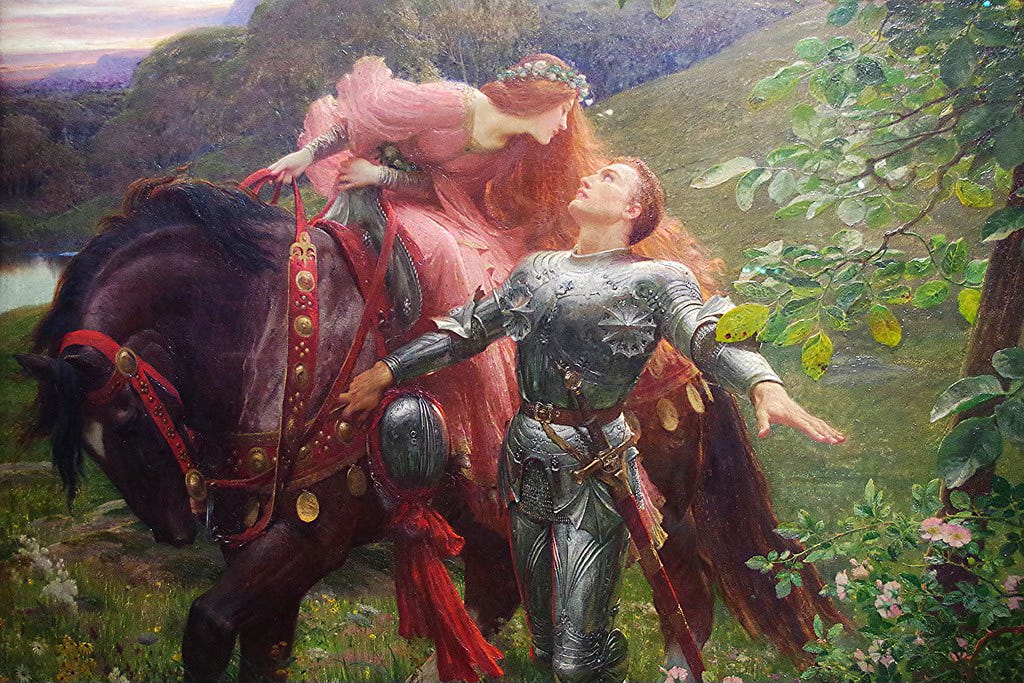
I love Arthurian legend, the basis for "courtly love" which the article refers to as "Arthurian" chivalry or "loverboy" chivalry. Courtly love was essentially invented by Eleanor of Aquitaine, inspired by the troubadour culture of the south of France, cultivated by her grandfather Duke William of Aquitaine. Queen Eleanor founded the "courts of love" in which great ladies would play lawyers and debate the highly romanticized and highly idealized manners and general behavior of their knighted admirers. It allowed women to hold forth upon matters of deportment and courtesy as well as discussing poems,songs and ballads. The bottom line was the respect and reverence which noble men were expected to show to noble ladies. It gave agency to women in an era of arranged marriages, when people did not marry for love. Women of all classes could be beaten by their husbands and mistreated in any number of ways. There was always the danger of both men and women finding love outside of marriage. Courtly culture acknowledged that such forbidden love happened but channeled it into chaste manifestations, because when actual adultery occurred it could lead to war, imprisonment or corporal punishment,  depending upon the rank of the lady and her husband. Not a Christian ideal but then many think it was influenced by the Cathars, as I explore in my novel The Night's Dark Shade. From The Chivalry Guild Letters:

Carolingian chivalry is the essentially French version, and its mythos is the chansons de geste (“songs of great deeds”) involving Charlemagne and his paladins—the most famous of which is The Song of Roland. Carolingianism is about war and God. It is the chivalry, Gautier writes, of the “11th and 12th centuries—that of the crusades, that of our [epic poetry]. It will appear rude and barbarous to some people, but in truth is strong and healthy, and has formed for us the powerful race whose glory has filled the world.” Roland and company don’t have much time for the finer points of etiquette and don’t dedicate themselves to idealized romantic love; they are too busy fighting Saracens and protecting Christian civilization.

As for the more popular Arthurian or English chivalry, Gautier has less fond things to say. He writes:

The romance of the Round Table spread amongst us the taste for a less wild but also a less manly chivalry. The elegancies of love in them occupied the place formally reserved for the brutality of war and the spirit of adventure in them extinguished the spirit of the crusades. One will never know how much harm this cycle of the Round Table inflicted on us. It’s civilized us no doubt; but effeminated us. It took away from us our old aim, which was the tomb of Christ gained by blood in battle. For the austerities of the Supernatural it substituted the tinsel of the Marvelous. It is to this dangerous but charming literature that we owe for theatrical, the boastful, rash chivalry which proves so fatal during the Thirty Years’ War.

This kind of chivalry also gives birth to the satires of Cervantes and company, which aren’t making fun of paladins defending Christendom but instead the errant knights roaming the countryside looking for damsels to rescue. “And we must confess,” Gautier notes, “that some complaints of the great satirist are not without foundation.” (Read more.)


 From Becoming Noble:

Modern discourse offers only impoverished models for women. Feminism dismantled an older understanding of womanhood without replacing it with a sustainable alternative. It treats the household as a prison, motherhood as an obstacle to self-realisation, and the virtues historically cultivated by women as instruments of oppression. Ironically, in so doing, it foreclosed many of the domains by which women wielded substantial influence over civilization.

The reaction is equally impoverished despite its superficial conservatism. The trad-wife thing, to take the obvious example, is a performance of homemaking that lacks any serious theological or historical foundation. It reduces womanhood to a visual display of domestic labour, detached from the actual structures of authority, education, and spiritual responsibility that characterised the aristocratic household. At bottom, it is a reaction to feminism conducted on feminism’s own materialist terms.

The home-schooling mother model is a significant improvement but still shares a visceral and fatal error which precludes its wider adoption. These approaches treat the domestic as something small. None advances the majesty of the Christian aristocratic tradition: that the household is the foundational unit of civilisation, that its proper ordering is a matter of cosmic significance, and that the woman who presides over it wields a form of distinct and profound authority. (Read more.)


Share

Saturday, May 2, 2026

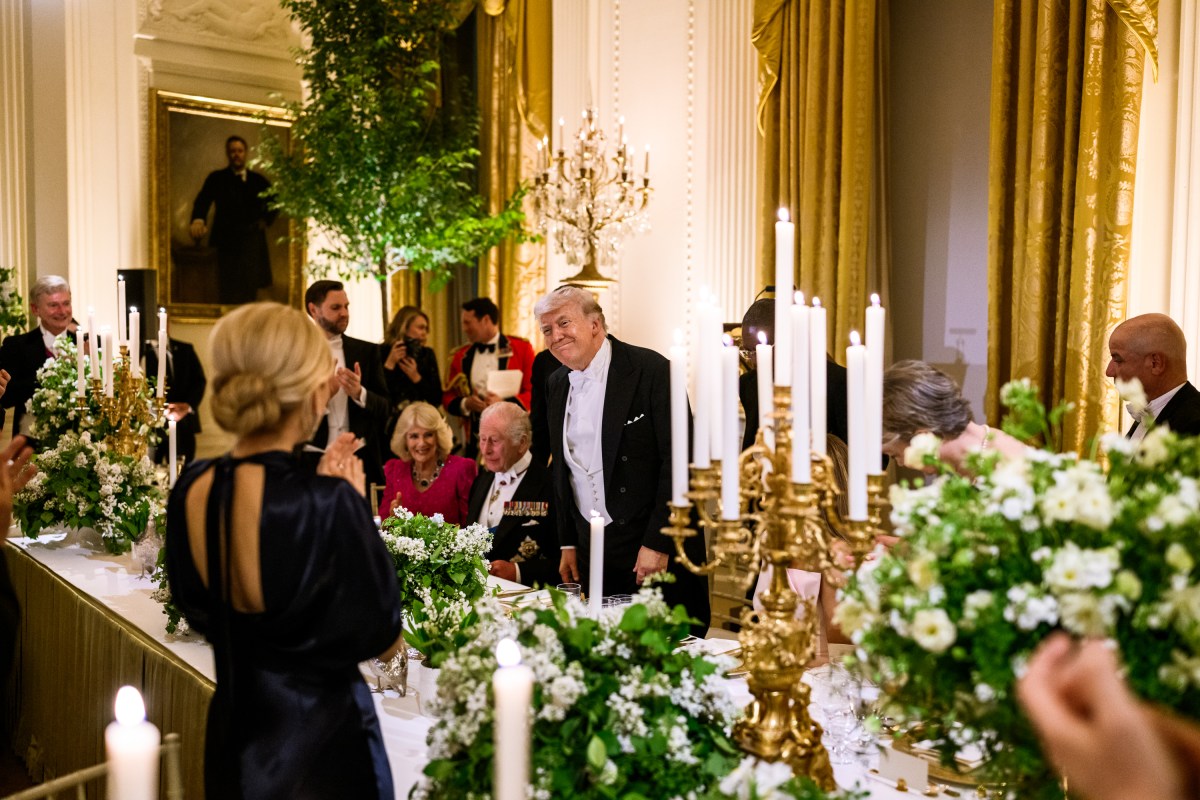
State Dinner at the White House, April 2026

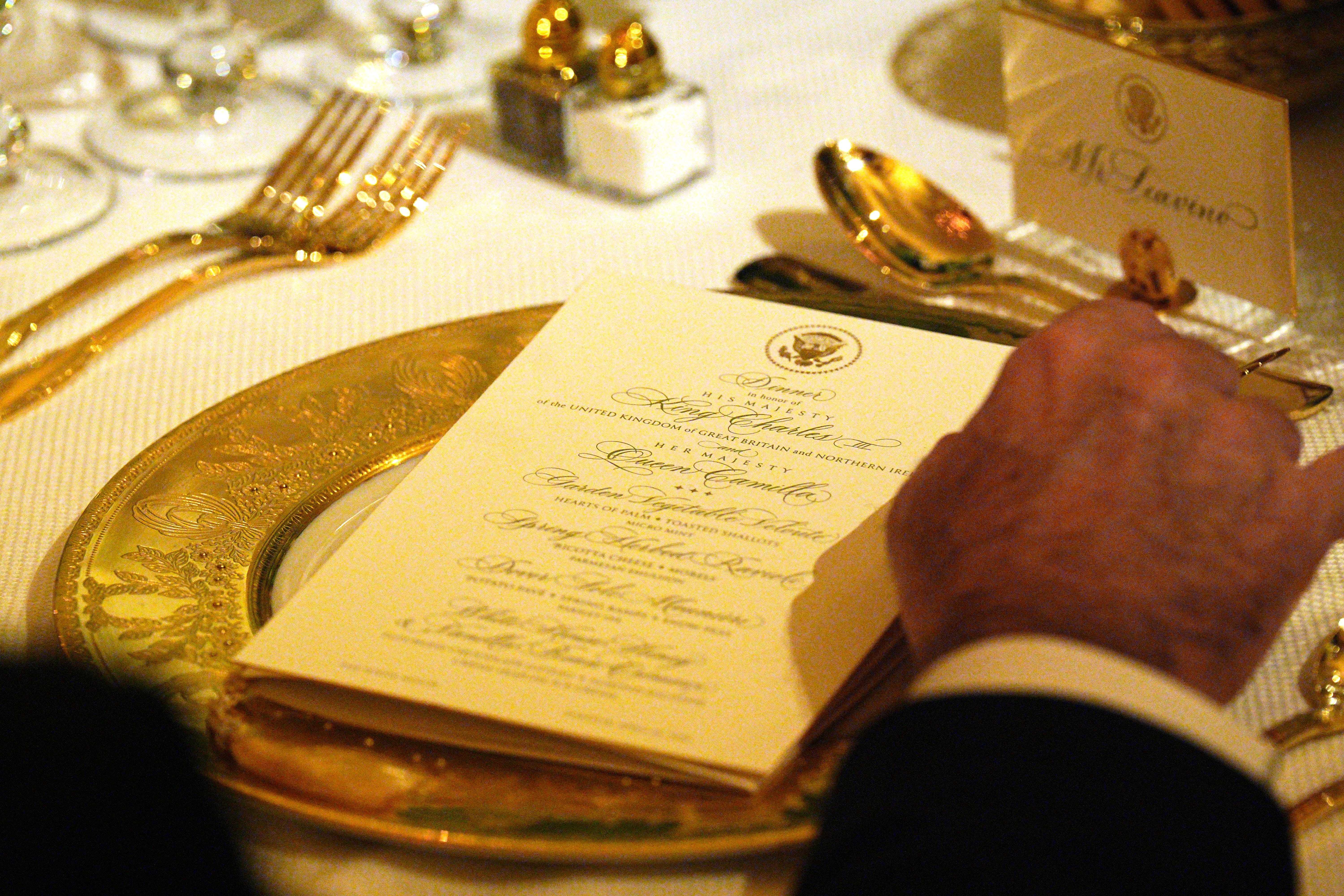
<p>The menu at the state dinner for the King and Queen at the White House in Washington DC, on day two of the state visit to the US (Aaron Chown/PA)</p> 

From The Independent:

The full menu for the has been revealed as President Donald Trump and Melania Trump welcomed King Charles and Queen Camilla as part of their state visit on Tuesday evening.

The dinner celebrated the relationship and came alongside the King’s speech, which thanked Mr Trump for a “wonderful dinner” and touched on the two countries’ “moments of difficulty”.

The menu contained many classic French dishes, including a Dover sole meuniere and potatoes pave, and elements of the banquet presentation were chosen to reflect “the long and enduring friendship” between the UK and the US. A spring theme was also echoed throughout the dinner, with fresh seasonal flowers on the table that were said by a White House spokesman to have been “inspired by the beauty of English gardens”. First course: garden vegetable veloute, hearts of palm salad, toasted shallots, micro mint.

Second course: spring herb ravioli, ricotta cheese, morel mushrooms, light parmesan emulsion.

Third course: Dover sole meuniere, spring ramps, snow peas, potatoes pave, parsley oil.

Fourth course: White House honey and vanilla bean cremeux, flourless chocolate gateau, almond jaconde, creme fraiche ice cream....(Read more.)

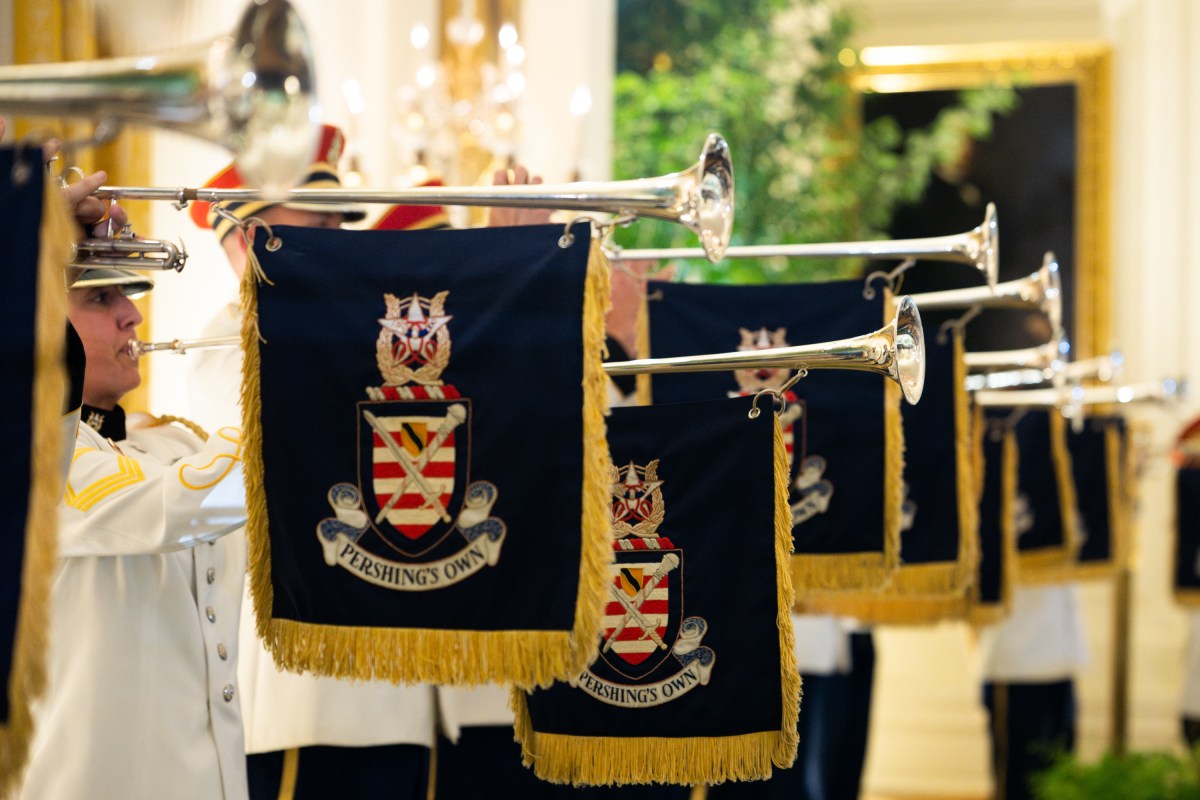
 President Donald J. Trump and First Lady Melania Trump host a State Dinner for King Charles III and Queen Camilla of the United Kingdom, Tuesday, April 28, 2026, in the East Room of the White House. (Official White House Photo by Andrea Hanks)

 President Donald J. Trump and First Lady Melania Trump pose for photos with King Charles III and Queen Camilla of the United Kingdom in the Diplomatic Reception Room of the White House before a State Dinner, Tuesday, April 28, 2026. (Official White House Photo by Daniel Torok)

 President Donald J. Trump and First Lady Melania Trump host a State Dinner for King Charles III and Queen Camilla of the United Kingdom, Tuesday, April 28, 2026, in the East Room of the White House. (Official White House Photo by Daniel Torok)

Photos from The White House.

More photos from USA Today.

Image may contain Person Adult Accessories Jewelry and Necklace

 From Tatler:

Queen Camilla is no stranger to delivering all-out glamour when the dress code calls for it, and the White House state dinner on Tuesday night was one such occasion.

Share

Tuesday, April 7, 2026

Easter Bonnets

Miss Janice explains the etiquette of wearing hats, gloves and corsages.

 Hats are a beautiful accessory and certainly popular to wear on Easter Sunday. You may keep your hat on while indoors, but should remove it at dusk. Gentlemen should remove their hats when entering a building. Hat pins are lovely adornments to a hat and should be pinned on the right side of a lady's hat and on the left side of a gentleman's hat. Make it Southern...A lot of Southern gentlemen still tip their hat to a lady (some men were just raised right)!...All y'all know by now that you may start wearing your white shoes and carrying your white pocketbooks on Easter Sunday...Here's Jacqueline Bouvier Kennedy with Young John Fitzgerald, Jr. on Easter Sunday 1963...

 There is also etiquette to be followed when wearing gloves and corsages. Proper etiquette dictates that gloves are removed when entering a building, whether it is a tearoom or a church. It is not considered proper to shake hands while wearing gloves (only the Queen of England can get away with this) or to eat or drink while wearing gloves. Remove your gloves in a lady like fashion, one finger at a time. Always hold your pocketbook and gloves in your left hand so that you will be ready to shake hands at any time.Remember, only the Queen of England may wear gloves while shaking hands! Corsages are a tradition in the South and may be worn on Easter Sunday. Corsages are pinned to the clothing on the left shoulder. (Read more.)


(Artwork courtesy of Hermes)

Share

Wednesday, March 4, 2026

Chivalry as a Way of Life


From Crisis:

Chivalry, as we said, wasn’t only a martial code. It was a way of life. It was, as one scholar put it, the “framework for lay society” in the Middle Ages. The Middle Ages, meanwhile, were nothing more or less than the application of Christianity to the whole of society. The so-called Dark Ages nearly severed the former Roman Empire from its pagan roots. Every aspect of religious, political, economic, military, and cultural life was reorganized by the Church along Christian grounds; that was their only point of reference.

The Church was unfettered from control by emperors and dictators. Slavery was abolished. Every aspect of public and private life was ordered to the salvation of souls through the Faith.

I have written here before that the West is on its way to another Dark Age. Ours is no longer a Christian society, but a pagan one. Our liberal democracies are now succumbing to the same twin errors—decadence and gnosticism—that destroyed the Roman Empire. Within a few centuries, nothing of the old order will remain. We Christians will have to rebuild civilization from its ruins. It’s only natural, then, that we should look to the Middle Ages for guidance.

Rod Dreher has been thinking along these lines for years. His book The Benedict Option urged us to look to the example of another great Medieval saint, Benedict of Norcia, for inspiration on how to build strong “intentional communities”: bastions of Christendom, safe-havens for the faithful, which can withstand the terror that will inevitably follow when our own Empire collapses. I agree with him wholeheartedly.

Yet it won’t be enough to build intentional Christian communities. We must also build intentional Christian men. Those men must be capable of building those communities and, when the time comes, defending them against the barbarian hordes—winning new souls for God all the while. To this end, I propose that we also follow the example of Saint Francis of Assisi. Call it the Francis Option. (Read more.)
SS. Michael, Margaret and Catherine appear to St. Joan

Jeanne d'Arc

Share

Saturday, January 3, 2026

The Rise of Balls in English Society

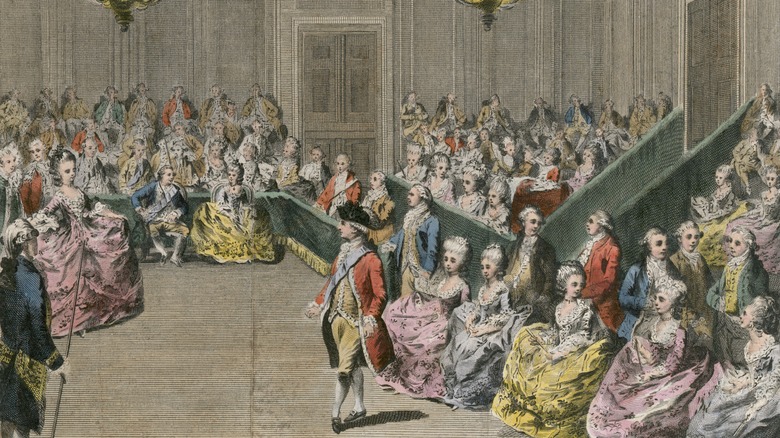
Ball at St James's Palace, London, on the night of the birthday of Queen Charlotte, Consort of King George III. From the Mayson Beeton Collection 

From Gilded Heiresses:

Balls became an essential part of British high society by the late 17th century, evolving from smaller gatherings of the aristocracy into lavish events held at private homes, exclusive clubs, and assembly rooms. They served to introduce young debutantes—women of high social rank eligible for marriage—into society. By the Regency period (early 19th century), the ball was central to the British social season—a time when families gathered in London to partake in a series of fashionable events. (If you’re a Bridgerton fan, then I’m sure you’ll be familiar with this concept!)

By the Victorian era, these social gatherings became even more extravagant and ritualised, with balls scheduled almost nightly during the peak of the season. Lavish decorations, grand musical performances, and intricate rules of etiquette defined these evenings. A strictly policed guest list underscored the exclusivity of these balls, and receiving an invitation was the ultimate status symbol.

World War I may have marked the beginning of their decline, but some of Britain’s legendary balls remain celebrated for their splendour and the lasting impact they had on the structure of British high society. I’m sure that many books could be written about individual balls and the scandalous dramas that happened, but here are a few of my favourites. (Read more.)


The history of Queen Charlotte's ball. From Grunge:

 Traditionally, Queen Charlotte's Ball required strict adherence to the rules, as reported by Town and Country. Not surprising considering the queen's love of formality and age-old customs. Debutantes had to wear formal gowns, complete with trains. Among their accessories, they carried fans, floral bouquets, and three feathers in their hair. At its high point, the Ball culminated in getting presented before the queen, who stood next to a massive birthday cake to receive debutantes. When each debutante came before the sovereign, they curtseyed respectfully.

According to History Extra, curtseying proved no joke. Today's debutantes continue to spend months practicing this unnatural yet elegant move. To execute it, practitioners must place their left knee in a locked position behind the right. Next, they bow deeply while facing the queen (or cake in later years). In other words, this move required plenty of balance.

Soon, the party had developed into the premier debutante ball of the burgeoning season where eligible bachelorettes hoped to snag a prize-worthy husband. They ultimately had a year to complete their mission or risk the spinster label, a fate no woman wanted to have thrust involuntarily upon her. Oddly enough, the cake and the curtseying tradition continues today featuring an audacious and towering confection. (Read more.)

Share

Friday, November 28, 2025

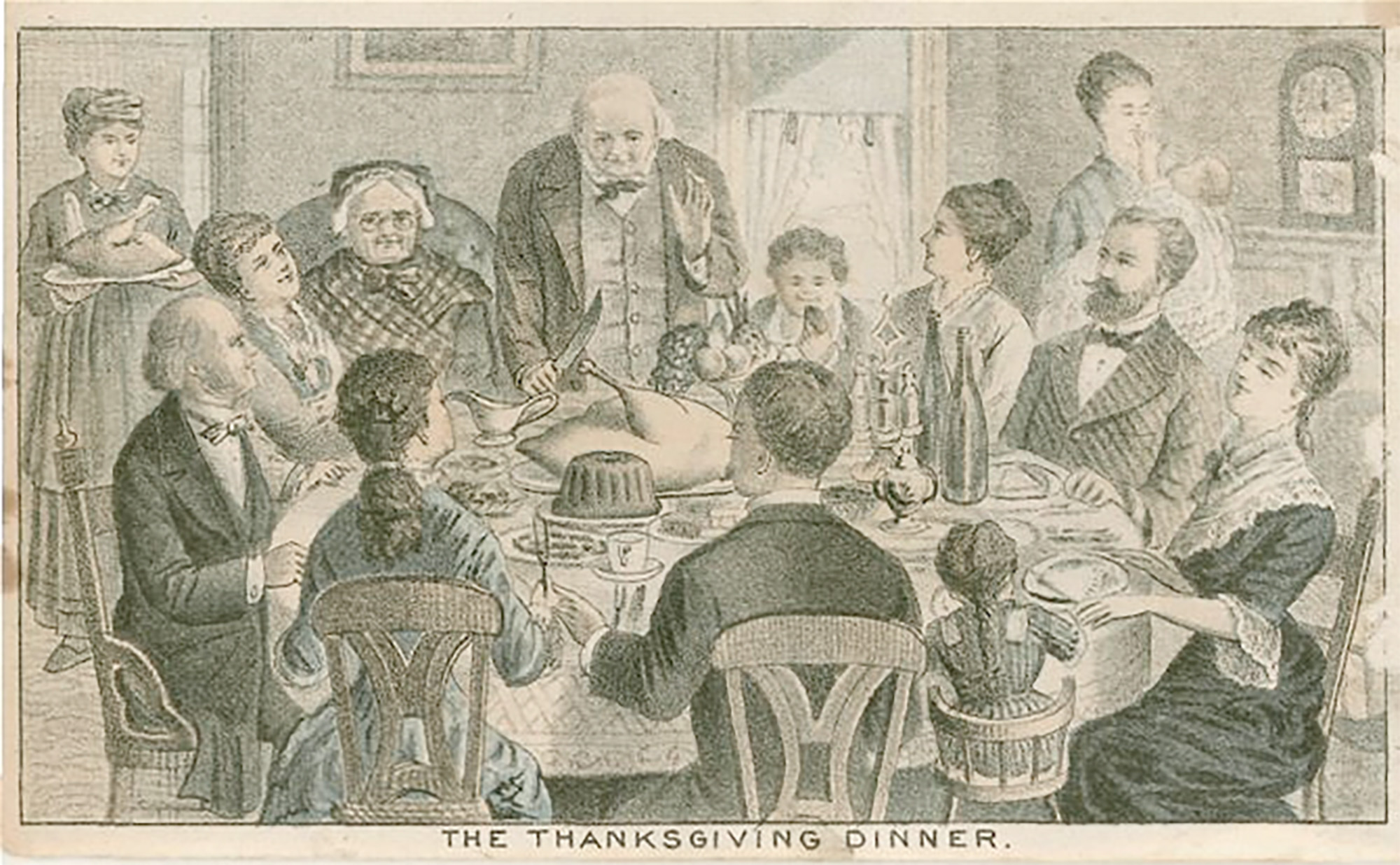
Holiday Etiquette Tips

From Kitchn:

When to arrive at a party?

If you live by the motto that it’s “better late than never,” you may be on to something. Although Martha doesn’t suggest showing up to parties two hours late, she does say that not showing up at the time it is scheduled to start is just fine. “A little past call time is always nice for the host because they’re never quite ready,” Martha suggested.

How long you should wait for a tardy guest before serving dinner?

“Not too long,” said Martha. “Just leave the plates — actually, push their plates to the end of the table.” (Note to self: Do not arrive late to Martha’s party.)

If you can move place cards if you don’t like the person you’re seated next to?

“No,” warned Martha. “You’re not allowed to. On Thanksgiving, my daughter moved all the place cards without my knowledge. That didn’t go over so well.” Check out the full segment below, along with Martha’s recipe for molasses-ginger crisps. We think they make a thoughtful gift, even if the eggs you use come from the grocery store. (Read more.)


More tips, HERE.


The comfort of scruffy hospitality, from Treehugger:

My friends Dana and John perfectly practice what the Rev. Jack King referred to as "scruffy hospitality." Their kitchen is small. The wood cabinets are dark and a few decades old. Spices and jars for sugar and flour line the countertops because there's nowhere else to put them. A tall, round table shoved in a corner has mismatched bar stools crammed around it.

The sliding glass doors in the kitchen lead to a back deck with a well-used chiminea, an outdoor table and a large variety of chairs and cushions, many of them bought at yard sales. We circle the chairs around the chiminea on weekend nights during all four seasons, whenever Dana and John put out a simple call out through text or Facebook that says, "Fire tonight!"

There will always be food, but like the bar stools and deck chairs, the food is mismatched. Our hosts provide some food; John may have the urge to make jalapeño poppers or Dana may put together some version of salsa with whatever's fresh from the garden, but there's not a formally prepared meal. Everyone just brings something. It's perfectly acceptable — encouraged even — to bring odds and ends of foods that need to get used up. I often bring wedges of cheese that have already been cut into or half a baguette to slice up and toast to dip in hummus. Everyone brings a little something to drink. And it's a glorious feast.

This kitchen and deck won't be featured in Better Homes and Gardens anytime soon, but maybe they should be. They are two of the most hospitable spaces I know. By opening up their home as-is, Dana and John are the most gracious hosts I know. I almost wrote "by opening up their home with its imperfections," but that's not accurate. Their home is perfect — just like it is. (Read more.)
Share

Friday, October 3, 2025

A Streetcar Named Desire (1951)

 "Please don't get up. I'm only passing through." ~Blanche in A Streetcar Named Desire (1951)
The above quote distills for me the tragedy of Blanche DuBois, even more so than the famous line about the "kindness of strangers." Blanche tells a group of poker-playing, beer-guzzling men not to rise for her, as if the thought of rising for a lady would ever occur to them. It is a small but final degradation of many which Blanche experiences in the house of Stanley Kowalski. Yet the viewer is reminded again and again throughout the course of the drama that Blanche's own past behavior has led her to such an utterly sordid end. Not only Blanche's behavior, but her sister Stella's attachment to a rapist, have resulted in Blanche's being taken from the prison of chez Kowalski to the prison of the mental hospital. 

As with all of Williams' plays, the dialog sparkles and even enchants in spite of the undercurrent of depravity. The following is a plot synopsis from Allmovie.com: 
In the classic play by Tennessee Williams, brought to the screen by Elia Kazan, faded Southern belle Blanche DuBois (Vivien Leigh) comes to visit her pregnant sister, Stella (Kim Hunter), in a seedy section of New Orleans. Stella's boorish husband, Stanley Kowalski (Marlon Brando), not only regards Blanche's aristocratic affectations as a royal pain but also thinks she's holding out on inheritance money that rightfully belongs to Stella. On the fringes of sanity, Blanche is trying to forget her checkered past and start life anew. Attracted to Stanley's friend Mitch (Karl Malden), she glosses over the less savory incidents in her past, but she soon discovers that she cannot outrun that past, and the stage is set for her final, brutal confrontation with her brother-in-law. Brando, Hunter, and Malden had all starred in the original Broadway version of Streetcar, although the original Blanche had been Jessica Tandy. Brando lost out to Humphrey Bogart for the 1951 Best Actor Oscar, but Leigh, Hunter, and Malden all won Oscars.
When I watched A Streetcar Named Desire as a young person I found it dark and shocking, especially Blanche's proclivities which result in her utter destruction. All I could see was the crazy, drunken old slut; it was quite unappealing. It still is. However, now I am better able to see Blanche as she had once been. I can see the sweet and refined person whose mental and emotional stamina were destroyed by trying to hold onto her patrimony, without any help from anyone. (Stella was too busy romping with Stanley to save Belle Reve or take care of the dying old folks.) I can see the heartbroken wife who gradually awoke to the horror that her marriage was not really a marriage. I pity the fact that the shattered Blanche sought to ease her pain by adopting a promiscuous lifestyle, as have many before and after. In Blanche's case being a sexually "liberated" woman resulted in the further fraying of her psyche; I daresay the same thing has happened to other liberated women as well. All may not end up in the mental hospital, but a little of the soul dies and one's human dignity is tarnished by taking refuge in hedonism.

According to SparkNotes:
Blanche’s sexual history is in fact a cause of her downfall. When she first arrives at the Kowalskis’, Blanche says she rode a streetcar named Desire, then transferred to a streetcar named Cemeteries, which brought her to a street named Elysian Fields. This journey, the precursor to the play, allegorically represents the trajectory of Blanche’s life. The Elysian Fields are the land of the dead in Greek mythology. Blanche’s lifelong pursuit of her sexual desires has led to her eviction from Belle Reve, her ostracism from Laurel, and, at the end of the play, her expulsion from society at large.
Everyone raves about the ground-breaking, soul-searing sexuality that is unleashed in Streetcar, but it is not so much about sex as it is about lust and addiction. It is their addiction to lust that has landed both DuBois sisters in the squalid scenario where they are at the mercy of the brutish Stanley, who expresses his pleasure or displeasure by screaming in the street or by smashing china and light bulbs. Stanley is the complete antithesis of the gentlemen among whom the DuBois sisters were raised; he is a source of fascination as well as revulsion for them both. It cannot be forgotten that it was the DuBois gentlemen whose "epic debaucheries," by Blanche's account, led to the loss of the family fortune. Blanche, who seeks beauty and romance, is hounded by the result of debaucheries, her own and other people's, until the final moment of the play.

Share

Tuesday, August 12, 2025

A Brief History of Country-house Sleeping Etiquette

 https://blogger.googleusercontent.com/img/b/R29vZ2xl/AVvXsEhfkFsE7WthGGe0R5Yb80Nu_h1ekcwGRxGLg6NBr1EehPIA6GIBWRLCI0Q-D0iGQ8liQuo7RC4KeCikOLWEpUvYAWkO9IdckFfwmzFy0EAj2caXXM0VLV7w8c6vKu7lSzLB_hSDgYQcfUzn/s1600/overnight+lol.jpg 

Lord and Lady Grantham were the exception not the rule. From Country Life:

There is a long-standing tradition among Britain’s aristocracy for couples, even married, to sleep apart. As Lady Pamela Hicks, cousin of the late Duke of Edinburgh and former lady-in-waiting to Elizabeth II, told biographer Sally Bedell Smith in Elizabeth the Queen: The Life of a Modern Monarch: ‘In England, the upper classes always have had separate bedrooms. You don’t want to be bothered with snoring or someone flinging a leg around. When you are feeling cosy, you share your room… It is lovely to be able to choose.’

Far from being a sign of distance or dysfunction, sleeping separately was — and still is, in some circles — a mark of elegance, practicality and personal comfort. Not only that, notes Julian Fellowes, creator of Downton Abbey, it may actually help sustain marriages. ‘I am quite sure their decision to have their own bedrooms and, occasionally, to share them, is one of the main reasons why divorce is kept to a minimum in really aristocratic circles,’ he notes. (Read more.)

Share

“Eddington” and the Death of Civility

 From Brownstone Institute:

Eddington doesn’t give us clean villains or heroes; but something worse: a world where good men are corrupted not by ambition, but by exhaustion, betrayal, and the slow evaporation of meaning. Joe Cross doesn’t sell out per se {et tu, Fauci}, but he does become the kind of man he once had tried to stop.

In its final act – without giving too much away – the film descends into a chaotic, hellish unraveling. Violence erupts. Messaging overtakes meaning. Competing outside factions, each claiming moral supremacy, tear the town apart. Cross is pursued, hunted, undone. And no one – not even the man I chatted with after the film – could quite explain what he had just seen. But that’s the point.

This isn’t just about Eddington. It’s about all of us. When civility disappears, when God is forgotten, when personal morality gives way to mass messaging and digital spectacle – along with solipsistic self-victimhood worship, we lose not just our mooring, but then our communities. When we lose agency, we become actors in someone else’s script; speaking slogans not our own; building someone else’s babbling to tower over you. That tower of babble infallibly fails and falls. (Read more.)

Share

Tuesday, July 1, 2025

If Chivalry is Dead, Did Women Kill It?

 From Culturcidal:

So, before I dig any further into this, I want to note that like many Southerners, I was taught to be chivalrous from a young age – and it stuck. I open car doors and pull out chairs for women. I even walk on the side of the street closer to the road, so that if a car jumps the curb, I will be the one hit. This article discusses men giving up seats for women on the subway. Well, the last time I was on the subway in NYC (which has admittedly been quite a while because I now like to Uber while I’m there), it was crowded and I gave up my seat for a woman. In other words, I am someone who grew up with the habit of being chivalrous, and it still continues to this day.

However, it’s also worth noting that over the course of my entire life, I’ve had one girlfriend who genuinely seemed to appreciate chivalrous behavior, another that seemed to expect it and a third girl I only went on a couple of dates with, who (politely, mind you), basically said she didn’t see the point of chivalry. Beyond that, the reactions to it from women could best be described as complete indifference.

Similarly – and understandably – most men don’t care about it either, and some guys even think chivalrous men are chumps, which is a result of listening to feminist women who basically tell anyone who listens some version of, “Women can do anything men can do, except better!”

Well, if that’s true, then women should be able to get their own seats on the bus and subway without men needing to worry about how it plays out for them, right? Of course, it’s even worse than that because a lot of men believe there’s a possibility that a woman may be genuinely OFFENDED if they behave in a chivalrous way toward them. How realistic is that outside of Berkeley or some Manhattan feminist enclave? It’s hard to say, although several men in the comments section discussing this article on X talked about bad experiences they had, so that seems to be at least a somewhat realistic concern men genuinely have. (Read more.)

Share

Sunday, June 15, 2025

Plan for the Marriage Supper

Table arrangement for the bridal supper of Louis and Antoinette. (From Vive la Reine.)

The young couple in their wedding clothes, May 16, 1770. Share

Tuesday, May 20, 2025

Le Privilège du blanc, 2025


Princess Charlene and Prince Albert of Monaco looked smart as they arrived for the Inauguration Mass of Pope Leo XIV in St Peter's Square on Sunday
Prince and Princess of Monaco
Queen Mathilde of Belgium and King Philippe of Belgium arrived arm-in-arm ahead of the Inauguration Mass of Pope Leo XIV
King and Queen of Belgium
Spain's Queen Letizia and King Felipe smiled as they arrived at the historic inauguration mass today
King and Queen of Spain

 The Privilège du blanc is the privilege granted to Catholic Queens, Princesses of the House of Savoy, the Princess of Monaco and the Grand Duchess of Luxembourg to wear white in the presence of the Sovereign Pontiff. Women ordinarily wear black, including a black mantilla, when having an audience with the Pope, according to the long-standing Vatican dress code. From The Royal Watcher:

The Queens of Spain and Belgium, the Grand Duchess of Luxembourg, and the Princess of Monaco exercised their ‘Privilège du Blanc’ at the Inauguration Mass of Pope Leo XIV yesterday, the special Papal Privilege which allows certain Catholic Queens and Consorts to wear white in the presence of the Pope at the Vatican. Traditionally, protocol for papal audiences required that women wear long black gowns with a black mantilla, with the colour signifying virtues of piety and humility. However, certain Catholic Queens and Consorts have traditionally been exempted from wearing black garments and are instead allowed the special Privilège du Blanc, to wear white in the presence of the Pope, which remains in affect despite papal protocol having changed over the years. (Read more.)
Photos, HERE and HERE.

Share