


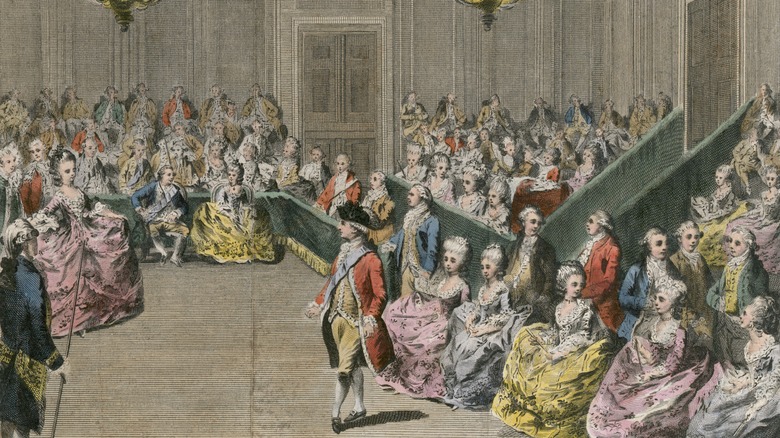
From Gilded Heiresses:
Balls became an essential part of British high society by the late 17th century, evolving from smaller gatherings of the aristocracy into lavish events held at private homes, exclusive clubs, and assembly rooms. They served to introduce young debutantes—women of high social rank eligible for marriage—into society. By the Regency period (early 19th century), the ball was central to the British social season—a time when families gathered in London to partake in a series of fashionable events. (If you’re a Bridgerton fan, then I’m sure you’ll be familiar with this concept!)
By the Victorian era, these social gatherings became even more extravagant and ritualised, with balls scheduled almost nightly during the peak of the season. Lavish decorations, grand musical performances, and intricate rules of etiquette defined these evenings. A strictly policed guest list underscored the exclusivity of these balls, and receiving an invitation was the ultimate status symbol.
World War I may have marked the beginning of their decline, but some of Britain’s legendary balls remain celebrated for their splendour and the lasting impact they had on the structure of British high society. I’m sure that many books could be written about individual balls and the scandalous dramas that happened, but here are a few of my favourites. (Read more.)
The history of Queen Charlotte's ball. From Grunge:
Traditionally, Queen Charlotte's Ball required strict adherence to the rules, as reported by Town and Country. Not surprising considering the queen's love of formality and age-old customs. Debutantes had to wear formal gowns, complete with trains. Among their accessories, they carried fans, floral bouquets, and three feathers in their hair. At its high point, the Ball culminated in getting presented before the queen, who stood next to a massive birthday cake to receive debutantes. When each debutante came before the sovereign, they curtseyed respectfully.
According to History Extra, curtseying proved no joke. Today's debutantes continue to spend months practicing this unnatural yet elegant move. To execute it, practitioners must place their left knee in a locked position behind the right. Next, they bow deeply while facing the queen (or cake in later years). In other words, this move required plenty of balance.
Soon, the party had developed into the premier debutante ball of the burgeoning season where eligible bachelorettes hoped to snag a prize-worthy husband. They ultimately had a year to complete their mission or risk the spinster label, a fate no woman wanted to have thrust involuntarily upon her. Oddly enough, the cake and the curtseying tradition continues today featuring an audacious and towering confection. (Read more.)
Share











No comments:
Post a Comment