


From Mark Judge at Chronicles:
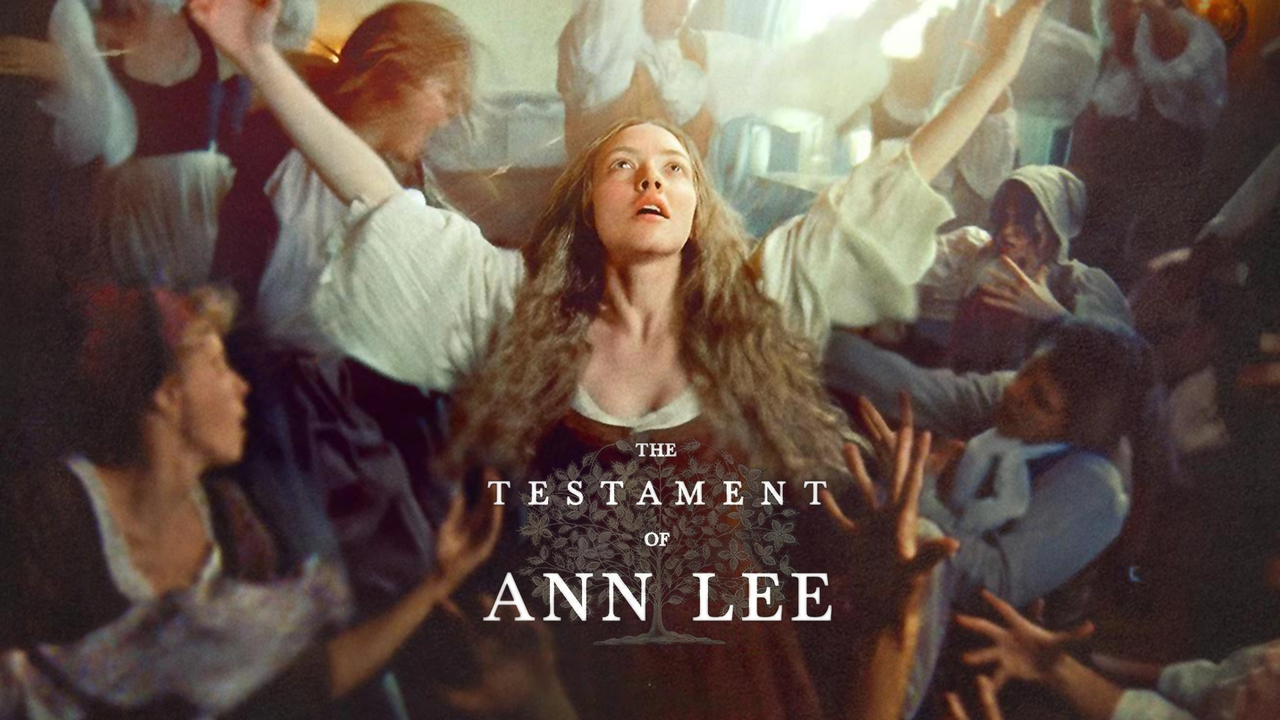
The Testament of Ann Lee, a new film by Mona Fastvold and Brady Corbet, is a bold example of what I have come to call Hollywood’s retroactive repression.
Retroactive repression is when the film industry, eager to virtue signal and punish historical America for its unenlightened ways, makes a movie depicting our past as a hellscape of racism, sexism, homophobia, and the usual catalogue of our supposed original sins. Examples abound: The Help. Mississippi Burning. The Long Walk Home. Men of Honor. Mona Lisa Smile. Pleasantville. Remember the Titans.
Retroactive repression is the artistic cousin of “punitive liberalism,” a term coined by James Piereson, which describes the left’s desire to punish America for her sins.
Retroactive repression films can be technically quite good, even as their plots can be plodding and annoying as they put America in the stockades, every time.
Such is the case with The Testament of Ann Lee. Amanda Seyfried stars as Lee, a real person who was born in 1736 in Manchester, England. Lee loves God and works hard, but she is put off by the number of babies her mother is having. Lee eventually marries a blacksmith (Christopher Abbott’s Abraham), but she feels called to celibacy and to expressing the charisma of God through dance and movement. The high mortality rate of newborn children at the time in Ann Lee is depicted in gruesome, horror-movie detail. Lee herself loses four children in childbirth. She begins to think she is being punished by God for ignoring her belief that celibacy is the path to true holiness.
Disillusioned, Lee joins a group of “Shaking Quakers,” whose services are akin to what we might associate with hippie ecstasies of chanting, ululating, and dancing. Lee is so charismatic that she attracts her own followers, who will come to be known as Shakers.
She becomes known as Mother, and her brother William (Lewis Pullman) helps her run the new sect. The Shakers suffer persecution in England and, in 1774, they came to North America, settling in upstate New York.
Technically speaking, Ann Lee is a fantastic film. The movie is narrated by one of the film’s secondary characters, Mary Partington (Thomasin McKenzie), who makes it authentic and easy to follow. Cinematographer William Rexer shoots the early part of the film set in Manchester as crowded, claustrophobic, and dirty, then opens the lens to reveal the gorgeous vistas of rural New York, a land that represents freedom.
In parts of the film the characters sing and dance, and the repetitive, trancelike effect is transporting. Amanda Seyfried is fantastic in the lead, at once vulnerable, inquisitive, and infused with the kind of confidence characteristic of the spiritually zealous. “For those who confess, shams are over, and reality has begun,” a religious leader tells them. They truly believe they are building a Utopia. Soon, they are declaring “Mother” Ann Lee the second coming of Jesus Christ.
Of course, Utopia on Earth is not possible, and the New World turns out to be a place with its own repressions. Lee is called a witch. Her preaching is considered blasphemous—and not without cause, as she claims to be the second coming of Jesus Christ. Ann’s sermons are violently disrupted. Of course, according to the rules of retroactive repression, this must end badly. In the end, Lee is deified by the filmmakers as a woman far ahead of her time, a rebuke to wallflowers and patriarchal America.
The writing and directing team of Fastvold and Corbet is the married couple whose last film was The Brutalist (2024), a film that had a similar theme of a dreamer who comes to America only to tumble headlong into prejudice and corruption. I remember being excited to see The Brutalist, the story of a great architect who arrived in America after World War II. I thought it would be an ode to America’s creative post-war boom. Instead, it was a long gripe about how the evils of capitalism destroyed a gifted artist’s dreams and work.
There’s nothing wrong with being reminded of the mistakes of previous generations, of course. Indeed, in many cases, it is perfectly legitimate for a movie to use retroactive repression to show us what we can learn from the past about what we hope to avoid doing in the future. But it would be so much better if that device were used more often to blast communists and left-wing bigots, or at least treat these right-wing boogeymen characters with more complexity. (Read more.)











No comments:
Post a Comment