Friday, August 21, 2026

The Callisto

Callisto tiny house is a cozy modern farmhouse 

I am fascinated by tiny houses. From Autoevolution:

Callisto is a single-level tiny house, and within its 320 square feet (29.7 square meters) of floorspace (400 square feet/37 square meters for the 40-foot-long version), you get a spacious living room, a well-equipped kitchen with a separate kitchen island, a full bathroom, and a private bedroom. Everything is on the ground level, offering the comfort and accessibility many are looking for.

This home features two matching entry doors that flank the living space, creating a balanced and symmetrical layout. The main entrance door on the left opens directly into the kitchen, while the secondary glass door across the room breaks up the wall space in the living area, seamlessly connecting the lounge and dining area to the outside.

The central kitchen is cleverly split into highly functional parallel workstations that optimize the use of space and increase functionality. On one side, a linear row of base and upper cabinets forms the main cooking area, with generous counter space, a built-in range, a microwave, and a full-size stainless steel fridge. (Read more.)

 Callisto tiny house is a cozy modern farmhouse

 Callisto tiny house is a cozy modern farmhouse

Share

Democrats’ Southern Strategy

 From Daniel McCarthy from Chronicles:

Don’t believe the Democratic National Committee’s official storyline—the DNC’s decision to make South Carolina the first Democratic presidential primary in 2028 isn’t about introducing more racial diversity into the early contests. It’s actually about keeping power in the hands of the party establishment, the people who backed Hillary Clinton in 2016 and Joe Biden in 2020, and who are likely to wind up supporting Kamala Harris in 2028.

The fix is in.

South Carolina was the establishment’s firewall against Bernie Sanders’ left-wing insurgency twice over. In 2016, Sanders nearly beat Hillary Clinton in the first caucus, in Iowa, and went on to defeat her in the New Hampshire primary. Four years later, there was a brief moment when Sanders looked like the frontrunner—until he got clobbered by Joe Biden in South Carolina.

It’s true that the black voters who make South Carolina’s primaries more racially diverse than the contests in Iowa or New Hampshire are also less politically radical, so it’s easy for the DNC to say it’s not trying to choke off support for the socialist wing of the party, it’s just giving black voters more of a say.

The Democratic Socialists of America, the left fringe of the party, is disproportionately white—even its New York City chapter is 60 percent white, according to DSA’s own membership polling.

That’s astonishing considering NYC itself is only 34 percent white.

This racial split between the Democrats’ most ideologically intense faction and the party’s elite, which only holds onto power thanks to black voters’ loyalty, is a fault line with the potential to reshape American politics. (Read more.)

Share

Jason Arday and Jesus the Vulnerable God

 From Mark Judge at Hot Air:

Jason Arday was an academic at Cambridge who got exposed for lying about his past and plagiarizing his papers. Some conservatives are blaming Arday’s death on DEI, while the left says he was undone by racism. While it is important that frauds get called to account, it’s also possible to recognize that the “shame storm” of modern witch hunts can also be too much for some people to bear — and that sometimes the shame storm is out of proportion to the actual crime. (Some shame storms are also entirely created by the media.) 

    While everyone has been dissecting Arday’s academic career and past, I kept thinking of him in those last moments when he decided to take his own life. When he fell terrified and abandoned. He deserved the blowback from his actions, but did not deserve to die. There is a way through these valleys, although suicidal ideation is a hard cross to bear. And the frenzy of commentary following Arday's death is a little too gleeful. Perhaps the wisdom of Pat Buchanan should apply here: “When God puts his hand on a man, I take mine off.”

 The journalist Helen Andrews called the phenomenon of the media swarming a target a “shame storm.” In 2019 Andrews was publicly embarrassed on television when an old boyfriend began insulting her about how their relationship ended. Her shame was debilitating: “Everyone at work was supportive, but no amount of support could counteract the paranoia that settled in over the next weeks and months. My colleagues probably didn’t believe the woman they worked alongside was secretly a comic-book ­villain—but surely the suspicion had been planted? I never knew whether someone on the subway was giving me a second glance because he knew me, or because he recognized me from the video. Fellow journalists reported back to me from conferences where [my ex-boyfriend] Todd expatiated on my depravity at length—in one case, before an audience that included my boss.” (Read more.)


Share

Thursday, August 20, 2026

What Does Marie-Antoinette Mean to Us Now?


Posthumous portrait of the Queen by Madame Lebrun
Many people are disgusted by the depiction of Marie-Antoinette in the BBC series. My piece for Catholic Answers:

I first visited Marie-Antoinette’s private retreat at Petit Trianon when I was seventeen years old. It was January, but the birds were singing in the gardens. Then and on successive trips, I experienced a strong sense of timelessness. Others have confided to me a similar feeling of enchantment when wandering through the gardens of Trianon.

People frequently ask me why I write about Marie-Antoinette. One of the reasons is that I keep encountering educated people who really think she said, “Let them eat cake.” I continue to encounter Christians who think Marie-Antoinette was killed as punishment for some egregious wickedness or, at least, for unforgivable stupidity. Having read books about her since childhood, I knew she was misunderstood; it was only after a great deal more research that I came to see how completely false are the common beliefs about her.

But the demonization of Marie-Antoinette in the popular mind is necessary to justify the excesses of the French Revolution. When people have a false and distorted view of history, it is difficult for them to grasp the present, and almost impossible to meet the future with any kind of preparedness.

The French Revolution was not necessary, simply because it is never necessary to murder tens of thousands of people. Reform certainly was needed, but reform can happen without mass murder.

Louis XVI was an intrepid reformer. He was not afraid to break with the past and abolish outdated customs while introducing new ways of doing things. Louis was not resistant to change, although that is how he is usually portrayed. The changes were slow but over time might have been effective, had the violent upheavals not swept everything away.

Too often, the violence is represented as a sad but unavoidable means of achieving freedom and democracy. But it is not only that the French Revolution overturned the social order; it was ultimately an attack on the Catholic Church. Many Catholics were killed, especially those peasants who did not want their religion taken away.

The French Revolution has been the blueprint for every totalitarian regime that has followed and has continued to be the model for those wishing not only to destroy the Catholic Church, but all Christian society. (Read more.)


The portrait above was painted posthumously by Madame Lebrun. Here is a letter from Marie-Thérèse Charlotte to the artist, who was a friend of the family:


 A letter written by Marie-Thérèse Charlotte to Elisabeth Vigee-Lebrun on April 15th, 1800, regarding a portrait of Marie Antoinette, which was given to Marie-Thérèse by the comte de Cossé. The duchesse wrote that he gave her…

“…the portrait of my Mother that you had charged him to bring me. You give me the double satisfaction of seeing in a more beautiful work an image very dear to my heart. Judge therefore how grateful I am to you for having used your rare talents to give me this proof of your feelings and be convinced that I am more sensitive to it than I can express to you. You can count equally, Madame, on my feelings for you.”

Share

How Beijing Laundered $230 Billion in Exports

 From The Enterprise:

Consider a homeowner who installs a good deadbolt on his front door. A month later, he checks his records and finds that no one has forced the front door since the day the lock was installed. He also finds that his television is gone. The lock worked exactly as designed, which is why the thief stopped using the door. What the homeowner needs is not a better lock but a survey of his windows.

In 2018, President Trump used Section 301 to put a real tariff rate on Chinese goods, a price an importer had to actually pay at the border rather than a figure riddled with carve-outs. Chinese exporters responded, as any rational party would, to the price by looking for a cheaper route. They found one, and the route ran through Mexico, Vietnam, Malaysia, and a few dozen other jurisdictions willing to sell a stitch, a stamp, and a certificate of origin.

On Thursday, the Office of Trade and Manufacturing Policy, Peter Navarro’s shop, published a 25-page report called

The Great Transshipment Scam

. The language was blunt enough that even the Associated Press could not soften it into a story about supply chain diversification. The report describes a global architecture built for one purpose, a lattice of free trade zones, bonded warehouses, processing corridors, and re-export centers. It says plainly that the rerouting “made it look like US imports from China had dropped” while Beijing kept the factories, the workers, the tooling, and the profits. Navarro’s own summary was less clinical. For years, he said, the great transshipment scam has let communist China launder its exports. (Read more.)

Share

Homebuyers Deserve the Facts About Crime and Schools

 From Chronicles:

Nothing is more natural when buying a house than looking into how safe the neighborhood is, and, if you have or plan to have children, whether the schools are any good.

Yet the last Democratic presidential administration tried to prevent real estate agents from answering those kinds of questions because it prioritized “diversity” over safety and education. The Trump administration revoked the de facto gag rule this year, but the damage the Biden administration inflicted is still being felt.

What’s worse, state regulations in New York and elsewhere still prevent real estate agents from speaking freely to homebuyers about crime and schools.

Interfering with homebuyers was a first-week priority for the Biden administration: Six days after he was sworn into office, Joe Biden issued his directive establishing enforcement priorities for the Department of Housing and Urban Development that would scare real estate agents into remaining silent on two of the subjects most important to their clients.

“Diverse and inclusive communities strengthen our democracy,” the executive memorandum began. What mom or dad wants their community to be “inclusive” of failing schools? Who wants diversity to mean mixing criminals with innocent people?

Black families don’t want to live in dangerous or educationally dead-end neighborhoods any more than people of any other color do. (Read more.)

Share

Wednesday, August 19, 2026

The King's Touch

Cult of King Charles the Martyr reflects enduring political divisions -  Anglican Journal
I knew the French and English monarchs prayed over those afflicted with scrofula but I did not know it was done in Scotland. When Charles I was crowned King of Scots in June, 1633, he continued the ancient ceremony. From The Scotsman:
Charles had already been crown by the English in 1626, this was the first coronation in Scotland since that of King James VI in 1567, and more notably, the first time an adult had been crowned as our monarch since that of James IV in 1458, who was 15, not an adult? Okay let’s go further back to King James I, he was 30, happy now? The abbey of Scone, traditional place of coronations up to 1424, had been destroyed, and for this occasion the ceremonial was located in the remains of Holyrood abbey, which had seen the coronation of King James II in 1437.

All that remained of the abbey was the nave, the remainder of the church having been demolished in 1570, and the structure was now restored for the occasion. Charles was baptised in the Chapel Royal at Holyrood Palace in 1600 by David Lindsay, Bishop of Ross, and created Duke of Albany, the traditional title of the second son of the King of Scotland.

[...]

While researching this I found an article about Charles and the “laying on of hands” a ceremony he performed while at Holyrood, a practice said to have been performed by all the Stewart monarchs but discontinued by the Hanoverian’s. Bonnie Prince Charlie though is said to have performed it during the 45. (Read more.) 

This is of particular interest to me since Louis XVI was a direct descendant of Charles I. King Louis treasured the ancient healing ceremony and celebrated it several times a year, not just at his coronation, as described in my book.

More HERE.

Share

Maryland’s Energy Crisis Is a Choice

 From Brian Chisholm:

Maryland’s soaring electricity bills are not a mystery, an accident, or an unavoidable act of nature. They are the predictable result of deliberate policy choices and Maryland families are being forced to pay the bill.

A new fifty-state analysis from Energy Bad Boys exposes a widening divide in American electricity prices. In 2011, average prices in Democratic-led states were reportedly 44% higher than in Republican-led states. By 2025, that gap had widened to 61%. Since 2018, prices in blue states rose 43%, compared with 22% in red states.

That does not prove that party control alone determines a state’s electric bill. Geography, fuel mix, weather, infrastructure, taxes, and market structure all matter. But the pattern is too large and too consistent to ignore: states that prematurely close dependable power plants, restrict natural-gas infrastructure, and impose increasingly aggressive mandates tend to make electricity scarcer and more expensive.

Maryland is a case study in what happens when political ambition outruns engineering and economics. (Read more.)


Share

The 'Real Indiana Jones'

From BBC:

In 1911, a US professor claimed he had discovered the ancient mountain stronghold of the last Incan king deep in the Peruvian Andes. Yet 53 years later, another explorer proved he was mistaken – and shortly afterwards, a BBC crew followed his trail.

"No one now disputes that this was the site of ancient Vilcabamba." So wrote the Yale academic who brought the Peruvian ruins of Machu Picchu to global attention in 1911. Hiram Bingham III was recruited by locals to look for a lost Incan city fabled for its hidden treasures – and he firmly believed that's what he had found.

Yet 50 years later, Bingham's conviction was challenged by another US explorer nicknamed "the real Indiana Jones". In August 1964, Gene Savoy claimed to have found the same lost city – around 60km (37 miles) northwest of Machu Picchu. He believed his expedition had identified the mountain stronghold of the last Incan king at Espíritu Pampa (the "Plain of the Spirits" or Vilcabamba), a set of ruins in remote cloud forests, high above a tributary of the Amazon. 

Just six weeks after Savoy's discovery, a BBC crew followed in his footsteps, travelling by rubber dinghy (and capsizing) on rapids, ascending steep canyon slopes with mules, and hacking through jungle to the site. "Scraps of information they'd picked up on the way made them doubt some of Savoy's claims," revealed the presenter. "But, having come so far, they had to get on and see for themselves."

The stakes were high. Perhaps they would find "the heart of an unknown city, where it seems likely the last Inca emperor gathered the remnants of his people". (Read more.)


Share

Tuesday, August 18, 2026

The Remarkable Rise of Empress Theodora

 From Risto Gjorgjiev:

 Born around 500 AD in the vibrant city of Constantinople, Theodora’s early life was far from royal. Her father, Acacius, was a bear trainer for the city’s grand Hippodrome, a colossal stadium renowned for its chariot races and theatrical spectacles. After his untimely death, Theodora’s mother, a dancer and actress, found herself struggling to provide for her three daughters. To make ends meet, young Theodora was thrust into the world of entertainment, becoming an actress and dancer in the very Hippodrome her father had worked.

 The Hippodrome was not just a place of entertainment; it was the beating heart of Byzantine social life. Here, factions clashed, politics played out, and the mood of the populace was gauged. Theodora, with her keen observation, learned to read the crowd’s behavior, understanding their passions, grievances, and loyalties. This knowledge would later prove invaluable.

However, life in the limelight was not without its challenges. Theodora faced societal disdain due to her profession, which was often associated with promiscuity. Her travels across the Eastern Mediterranean exposed her to various cultures and experiences, including a tumultuous relationship with a Syrian official that left her stranded in North Africa.

In a twist of fate, Theodora’s return to Constantinople marked a new chapter in her life. Embracing Christianity, she left behind the world of entertainment and joined a community of devout women. It was during this period of reflection that destiny played its card: she caught the eye of Justinian, the nephew of the reigning emperor and the empire’s most eligible bachelor. (Read more.)

 The Mad Monarchist has a post about one of the most colorful women who ever lived, the Empress Theodora.

Together with her husband Empress Theodora oversaw the rebuilding of Constantinople into one of the most spectacular cities in history. She helped in the building of hospices, churches and refuges for the poor. She is also credited with influencing new laws to protect women, making rape and kidnapping capital offenses, no matter if the woman was noble or common born. Women could not be forced into the entertainment industry or prostitution and could not be put in prison for debts. Instead they were to be placed under the supervision of religious women to work off their debt. This was necessary because of the rape and abuse women often suffered in prison. She cracked down hard on prostitution, buying the freedom of many girls herself, meting out harsh punishment to their captors and setting up establishments to help them get back on their feet in legitimate ways. (Read more.)

Empress Theodora did much to protect women during her husband's reign. From The Collector:

The origins of women’s rights can be attributed to Empress Theodora. Probably her experience as a young woman marginalized by the institutional system of that time pushed her to work on the improvement of women’s rights in the Empire. She elaborated on The Corpus Juris Civilis, a series of juridical reforms included in Roman law, and laid the foundation for a framework for Western legal heritage for women’s rights, including the English Common Law, the American Constitution, and even contemporary international public law. Additionally, under Empress Theodora, rape became punishable by death. No matter their position or status, everyone present during the rape was affected by this rule, and the rapist’s property was handed over to the victim. (Read more.)

Share

The Death of Truth

 From Gavin Ashenden.at New English Catholic:

The death of Professor Jason Arday is a great tragedy, and those who pray will immediately want to pray for his soul, but not just for his own soul, but for the souls of those who manipulated, used and abused him by finding in him a useful instrument for the progressive fantasy of diversity, inclusion and equity.

Suicide always leaves anybody touched by it, which includes those who read about it, with a sense of guilt. We cannot escape the question of whether or not there was anything we could have done to save a life from despair, or whether there was anything we did to contribute to the despair?

And so, in order to face those questions, many of the people who found in Professor Arday a useful tool for their propagandisation of progressive ideology need to divert and deflect the blame to others.

Already the accusations have been made that those who asked questions about the truth were to blame for placing a fragile man under pressure, as if there is some kind of trade-off between personal fragility and claims for truth. (Read more.)

Share

The Absence of Young Male Novelists

 From Chronicles:

Acclaimed novelist Joyce Carol Oates had no issue tweeting that “a friend who is a literary agent told me that he cannot even get editors to read first novels by young white male writers, no matter how good; they are just not interested.” And, without a hint of irony, followed up that statement with “this is heartbreaking for writers who may, in fact, be brilliant, & critical of their own ‘privilege.’” Although she is willing to recognize that young white men may be talented and barred from literary opportunities, she cannot help but equalize the statement with ludicrous notions of “privilege” where there is anything but.

None of this is especially controversial within the industry itself. By 2021, there was not a single white male millennial on the Times’s “Notable Fiction” list; the same was true in 2022, and only one appeared in each of the next two years. Demographic transformation of American publishing is measured, publicized, and, in many quarters, celebrated. The question is not whether the literary establishment has changed, but whether its new priorities have altered the kind of literature it is capable of producing. If the aspiring Roth or McCarthy today finds fewer editors willing to take his manuscript seriously (not because of its prose but because of the demographic profile of its author), that represents more than an injustice to individual writers. It represents a narrowing of the imaginative possibilities of American literature itself.

Beyond the disparities in race among novelists and literary agents lies the much more pervasive racial disparity in short-form magazines where fiction writers can build a portfolio. These magazines brazenly cater to just about every favored identity group imaginable. They offer fee-free submissions for minority groups; they have exclusive windows to segregate who may submit; and they champion these groups as combating historical overrepresentation from white men. This, of course, can only go on so long before these identity groups, themselves, become the overrepresented ones.

The most commonly offered explanation for this obvious discrimination against white men is that publishing is simply “correcting historical imbalances.” An industry that once professed indifference to the identity of the author increasingly treats identity as a meaningful criterion in and of itself. Literary merit is now expected to coexist with representational goals, institutional diversity targets, and a moral vocabulary inherited from Marxist cultural theory. The result is a publishing culture that increasingly evaluates fiction not as art but rather as an instrument of social justice.

What does this mean for us? What does this mean for the West? (Read more.)

Share

Monday, August 17, 2026

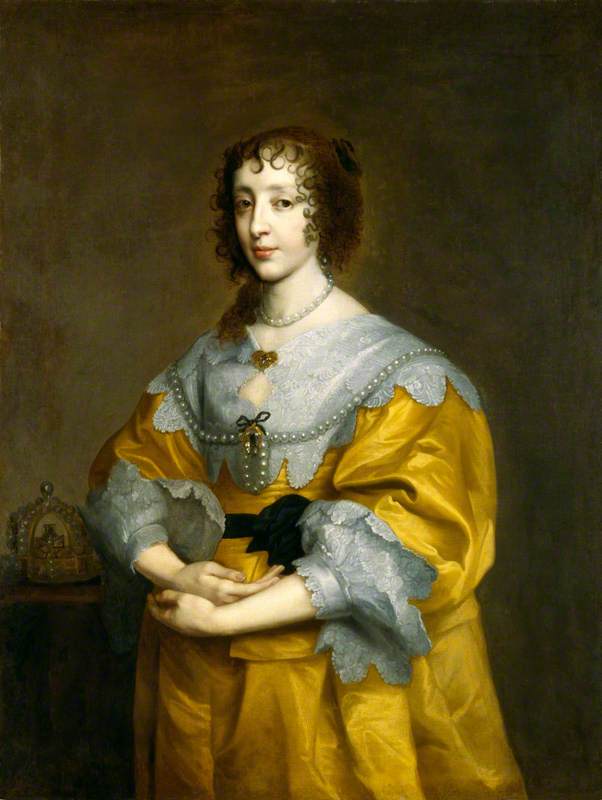
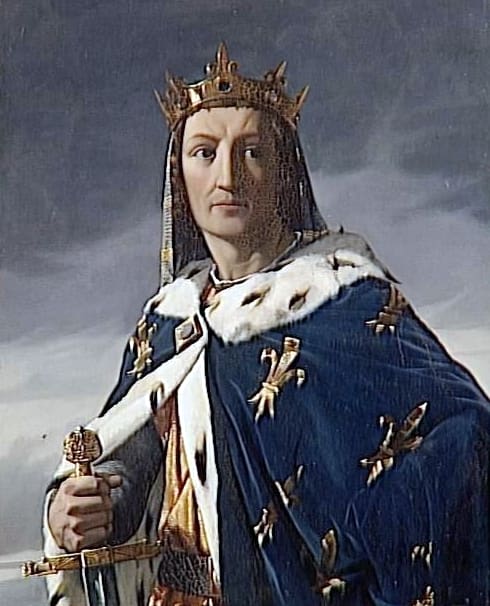
Queenship and Revolution in Early Modern Europe: Henrietta Maria and Marie-Antoinette

Marie-Antoinette de Lorraine d'Autriche

Henriette-Marie de France
Queen Marie-Antoinette, wife of King Louis XVI of France and Queen Henrietta Maria, wife of King Charles I of England were two of the most notorious queens in European history. They both faced accusations that they had transgressed social, gender and regional norms, and attempted to defend themselves against negative reactions to their behaviour. Each queen engaged with the debates of her time concerning the place of women within their families, religion, politics, the public sphere and court culture and attempted to counter criticism of her foreign origins and political influence. The impeachment of Henrietta Maria in 1643 and trial and execution of Marie Antoinette in 1793 were also trials of monarchical government that shaped the English Civil Wars and French Revolution.
I was lucky enough to receive a copy from Palgrave Macmillan of Queenship and Revolution in Early Modern Europe: Henrietta Maria and Marie Antoinette by Carolyn Harris, which is a part of their Queenship and Power series. Marie-Antoinette has had much written about her, while Henrietta Maria seems to have been quite forgotten. I only recently received a new biography about her.
The comparison between Marie-Antoinette and Henrietta Maria is perhaps not one that immediately comes to mind, but both women lived in a time of civil unrest, albeit over 100 years apart. Both women were childless for the first part of their marriage and suffered for it. It’s a rather interesting comparison, and I especially enjoyed reading about Henrietta Maria’s impeachment, about which so little appears to have been written. Henrietta Maria managed to escape to France, but without her husband who was eventually executed in 1649. Marie-Antoinette and her family also attempted to escaped, but they were caught, and both Marie-Antoinette and her husband were executed by guillotine. (Read more.)
  My books on the two Queens available HERE. Share

Racialized DEI Hiring Is Bad for Everyone

 From AMAC:

Jason Arday was found dead on Friday. After large parts of the black Cambridge academic’s work and life story were revealed to be fraudulent, the 41-year-old chair of sociology of education resigned in early August and, many suspect, took his own life.

Western liberals have rushed to blame those who criticized Arday, accusing them of “racist” attacks that led him to commit suicide. But while Arday’s death is undoubtedly a tragedy, it does not illustrate the dangers of anti-black racism. Instead, it demonstrates the destructive nature of so-called “antiracist” DEI policies to everyone involved. Those who pushed Arday forward because of his race and not his merit and those who for years turned a blind eye to his dishonesty bear far more blame than any supposedly “racist” critics.

Jason Arday was the hero of a fairy tale irresistible to western liberals. The son of immigrants from Ghana to the U.K., he told people his childhood was spent in special education schools for physical and intellectual disabilities. He also said that he didn’t learn to speak until age 11 and to read until 18. Dyslexic and deaf in one ear, he said he developed epilepsy as a teen from enduring beatings by neighborhood kids. (Read more.)

Share

Did the Hittites Record the Fall of Homeric Troy in Cuneiform?

 From The Collector:

Homer’s account of the Trojan War in the Iliad, written in the 7th century BC, is one of the world’s most enduring stories. But was it purely fantasy, or based on real historical events? In the search for confirming evidence, scholars have examined clay tablets containing the historical archives of the Hittite kings at Hattusa. They preserve details of Anatolian politics in the 13th century BC, the time when the Trojan War was supposed to have been fought. While these administrative texts do not speak of golden armor or meddling gods, they do record a century of real conflict over the legendary city the Hittites called Wilusa, which many scholars believe was ancient Troy.

The Hittite Empire ruled over much of Anatolia throughout the Late Bronze Age, the era between approximately 1550 and 1150 BC. Numerous Hittite documents have been uncovered and translated. In particular, thousands of clay tablets were unearthed at Bogazköy in modern Turkey in the early 20th century, containing administrative records kept by Hittite royal scribes of the Hittite capital of Hattusa. This collection contains diplomatic letters between rulers, quite a few of which refer to attacks on western Anatolia by a nation called the Ahhiyawa. While not universally accepted, the majority of scholars agree that the Ahhiyawa were the Mycenaean Greeks. The ethnonym “Ahhiyawa” is held to be a Hittite version of “Akhaioi,” the Greek form of “Achaeans.”

As soon as these documents were uncovered and translated, historians began to realize their potential significance regarding the Iliad. According to Homer’s epic poem, a thousand Greek ships were launched against Troy in western Anatolia in the 13th century BC. This was not a war against just one city but against Troy’s many allies all over western Anatolia as well. Hittite documents dating to the same period appear to confirm that the Ahhiyawa were engaged in large-scale warfare in western Anatolia at this time. (Read more.)


Share

Sunday, August 16, 2026

The Forgotten Prince of Versailles, Part I


From Philip Diaz-Lewis at Rationis Fines:

In December 1765 the heir to the French throne died at Fontainebleau, aged thirty-six. Louis-Ferdinand, Dauphin of France, had been trained from childhood for kingship and had spent fifteen years attending the councils of his father Louis XV. He would never reign. Three of his sons eventually did. The (in)famous career of his son, Louis-August, the future Louis XVI, would overshadow the memory of his father.

The funeral preaching at once made him into the exemplary figure of an ideal Christian prince. First the Jesuits, then the bishop Loménie de Brienne, then the abbé de Boismont, lined up to preach orations. In their eyes Louis-Ferdinand was a model of rational religion (religion eclairée), and piety (pieté).1 His former confessor, the abbé Soldini, then composed in 1766 the work Essai sur la vie de Mgr Louis Dauphin. He set Louis-Ferdinand against the sensualism and materialism that had come to characterise the radical French Enlightenment of the philosophes.2

Scarcely had his body been laid to rest, however, that his legacy would be contested. For the poet and literary critic Antoine-Léonard Thomas had written a great elegy in his praise, likening the prince to ancient Roman heroes and sages like the general Germanicus, and the emperor Marcus Aurelius. Catholic admirers complained that he was turning the late Dauphin into a virtuous pagan instead of a Christian.3 (Read more.)


Share

A Flawed Covid Study and the Amish

 From Sharyl's Substack:

A study was published entitled: “Closed but Not Protected: Excess Deaths Among the Amish and Mennonites During the COVID-19 Pandemic.” It appeared in the Journal of Religion and Health on June 11, 2021.

But I noticed serious flaws with the study and decided to challenge it. Among the problems I saw:

  • For their study population, the researchers grouped together a sample of Mennonite and Amish— even though Mennonites typically followed CDC guidelines while the Amish did not.

  • They excluded the largest Amish population in the US in Lancaster, the one that was actually the subject of the news reports.

  • And their study headline was at odds with what their own data showed: even with their skewed sample, the Amish fared no worse than the rest of the US for not having shut down.

After examining the study, I tried to get further information to determine if corrections were warranted. Among other things, I wanted to know:

  • Who were the peer reviewers who had signed off on a deeply flawed study?

  • What did the actually study notes and data show about why the most obvious study sample population was excluded?

  • What were some of the internal communications before and after publication?

With scientific studies, all the data is supposed to be available for public review and replication for obvious reasons. Studies aren’t considered scientifically valid without this kind of transparency. And. in many cases, we actually own the data because our tax money paid for the study—or some of it— or pays the salaries of some of the people involved.

But in this case, as with other with other times I’ve pursued study information, the scientific establishment found a way to exempt itself from the common sense oversight guidelines. (Read more.)


Share

The Terrain of Neuroscience: Brain, Consciousness, and Identity (Part 1)

 From Church Life Journal:

Philosophers use the terms “identity,” “self,” and “subject” frequently, yet much less frequently do they define them adequately; something similar is true for neuroscientists studying self-awareness. In my historical work, I have shown that “identity” has meant three distinct but related ideas in the history of philosophy and related disciplines.[4]

The first meaning, or Identity1, is endurance through time. I am the same person I was yesterday, and I will be the same person if I wake up tomorrow. This is the most basic sense of identity, as well as the most ancient meaning of the term. Identity2 concerns what the Platonic schools called the “true self.” When I answer the Delphic Oracle’s command to “know yourself,” what is it that I know? Identity2 is the most central meaning of identity. Identity3 is how I experience and know myself, both emotionally and cognitively. This is the realm of consciousness, and it is the most accessible aspect of identity.

Here I will focus on the last meaning of identity, for the simple reason that neuroscientists tend to reduce this multivalent term to this one meaning. They are not alone in doing this; the whole trajectory of modern thought on identity promotes this reduction, as I show in my book Body and Identity. Like all reductions, however, much is lost, and it promotes many unnecessary confusions.

After surveying common patterns and specific proposals in the field of consciousness studies (analytic philosophy, cognitive psychology, and neuroscience), I will at a later time describe the various conceptual problems that arise within it. There I will sketch a better account of consciousness and bring us back to the topic of identity and draw a few conclusions. (Read more.)

Share

Saturday, August 15, 2026

The Affair of the Necklace

The diamond necklace was commissioned by Louis XV for his mistress, Madame du Barry, from the crown jewellers, Boehmer and Bassenge. With the death of the King, the necklace was not paid for, almost bankrupting the jewellers and leading to various unsuccessful schemes to secure a sale to Queen Marie-Antoinette.

On August 15, 1785, the "Affair of the Necklace" broke upon France, just as Louis XVI and Marie-Antoinette were about to assist at the Mass of the Assumption, the patronal solemnity of the realm. Cardinal Louis de Rohan, who was supposed to offer the Mass, was publicly arrested in his pontifical robes for his part in the debacle. The Diamond Necklace scandal was one of the events which precipitated the French Revolution of 1789 and the fall of the monarchy. After perusing the internet I think it becomes necessary to affirm once again that Marie-Antoinette, according to several major biographers, was an innocent victim in one of the most sordid intrigues in history. She never sought to possess the necklace. For one thing, the necklace was not to her liking; she preferred light, aerial creations. A few scholars even doubt that Madame du Barry, whom the jewelers had in mind when they originally designed the huge, garish necklace, would have cared for it, her taste being not quite so grotesque as is generally assumed. Also, by 1785 Marie-Antoinette had cultivated simpler tastes; she was very much under the influence of Madame de Polignac, who never wore diamonds. It is known that when Boehmer tried to sell her the necklace, she remarked that France needed ships, not diamonds.

The fault of the King and Queen was in attempting to be too above board in the handling of the proceedings. Instead of trying to settle the disaster quietly, there was a public trial of the Cardinal, for whom Marie-Antoinette harbored resentments. Not only had Cardinal de Rohan rudely infiltrated one of her garden parties, but he had told ribald jokes about Marie-Antoinette's mother. He had many mistresses (including Bonnie Prince Charlie's daughter). He symbolized the worst decadence of the French nobility and the corrupt higher clergy. He was grand almoner of Versailles due to his ancestral prerogatives, but neither the king nor the queen had any use for him. The scandal rid them of him, but at a very high price. They could never have known at the onset the cast of bizarre characters with whom the Cardinal was involved, who were brought into the light of day. The Queen's name was dragged through the mud by being associated with such people in the gazettes, people who were complete strangers to her. Biographer Maxime de la Rocheterie believed that even if the king and queen had tried to suppress the scandal, the results would have been disastrous nevertheless.

How did it all come about? Through a woman who lied. Each lie told by Madame de la Motte was more outrageous than the last, yet individuals motivated by lust or ambition or greed believed her tales. She told people that she was an intimate friend of the Queen, who had never even heard of her. The swindle was tragic for all involved, especially for the innocent Marie-Antoinette, for it confirmed in the popular imagination all the salacious gossip which portrayed her as a loose, extravagant woman.

For details of the Diamond Necklace Scandal, read my book Marie-Antoinette, Daughter of the Caesars.
Share

Welfare Fraud Racket

 From Tierney's Real News:

The 64-page report titled Wolves in White Coats: How Doctors and Hospitals Pushed and Profited from the Fraud of Gender Medicine reveals that more than 225 hospitals and health systems made more than $50 MILLION in profit by building pediatric gender programs nationwide and exploiting insurance billing codes. They used diagnoses like “endocrine disorder, unspecified” and “precocious puberty” to get coverage to perform these disgusting procedures in minors. In other words, they mutilated children for profit.

JD VANCE: “It turns out that convincing vulnerable children to reject their gender can create patients for life, earning hospitals tens of thousands of dollars in additional revenue per child. For years now, some hospitals and healthcare providers have been subjecting children to horrific, experimental treatments in service of radical gender ideologies.

Today, thanks to the Wolves in White Coats report released by the HHS, we know why: profit. It turns out that convincing vulnerable children to reject their gender can create patients for life, earning hospitals tens of thousands of dollars in additional revenue per child.

The report contains deeply disturbing allegations, and I encourage every American and every parent, to read it. More than just pushing these procedures on kids, hospitals and providers may have been defrauding Medicaid and private insurers by using misleading or fraudulent billing codes to get insurance to cover the costs.

People were getting wealthy by DOING these procedures on kids, LYING about medical implications, and collecting REWARDS!”

More than 225 hospitals and health systems built pediatric gender programs. Then they HID what they were doing to kids behind FALSE billing codes.

• $50 MILLION in puberty blockers were billed under E34.9 — “Endocrine Disorder, Unspecified”

• More than $11 MILLION found billed as “precocious puberty” for kids aged 13-17.

That’s not a paperwork error. That’s how you hide the abuse you inflicted on children.

These providers created lifelong patients (hormones, surgeries, follow-up care) - with average costs for such treatments far exceeding routine pediatric care (tens of thousands to over $100,000 per patient in some estimates cited). (Read more.)

Share

Merciful Love through Mary

 From Vultus Christi:

Those familiar with the devotion of total consecration to Jesus through Mary will be familiar with all these ideas. Saint Louis de Montfort says that, through Mary, every little work becomes acceptable, and even its imperfections are entirely cleansed. He recommends Mary as merciful. He states that those who take other ways have more (not less) “obscure nights, combats, strange agonies, craggy mountains, cruel thorns, and frightful deserts.” But he affirms that “by the path of Mary, we pass more gently and more tranquilly.” And because the offering of ourselves is so little, he states that we do well to offer ourselves through Mary so that Mary will offer herself with us.

Perhaps the most remarkable similarity, though, is the way that both the Oblation to Merciful Love and Total Consecration to Mary involve the handing over of everything: all we are, have, and possess, such that we die and show up at the judgment seat with empty hands, without a single good work or spiritual treasure. And yet in the case of both, this engenders confidence. We are freed to do everything and give everything — no matter how small or imperfect — for love alone with confidence that, if we truly keep nothing for ourselves, neither farthing or penny, we will be clothed with riches that are not our own, the riches of Jesus Christ and His Holy Mother. With such similarities, the question naturally arises about the compatibility of the two. Is it merely the case that some are attracted to offering themselves to Merciful Love and others to Mary, or is there, perhaps, a way in which the two fit together into a single whole? This is the question we hope to explore over the coming days.

But first, let us take a closer look at true devotion and total consecration to Mary. (Read more.)

Share

Friday, August 14, 2026

Arrest of Cardinal de Rohan

It is tragic and ironic that the scandal that led to the fall of the French monarchy would explode on the patronal feast day of the kingdom, the Assumption of the Blessed Virgin Mary. It was also the feast-day for the Queens of France, who in the days of the Bourbons were all named "Marie." It is an additional irony that a Cardinal of the Roman Church was instrumental in the culmination of the scandal through his own unworthy and imprudent conduct. Here is Madame Campan's account of the Cardinal's arrest:

On the following Sunday, the 15th of August, being the Assumption, at twelve o’clock, at the very moment when the Cardinal, dressed in his pontifical garments, was about to proceed to the chapel, he was sent for into the King’s closet, where the Queen then was.

The King said to him, “You have purchased diamonds of Boehmer?”

“Yes, Sire.”

“What have you done with them?”

“I thought they had been delivered to the Queen.”

“Who commissioned you?”

“A lady, called the Comtesse de Lamotte-Valois, who handed me a letter from the Queen; and I thought I was gratifying her Majesty by taking this business on myself.”

The Queen here interrupted him and said, “How, monsieur, could you believe that I should select you, to whom I have not spoken for eight years, to negotiate anything for me, and especially through the mediation of a woman whom I do not even know?”

“I see plainly,” said the Cardinal, “that I have been duped. I will pay for the necklace; my desire to please your Majesty blinded me; I suspected no trick in the affair, and I am sorry for it.”

He then took out of his pocket-book a letter from the Queen to Madame de Lamotte, giving him this commission. The King took it, and, holding it towards the Cardinal, said:

“This is neither written nor signed by the Queen. How could a Prince of the House of Rohan, and a Grand Almoner of France, ever think that the Queen would sign Marie Antoinette de France? Everybody knows that queens sign only by their baptismal names. But, monsieur,” pursued the King, handing him a copy of his letter to Baehmer, “have you ever written such a letter as this?”

Having glanced over it, the Cardinal said, “I do not remember having written it.”

“But what if the original, signed by yourself, were shown to you?”

“If the letter be signed by myself it is genuine.”

He was extremely confused, and repeated several times, “I have been deceived, Sire; I will pay for the necklace. I ask pardon of your Majesties.”

“Then explain to me,” resumed the King, “the whole of this enigma. I do not wish to find you guilty; I had rather you would justify yourself. Account for all the manoeuvres with Baehmer, these assurances and these letters.”

The Cardinal then, turning pale, and leaning against the table, said, “Sire, I am too much confused to answer your Majesty in a way–”

“Compose yourself, Cardinal, and go into my cabinet; you will there find paper, pens, and ink,–write what you have to say to me.”

The Cardinal went into the King’s cabinet, and returned a quarter of an hour afterwards with a document as confused as his verbal answers had been. The King then said, “Withdraw, monsieur.” The Cardinal left the King’s chamber, with the Baron de Breteuil, who gave him in custody to a lieutenant of the Body Guard, with orders to take him to his apartment. M. d’Agoult, aide-major of the Body Guard, afterwards took him into custody, and conducted him to his hotel, and thence to the Bastille....

The moment the Cardinal’s arrest was known a universal clamour arose. Every memorial that appeared during the trial increased the outcry. On this occasion the clergy took that course which a little wisdom and the least knowledge of the spirit of such a body ought to have foreseen. The Rohans and the House of Conde, as well as the clergy, made their complaints heard everywhere. The King consented to having a legal judgment, and early in September he addressed letters-patent to the Parliament, in which he said that he was “filled with the most just indignation on seeing the means which, by the confession of his Eminence the Cardinal, had been employed in order to inculpate his most dear spouse and companion.”

Fatal moment! in which the Queen found herself, in consequence of this highly impolitic step, on trial with a subject, who ought to have been dealt with by the power of the King alone. The Princes and Princesses of the House of Conde, and of the Houses of Rohan, Soubise, and Guemenee, put on mourning, and were seen ranged in the way of the members of the Grand Chamber to salute them as they proceeded to the palace, on the days of the Cardinal’s trial; and Princes of the blood openly canvassed against the Queen of France.

Here is additional information about the Cardinal, who was tried but acquitted, and a line which I found interesting:

Rohan’s acquittal did not stop the king from banishing him to Chaise-Dieu. During the French Revolution, Rohan left France for Germany. His character improved and he spent the remains of his wealth providing for the poor clergy around him. The Rohan family spent decades paying off the debt of the diamond necklace–they were honor-bound to pay the 1.6 million francs owed for the necklace since Cardinal Rohan had been guarantor.

Share

Why Minnesota Is the Warning

 From Tierney's Real News:

There are roughly 1.3 million Democrat voters in Minnesota. Therefore turnout for Democrats was roughly 54%. There are roughly 1.4 million Republican voters in Minnesota. Therefore turnout for Republicans was roughly 29%. Would you pat the Minnesota Republican RINO party on the back for this result? I would not. THE MATH DOESN’T LIE.

In 2016, Trump got 1,322,951 votes in Minnesota while Hillary got 1,367,716. If you add in the Libertarian votes, the total conservative vote in Minnesota exceeded 1.5 MILLION. So, yes, there ARE that many Republican voters in Minnesota! I contend that the Minnesota Republican party is a bunch of RINOS and Koch Libertarians who confuse and fracture conservatives voters to reduce turnout and instill complacency and apathy - to help Democrats win!

The Minnesota GOP endorsed Kendall Qualls (in 3rd place) to split the conservative vote. Then, like clockwork, the Minnesota GOP RINOS came out with a bogus campaign accusing Mike of being for amnesty - just a few days before the election. In addition, DeMuth is the one who is actually for amnesty - she said so herself! Then she framed Mike for HER stance! RIGGED. (Read more.)

Share

The Hessians and the American Revolution

 I remember visiting the Hessian Barracks in Frederick, MD as a child. From Smithsonian:

On August 15, 1776, a flotilla of British ships arrived on Staten Island, New York, just south of Manhattan. On board the vessels were more than 8,600 foreign soldiers, the first major contingent of German troops to reach the American Colonies. (Another group had set up camp in Quebec several months earlier to reinforce British forces in Canada.) 

There was no mistaking the new arrivals. Unlike their British allies, who were famously known as the redcoats, the Hessians usually wore blue or green coats, sometimes accompanied by tall, pointy brass headgear called miter caps.

For more than a year, the British Army had been battling rebellious colonists intent on establishing an independent nation. In October 1775, a fed-up George III announced his intention to “put a speedy end to these disorders by the most decisive exertions.” The British king added that he had “received the most friendly offers of foreign assistance.” Despite vigorous objections from some lawmakers, Parliament backed George in taking up those offers, expecting that the added manpower would soon crush the rebellion once and for all.

The Germans apparently shared that optimism. “None of the soldiers that went to America in 1776 anticipated that the war would last more than a year or two,” writes Friederike Baer, a historian at Penn State Abington College, in her 2022 book, Hessians: German Soldiers in the American Revolutionary War. (Read more.)

Share

Thursday, August 13, 2026

Isabel and Her Daughters

Queen Isabel of Castile was a conscientious and vigilant mother. To quote:
Isabel was highly preoccupied with her daughters’ moral and religious education and, if her library is a guide, they would have spent time studying the lives of saints and other devotional works. The Carro de las donas, by the Franciscan monk Francesc Eiximenis, was one of a number of “how to raise your daughters” manuals that sat on the royal bookshelf…

In Isabel’s fastidious court, men and women stayed apart. Catherine slept in Isabel’s chamber, along with her sisters. Doctors and other men were not allowed into the quarters until all of them, and the ladies-in-waiting who also slept there, were up and dressed. The women also ate apart in the intimacy of Isabel’s chambers. The infantas and their mother emerged from this feminine bunker only to eat with others when there were important visitors, in which case the full spectacle of the public court went into action…

Segregation did not mean that there was no fun to be had at her mother’s side. Tales of chivalry were told or sung after dinner with Isabel herself sighing at the tragic bits. Among other things, Catherine would have heard the retelling of old battles from the war in Granada. She must also have heard the famous romantic legends of the land she was destined to travel to. Arthur, the Round Table, the Holy Grail, Lancelot and Merlin were all characters in the rich chivalrous imagination of the Spanish court. They were there in Isabel’s books and on her tapestries too…

Board games, chess, word games and cards were played. There was music too, at the table. This may have been devoted to chivalry or courtly love when Isabel was there… Musicians were always on hand. They were, indeed, among the best-paid people at court. Spain already boasted a long tradition of troubadours and popular songs coming especially from north-west Galicia and the Moslem territories of al-Andalus. (Read more.)
Share

Another Trans Murder

 From The Post-Millennial:

The cause of death in the killing of William Evans-Ellis, the mentally handicapped 7-year-old allegedly murdered by his mother and two trans-identified males, has now been confirmed by the Hamilton County Coroner's Office. The 7-year-old from Oakley, Ohio was discovered dead last week after suffering extensive abuse.

William's mother, Kaitlin Evans, 39, has been charged with murder and child endangerment, as have trans-identified males Kirby Rankin, 33, and Nessa Keaney, 23. The transgender male lovers of Evans shared a home with her and the boy. Rankin was previously known as Nathan Rankin, while Keaney was previously known as Adamhnán Keaney.

Speaking to reporters on August 11, Hamilton County Coroner Dr. Lakshmi Sammarco explained that a blunt force injury to William's head was what killed him. The mother and trans lovers allegedly caused "bruises too numerous to count" on the boy's body, and Sammarco estimated he had been dead roughly a day by the time officers found him, per Cincinnati.com. Sammarco reflected on the difficulty of the case: "This is a hard case for everybody... We always say that we expect the worst, but sometimes we get it." (Read more.)

Share

The Duty of the Medieval Princess

 From Sharon Bennett Connolly:

From dutiful daughters to runaway nuns, from empresses to rebels. The life of a medieval princess was, perhaps, not as predictable as we have been led to believe. At times, it is true, they were married off to a foreign prince, never to see England or their family again. But we can count the number of girls that happened to on one hand. Which is quite remarkable, given the distances and pace of travel in medieval times, when a horse could cover around 20 miles a day and a horse litter, the popular form of travel for noble women, would cover far less than that.

Some princesses even visited home after they married or were visited by members of their family; some never even left England.

Marrying your daughter to a prince in a distant land and never hearing from her again was not the purpose of a royal marriage. It was never in the king’s interest to abandon his daughter, or sister, once she was married abroad. Royal daughters were raised to be a personal and diplomatic link to their homeland. They were the means of keeping communications open when all other options failed; private letters were used to warn against treachery or prevent a breakdown in diplomatic relations.

Some did escape this destiny. For instance, a number of William the Conqueror’s daughters became nuns. Cecilia had that life decided for her from a young age, but Adelida appears to have chosen this course after a number of failed marriage proposals. Perhaps she had had enough of the royal marriage market? King Stephen’s daughter, Mary, was also destined for the Church, with her parents even founding a religious house for her. Kidnapped for her royal blood, and forced into marriage, she would return to the convent after becoming a mother. The scandal was not of her making, unlike Gunhild, the daughter of King Harold II, who seems to have had a rather relaxed attitude to marriage and relationships; a woman before her time – by about 1,000 years! Gunhild had spent time in the convent, possibly having sought sanctuary after the Norman Conquest. There is uncertainty as to whether she ever took her vows; though the church seemed to believe she had and sought her return to the cloistered life. (Read more.)

Share

Wednesday, August 12, 2026

Charles I and Henrietta Maria Departing for the Chase

File:Daniel Mytens (c. 1590-1647) - Charles I and Henrietta Maria Departing for the Chase - RCIN 404771 - Royal Collection.jpg
 From The Royal Collection Trust:

 In this ambitious large scale double portrait by Daniel Mytens the King and Queen are depicted on a terrace as they prepare to depart on a hunting excursion. Surrounded by lively dogs, they are attended by the court dwarf, Jeffrey Hudson and an African servant who brings their horses. The unusual composition, in which the two main figures are set off to the left hand side serves to emphasise the informality of the image. The couple are depicted in fashionable dress rather than court regalia and the strength of their loving relationship is commemorated through their intimate pose - they are shown holding hands - while a winged cherub showers flowers upon them. (Read more.)


More HERE.


Share

Laundering Our Tax Dollars

 From Tierney's Real News:

Mike Benz, John Solomon, Marco Rubio, and RFK Jr. have all given recent interviews about how Team Obama and the Deep State used USAID to launder our money all over the world and then back to America to take out President Trump.

They are all saying the same thing in different ways. The left-wing Deep State has been doing this for decades and laundered TRILLIONS of taxpayer dollars for Globalist (Communist) operations that are designed to destroy us. That’s how you know it’s all true!

Mike Benz was a speech writer for Ben Carson and Stephen Miller, a leader in the US State Department under President Trump's first term and hired by Marco Rubio to dismantle and restructure USAID in Trump's second term.

Mike Benz said that Barack Obama was using USAID to pretend to send money to a country for “aid” and instead laundering it to the Cayman Islands. He would then use that money to fund and train “Rent-a-Riots” for protests to overthrow governments, including ours.

Sound familiar? (Read more.)

Share

‘Phossy Jaw’

 From All That's Interesting:

Matchmaking was a common trade across early 19th-century England and America, and matchmakers worked tirelessly to find new innovations in match technology. Enter: white phosphorous. Though notoriously toxic, the chemical could be rendered into a paste that could be lit on any surface with just a bit of friction. These so-called “strike-anywhere” matches, also known as lucifer matches, became incredibly popular — and the industry to create them became equally profitable. Although factory owners knew that prolonged exposure to white phosphorous could cause the necrosis of the human jaw, they continued to use it anyway — and employed young women and girls in their factories for 10 to 15-hour days. (Read more.)


From Grunge:

 For the whole story of the matchstick women, there's a little bit of background that's needed first — especially considering that today, it's nothing to strike a match (or flick a lighter) and make fire happen. It wasn't always that easy, though. For centuries, making fire was a pretty labor-intensive endeavor that, according to the Pitt Rivers Museum, required the use of flint and tinder. The idea of using a chemical reaction to kick-start a fire only really came about in the 17th century, and it wasn't until 1827 that John Walker accidentally invented something much, much better.

Walker had originally intended to become a surgeon, but it wasn't long into his study that he decided he wanted a life with considerably less blood in it. After opening his own chemist's shop in Stockton-on-Tees, he quickly realized that his background in chemistry and botanical studies gave him something of a unique perspective on things. In addition to making his own medicines (they were definitely different times), he also spent some of his spare time conducting various scientific experiments.

The breakthrough came when he was trying to develop a combustible paste. It would have been a big deal for the military, but when he scraped the stick he'd been using to stir his experimental paste with along his mantelpiece, he invented something that had a much wider appeal: the match. (Read more.)

Share

Tuesday, August 11, 2026

"Most Mournful and Moving"

From Ancient Origins:
The Lion of Lucerne (known also as the Lion Monument) is a memorial located in Lucerne, Switzerland. This monument is a rock relief carved into the cliff face of a former sandstone quarry, and features a dying lion. Sculpted during the early part of the 19th century, the purpose of the Lion of Lucerne was to commemorate the Swiss Guards who lost their lives in 1792 during the French Revolution.  

The Lion of Lucerne was designed by Bertel Thorvaldsen, a famous Danish sculptor who lived between the 18th and 19th centuries. The man who was responsible for the actual carving of the monument, however, was a stonemason from Constance (in southern Germany) by the name of Lucas Ahorn. The memorial was designed by Thorvaldsen in 1819 whilst he was staying in Rome, and work began in the following year by Ahorn. The monument, which measures 10 meters (32.8 ft.) in length and 6 meters (19.7 ft.) in height, was completed in 1821. (Read more.)

More HERE and HERE. Share

Ferguson at Twelve: The Lie That Divided a Nation

 From Man of Steele:

Ferguson is often thought of as an isolated event, something that happened way back when. I recently had to explain what happened in Ferguson to several eighteen year olds who had never heard of the shooting, because they were six years old when it happened. But Ferguson is not an isolated event. In many ways, it is the beginning, or the key escalation, in the long running culture war that is now sixty years old, and its repercussions are felt to this day. Would the stunning response sanitizing the Hamas of October 7 as freedom fighters have been possible without how Ferguson changed the landscape? Likely not. Or it wouldn’t have been as successful. Ferguson was the launch of Black Lives Matter, the elevation of liberation ideology and the red-green axis that rolls stronger today than ever. And it all began on Canfield Drive with the dead body of Michael Brown lying on that scorching pavement that August afternoon and this weekend is the twelfth anniversary.

On August 9, 2014, Michael Brown was eighteen years old when he was shot and killed by Officer Darren Wilson. Within hours of the shooting, Dorian Johnson, who had been with Brown prior to the shooting, told the world that Brown had his hands up in the air and said, don’t shoot. The “Hands up, don’t shoot” slogan spread across the world like wildfire as the Twitter hashtag maps documented. Al Sharpton yelled the slogan and that a surrendering black teenager had been shot by a white cop. Black shot by white. Black white. And it traveled from Canfield Drive to the Congress to the NFL to corporations and to campuses across America. It became, to use my father’s phrase, a poetic truth, the kind of lie that a nation believes not because the evidence supports it but because it confirms what many Americans suspected of their nation. (Read more.)


Share

When Everything Is Fascism, Nothing Is

 From Unlicensed Punditry:

If I hear that America is sliding into fascism one more time, I’m going to puke.

Maybe I’m just hopelessly old-fashioned, but I still believe words are supposed to mean things. Fascism is a real thing. It has a history, an ideology, identifiable characteristics and some exceptionally ugly examples from the twentieth century. It does not simply mean that the president said something obnoxious, enforced a law you dislike, criticized a newspaper, deported someone, imposed a tariff, fired a bureaucrat or exercised an executive power differently than the last guy did.

Yet here we are.

“Fascism” has become less a political classification than a particularly nasty synonym for “authoritarian,” and authoritarian increasingly means “someone on the other political team using government power in a way I don’t like.”

When everything is fascism, nothing is.

That is not an argument that fascism is meaningless. Quite the opposite. It is an argument that a useful word has been abused to the point that its use in contemporary American politics often tells us more about the person saying it than the person being described. (Read more.)

Share