Showing posts with label The Order of Carmel. Show all posts

Wednesday, April 15, 2026

The Fiery Sword of the Prophet Elias

 Picture 

From TFP:

In the words of Saint Bernard to Pope Eugene III, by vindicating the rights of God, Elias was the model of justice, mirror of holiness, example of piety, champion of truth, defender of the faith, doctor of Israel, teacher of the uneducated, refuge of the oppressed, advocate of the poor, an arm of widows, eye of the blind, the tongue of the dumb, avenger of crimes, dread of the wicked, glory of the righteous, rod of the mighty, hammer of tyrants, father of kings, salt of the earth, the light of the world, the prophet of the Most High, forerunner of Christ, the anointed of the Lord, terror of the Baalites and thunderbolt of idolaters.3

Elias fulfilled the threefold mission God had entrusted to him at Horeb. The time was approaching for him to leave the earth. For an ordinary person, this necessarily means passing through the threshold of death. However, divine Providence had other plans for Elias, the prophet of great exceptions. Some scholars believe the angels took him on a chariot of fire4 to an unknown place on earth; others, that he went to the earthly paradise. As he was taken up to heaven, he threw down his cloak to Elisha, his disciple and successor.

Thus, from his place, “consumed with zeal for the Lord God of hosts,” the prophet Elias follows the unfolding history of salvation.5 He contemplates the extreme decadence of modern times, when the laws of the Lord God are trampled upon like never before. He despises the idols which twenty-first century men have erected to Moloch, the God associated with child sacrifice, through the unspeakable sin of abortion; or to idols of sensuality with the increasing number of sexual immoralities added and accepted by society at large; finally, he can scarcely hold back his fiery sword when he witnesses the corruption and betrayal of members of the One True Church of Christ.

We pray to Saint Elias for the grace of perseverance and fidelity to the Lord of Hosts in these challenging times and we join our supplications to Ecclesiasticus . . .

“And who can glory like to thee? Who raisedst up a dead man from below, from the lot of death, by the word of the Lord God. Who broughtest down kings to destruction, and brokest easily their power in pieces, and the glorious from their bed. Who heardest judgment in Sina, and in Horeb the judgments of vengeance. Who anointedst kings to penance, and madest prophets successors after thee. Who wast taken up in a whirlwind of fire, in a chariot of fiery horses. Who art registered in the judgments of times to appease the wrath of the Lord, to reconcile the heart of the father to the son, and to restore the tribes of Jacob. Blessed are they that saw thee, and were honoured with thy friendship” (Ecclus. 48:4—11). (Read more.)


Share

Monday, July 28, 2025

The Most Controversial Religious Artwork of All Time

Personally, I never saw anything controversial about it. From ArtNet News:

Made by Bernini, arguably the greatest artist of the Baroque era, between 1647 and 1652 the sculpture depicts Saint Teresa of Àvila, also known as Teresa de Jesús (1515–1582), a Spanish Carmelite nun, who was canonized in 1622, merely 25 years before the sculpture’s creation.

Born to an aristocratic Spanish family, Saint Teresa was a religious reformer who founded the Discalced Carmelites order. She experienced mystic visions, which she described in penetrating detail in her influential vernacular writings, most famously in her autobiography The Life of St. Teresa of Jesus.  

The sculpture was commissioned by Venetian Cardinal Federico Cornaro (1579–1653), who had chosen the church, which was home to an order of Discalced Carmelites, for his burial chapel, making Saint Teresa a fitting subject matter. (Read more.)

Share

Sunday, July 20, 2025

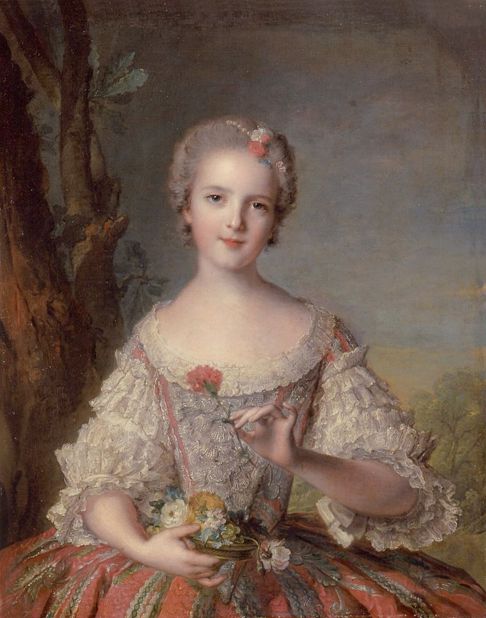
Madame Louise of France: the Princess Who Became a Nun


From Plinio Corrêa de Oliveira:

Wishing to enter the convent, while attending the Countess of Rupelmonde’s reception of the habit at the Carmel, she decided to join that Order. She began to prepare herself for it by studying the rule of St. Teresa and slowly abstaining from the comfort that surrounded her. She would stay away from the heated area of the castle during periods of appalling cold.

She could not stand the smell of candles and only overcame this repugnance after years of effort. Finally, she obtained the consent of the king and on February 20, 1770, entered the Carmelites of Saint Denis. France admired her example, and Pope Clement XIV wrote the princess to express his happiness at seeing his pontificate marked by such a comforting event for religio
n.
Therefore, this event took place nineteen years before the French Revolution broke out.
In the convent, she fought hard for her companions to stop distinguishing her from the others. She also worked to overcome her difficulty in staying a long time on her knees, a grace she obtained after a novena to St. Louis Gonzaga. She received the habit on September 10, 1770, clad in the mantle of Saint Teresa, owned by the Carmelites of Paris, and took the name of Sister Therese of Saint Augustine.
What an honor to receive the habit clad in the mantle of Saint Teresa!
Later named mistress of novices, she excelled in that difficult work, manifesting constant joy in the midst of the difficulties she encountered. Later she was unanimously elected mother superior. When the Visitor General of the Carmelites brought the news to the king, he said that Sister Therese had only had one vote against her. ‘So,’ Louis XV replied, ‘was there a vote against her?’ ‘Yes, Sire,’ answered the prelate, ‘but it was her own vote.’

(Read more.)

Share

The Cave of Elijah

 "Elias the prophet stood up, as a fire, and his word burnt like a torch....Blessed are they that saw thee, and were honored with thy friendship." (Ecclesiasticus 48: 1, 11)

"Elias indeed shall come, and restore all things." (Matthew 17:11)

From A Pilgrim's Journey:

The caves on Mount Carmel were well known to the prophet Elijah. They provided him shelter and also protection from the wrath of Jezebel, whose prophets of Baal Elijah had defeated. It is also thought that Elijah established a “school of prophets” here on his return from exile at Mount Sinai. If so, this would be where his successor Elisha, among others, studied. (Read more.)


The greatest of the Old Testament prophets is Elias (Elijah.) The life of St. Elias can best be described by two phases which he often used: "As the Lord liveth, in Whose sight I stand" (3 Kings 17:1), and "With zeal have I been zealous for the Lord God of Hosts." (3 Kings 19:10) Whatever his exterior activities, the prophet remained aware of the constant presence of God. He possessed an unflagging desire to serve his Lord, even in moments of darkness and discouragement. (3 Kings 19: 4, 14)

Elias, called "the Thesbite," first manifested himself during the three year drought and famine by which the God of Israel punished His erring people, who had been led into idolatry by King Ahab and Queen Jezebel. (3 Kings 17:1) Described as "a hairy man" (4 Kings 1:8), he usually could be found praying in remote desert and mountain retreats. It was in the solitude of Mt. Horeb that he experienced the majesty of God, not in fire or earthquake, but in the serenity of a "whistling of gentle air." (3 Kings 19:12) His usual haunt seems to have been Mt. Carmel, where he had the famous contest with the 450 prophets of Baal. (3 Kings 18:19) He defeated them by calling down fire from Heaven (3 Kings 18:38), setting the precedent for those who wish to follow in his footsteps as "Carmelites," whose role is to pray for the fire of graces, especially in times of crisis for the Church.

It was also on Mt. Carmel that Elias, deep in prayer, sent his servant to scan the horizon for rain. Finally, after looking seven times, the servant reported "a little cloud...like a man's foot arising out of the sea." (3 Kings 18: 43-44) Tradition holds that Elias knew the cloud to be a sign of the coming of the Immaculate Virgin Mary, Mother of the Redeemer. "Henceforward, Carmel was sacred in the eyes of all who looked beyond this world." (Dom Gueranger's The Liturgical Year, Vol. XIII)

St Elias came to have many disciples called the "sons of the prophets." (4 Kings 2:5) This group was seen as being the origin of the Carmelite order, since for generations to come, holy men and hermits would seek to live a life of solitude and prayer in imitation of Elias and the "sons of the prophets." Elias chose Eliseus (Elisha) to be his successor. (3 Kings 19:19) In a remarkable and moving scene, Elias is mysteriously assumed into heaven, riding in a fiery chariot. Before the dramatic departure, Eliseus begged Elias for a double portion of his spirit (4 Kings 2:9)

As Elias is carried away in the whirlwind, he bequeathes to Eliseus his mantle, along with his "double spirit." (4 Kings 2:13) Eliseus continued the work of fighting idolatry, working many miracles which surpassed those of his master. Can the mantle of Elias be seen as prefiguring the brown scapular, which symbolizes the spirit of prayer and penance, the spirit not only of Elias, but of Mary?

The history of Elias the prophet does not end with his assumption, for he makes an appearance in the New Testament as well. He and Moses converse with Jesus at His Transfiguration on Mt. Tabor (Matthew 17:3), as witnesses of the divinity of the Son of God. Afterwards, the Apostles question Our Lord about Elias. "Why then do the scribes say that Elias must come first?" (Matthew 17:10) They refer to the prophecy of Malachias: "Behold, I will send you Elias the prophet before the coming of the great and dreadful day of the Lord." (Malachias 4:5) Jesus assures them that Elias has preceded him in person of the John the Baptist (Matthew 17:12), who had the "spirit and power of Elias." (Luke 1:17)

However, Our Lord makes it clear that "Elias indeed shall come and restore all things." (Matthew 17:11) According to the scripture scholar Fr. Herman Kramer: "'John the Baptist did not usher in the great and dreadful day of the Lord,' as was foretold of Elias. That day will be the destruction of Antichrist...." (Fr Herman Kramer, The Book of Destiny, 1975)

Most of the early fathers of the Church identify Elias as one of the "two witnesses" in Chapter 11 of the Apocalypse, who do battle with the Antichrist. The two witnesses are martyred by the son of perdition, but their resurrection and ascension into Heaven ushers in the final defeat of "the beast." (see Apocalypse 11) The exact manner in which such cryptic prophecies will be fulfilled remains to be seen. It is interesting, however, that Carmelites have always used red vestments on July 20 in honor of the martyrdom of Elias that is to come.

Share

Wednesday, July 16, 2025

The Power of Francis Poulenc’s “Dialogues of the Carmelites”

The nuns were martyred on July 17, 1794. From The Voegelin View:

The 1957 opera is based on the true story of the Martyrs of Compiègne, a community of sixteen Carmelite nuns who were guillotined during the French Revolution’s Reign of Terror. The libretto is the work of Georges Bernanos, the French Catholic author best known for his novel The Diary of a Country Priest.
Dialogues balances the sweep of historical events with the inner spiritual journey of Blanche de la Force, a young woman from an aristocratic family who fears the oncoming Revolution. Blanche’s fear impels her to join the Carmelite order, but in doing so she goes straight into the target of the revolutionary mob. Arrested and cast out of their convent, the nuns take a vow of martyrdom rather than renounce their vocation. Blanche initially panics and runs away, but at the last moment she finds her courage, steps out from the crowd, and joins her sisters at the guillotine. Many hold Dialogues in high esteem as one of the twentieth century’s greatest operas, even for its subject alone. The intolerant repression of religion by the architects of the French Revolution—ironically carried out in the name of “liberty,” “fraternity,” and “equality”—is a story that must be told, with heroic themes befitting grand opera.
If I have reservations about the piece, it is largely because its first half is filled with abstract spiritual discussions that are poorly suited to musical treatment. This portion of the opera feels static and verbose—not to mention overlong—with Poulenc having little to do but spin exquisite filigree around the text, between increasingly powerful orchestral interludes. The opera’s second half livens up considerably, though, as the revolutionary forces close in on the convent and the nuns take their vow of martyrdom. This is a spiritual, even intellectual opera, one that examines themes of fear and grace—particularly what Poulenc termed “transfer of grace” by which one human death can redeem another. (Read more.)
Share

Tuesday, July 8, 2025

Vestments Made by Saint Thérèse


From Liturgical Arts Journal:

Thérèse had great devotion to the Holy Face of Tours and this is reflected in the image on the chasuble. The decoration is full of symbolism. Thérèse chose two white roses to honor her parents, Sts. Louis and Zélie. She also chose to depict white lilies to symbolize the nine children born into her family. Four died in infancy and so they are the flowers that have not bloomed. The five siblings who survived into adulthood all became fully professes sisters, depicted as the flowers in full bloom. Thérèse identified with the lily half hidden behind the Holy Face. (Read more.)

Share

Friday, June 27, 2025

The Sacred Heart, Our Lady, and General de Sonis

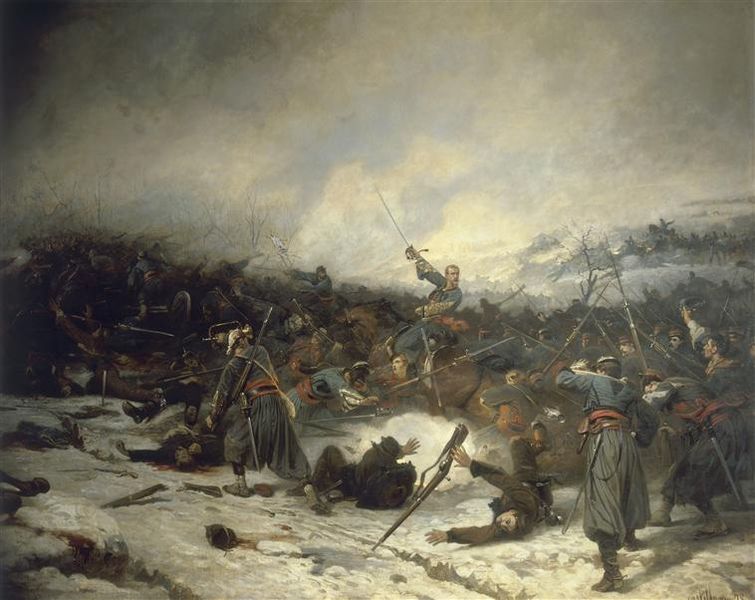
The following is the little known story of a great battle was fought over the fate of France. General de Sonis was a devout Catholic husband and the father of a large family, as well as being a lay Carmelite. To quote:
Back on the battlefield, a strange thing happened. The Virgin Mary appeared to the wounded General Sonis, assuring him that all was not lost and that France would survive. A scattering of soldiers milled around the former battle; only the Zouaves and a very few other units retained their order and discipline. The remnant of the 17th Corps retreated to Poitiers. When the surviving Zouaves reached this refuge, they were welcomed deliriously by the townspeople. Deeply saddened by the plight of his former paladins, Pius IX sent a message to them: “Tell Charette and his heroic sons as speedily as possible that my wishes, prayers, and remembrances constantly follow them wherever they go; that as they were, and still are, present with me, I am also with them in heart and soul, ever entreating the God of all mercy to protect and save both them and their unhappy country, and to bless them as fully and as specially as I do this day, in His name and with the warmest effusion of my heart.” (Read entire post.)
Share

Tuesday, May 13, 2025

Fatima and the Holocaust

Our Lady appeared wearing the yellow star. To quote Emmett O'Regan:
 This attention to detail was obviously of great importance to Sr. Lucia, who must have considered every last feature of the apparition to be of deep symbolic importance. And the fact that she insisted that the star was yellow and not gold in colour immediately conjures images of the yellow star that would be forcibly imposed upon the Jewish population of the Third Reich. Every Jew in Nazi-occupied Europe was forced to wear a yellow Star of David with the word Jude (or its equivalents in other countries, e.g. Juif, Jood, etc.), which was intended as a "badge of shame" in order to distinguish them from the rest of the population.

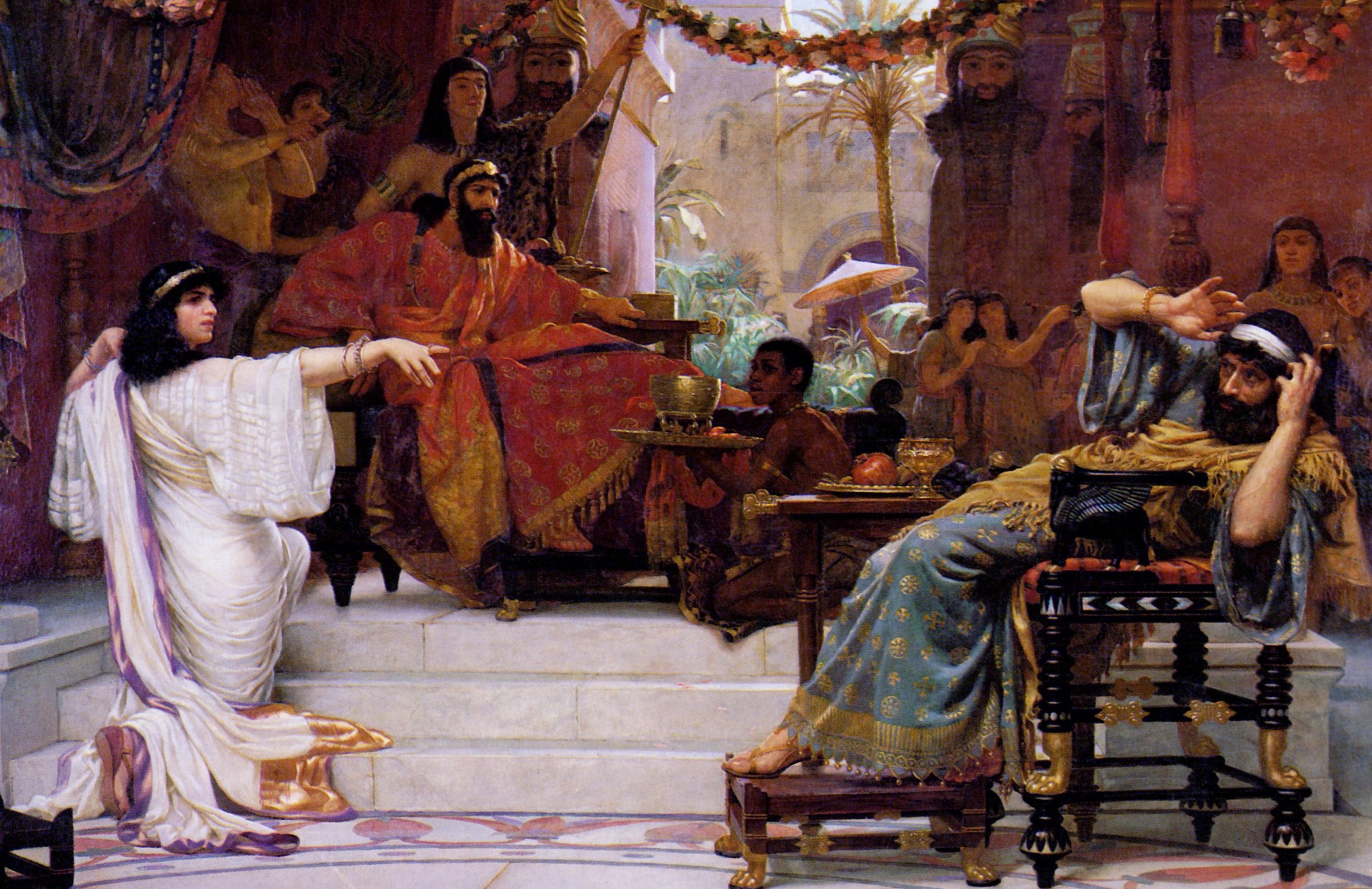
In the previous post, we have already noted how after Sr. Lucia's death on the 13th Feb, 2005, a connection was made between the star on the tunic of Our Lady of Fatima and the Star of Esther, in an article titled Hidden Revelations: The Star of Esther and the Secrets of Fatima by Marianna Bartold. It will be worth recapping the main thrust of this argument again here, as the central theme of the biblical story of Esther is her role in rescuing the Jewish people from the threat of total annihilation - which in many ways prefigures the looming threat of a Jewish Holocaust in the 20th century. In her article (linked to above), Bartold connects the star depicted on the tunic of Our Lady of Fatima to the biblical tale of Esther, the famed Jewish Queen who interceded to save her people from destruction on the 13th of the month of Adar - an event which is still remembered by Jews today during the festival of Purim. Bartold notes that the Hebrew month of Adar roughly corresponds to February in the Gregorian calendar, highlighting the significance of this connection in relation to the date of the death of Sr. Lucia on 13th Feb, 2005. Because of a use of a lunar calendar system, the Hebrew months shift back and forward slightly each year, as opposed to the Gregorian calendar which has dates that are firmly fixed. So the 13th February would certainly be the best (and perhaps only) date in the Gregorian calendar that could be used to symbolically point to the 13th Adar. (Read more.)
Memorial of Queen Esther — Passionist Nuns
Share

Sunday, December 31, 2023

Happy New Year!

As Saint Thérèse of the Child Jesus said, "As this year has gone, so our life will go, and soon we shall say 'it is gone.' Let us not waste our time; soon eternity will shine for us."

In honor of the New Year, please accept a free e-copy of my medieval novel.

Share

Sunday, October 15, 2023

St. Teresa of Avila as 'Doctrix Ecclesia'

Long before 1970 and being proclaimed a doctor of the Church, the Holy Mother Saint Teresa of Jesus was shown wearing a doctor's cap in Spain and in the Carmelite Order. From The Liturgical Arts Journal:

 It was Pope Paul VI who in 1970 finally granted the Title of Doctor of the Church to St Teresa, finally answering a request that was first elevated in 1597 by all the cathedral chapters of Spain to Pope Clement VIII. The petition had been repeatedly denied by Rome dryly arguing Obstat sexus (her sex prevents it).

The devotion of the Spanish people was too great to be contained, and while the title of doctor of the church could not be used, this did not stop her receiving other titles such as doctrix seraphica or doctrix mystica.

 St. Teresa was particularly popular among the scholars of the University of Salamanca, who were tasked with the efforts for her canonization and are likely responsible for the apparition of the biretta in her iconography. This intrusion by a member of the opposite sex into academic circles must not have been too shocking, since it is known that at least 4 women attained degrees and taught in Spanish universities at the turn of the 15th century, and while very rare, the precedent was set. While the academic bonete with white tuft can be found in depictions of the saint as early as 1647, it usually placed on the side, with the first images of her actually wearing it dating from the mid 18th century. As the depiction of Saint Teresa donning the 4-horned “bonete” with white tuft gained popularity, we see examples of sculptures getting the hat added later on or as an accessory to be used on particular occasions.

 An atypical example of these removable birettas is the one crafted by Fr Félix Granda in 1922. Rather than being shaped like the traditional 4-horned “bonete”, it was modeled after the 8 sided academic caps used by the doctors of the university of Salamanca at the time. Also, instead of being made out of wood or fabric, it was crafted in gold plated silver and profusely decorated with filigree, enamels, ivory and gemstones. (Read more.)


Share

Saturday, March 4, 2023

The Limits of Obedience

 I saw this post making the rounds on Facebook, with much shock and dismay from the devout. It is by Mary T., a former postulant from a strict contemplative order of nuns. The post describes the true sufferings of a sincere and fervent young lady who really wanted to give her life to God as the Bride of Christ. She describes how she found the requirements of obedience onerous and almost unbearable; her health eventually declined. A reader asked me for my thoughts on the article, knowing that in the late 80's and early 90's I explored religious life in the Discalced Carmelite Order, which led me to three different monasteries over the course of five years. Mary immediately had my sympathy since for several years, as any of my family and close friends will attest, I wanted the same thing very much, to be a nun. I understand the total sacrifice, the burning of bridges and giving up everything in order to follow Jesus. I also understand the pain of having to leave a beloved way of life and return to the world that one thought was safely left behind. 

Let me say that it was an honor for me to be admitted for even five minutes to any of those Carmelite monasteries where I discerned a vocation; in each one what I learned about God, faith, prayer, the liturgy and my own human weakness. I had the example of holy women whom I would probably never have met anywhere else, who were filled with the joy of the Holy Spirit and with zeal for the Lord of Hosts. But a vocation is a call from God. If one does not have a vocation to a particular community or to a certain way of life, then all the good will in the cosmos cannot give it. And while a person may have a call to religious life, they might not have a call to a particular community. Or even to a certain order or congregation. It is a matter for a great deal of prayer, discernment and spiritual direction from a prudent advisor.

The first thing that occurred to me when reading Mary's account of her time in the monastery was how health issues made her life of holy obedience almost impossible. Someone with dire health issues should not be admitted to a strict penitential monastery. By "penitential" I mean corporal penances such as limited personal hygiene, and fasting. And other things, such as sleeping on boards. If the health issues arose during the time in the monastery, then most communities would have sent the postulant home right away, unless it was a passing illness. If  a nun has a passing but serious illness like the flu, shingles, COVID, etc then most monasteries have an infirmary where the sick are cared for and all austerities are suspended until the nun recovers. But long-term failing health is usually a sign that a postulant does not have a vocation to a particular community. Now there are some communities, like those of the Visitation Order, that accept aspirants with health problems; there are probably other congregations as well. There are plenty of convents that are not so strict, which are bearable for a sensitive candidate, a candidate who might find the lack of hygiene in a strict monastery to be too much. There are convents where you can shower every day and change your underclothes every day. There is no shame in wanting to be clean.

Which brings us to the subject of underclothes. Let me be frank. Remember when Star Wars director George Lucas told Carrie Fisher aka Princess Leia that there was no underwear in space? Well, some monasteries are like outer space. Underclothes do not exist, except a rough linen or wool tunic which you also sleep in and change once a week, twice a week if you are in a more "progressive" community. When I read Mary's complaint about not being able to change her underwear I thought: "Wow, they got to wear underwear." Neither do the super austere ones have deodorant. In the heat of summer, most places allow a daily bath or shower, but it has to be really hot outside. And no air conditioning, at all. In the winter, no socks, unless you go out to shovel snow. But then I was only in Discalced Carmelite monasteries. We wore sandals all year long. Other monasteries have shoes and socks. We had perpetual abstinence from meat as well. In spite of such renunciations of physical comforts, cloistered nuns are famously long-lived.

Now we come to the issues of holy obedience. I was twenty-five years old when I first entered Carmel and everyone who knew me thought of me as being quite ladylike. But I had to have thorough etiquette lessons in the novitiate, like Marie-Antoinette arriving at Versailles. In an ancient way of existence, following a venerable Rule and ceremonial, where much of the day is spent in silence, then deportment becoming to the consecrated life is important and saves a lot of misunderstandings in the long run. I had to learn the traditional sign language, to kiss the floor if I committed a fault, to beg pardon of the community at the chapter of faults. Now faults are different from sins. Sins are for the Sacrament of Reconciliation. Faults are mistakes you commit from human weakness and without intent, such as leaving the kitchen light on or forgetting to ring the bell for Compline.

As for obedience itself, in the monastery, under the three evangelical counsels of poverty, chastity and obedience, a person is never to obey a sinful command, just as in the secular world. No one has the right to command you to sin. If the legitimate command of a superior is more than the person's physical or emotional strength can bear, i.e., if it makes them soil their clothes, or fall into intense anger, etc. then they must make a representation to their superior. A representation is when you are bound to be honest with your superior. If a nun has a passing but debilitating illness such as shingles or measles or whatever, she is supposed to tell her superior. And the superior is supposed to see that the nun is properly cared for in the infirmary or hospitalized if necessary. Obedience is not supposed to be a crushing burden to the soul or body. If it is, the individual is in the wrong place.

This is not to say that obedience is meant to be easy. It is a sacrifice in faith of one's free will. It can be emotional martyrdom. The difficult part of obedience, from what I have experienced and from what nuns, priests and religious have shared with me, is not when you are asked to do something hard, like making dinner for the community. The difficult part of obedience is when you are told to do something you think is stupid or ridiculous or in bad taste. Like singing a song you dislike. And in the cloister the tiniest things can grate on the nerves. Perhaps you are asked to decorate the altar in a way that you personally think is tacky. You can ask: "Mother, may I tell you another idea for decorating the altar?" And the superior may ask you for your opinion. Or she might just say: "Sister, just do as I ask." And you have to do it, even though you are convinced that God would be better glorified by your artistic vision. But no, God is glorified by a meek and humble heart.

One issue that struck me about Mary's eloquent and heartrending article is that, although her words ring with sincerity and truth, we are still only hearing her side of the matter. It would be interesting to hear what the nuns have to say about the demands they made upon her and why. But nuns do not issue public statements about ex-postulants, as a rule, so we will never know their view. So we pray for Mary to be led by Our Lord to wherever her gifts will be appreciated and where she will blossom.

One more word about religious life in general and cloistered, contemplative life in particular. Holy obedience in religious life often demands sacrifices that in any other circumstances would be abusive. It is like being in marine boot camp, or the Navy Seals. It can be extremely tough; you can be corrected for faults you had no idea you had, and humiliated before the entire community. If a postulant cannot take it, there is absolutely no shame. They are just not meant to be in that particular community. All communities are different, even within the same order, and each order or congregation has very specific guidelines about obedience in their constitutions that have to be approved by Rome. There are levels of obedience in all vocations, such as in marriage or in parish life. But the obedience of religious life, especially when solemn vows are made, cannot be compared to what is asked of a layperson. I know that most laypeople, and even secular priests, reading Mary's account, have been shocked. But most of what she describes is typical of strict cloistered monasteries, from what I have read and from my personal experiences. What disturbs me are the health issues she experienced that appear to have been long-term and a source of continued suffering. I hope she has healed and I wish her every blessing and happiness.

People ask me all the time why I left the monastic life. I had to leave it due to continuous severe migraines. Also, the nuns at the Carmel where I spent most of my novitiate thought that I had gifts which I needed to use in the secular world. Although I heartily disagreed with them, they turned out to be right. Obedience can be a bitter chalice but for it we have the example of  Our Lord. "My Father, if it be possible, let this chalice pass from me. Nevertheless not as I will, but as thou wilt." (Matthew 26: 39)  

Share

Friday, March 3, 2023

Forward Boldly: Asbury Revival

 My friend Christine Niles analyzes the Asbury Revival from a Catholic perspective.

Share

Tuesday, February 21, 2023

Death Clarifies What We Love

 From Church Life Journal:

In the midst of increasingly intense and competing narratives within the church and without—but especially within it—Rosemary, my Gram, reminds us that the Little Way is always possible. We can always choose to love. The simplicity of such a decision should not prevent us from grasping either its difficulty or its profundity. It is love that clarifies our thinking, not more thinking. It is love alone that can dissolve that inveterate bias native to our nature. Love is always the encounter of a person, preeminently Jesus of Nazareth, as Benedict XVI and Francis never cease to remind us, but through him it is also the desire for encounter with everyone else. Love alone rents asunder our petty and self-serving horizons and holds out to us the beautiful possibility of loving God with God’s own love. A love wherein we become capable of earnestly desiring the good of our neighbors and capable of the sacrifices it would demand.

Rosemary was a model of that kind of love and so she is a model for all of us living in the meanwhile, the time between confusion and clarity, between injury and healing, between the earnest desire for peace and its accomplishment. Her life invites us, has invited me, to consider how to live amidst the coming-of-age that is the story of our own lives no less than those of our grandparents. Caught between serious questions and their answers, between the Gospel and a secular age that further unlocks its inner riches, between faithfulness and selfishness; such a predicament demands that we earnestly and honestly seek clarity, but it also demands that we often live before it is reached. Is not the testimony of our sacred texts that we must gradually become certain kinds of people through sacrifice before we can “see” and “hear” and “understand” the fullest answers to our deepest questions? At least then, as we drive back and forth making our Little Way, let us not forget to love in the meanwhile. (Read more.)


From National Catholic Register:

There is, nonetheless, often the notion that doctrinal fidelity is somehow in tension or even at odds with pastoral concerns. The truths of the faith, so the thinking goes, are not as important as the unqualified welcoming of all. It is as if the purpose of the Church is to create a safe space. This is both wrong and dangerous. The Church should never be satisfied to leave a person in his or her sin. This is a false idea of love and a disservice to the sinner. We are called to love the sinner so that he or she may live within the light of truth, a reality that is both liberating and one that saves. This is much more difficult for the person accompanying the sinner than simply letting him or her stay in their sin, but it is essential. True love calls for a change in heart — ask any husband or wife. A good spouse demands more from the other than he or she would give on his or her own. (Read more.)


From Crisis:

The biggest threat facing America today isn’t China or Russia. It’s not radical sexual or racial ideologies, nor globalism and widening economic disparities. No, all of these threats, however real and legitimate, all dim in comparison to a much graver menace to our shared future: the dramatic decline in citizens’ religious affiliation and belief. A recent anti-religious op-ed by the Washington Post’s Kate Cohen hints at what awaits an America untethered from Christianity.

“In America, you have to opt out of religion in public life. That’s backward,” reads Cohen’s provocative title. Citing a number of examples, from court-mandated addiction recovery programs, to the language of the Pledge of Allegiance, to abortion restrictions, Cohen claims that it is “backward” that the religiously unobservant are the ones who must opt out of various aspects of American civil life that retain, however tenuously, a religious character.

She approvingly quotes a recent legal argument that Americans have the “absolute right to live free from the religious dictates of others.” She adds: “But as long as this country’s default setting is religious—both culturally and politically—we have to fight for it.” (Read more.)

Share

Sunday, January 22, 2023

The Jubilee Year of St. Thérèse of Lisieux

 From Aleteia:

The Catholic Church has also convened a Jubilee Year to commemorate the birth of the French mystic, author, and doctor of the church. This past January 8, the Holy Doors of the Basilicas of Lisieux and of Alençon were opened simultaneously, marking the beginning of the Year. The Bishop of Bayeux and Lisieux, Monsignor Habert, presided over the act. In the afternoon, the first mass for pilgrims was celebrated.

Fr. Thierry Hénault-Morel, rector of the Shrine of Alençon (Thérèse’s hometown), explains that “every two years, UNESCO pays tribute to personalities who, each in their own way, have worked and continue to work in the fields of education, the promotion of women, culture, science and the building of peace.” (Read more.)
Share

Tuesday, November 1, 2022

Fatima, Vatican II, and the Consecration to the Immaculate Heart of Mary

Louis XVI not Louis XIV is the King of France who would "regret it" since Louis XIV died in his bed, but Louis XVI died on the guillotine. From CNA:

The devotion to the Immaculate Heart of Mary spread widely after the apparitions of Fatima in 1917. The request to consecrate the world to the immaculate heart of Mary was expressed in the second of the three secrets of Fatima.

“When you see a night illuminated by an unknown light, know that it is the great sign that God gives you that he is about to punish the world for its crimes by means of war, hunger, and persecution against the Church and the Holy Father. To prevent it, I will come to ask for the consecration of Russia to My Immaculate Heart and the reparative Communion on the first Saturdays. If they accept My requests, Russia will be converted, and they will have peace; if not, she will spread her mistakes around the world, promoting wars and persecution of the Church. The good will be martyred, the Holy Father will have much to suffer, and various nations will be destroyed. Finally, My Immaculate Heart will triumph. The Holy Father will consecrate Russia to me, which will be converted, and a period of peace will be granted to the world.”

On June 13, 1929, Sister Lucia had a splendid vision of the Holy Trinity and the Immaculate Heart of Mary, during which Our Lady told her that “the moment had come when she wanted her desire for the consecration of Russia to participate in the Holy Church and his promise to convert her.”

According to Sister Lucia, Our Lady underlined that “the moment has come when God asks that the Holy Father make, in union with all the bishops of the world, the consecration of Russia to my Immaculate Heart, promising in this way to save her. There are so many souls that God’s justice condemns for sins committed against me, so I come to ask for reparation: sacrifice yourself with this intention and pray.”

Sister Lucia, through her confessors and the bishop of Leiria, managed to get the request of the Madonna delivered to Pope Pius XI, who promised to consider it.

Sister Lucia said that the Lady then complained to her that the consecration of Russia had not been realized. “They didn’t want to listen to my request. Like the king of France, they will regret it, and they will. But it will be late. Russia will have already caused her mistakes in the world, causing wars and persecution of the Church. The Holy Father will have to suffer a lot.”

The allusion was to the French King Louis XIV, the so-called “Sun King.”  In 1668, St. Margaret Mary Alacoque asked to have the Sacred Heart of Jesus applied to the royal banners. However, Louis XIV did not, and his dynasty fell under the guillotine with Louis XVI.

Sister Lucia wrote several letters about the devotion. Finally, on Dec. 2, 1940, Sister Lucia wrote directly to the pope, asking that he bless the devotion of the First Saturdays. (Read more.)


 I have written a great deal about the requested Consecration of France to the Sacred Heart, HERE, HERE and HERE.

Share

Wednesday, November 24, 2021

Those Other Women in the Church

 From The Catholic World Report:

Religious contemplatives not only sustain the Church. They remind all people that this world is not the end for which we are created. Today, in a secular culture and within a limping Church, their vocation can be difficult to fathom – especially since their chief desire is the precise opposite of those clamoring for women to have more ruling power. Religious contemplatives eschew power and Church politics; they want to be left alone to worship, to pray, and to live out the unique charism they have received from their saintly founders.

Yet amidst this storm for women’s power, the Congregation for Institutes of Consecrated Life is restricting female contemplative communities through the instruction Cor Orans, which itself is the application and clarification of Francis’ 2016 apostolic constitution on women’s consecrated life, Vultum Dei Quaerere. The autonomy of each individual monastery, long understood as essential for a community to maintain its charism, is suddenly being stripped and placed into the hands of a “Federal President” appointed by the Vatican. Individual institutes will be forced into “federations” that could require certain practices and forbid others that a monastery or institute has done for centuries.

In addition, Cor Orans doubles the required formation period of contemplative nuns to nine years, and stipulates that ongoing formation occur outside the monastery, a practice forbidden by St. Teresa of Avila in her constitutions for the Carmelite order. Should a monastery have only five professed nuns, it loses its right to elect its own superior; the Federal President would then take over. When St. Teresa opened her first monastery in 1562, she was joined by just four novices. (Read more.)


Share

Sunday, August 22, 2021

Conformed to the Blessed Cross

 From Crisis:

On the 14th of May in 1940, following a massive invasion four days earlier by the German High Command, Holland was forced to surrender, along with Luxembourg and Belgium, each fated to spend the next five years in a state of brutal subjugation under the heel of the Third Reich.  Wholesale deportations soon began, especially of Jews, who were routinely rounded up and sent to Concentration Camps where most of them perished in gas ovens. By the summer of 1942, the bishops of Holland were ready to mobilize. They issued a sweeping public condemnation of racial barbarity that so infuriated the Nazis that they ordered the arrest and deportation of all Catholics of Jewish descent, including a Carmelite nun by the name of Edith Stein and her sister Rosa, both of whom would die at Auschwitz on the 9th of August.

She had long foretold her end, however, writing her Superior three years before for permission to become a Victim Soul in order to help atone for the sins of the world. “Dear Mother,” she began,

I beg your Reverence’s permission to offer myself to the Heart of Jesus as a sacrificial expiation for the sake of true peace…I know that I am nothing, but Jesus wills it, and he will call many more to the same sacrifice in these days. (Read more.)


Share

Tuesday, January 5, 2021

Father Reginald Foster, R.I.P

From The Smithsonian:

Of course, Latin is no longer the default language for European learning and diplomacy, as it was from the Roman Empire through the early modern period. Since the implementation of Vatican II in the early 1960s, even many priests don't speak the language in a meaningful way. Still, despite Latin's decline in political and ecclesiastical circles, hundreds of folks around the globe continue to speak it as a living language—and no teacher is more responsible for the world's remaining crop of latineloquentes (“Latin speakers”) than Friar Reginald Foster, the Carmelite monk who served as Latin secretary to four popes from 1969 until 2009, translating diplomatic papers and papal encyclicals into Latin, which remains the official language of the Holy See. Foster died on Christmas Day, at the age of 81.

In 2007, Foster himself lamented to the BBC that he thought the language was on its way out altogether. He worried that a modern world, illiterate in Latin, would lose contact with crucial portions of history, and half-jokingly recommended that then-Pope Benedict XVI replace Italy's traditional siesta with a two-hour daily Latin reading.

The Pope never took up Foster's suggestion, but the irony is that Foster had already managed, almost single-handedly, to reverse some of the trends that so troubled him. His deepest passion was teaching Latin at the Pontifical Gregorian University in Rome, starting in 1977, and running his famous spoken Latin course nearly every summer, beginning in 1985. Through these courses, Foster launched multiple generations of classicists who have used his techniques to bring their students into closer contact with a past that, until recently, had seemed to be vanishing. (Read more.)
Share

Monday, November 23, 2020

Dialogues des Carmélites: Lasting and Profound

 From The Metropolitan Opera:

Yannick Nézet-Séguin brought his first season as the Met’s Jeanette Lerman-Neubauer Music Director to a close with a revival of Dialogues des Carmélites in May 2019. As he prepared to lead Poulenc’s powerful opera of faith and martyrdom, the maestro spoke to the Met’s Jay Goodwin about what makes this masterpiece of 20th-century music unique. You finish your 2018–19 opera season with Poulenc’s Dialogues des Carmélites. Have you conducted it before? (Read more.)
Share

Sunday, November 22, 2020

A Devotion to Defend Against ‘Revolutionary Men’

From Crisis:

Revolution. That’s exactly what they want. It’s no longer a question of contracting or expanding welfare programs but of class warfare. Debate over whether law enforcement agencies have positive value has replaced that over whether racism is a marginal or a widespread problem within them. Gone are the days when the Left supported the Defense of Marriage Act, content with legal tolerance of homosexual behavior. Promises to reduce abortion while keeping it “safe, legal, and rare” have been replaced by calls for “abortion on demand and without apology.” It’s a complete inversion of reality. Good is treated as evil, and evil as good.

If calls for revolution now provoke fairly limited concern, their gravity is severe enough for them to have been the subject of heavenly warnings as long ago as the 1840s, when the private revelations that made the devotion to the Holy Face known to the Servant of God Sister Mary of Saint Peter called attention to the threat posed by “revolutionary men,” including communists, whom she called by name—this, before The Communist Manifesto was published.

It’s probably fair to assume that even devout, orthodox Catholics tend not to be familiar with the Holy Face devotion. And this might not seem too unusual. Only a rare Catholic would be able to keep informed about all the devotions authorized by the Church or all saintly individuals whose claims to have received private revelations have been viewed favorably by ecclesial authorities without being granted “final” formal approval. In the case of the devotion to the Holy Face this lack of awareness is a bit more remarkable for two reasons. Firstly, Sister Mary of Saint Peter claimed to receive messages calling attention to the same danger later highlighted at the well-known and influential Marian apparitions at Fatima. Secondly, the life, writings and spirituality of Sister Mary of Saint Peter strongly influenced one of the most important members of her Discalced Carmelite order: Saint Thérèse of Lisieux, whose full religious name was Thérèse of the Child Jesus and the Holy Face.

Those who want complete information about the devotion to the Holy Face and the full story of Sister Mary of Saint Peter’s life would do well to read The Golden Arrow, which includes her autobiography and the brief summaries she wrote of her revelations. Biographies of the devotion’s primary promoter, Venerable Leo Dupont, are quite useful and provide a useful example of sanctity in the law state. The best of these is Pierre Janvier’s The Life of Leon Papin-Dupont; it’s still in print and can easily be found online. It’s more thorough than Dorothy Scallan’s youth-oriented The Holy Man of Tours, a work that’s also marked by some literary embellishment. The most basic facts can, however, be briefly summarized. (Read more.)

Share