Showing posts with label Style. Show all posts

Friday, November 6, 2026

How to Style Your Home and Wardrobe with Toile de Jouy

toile de jouy pierre frey la roziere 

From Léonce:

 Recently, I have developed a fascination with toile de Jouy, a design that you may recognize even if you are not familiar with its name or its historical ties to Oberkampf. For instance, think of the iconic pattern featured on Dior’s Book Tote. This toile de Jouy pattern was designed by Dior’s creative director, Maria Grazia Chiuri, to pay homage to the house’s heritage—Christian Dior’s first boutique on Avenue Montaigne prominently featured a pastoral toile pattern in its interior. Or recall the scene in the 1963 film Charade, where Audrey Hepburn’s character, left with only her Louis Vuitton luggage, retreats to a Parisian hotel room adorned with charming blue toile wallpaper. While the room isn’t ostentatiously luxurious, it exudes a captivating, understated elegance.

I remain deeply inspired by toile de Jouy for its ability to tap into one’s imagination. For me, observing a toile de Jouy within an interior feels like a journey through time. I am particularly enamored with the single-color designs by Jean-Baptiste Huet (1745-1811), which depict pastoral scenes and vignettes of French countryside life. These designs also feature exotic travel fantasies, allusions to European mythology, and nods to scientific advancements of the era, such as the first flight of the hot-air balloon (Montgolfière) in Versaille in 1783. Each piece is a captivating visual narrative, rich with historical and cultural references. (Read more.)

To toile or not to toile? From A Wanderlust Home:

The word “toile” comes from the French word for linen cloth.  The word is shortened from the full name toile de Jouy. Toile de Jouy was originally produced in Ireland in the mid 1700s, but jumped from the island to England and to France where it was dubbed "Toile de Jouy," which literally means "cloth from Jouy-en-Josas," a town in northern France. Christophe-Philippe Oberkampf moved to Jouy-en-Josas and started a factory there in 1759, which produced the now eponymous "toile de Jouy."

Although the word toile means fabric, the word toile has evolved to also refer to the original design aesthetic of the fabric. Toile designs are popular for non-fabric items like fine china and wallpaper.

The design aesthetic when using Toile is usually very traditional. Times have definitely changed and we are seeing more Toile used in contemporary designs.  And, we are loving it and here for it all! (Read more.)

Share

Thursday, October 29, 2026

Shades of Victorian Fashion: Orange, Pumpkin, and Peach


The Victorians loved vibrant colors. From Mimi Matthews:

Unlike popular autumnal shades, such as golds, browns, and burnished reds, the Victorians generally regarded the color orange with disfavor. Fashion magazines of the day advised against wearing orange dresses, calling the color ugly and claiming that it was unflattering to every complexion. Even worse, as fashion historian C. Willett Cunnington reports, some believed that the color orange implied “a degree of animal passion which the pure ought not to possess.” I had not intended to give orange an article of its own, but it’s Halloween today and I can think of no better occasion to showcase a selection of this much maligned—but nonetheless striking—shade of Victorian fashion. (Read more.)
Share

Monday, October 26, 2026

Dressing for Unpredictable Weather

 From Léonce:

1. Never Underestimate the Importance of a Good Umbrella

I realise an umbrella is hardly the most exciting place to begin a fashion conversation. But anyone who has spent an autumn in Amsterdam will understand. There is nothing quite like having your umbrella turn itself inside out in the middle of a downpour, preferably just as you’re crossing a busy street. I’ve come to believe that a good, wind-resistant umbrella is one of those rather unexciting purchases you’re eventually very grateful to have made.

2. Dress in Layers, but Don’t Overdo It

The difficulty with dressing for chilly, unpredictable weather is that the temperature outside rarely has much in common with the temperature inside. I’ve found that several lighter layers are generally much easier to live with than one particularly heavy one. A fine merino wool sweater, a cotton shirt, or a lovely cardigan worn beneath a jacket or coat allows you to adjust without too much fuss. I also tend to prefer natural fabrics that feel comfortable against the skin and are easy to layer without becoming too warm indoors.

3. Suede Is a Beautiful, Rather Impractical Love Affair

I have a particular weakness for suede. Shoes, bags, jackets, there is something about the softness of the material that makes almost everything look a little more beautiful. Unfortunately, I also happen to live in Amsterdam, where autumn and rain are practically inseparable. You would think that, after a few years here, I might have learned to stop buying suede. I haven’t. I still find myself admiring a beautiful chocolate-brown suede jacket or a pair of suede ankle boots, conveniently forgetting that there may be very few days when I can actually wear them. (Read more.)


Share

Monday, October 12, 2026

An Aesthetic Call to Arms

 From Letters from the Old World:

Modern discourse understands that beauty and the divine are inextricably linked: as theologian and priest Hars Urs Von Balthasar said, “every experience of beauty, points to infinity”.

Why then do so many not make the connection between this truth and how they choose to dress? Is caring how you look always mere pride or vanity? Many assume so.

Often “it’s what’s on the inside that counts” is interpreted as “it’s only the inside that counts.” A moral truth is thus perverted into license for aesthetic neglect, as though appearance should not matter at all.

But you know this isn’t true. And so does God.

Consider the instructions for His sanctuary as described in Exodus; gold lamp stands decorated with flowers, colorful linen curtains, cherubim designs, leather and wood fixtures, etc.

Likewise, God commanded Aaron to wear sacred garments with “gold, and blue, purple and scarlet yarn, and fine linen” so as to “give him dignity and honor.”

Clearly, presentation matters.

This is not a God who rejects the value of aesthetics, but one who understands and uses them to his own ends. In this way, beauty in appearance can reflect a divine purpose. God wanted his temple to be beautiful because it mattered that it was beautiful.

Today, we’ll show you that dressing well isn’t vanity, but in fact one of the simplest ways you can respect yourself, improve your community, and honor God.

By the end of this article, you’ll understand the theological importance of how you dress, and why you have a sacred duty to dress your best. (Read more.)

Share

Monday, September 7, 2026

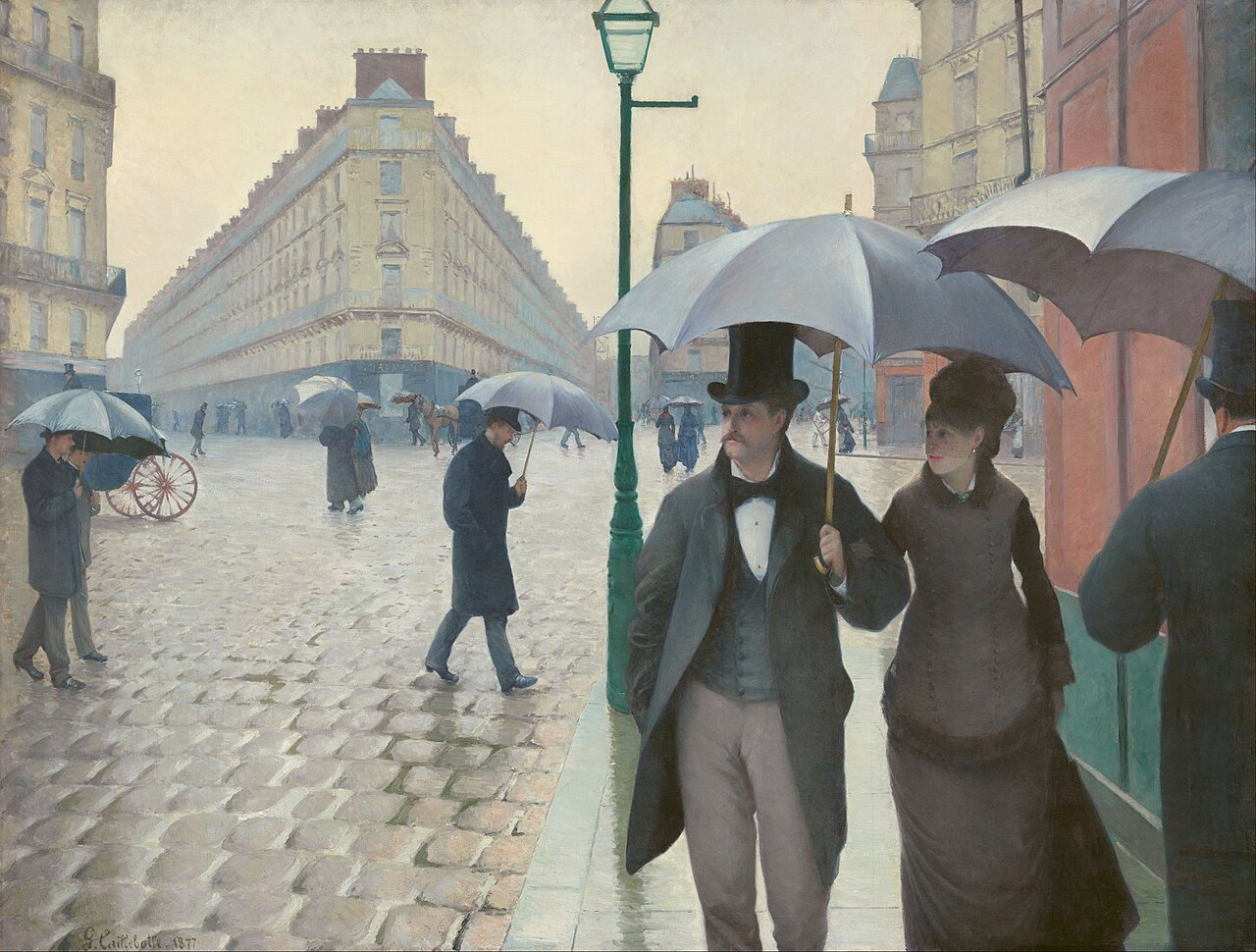
Umbrellas: The Aesthetics of 19th-Century Urban Life


From The History Avenue:

 Appearing in Ancient Egypt around the 25th century BC, umbrellas evolved and took on different purposes. In Ancient Egypt, Akkad, and Persia, for example, umbrellas served as status symbols, often tied to regal processions. In Ancient Greece, fashionable ladies used umbrellas as a style statement. In Rome, maidservants also used umbrellas to protect high-status women from the sun. There are rare mentions of umbrellas used for protection from rain. During the Middle Ages and the 16th and 17th centuries, umbrella popularity declined. Umbrellas were mostly reserved for clergy and religious processions. Records also note Italian riders using them as protection from rain. 

In the 18th century, things changed. Umbrellas were mostly used by women to protect themselves from rain. There was also a common perception that umbrella users were “vulgar” and didn’t have their own carriage to escape from rain. Apart from women, the most frequent users of umbrellas were the lower classes, who saw them as protection from sudden downpours or long, slow autumn rains. The first lightweight folding umbrella in Europe was introduced by French merchant Jean Marius, who had a shop in Paris. Princess Palatine purchased a model in 1712 and introduced it to her aristocratic friends. Very soon, umbrellas became a hit fashion statement in Paris. This paved the way for luxury umbrellas where the handle was especially important. The makers of umbrellas paid a lot of attention to crafting special handles depicting animals and having special shapes made from precious materials and carefully ornamented. In England, Jonas Hanway, a merchant and the founder of Magdalen Hospital, was the first person who braved public ridicule by carrying an umbrella in public. By the end of the 18th century, umbrellas were widely accepted by English gentlemen. (Read more.)


Share

Sunday, August 23, 2026

The Modesty Fallacy

 Worrying about female modesty has become an obsession among many Christians. Yes, there is more flesh exposed than there was in past times. But there is such cult-like behavior in many Catholic circles, including homeschooling groups, that has nothing to do with Church teaching nor with Sacred Scripture. I knew one group of young mothers where no one could wear cologne. Another group is saying you cannot take Catholic children to the beach because of what they might see. People make up their own rules that have nothing to do with tradition but with their own irks and quirks. They are the new Puritans. And as a historian I can tell you that standards of modesty among Catholics have changed and fluctuated a great deal for 2000+ years. I will  never forget the reaction of a devout lady when she was shown the original edition of my novel Trianon with the beautiful LeBrun portrait of Marie-Antoinette and her children on the cover. "She's wearing a low-cut dress!" was the exclamation. As for immodesty being connected to rape, Muslim women are raped even when they are covered from head to toe. And what about all the nuns raped by Communists? And I have lamented about all the young Catholic women making themselves deliberately unattractive in ugly, shapeless clothes as a badge of piety.

Lindsay T. has an interesting series of articles on her substack.

The virtue of modesty is defined in the Catechism as “a virtue of the heart” which “guides how one looks at others and behaves toward them in conformity with the dignity of persons”.[7] How men and women dress is important, but judgement of one’s degree of modesty is not the responsibility of the on-looker. In fact, the on-looker should employ modesty in how he looks and behaves towards the other person.

Pope John Paul II, in his book Love and Responsibility, also places responsibility of chaste thoughts on the on-looker:

The virtue of chastity is underdeveloped in anyone who is slow to affirm the value of the person and allows the values of sex to reign supreme: these, once they take possession of the will distort one’s whole attitude to a person of the other sex. The essence of Chastity consists in quickness to affirm the value of the person in every situation.[8]

If an onlooker is tempted to lust by a woman wearing yoga pants or spaghetti straps, I would suggest their attitude towards the other sex has been distorted; they have allowed “the values of sex to reign supreme.” The focus should be on affirming “the value of the person in every situation.”

The culture around Franciscan University, though it professes to teach and encourage a Catholic sexual ethic, has proven repeatedly that it does not affirm “the value of the person in every situation” when it comes to cases of harassment and assault. In fact, it has repeatedly favored the perpetrator—which is most often male—and has scapegoated alleged victims—who are most often female. The questions that female students have received upon reporting harassment or assault prove the strength of the prevailing group theory: It can’t be the man’s fault. There must be something the girl did to incite, invite, or welcome that behavior.

[....]

As a Catholic woman and mother, it concerns and affects me when, at the local Catholic high school, a teacher who is also a Franciscan graduate tells a classroom that “rape culture” is a product of feminism (See Krason: “The sexual harassment frenzy… is the latest poison from the Sexual Revolution”) and many men’s lives have been ruined by false accusations. This group theory that women are responsible for men’s purity is a part of their cultural evangelism. The University’s sexual assault misinformation spreads with conviction. As long as this group theory can subsist—that women are responsible for male virtue—then the friars can sidestep accountability. A University that has protected abusers (who are overwhelmingly male) and mishandled (overwhelmingly female) students’ reports of harassment and assault will be seen as not only blameless, but as a conservative institution battling the woke, feminist agenda of “rape culture” (I hope that sounds as crazy to you as it does to me). (Read more.)

NOTE: Yes, there is a jab at Trump for something coarse he said years ago. He was saying how rich and powerful men are often able to get away with grotesque behavior towards women. He was not advocating the bad behavior, which is obvious when one hears the entire conversation.

Share

Friday, August 7, 2026

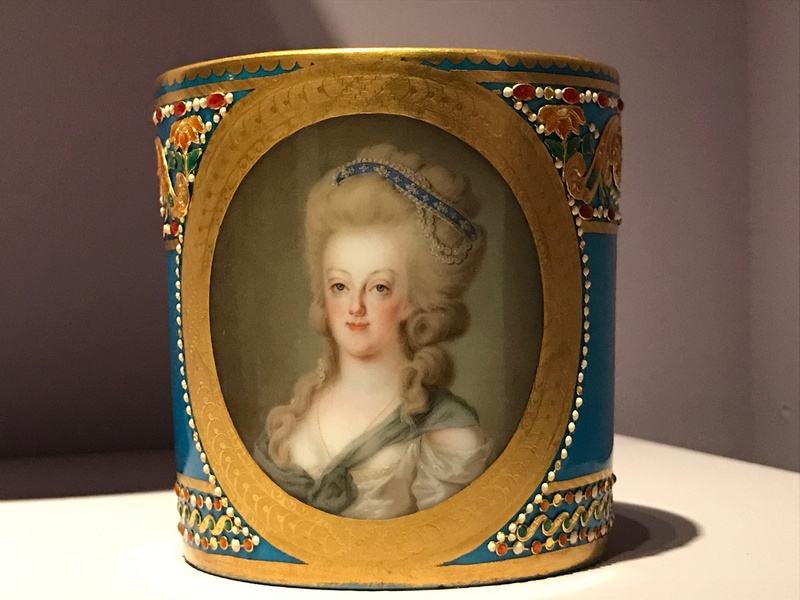
How Marie Antoinette Shaped Centuries of Fashion and Design

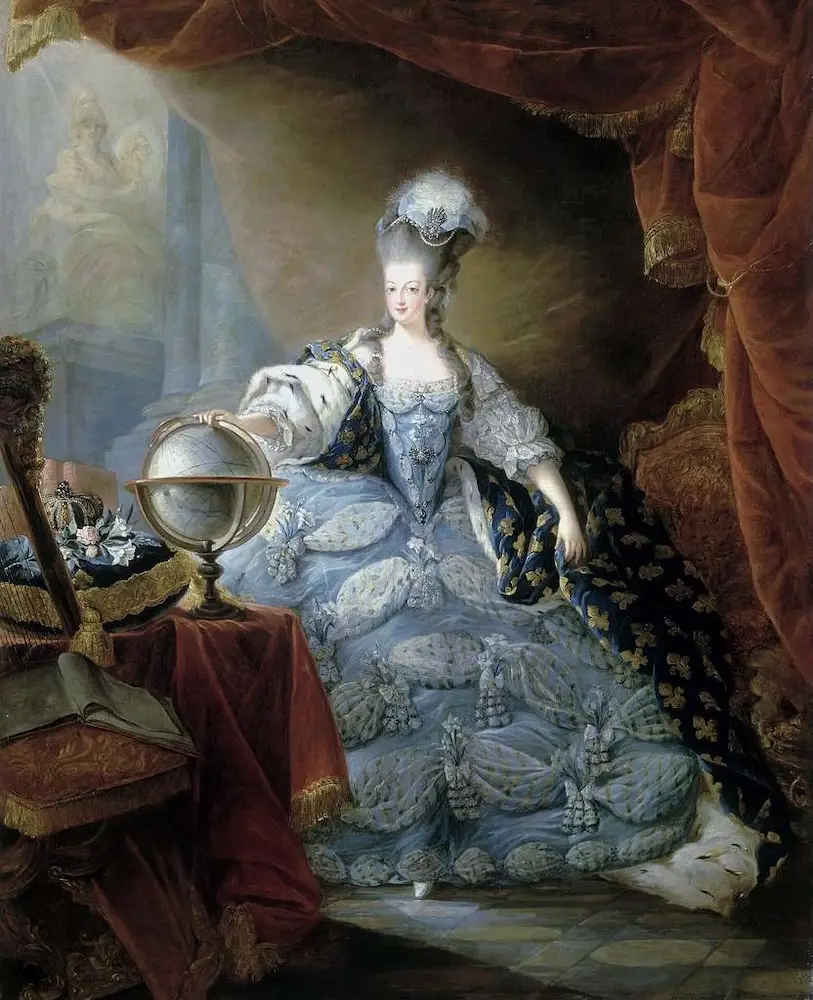
A young Marie-Antoinette in formal court dress, which she disliked.
 

painting of marie antoinette
Marie-Antoinette at 19 in a formal court gown for a state occasion, corseted with panniers (side hoops), jewels, rouge, and very elaborate hair. Some people think this gown was what she wore to her husband's coronation.

The Queen with her two oldest children in the less formal attire she preferred.


There are not many of Marie-Antoinette's gowns left because the really fine ones were made into Mass vestments and donated to the Church. The other gowns were given to her ladies, particularly the lady in charge of the Queen's clothes, who could then sell the gowns for extra income. From History:

“Court fashion was highly prescribed. Marie Antoinette wanted to break free of that and express herself,” says Jeffrey Mayer, professor of fashion history at Syracuse University. Her style signaled a departure from the Baroque era (17th–18th century), which was defined by lavish ornamentation. Instead, she embraced "an elegant, fresh, feminine style, made provocatively modern,” says Cox.

Inspired by Enlightenment thinkers like Jean-Jacques Rousseau, the queen embraced all things pastoral. She regularly used printed cottons such as toile de Jouy, a fabric depicting monochromatic pastoral scenes. Her playful style drew from the Rococo movement, an 18th-century decorative trend that featured curved lines, pastels, wooden marquetry, ribbons and florals. Marie Antoinette's embrace of these motifs helped popularize the style and laid the groundwork for the “French country” aesthetic. At the Petit Trianon, the queen’s personal retreat in Versailles, she harmonized interior design with fashion. Motifs like her beloved cornflowers adorned everything from her custom tea set to her gowns. Although earlier royals used monograms, she emblazoned “M.A.” on everything from banisters to cosmetics, creating a lasting association between monograms and luxury, says Cox. 

 [...]

The palace of Versailles was open to the public (as long as you met the dress code), and visitors could tour the queen’s closet. They could also visit the Parisian shop of Rose Bertin, Antoinette’s stylist and unofficial “Minister of Fashion.” They could even commission a copy of her latest look…as long as they waited the mandated two weeks after the queen debuted it.

Bertin’s Paris shop, Le Grand Mogol (The Grand Mogul) “functioned as an early couture salon, showing new collections each season and maintaining a fully staffed workroom. This was the blueprint for the modern 'fashion house' or maison de couture,” says Mayer. (Read more.)

The young Queen with flowers replacing jewels.

At a costume ball, escorted by her brother-in-law, the Comte d'Artois (Charles X)

In simple attire, no jewels, hair unpowdered.

Marie-Antoinette in simple attire, hair unpowdered, no jewels. But the portrait was seen as being disrespectful to her queenly status.


Share

Monday, August 3, 2026

A Romantic Manor House in Normandy

Image may contain Door Home Decor Architecture Building Housing House Indoors Interior Design Furniture and Couch 

 Image may contain Architecture Building Dining Room Dining Table Furniture Indoors Room Table Chandelier and Lamp

 Image may contain Christine Neubauer Architecture Building Cottage House Housing Grass Plant Garden and Nature

From House and Garden:

'It’s one of the most beautiful places in France,’ says Cordelia de Castellane of the Normandy village of Beaumont-en-Auge, situated a few miles south of the coastal town of Deauville. And just beyond the boundaries of this picture-postcard commune, set against the bucolic backdrop of the region’s farms, orchards and medieval fortresses, the Greek-French designer has recently completed the decoration of a charming country retreat, with parts of the distinctive building dating back to the 17th century.

The striking three-storey manoir has a traditional half-timber colombage façade and belongs to a literary couple who are longtime friends of Cordelia. ‘We share a love of dance and literature, particularly the works of Marcel Proust,’ explains Cordelia, who serves as artistic director of Dior Maison and Baby Dior. The 150-square-foot property unfolds across a trio of structures: alongside the main manor house – the interiors of which Cordelia describes as ‘super French’ – is a four-bedroom guest house with a more contemporary look, and a former rotisserie that now contains a palatial, beamed dining room.

Before making a decision to change a single thing, Cordelia spent some time staying alone in the house. This luxurious period of solitude proved fruitful. Immersing herself in the original spirit of the interiors and observing the movement of light across its rooms guided her approach to the layout and to the decoration, which is by turns calm and characterful. It is typical of Cordelia’s method. ‘I see the people, I feel the house – and it just comes to me,’ she says of how she brought this scheme to life. (Read more.)

Image may contain Window Bay Window Chair and Furniture

Image may contain Indoors Interior Design Bathing Chandelier Lamp Bathtub Person Tub and Home Decor

Share

Saturday, August 1, 2026

Chemise à la Reine vs. Grande Robe Française

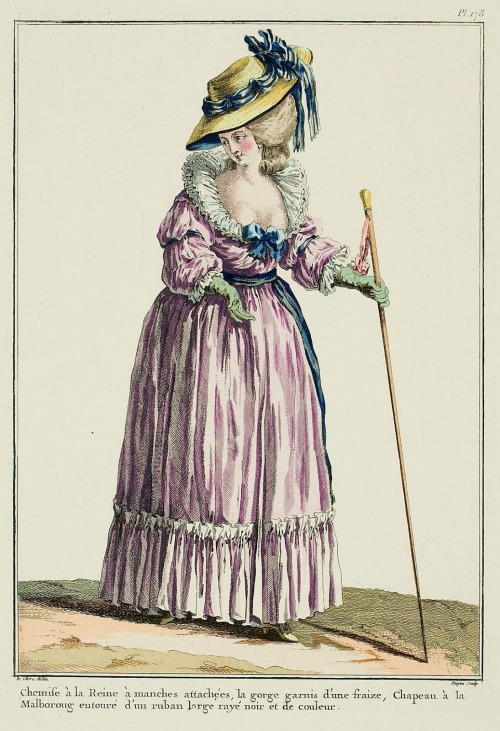
This simple style was introduced by Marie-Antoinette and, although she did not wear such a low neckline as shown in the fashion plate above, it still upset many people. The Queen intended the dress for quiet times at Trianon. Via Tiny Librarian:
Chemise à la Reine with bound sleeves, the neckline trimmed with a frill, Marlborough Hat wrapped with a wide ribbon striped in black and colour. (1784)
“Chemises” belonged to the category of simple and comfortable dress which was in vogue from about 1781 overall due to Marie Antoinette.

At the time, one said that an upper-body garment was made en chemise when “the beginning of the sleeves ended in two pieces which were added” (Dictionary of the abbé Jaubert, 1778).  One frequently finds in the notes of Mlle Bertin mentions such as “a piece en chemise of Italian gauze”, “a fichu-chemise* of Italian gauze”, etc.  On the date of the appearance of the “chemises à la reine”, Bachaumont fixes it for us in writing about the portraits of the Queen and Madame, by Vigée-Lebrun, shown in 1783: “The two princesses are en chemise, a costume invented recently for women.”

And he added, “Many people have found it inappropriate that these august personages are offered to the public in a garment reserved for the interior of their palace.”
(Read entire post.)

This gown is an example of the most formal attire possible, which the Queen was trying to get away from. However, people were more displeased by her simple attire than by her grand formal costume. More HERE. Share

Wednesday, July 22, 2026

Restoring a House in Saint-Antonin-Noble-Val

How Jinny Blom restored her mother's house in South of France with colour pattern and joy Architecture Building City... 

How Jinny Blom restored her mother's house in South of France with colour pattern and joy Home Decor Lamp Couch... 

How Jinny Blom restored her mother's house in South of France with colour pattern and joy Indoors Interior Design Wood... 

From Home and Garden:

‘I am very loyal,’ says the landscape gardener Jinny Blom. ‘If I make a promise, I’ll keep it.’ That is precisely how she ended up being the custodian of a house in a small village in south west France. Before Jinny’s mother Françoise died in 2013, she asked her daughter to look after her home in Saint-Antonin-Noble-Val. ‘It meant a huge amount to her,’ Jinny adds. ‘I feel she belonged there and so it became somewhere with real resonance for me.’

Her mother moved to the historic village, which is surrounded by a rugged limestone plateau at the bottom of a gorge on the Aveyron River, on something of a whim in the early 1990s. ‘It was a funny choice,’ says Jinny, ‘as she was very gregarious, and it was desolate and parochial back then.’ Things have, however, changed significantly since. Today, the inhabitants of the charming village include a Parisian interior designer and a former member of Yohji Yamamoto’s fashion design studio. As Jinny puts it, ‘There is a lot of nice stuff happening.’

Françoise sounds like a very wonderful character. Born in Madagascar, where her French father was a spice and timber trader, she was sent to school in England during the Blitz: she arriving speaking only Malagasy patois and didn’t see her parents again until she was an adult. ‘My mother was more English than anyone you’ve ever met,’ notes Jinny. ‘She spoke like the Queen and had her hair done like her. She was, to all intents and purposes, the Queen, except that she was – without a shadow of a doubt – French, because she wore couture, which nobody else did in Royal Leamington Spa, where we lived.’ (Read more.)

 How Jinny Blom restored her mother's house in South of France with colour pattern and joy Indoors Interior Design...

Image may contain Cushion Home Decor Indoors Interior Design Pillow Chair Furniture Bed Bedroom and Room

Share

Friday, June 26, 2026

The Textile Designers Behind Some of Jacqueline Kennedy Onassis’s Most Memorable Interiors

 From Elle Decor:

Jacqueline Kennedy Onassis is remembered not only for her enduring influence on American style, but also for the homes she carefully shaped throughout her life. From the White House and the Kennedy compound in Hyannis Port to her Fifth Avenue apartment and homes she shared with Aristotle Onassis in Greece, Kennedy approached interiors with the same elegance that defined her public image.

Newly surfaced, never-before-published letters exchanged between Kennedy and textile designers D.D. and Leslie Tillett reveal the depth of that involvement. While Kennedy worked with celebrated decorators including Sister Parish, Stéphane Boudin, and Albert Hadley, the Tilletts became her trusted collaborators whose textiles appeared over and over again. Together, the letters offer a rare glimpse into the creative partnership behind some of Kennedy’s most significant interiors.

By the time Kennedy arrived at the White House in 1961, D.D. and Leslie Tillett were already fixtures in American decorating circles. Founded in the 1940s, Tillett Textiles built its reputation on hand-screened fabrics and a customized approach to design, attracting decorators such as Sister Parish and Albert Hadley, as well as clients like Bunny Mellon. It was through Parish and her White House renovation that the Tillets connected with Kennedy. (Read more.)


Share

Wednesday, June 17, 2026

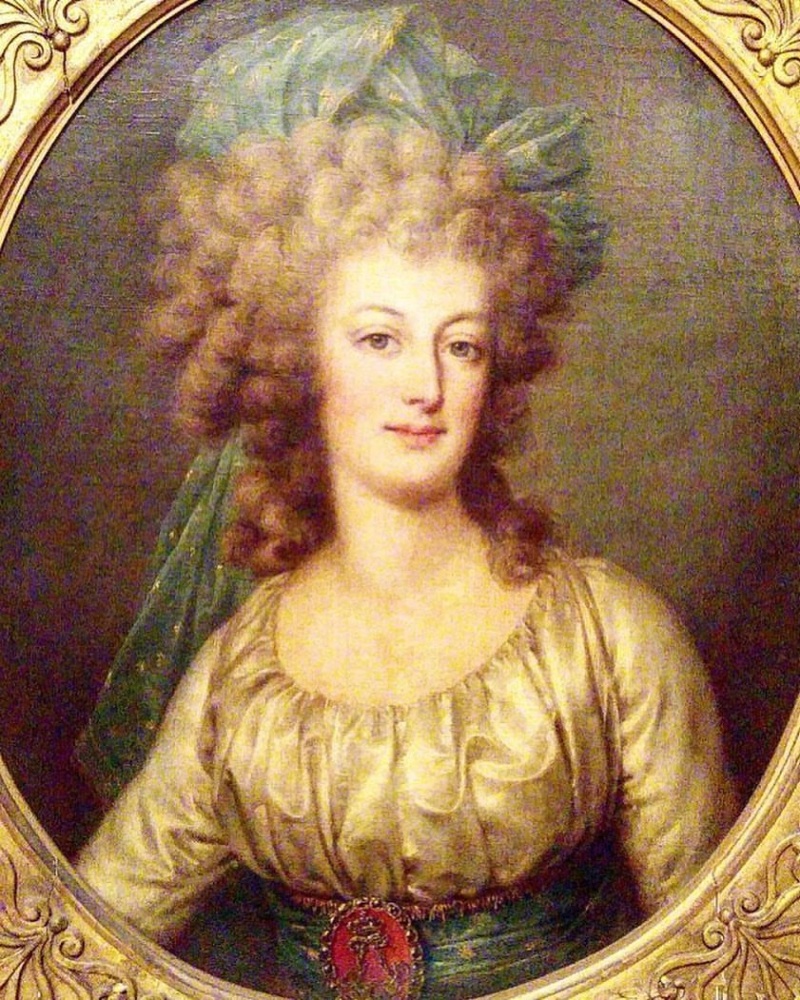
Rare Portraits of Marie-Antoinette


From Le Boudoir de Marie-Antoinette, HERE, HERE, and HERE. 

The Dauphine painted by Duplessis in 1773, for her mother the Empress.

And from around the web, it seems that one of the the popular "diary" novels written in the last twenty years was mistaken for a genuine diary of Marie-Antoinette by a researcher. From Anna Gibson:

Reminder to check the sources of your sources!

So an article by a fashion historian in a peer-reviewed journal thought that Kathryn Lasky’s The Royal Diaries novel was real and cited the information in it for an article about the evolution of the chemise dress. (Marie Antoinette had no diary, and she certainly didn’t somehow write in 1769 about dresses that start showing up in fashion journals in the late 1770s; nor did Rose Bertin time travel to meet Marie Antoinette when she was just an archduchess, or design her wedding dress, etc.)

So far I’ve uncovered two articles that cited this historian’s article while repeating the false information regarding Marie Antoinette’s diary and the robes à la créole. Completely understandable that these second writers would take this historian at their word because one would assume they know their stuff, but not understandable that the historian behind the original article found Lasky’s book, read the page in question, and then cited it as fact.(Read more.)

Share

Sunday, June 14, 2026

The New York City Unicorn Apartment

Image may contain Window Chair Furniture Windowsill Table Tabletop Desk Car Transportation and Vehicle 

From Architectural Digest:

Many try their luck at finding the New York City unicorn apartment—the charming, affordable, off-market unit. And most fail. But interior designer Sam Masters achieved the unthinkable: a prewar, one-bedroom in the heart of the West Village. Of course, this wouldn’t be a true New York City fairy tale without a bit of drama. It took Masters 16 years and six apartments to land here. But when he did, it almost felt scripted: “When I first moved to Manhattan, my friends and I went out one night and walked down Bleecker Street. It was just so alive, and I looked up at these very windows and wondered who lived there.” Of course, like any true New Yorker, Masters is quick to temper that memory with the caveat that the Village has “become overrun and a little annoying.”

 But Masters isn’t afraid of leaning into the (well-earned) city cliché. “[My apartment] definitely has a very 2000s-ish New York City feel,” the designer says. “It’s got that Sex and the City vibe of the West Village, which I love, and it’s quirky—you know, crumbling plaster walls and paper-thin windows, so it’s loud.” Manhattan is, after all, an island of trade-offs. (Read more.)

 Image may contain Indoors Interior Design Kitchen Sink Sink Faucet Plant Window Blade Knife Weapon and Windowsill

Image may contain Lamp Couch Furniture Cushion Home Decor Art Painting Architecture Building and Indoors

Share

Thursday, May 21, 2026

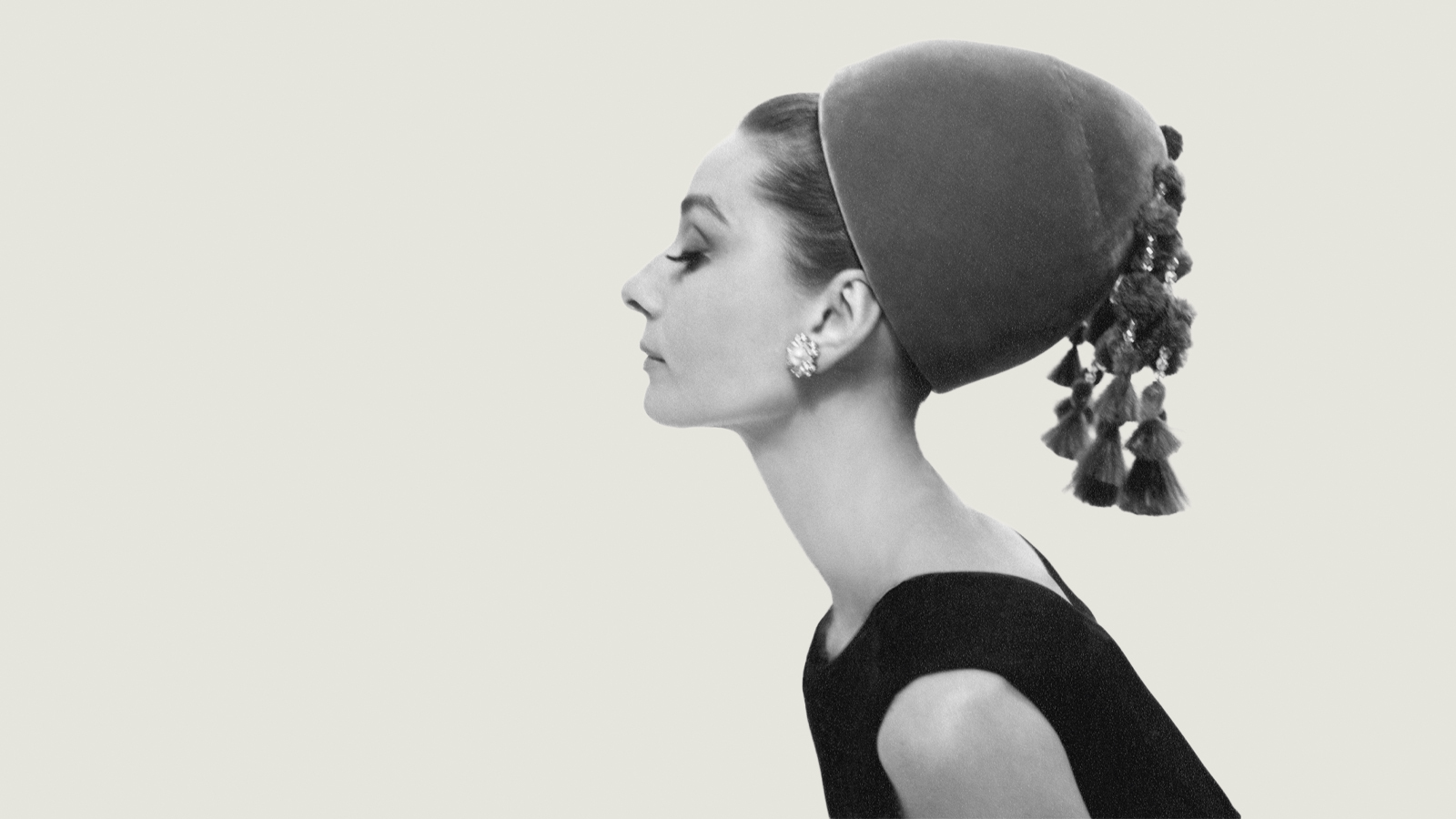
Headpiece Renaissance

 Audrey Hepburn in profile 

From Country Life:

Headdresses have been making, well, headline news, thanks in part to one of the UK’s most famous wearers of headpieces, Isabella Blow, whose biopic The Queen of Fashion is due out this year.

Issy, as she was known, saw them as not merely a fashion statement, but as an extension of her identity, famously saying: ‘I don’t use a hat as a prop. I use it as part of me.’

Their renaissance has also been fuelled by Instagram and a flurry of lavish country-house celebrations. At a party at Cornbury Park, Oxfordshire, home of the Howden family, headpieces were as central to the spectacle as the setting itself.

For the Narnia-themed event, the insurance magnate David Howden wore a spectacular Aslan-inspired lion headdress commissioned from the Canadian costume designer Maryam of Eastern Wind Studio by his wife, Fiona, who has long been a passionate hat collector and wearer of headpieces.

She sees them as ‘an opportunity to dress up as a character and add glamour, fun and theatre to events’. Her hat collection, sourced from street stalls in Venice, Italy, together with commissioned pieces, ‘makes great dressing-up material for my girlfriends and daughters’ — and for Royal Ascot, which David's company sponsors. Both David and Fiona were in the Royal Procession last year.

Hats and headpieces have long been regarded as little pieces of theatre, as well as signifiers of status in country-house circles. They acted as a kind of visual shorthand, announcing style, self-assurance and, occasionally, the scale of one’s estate. (Read more.)


Hat etiquette (a snob's guide), HERE.

Share

Wednesday, May 20, 2026

Lady Hamilton: The 18th-Century Beauty Who Revived Ancient Greek Fashion

undefined 

From The Greek Reporter:

Lady Hamilton, a woman who became famous in Europe for her astonishing beauty as well as her political influence, also spread ancient Greek-inspired fashion across the continent for the first time. Born into poverty and working as a scullery maid in her teenage years, she was scorned by her first two lovers who took advantage of her youthful beauty and then left her. Her third lover, however, was Sir William Hamilton, the English ambassador to Naples, who, against all social norms, then made her his wife. Lady Hamilton soon became a fashion icon and started trends, such as draping herself in simple garments that were inspired by classical times and ancient Greece, in particular. She called this Greek-inspired theme “Attitudes” and was known to have used her many shawls during her public performances based on ancient Greek symposia.

Goethe famously wrote of Lady Hamilton: “She wears a Greek garb, becoming to her to perfection. She then merely loosens her locks, takes a pair of shawls, and effects changes of postures, moods, gestures, mien, and appearance that make one really feel as if one were in some dream….”

“Successively standing, kneeling, seated, reclining, grave, sad, sportive, teasing, abandoned, penitent, alluring, threatening, agonized…one follows the other, and grows out of it. She knows how to choose and shift the simple folds of her single kerchief for every expression, and to adjust it into a hundred kinds of headgear,” he wrote. (Read more.)


More on Lady Hamilton, HERE.

Share

Sunday, April 26, 2026

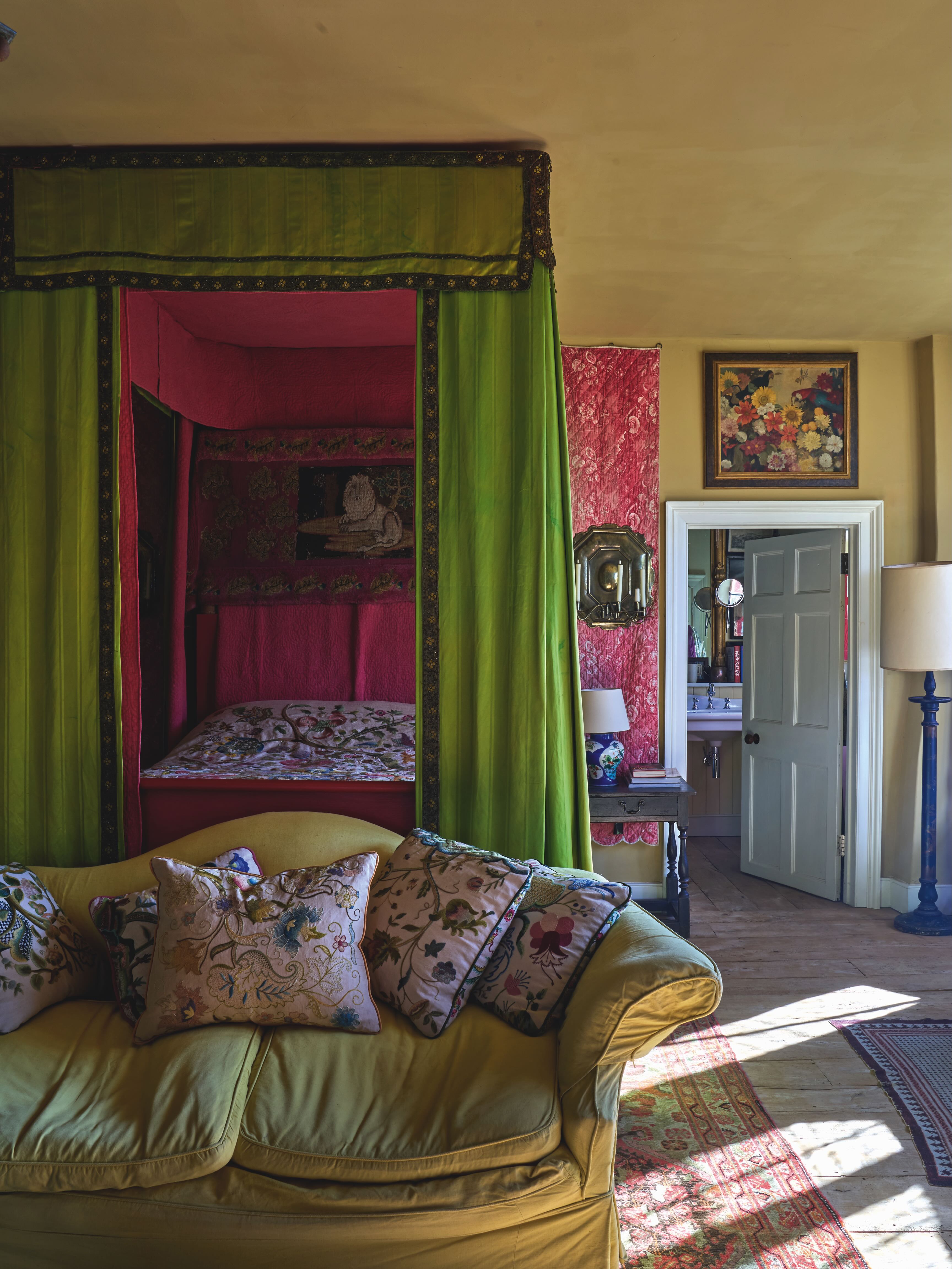
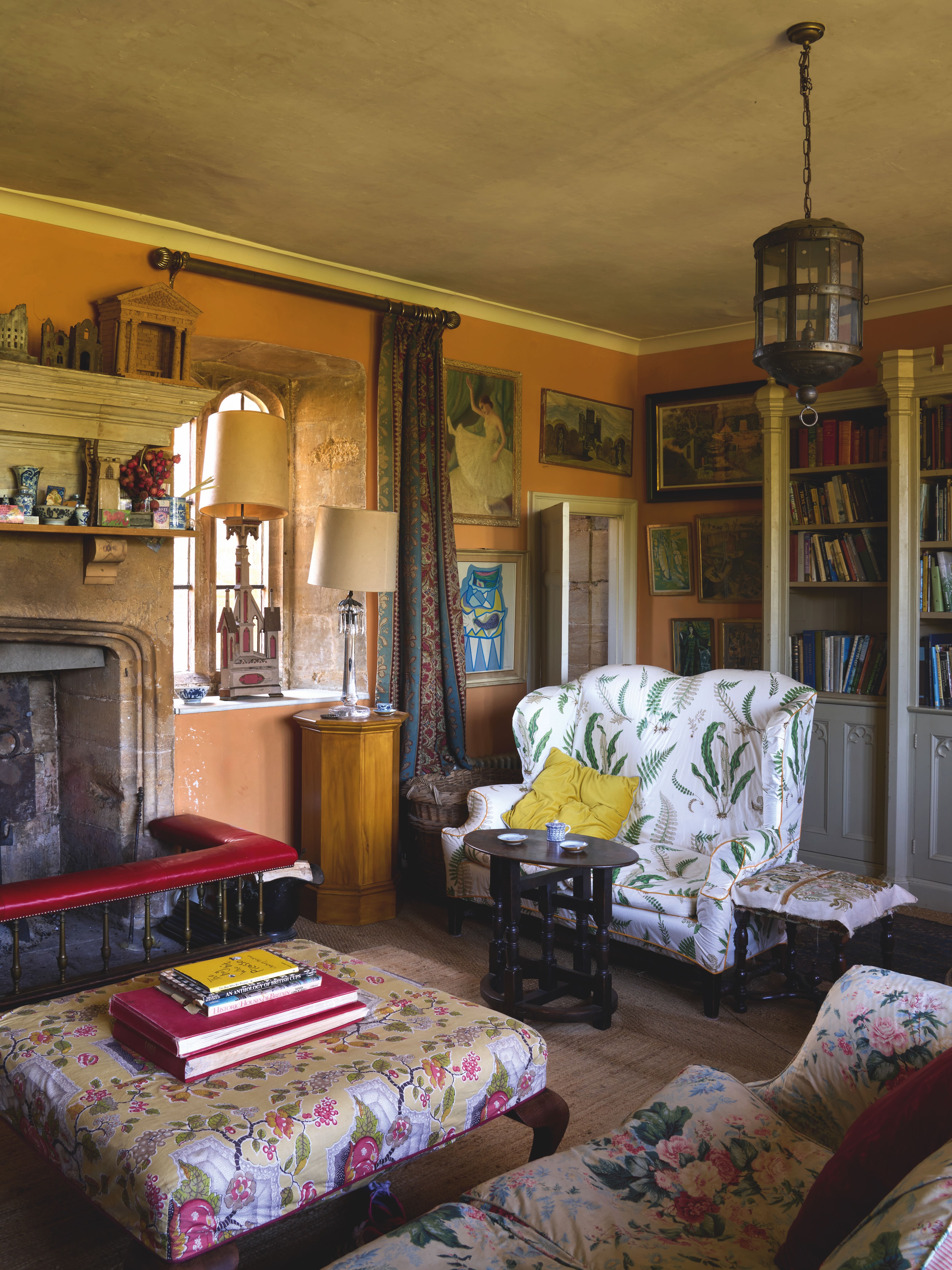
Ashington Manor in Somerset

 A bedroom at Ashington, featuring a yellow sofa and a green four-poster bed 

The sitting room, featuring a fireplace, and lots of furniture dressed in floral fabrics 

From Country Life:

There are many things to note about Ashington Manor in Somerset, not least that, in the 16th century, it was the home of Ursula St Barbe, wife of Sir Francis Walsingham, Elizabeth I’s chief fixer, whose machinations precipitated the gruesome end of Mary, Queen of Scots.

Although she primped it up with a fancy new façade and oriel windows, it had mixed fortunes in the following centuries until it was stumbled upon by Isabel and Julian Bannerman. The couple are makers of magical gardens, who have cast their spell for The King, Sting and Trudie Styler, Jasper Conran and Keith Tyson, as well as further afield, including in Lower Manhattan, New York, where a garden they designed commemorates the British and Commonwealth victims of the attack on the World Trade Centre in 2001. However, what is remarkable on a crisp morning beneath the mullioned windows of Ashington’s double-height great hall is that it is almost toastily warm, in a way that could never be achieved by even the most generously proportioned hearth.

Most people who spend time in leaky, historic piles resign themselves to the fact that if they want to enjoy the heady smell of old oak, the texture of worn stone and the gentle creak of mortise and tenon joints tapped together three or four centuries ago, the price they must pay is wearing thick socks and a gilet all day (and night). They cling to the Aga like a limpet and feel pathetically grateful when handed a hot-water bottle or find, to their delight, that someone has remembered to flick the switch on one of the world’s least expensive luxuries — an electric blanket.  (Read more.)

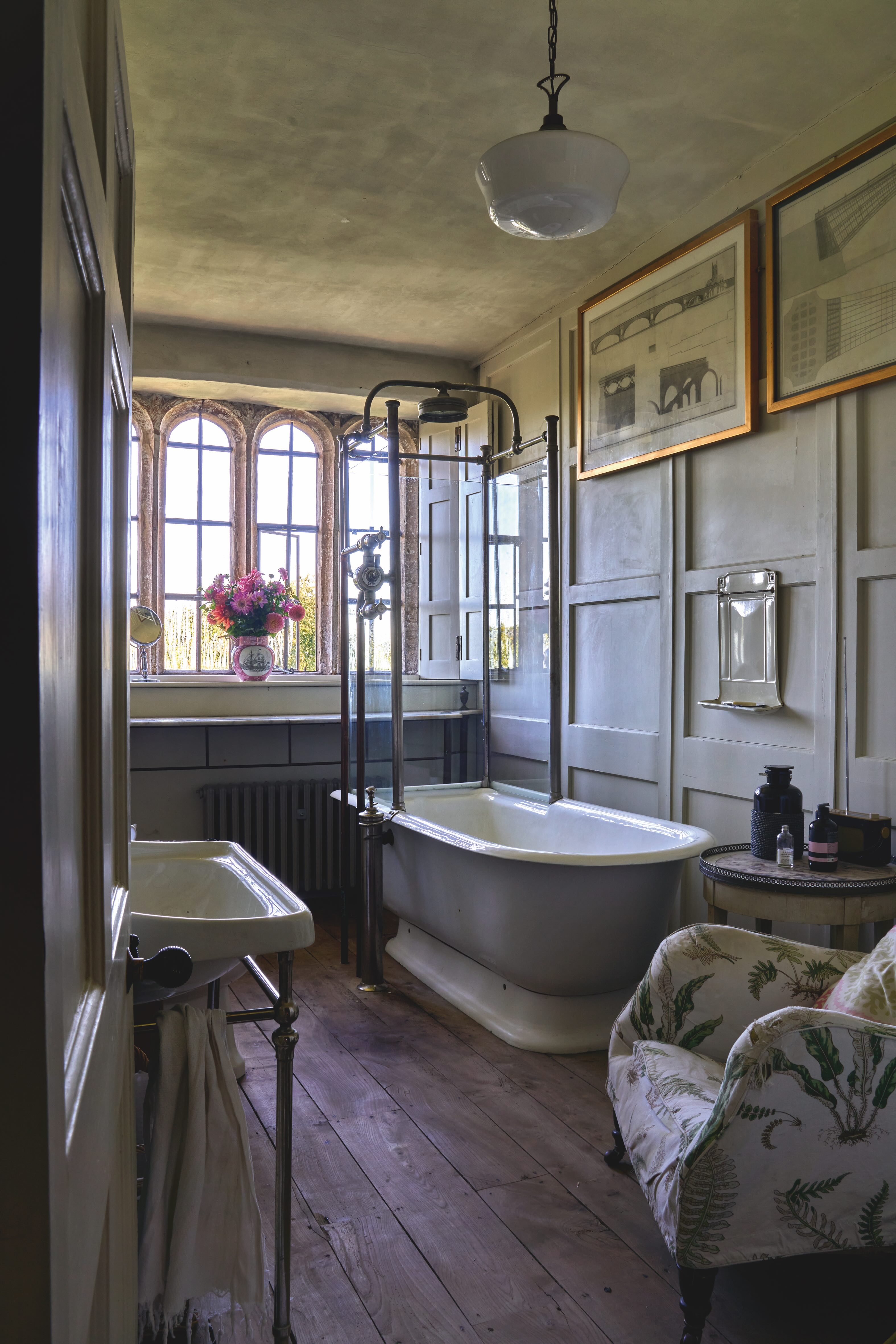
 A bathroom with a vintage bathtub and shower. There is also a chair

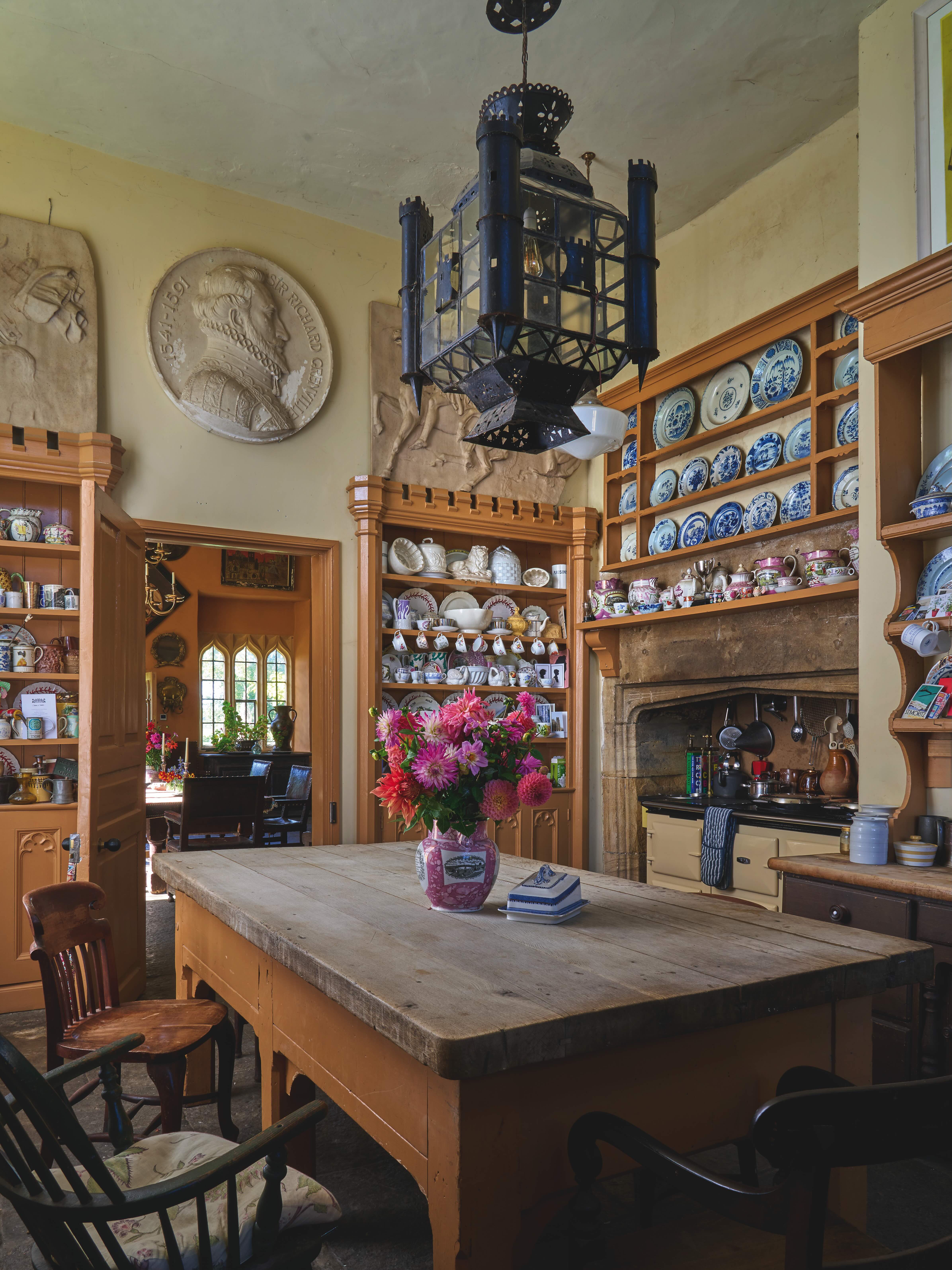
The kitchen. Above a large wooden table is a cast-iron lamp, reliefs can be seen on the walls and dressers are packed with plates.

Share

Monday, April 13, 2026

Audrey Hepburn’s Pearl Necklace In 'Breakfast At Tiffany’s'

 From British Vogue:

Under the lavender light of dawn in New York City, a yellow taxi stops in front of Tiffany & Co. on Fifth Avenue. A slender figure emerges, dressed in a sleeveless black Givenchy dress, her arms covered by elbow-length gloves. She moves slowly towards the shop window. The camera lingers first on her back: her hair swept into an elegant updo, almond-shaped diamanté clips at her ears, and the open cut of the dress revealing her shoulders. Above the black straps of her dress runs a five-strand pearl necklace, luminescent and striking. As the camera pans, the delicate features of Audrey Hepburn’s face come into view. Her eyes are hidden behind dark sunglasses; a small diamanté coronet crowns her hair. As Holly Golightly, Hepburn elegantly bites into a croissant and sips coffee from a paper cup.

The opening frames of 1961’s Breakfast at Tiffany’s are some of the most memorable – and most stylish – in cinematic history. Lily Collins (taking a break from playing Emily in Paris, Rome and potentially Greece), is set to star as Hepburn in a film about the making of the adaptation of Truman Capote’s novella. While Hepburn’s Hubert de Givenchy gown remains one of the most iconic dresses ever captured on film (she and the French couturier had a 40-year friendship, with him also designing her costumes for 1953’s Funny Face and 1957’s Sabrina), the pearl necklace she wears – which closes at the front with a sparkling clasp – is also one of the most memorable jewellery pieces in film history. Poignantly, the most famous pearl necklace in the history of cinema was not made of pearls at all. Rather it is non-precious costume jewellery, created by the French jewellery designer Roger Scemama.

To begin with, the film faithfully echoes the look described in Capote’s story, in which Golightly is introduced wearing “a slim cool black dress, black sandals, a pearl choker”. The multi-strand pearl necklace complements the architectural simplicity of the dress. On set, a necklace made of real pearls and precious stones would have been an impractical costuming choice: it would have taken longer to produce – and of course cost far more. But most importantly of all, it would not have been right for Holly Golightly – a young woman in the process of inventing her identity and her place in New York society. As her supposed talent agent, OJ Berman, memorably tells Paul Varjak (the “kept man” and struggling writer played by George Peppard): “She is a phoney.” Costume jewellery, therefore, becomes a perfect metaphor for a character whose glamour is largely performative. (Read more.)

Image may contain Person Head Face Smoke Book Publication Clothing and Coat

Share

Friday, April 10, 2026

Color Psychology

camino rivestito con piastrelle 

bagno blu 

From Architectural Digest:

The project began with a clear concept: to make color a key component of the space. “We didn’t use color as merely a finish, but as a design element,” explains architect Ciro Scognamiglio of AreaDieci Architetti—alongside Francesca Sannino, he was responsible for the apartment’s reimagined interior design. Instead of tackling the previously modern interior as a neutral box to be repainted, the architect duo created a coherent design strategy in which every vertical surface and piece of furniture participated in a precise system built around color. Cooler tones, which are used throughout this project, evoke tranquility and a sense of spaciousness. The interior firm mainly stuck to this side of the color wheel in their renovation. Now, inside the apartment, light bounces off jewel-like surfaces, and color becomes a tool to connect spaces, not separate them. (Read more.)
cucina verde vetrata dicroica appartamento colorato

Share

Tuesday, April 7, 2026

Easter Bonnets

Miss Janice explains the etiquette of wearing hats, gloves and corsages.

 Hats are a beautiful accessory and certainly popular to wear on Easter Sunday. You may keep your hat on while indoors, but should remove it at dusk. Gentlemen should remove their hats when entering a building. Hat pins are lovely adornments to a hat and should be pinned on the right side of a lady's hat and on the left side of a gentleman's hat. Make it Southern...A lot of Southern gentlemen still tip their hat to a lady (some men were just raised right)!...All y'all know by now that you may start wearing your white shoes and carrying your white pocketbooks on Easter Sunday...Here's Jacqueline Bouvier Kennedy with Young John Fitzgerald, Jr. on Easter Sunday 1963...

 There is also etiquette to be followed when wearing gloves and corsages. Proper etiquette dictates that gloves are removed when entering a building, whether it is a tearoom or a church. It is not considered proper to shake hands while wearing gloves (only the Queen of England can get away with this) or to eat or drink while wearing gloves. Remove your gloves in a lady like fashion, one finger at a time. Always hold your pocketbook and gloves in your left hand so that you will be ready to shake hands at any time.Remember, only the Queen of England may wear gloves while shaking hands! Corsages are a tradition in the South and may be worn on Easter Sunday. Corsages are pinned to the clothing on the left shoulder. (Read more.)


(Artwork courtesy of Hermes)

Share

Wednesday, February 25, 2026

A Primer on Georgian Fashion

 'Costumes during the Reign of George III and First Years of the Republic 1778-1790', 1903, (1937).

How did people really dress in the Wuthering Heights era? From InStyle:

Another year, another classic literature adaptation on the big screen. The latest book getting the Hollywood treatment? Wuthering Heights, Emily Brontë’s gothic novel about the unbridled passions of free-spirited Catherine Earnshaw and her tortured soulmate, Heathcliff. Emerald Fennell directs the ultra-stylized interpretation of the story, which stars Margot Robbie and Jacob Elordi.

When the first trailer dropped for the film, Robbie’s on-screen attire caught the Internet’s attention. A see-through bridal look even went viral. Wuthering Heights is set between 1771 and 1802, leading fans to wonder: was the real Georgian era that daring?  

 Not quite. The film’s costume designer, Jacqueline Durran, told British Vogue she and Fennell weren’t aiming for historical accuracy. “Our dates are all confused in the sense that we’re not representing a moment in time at all—we’re just picking images or styles that we like for each character,” she explained.

Wondering what the novel’s characters may have worn in real life? Here’s a breakdown of how people dressed in the late Georgian era, the historical period that backdrops Brontë’s Wuthering Heights.

Before putting on their gowns and coats, Georgian women had to assemble their base layer of clothing. First came a shift or chemise, typically made of linen, according to the Victoria & Albert Museum. Then, they put on stays—boned undergarments for shaping and offering structural support.

“A pair of stays was a sort of early example of a corset,” curator Anna Reynolds explained in a video promoting the Royal Collection Trust exhibition Style & Society: Dressing the Georgians. “They shaped the body and they provided support, a bit like a modern bra. They fasten at the back with a single lace.” Next came the ever-important petticoat, an underskirt which was often purposely exposed when worn with a robe à la polonaise—more on that later. 

Finally, there was the matter of shaping the skirt to achieve a fashionable silhouette. By the late 18th-century (aka the Wuthering Heights era), wide panniers—side hoops extending from the hips to dramatically spread out a skirt—had fallen out of fashion everywhere but the court, per FIT’s Fashion History Timeline. Taking their place? Rumps, or bum pads filled with cork, which created the appearance of an exaggerated posterior. (Read more.)


There is a trend of anachronistic costumes in historical films, although Netflix's The Leopard has dazzling and relatively authentic costumes, to show it can be done. From The Guardian:

 For some, this current mood for anachronisms is being overstated. Helen Walter, costume and visual historian at the Arts University Bournemouth, isn’t “sure it’s as big or as unprecedented a shift as people are making it out to be”. Costume design, she says, “often says much more about the people who are making it than the original setting … it always says something about the time that it’s being made.”

True historical accuracy is also not actually possible. According to Waddington: “Every period thinks that they’re doing the period, but they never really are [there are] always telltale signs.”

When Oscar-winning costume designer Sandy Powell did Shakespeare in Love, she says “all of the silhouettes were the correct period cuts for all the clothing, but you can’t necessarily find period-accurate fabrics because they’re just not made in the same way now”. Powell remembers upsetting somebody by using an art deco lace to make an Elizabethan collar. “I thought, ‘Well, I don’t care,” she says. “It looks good. And actually, this isn’t a documentary’.”

Costume, says Walter, “like any other art form is not immune to fashion and general cultural trends”. But designers will ultimately be led by the film in question. “I do whatever feels right for the piece,” says Powell. Her upcoming work on The Bride! starring Jessie Buckley, is true to period but takes an anachronistic mood to “how clothes are worn more than the actual items of clothing”.

“It’s almost as if the punk that we know from, let’s say, the 70s or 80s, existed in the 1930s. What would it look like?” Often working with a lot of artistic license, with The Bride! she “had free rein to have fun and go mad with it but all within the period.” (Read more.)


Where was Heathcliff from? From Down to Earth:

Today, Liverpool is celebrated globally as the birthplace of the Beatles. However, the city is much more than that. Located strategically at the estuary of the Mersey river as it ends into the Irish Sea along the northwest coast of England, Liverpool once ruled the seas.

“The city was a center of commerce, and its famous docks formed a continuous line of sea wall for six miles. It surpassed all other English ports in terms of foreign trade particularly in Asia, Africa, and the East in general.  In fact, by mid-century, by any criteria, Liverpool was England’s “first port of empire,” writes Diane Robinson-Dunn from the University of Detroit in Lascar Sailors and English Converts: The Imperial Port and Islam in late 19th-Century England.

In Racial Hybridity and Victorian Nationalism: 1850-1901, Alisha Renee Walters writes that, “Susan Meyer underlines that in 1769, “the year in which Mr. Earnshaw found Heathcliff in the Liverpool streets, the city was England’s largest slave-trading port.” She also suggests that Heathcliff may be “the child of one of the Indian seamen, termed lascars, recruited by the East India Company.”

The story of the Lascars begins with the establishment of trade links between Mughal India and Stuart England. The East India Company was established in 1600 AD after being given a royal charter by Queen Elizabeth I. Later, Thomas Roe, Emperor James I’s envoy, led a mission to India and had an audience with Emperor Jehangir in Agra. This led to the opening of English (later British) ‘factories’ across the subcontinent.

British trade with the subcontinent meant that Indian goods like spices, cotton, silk, jute, indigo, tea, porcelain and opium, made their way to docks in London, Liverpool, Hull, Cardiff, Glasgow and other British port cities. By the 1720s, Bengal alone contributed over half of the East India Company’s imports from the Indian subcontinent.

This trade in goods opened passages to migration between India and Britain.

The term ‘Lascar’ is derived from the Urdu/Hindustani and ultimately Persian word ‘Lashkar’ meaning ‘army’. The Portuguese, great rivals of the British, first used it and it soon found its way into the British lexicon as well.

The Lascars really entered the picture after 1757. That year, the British under Robert Clive won the rich province of Bengal after defeating Siraj ud Daulah, its Nawab.

According to the portal South Asians in Britain, “South Asian seafarers, seamen and mariners, known as ‘lascars’, were first hired to work on ships by the East India Company in the seventeenth century. As the Company increased its control of territory in India and trade and merchant shipping expanded during the eighteenth and nineteenth centuries, they were recruited in ever increasing numbers. Employed on so-called ‘Asiatic’ or ‘Lascar’ Articles, which determined their rates and condition of employment, lascars were a source of cheap labour for shipping companies, who paid them significantly less than their European counterparts.”

The heyday of the Lascars was from the 1850s to the 1950s. That was the time when steam ships replaced sail ships. European sailors were not willing to work in the gruelling conditions aboard steamers. The labour shortage thus created was largely filled by Lascars.

Once they arrived in British ports though, the Lascars were in for a tough time. They were often abandoned to fend for themselves and often ended up destitute on the streets.

This was the situation especially before the Revolt of 1857, when the East India Company employed Lascars. Post the Revolt, the Company was abolished and the British Crown took over.

Many Lascars settled in British port cities where they worked as crossing-sweepers, ran lodging-houses or set up cafes and restaurants.

South Asians in Britain notes that “Men from diverse religious, regional and cultural backgrounds signed up as mariners mainly in the large port cities of Bombay and Calcutta. Initially recruited from the coastal regions of East Bengal, Gujarat and the Malabar coast in south-west India, as demand for their labour grew, workers from more rural areas of India, such as Assam, Bengal, the North-West Frontier Province and Punjab also signed up.”

In East Bengal, the Lascars mainly came from the Sylhet region. In his book, Bengali Settlement in Britain, author Faruque Ahmed notes that it was mainly Bengali Muslims, rather than Bengali Hindus, who became Lascars as religious injunctions forbade Hindus from crossing the Kaalapani.

Sylhet today is located in the northeastern corner of Bangladesh. At the time of the Partition of the Subcontinent, it was a part of Assam. (Read more.)

Share