


From The Conversation:
For whatever the land you possess, whether it be where sand
And gravel lie barren and dead, or where fruits grow heavy
In rich moist ground; whether high on a steep hillside,
Easy ground in the plain or rough among sloping valleys -
Whereever it is, your land cannot fail to produce
Its native plants…These words come the Hortulus: The Little Garden written by Wahlafrid Strabo (c. 808-849), who was a Benedictine monk from the monastery of Reichnau on an island in Lake Constance.
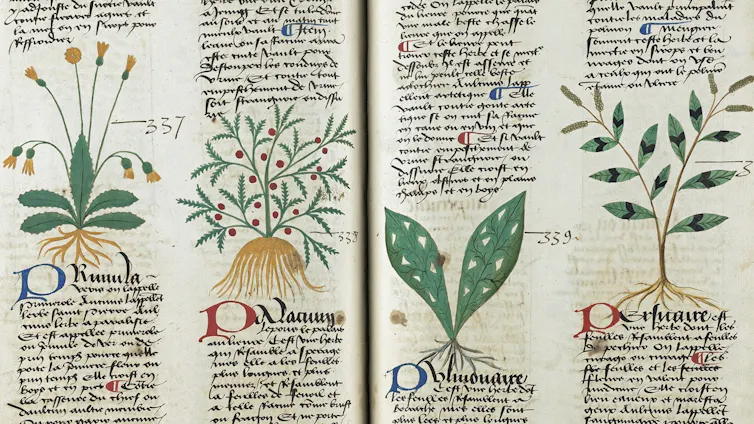
The 9th-century Hortulus is considered one of the most important European historical documents on gardening and plants, combining practical advice with its poetry. It continues to inspire modern gardeners in planting and design. The writings offer a tour of the monastery garden and the qualities of its plants. Twenty-nine plants are named, from Indian pepper to grapes, nettle, pennyroyal and peach. For the most part these are medicinal, though Wahlafrid includes some culinary observations, and a final detail about the rose as a source of soothing oil and symbol of the Virgin Mary.
The descriptions of the fresh and delightful taste of melon and gourds (bottle gourd or calabash) sit alongside longer discussion of the use and preparation of herbs and vegetables for health.
As a flavour of the way in which these observations were made, take the plant Southernwood (Aretemisia Abrotanum), not commonly known these days but common enough in the medieval period. Strabo notes that: “It has power against fevers, banishes stitch, and if your limbs ache with the elusive and mysterious pain of gout, it will bring relief.” (Read more.)











No comments:
Post a Comment