


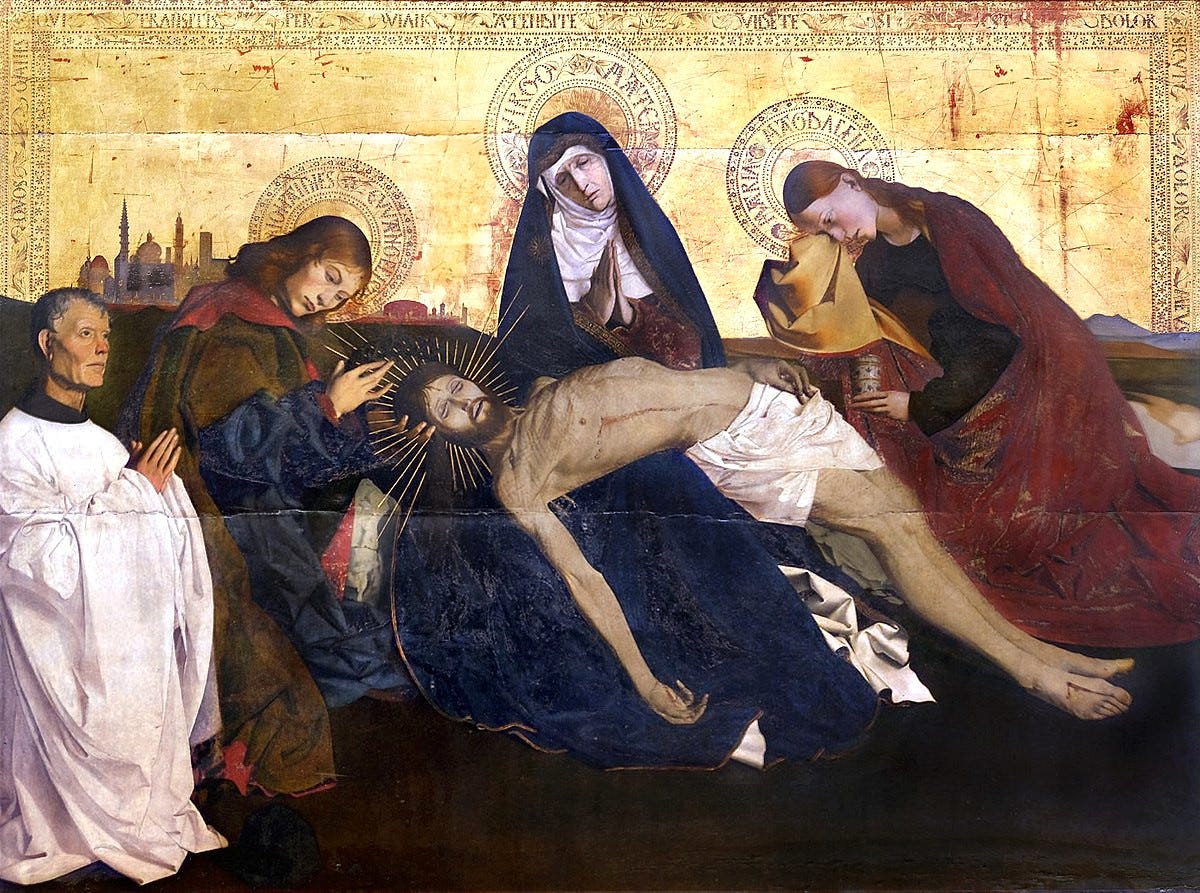
September is the month of Our Lady of Sorrows. From The Way of Beauty:
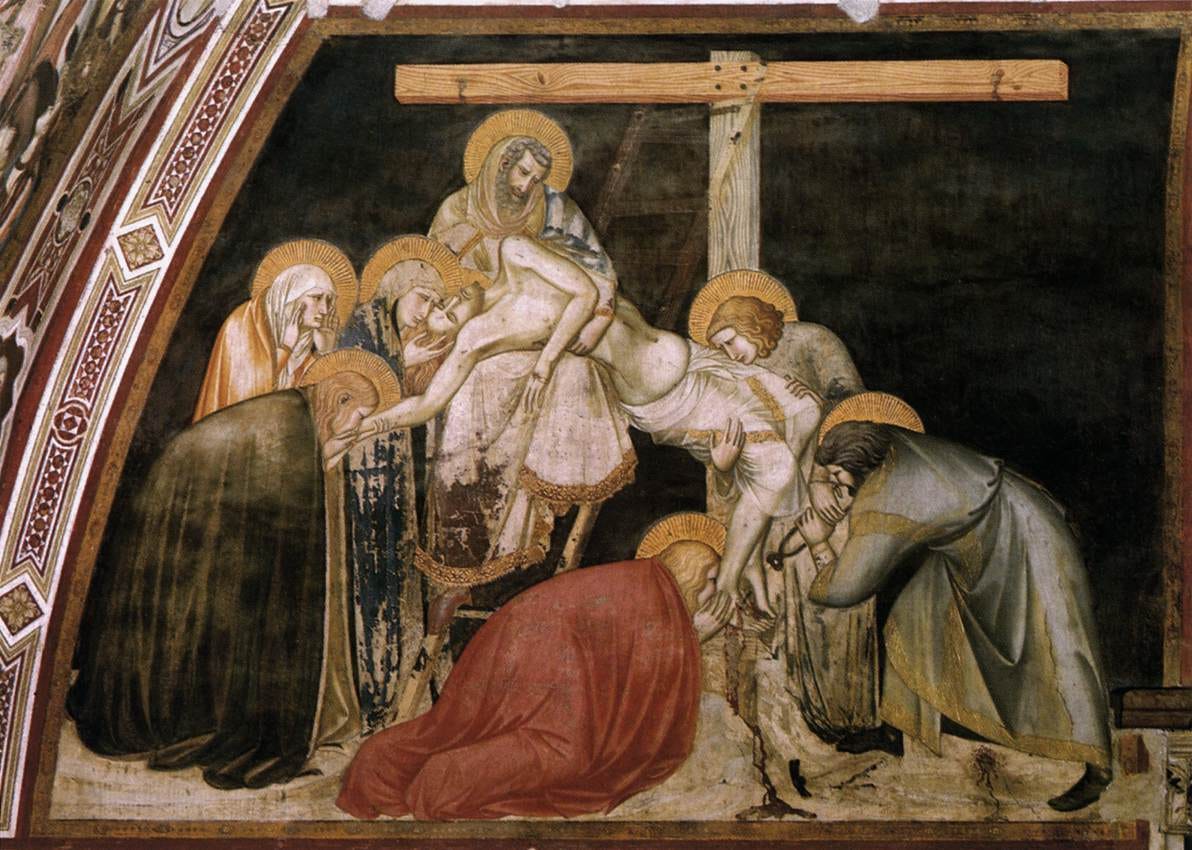
Pope Benedict XVI, in The Spirit of the Liturgy, identified three authentic traditions of Christian liturgical art: the iconographic, the Gothic, and the Baroque. Each is a legitimate expression of the Christian understanding of the human person and our relationship to God, and each communicates that understanding through a distinct visual language, thereby promoting prayer and worship among the faithful. The iconographic tradition, which dominated Christian art in both East and West until the 12th century, portrays man as he will be in heaven: transfigured, luminous, outside ordinary space and time. The Baroque, which developed in the 17th century, portrays fallen historical man in this life, in the full drama of suffering and grace. The Gothic stands between them, and it is the art most characteristic of the high medieval period in the West.
The Gothic is an authentic and distinct style of liturgical art that developed organically in the West from the iconographic prototype. As the change was gradual, any attempt to date its beginning involves some arbitrary choice. Most commentators settle on the mid-12th century, coinciding broadly with the completion of what is generally considered the first Gothic church, the Abbey of St Denis in Paris, in 1144. The name ‘Gothic’ was coined by High Renaissance commentators as a term of contempt. They held it to be a barbaric style belonging to the period of cultural decline that they believed had begun when the Goths overran the Roman Empire in the West a thousand years earlier. Historians today do not generally share that view of cultural decline, but the name stuck. Even those of us who admire Gothic culture and art continue to use it!
The impetus for the departure from the iconographic prototype stemmed from an increased emphasis on the reliability of human experience and the value of information received through the senses. This led to a greater curiosity about and appreciation of the natural world. Such appreciation was not new: Christians had always relied on sensory information and valued the beauty of the cosmos. What was different was the degree of weight now placed upon them.
Tied to this was the conviction that our world, though fallen and imperfect, is nevertheless good, ordered, and beautiful. There may be evil and suffering in the world, and it may not be as good and beautiful as it ought to be, but it remains God’s creation. This appreciation of the natural world and confidence in our ability to know it through the senses sparked curiosity and a desire to observe it more closely. One effect was the rise of scientific inquiry; another, the one that concerns us here, was an increased naturalism in art, a greater correspondence to natural appearances. The devotion to rational inquiry bound up with this cultural movement also led to a new approach to learning and to the establishment of the great universities, among them those of Paris and Oxford. (Read more.)








No comments:
Post a Comment