Tuesday, November 14, 2023

French Laundry Tips

 From Real Simple:

Writer Danielle Postel-Vinay may live in New York City and the Hudson River Valley—but she knows a thing or two about French culture. As a teenager, she met her first mentor in the French way of life, Jacqueline Manon, an antique shop owner in her Midwestern hometown, who took her under her wing and invited her into her home. After spending time in France, Postel-Vinay married a Parisian man, and her new French family and mother-in-law continued her education in the French way of keeping a home. Now, the writer's sharing all of the secrets she's gleaned from her French family and friends in her new book, Home Sweet Maison: The French Art of Making a Home.

The book is full of tiny tips and tricks learned from observing her French relatives and spending time in France. Moving through the home room by room, the book covers everything from the right way to set a table, to how to use home fragrances to evoke a mood. Woven with personal anecdotes, the guided tour of the French home is fascinating, but perhaps the most interesting and practical tips can be found in the chapter on the French way of doing laundry.

While Americans may throw giant piles of clothing haphazardly into oversized washing machines, and then dryers, Postel-Vinay describes the French way of doing laundry as more thoughtful. Will using the proper stain pre-treatments and air-drying your clothing really turn your most dreaded household chore into an art form? Perhaps not. But your white shirts will be brighter, your delicates will last longer, and your fitted sheets will always be properly folded. Here are five things the French know about doing laundry, according to Postel-Vinay. (Read more.)
Share

Monday, November 13, 2023

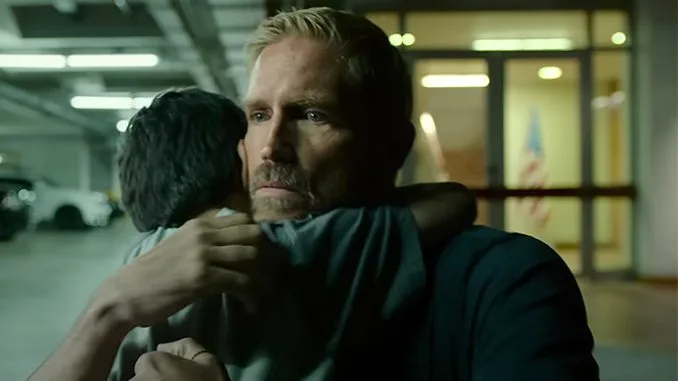
Sound of Freedom (2023)


 None of the positive reviews I read about Sound of Freedom prepared me for what a powerful film it is. Due to the subject matter, it is impossible to describe the experience as enjoyable, but definitely life-changing. I think that most Americans have trouble comprehending such an evil. Since I have relatives who have worked with law enforcement in rescuing children from sex slavery, I was already aware of the problem. But Sound of Freedom exposes the magnitude of the child sex trade, how it is going on all around us, and because people are blind, stupid, indifferent or complicit, it is allowed to flourish. Child trafficking has surpassed the drug trade in generating billions of dollars for a corrupt few at the cost of destroyed bodies, minds and souls. If governments really wanted to stop it, it would stop, but so many of our so-called leaders are part of the problem, not the solution. And I do not get the accusations about the film being linked to QAnon. Maybe some of the "Anons" endorsed it, but the story is based on verifiable events. Any law enforcement professional in any major city can tell you that human trafficking has become a problem.


 From Worth It or Woke?:

Every 40 seconds, a child goes missing in The United States of America. Of those taken, millions are sold into sex slavery. The average life expectancy of a child sold into sex slavery in the United States is 7 – 10 years of age, and The United States of America is one of the top destinations for human trafficking and is among the largest consumers of child sex....

How often have we heard some moronic actor and filmmaker say that their piece of garbage propaganda piece posing as a film is “important?”

Well, here is one that actually is, not because it’s excellent (it is), not because it’s gripping (it is), nor because it will haunt you long after the curtain falls (it will), but because its message is so very necessary and it’s goals so very attainable.

Sound of Freedom follows the early missions of the real-life Tim Ballard, played by Jim Caviezel, as he hears God’s calling to rescue children sold into slavery worldwide.

Simply put, Sound of Freedom is nearly perfect. Its gripping story is bolstered by superb performances, a crisp screenplay with economical yet powerful dialogue, and scenes of such terror as to give you nightmares, and even though it is the stuff of the most twisted horror films that will have you sweating and checking in on your sleeping children, it’s not graphic.

Much like how 1999’s Fight Club used the atmosphere and the reactions of those ancillary to the surrounding horrors to elicit the audience’s emotional investment, Director Alejandro Monteverde masterfully allows our imaginations room to breathe and us the freedom to fill in the monstrous blanks ourselves.

Very often in films with multiple children and most certainly in low-budget independent films, it’s a matter of course to have several performers who are not up to the level of its leads or the material. However, from the “smallest” role and up, God’s hands unquestionably guided everyone’s performance, with each delivering impressive and unprecedented emotional presentness. Even the child extras were pitch-perfect, a movie miracle.

Yet, in a movie full of exceptional performances, Jim Caviezel’s genius was laid bare for all to see. Undoubtedly, Jesus has a special place set at his Heavenly table for men like Tim Ballard, and in Sound of Freedom, Jim Caviezel shows us exactly why. In The Passion of The Christ, Caviezel captured what was certainly only a fraction of the otherworldly love of Christ, limited as Caviezel was by virtue of being only a man. Still, it was enough to transport the audience back 2,000 years to the side of our Lord and Savior. In Sound of Freedom, he expertly displays Ballard’s haunting sincerity and righteously obsessive drive in a complex performance worthy of every accolade. (Read more.)


 From The Washington Examiner:

 When Eduardo Verastegui learned about Operation Underground Railroad, a nonprofit organization that works to save children from sex trafficking, he knew he wanted to tell its story. Specifically, he wanted to tell the story of Tim Ballard, its founder and CEO.

Ballard had spent more than a decade at the Department of Homeland Security, where he worked on the Internet Crimes Against Children Task Force. When he realized that there were real children who couldn’t be saved without cutting an impossible amount of government red tape, he left in 2013 to create OUR, which boasts 4,000-plus predators arrested and 6,000-plus survivors recovered.

In addition to aftercare and preventative efforts, its website notes, the organization goes “to the darkest corners of the world to assist law enforcement in rescuing children.”

Statistics on human trafficking are hard to compile, but the State Department reports that it has 27.6 million global victims. Many of these are children, and many of them are continuing to be exploited right here in the U.S., not just through physical violence, but also a seemingly endless supply of child pornography. (OUR claims that “Americans are some of the top consumers AND producers of child pornography.”) (Read more.)

Share

Scenes of Genocide

 From the Wall Street Journal:

A fetal heartbeat flutters and then stills, a bullet lodged in the embryonic heart. The mother survives the shooting and her child’s stillbirth. A body that has been decomposing for almost three weeks lies on the autopsy table, riddled with knife and bullet wounds. Another is nearby, the man’s bluetooth receiver still clipped onto his shirt. Death came as a surprise.

This is Israel. I arrived on Oct. 19 to spend 10 days as a human-rights observer with the permission of the nation’s Foreign Affairs Ministry and help from Israel Defense Forces officer Kobi Valer. As an observant Muslim, I felt a duty to come and bear witness. What I saw will remain with me forever.

Hamas waged its attacks in the nation’s south, but hundreds of its victims have since been moved north. I encountered many of them at the morgues at the Shura military base near Ramle, some 15 miles southeast of Tel Aviv. I toured the Sammy Ofer Fortified Underground Emergency Hospital in Haifa, visiting the neonatal units whose tiny patients had recently been relocated in anticipation of further conflict. I examined bodies and ashes, incinerated teeth and bones. I saw toddlers, teens and adults, young and old, many of them bound, tortured and burned alive.

One word continually came to mind: genocide. No matter how it emerges, the monster is easy to recognize. As a doctor, I had a rare and panoramic view of the aftermath: the targeted people’s long, agonizing journey to death.

This isn’t the first time I have seen Islamist jihadism or even Islamist genocide. I’ve been to northwestern Pakistan and met child Taliban operatives groomed for suicide missions. I still attend to 9/11 first-responders in New York. I’ve been to post-ISIS Iraq to meet with Kurdish and Yazidi survivors of genocide. I’ve spoken with former ISIS child soldiers and the Peshmerga veterans of that brutal and bloody three-year war.

The Oct. 7 genocide was different, more barbaric than anything before it. The attacks were cloaked in the language and metaphors of Islam, yet corrupted with cosmic enmity for the Jewish people, Judaism, global Jewry and the Jewish state. They revealed again that Islamism is a virulent impostor of Islam with intentions anathema to the faith. And there was no doubt of Islamism’s guilt: I saw real-time footage generated by the Hamas commandos’ own

cameras. I heard phone calls exclaiming the Shahadah—the Islamic declaration of faith—as they murdered, executed, burned, pillaged and then broadcast their crimes.

There is a commonality I have found in the face of such destruction. People struggle to find the words to describe what happened. Israelis I met were still searching for how to recount their experiences. Some talked about a second Shoah, a second Holocaust. One Israeli detective disagreed: “We can’t call this a holocaust—not because of the numbers—but because the Nazis were systematic and institutionalized the killing, and we can’t call it carnage, because ‘carnage’ is too nice a word.” He looked at me with a painful gaze. I found my own words strangled in silence, except one: genocide.

Article 6 of the 1998 Rome Statute of the International Criminal Court defines genocide as a crime against humanity in terms identical to the 1948 Convention on the Prevention and Punishment of the Crime of Genocide. Its essential element is intent “to destroy, in whole or in part, a national, ethnical, racial or religious group.”

The Oct. 7 attack was premeditated, organized and targeted, seeking to destroy as many Israelis as possible. Hamas tortured and immolated its victims, including children, pregnant women and the unborn. Its men intentionally captured hostages, around 240 in total, reportedly from more than 40 countries.

They had intent. Eyewitnesses told me the terrorists came with tablets loaded with maps of the kibbutzim, blueprints and floor plans of homes, names of families and specific knowledge of service records and where Israeli veterans were living. Others told me that some of the terrorists spoke Hebrew and lured the unwitting out of their safe rooms into certain death.

This wasn’t like the pogroms of the 1880s, a frenzy of killing with rabid emotion. This was a methodically planned genocide. No such circumstances apply to Israel’s operation in Gaza, and so the description must not be the same. The sovereign state of Israel is destroying Hamas because Hamas is threatening Israel, which is working to mitigate civilian losses. The country has a duty to prevent further genocide against its people. Saying so doesn’t detract from the suffering of Palestinians who are captives of Hamas.

Two weeks after the attack, Queen Rania of Jordan suggested that the butchering of children had yet to be “independently verified” as I examined images of their remains in Ramle. The deceit felt as barbaric as the atrocities. There is no context, no nuance, that justifies genocide. Its intention is the same throughout the ages: the destruction of a people.

Israel, the West and the Muslim world must respond with necessary moral clarity: Define the Oct. 7 attacks as genocide. Legally designating the horrors as such ought to become a priority, independent of the war against Hamas, because the attacks need to be documented and prosecuted as crimes against humanity. Doing so is a matter of Jewish survival. The world has been silent in the face of Jewish genocide before. When we now say never again, we must mean it. (Read more.)

Share

Our Primordial Drive for Love

 From Big Think:

What happens in the brain of someone who gets dumped? One answer is increased activity in the nucleus accumbens, which is the same brain region that becomes active when you become addicted to cocaine, cigarettes, or gambling. Romantic love, in other words, is an addiction. That’s one key takeaway from the research of anthropologist Hellen Fisher, who argues that we should learn to respect the intense feelings of people who get romantically rejected. According to Fisher, a better understanding of how the brain processes love and romantic desire can help us find the right partner and sustain a meaningful, healthy relationship. (Read more.)
Share

Sunday, November 12, 2023

Charles Stuart, Prince of Wales

Charles II was the great grandson of Mary Queen of Scots, grandson of Henri IV of France, and first cousin of Louis XIV. From English Historical Fiction Authors:
Charles was the eldest son and heir of King Charles I of England and Queen Henrietta Maria (sister to Louis XIII of France). His grandfather, King James I of England (James VI of Scotland) united the crowns of Scotland and England upon the death of Queen Elizabeth I. Charles was born on May 29, 1630 in St. James’s Palace in London, and as the story goes, a bright star shone in the afternoon sky to mark his birth. Ironically, this star was Venus.

Charles took after his mother’s French heritage, with his dark looks. Henrietta Maria called him her ‘black boy', though not with affectionate fondness. Whereas most mothers are often blind to their children’s ‘imperfections’, Henrietta Maria was hypersensitive. Shortly after Charles’s birth, Henrietta wrote about her son to a former nanny, “he is so fat and so tall…I will send you his portrait as soon as he is a little fairer, for at present he is so dark I am ashamed of him.” Charles never became fair, but at 6’2” he fulfilled the promise of exceptional height. (Read more.)


Share

Reason’s Rigors and Revelations

 From Catholic Exchange:

On the other hand, think of the word “philosophy.” “Philosophy” conjures up ideas about beliefs and self-justification, a product of hope and aspirations, a matter of mere opinion and belief no matter how persuasive or subtle.  “Philosophy” is almost a universally accepted synonym for opinion in our modern times.

So, is science all it is purported to be?  And, is philosophy merely a matter of persuasive rhetoric, a matter of speculative justification, whose certainty pales when compared with the power and the breadth and depth of scientific inquiry and truth?  Well, in our modern world, science is certainty, truth, “the” sole source of matters of fact.  But, “philosophy” is merely opinion, despite how many others agree with any idea, any proposition, any truth claim. 

But, once the rigors of science reveal the crucial role of and the requisite reliance on the rigors of reason, then science’s power and dominance seem more attributable to reason’s order and power. For science is merely the rigorous use of reason applied to the physical world. And, to make matters worse for science, you quickly can discern how science is impotent and impossible without reason.  For science depends on reason, logic, rational order. But reason, on its own, is where the true power lies, as mathematics tells us so clearly. 

And, a brief example can clearly demonstrate the primacy and efficacy of reason.  Suppose you were inclined to make the case for science’s primacy, how could this case be made?  Well, you could point out all of science’s many triumphs.  But that doesn’t prove the exclusive nature of science as the sole source of truth.  It just portrays its many discrete truths about the physical world. (Read more.)

Share

Giant Aztec Snakehead Beneath Mexico City University

 From LiveScience:

An earthquake last year revealed a big surprise beneath a law school in modern-day Mexico City: a giant, colorful snakehead from the Aztec Empire. The snakehead dates back more than 500 years, to when the Aztecs controlled the area, which at the time was part of the flourishing capital of Tenochtitlan. The sculpture was discovered after a magnitude-7.6 earthquake struck Mexico City on Sept. 19, 2022; the seismic event caused damage and changes in the topography, revealing the snakehead beneath a building that was part of a law school at the National Autonomous University of Mexico, Mexico's National Institute of Anthropology and History (INAH) said in a Spanish-language statement. The Aztecs built temples and pyramids and worshipped a number of deities, including Quetzalcoatl, who was often depicted as a snake. However, it's unclear if this sculpture depicts him, the archaeologists said. (Read more.)

Share

Saturday, November 11, 2023

All the Light We Cannot See (2023)

I thought the film was wonderful and even if not identical to the book, certainly captured the essence. It is for general audiences except for very small children due to the violence of the war. I disagree with the bad reviews and am glad I watched it for myself before reading them. From Jocelyn Soriano:

I can’t help but relate to the movie when it comes to the time we’re living in. War may not exist yet where we are, but it doesn’t seem so far away. And we’re already living at a time of great spiritual struggle where there is a fierce battle between good and evil. Amidst all such darkness, let us not lose hope. The light we see around us may be growing dim, but that doesn’t mean it cannot be found.

“…the light you get from a piece of coal is actually sunlight. The point is… light lasts forever. For a billion years inside a piece of coal. But darkness… Darkness lasts not even for one second when you turn on the light.” – Marie, All the Light We Cannot See (Read more.)


For differences between the book and film, HERE. 


Share

Wolves in Sheep's Clothing

 From The Daily Wire:

Kirk Cameron called out Scholastic Books for glamorizing gender transitioning and pushing “sexually explicit” material in books, calling the publisher a “wolf in sheep’s clothing” that’s taken over schools and libraries. The 53-year-old actor dropped a lengthy post on Tuesday on X slamming the publisher for prioritizing “LGBTQIA+-themed books — including those that have obscene, graphic content” as he discussed his new partnership with non-woke SkyTree Book Fairs. (Read more.)
Share