Saturday, January 31, 2026

Leftist Hysteria in Minneapolis Is About Votes, Not Immigrants

 From Chronicles:

President Trump’s opponents are betting heavily that the political fallout from the thoroughly well-organized anti-ICE demonstrations by largely white residents in Minnesota’s Twin Cities will advance their aims. In response to what authorities have described as the largest anti-illegal immigrant operation in American history, tens of thousands of protestors were in the streets over the weekend, braving persistent subzero temperatures to make their voices heard.

Some hopeful leftists are already describing these localized events as the turning point in stopping Donald Trump. Others, including former Democratic Presidents Bill Clinton and Barack Obama, who themselves presided over millions of deportations at a time when their party still took our country’s immigration and border control laws seriously, are full of apocalyptic rhetoric about the future of democracy and suggest that the very ideals of America are at stake.

Some protestors are visibly following a detailed playbook shared on Signal group chats, which were exposed and published on X by independent journalist Cam Higby. This playbook offers instructions on coordinating activists to harass, frustrate, and disrupt ICE actions as they unfold. Higby released a list of the Signal chat’s administrators, and he and others also speculated that an admin on the Signal chats named “Flan” is Minnesota’s Lieutenant Governor Peggy Flanagan. Flanagan has released a statement denying those allegations. FBI Director Kash Patel said he has opened an investigation into the Signal chats.

According to media reports, the Minnesota National Guard was under orders to provide the protestors with coffee and donuts, while local law enforcement appears either under orders or unwilling to assist federal agents. Egged on by state and local politicians to be confrontational, many of the protestors have become violent, attacking businesses where ICE agents eat and sleep and harassing these agents and, in some cases, civilians who simply look like they might be ICE agents, in public places. (Read more.)

Share

The Transformation of the Roman Empire Into Byzantium

 From The Greek Reporter:

The transformation of the Roman Empire into what modern historians call Byzantium was not a single event but a gradual process, reaching a profound turning point in the 7th century. By this time, the Roman state had changed in territory, culture, language, religion, and political structure, becoming something new—yet it continued to call itself Roman. The 7th century marked the moment when the Ancient Roman world evolved into the medieval Byzantine Empire, which had previously been known as the Eastern Roman Empire.

Although Hellenistic culture had long prevailed, cemented by the founding of Constantinople in 330, the Eastern Roman Empire retained the core elements of imperial Rome. Its administration remained rooted in Roman institutions, its cities preserved Classical urban culture, and its emperors regarded themselves as heirs of Augustus and Constantine. Latin was in decline, however, even as it remained the official language and the emperors claimed dominion over the entire Mediterranean.

 The transformation was inevitable: Constantinople was emerging as the center of the empire while Rome’s influence waned. As historian Peter Brown observed, Byzantium represents continuity: “The Roman Empire did not fall in the East. It was transformed.” Centered in Constantinople, the Eastern Roman Empire remained a powerful and sophisticated Roman state but with a distinct Byzantine character—while still seeing itself as Roman. (Read more.)


A Byzantine princess in Kyivan Rus. From History of Royal Women:

As the sister of the Byzantine Emperor and as a princess born in the purple, Anna was a highly desirable bride. In 972, the Holy Roman Emperor, Otto II, married Theophano, a relative of the Byzantine Emperor, after requesting an imperial princess. Sometimes Theophanu is thought to have been a sister of Anna, but she was probably related to her more distantly. It is possible that Otto may have wanted to marry Anna instead. In 986, a Bulgarian prince appears to have asked Basil for his sister’s hand in marriage, but this was rejected.

In 988, the new French king, Hugh Capet, sent a letter to Basil, asking him to find a bride for his son, the future Robert II, of equal rank. It was likely Anna, who he was asking for. This arrangement did not go through either. It is believed that all of these proposals were turned down because, at the time, Byzantine princesses born in the purple were considered too important to marry foreigners, even if they were kings or emperors. The Byzantines at this time were also said to have still considered the Western Europeans as barbarians. Everything changed in 988 when Vladimir, Grand Prince of Kyiv, wished to marry Anna. (Read more.)

Share

Friday, January 30, 2026

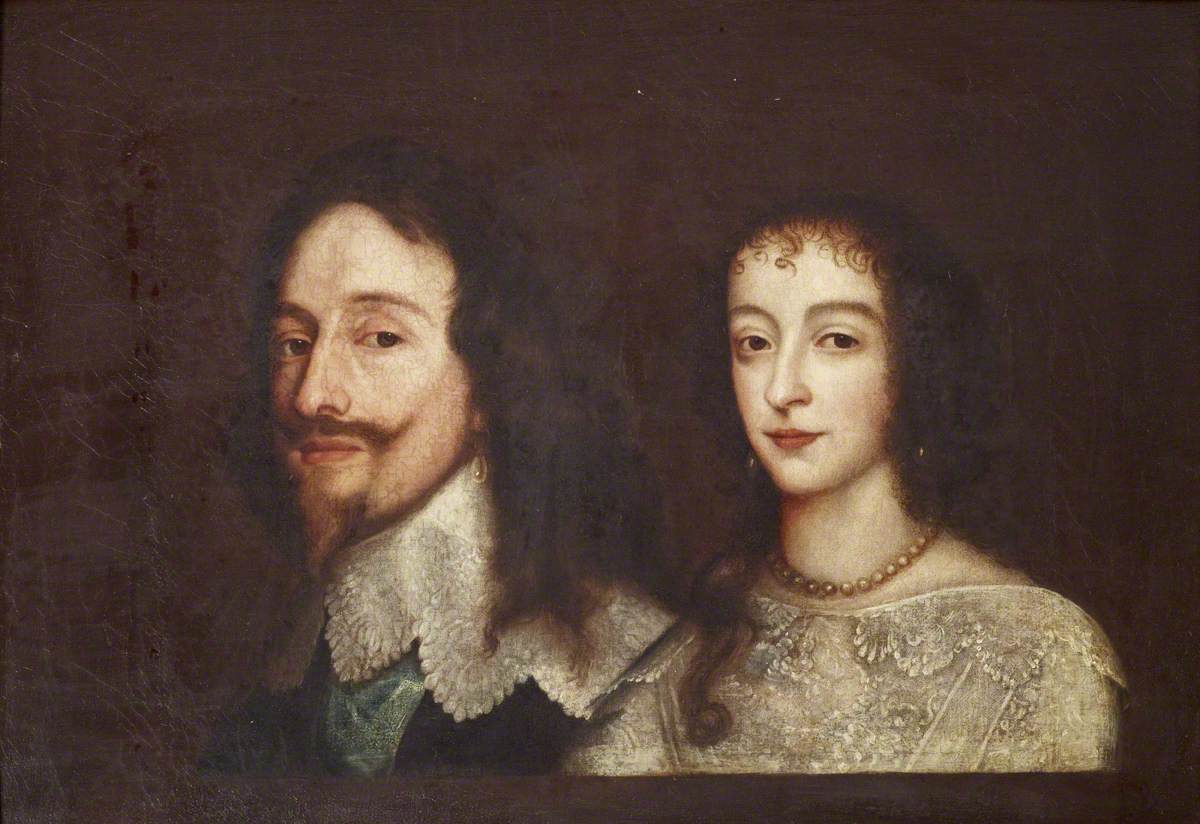
Execution of Charles I


He conducted himself with composure and gave his cloak to Dr Juxon, the Bishop of London, saying,“I go from to corruptible to an incorruptible crown where no disturbance can be.” He lay full length, placed his head on a low block and with one strike the executioner severed his head from his body.When he died a great groan went through the crowd.“Such a groan by thousands then present, as I never heard before and I desire I may never hear again.” (Read more.)


More HERE. 

On Charles' widow, HERE. My novel on the royal couple, HERE. Share

SignalGate and the Myth of the Peaceful ICE Protester

 From Amuse on X:

Based on what is now known, it is far more accurate to say that Alex Pretti functioned as an active participant in the ICE Watch insurgency in Minnesota. He was not a bystander. He was not merely present. He was trained, coordinated, armed, and operational. He provided actionable intelligence. He accepted assignments. He moved toward enforcement scenes in response to real time direction. And on the day of his death, he inserted himself physically into a confrontation with federal officers while carrying a loaded firearm and additional magazines, in violation of Minnesota law, after being warned by his own parents not to engage officers because of his anger.

To see this clearly, it helps to distinguish protest from direct action. Protest expresses opposition. Direct action seeks to obstruct. Protest communicates. Direct action intervenes. Protest attempts to persuade an audience. Direct action attempts to impose costs. ICE Watch was not organized around persuasion. It was organized around disruption. Its purpose was to locate, track, and interfere with immigration enforcement operations in real time.

Alex Pretti attended ICE Watch training. He participated in Signal groups used to coordinate these operations. He did not merely observe these channels. He contributed to them. He provided location updates. He responded to calls for support. He moved to spot ICE vehicles. He accepted assignments to go to enforcement scenes. That is not expressive dissent. That is operational participation. (Read more.)

Share

The Potato Famine: A Modern Catastrophe

 From Chronicles:

Sometimes great matters depend upon… vegetables. Ancient civilization was founded on the simple discovery that grasses could become grains, reliable and storable, allowing the emergence of fixed Fertile Crescent cities with rulers and philosophers. But vegetables can also yield disaster. The failure of the Irish potato crop in the mid-1840s not only brought terrible suffering to that island but has blighted Anglo-Irish relations ever since. Few other episodes have left such a toxic aftertaste, with over 100 memorials around the world and countless cultural references.

Canadian historian Padraic X. Scanlan has Irish antecedents, and generally left-of-center views. Still, he writes a careful analysis of an episode that is far from England’s finest hour. He has steeped himself not only in the cultivation, mythology, and natural history of the potato, but also in the cultural, economic, industrial, mercantile, and political currents which together heaped horrors on the Irish. He shows that what is often portrayed as a medieval-style catastrophe was in fact a modern one, a predictable product of the dynamic 19th century—and, furthermore, offers insights for our world regarding economic insecurities, environmental destruction, and ever-evolving pathogens. 

Sometime in 1844 or 1845, a cargo of seed potatoes from America was offloaded somewhere in Europe. Unfortunately, that cargo contained an unobtrusive mold called Phytophthora infestans, which launched itself onto the Old World with alacrity. Potato crops from Spain to Sweden were affected, causing dearth and deaths, but the direst effects were felt in Ireland, where the population was uniquely dependent on the potato. In 1841, there were some 8.2 million people in Ireland; by 1851, that number decreased to 6.5 million, through death by starvation or disease, or forced emigration. Such was the culture shock that for almost a century afterwards the population of Ireland would continue to decline. The Irish government still issues annual warnings to farmers about the likelihood of blight. 

Although Ireland had much fertile land and was famous for dairy and meat products, millions had been perilously reliant on the potato as early as the 1730s. There had been crop failures before; in 1740–41, the harvest was ruined by weather, and 300,000 died, a proportionally higher number than would die during the famine. Since its arrival in Tudor times, the potato had proved its worth as a cheap, easily cultivated, and highly nutritious staple. Grown and eaten close to home, the potato was largely insulated from market vagaries that were just becoming important with the rise of industry and commodity capitalism. Landlords encouraged it because it could feed more workers on less land, leaving acreages open to more lucrative grain or livestock. (Read more.)

Share

Thursday, January 29, 2026

Marie-Antoinette Was NOT a "Feminist"

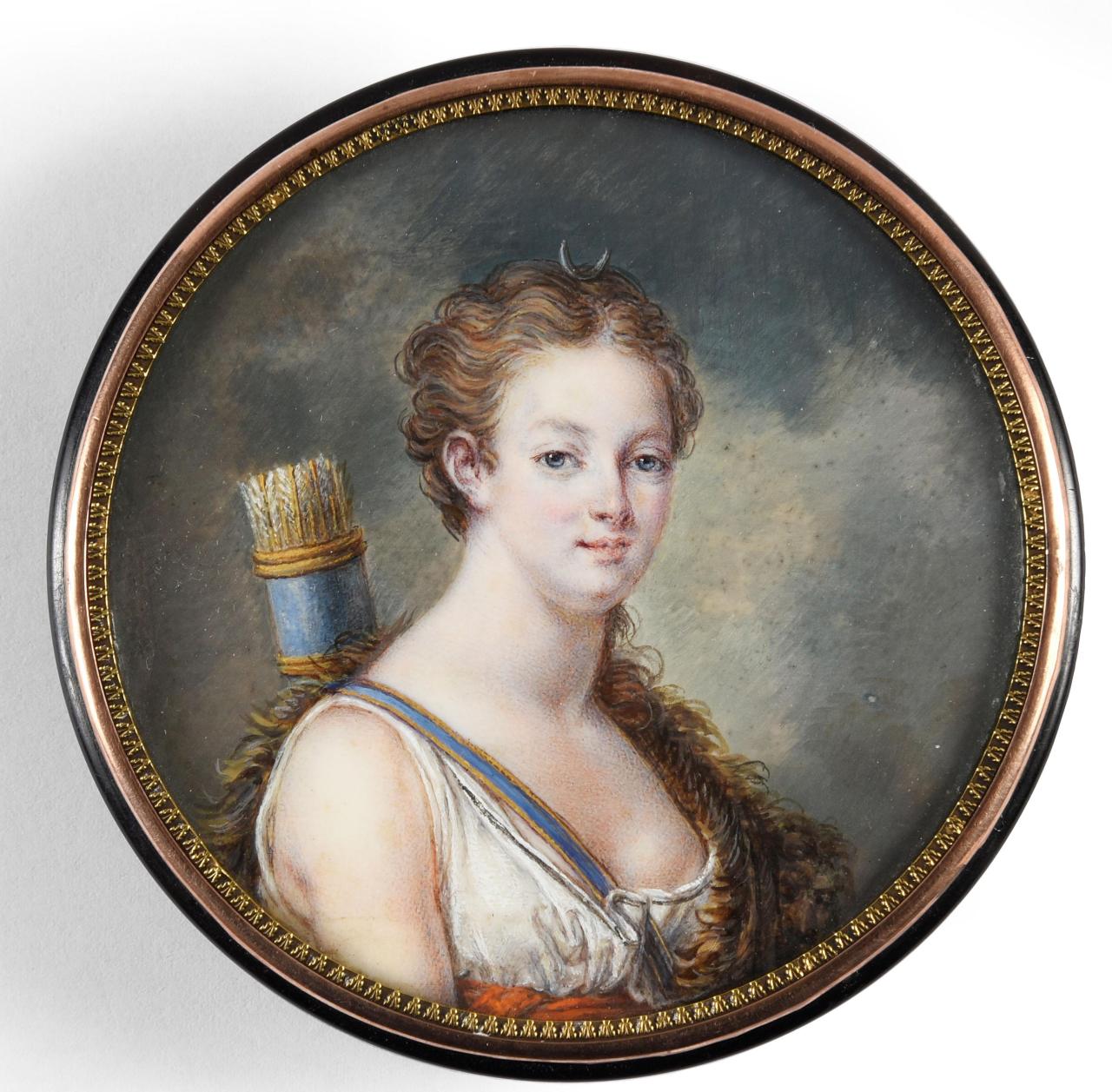
Marie-Antoinette as the Virgin goddess of the Hunt

 The PBS Marie Antoinette is the typical British propaganda about French royals being sex-crazed and decadent. But the ridiculous notion about it being a "feminist" interpretation is anachronistic, showing a complete misunderstanding of the historical role of women. From What to Watch:

Perhaps not surprisingly, since she takes the title role in the historical drama, Marie Antoinette, Emilia Schüle has a different opinion from most on the much-maligned last Queen of France.

"Marie Antoinette is framed in this one very particular way, but there was so much more to it," says the German actor. "Having played her, I think she’s a very inspiring, even feminist, human being who was fighting for her personal freedom and for her family." As the 18th-century period drama returns for Marie Antoinette season 2, Marie and her husband, King Louis XVI (Louis Cunningham) are in the Palace of Versailles and at the height of their power and popularity. (Read more.)

There actually were "feminists" around in Marie-Antoinette's lifetime, such as Mary Wollstonecraft, who did not see Marie-Antoinette as one of her number at all. Mary Wollstonecraft, called the "Mother of Feminism," saw the Revolution as the dawn of a glorious new era, as she describes in an excerpt from her book An Historical and Moral View of the Origin and Progress of the French Revolution; and the Effect it Has Produced in Europe. When the book was published in 1795, thousands of people had already been killed; the genocide in the Vendée, including the torture, rape and murder of women and children, was at its height.

Yet Mary Wollstonecraft dismisses the mass murders and extreme violence to be merely the result of "
the desperate and engaged factions." Otherwise, she lauds the "grand theatre of political changes" which were leading France "from a state of barbarism to that of polished society...hastening the overthrow of the tremendous empire of superstition and hypocrisy, erected upon the ruins of gothic brutality and ignorance." (I have no doubt that by "empire of superstition and hypocrisy" she was referring to the Catholic Church.) She rejoices that the French were at last to "grasp the sentiments of freedom" while being delivered from the "servility and voluptuousness" of the ancien régime.

Mary Wollstonecraft, unfortunately, was not herself unfamiliar with "voluptuousness and servility," as she later became as famous for her stormy love affairs as for her writings. Why certain women turn to feminism has always interested me; Mary's case is especially sad. Mary was the brilliant and sensitive daughter of an abusive and improvident father; she had to protect her mother and sisters from beatings and heaven knows what else. She later became involved with men who used her then abandoned her, contributing to her struggle with depression and suicidal tendencies.

Mary criticized Edmund Burke's lament for the death of Marie-Antoinette and the end of chivalry; she hated chivalry and thought that women should be able to take care of themselves. Poor Mary, however, could barely support herself and the child she had by one of her lovers. Finally, she found a man who loved her, William Godwin, and they married; their happiness was short-lived. She died as so many other woman died in those days, from complications in childbirth. Nevertheless, before her death she found great satisfaction in her motherly roles that she may not have found in other areas of her life. The child she brought into the world amid such great suffering became the gifted writer Mary Shelley, author of Frankenstein and wife of Percy Bysshe Shelley. All of which, of course, is a story in itself....

As for Marie-Antoinette, to the horror of feminists everywhere, she was taught to be obedient to the men in her life, beginning with her husband's grandfather Louis XV and secondly to her husband Louis XVI. She disobeyed only when she thought the law of God was being compromised, as when as a fifteen-year-old dauphine she refused to speak to the king's mistress Madame du Barry. Later, she refused to accept as a confessor any priest who had denied the papal supremacy. At her trial she declared that she was merely the wife of Louis XVI, and had been bound to conform to his will. It was the way she had been brought up, as were all women and girls just about everywhere. This does not mean she was not high-spirited and mischievous, but everything she did was done with her husband's permission. The idea of herself making decisions on her own would have been seen by her, as by most women of her day, as being unwomanly. Marie-Antoinette was not a great intellect like Mary Wollstonecraft or Catherine II or Madame de Staël. She read Rousseau but other than him she enjoyed novels, plays, histories and prayer books. While she believed in the reform of family life, with women taking care of their own children instead of farming them out to wet nurses, and had a great many charities to aid mothers and their children, she was in no way what anyone then or now would regard as a feminist.

Share

Hate Hoax? The Omar Attack and the Case for a Federal Investigation

 From Alexander Muse on Amuse on X:

A hate hoax, properly defined, is not a mere misunderstanding or a mistaken report. A hate hoax is a false or staged claim of a hate crime or bias motivated incident, in which the alleged victim fabricates, exaggerates, or materially misrepresents events to suggest they were targeted because of race, religion, ethnicity, sexual orientation, or political identity. Unlike misreporting caused by confusion, a hate hoax involves intentional deception and is often revealed through evidence such as surveillance footage, digital records, forensic analysis, or confessions. The concept matters because it names a distinct phenomenon, one that has predictable features and predictable effects.

One defining feature of hate hoaxes is immediate media amplification. Allegations of hate crimes fit powerful moral and political narratives, so major outlets often report them rapidly and uncritically, framing claims as established facts before investigations conclude. This amplification creates instant reputational harm to accused individuals or groups and embeds the story in public consciousness. Closely tied to this is the political utility of the allegation. Hate claims are frequently used to validate broader arguments about systemic oppression, political movements, or social decay. This gives activists, institutions, and commentators incentives to promote the story quickly. When evidence later contradicts the narrative, coverage is often delayed, muted, or buried. By that point, the correction rarely travels as far as the original claim. Accountability is minimal, and the original targets of the accusation often suffer permanent damage that is never repaired.

These dynamics are not theoretical. They have played out repeatedly in recent American history. In January 2019, actor Jussie Smollett claimed he was the victim of a racist and homophobic assault in downtown Chicago. He alleged that attackers yelled ‘this is MAGA country’ while beating him and placing a noose around his neck. The story dominated national headlines and was framed as proof of rising hate crimes. Within weeks, Chicago police concluded the attack was staged by Smollett himself, who had paid two acquaintances to carry it out. Prosecutors argued the motive involved career leverage and attention. The case became the most notorious modern hate hoax, and it permanently altered public trust in high profile hate claims.

In June 2020, NASCAR announced that a noose had been found in Bubba Wallace’s garage stall at Talladega Superspeedway. Media outlets and political leaders treated it as a modern lynching symbol. The FBI later determined the rope was a garage door pull that had been in place since 2019, before Wallace was assigned the stall. No criminal intent existed, but the narrative had already traveled the world. The episode demonstrated how institutional panic and narrative momentum can outpace evidence. (Read more.)

Share

What Europeans Found on the Most Isolated Island in the World

 From Literary Hub:

Europe came late to Rapa Nui, two centuries after Magellan led a pioneering Spanish expedition across the Pacific in 1521. Many of the statues were probably carved in those eight generations. When ships finally arrived—eight in all between 1722 and 1786, from Holland, Spain, England, and France, bringing a total of around 1,400 men—the visitors saw things they found hard to believe. There was a long tradition in Europe of representing named individuals realistically in stone, whether known persons or mythical beings or gods. The statues on the island were much larger, and far more numerous, than any standing at typical installations in Europe. And they seemed identical, anonymous, stylized, and alien. From the Islanders’ point of view, the visitors were equally strange, as they appeared and vanished overnight, over sixty-four years spending a total of no more than a week ashore. We may imagine that Islanders found it hard to stop talking and thinking about what had happened. But there must have been many who never saw a European.

Such brief and intermittent encounters had profound consequences, for the Islanders and for our understanding of their story, even now. It began on the Easter day when the Africaansche Galey signaled land. The Dutch West India Company had sponsored an expedition to search for a southern continent, which was thought necessary to balance all the land north of the equator. Jacob Roggeveen, a lawyer turned explorer, had wandered about the Pacific with three ships and found nothing. His crews were beginning to lose faith till they spotted a turtle and floating vegetation, and birds overhead. There was great joy, Roggeveen wrote in his log: They were about to discover Southland. But the imagined continent soon revealed itself as no more than a low, flat island. Rising plumes of smoke showed it was inhabited. Weather marked the occasion: They waited at a distance for thunder, lightning, heavy rain, and winds to clear.

The pioneer encounter occurred 3 miles offshore. The Dutch, spotting an old man approaching in a canoe, sent out a sloop to investigate. This unceremonial meeting was the first contact between people whose ancestors had parted tens of millennia ago in Asia, and whose experiences, cultures, and beliefs separately reflected that distance. It was an innocent event played out repeatedly around the world in various forms. A marker of unity. A harbinger of change and loss.

The naked man put up a good fight, but was overpowered and brought to the Arend, Roggeveen’s flagship. Curiosity trounced the Islander’s fears, and he seemed delighted by what he saw, taking a special interest in the ship—how it was made, the masts’ great height, the sails and the thickness of the ropes, and the guns, to which he gave particular attention. The sound of the ship’s bell and the sight of himself in a mirror scared him, and he appeared to be ashamed of his nudity. Offered a glass of liquor, he poured it down his face and tried to rub it out of his eyes. He put his arms and head on the table, and repeatedly raised them toward the sky, shouting loudly as he “addressed his gods.” (Read more.)

Share

Wednesday, January 28, 2026

The Wildest Adaptation Yet

two figures in historical attire standing in a moody landscape The costumes are deliberately inaccurate. The story begins in the 1780's but the costumes have no connection to the era. The chunky jewelry is of the sort which may have been worn in Imperial Russia but are out of place in a film about Yorkshire gentry. As for the casting, Margot is lovely but too old to play teenaged "Catherine Earnshaw," the "Edgar Linton" character is too dark for Catherine's pallid husband. I do think Jacob Elordi is perfect for "Heathcliff." Having an Asian actress for the part of Ellen is odd since the whole point of Ellen is that she is a tough, no nonsense Yorkshire woman, the same age as the protagonists but reared to be a servant. Ellen as principle narrator has a decidedly unromantic view of the characters as expected of a person with such a background. Replacing her with an Asian adds an air of exoticism to the Earnshaw household, which was a place of dreary abuse and harsh fanaticism. From Country Living:

Our first clue that Fennell’s version might be unlike any that came before it is the quotation marks around the title: “Wuthering Heights”.

It’s a subtle typographical choice that has sparked intricate discussion online – from TikTok speculation to serious cultural debate. Some fans on social platforms posited that this punctuation choice hints at a narrative choice – that someone from a later period is reading the book or imagining themself within it.

But in a recent Fandango interview, Fennell herself put these theories to rest and explained her reasoning: that a novel as "dense, complicated and difficult" as Brontë’s resists a straightforward cinematic translation – you simply can’t adapt it faithfully scene by scene.

“I can’t say I’m making Wuthering Heights," she explains. "It’s not possible. What I can say is I’m making a version of it. There's a version that I remember reading that isn't quite real, and there are things I wanted to happen that never happened.

"So, it is Wuthering Heights, and it isn’t – but really I'd say that any adaptation of a novel should have quotation marks around it." (Read more.)

Share