


From The Bridgehead:
SharePaul Kingsnorth has been grappling with the question of how to live in this revolutionary age on his Substack “The Abbey of Misrule,” noting at the outset that: “The storm is here and an age is ending, but new and old hearts stay steadfast on the margins. God is not mocked, and reality bats last. In an age of Big Everything, small remains beautiful and shall, in the end, inherit the Earth.” In his concluding essays, he suggests that becoming rooted in “people, place, and prayer” are key parts of the answer.
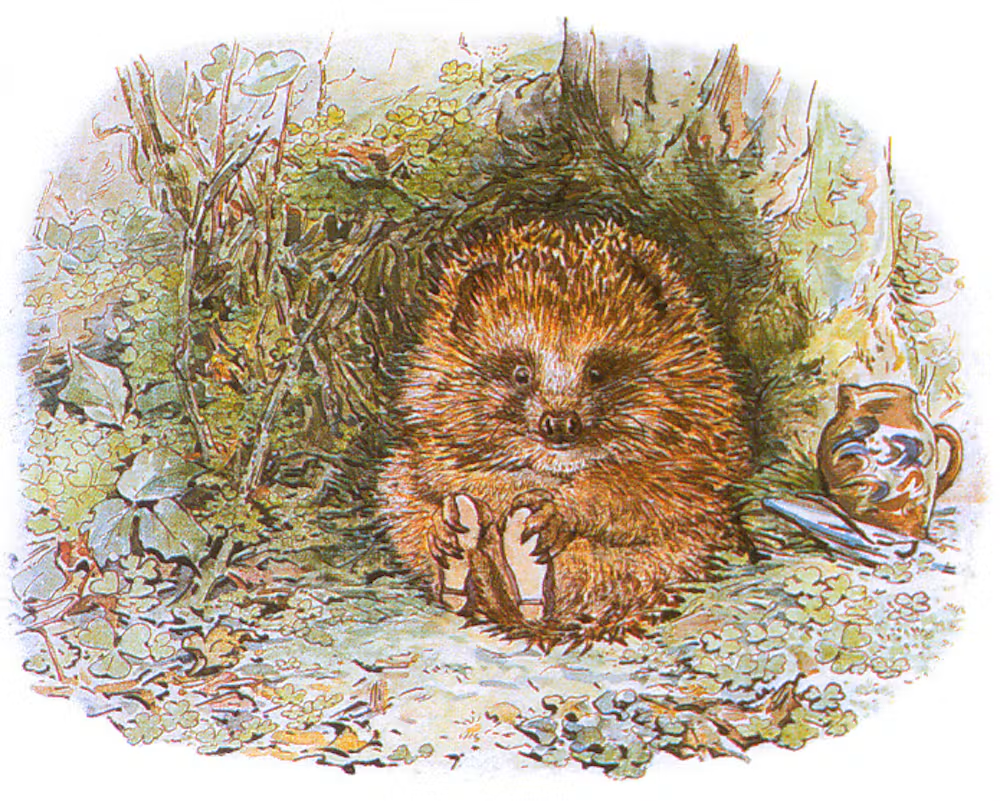
Kingsnorth’s proposal reminded me of Potter, who was the sort of conservative who knew precisely what she wanted to conserve—and how. Potter was born in 1866 in Kensington, London, to Rupert and Helen Potter, joined six years later by a little brother, Walter Bertram. She spent her childhood cultivating a deep love of art and nature. She and Walter populated their home with a menagerie of pets, including rabbits, mice, frogs, lizards, snakes, salamanders, and a rotund hedgehog. Walter even had a pair of long-eared bats that he left with Beatrix when he went to boarding school. She painstakingly painted and sketched them all with astonishing skill.
Potter’s pets and artwork turned into tales for children and in 1901 at the age of 36 she self-published the first edition of The Tale of Peter Rabbit after publishers turned her down due to her insistence that the price must be kept low to keep the story affordable for children. The following year, Warne & Co. published an abridged version to an enthusiastic public reception, and several sold out editions. They asked Potter for more, and a series of stories were published in swift succession. There would eventually be 33 in all, and Potter became one of the most famous children’s authors of all time. (Read more.)











No comments:
Post a Comment