Showing posts sorted by relevance for query Leslie carroll. Sort by date Show all posts

Friday, July 8, 2011

A Quick Trip to New York

Last week I made a day trip to New York by train so I could go to my friend Leslie Carroll's party. The party was held at the Irene Goodman Literary Agency where Leslie is represented. I love train travel; it is a great way to catch up with reading. The train was filled with families going on vacation, families with small children. They were loud but helped to create a festive atmosphere. I must say that I did not recognize New York at first when I saw it from a distance. What city is that? I wondered. The absence of the World Trade Center towers really changes the skyline. It gave me a eerie chill.

At the Pennsylvania Station there were soldiers with machine guns and police everywhere. I have to begrudgingly admit it that made me feel safer, much safer than I used to feel in New York back in the 1980's. Manhattan was as crowded as ever and seemed more run down than I remember. But there were oodles of young people who add a freshness and a vibrancy to the scene. Everyone I encountered was very friendly, but then I was only there for a few hours.

I took a taxi to the agency and was delighted to meet Leslie Carroll in person. She is the author of some non-fiction works which I have reviewed. I also met Leslie's friend Juliet Grey who is writing a three volume epic saga about Marie-Antoinette. We had a lively discussion about the Queen and then began to partake of the refreshments, which were varied and generous. I enjoyed chatting with Miss Goodman's staff, all of whom were poised and intelligent. I had so much fun talking about historical figures with authors Lauren Willig and Isobel Carr and we agreed that Someone needs to write a novel about Henrietta Maria. My friend Christine Trent was also there with her wonderful husband, John. John and Christine helped me to find my way back to the train station in plenty of time to catch my train. We had a lovely conversation and my only regret is that my day in New York was too short. Share

Sunday, January 9, 2011

Notorious Royal Marriages


Lord Darnley and Mary Stuart
Notorious Royal Marriage by Leslie Carroll is a delightful romp through European history by way of examining several of the most infamous couples of all time. Eleanor of Aquitaine and her consecutive kings, Isabella and Ferdinand, Juana and Philip, Henry VIII and all six Queens, Mary Stuart and Henry Lord Darnley, Marie-Antoinette and Louis XVI, Alexandra and her Nicholas and many more. It is a book which I found not only highly entertaining but in each chapter, even those about royals whom I have studied, I always learned  things I had never known before. In most instances, when addressing certain controversies, Leslie carefully presents the evidence, gives her opinion, but lets the reader draw their own conclusions. I have to say that I am impressed with the vast amount of information that was compiled for each royal marriage, yet summarized into compact narratives.  

Royal Marriages has a distinct common touch that makes it an easy read but contains enough dates and details for any lover of history. While the chapter on Louis XVI and Marie-Antoinette had a few items that Leslie and I could probably sit and debate about over cocktails, I was moved by the chapters on Franz Josef and Sissi, who suffered everything throughout their long and rocky marriage, as well as by the retelling of the saga of George IV and Mrs. Fitzherbert. I was very glad that Leslie pointed out the Nazi connection in recounting the bizarre relationship of Wallis Simpson and Edward VIII. Most of all, I loved the chapters on Mary Queen of Scots. On the book blog Historically Obsessed, Leslie gives a description of each of the doomed queen's doomed weddings. To quote:
The sun was not yet up on the morning of July 29, 1565, when Mary was led down the aisle of the Chapel Royal at Holyrood by Darnley’s father, Lord Lennox, and the Earl of Argyll. Over her wedding gown she wore her deuil blanc, a white gauze sack that covered her from head to toe—the traditional mourning garment for French queens—emblematic of her status as a widow, and by extension, the Dowager Queen of France.

Darnley entered the chapel and the bridal couple exchanged vows. Since they were first cousins, a papal dispensation was necessary in order for them to marry. It had not arrived in Edinburgh by July 29, but Mary blithely assumed the document was en route, and therefore, she married Darnley without it. Although the dispensation finally made it to Scotland, the July 29 marriage was technically not legal because it had been performed while the bride and groom remained within a proscribed degree of affinity.

After the rings were exchanged, despite the fact that he, too, was a Catholic, Darnley quit the chapel to avoid being charged with “idolatry,” leaving his bride at the altar to continue the mass. As soon as the ceremony was over, Mary invited her guests to help her cast aside her mourning garments by each removing one of the pins that affixed the deuil blanc to her wedding gown.
I had trouble putting this book down and must have been an incredible bore to my family over the holidays as I kept slipping away to read it. It was intriguing to see how even the best of marriages had ups and downs, with the complications of royalty adding to the challenges of compatibility.

Share

Tuesday, March 15, 2011

Royal Pains

King John was not a good man.... ~ from A.A. Milne's "King John"

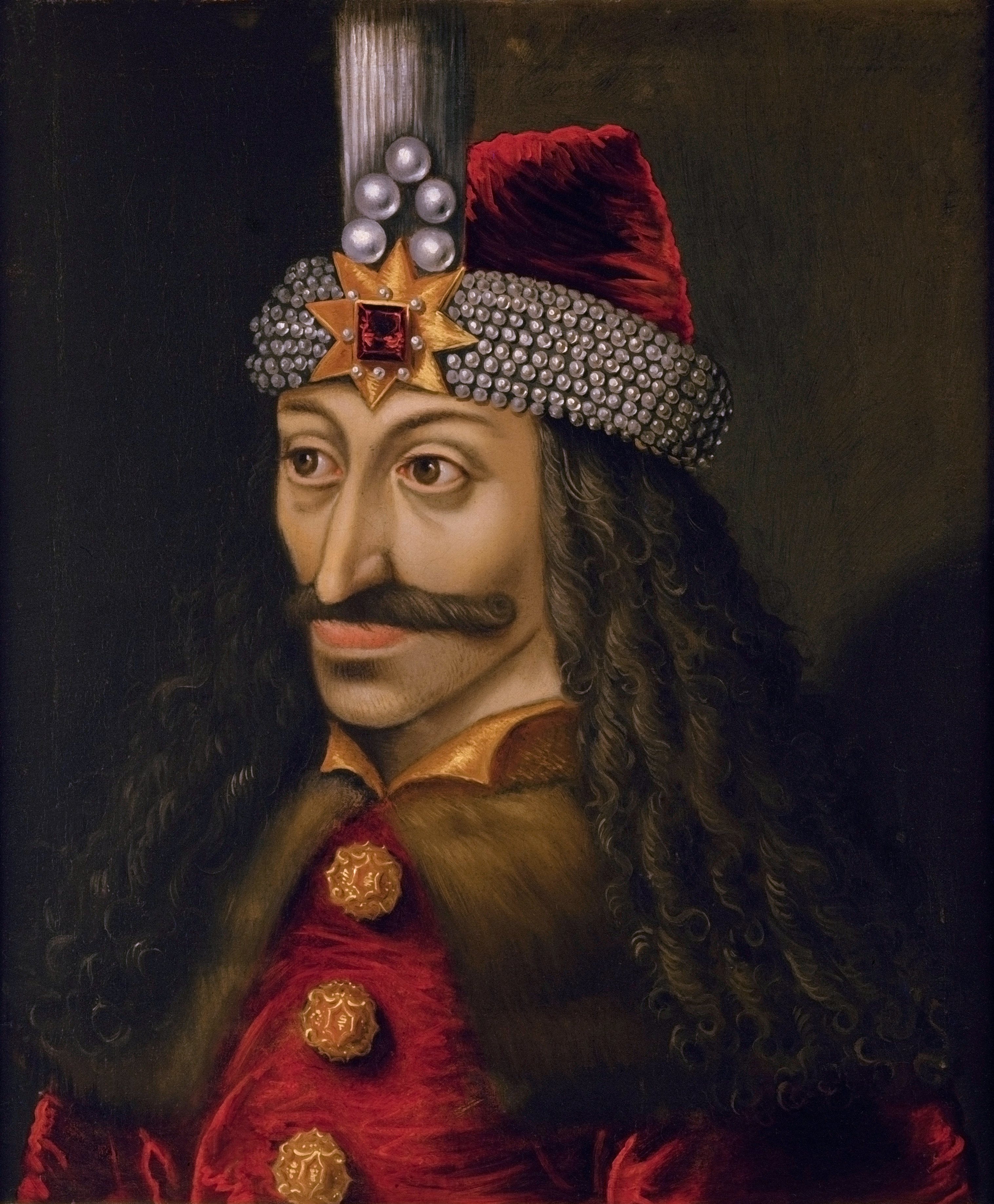
With her inimitable brand of poignancy, wit and humor, Leslie Carroll entertains us once more with her newly released book Royal Pains: A Rogues' Gallery of Brats, Brutes, and Bad Seeds. Once again, I looked for spare moments in which to slip away to my reading corner. Although the stories of naughty (and sometimes genuinely evil) royals are not without tragedy and pathos, Leslie's piquant observations are such that one cannot help but chuckle out loud from time to time. However, I do not recommend reading the horrific accounts of Vlad the Impaler, Ivan the Terrible, or Erzsébet Báthory (the Blood Countess, whose picture I do not even want on my blog) before bedtime because the magnitude of their crimes might make it difficult to sleep. I suppose one should be comforted in the knowledge that there have always been psychopaths; our age is not unique in that respect. Nevertheless, in days gone by people did not try to justify or sanitize the actions of evildoers; a wicked tyrant was a wicked tyrant, and everyone knew it.

As in her previous books, Leslie skillfully pulls together reams of information into flowing narratives. Although I had encountered each of the historical personages before, in every case I found myself learning a great deal as well as garnering deeper insights into the various eras of history. The author is careful to mention the good deeds of the likes of bad King John and Ivan the Terrible; they did do a few magnanimous things for the common people, and so a balanced picture is given. As for some of the more complicated and mysterious characters such as Richard III and Crown Prince Rudolph, the evidence is presented but the reader is allowed to make up his or her own mind.

Some royals came off much better than I had expected. I always had the impression that Prince Albert Victor ("Eddy") was a total degenerate. After reading Royal Pains I am now able to see him as a deeply romantic young man, yearning for the princess of his dreams. He was not overly clever and enjoyed fast living but he was by no means Jack the Ripper. If Eddy had lived and married Mary of Teck, she would have straightened him out, I think. As it was, she straightened out his brother George.

The Mayerling tragedy, which I have written about before, is dealt with very astutely in Royal Pains. Crown Prince Rudolph is shown to have been perfectly capable of doing away with himself although the theories that he was assassinated are also explored. Rudolph, although he fell into drugs and dissipation, had an endearing side and genuinely cared about his people. He is one of the most sympathetic figures in the book albeit he was a bit mad. Being psychologically tortured as a small child did not help his mental equilibrium as an adult.

As I was growing up in the 1970's, Princess Margaret was always in the news, although I had no idea until now of the extent of the mess she made of her life. Hers is a sad story. At the end of her chapter, I realized once more how early childhood influences can make or break people. Being overindulged and spoiled can warp a child's character as much as cruelty and neglect. There is nothing like a book which charms even as it provokes reflection, which takes us on a journey to the past in order to better understand the present...and better understand ourselves.

(*Note: Royal Pains was sent to me by the author in exchange for my honest opinion.)

Vlad Dracula

Richard III
Ivan the Terrible
Lettice Knollys, Countess of Leicester
The Duke of Cumberland
Crown Prince Rudolph
Prince Albert Victor
Princess Margaret Rose

Share

Sunday, May 1, 2011

The Fair Bridal

On Friday morning, I found myself tweeting the royal wedding. As anyone who watched the wedding knows, it was like the most wonderful film ever made...except that it was real. I was uplifted by the beauty of the event and the sense of connection with the ages. I enjoyed being one of the many crazy Americans who rose before dawn to join millions around the world witness the marriage vows of two young people. There are few young people today who have escaped the stains of scandal, tragedy and worldliness. Seeing such an attractive and very prominent couple dare to accept the challenges of matrimony, in spite of everything that has gone before, is a sign of hope. I was glad to read the following words in The Catholic Herald:
Speaking in an interview with the Catholic Herald in Rome this afternoon, Archbishop Vincent Nichols went on to compare the beatification of Pope John Paul II, which takes place tomorrow morning, with the wedding of the Duke and Duchess of Cambridge which he attended yesterday.

He said: “Tomorrow, in a way, is a celebration of the same love that William and Catherine promised to each other – yesterday in marriage, today in service of priest, bishop and Pope – but it’s the same well-spring of love that comes from God that we see on both days.”

Describing yesterday’s events in Westminster Abbey, Archbishop Nichols said that the crowd cheered at two points during the wedding ceremony. He said: “It was very remarkable when it happened. The first [instance] was when the two exchanged their promises. So when Catherine said ‘I will’ there was a great cheer. People recognised the solemnity of the promises that were being made. The second was when the Archbishop of Canterbury said ‘So in the sight of God and these people I now declare you man and wife’ and there was a great cheer.

“There is popular recognition that marriage is a fresh start. That this from now on was something different and it was a profound change in the life of both those young people. And everybody recognises it. I think that gives the lie to the idea that marriage is of little consequence in our society. It clearly is of great consequence in the eyes of people witnessing and taking part in that marriage yesterday.”
Congratulations and best wishes to Their Royal Highnesses, the Duke and Duchess of Cambridge! I think that the new Princess William (not "Princess Catherine") was an exceptionally lovely bride. The gown was elegant, dignified and understated, recalling Grace Kelly's. It is rare to see such perfect poise and exquisite posture in anyone from the present generation.

Meanwhile, my friend Leslie Carroll, author of Notorious Royal Marriages, has been in London all week and has sent home some reports, HERE and HERE.

There are some wonderful photos from The Daily Mail, HERE. And even more HERE.

See the official wedding program.

Last but not least, have fun seeing some crazy wedding hats. Share

Saturday, February 27, 2010

The Versailles Glide

Author Leslie Carroll discusses how Marie-Antoinette was taught to walk in the manner of ladies of the French court, saying:
In order for Antonia to more seamlessly assimilate into the rarified and sophisticated atmosphere at Versailles, Maria Theresa imported the celebrated choreographer Jean-Georges Noverre from the Duke of Württemburg's court of Stuttgart. Noverre was a world traveler who had been the choreographer at London's Drury Lane Theatre under the management of David Garrick. Both men had very progressive views about Theatre and Dance and each was known for his introduction of "naturalism" (that term being relative, given the "method acting" styles of the 20th century) into his art. Noverre was the first proponent of the "story ballet" and strongly believed that the elements of dance within a theatrical or operatic performance be organically integrated into the whole.
Share

Friday, January 15, 2010

Malmaison

Leslie Carroll, the author of several popular historical books, describes the spectacular country retreat of Josephine and Napoleon. To quote:
No one knows how Malmaison (“bad house”) got its name. The château’s life began as a fief of the Abby of Saint-Denis, and from 1360 to 1763 it remained in the same family. On April 21 1799 the property was purchased by Josephine Bonaparte, the wife of the rising Corsican-born general, Napoleon....

After Josephine was crowned empress of France on December 2, 1804, she rededicated herself to making Malmaison even more her own idyll. A conservatory and garden were added, because Josephine was passionate about flowers, especially roses. And she indulged her passion for collecting art and antiquities.

Although he claimed to have been doing it for France, a purportedly brokenhearted Napoleon divorced Josephine on January 10, 1810 because she had failed to give him an heir. When the ceremony was over and all the documents had been duly executed, Napoleon kissed Josephine and accompanied her to her apartments. Later that day, she visited his rooms, her hair “disordered and her face contorted,” according to Napoleon’s valet Louis Constant. The imperial couple began to weep. “Be brave,” the emperor counseled his now ex-wife, “I will always be your friend.”
Share