
Melody Krell interviews Mike Lindell.
Share


A Prayer for America on Election Day
1 week ago


From Ars Technica:
Most of Mars appears to be an endless expanse of alien desert, without a river or lake in sight. However, liquid water definitely existed in the planet’s distant past. A new paper has also suggested that it's also possible small quantities of water still might exist in places that otherwise appear barren.Share
Before China’s Zhurong (also known as Phoenix) rover went into hibernation mode last May, researchers from the National Astronomical Observatories and the Institute of Atmospheric Physics of the Chinese Academy of Sciences discovered something unexpected. Zhurong was exploring the Utopia Planitia region, which is near the planet’s equator. No liquid water was thought to exist at those latitudes. Yet when the rover beamed back data from its Multispectral Camera (MSCam), Navigation and Terrain Camera (NaTeCam), and Mars Surface Composition Detector (MarSCoDe), there was possible evidence for liquid water having been present less than half a million years ago. (Read more.)
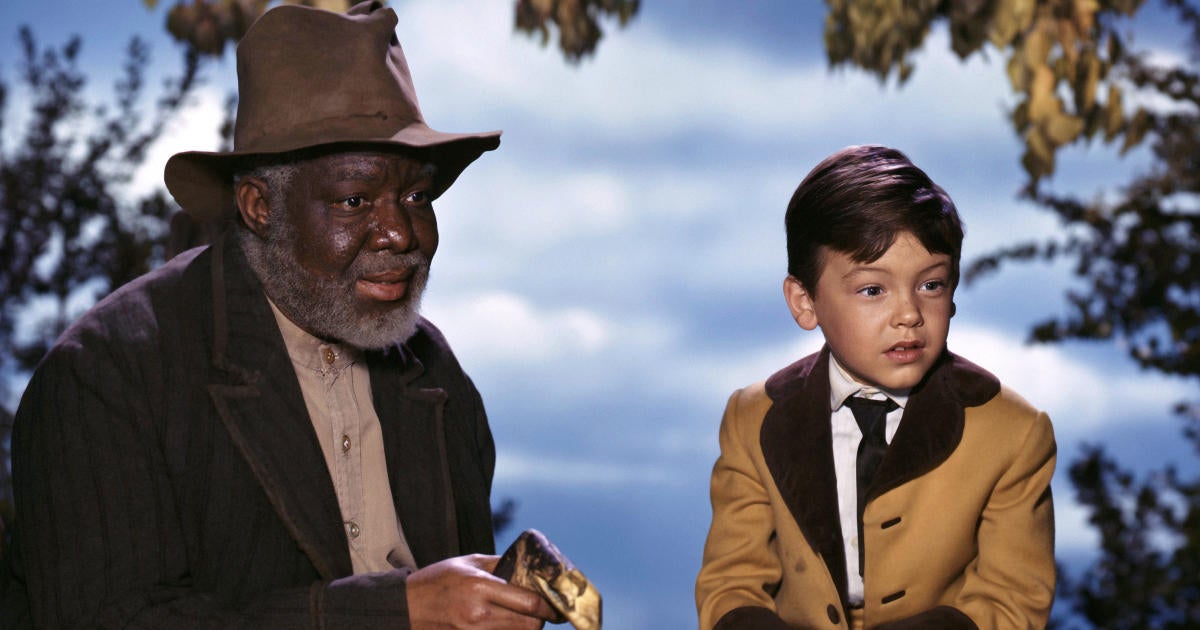
ShareWhat I remembered was being a thoroughly charmed and entertained six-year-old. That happened again at age 57 last week. Due to the absurd uproar over the movie, what I expected was nowhere to be found. Does Song of the South have some racial issues? Sure, but nothing that justifies Disney’s Orwellian erasure. Overall, Song of the South (like its source material) is about healing the rift between black and white America and does so in racially progressive ways unheard of in 1946.
Despite this fact, due to thin-skinned and wildly misinformed criticism, Disney has blacklisted Song of the South since 1986—the last time it enjoyed a theatrical release. What’s more, the movie’s never been released on home video in America. Not even on laserdisc or Betamax. Trust me; there’s no moral justification for this.
Song of the South is about seven-year-old Johnny (played by the sadly doomed Bobby Driscoll), who’s told he’s about to enjoy a vacation on his grandmother’s Georgia plantation. The truth, though, is that his parents are having problems. Dad is going away. This explodes Johnny’s security and leaves him without a father figure. Before arriving, Uncle Remus (James Baskett) and his storytelling abilities are already legendary to Johnny, and his meeting with the legend does not disappoint. (Read more.)
From Newsmax:
The FBI lacked "actual evidence" to investigate Donald Trump's 2016 presidential campaign and relied too heavily on tips provided by Trump's political opponents to fuel the probe, U.S. Special Counsel John Durham concluded in a report released on Monday.
The former president was said to be impressed by the report and convinced it clearly vindicated him. A Newsmax report said Trump, who has long contended the claims of collusion with Russia were part of a politically motivated hoax, views the Durham conclusion as supporting his witch-hunt contention.
The report marks the end of a four-year probe launched in May 2019 when then-Attorney General William Barr appointed Durham, a veteran prosecutor, to probe potential missteps by the FBI when it launched its early stage "Crossfire Hurricane" inquiry into potential contacts between Donald Trump's 2016 presidential campaign and Russia. (Read more.)
From Just the News:
Former House investigator Kash Patel told Just the News that the investigation had undermined the nation's credibility in the eyes of its foreign allies, saying it "continues to erode our our system of justice and continues to create a two-tier system of justice. People can't look to America and be like, how do you install a uniform singular system of justice anymore?"
He further suggested that Congress ought to hold the responsible intelligence officials accountable by going after their retirement benefits. (Read more.)
More from Giuiliani on the Durham Report, HERE.
ShareFrom ExplorersWeb:
A study in Plos One suggests that Homo sapiens needed three attempts across 12,000 years to finally wrest control from their predecessors. This slow-moving colonization took place between 54,000 and 42,000 years ago, according to the paper’s authors, who studied ancient artifacts from caves in France’s Rhone Valley.Share
“The first two of these waves failed but the third succeeded around 42,000 years ago,” Ludovic Slimak of the University of Toulouse, who is leading the excavations in France, told The Guardian. “After that, modern humans took over in Europe. The Neanderthals, who had evolved on the continent, died out.”
Slimak and his colleagues say they’ve found evidence that Homo sapiens arrived in Europe from western Asia. The colonizations took much longer than historians have previously thought, requiring travel along the Mediterranean before turning north toward the Rhone Valley. (Read more.)


Filming concluded last week on The Flood (Le Déluge), a film written and directed by Gianluca Jodice (director of The Bad Poet [+]) which centres on the final days of Louis XVI and Marie Antoinette before their execution. The film, an Italian-French co-production, stars Guillaume Canet (seen recently in Astérix & Obélix: The Middle Kingdom [+], which he also directed) in the role of the last French monarch, and Mélanie Laurent (seen recently in The Mad Women's Ball [+], which she also directed, and in Ride Above [+]) in that of his wife, and presents itself as an apocalyptic film in the most literal sense of the word: that of revelation.
Written by Jodice together with Filippo Gravino (frequent collaborator of Claudio Giovannesi, Claudio Cupellini and Matteo Rovere), tells the story of the end of this absolutism and of this monarchy which it seemed would never come, laying bare two of the biggest icons of History in front of the people, of themselves and of mankind, for the first time.
The synopsis goes like this: When talking about Louis XVI and his wife Marie Antoinette, what immediately comes to mind are lace, tall wigs, flamboyant clothes and colours, Versailles, or… the guillotine. Here, between these two extremes, exists a middle ground, a period of time seldom explored: the few months when the last king and queen of France were imprisoned, with their two young children, in a black castle on the outskirts of Paris, awaiting their executions. A brief and condensed period where, amidst violence and harassment, all masks fell off: those of two royals, as public and private figures; that of the old regime; that of a History that finally turned the page; and that of God who, from then on, was eclipsed by the shadows, leaving man entirely alone.
The film’s cast also includes Aurore Broutin, Hugo Dillon, Tom Hudson, Roxane Duran, Anouk Darwin Homewood, Vidal Arzoni and Fabrizio Rongione. The technical crew includes recognisable names, from director of photography Daniele Ciprì, to two-time Academy Award-nominated costume designer Massimo Cantini Parrini (for Matteo Garrone’s Pinocchio [+] and Joe Wright’s Cyrano [+]), from set designer Tonino Zera to four-time Oscar-nominated hairstylist Aldo Signoretti (for Baz Luhrmann’s Elvis, Paolo Sorrentino’s Il divo [+], Mel Gibson’s Apocalypto, and Baz Luhrmann’s Moulin Rouge!).
The Flood is produced by Matteo Rovere and Andrea Paris from Italian company Ascent Film with Rai Cinema, and co-produced by Yann Zenou of QUAD (France). Director Paolo Sorrentino figures as associate producer. Filming lasted six weeks and took place in Turin and Rome. (Read more.)
Share
But then what else is new. From Julie Kelly at American Greatness:
Now, none of these so-called “foot soldiers” possessed nuclear material or starved millions of their countrymen or harbored foreign terror cells bent on the annihilation of the United States. To the contrary, several defendants associated with both groups fought in the very same wars orchestrated by Frum and his former boss. For example, Joseph Biggs, a Proud Boy convicted last week of seditious conspiracy and other offenses, is a Purple Heart recipient who was deployed to both Iraq and Afghanistan in the early 2000s. But in Frum’s tiny, vindictive mind, men like Biggs—who brought no weapons to the Capitol and did not assault police on January 6—are comparable to, perhaps worse than, al-Qaeda and ISIS.Share
After all, Osama bin Laden never expressed loyalty to the Bad Orange Man! Trump’s most dependable political foes inveighed shortly after the verdicts were announced. Representative Jamie Raskin (D-Md.), a member of the now defunct January 6 select committee, burnished Frum’s “axis of evil” by describing the triumvirate of Trump, the Proud Boys, and the Oath Keepers as an “overlapping concentric ring” of traitorous conspirators. “Are we going to become a country where the foot soldiers and the lower-down ring leaders go to jail but the masterminds and the real ringleaders at the top skate away free or go golfing in Scotland or Ireland,” Raskin, referring to Trump’s recent overseas golf excursion, asked MSNBCs Stephanie Ruhl.
His committee cohort Adam Schiff (D-Calif.), still driven by a psychotic desire to see Trump in handcuffs after multiple failed attempts, demanded that the “Department of Justice must also hold those who fomented the insurrection accountable, not just those who stormed the gates.”
Claiming, without evidence, there is a “huge domestic terrorism problem” in America, former federal prosecutor and Special Counsel Robert Mueller’s “pit bull” Andrew Weissmann told MCNBC’s Nicolle Wallace that “the question of should there be charges against the former president becomes one that I think answers itself when you see lower level people who were just convicted being brought to justice but you don’t see the leader yet being brought to justice.”
Weissmann said the convictions “amps the pressure up” on Special Counsel Jack Smith, now investigating Trump’s criminal culpability for January 6. Unfortunately, for once, this cabal is probably right. As I explained here last month, the trial’s outcome could determine Trump’s legal fate, now in the grasping clutches of Attorney General Merrick Garland’s hand-picked special prosecutor.
Garland, in fact, took a victory lap the day after the verdicts were announced. Flanked by the Justice Department’s most powerful apparatchiks—including Deputy Attorney General Lisa Monaco, National Security Division chief Matthew Olsen, and FBI Director Christopher Wray—Garland publicly praised the prosecutors and investigators involved in the case. “Our work will continue,” Garland pledged on May 5. “During my Senate confirmation hearing, I promised that the Justice Department will do everything in its power to hold accountable those responsible for the heinous attack that sought to disrupt a cornerstone of our democracy, the peaceful transfer of power to a newly elected government.”
The top prosecutor in the country doesn’t assemble that show of force merely to boast that a jury picked from a city that voted 93 percent for Joe Biden scored another easy victory. He was sending a warning shot to Team Trump. Garland also was joined by Matthew Graves, the U.S. Attorney for the District of Columbia who is handling more than 1,000 and counting cases involving January 6 defendants. That same day, Graves’ office filed a 183-sentencing memo related to the convictions of nine members of the Oath Keepers in two separate trials. (Read more.)
Give. From Big Think:
Giving to others, even in small ways, can generate a palpable sense of purpose. And that’s not just because we’ve been taught that it’s the right thing to do. There’s actually a scientific explanation for why that happens. It’s rooted in the distinction that researchers often make between activities that are eudaimonic versus hedonic. Eudaimonic (“eu” meaning good, and “daimon” meaning spirit or soul) activities are outwardly focused and include those in which we give of ourselves to others. The term comes from what Aristotle described as the “pursuit of virtue, excellence, and the best within us.” In contrast, hedonic (meaning “pleasure”) activities are focused inward and concerned with more momentary fulfillment. Getting the latest phone, splashing out on a gourmet meal, or winning a new sales contract may be hedonic activities. None of them are bad on their own. But when your life is dominated by the pursuit of hedonic rewards, you can start to make choices that will not lead you to happiness in the long run.Share
Emerging neurological evidence shows activities that transcend the hedonic, such as giving to others, lead to greater well-being over time. In one study, functional MRI scans were used to observe neurological activity in the reward center of the brain, the ventral striatum, when exposed to thoughts about either giving or receiving money. In some people, questions about giving money (for example: If you were giving money, who would you give it to and why?) stimulated high reward activity. In other people, questions about receiving money (for example: If you were to get money, what would you spend it on and why?) activated the brain’s reward center. But over time, an interesting patten emerged. When researchers measured depressive symptoms in each group one year later, they found that the participants whose brains had lit up from giving money experienced a decline in depressive symptoms, while the people whose brains rewarded them for receiving money showed an increase in depressive symptoms. (Read more.)



The story begins not with Louis but Jeanne herself, who as a youngster is sent off to a nunnery for being too darn sexy for her servant job – then is later thrown out for being too darn sexy even for the nunnery. A Parisian brothel proves more her speed, and after gaining a reputation as a skilled and highly cultured lover, she comes to the attention of the Comte du Barry (Melvil Poupaud) – who along with the Duc du Richelieu (Pierre Richard) contrives to bring her to Versailles, in the hope that the king will spot her and take her as a mistress.
The plan works, and after a gynaecological exam that’s played for laughs – actually one of the better scenes – Louis and Jeanne become a serious item, much to the chagrin of the king’s slightly ludicrous ugly-sister trio of daughters and the court at large. Essentially, every second scene involves Jeanne billowing into a large room as expensively costumed extras gasp and swoon over some outrageous flaunting of etiquette (maybe she’s wearing men’s clothes, maybe she’s accompanied by a black page boy the king buys her as a present).
Eventually tragedy strikes when Louis contracts smallpox, allowing Depp a number of increasingly tedious scenes in which he lies in bed croaking with his face covered in Rice Krispies. And when things get especially dire, out come the Coco Pops.
It’s mostly handsomely shot, with painterly vistas of the French countryside and lots of dazzling Versailles interiors. But the central relationship never convinces – it all just feels like a performance, put on for the benefit of the courtiers and by extension, us. Depp is hardly the first Hollywood outcast to find work in Europe, but it would be a stretch to say this feels like the first spark of a glorious comeback. (Read more.)
From Screendaily:
A relatively classy venture about class, Jeanne Du Barry looks at a real-life instance of social climbing with playful exuberance and a serious subtext. The title character — played by director and co-screenwriter Maiwenn — did a lot of what simply isn’t done, and her bold gambles paid off. Calling upon American Johnny Depp to play King Louis XV could be viewed as stunt casting but one soon forgets he’s an unusual choice because, if there is not exactly chemistry between the leads, there is something pleasingly watchable. This is not great or memorable filmmaking but the power of the story and some of the performances make up for that. Opening Cannes Out of Competition, the film hits French theaters immediately.
The illegitimate daughter of a monk and a cook, Jeanne learned good manners and received a good education, thanks to help from key aristocrats for whom her single mother worked. Her book-learning — we’re shown that she loved to read and was so adept at spelling and grammar that she could tutor well-born youths — co-existed with an early understanding of hypocrisy and keeping up appearances.
Mother and daughter leave the countryside for Paris, “the capital of all hope and desire”. Jeanne, who had spent time sheltered in convents where the nuns objected to books, learns the ways of libertinage and builds a reputation as a skilled courtesan. It’s clear that Jeanne will perform any sex act and submit to same, but there is nothing crass or prurient about the way this is conveyed on screen.
When she meets the smooth-talking Count du Barry (Melvil Poupaud, entertainingly louche) they strike a bargain. She’ll use her charms to work her way up the ladder of increasingly wealthy lovers, helping to support his household. Du Barry’s friend the Duke de Richelieu (Pierre Richard — the supple physical comic from The Tall Blond Man with One Black Shoe — in a wonderful turn) is determined for Jeanne to meet the King.
She does. It’s transgressive lust at first sight. Jeanne is told: “Whatever you do, don’t look the King in the eyes.” Jeanne, of course, takes that as a challenge to make sure female gaze and male gaze meld — and flabbergasted and disapproving witnesses of the court be damned. This is the story of two people who get to be together but are sneered at the entire time, because the time is the late 1700s and the setting is Versailles.
Most men — and women — consider Jeanne to be an ignorant whore. She may be a harlot, but she’s not ignorant. Between being a servant and a harlot, she finds the perks better in the field of harlotry. Of course, there’s the comical indignity of the exam by the royal physician leading to his pronouncement: “I declare her worthy of the royal bed.” And that is where she and Louis truly connect. The King makes it clear that the uncommon commoner will live at Versailles. The court — starting with his four snobbish daughters — can’t abide the arrangement.
Although she has no children of her own, Jeanne is very attached to Du Barry’s son Adolphe and also to the King’s son Louis (who will later marry Marie Antoinette and find that the People have some objections to their heads remaining attached to their necks). Jeanne is devoted to the bright and adorable Black boy, Zamor, her page who pops out of a giant gift box from the King. Generous and down-to-earth, Jeanne is authentic in a world of artifice. What Jeanne and the King share is healthy sexual appetites and unapologetic pleasure in each other’s company. They have the happy smirks of people who are getting away with something — and given how regimented the monarch’s life is, they are.
When Marie Antoinette (Pauline Pollmann) is imported from Austria to strengthen political ties, it is beyond-crucial that she speak to Jeanne, who is not permitted to break the ice. Just a few words will suffice to lift disgrace and make the King’s whore acceptable. Will Marie Antoinette withhold those precious syllables forever or give in?
While Depp is consistently compelling and Maiwenn acquits herself reasonably well, Benjamin Lavernhe is worth the price of admission as the King’s valet, La Borde. Lending gesture-perfect gravity under all circumstances, he’s a keeper of the flame of protocol whose own inner light is admirably subtle as he guides Jeanne through what amounts to a crash course in, well, almost everything. One simply doesn’t show feelings at court. Jeanne has too much exuberance to put a lid on hers for long. And she thinks the prancing habit of backing out of the King’s presence is hilarious. (Read more.)
Frock Flicks analyzes the costumes, HERE.
Share











