Sunday, January 25, 2026

A Haunt of Demons Shuts Its Doors …The Fall of Margaret Sanger’s ‘Clinic’

 From Paul Kengor at The American Spectator:

As we left Little Italy and headed up the street, I took a right onto historic Bleecker Street. I knew what was around the corner. For years, I shuddered every time I walked by it. I was always particularly appalled because the “it” was attached (in a cruel irony) to the Fulton Sheen Center, where I had spoken and stayed on several occasions. When I did, I never ceased to marvel that the “it” abutted this center named after the greatest figure in American Catholicism. The only solace that I took was that perhaps the folks visiting the Sheen Center would pause to pray for the end of the “it” next door.

The unspoken “it” was the infamous original Planned Parenthood “clinic” founded by none other than Margaret Sanger herself. In fact, it sat on a corner that bore the name Margaret Sanger Square. It was here that the racial eugenicist pondered her craft of “breeding a race of thoroughbreds,” of “race improvement,” and ridding the gene pool of its “human weeds” and other “defectives,” “morons,” “imbeciles,” and “idiots” that she strove to ensure never left their mothers’ wombs.

Sanger died several years before Roe v. Wade was passed on Jan. 22, 1973. Once that landmark court case was issued, Maggie’s heirs got to work. Truly only God knows how many unborn babies were killed inside that building that became a haunt of demons. We know only that it was a ghastly, unholy number.

I’ve written about my face-to-face encounters with that building several times before. Those encounters were always one on one, man versus bricks. I would stand in silent, solemn prayer that the place would be shut down one day. I got some dirty looks, especially from the abortion “escorts” who wanted no one like me in their way as they grabbed the arms of mostly black women to hastily shepherd them inside to kill their unborn children. (Read more.)

Share

Why Did the Inca Empire Fall So Quickly?

 From How Stuff Works:

The Inca Empire once controlled much of western South America, stretching from modern Ecuador to northern Chile. Its fall was not the result of a single battle but of a deadly combination of internal conflict, disease, and the arrival of Spanish conquistadors. The Inca Empire was the largest empire in the Western Hemisphere before European contact. Ruled by the Sapa Inca from the capital city of Cusco, the empire relied on a sophisticated Inka administration, vast road networks, and a powerful Inca army.

The Inca civilization united millions of people across the Andes, including regions near Lake Titicaca, the Ecuadorian coast, and present-day Peru. When Inca emperor Huayna Capac died, likely from a European disease brought indirectly through Central America, a power struggle erupted between his sons. The resulting Inca civil war between Atahualpa and his brother devastated the empire. Although Atahualpa won the civil war, the conflict fractured Inca leadership and drained military strength. (Read more.)

Share

Saturday, January 24, 2026

Pius VI: Quare Lacrymae

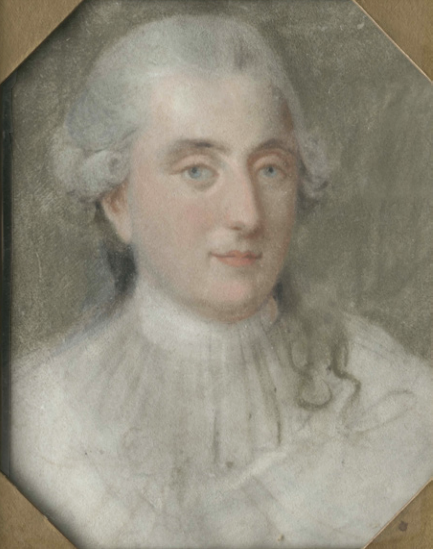
Louis XVI by Johann Heinrich Schmidt

The Sovereign Pontiff explains why both Louis XVI and his ancestress Mary Queen of Scots can be considered Catholic martyrs, for ultimately they were killed out of hatred for the Faith. From The Josias:

Quare Lacrymae is mainly concerned with showing that King Louis XVI’s death was a martyrdom. Pius VI can appeal to Louis XVI’s moving last will and testament, but in order to prove the point he has to show that the cause of his death was odium fidei. In order to prove this, Pope Pius argues that the main thrust of the revolution was against the Catholic religion. In the course of his argument he makes a bold claim about the connection between Calvinism and Enlightenment philosophy—anticipating in certain respects recent arguments by the likes of Brad Gregory. (Read more.)

Share

America’s Top Retired Generals In Beijing Conference

 From Natalie Winters:

The most consequential name on the participant list was Admiral Mike Mullen, the former Chairman of the Joint Chiefs of Staff and once the highest-ranking officer in the U.S. military.

From a United Front perspective, Mullen is the ideal validator. He no longer sets policy, but his stature remains intact. His participation in a CUSEF-supported forum allows Beijing to project an image of strategic parity — suggesting that even America’s former top military commander views engagement on CCP-curated terms as legitimate.

This is not about what Mullen said in the room. It’s about what his presence communicates. United Front work operates on symbolism and access. A retired four-star admiral in Beijing signals credibility to Chinese audiences, international partners, and wavering elites abroad. (Read more.)

Share

The Triumph of German Industrial Modernism

 From The Palladium Newsletter:

Germany entered the twentieth century as an industrial giant but a cultural latecomer. Its artistic inheritance remained rooted in regional craftsmanship and medieval revivalism. Albeit beautiful in isolation, these traditions offered little guidance for a rapidly growing nation competing with the disciplined cultural machines of France and England. Germany produced enormous quantities of goods, yet lacked the institutions needed to give them a coherent visual or moral character. In the hierarchy of European taste, France still dominated luxury and refinement, while England retained prestige in craftsmanship and the decorative arts. German manufacturers, in contrast, filled markets with imitative ornaments and sentimental novelties. Public taste deteriorated. Reformers feared that industrialization had eroded the very ability to judge quality, creating a visual environment disconnected from any shared cultural purpose.

The German architect and author Hermann Muthesius diagnosed the crisis with clarity: German manufacturers, he argued, had abandoned their cultural responsibilities. Cheap, derivative goods did more than weaken taste. They threatened “the national character through pollution of the visual environment.”] Germany could not rely on imported styles, nor accept a reputation for shoddy production. A new domestic standard was required—one rooted in simplicity, integrity, and an honest expression of industrial reality.

The Werkbund emerged as the institutional answer. Its founders rejected the nostalgic escape into handicraft promoted by the English Arts and Crafts movement. They embraced the machine as a cultural fact. Modern life would not be redeemed by retreat, but by disciplined cooperation between artists and industry. Mechanization could produce beauty, but only if aesthetic judgment shaped its direction.

Central to this project was education. The Werkbund believed that a modern society needed perceptual training as urgently as technical skill. Reformers like Muthesius and Georg Kerschensteiner pushed to overhaul the school system, arguing that aesthetic judgment could not be left to habit or chance. Muthesius had already modernized the Prussian Arts and Crafts Schools, insisting that “art is an indispensable complement to life.” Kerschensteiner championed manual training as a foundation of ethical and civic development. Educators such as Ludwig Pallat, Hermann Obrist, and Franz Cizek used the Werkbund to promote methods that would “stimulate the creativity of the child, preserve his innate imaginative powers, train his eye and hand as well as his brain, and inculcate respect for manual skill.” Their goal was not simply to produce designers, but to produce citizens capable of sustaining a higher national culture. Taste itself was civic infrastructure. (Read more.)

Share

Friday, January 23, 2026

The Widow Capet

Above is a posthumous portrait depicting Marie-Antoinette in the Temple prison after the murder of her husband. A bit idealized (I doubt that she had a bust of Louis XVI at hand) it is nevertheless based upon a Vigée Le Brun portrait. The queen did have her missal with her, because it is recorded that the Revolutionaries later took it away when she was sent to the Conciergerie. Antonia Fraser mentions in Marie-Antoinette: The Journey that the queen would ask her sister-in-law Madame Elisabeth to read the words of the Mass to her from the missal. (In the Temple prison they were forbidden to receive the sacraments.)

Here are the statements of Louis XVI concerning his wife from his Last Will and Testament:
I commend my children to my wife; I have never doubted her maternal tenderness for them. I enjoin her above all to make them good Christians and honest individuals; to make them view the grandeurs of this world (if they are condemned to experience them) as very dangerous and transient goods, and turn their attention towards the one solid and enduring glory, eternity. I beseech my sister to kindly continue her tenderness for my children and to take the place of a mother, should they have the misfortune of losing theirs.
I beg my wife to forgive all the pain which she suffered for me, and the sorrows which I may have caused her in the course of our union; and she may feel sure that I hold nothing against her, if she has anything with which to reproach herself.
Share

Lying about the Goods

There are those of us who believe same-sex marriage is impossible. But it seems in the case of the Goods it was not even attempted. From Declassified with Julie Kelly:

Following the anti-Trump resistance fashion of resigning from the Department of Justice as a sign of protest against their higher-ups and the president, six prosecutors at the U.S. Attorney’s Office for the District of Minnesota quit earlier this week rather than pursue an inquiry into the woman described as the “widow” of Renee Good, the anti-ICE activist shot and killed on January 7.

One of the departing lawyers, Joseph Thompson, had led the office’s multi-billion dollar fraud investigation into several Medicaid-funded organizations in Minnesota. But he left his post on Tuesday—not before allowing a New York Times photographer into his government office for a photo shoot, it appears—rather than follow orders to do his job. “Mr. Thompson’s resignation came after senior Justice Department officials pressed for a criminal investigation into the actions of the widow of Renee Good,” the Times reported on Jan. 13. “Mr. Thompson, 47, a career prosecutor, objected to that approach, as well as to the Justice Department’s refusal to include state officials in investigating whether the shooting itself was lawful.”

But if Thompson and his colleagues indeed resigned over plans to investigate Good’s “widow,” they may soon regret their decision. (Or not. Either way, good riddance.) An attorney representing Renee Good’s estate acknowledged in an interview with the Washington Post that Becca Good was not her wife. Antonio Romanucci, the Chicago-based attorney who also represented the family of George Floyd and succeeded in winning a $27 million settlement for the Floyd family, said Renee’s “partner, parents and four siblings want ‘to honor her life with progress toward a kinder and more civil America.” Romanucci further confirmed the pair “were not married.”

On Friday, just a few days after publishing the story about Thompson, the Times had to admit in a separate story that Becca and Renee “were not legally married.” But a review of Times articles published since the shooting does not show that the paper has corrected any previous articles describing Becca Good as the “wife” or “widow” of Renee Good. (Read more.)

Share

Is Alexander the Great’s Tomb Hidden in Venice?

They think Alexander is buried in San Marco instead of St. Mark. It is an interesting theory but I doubt it because of the care the Early Christians took with the bodies of saints like St. Mark. From The Greek Reporter:

The true location of Alexander the Great’s tomb is considered to be one of the great mysteries of the ancient world. After going missing in antiquity, researchers are still trying hard to find it. One modern theory asserts that Alexander the Great’s real tomb is actually in Venice, at St Mark’s Basilica. Why is the tomb of Alexander the Great a mystery in the first place? After he died in 323 BCE, Ptolemy stole his body and took it to Memphis, Egypt. That was the site of Alexander’s first burial. However, Ptolemy’s son then moved Alexander’s body to a different location in Egypt. He had the body buried in Alexandria, which was a fitting location as that city was named after the king himself.

There are several records of important historical figures visiting Alexander the Great’s tomb over the centuries. For a long time, its location was certainly no mystery. However, the last reliable mention of his tomb being visible and recognised in Alexandria comes from the Sophist teacher Libanius, writing in 390. After this, in about the year 400, John Chrysostom visited Alexandria with the intention of visiting Alexander’s tomb. However, by that time, the tomb was lost. (Read more.)

Share

Thursday, January 22, 2026

"Generalissima"--Queen Henrietta Maria and the English Civil War

From author Stephanie Mann:

This is the second volume in a trilogy of historical novels about Queen Henrietta Maria, the wife of King Charles I; mother of Kings Charles II and James II and therefore grandmother of the Old Pretender and great-grandmother of the Young Pretender and the Cardinal Pretender.

In this book the author traces the lives of the Queen and her family from 1640 to 1644, from the Royal palaces of Saint James, Wimbledon, Whitehall, Hampton Court, to The Hague in the Netherlands, the battlefields of the English Civil War, through betrayals--especially by Lucy Fairfax, one of her ladies-in-waiting--and attacks on Henriette (as she is called throughout the book) because she is a Catholic; storms and battles at sea, the death of her mother, pregnancies, separations, her efforts and love for her husband and her disappointments that he has not always fulfilled the promises of their marriage contract, times in York, Oxford, Cornwall, and France!

Throughout all these conflicts, dangers, and adventures, Vidal's narration, use of dialogue, and description are vivid, personal, and often poignant. (Read more.)


Share