Monday, July 3, 2023

Liberty Blue Dinnerware


From Miss Janice:

I just love the history behind this pattern. The Benjamin Franklin Federal Savings bank, established in 1925, commissioned the Enoch Wedgwood company, in Staffordshire England, to make special dinnerware to commemorate their 50 year anniversary. The result was Liberty Blue, made exclusively for the bank in 1975 and 1976. New account holders who made a deposit of $50 were offered a four-piece place setting. After the bank ended their promotion, grocery stores allowed customers to buy pieces with their grocery purchases.

Liberty Blue is a great addition to my china wardrobe as it pairs well with my red, white, and blue china pieces. The blue and white is timeless and classic and the scenes.

Liberty Dinnerware pieces:
~Teacup, Paul Revere
~Saucer, Old North Church
~Covered Sugar Bowl, Betsy Ross, Sewing the Flag
~Creamer, Paul Revere's Ride
~Teapot, Minutemen 
~Coffee Mug, Monticello
~Dinner Plate, 10", Independence Hall
~Luncheon Plate, 9", Washington at Valley Forge
~Dessert Plate 7", Washington Leaving Christ Church
~Platter, 12", Governor's House at Williamsburg
~Platter, 14", Washington Crossing the Delaware
~Platter, 18" and 20", Declaration of Independence
~Round Vegetable Bowl, Frances Tavern, Scene of Washington's Farewell to the Continental Army
~Oval Vegetable Bowl, Minutemen 
~Salt and Pepper Shakers, Paul Revere's Ride

(Read more.)


Share

‘This Was Organized Crime’

From the New York Post:

Members of President Biden’s family may have accepted in excess of $40 million from foreign nationals in exchange for favorable policy decisions, House Oversight Committee Chairman James Comer suggested Wednesday.

The Kentucky Republican said that his panel has identified “six specific policy decisions” where Biden, 80, took actions that indicate he may have been “compromised,” during an appearance on John Catsimatidis’ “Cats & Cosby Show” on WABC 770 Wednesday.

Comer noted that of the six policy decisions, four of them “were made while Joe Biden was president early on — [where] we cannot come to any other conclusion as to why these decisions were made, other than the fact that this president is compromised.” 

“This was organized crime. There’s no other way to define it,” Comer alleged. 

The Oversight Committee chairman explained that as recently as “in the last five days” his panel has obtained banking statements and suspicious activity reports that show “more bank accounts, more shell companies and more Bidens” being involved in the family’s overseas influence peddling scheme. (Read more.)


From American Greatness:

The American post-Cold War order from the Ronald Reagan through George W. Bush administration is over. Barack Obama began its erosion with his tired lectures about the past sins of the United States. Obama empowered radical Islamists. He invited Russia back into the Middle East after a forty-year hiatus. He snored while Vladimir Putin swallowed large areas of Ukraine. He nonchalantly allowed ISIS almost to take over Iraq. And he authored the Libyan misadventure. (Read more.)


From The Blaze:

President Joe Biden screamed at a reporter on Wednesday for asking whether he was involved in his son's business dealings. A gaggle of reporters outside the White House peppered the president with numerous questions before he departed Washington for Chicago, where he delivered a speech touting "Bidenomics." 

"President Biden, how involved were you in your son's Chinese shakedown text message? Were you sitting there? Were you involved?" reporter Steven Nelson asked. (Read more.)


Joe Biden has greatly amplified what Obama inaugurated. He accentuates the Obama-authored foreign policy disasters by his own family corruption.(Read more.)


Share

Reps. Greene, Stefanik Move to Expunge Trump Impeachments from Congressional Record

 From American Greatness:

As reported by Just The News, Greene’s resolution focuses on expunging the first impeachment, which occurred in late 2019 and early 2020 after President Trump called on Ukrainian President Volodymyr Zelensky to investigate corruption in his own country, stemming from the Biden family’s involvement with the energy company Burisma Holdings.

Stefanik’s resolution, meanwhile, targets the second impeachment, brought against Trump after he had already left office, which asserted without evidence that he had “incited an insurrection” over the peaceful protests that occurred at the U.S. Capitol on January 6th, 2021. The resolution introduced by Greene focuses on the new revelations regarding an official FD-1023 form, an FBI informant document alleging that both Joe Biden and his son Hunter did indeed receive bribes of $5 million each from the founder of Burisma, in exchange for the promise of changing American foreign policy towards Ukraine. The bribe specifically demanded that Biden exert his influence to have Ukraine’s then-Prosecutor General, Viktor Shokin, fired from his position after he announced an investigation into Burisma for corruption. Shokin was ultimately fired by then-President Petro Poroshenko after Biden threatened to withhold up to $1 billion in foreign aid to Ukraine. (Read more.)

Share

Things to Make with Lemon Balm

I have more lemon balm in my garden than I know what to do with. From The Nerdy Farm Wife:

Lemon balm (Melissa officinalis) is an easy to grow herb that not only attracts bees to the garden, but is also a great anti-viral with relaxing properties that are helpful for soothing frayed nerves and calming hyper children. Traditionally, it’s been used to gently treat colic and upset stomach in everyone from infants to elders. A leaf can be chewed to freshen the breath or crushed and placed on a bug bite to help ease the itch. Our favorite use is to turn it into a lip balm for cold sores! (See #3 below.)

If you’ve ever planted lemon balm, you know how one tiny plant can quickly take over a large portion of your garden! Fortunately, lemon balm has many uses and today, I’m sharing over a dozen things to do with this prolific little gem. (Read more.)

Share

Sunday, July 2, 2023

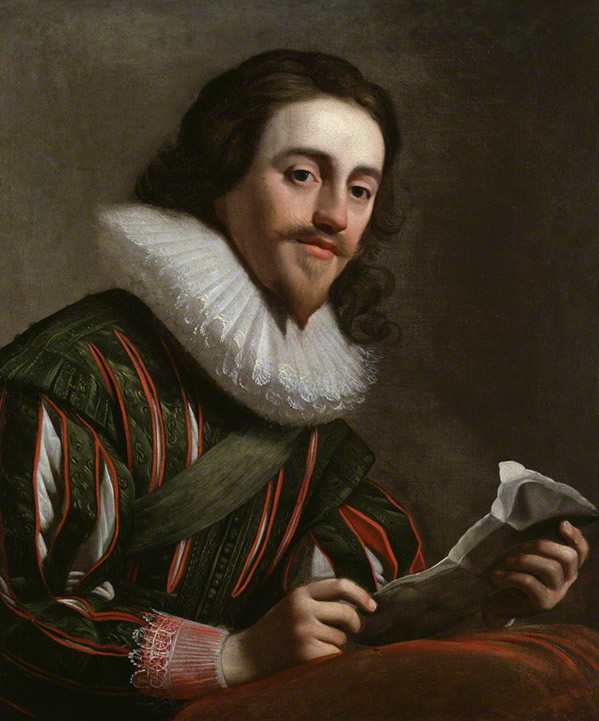
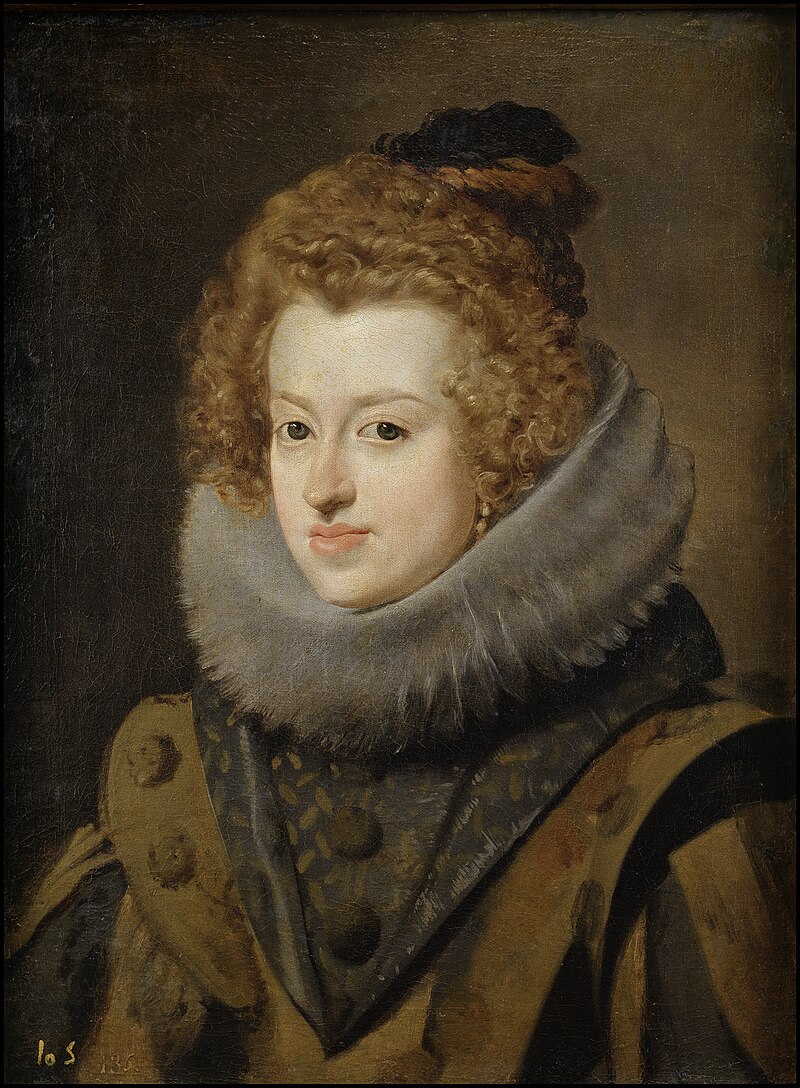
Charles Stuart and the Infanta

 From The London Review of Books:

Never trust a man called Smith. Or rather, don’t trust him if he has a fake beard and is travelling with another man called Smith who also has a fake beard. This is one of the profound moral lessons which emerge from one of the most extraordinary incidents in 17th-century English history.

On 17 February 1623, the future Charles I and the royal favourite, the Duke of Buckingham, set off for Madrid incognito. They wore false beards, and they called themselves John and Thomas Smith. Their mission was to win the hand of the sister of the king of Spain, the Infanta María. The courtly duo were not well suited to a life in mufti. The only coins they carried were of a suspiciously large denomination. A ferryman to whom they gave a silver 20-shilling piece decided they must be noblemen who were going to fight a duel abroad, and reported them to the authorities. At Rochester they spotted an ambassador and his escort, and fled over the fields to Canterbury. There the mayor attempted to arrest them, and Buckingham had to pull off his beard, confess his identity, and claim that as admiral of the fleet he was off to arrange an impromptu inspection at Dover. The prince and the favourite then joined up with two courtiers, Endymion Porter (who had been born in Spain) and Sir Francis Cottington, and set sail for France on 19 February. They were thoroughly sick on the voyage. The small party was conspicuous enough to be identified by a group of German tourists outside Paris, so they took the precaution of buying periwigs to thicken their disguises. These were effective enough to enable them to see the sights of the French court without being identified. They then trekked down the Iberian peninsula, where they behaved like the very best kind of Englishmen abroad, rustling goats and provoking fights by making tactless remarks about people’s mothers.

On 7 March they arrived at the home of the most frigidly formal court in Europe. The English ambassador, the Earl of Bristol, was, as a contemporary source had it, ‘in a kind of astonishment’ (early modern English for ‘gobsmacked’) when a stranger pulled off his false beard to reveal that he was the heir to the English throne. The Spanish court had to pretend that Charles was invisible until an official reception could be organised for him on 16 March. To celebrate this occasion, more than three hundred prisoners were released, including all Englishmen serving in the galleys, and candles were ordered to be lit in every window in Madrid. ‘The voyage of the Knights of adventure’, as the secretary of state Edward Conway called it, finally seemed to be taking off. Buckingham recorded that Charles was in love: ‘Baby Charles is so touched by the heart that he confessed that all he ever saw is nothing to her.’

Poor Charles was not to get the girl. The infanta declared that she would rather take to a nunnery or die a martyr than marry a heretic. James I obligingly sent out a brace of high Anglican churchmen to convince the Spanish that England could do things with smells and bells too, but this was not enough to persuade them. One of these unfortunate clerics never arrived, having been jolted off his mule en route to Madrid. It rather sums the whole venture up. Also among the larger entourage sent out to reinforce Charles in making his suit was the king’s fool, Archie Armstrong. He had been kitted out with a wildly expensive new suit for the trip, and the climate clearly agreed with his sense of humour, which was always dry and sharp. He saw more of the infanta than Prince Charles ever did, and seems to have charmed her. When she remarked how extraordinary it was that the Duke of Bavaria’s tiny Catholic army should have ousted the Protestant forces from Prague, Archie merrily reminded her that it was equally extraordinary that only ten ships had made it home from the Spanish Armada. History does not relate how loudly she laughed.

The prince’s negotiations were impeded by his being caught up in a hideously complex network of international negotiations and misunderstandings which he only ever partially grasped. The Spanish assumed that his sudden arrival could only mean that he intended to convert to Catholicism, but were rapidly disabused of this misapprehension. Charles himself had been led to believe that a marriage, which had been the subject of negotiations between the two countries since at least 1604 (when his elder brother was the prospective groom), was more or less signed and sealed. The Spanish ambassador to London, old Aesop Gondomar (as Jonson called him – he was fond of telling animal tales), very much wanted to be in with James I, and as a result persistently exaggerated the extent of his influence over and knowledge of the inner workings of Spanish government. He encouraged Charles to believe that the marriage would go ahead, and in a letter of September 1622 which Glyn Redworth has unearthed in the British Library, he urged Buckingham that it was time for the prince to ‘mount’ Spain. In fact, Gondomar was seriously out of touch with opinion at home, and was more respected by James I than by his own king. He never appreciated that the marriage would be impossible without Charles’s conversion, or that the Spanish would demand toleration of Catholicism in England to an extent to which Stuart Parliaments would never have assented. Gondomar remained convinced that the religious issue did not matter much because he believed the English people were all eager to return to Catholicism.

Once Charles and his ever growing entourage were established in Madrid, the Spanish faced a serious problem: how to get rid of them without falling out irretrievably with England. Felipe IV’s favourite, the Count of Olivares (whose memorable mutton-chop whiskers and multiple chins were recorded in loving detail by Velásquez), engaged in some exceptional skulduggery to make sure that the match did not come off. He later boasted that he had single-handedly scuppered the whole plan. The diplomatic way of saying no to Charles was to make the pope say no to him instead. A papal dispensation was needed for the Catholic infanta to marry the Protestant Charles, and the terms of this dispensation were critical. At first, the pope had been happy to insist on greater toleration for British Catholics as the price of the match; after Olivares got to him in April 1623, the condition was that ‘free and public’ exercise of the Roman Catholic religion be approved by the English council and Parliament. Olivares had Charles cornered, and effectively imprisoned in Spain until he was prepared to offer more concessions than he could ever in practice deliver. Then the pope died, and the dispensation had to be sought again. Meanwhile, the Spanish insisted that the infanta stay in Spain until it was clear that James was actually improving the conditions of English Catholics. And meanwhile, too, a large junta of Spanish clerics sat to determine, with endless scholastic distinctions, the conditions that should be attached to the marriage. The summer got hotter, and people on both sides began snarling at each other.

Charles’s response to these nasty tactics was entirely straightforward: he set about lying and scheming in return. As a result of his lies, as John Elliot wryly puts it, ‘the dishonours were ultimately even.’ He no doubt still wanted the infanta, but through the later summer of 1623, as messages and counter-messages shuttled between England and Spain, he adopted a sublimely duplicitous negotiating strategy. He agreed to all the demands which Olivares had been quite sure were impossible for him to agree to. He accepted that there should be no further persecution of Catholics and no further laws against them in the three kingdoms. He even persuaded his father (who never had any difficulty remembering 5 November, when English Catholics had apparently tried to blow him up) to go along with him. Everything was signed and sealed in a most royal fashion: Charles left Madrid on 30 August 1623, having told the Earl of Bristol that he should give his consent to marriage by proxy within ten days of the arrival of the dispensation from the new pope. A stately pillar was erected on the site of his departure from his future brother-in-law Felipe IV to mark the solemn occasion. It’s an indication that Felipe at least may have believed the marriage would happen. But Charles had learned a trick or two in Spain. Once he was safely on his way, he coolly countermanded the orders for his proxy marriage, telling Bristol not to go ahead until he was assured that the infanta would not take herself to a nunnery after the match in order to avoid its consummation. With that, the noble prince did a bunk back to England.

There were many reasons why the whole courtship failed. Neither party ever understood the other, and it was not clear that anyone apart from Charles really wanted the match. But the ultimate significance of the affair derives from its complex relationship to a larger setting of international politics. In 1623, English foreign policy was dominated by one issue: the Palatinate. James I’s daughter Elizabeth had in 1613 married the Protestant Frederick, the elector palatine. In 1619 the Bohemian estates chose Frederick as king of Bohemia, and in the process ousted Archduke Ferdinand, who was a particularly devout and intolerant Catholic. Unfortunately for Frederick, Archduke Ferdinand was elected Holy Roman Emperor immediately after he was denied the throne of Bohemia. Spanish and imperial troops ejected Frederick and the ‘Winter Queen’ Elizabeth from Prague (so called because she entered her kingdom in triumph in October 1619 and fled in November 1620), and seized much of the Palatinate. Over the next few months the hotter sort of Protestants in England called on James I to support European Protestantism in the form of his daughter.

The major historiographical debate about the Spanish match is concerned with what, if anything, it had to do with a desire to help Elizabeth of Bohemia. Old school historians had it that the Stuarts were already autocratically detached from the interests of their people by the 1620s. As a result, they tended to see the Spanish match as a frivolous flirtation with Catholicism by an irresponsible prince who failed to understand the level of popular hostility to a Catholic match. Revisionist historians, who wish to see the Civil War as a consequence of short-term miscalculations rather than of a long-standing and growing alienation of subjects from Stuart tyranny, claim instead that James was using the Spanish match as the majority of his countrymen would have wished, to help ease the situation in central Europe and diminish the Catholic threat. Certainly, it would have made some sense for James to have reasoned that if the sister of the Spanish king married the heir to the English throne, then the Spanish king would be unwilling to help the Holy Roman Emperor drive the daughter of the king of England from her realm. By the end of the affair, this is the outcome that James I seemed to want: the final condition which he imposed on the match, after Charles had left Spain and the agreement was in tatters anyway, was that Felipe should help return the Palatinate to his daughter.

For Glyn Redworth, though, the story is rather more complex. James believed that a strategic set of unions between Protestant and Catholic dynasties might end discord in Europe. James also urgently needed money to pay for troops to defend his daughter’s interests in the Palatinate, which might be more readily obtained from a hefty Spanish dowry than from a refractory House of Commons. For Redworth, it was only after the event that Charles and Buckingham made the association between the Spanish match and the fate of Elizabeth of Bohemia. The Spanish match was primarily a hare-brained scheme cooked up by a foolish prince, who was goaded on by an ill-informed Spanish ambassador, and which foundered because two cultures failed to understand each others’ motives and priorities. This view is in many respects extremely convincing. In retrospect, it does seem very hard to believe that the Habsburg Catholic ruler of Spain would in a month of (heavily ceremonial) Sundays do anything which ran counter to the interests of his uncle the Habsburg Catholic Holy Roman Emperor. If James, Buckingham or Charles thought that marrying Charles to a Catholic princess would help the cause of Protestant Europe, then they must have had their heads in the clouds.

But there is a problem with, or at least a consequence of, Redworth’s thesis. In order to sustain his argument that the Spanish match really had little or nothing to do with Bohemia, he has to be deeply unsympathetic to Charles, whom he sees as a hot-headed fool ‘puffed up with an almost adolescent recklessness’. Redworth’s Charles only belatedly realised that he could pretend his mission was motivated by a desire to help his sister. This is a beguilingly simple account of his motives early in the courtship, but it is also curiously flat. Charles was not just a hothead in love. He read the wrong kinds of book (for an heir to the throne, anyway), and thought you could behave as though you were in them. Early 17th-century autobiographies do sometimes present their heroes as knights errant in allegorical romances. Sir Kenelm Digby, who wrote one such autobiography, was in Spain throughout the marriage negotiations (he was a relative of the English ambassador), and returned to England with Charles. Prose romance enjoyed a growing association with political troubleshooting throughout the late 16th and early 17th centuries: in Sidney’s New Arcadia the princes Musidorus and Pyrocles range around Europe in disguise, acting as European constitutional troubleshooters and wooing princesses with tales of their political adventures. John Barclay’s Argenis, a neo-Latin romance, was a European hit from its first publication in 1621, and its tales of knights and swooning lovers were frequently decoded as covert tales about political machinations in Europe.

It is no accident that James I referred to Buckingham and Charles as ‘sweet boys, and dear venturous knights, worthy to be put in a new romanso’. Loving romances, and living them, too, ran in the family: Elizabeth of Bohemia, according to her granddaughter, ‘thought of nothing but plays, masquerades, and the reading of romances’. Charles was being fashionable, even slightly ahead of his times, in dashing across Europe in a false beard: his culture made him think he knew that gallant acts of social transgression were the way to a princess’s heart and to the liberation of beleaguered states. Redworth aptly notes at one point that Charles could be motivated by literary example: one of his more ridiculous attempts to make contact with the infanta, who was in the flesh rather less animated even than her portrait by Velásquez, was to climb over a wall and leap down before her. This was probably an imitation of one of the principal actions in Rojas’s bestselling La Celestina, of which Charles bought a copy in Spain. But Redworth is too keen to see Charles as just a silly young wag who was carried away by the hope of some exotic totty – or, as he puts it, ‘As for Charles, his wish to be united with her whose “idea is graven in my heart” needs no explanation.’ Love always needs cultural explanation. And Charles partly shaped his actions after books.

The wider cultural dimension of the Spanish match may also have exerted a greater influence over the ways in which the participants represented their actions than Redworth allows. The voyage to Spain created just the kinds of great unfocused expectation about European peace and erotic happiness that sets poets in a frenzy, and the literary evidence strongly suggests that, throughout the summer of 1623, English writers with links to the court were seeing a connection between the Spanish marriage and the fate of Bohemia. Ben Jonson set the two affairs side by side, as though keen to keep them together but anxious not to press for a direct causal link, in poems written in the very delicate period around June-July 1623 (at about the same time he was probably translating Barclay’s Argenis). His ‘Epistle Answering to One That Asked to be Sealed of the Tribe of Ben’ makes the conjunction, as does one of his worst poems, ‘On the dedication of the King’s new Cellar to Bacchus’. In the new ‘cellar’ (which was more like a grotto or private drinking-space), Jonson imagines that King James

gratulates the passage
Of some well-wrought embassage,
Whereby he may knit sure up
The wishèd peace of Europe,
Or else a health advances,
To put his court in dances,
And set us all on skipping,
When with his royal shipping
The narrow seas are shady,
And Charles brings home the lady.

‘Sure up’/‘Europe’ is a hiccuping drunken rhyme so bad as to acknowledge that the reality is likely to be harder to achieve than it sounds. Jonson is careful to separate slightly events in the Palatinate from those in Spain: skipping (prompted no doubt by a bit of sipping) comes between the ‘embassage’ and Charles bringing home the lady. But there is no doubt that for James’s subjects and panegyrists, the Spanish match was being cautiously linked with the ‘wishèd peace of Europe’ in the summer of 1623.

It’s a bit hard to believe that the linkage was not there in the minds of Charles and Buckingham as they set off. Certainly, the main Spanish witness to the negotiations, Fray Franciso, felt that the English had all along concealed that their prime concern was with the fate of the Palatinate. Thomas Howell (who was another witness on the spot) records Gondomar as saying that ‘there is no other way to regain the Palatinate, but by this match.’ But if Redworth is right, and Charles when he set off really just wanted to ‘mount’ Spain, then what may have happened is that the motives of the chief actors in the debacle gradually caught up with the representations of those motives that were circulating at home. Although Jonson’s poem on the King’s cellar looked crashingly tactless by the time Charles returned without the lady on 5 October 1623, it was sketching out motives which Charles and Buckingham eventually claimed as their own.

Prince Charles’s reception when he returned to England empty-handed was far more enthusiastic than it would have been if he had indeed brought home the lady. A real danger that there might be a Catholic heir to the throne had been averted. As a result Charles was greeted as warmly by the English on his return as he had been by the Spanish on his arrival. There were more fireworks, much ringing of bells, and more prisoners were set free. The released prisoners and manufacturers of fireworks were among the very few winners in the affair. Archie the fool was another: he claimed to have received a state pension from Felipe IV which eventually amounted to £1500. But all that Prince Charles had to show for his months in Spain was a desire for revenge, along with a few jewels and gloves bestowed on him by the infanta. He also had four camels and an elephant, which had been given to him by the Spanish king. (Read more.)


From ResearchGate:

The Spanish Match is an engaging collection of essays originally read at an interdisciplinary conference held at Stratford-upon-Avon in 2003. While historians have usually tended to emphasize the political implications of the proposed marriage and the joyous reception given Prince Charles upon his return without a Spanish bride, these eleven essays examine less well-known, but no less important, aspects of his ill-fated trip to Madrid in the spring and summer of 1623. They range from the prince's purchases of pictures and clothing, to the ceremonies of welcome, concluding with the literary responses in Britain, Spain, and France to the proposed marriage. Given the unusually eclectic specialties of the authors, different readers will naturally derive pleasure from different essays, but they will learn much from all. I found the chapters on Charles's purchases particularly rewarding. Contrary to the view that the prince's interest in collecting began with the pictures he had been given and others he had seen in Madrid, he had already begun his collecting under the tutelage of Arundel, Buckingham, and others. But the pictures he was offered in Spain had political as well as aesthetic significance. Titian's Portrait of Charles V with Hound signified to recipient and giver alike that the prince was not only "being invited to join the Habsburg dynasty," but also to accept his "crown from the Pope just as his namesake had done" (19). What probably drew the attention of his Spanish hosts was not purchase of art, but of clothing. Charles and Buckingham traveled to Spain in unconvincing disguise as ordinary Jack and Tom Smith, but once in Spain, Charles spent lavishly to acquire a wardrobe to impress his hosts. He had to have clothing for his roles of eager suitor as well as princely guest, some in the Spanish style, others the English. But Charles was not the only one to fill the purses of Madrid's haberdashers. Charles's extravagance was matched by the Spanish nobility, who were encouraged by the suspension of a recently enacted austere sumptuary code and by Philip's generous offer of no-interest loans. Rumors of Charles's extravagance worried his father, but James would have been far more upset had he known of the ceremonies Charles participated in. Although Philip was careful to honor his prospective son-in-law by insisting that two Cardinals and the Inquisitor General take part in welcoming ceremonies, many of the entertainments had a religious aspect, designed to suggest that by participating in them Charles was prepared to convert to Catholicism. James would have been shocked to learn that Charles was widely reported to have knelt when the Sacrament passed by during the Corpus Christi procession, part of a festival designed to convert Protestants by using "splendour and magnificence to confirm the 'truth' of the Catholic faith" (71). Charles's impetuous visit proved to be a boon to writers and publishers in England, Spain, and France. Spanish interpreters and presses cranked out devotional books aimed at the English market, while their English counterparts provided new dictionaries and language-learning texts. The failure of his courtship and Charles's subsequent marriage to a French princess allowed the French writers to rewrite the history of 1623. In this new version, the central event was Charles's brief stay in Paris, where he allegedly fell in love with his future bride. Therefore, his trip to Madrid became mere anticlimax, carried out merely to keep up appearances. In England, Charles's quixotic Spanish adventure was remembered in plays by Massinger and Middleton that questioned the viability of interfaith marriages and heightened anti-Spanish feelings. If Charles failed, at least one Englishman enjoyed success in Spain. Archie Armstrong, James I's fool, who accompanied the prince, had far greater success at court as related in a "mock-encomium" by John Taylor, the Water-Poet. While the fool was granted personal access to the Infanta's presence, the eager suitor had to resort to climbing the walls to gain a peek at his prospective bride, an act that shocked the Spanish, and delighted the English, publics. This informative collection concludes with a useful appendix containing a brief account...(Read more.)

Share

J6 Prisoner Released

 From The Gateway Pundit:

Recently, The Gateway Pundit reported on the horrible abuse taking place in American prisons today. J6 political prisoner Ryan Samsel and his friend and Trump supporter Cush’Mir McBride were viciously beaten and nearly killed by prisoner guards in recent months. Cush’Mir shared his harrowing story recently with The Gateway Pundit earlier this month. He is determined to raise awareness about the plight of abused inmates and the need for reform. He hopes that by sharing his story he will shed light on the prevalent issue of abuse within the prison system.

“I hope to spread awareness about abuse and mistreatment within these prisons and speak out for those who lack help and support and simply have no way to be heard. And I’m here to be a voice for us all today and hopefully can help save lives in the future, as I once was a victim of abuse within prison,” Cush’Mir told The Gateway Pundit. (Read more.)

Share

Robert Maxwell & the KGB

 An old article, but interesting in light of all that has happened. From Espionage History Archive:

We’ll note that Maxwell has been christened one of the greatest spies of the Cold War. His record, however, isn’t limited to work for Moscow. The main intelligence service in his life was Israel’s Mossad. Itzhak Shamir himself, the future Prime Minister of Israel, enrolled Jan Ludvik Hoch into the Zionist underground organization Irgun at the beginning of World War II. There he received the agent call sign “Little Czech,” under which he worked his entire life. The French Resistance and British Army became the first phases of the Little Czech’s service in Zionist intelligence, well before the founding of the State of Israel and Mossad.

Further on fate took its own turn, and Maxwell left the British Army in 1947, entering the publishing business. Moreover, after the war Captain Maxwell had been the head of the British Foreign Office’s press bureau in occupied Germany, where he made the needed connections. The capital for his scientific publishing house Pergamon Press made up all of 100 pounds sterling.[1]

Having foreseen its importance in the modern world, the enterprising Maxwell made his bet on scientific information. This sphere became fertile ground for the intelligence services as well. After all, scientists and academics aspired to publish their works in his journals and release books under his label. The Little Czech’s masters could find much of interest there. Maxwell published, for example, the Soviet physicist Lev Landau.

Soon the publishing house became a leader in scientific-technical literature as well history, politics and memoirs. This was also done with an intelligence objective. At once the spy took under his control the publication of the UK Mirror Group’s six newspapers, plus the US publisher Macmillan’s magazines, books and newspapers. These were so-called publications for everyday people. (Read more.)

Share

Saturday, July 1, 2023

Election Rigging For Biden

 From The Federalist:

The troubled Biden son has always been at the center of concerns about the 2020 election, in the form of the infamous “Hunter Biden laptop.” When reports surfaced in October 2020 of an abandoned laptop showing the dirty details of not only Hunter’s shady business enterprises and potentially criminal conduct but also then-presidential candidate Joe Biden’s knowledge of and involvement in it, the corrupt Department of Justice joined hands with Big Tech censors and media propagandists to hide the story.

This was hugely significant, not only because it exposed the depravity of federal law enforcement and America’s information gatekeepers, but also because polling showed that if voters had known the depths of Biden family filth at the time, a potentially scale-tipping number of them would have voted differently in the 2020 election.

The IRS whistleblower transcripts released on Thursday, however, add new layers to the election rigging. According to the IRS agents who came forward, federal agencies abandoned standard procedures to slow-walk investigations into Hunter Biden, ignored agents who pushed for the investigation to move forward properly, retaliated against those agents, and — crucially — interfered even further in the 2020 election by making sure not to go public with details of their investigation until Donald Trump was on his way out the door and Joe Biden was safely elected.

The second IRS whistleblower, who remained anonymous, recalled what he remembered from May 2019 to Dec. 8, 2020, the day agents went “overt” with the Hunter Biden case, immediately following the contested presidential election.

He explained that in criminal tax investigations, IRS policy dictates the “need to interview the subject within 30 days of elevating the investigation.” Though sometimes undercover investigations or ongoing criminal activity might delay interviewing a source, that just isn’t how tax crimes work, he said, because “the evidence is typically historical.” The whistleblower said he especially wanted to go overt to put the Biden son “on notice,” since Hunter apparently had unpaid taxes from 2015 and unfiled tax returns from 2016 and 2017. One can infer from the transcripts that if the IRS’s standard timeline had been followed, Hunter Biden would have been interviewed by the early summer of 2019. But he wasn’t.

According to the whistleblower, he repeatedly raised the issue of going overt but was always shot down. “I was continually being told that we had to stay covert to preserve potential evidence from the FBI side of the investigation,” he said. Assistant U.S. attorneys and the DOJ’s tax attorneys, however, told the IRS agents that prosecutors would eventually be able to move forward with hard-hitting “Spies evasion” charges, felony charges for willful tax evasion. Based on the sweetheart Hunter Biden plea deal revealed this week, those felony charges were never pursued. Instead, assuming the deal is accepted, the Biden son’s tax charges will be mere misdemeanors with probation, no jail time. (Read more.)


From Just the News:

A nearly 2-year-old report was finally made public last week and showed Dominion voting machines had significant vulnerabilities, which led the Department of Homeland Security’s Cybersecurity and Infrastructure Security Agency (CISA) to issue a public advisory last year based on the findings. However, Georgia election officials say that the machines won’t be updated until after the 2024 elections because it's such a massive undertaking.

The report was completed in July 2021 by University of Michigan Professor of Computer Science and Engineering J. Alex Halderman with Professor Drew Springall, of Auburn University, and focused in part on vulnerabilities they found after examining Dominion’s ImageCast X Ballot Marking Devices for three months. A redacted copy of the report was released June 14 by the U.S. District Court for the Northern District of Georgia, Atlanta Division. The report was completed on behalf of the plaintiffs in the case of Curling v. Raffensperger and found the Dominion machines are vulnerable to vote flipping.

Halderman suggested the machines were capable of being manipulated in mere minutes by bad actors, saying the QR codes on printed ballots could be altered and malware installed on individual machines “with only brief physical access.”

The broader voting system could be attacked if bad actors have the same access to it as certain county-level election officials, the report also concluded. However, Halderman stated there is no evidence such vulnerabilities have been exploited in past elections. (Read more.)


From The Daily Caller:

How can pro-law-and-order Americans respect people who see shoplifters, carjackers, violent hoodlums, and even murders, and either ignore their crimes or, if they are arrested, speed their return to the streets, so they can resume their criminal careers?

How can everyday Americans feel anything but rage against those who completely invented the notion that former President Donald J. Trump was a Kremlin agent and then incinerated three years hounding him and imprisoning his supporters — all based on an unfiltered lie?

No wonder Rightists lately chant “No more Mr. Nice Guy!” (Read more.)


Share

The Devil, You Say

 From Francis X. Maier at The Catholic Thing:

The late Leszek Kolakowski had a lifelong fascination with the nature of evil.  He wrote about the devil in history more than once.  In his essay, “A Stenographic Report of the Devil’s Metaphysical Press Conference in Warsaw, on the 20th of December 1963,” Kolakowski put the following words into the devil’s mouth in speaking to modern Christian theologians:

You have stopped believing in me.  I know all about it, of course.  I know all about it, and it is a matter of complete indifference to me. . . .[And yet,] since when does faith tremble before the ridicule of pagans and heretics?. . .  .You want to be up to date in this world, to give up “fairy tales,” to stride at the front of humanity. . . .[But] what is it that you must renounce in order to win approbation in this world?  The devil?. . . .And do you imagine that this is where the concessions will end?

There comes a moment in Nefarious when the prison’s Catholic chaplain makes a brief appearance.  The demon initially recoils in fear. . .until the priest starts blathering about how the Church has “evolved beyond” belief in devils, thanks to enlightened psycho-social tools.  Later, along unintentionally similar lines, the unbelieving psychiatrist lists all the human advances in knowledge and behavior that today make religion obsolete.  The demon in the human prisoner pauses.  Grins.  And then says, “I think I love you.”

See the film.  Preferably in the daylight.  Preferably with a friend. (Read more.)

Share