Tuesday, May 23, 2023

An All-Too-Moveable Feast

I am saddened with how the American hierarchy has hacked up the Roman calendar. From Charlotte Allen at First Things:

The American bishops—as well as others, mostly in the English-speaking world—had a precedent for this. Starting in the late 1960s, the Feast of the Epiphany, celebrating the Magi’s visit to the infant Jesus—traditionally January 6, “Twelfth Night,” in the Western church—was moved to the Sunday immediately following New Year’s Day. This has meant that the season of Christmastide itself, which traditionally speaking isn’t supposed to end until the eleven pipers pipe and the twelve drummers drum, has regularly been terminated in parish churches as early as January 2. Further gumming up the works is the fact that many Spanish-speaking Catholics in the United States haven’t bought into the bishops’ switch to Sunday and continue to celebrate El Día de los Reyes—a much more important feast for them than for Anglophones—on whatever day of the week January 6 happens to fall.

Postponing Ascension Day—giving Jesus three extra days on earth before being “taken up” until a “cloud received Him”—means compressing the time between the Ascension and Pentecost (the ancient Jewish Feast of Weeks marking the seventh sabbath after Passover and always celebrated by Christians on a Sunday) from ten days to a mere seven. You might say that God now has to send down the Holy Spirit to the Church (the event that the Christian feast of Pentecost commemorates) by express instead of standard delivery. Not only does this change maul the Scriptures (the Acts of the Apostles is very clear about the time period between Ascension Day and Pentecost), but the once-widespread Catholic custom of a nine-day novena between the two feast days—with the Easter candle in the sanctuary extinguished on the intervening Sunday as a symbol of Christ’s absence—is now just a memory in most U.S. dioceses.

And in a further flattening of the post-Easter liturgical calendar, the American bishops (along with bishops in many other Western countries) moved the uniquely Catholic feast of Corpus Christi, which since the Middle Ages has been celebrated on the Thursday ten days after Pentecost. Again, the bishops decided that going to Mass or viewing a procession on a weekday was too much to ask of American Catholics, so Corpus Christi was shuffled off to Sunday as well. So now we’re left with a blurry procession of late-spring Sundays: Ascension Sunday, Pentecost Sunday, Trinity Sunday (a week after Pentecost), and Corpus Christi Sunday. Many Catholics probably have trouble figuring out which one is which.

As for the bishops’ goal of encouraging Mass attendance on major feasts by moving around their days of observance, quite the opposite has happened instead. Fewer Catholics than ever go to church on Sundays these days, even though such convenient scheduling arrangements as evening and vigil Masses have made it easier than ever in history for them to fulfill their weekly worship obligations. A Gallup poll released in April 2018 showed that Sunday Mass attendance, which had stabilized at around 45 percent about a decade ago, has recently resumed a precipitous post-Vatican II decline, down to 39 percent in 2017 from its height of 75 percent during the 1950s. And as the rules about holy-day worship have relaxed, the complaints from Catholics obliged to abide by the few restrictions left have grown. In December 2017, when Christmas fell on a Monday, many Catholics were disappointed to learn that the bishops wouldn’t let them pull a “two-fer” via a Mass on Sunday, December 24, that would cover both days. (Read more.)

Share

New York City May Be Sinking Under the Weight of Its Skyscrapers

 Another reason to flee from New York City. From Architectural Digest:

The paper concludes with an emphasis on the importance of strategies that could minimize the impact of inundation from sea water. However, the authors implicitly argue that New York’s developers still aren’t taking the risk of rising waters seriously enough. “New York City is ranked third in the world in terms of future exposed assets to coastal flooding,” the paper reads. “90% of the 67,400 structures in the expanded post-Hurricane-Sandy flood risk areas have not been built to floodplain standards.”

With UN reports estimating that the percentage of the world’s population living in urban areas could increase to as much as 68 percent by 2050, coastal cities should take notice of New York’s slow sinking. Though it would hardly be prudent to topple every skyscraper and start over, perhaps research like this will inspire ingenious solutions that can help New York rise to the challenge of climate change. (Read more.)

Share

Monday, May 22, 2023

Practical and Ideal


From Dream Tiny Living:

The number of people adopting the tiny house lifestyle is increasing day by day and the demand for these houses is increasing. We continue to discover new tiny houses to help you find the tiny house of your dreams. Today we will introduce you to ‘Practical and Ideal Sized Tiny House Design 5m x 6m’, suitable for the minimalist life of your dreams.

One of the biggest advantages of the tiny house is its low cost. You can have a tiny house that fits your budget by building these houses in different sizes and designs in line with your wishes and living standards. After you start to adopt this minimalist lifestyle, your expenses will decrease significantly.

Tiny houses that offer the opportunity to liberate your life are a source of motivation for many people. You can create a comfortable minimal lifestyle by getting away from the modern city life and the crowd. To own a tiny house, you should examine different tiny houses and choose the tiny house that suits your lifestyle. For this, do not forget to take a look at other tiny houses on our website. (Read more.)


From Treehugger:

For many people, a tiny house represents more financial freedom and the possibility to live a fuller life within a smaller footprint—both literally and ecologically. Nevertheless, behind the dream, there are always some practical questions to consider. For instance, where do you find a place to park your tiny house? What about buying insurance or permits? What do you do if you're thinking about tiny living but have kids?

For some, that last question can be a big one, as it can be perceived as a barrier to switching over to a tiny house. But for some, this issue can be reframed as a creative challenge, as Australian architect Wayne and partner Anthea have done. They are parents to two young adults, Darienne and Remony, and have recently embarked on their own tiny house adventure in not one—but two!—tiny houses, one for the parents and another for the two daughters. This DIY project was constructed together as a family, and as the couple explains, also looks toward a future where their daughters might be able to live mortgage-free. (Read more.) 

 A two-storey tiny house, HERE.


Tiny house designs, HERE and HERE.


A natural material tiny house, HERE. 


Share

The Racialization of Society

The entire Bridgerton thing is stupid, since there were no black aristocrats in England, and the political battle to abolish the slave trade was in full swing. It detracts from the struggle against slavery to show black people as being part of the British elite. From The Spectator:

Imagine it. Imagine if an image of a fine, upstanding, elite black family – the Obamas, say – was publicly described as ‘terribly black’. We would hate that, wouldn’t we?

The vast majority of people would feel incredibly uncomfortable, if not outraged, with public chatter on the selfishness of black women, the scourge of black fragility, or the dangers posed by angry black men.

So how has it become entirely normal to see such commentary in relation to white people? Are sweeping racial generalisations okay when talking about white people? Why?

Adjoa Andoh’s comment on the whiteness of the Windsors has caused a storm. It was during ITV’s live commentary on the coronation that the Bridgerton actress observed that the ‘rich diversity’ of the audience in Westminster Abbey had been replaced by a ‘terribly white balcony’. ‘I’m very struck by that’, she said. (Read more.)

Share

A Life of Endurance

A mother's love never dies. From Ellen Gable at Plot Line and Sinker:

If the struggles my mother endured are any indication of her achievements in life, then what she achieved here on earth can be considered great, indeed. My mother (Betti) was born in 1934 and died in 2007, but her influence in my life and in the lives of my children, nieces, nephews, and siblings has continued.

On the one hand, she was generous to a fault, often going into debt when we were young so that my siblings and I could have plentiful presents under the Christmas tree. She loved coming up to Canada and especially enjoyed surprising my boys with unexpected trips (and she never missed a Baptism or a First Communion or musical performance until she became terminally ill).  She had a unique, wry sense of humor and was laugh-out-loud funny sometimes.  Even today, she still makes me laugh when I think of one of her funny sayings.

On the other hand, she chain-smoked most of her life (she quit when she was 61), could swear like a sailor, and wasn’t always faithful with church attendance. But as a young mother with three small children and nine months pregnant with another, my mother watched her husband (my father) spiral into a full-blown psychotic breakdown and watch as he was committed to a psychiatric hospital. That same day, she went into labor with my youngest brother. With the help of extended family, she endured, and Dad finally came home.

Mom survived a critical illness when she was 33 years old and was not expected to live. I was only seven at the time, but I remember how thin she was. She weighed eighty pounds and at five feet, six inches tall, she was a walking skeleton.  She beat the odds, though, and lived a fairly healthy life until her sixties when chronic obstructive pulmonary disease (COPD) caught up with her. (Read more.)

Share

Sunday, May 21, 2023

Buttons with Miniature Portraits of French Royal Family

Marie-Thérèse of Savoy was the wife of Artois (Charles X). From Invaluable:

The miniatures inverted-glazed silver frames set with paste stones, with eyelets on the back. Subsequently attached rings for hanging. Engraved on the reverse with the names of the sitters: "LE ROY" (Louis XVI). "LA REINE" (Marie - Antoinette - youth portrait) "LA REINE" (Marie - Antoinette - older portrait). "MD. D'ARTOIS" (Maria Josepha of Saxony, wife of the Comte d'Artois, later King Charles X.) "Madame FILLE DU ROY" (Marie - Thérèse Charlotte de Bourbon 1778 - 1851). "MADAME" (Maria Josepha of Savoy, 1771-1810, wife of Louis, Comte de Provence, later King Louis XVIII, who was Louis XVI's eldest brother and bore the title "Monsieur". "M. BAILLY" (Jean Sylvaine de Bailly, mayor of Paris and French mathematician, 1736 - 1793) "M. L'ABBÉ MAURY" (Jean - Siffrein Maury, 1746-1817, opponent of the French Revolution, became Cardinal in 1794 and Archbishop of Paris in 1810). Exceptionally beautiful and rare, unusual ensemble of fine quality. Diameter 34 mm each. Highly interesting pieces on the history of the French Revolution and the Ancien Régime. The miniature shown in the image with the portrait of General Lafayette is sold individually.  (Read more.)

Share

Modernity is Making You Sterile

 From The Spectator:

That’s the problem with what we all think of as progress: it swats away benevolent traditions because the usefulness of traditions can be subtle and hard to understand. Technology brings many blessings: better medical treatment, better nutrition, and better comfort for all of the world’s population, even in the poorest regions. But rapid technological development liquifies well-established traditions and sometimes we don’t realise what we’ve lost until it’s too late.

Progressivism, the dominant ideology of our times, insists that history has a shape – that as time goes by, and new ideas and new technologies arrive in our lives, the world gets better. Those who insist on holding to traditions are the enemies of this process because progress and tradition are understood – correctly – to be in direct and bloody competition with one another.

But what we are now discovering is that, at the population level, modernity selects systematically against itself. The key features of modernity – urbanism, affluence, secularism, the blurring of gender distinctions, and more time spent with strangers than with kin – all of these factors in combination shred fertility. Which means that progressivism, the political ideology that urges on the acceleration of modernisation, can best be understood as a sterility meme. When people first become modern, they have fewer children; when they adopt progressive ideology, they accelerate the process of modernisation and so have even fewer. Britain was the first country to experience an industrial revolution, meaning that Britain started hurtling towards modernity faster than anyone else. Today, only 3 per cent of the world’s population lives in a country whose fertility rate is not declining.⁠

Demographic imbalance may well represent the greatest threat to the long-term stability of Britain, and indeed the rest of the world. Put simply, our age pyramid no longer looks like a pyramid. An ageing population depends on working-age adults to fund the welfare system. An economic system dependent on high levels of debt also depends on above-replacement birth rates. The whole system is a Ponzi scheme, reliant on continued population growth in order to sustain itself. (Read more.)
Share

A Roman Senator’s Day in Ancient Rome

 From The Collector:

The Senate was composed of elderly men, which is why the word for senate means “old man” in Latin (senex). The primary function of the Roman Senate was to debate decrees and create laws, any of which could be approved or declined (in Latin veto) by the consuls or leaders of the Senate.

Furthermore, it decided Rome’s external policy, managed expenses, and supervised religious matters. In matters of war, the Senate decided the number of troops necessary for a campaign, controlled the generals, and offered them honors. The final decision of the Senate on a matter was known as a Senatus Consultum, and every magistrate had to accept it. Their decisions were similar to decrees and functioned similarly to laws.

How did patricians become senators? First, They were not elected but appointed. Throughout much of the Roman Republican period, an elected official, the censor, appointed new senators. Later during the Roman Empire, the emperor controlled who could become a senator. Secondly, Senators were required to be of high moral character. They had to be wealthy because they were not offered payment for their jobs and had to spend their wealth on running the Roman state. They were not allowed to have other jobs, such as being a banker or a merchant, nor could they commit any crimes. (Read more.)
Share

Saturday, May 20, 2023

My Spring Newsletter

 Dear Friends and Family,

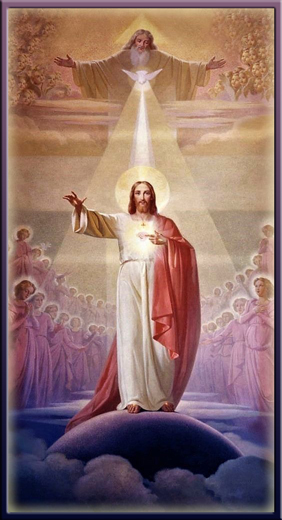
A blessed Ascension!


Let us live as if we were already There.
Why do we on earth not strive to find rest with Him in heaven even now, through the faith, hope and love that unites us to Him? While in Heaven He is also with us; and we while on earth are with Him. He is here with us by His divinity, His power and His love. We cannot be be in heaven, as He is on earth, by divinity, but in Him, we can be there by love. ~ St. Augustine, Sermon for the Ascension

The Pentecost novena begins today, even for those who were not able to celebrate the Ascension yesterday. The Golden Sequence makes a superb novena prayer.
Veni, Sancte Spiritus,        Come, Holy Spirit,
et emitte caelitus                send forth the heavenly
lucis tuae radium.               radiance of your light.

Veni, pater pauperum,      Come, father of the poor,
veni, dator munerum         come giver of gifts,
veni, lumen cordium.         come, light of the heart.

Consolator optime,             Greatest comforter,
dulcis hospes animae,         sweet guest of the soul,
dulce refrigerium.               sweet consolation.

In labore requies,                In labor, rest,
in aestu temperies               in heat, temperance,
in fletu solatium.                  in tears, solace.

O lux beatissima,                 O most blessed light,
reple cordis intima               fill the inmost heart
tuorum fidelium.                  of your faithful.

Sine tuo numine,                  Without your divine will,
nihil est in homine,               there is nothing in man,
nihil est innoxium.                nothing is harmless.

Lava quod est sordidum,     Wash that which is unclean,
riga quod est aridum,           water that which is dry,
sana quod est saucium.        heal that which is wounded.

Flecte quod est rigidum,      Bend that which is inflexible,
fove quod est frigidum,        warm that which is chilled,
rege quod est devium.          make right that which is wrong.

Da tuis fidelibus,                    Give to your faithful,
in te confidentibus,                who rely on you,
sacrum septenarium.            the sevenfold gifts.

Da virtutis meritum,             Give reward to virtue,
da salutis exitum,                  give salvation at our passing on,
da perenne gaudium,            give eternal joy.
Amen, Alleluia.                      Amen, Alleluia.

This spring I have been privileged to be part of some Catholic podcasts.
 

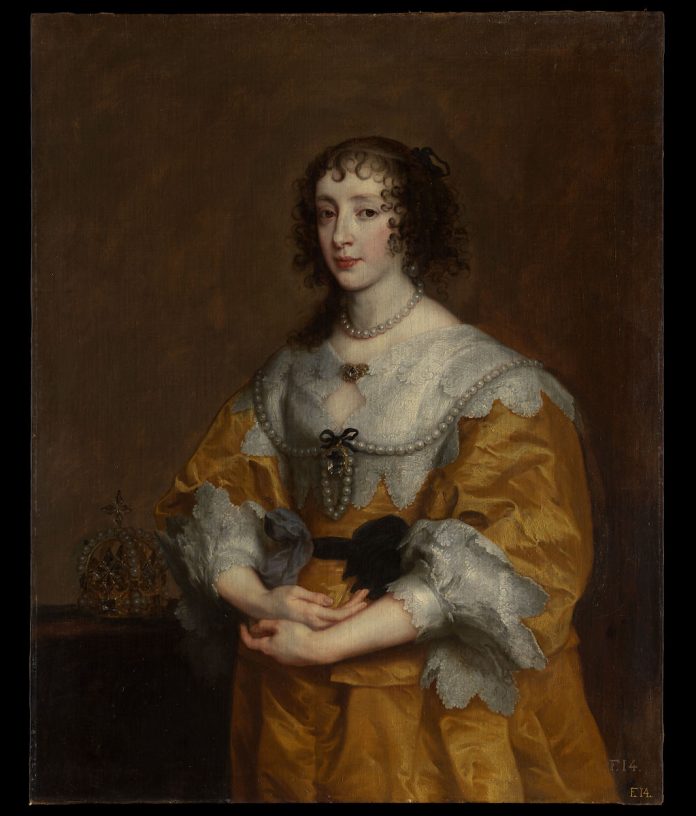
 I was delighted to be interviewed by Bob Krebs, a fellow native of Frederick County, Maryland and currently the Director of Communications of the Diocese of Wilmington. We discussed Queen Henrietta Maria. The interview can be heard HERE.

I was also interviewed by Kristen of Catholic Exchange about the real Marie Antoinette. To
listen, click HERE.

Connor McHugh invited me to be on his marvelous podcast called Plotlines. We discussed the PBS portrayal of Marie-Antoinette, HERE. And then he invited me to join some illustrious comrades in discussing the French pretender Henri V, HERE.

Meanwhile, I have been working on the sequel to My Queen, My Love,  to be called Generalissima, Part II of the Henrietta of France trilogy. It will deal with Henriette's role in the tumult of the English Civil War. My Queen, My Love is still selling steadily and garnering some excellent reviews from bloggers and literary journals. I was really happy to receive a glowing review from royal historian Theodore Harvey at Royal World:
Most Americans are probably not aware that the US state of Maryland was originally named after Queen Henrietta Maria (1609-1669), daughter of King Henri IV of France (1553-1610) and wife of the ill-fated King Charles I of England (1600-1649). Readers seeking an introduction to this unjustly neglected historical figure would do well to immerse themselves in this charming and engaging book by Elena Maria Vidal, who appropriately enough lives in Maryland....The central importance of religion is evident from the outset. Daughter of the pragmatic convert Henri IV, the devoutly Catholic Henrietta Maria finds herself in an impossible situation as wife of the staunch Anglican Charles I in what is by then a predominantly and fervently Protestant country, with even the King's own high church Anglicanism increasingly deemed too "catholic" by some. While the author clearly shares Henrietta Maria's devout Roman Catholicism, it is to Vidal's credit that the sincerity of King Charles who believes that his Church of England is truly Catholic is depicted in a well-rounded manner. I particularly appreciated the writer's evident love of liturgical beauty as reflected in lavish descriptions of Catholic ceremonies including sacred music. Henrietta Maria's enjoyment of the secular arts, so scandalous to the dour Puritans especially her own participation in Masques, is a consistent theme as well. (Read more.)

And I was also delighted by this insightful assessment of My Queen, My Love by Laura Crockett at The History Desk:

Henriette-Marie married Charles I of England in 1625. She became his queen but was never crowned, formally. When she married Charles, she was 15. Our modern perspective tells us that is a mere girl. Nevertheless, previous ages were practical in these matters. Henriette died when she was 59. That too, is young in our eyes.  Nonetheless, she lived to a ripe age, because the average, back in the day, was 35 years.

Vidal structures the story as one of those perfect circles, wherein she begins with Marie de Medici, Henriette’s mother, and then closes the story with Marie. What is given to us, in between the Marie sections, is the story of her daughter, who lived during a crucial development era in the history of the Western world.

Henrietta Maria holding a butterfly


Please do consider leaving a review on Amazon for My Queen, My Love. Some readers have had trouble publishing positive reviews, so let me know if you have trouble.

Love and Prayers to all,

Elena at "East of the Sun and West of the Moon"

(Read more.)

Share