Sunday, January 8, 2023

Nineveh: the Most Dazzling City in the World

 From The Conversation:

Archaeologists in northern Iraq, working on the Mashki and Adad gate sites in Mosul that were destroyed by Islamic State in 2016, recently uncovered 2,700-year-old Assyrian reliefs. Featuring war scenes and trees, these rock carvings add to the bounty of detailed stone panels excavated from the 1840s onwards, many of which are currently held in the British Museum. They stem from the ancient city of Nineveh which, for a time, was likely the most dazzling in the world.

There is evidence of occupation at the site already by 3,000 BC, an era known as the late Uruk period. But it was under King Sennacherib (705-681 BC), son of Sargon and grandfather of Ashurbanipal, that Nineveh became the capital of Assyria, the greatest power of its day.

In moving the capital, Sennacherib was doing nothing new. Traditionally, the Assyrian capital was Ashur (from which we derive the word “Assyria”), but in the 800s BC the political capital had been moved to Kalhu (Nimrud). Sennacherib’s father, Sargon, had subsequently built himself a completely new capital city, Dūr Šarrukīn. (Read more.)

Share

Saturday, January 7, 2023

Covid Cartels

 From Just the News:

Some studies have raised concerns that the vaccines or their boosters have weakened immune responses or failed to protect Americans from the virus as advertised, while the CDC has released data showing hundreds of safety signals have been identified in adverse event reporting databases for two COVID-19 vaccines, the Epoch Times reports.

Sen. Ron Johnson (R-Wisc.), the ranking member on the powerful Senate Permanent Subcommittee on Investigations, began raising such concerns from medical experts and whistleblowers last year. He told Just the News on Wednesday that delays in acknowledging such concerns have put people at risk and eroded trust in public health agencies.

"It's enormously frustrating because I think we could have prevented so much harm if our federal health agencies would have been honest and transparent," Johnson said during a wide-ranging interview on the John Solomon Reports podcast. (Read more.)


From LifeSite:

The tragic cardiac arrest suffered by a 24-year-old Buffalo Bills safety on Monday Night Football may have been caused by “vaccine-induced myocarditis,” according to distinguished internist, cardiologist, and epidemiologist Dr. Peter McCullough.

“If Damar Hamlin indeed took one of the COVID-19 vaccines, then subclinical vaccine-induced myocarditis must be considered in the differential diagnosis,” McCullough told COVID vaccine journalist Steve Kirsch last night.

In the statement that was also amplified by the Association of American Physicians and Surgeons (AAPS), McCullough described the tragic event as “a classical cardiac arrest,” which was later confirmed to be accurate by the Buffalo Bills, and expressed solidarity in prayer with the entire nation for Hamlin’s “complete recovery.” (Read more.)


Share

Happiness Habits

 One's Christian faith should be a source of deep joy and peace which the world cannot give or take away. Practical tips on how to translate faith into action are always helpful. From Hack Spirit:

We can cultivate those same feelings without the cash by starting a daily gratitude practice. I can honestly say this is one of the most powerful additions to my self-help tool belt. It gives you instant feel-good feedback. Studies show that a simple gratitude practice helps you feel more positive emotions, and relish good experiences. It also improves your health, helps you deal with adversity, and builds strong relationships. You could say:

It’s not what you have, it’s how well you notice what you do have that really makes you joyful.  (Read more.)

Share

Friday, January 6, 2023

Ballade to Our Lady


By François Villon (1431-1463) at The Thinking Housewife:

O excellent Virgin Princess! thou didst bear
King Jesus, the most excellent comforter,
Who even of this our weakness craved a share
And for our sake stooped to us from on high,
Offering to death His young life sweet and fair.
Such as He is, Our Lord, I Him declare,
And in this faith I choose to live and die.

(Dante Gabriel Rossetti, trans.)

(Read more.)

Share

Today’s 18-year-olds

 From Let Grow:

This accidental crippling of our kids is showing up on campus as fear and depression. To look at whether, in fact, giving kids’ too little independence too late is the real culprit, Korbey interviews Georgetown Psychology Prof. Yulia Chentsova Dutton. The professor and her team devised a clever study:

[They] interviewed students from Turkey, Russia, Canada and the United States, asking them to describe a risky or dangerous experience they had in the last month. Both Turkish and Russian students described witnessing events that involved actual risk: violent fights on public transportation; hazardous driving conditions caused by drunk drivers; women being aggressively followed on the street. 

But American students were far more likely to cite as dangerous things that most adults do every day, like being alone outside or riding alone in an Uber.

The American students’ risk threshold was comparatively “quite low,” according to Chentsova Dutton. Students who reported they gained independence later in childhood — going to the grocery store or riding public transportation alone, for example — viewed their university campus as more dangerous; those same students also had fewer positive emotions when describing risky situations. (Read more.)

Share

What Makes Niagara Falls Such A Perfect Setting for a Murder Mystery?

From Crime Reads:

The manmade structures of Niagara have changed enormously since the 1890s, but the Falls themselves have remained as awe-inspiring as when Father Louis Hennepin first saw them in December of 1678. “The Waters which fall from this horrible Precipice, do foam and boyl after the most hideous manner imaginable, making an outrageous Noise, more terrible than that of Thunder; for when the Wind blows out of the South, their dismal roaring may be heard more than Fifteen Leagues off.” (A New Discovery of a Vast Country in America. French publication in 1697. English translation and publication in 1698.)

Once you’ve trained yourself to let go of the present, it’s bewitching to sink into a bygone era. There’s nothing you can do to change it. It may not be a comfortable place to linger too long, but the past is a known quantity, which makes it safe for the writer, if not for the characters with whom she peoples her not-so-imaginary world. (Read more.)


Share

Thursday, January 5, 2023

Over 333,472 Misdemeanors Committed in Kari Lake’s Election

 From Townhall:

The Republican Party has a 4% voter registration over Democrats in both Maricopa County and statewide. Despite this, 14% of voters supposedly flipped to oppose Arizona’s top Trump candidates. Just like how no one believed Donald Trump lost the state in 2020 when he led Joe Biden three or four points going into the election, no one believes Hobbs won. This is why instead of being happy and gloating at their win, the left is reacting with a bizarre level of intense anger towards the right. 

Lake’s team discovered that over 298,942 ballots delivered to third-party signature verification service Runbeck Election Services on Election Day had no chain of custody, and provided this evidence to Thompson. A Runbeck employee stated there were at least 9,530 duplicate ballots printed and issued with no chain of custody. And two days after the election, 25,000 more ballots were found which lacked a chain of custody, totaling over 333,472 ballots. Under Arizona law here and here, every one of those constitutes a class 2 misdemeanor.

This doesn’t even include all the “Door 3” ballots that were commingled with counted ballots at the vote centers plagued with printing problems; it is unknown how many of them have botched chains of custody. (Read more.)


Share

Downfall

 The thirty days that led to the downfall of Charles I. From Leanda de Lisle at Aspects of History:

The King’s supporters held a majority in the House of Lords. His enemies dominated the Commons. But they owed their majority to intimidation, with demonstrations keeping moderate MPs away. Charles’s plan was to force these moderates back.  To achieve this On 12 December a royal proclamation summoned ‘all members of both Houses of Parliament’ to return to Westminster by 12 January. 

The clock was now set ticking: on 12 January it would be clear if Charles could still rule England, or not. The irony was that divisions of 1641 owed much to King Charles’s efforts to ensure the opposite – consensus. His ambition was for his three kingdoms to practice the same moderate form of Protestantism, represented by the Church of England, which he judged to be ‘the best in the world’. But when, in 1637, Charles had tried to impose an English style Prayer Book on the Presbyterian Scots, who practiced a purer form of Calvinist Protestantism, it had led to riot, then rebellion and then war. 

The Scots rebels had formed a secret alliance with some of Charles’s leading opponents from the ‘Puritan’ party in England, who also preferred a more stripped down Calvinist Protestantism than Charles did, and in 1640 the Scots had invaded England. Charles had been obliged to call parliament to pay the Scots to leave, and his enemies had come to dominate it. They had achieved this by using the principle weapon of any populist politician – fear. They claimed that England faced a Roman-Catholic takeover and tyranny, from which only they could save its people. This ruling group, led by figures such as the ‘popular Lord’ Robert Rich, Earl of Warwick, and the Puritan MP John Pym, was now known as ‘The Junto’.  (Read more.)

Share

Wednesday, January 4, 2023

A Proportioned Extravagance

 From Father Paul Scalia:

The Incarnation is a great example of that scholastic maxim, Whatever is received is received according to the mode of the receiver. (Quidquid recipitur ad modum recipientis recipitur.) By becoming incarnate of the Virgin Mary, the Son of God proportions himself to our “mode” so that we can receive him. In his mercy, he doesn’t demand that we become capable of him but makes himself capable of being received by us. True mercy always has this quality of being fitted, tailor-made for those in need, neither too high for them to reach nor too hard for them to accept.

So God comes to us in a manner we can receive. The infinite becomes finite, the eternal enters time, and the Creator of all is born of the Virgin and laid in the manger. We can receive him because he has become accessible to all of us, and to every kind of us, from the lowly shepherds to the learned Magi. We can receive mercy more easily because – without losing any of its power – it has been scaled to our size.

And not only to our size. God’s mercy is also fitted to our wounded human nature. He is born poor to meet us – we who have squandered our gifts and lost our inheritance. He is born homeless for us, who live in this world as exiles. He is born exposed to the elements and even to his enemies to encounter us, who are so weak and in danger. He is born alienated from his own people – who “received him not,” (Jn 1:11) – to be one with us, who are alienated from God and from one another.

He unites himself to us in these sorrows because mercy does not stand far off and look patronizingly on the suffering. The Lord of mercy draws near, unites himself with us, and becomes one with us in our misery. The poverty of his birth already points to Jesus as the man of sorrows, the one united with humanity’s every kind of suffering – mental, emotional, physical, spiritual.

But the simplicity and ease with which we can now approach God doesn’t mean that his mercy is indulgent and permissive. On the contrary, like all newborn children, he calls out and asks something from us. The infant Christ cries out to us, asking that we receive him and respond. Yet even this inconvenience is proportioned to our needs, for it keeps us from the vice of taking his mercy for granted. (Read more.)


From Aleteia:

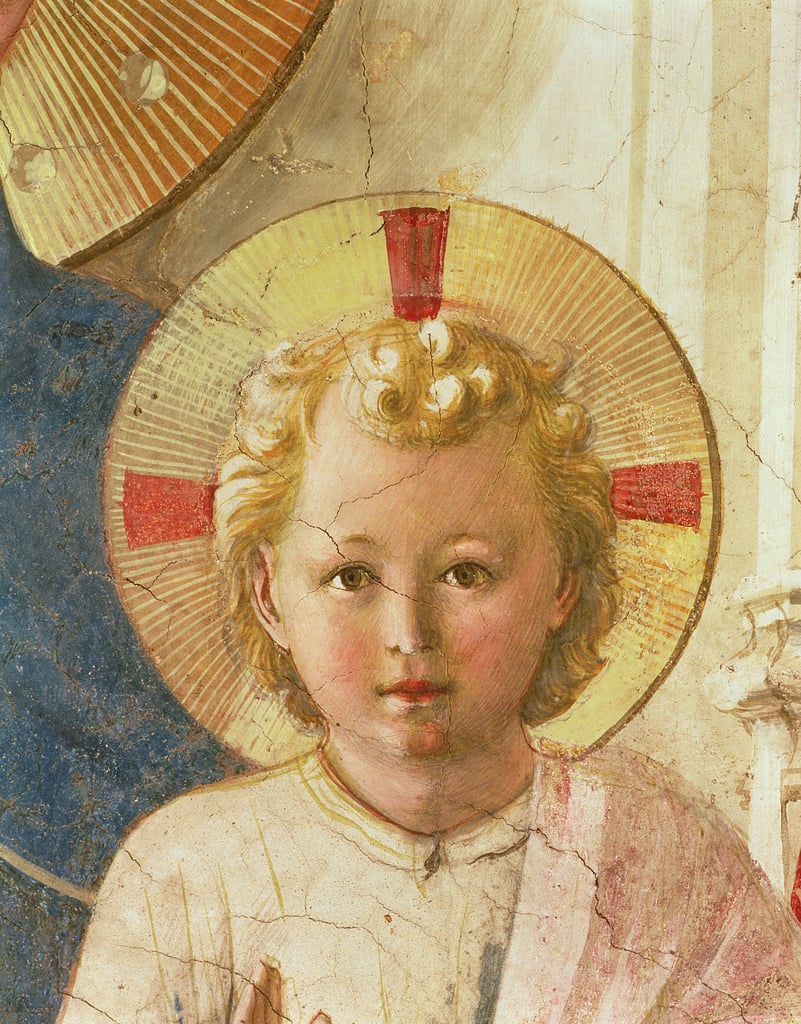
 Many of us forget, however, that Christmas is actually the origin of the thing we call “childhood!” That’s because Christianity essentially invented this cherished human phase. Before the news that God was born in infant flesh, “childhood” could not make its mark on the human imagination. We can thank Jesus, therefore, for the modern concept of “the child.”

In the ancient world, children were often regarded as burdens to society, expendable, fleeting, and unworthy of too much sacrifice or care. Rates of infant mortality were high, and even the children of nobility were raised by slaves or servants. Children were vessels of potential, yes—but a potential whose realization was uncertain. Perhaps the ancient heart resisted investing too much in something so fragile. Perhaps a hardscrabble world could not look with too much indulgence on “idle mouths to feed.”

In ancient art, then, we seldom see children that look like children. They are diminutive adults, pasted over with symbols of their future usefulness, pointing to a time when they’ll “pull their weight.” Girl children in ancient Egypt were shown with bodies fully-developed and often eroticized. Boys had adult proportions and wore cumbersome insignia or uniforms. Even in Augustan Rome, whose government policies rewarded childbearing, the royal princes were depicted in heavy togas, gazing with eyes haunted by weighty responsibility.

With Christianity, however, came a new appreciation for childhood. The One, transcendent God had become a baby! Divinity had inhabited the infant form, revealing its grace and beauty—a beauty that lay precisely in “uselessness” and vulnerability! Famously, the first image of the Christ Child appears in the catacombs of Priscilla in northern Rome. Here, a gentle, veiled lady holds a chubby toddler on her lap. Thenceforth, Christian artists would show greater and greater insight into the condition of childhood and all its precious stages—each a poignant revelation of a vulnerable and self-giving God. (Read more.)


Share