Friday, May 6, 2022

Biggest Earthquake in Human History

 From LiveScience:

Archaeologists have found evidence of the largest known earthquake in human history — a terrifying magnitude-9.5 megaquake that caused a 5,000-mile-long (8,000 kilometers) tsunami and prompted human populations to abandon nearby coastlines for 1,000 years, a new study finds.

The earthquake struck about 3,800 years ago in what is now northern Chile when a tectonic plate rupture lifted the region's coastline. The subsequent tsunami was so powerful, it created waves as high as 66 feet (20 meters) and traveled all the way to New Zealand, where it hurled car-size boulders hundreds of miles inland, the researchers found.

Until now, the largest earthquake ever recorded was the 1960 Valdivia earthquake, which hit southern Chile with a magnitude between 9.4 and 9.6, killing up to 6,000 people and sending tsunamis barreling across the Pacific Ocean. The rupture that caused the Valdivia earthquake was enormous, extending as far as 500 miles (800 km) in length. But, as scientists detail in research published April 6 in the journal Science Advances, the newly discovered ancient megaquake was even bigger, coming from a rupture roughly 620 miles (1,000 km) long.  (Read more.)
Share

Thursday, May 5, 2022

Painting Furniture


From Confessions of a Serial DIYer:
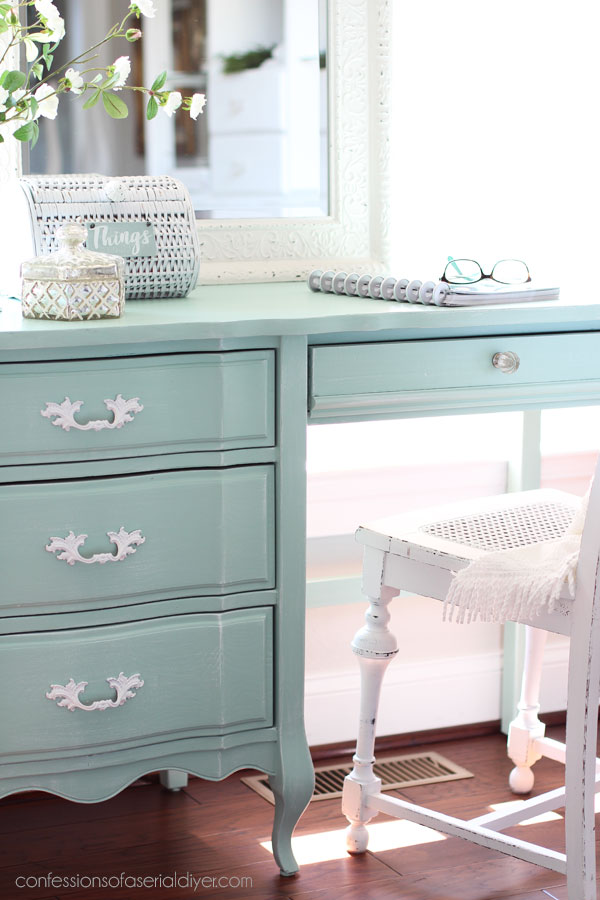
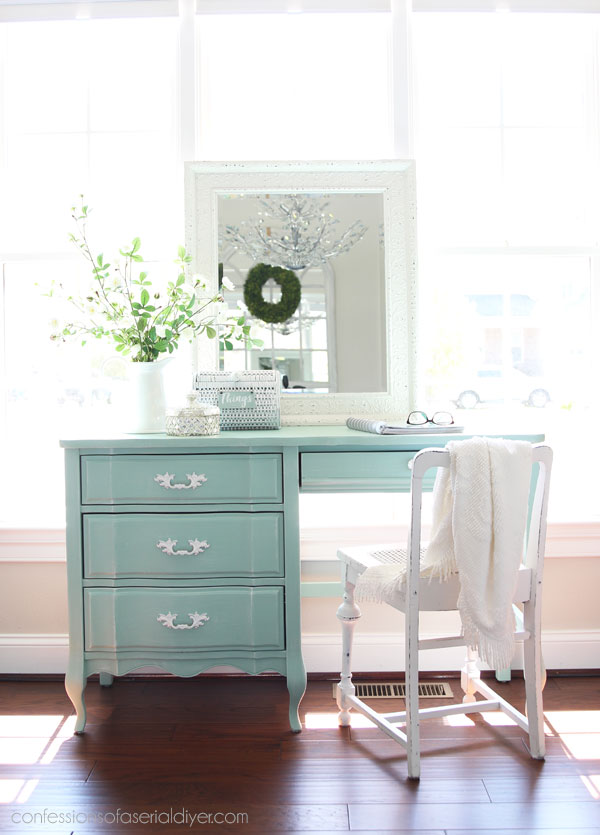
I’ve reshared a couple of pieces recently that I originally redid at the height of the pandemic, and I was surprised at how many people missed them on the first go round. It was a super crazy time, so I totally get it! I decided to pull another of those makeovers out today as these ones were super fun to bring back to life!

I rarely take on other people’s projects as I don’t like not having the freedom to just do whatever I want with a makeover. The stars aligned for this one though.

My neighbors had asked me for advice about painting some furniture that belonged to their daughter. I was just finishing up the haul I’d been working on at the time, so I asked them to send me photos of what they wanted to paint. When I saw those gorgeous French Provincial curves, I knew I wanted to take this project on! (Read more.)
Share

Make Catholicism Penitential Again

 From Crisis:

Jesus’ very first words in the Gospel of Mark are: “Repent, the kingdom of God is at hand!” (1:15). While Matthew and Luke expand upon Jesus’ infancy, His baptism, and the temptations in the desert, they also begin with a repentance motif. After all, John the Baptist is introduced as Christ’s herald, preaching a baptism of repentance. And, after the events listed above, Jesus inaugurates His own public ministry with a call to repentance (Matthew 4:17) and a campaign against evil, characterized by healings and exorcisms.

Repentance, then, is the very leitmotif of Jesus’ ministry. It is also the Church’s, for the Risen Christ commissions His Apostles to “preach repentance for the forgiveness of sins, beginning in Jerusalem” (Luke 24:46-48; see also John 20:21-23). (Read more.)
Share

Characters of Our Own Creation

 From Big Think:

Consider three strands of evidence. First, the neuroscience. The linguistic explanations we create of our own behavior are generated by the language centers in our left cerebral cortex. In people whose brains have been surgically split in two, by severing the corpus collosum that links the left and right cortex, this means that language-generating machinery in the left cortex is necessarily completely oblivious to the machinations of the right cortex. As it happens, the right cortex sees the left half of the visual field and controls the left hand. So, when people with split brains are asked verbally to explain the actions of their left hand, you might expect them to be utterly mystified. But not at all! They are all too ready to confabulate a credible-sounding (though entirely baseless) explanation. (Read more.)
Share

Wednesday, May 4, 2022

The Triumphs of Caesar


 From Royal Collection Trust:

This painting is one of nine canvases known as The Triumphs of Caesar, which can be counted amongst the finest achievements in Italian Renaissance art. They were probably painted for Franceso II Gonzaga (1466-1519), who became the 4th Marquis of Mantua in 1484. The nine paintings form a sequence, which should really be called the 'Triumph of Caesar', because it depicts a single procession, culminating in this final episode - the arrival of Julius Caesar borne on a chariot passing in front of a triumphal arch. The procession cannot be connected with a particular campaign, which is probably why it was seen more generally to celebrate the triumphs of Julius Caesar (c.102-44 BC), an ancient Roman soldier, statesman and historian revered during the Renaissance.

Mantegna could have consulted a number of writers, such as Suetonius, Plutarch and Appian, all of whom include descriptions of triumphs and were available during the Renaissance in manuscript or printed forms. He would have also referred to Roman antiquities, particularly monumental arches and columns, which he would have known through drawn sources.

Triumphs of Caesar were acquired by Charles I in 1629 when he purchased a large part of the collections formed by the Gonzaga family. They were clearly then considered to be the masterpiece of the collection. The canvases have been hung at Hampton Court since the probable date of their arrival in England in 1630, and tapestries based on some of the scenes were woven at the Mortlake factory. (Read more.)
 

More HERE.


Share

Normal Children

 From Crisis:

Yet, you cannot help but notice that people who read books are still able to operate a microwave and tie their own shoes. For kids growing up on smartphones, the outcome looks less promising. When children are plugged into iPads to keep them quiet during daily activities and hooked up to televisions suspended from the ceiling at the dentist’s office, what are the boring quotidian experiences that they are missing out on? And what are the consequences?

Writing in The Wall Street Journal about the challenges posed by Big Tech for little kids, Peggy Noonan captures the frustration of many parents. It is clear that popular apps negatively affect the emotional health of teenagers, especially teen girls. Perhaps the most damning evidence is that some of the very same people making money off such apps send their children to schools free of the taint of computer screens and smartphones. But how do you, the plebian, get off the treadmill and disconnect? Half-measures are difficult to enact, and banning technology renders children veritable social outcasts. Still, it seems worth it.

Noonan includes an anecdote about a mother with many children whose children used little technology. While at the grocery store, she was asked, “Do you homeschool?” Noonan explains, “The mother wasn’t sure of the spirit of the question but said, ‘Yes, I do. Why do you ask?’ The checkout woman said, ‘Because they have children’s eyes.’” If it is that obvious that children are being raised differently, there may be something there worth investigating. Sitting out the technology quagmire seems increasingly reasonable.

A full two years after Covid-19 brought normal social interaction to a grinding halt, you will still find stray signs affixed in waiting rooms, hanging so long they have been overlooked. Expressing the rallying cry of March 2020, they plead, “Stay Home. Stay Safe. Save Lives.”

Setting aside the question of whether isolating healthy people was ultimately a prudent decision for society at large, the forced closure of schools was a catalyst in many families. Brought together by the strange events in an increasingly strange world, many families discovered that homeschooling was not as far-fetched as they once imagined. Absent the grinding strain of institutional bureaucracy, some children’s migraines disappeared, their moods brightened, their sleep improved. Covid-19 or not, staying home might really be a good thing for some children. More than anything, what children stand to gain in home education is the ability to be real children, innocent and not yet deformed by antisocial technology. (Read more.)

Share

The Deceased Wife’s Sister’s Marriage Act

 From The Conversation:

It was once illegal in Britain for a woman to marry the husband of her dead sister. Legally, they were seen as brother and sister, making such marriages incestuous. While it might seem odd now, this was a hot issue for Victorians and many argued that it should be legal.

William Gladstone, prime minister and leader of the Liberal party, was among many Victorians who argued for the law’s repeal on the grounds that the ecclesiastical law it was based upon was open to interpretation. He argued that on this basis these marriages were already legal in the colonies and that the law which made the union illegal confirmed that in-law marriages made before 1835 were sanctioned, placing a disparity within the law. It also highlighted the way that the rich could circumvent the law by marrying on the continent, while the poor had no such recourse, making an intrinsic inequality within society.

Nevertheless, the law wasn’t finally repealed until 1907 – 72 years after the 1835 Marriage Act first brought it into effect. Part of the scandal inherent in this law was the suggestion that female desire could exist before marriage – that a woman could sexually desire her sister’s husband. This, combined with the implication of incest, meant that the Deceased Wife’s Sister’s Marriage Act became far more controversial and divisive than anybody anticipated when it was first passed.

Dinah Craik was one of many authors intrigued by this controversy and who wrote on the subject. Craik was a popular author of domestic fiction, which were books focused upon the home life of women, written by and for women. Craik had cultivated a reputation as a respectable, middle class and even matronly author. Although her writing was sometimes seen as old fashioned, this reputation allowed her to write about controversial issues without appearing to be too controversial herself. (Read more.)

Share

Tuesday, May 3, 2022

The Van der Doort Inventory

Emblem showing differences of Peace and War by Peter Paul Rubens

The inventory taken of the art collection of Charles I. From Royal Collection Trust:

The collection is presented here in the order of the inventory made by the keeper of the royal collection, Abraham van der Doort, around 1639. Unlike the Sale, the inventory is only a partial view of the collection; it focusses on Whitehall Palace and begins to tackle a handful of other residences in briefer form towards the end of its contents.

Van der Doort's original information is spread throughout a set of source manuscripts, each differing slightly. Some information included in the 1960 Walpole Society transcription has been omitted online to avoid duplication in the database, notably the 'Frizell List' and 'Titian List' (pp.181-4 and 192-3). We also include supplementary information from another roughly contemporaneous inventory (c.1640) not drawn up by van der Doort (the V&A MS.). The St James's Palace section is taken wholly from that V&A manuscript. Note that not every inventory number online is taken from the original sources, where some items are unnumbered. Van der Doort's measurements, as he states, are taken within the frames; and measurements sometimes differ across the source manuscripts. Where online information is taken from more than one source manuscript, brackets are used to differentiate; square brackets offer twenty-first-century knowledge or opinion. We encourage students of the collection to refer to the Walpole Society pages for further detail and provide a glossary to clarify our translation of the seventeenth-century information into digital format.

Each online entry contains a view of the work in question and could have as many as three sections: current knowledge about the work, and the information from van der Doort's inventory and from the Sale inventory. Each entry also includes where possible an image of the work, as well as (in the case of the van der Doort inventory) the relevant page from the Walpole Society transcriptions of the inventories, which may be found by scrolling to the right of the image. (Read more.)


 More on the Collection, HERE and HERE. 


Share

'You’re Hired'

 From The American Conservative:

Former President Donald Trump made the most courageous decision of his post-presidency so far by endorsing J.D. Vance for the GOP Senate Primary in Ohio. Vance is an authentic representative of America’s populist tradition, contending against a field of establishment phonies. For the discontent that propelled Trump to the White House in 2016 to be addressed, Vance must find his way into the halls of the Senate. And thanks to Don’s nod, he likely will.

A disclosure: Vance and I are friends. We first met online around his conversion to Catholicism, a distant friendship that deepened at the height of the pandemic before we finally met “in real life,” as the kids say. And that’s a good place to start a brief for Vance. The Vance I’ve gotten to know over the past few years has something few politicians possess: namely, depth of soul.

Readers of his memoir, including liberals prepared to rise above their partisan hatred, will have glimpsed this quality in Hillbilly Elegy. Vance can be shrewd, yes. He is book-smart and people-smart. He rose from “the holler” to the stratospheric heights of Yale Law School and venture capital. But he is still foremost the grandson of “Mamaw”: the ferociously loyal guy who will offer to host you and your family for a weekend refuge from New York City’s lockdown madness while his wife is pregnant and he’s running for the Senate.

The book-smarts matter, too. Anyone who has spent any amount of time around members of Congress knows that most are absolute morons. Yes, they might possess a base kind of intelligence for flattery and for sniffing out others’ weaknesses. But genuine intelligence, deepened by serious reading, is something else. Vance has it. That obscure blog offering cutting-edge takes on this or that social problem? Chances are, he not only reads it but knows the author.

Most important, Vance has courage, of the kind Trump must have recognized when he decided to endorse Vance, over and against the opposition and underhanded scheming of much of the Republican establishment, including inside the Buckeye State GOP.

It took courage for Trump, during the GOP primaries, to question many of the Swamp Republicans’ most donor-beloved orthodoxies, from privatizing entitlements to endless war. It took courage for Trump, as president, to stand by his second Supreme Court nominee, Brett Kavanaugh, once he became the target of an unprecedented barrage of lies about his sexual record. It took courage for Trump, as commander-in-chief, to put the United States on the path to withdrawal from the Middle East, knowing it would invite the wrath of the national-security Blob.

Likewise, it took (and takes) courage for Vance to question the pro-war uniparty’s rush to escalation in Ukraine. Many other would-be populist contenders among the party’s new crop of interesting senators and senators-in-waiting succumbed to the pressure to endorse MOAAARRR war. That includes two of Vance’s primary opponents, the dull Mike Gibbons and the ridiculous Josh Mandel, both of whom endorsed a European-led no-fly zone over Ukraine—a step that would almost certainly have drawn Washington into a catastrophic shooting war between NATO and Russia. (Read more.)

Share