Friday, December 3, 2021

The History of St. James


 From British Heritage:

The epicenter of modern Royal London has to be the area around St. James’s. It wasn’t always so, of course; William the Conqueror built his castle at the east of the City for protection against river-borne foes. As security became less of an issue, though, palaces were built for splendor, further west, where prevailing winds whisked away the city smells. Whitehall Palace is long-gone. The last and only survivor of a Royal residence once more like a town than a castle is Inigo Jones’s extraordinary Banqueting House, now reopen after a long refurbishment program, but two great palace complexes do survive.

St. James's Palace is still very much a working palace and isn’t open to the public, but I’m told you can get into at least part of it if you’re prepared to get up early. The Chapel Royal holds services on Sundays, except August and September, at 8.30 and 11.15 a.m.

It’s a short wander through to St. James’s Park, but if you time it properly, you’ll get rather more than a pleasant stroll. Friary Court in Marlborough Road is the place where those in the know gather to watch the troops parading just before the Changing of the Guard ceremony. It’s a crowd, yes, but small in comparison to the giant mob waiting at Buckingham Palace. Stand here just before the parade’s start time to witness a much more interesting version of the famous ceremony, including inspection, drill, and music. You can then follow the bandsmen down the Mall to Buck House, where everyone else has missed the free show. (Read more.)


Life, death and art at the Stuart Court. From The Tudor Travel Guide:

This is where Simon Thurley’s new book begins, at the Scottish court and with the proclamation of James as the new King James I of England. The palaces that James inherited south of the Scottish border had been fashioned by the previous dynasty and so, on this point, we find a happy connection to the sixteenth century. Yet it is also intriguing to see how those palaces flourished, declined or indeed were lost over the following century. Such is the case with the story of Whitehall Palace, for example, once Henry VIII’s seat of government and power in Westminster. This was, of course, consumed by fire and almost totally destroyed towards the end of the seventeenth century. (Read more.)

Share

Escape from Boko Haram

 From The Christian Post:

She asked God to “please allow me to see my family once more and I promise to follow you for the rest of my life.” According to Bishara, “He came through five minutes later because one of their cars was not moving so they decided to go fix it because we were [too] far from town for them to go back and steal another car.”

The car malfunction kept the terrorists occupied, thereby giving Bishara an opportunity to escape that did not come without risks: “While I was in the truck, I heard a voice say ‘jump’ and then I looked down and it was scary of course.”

“So it was just all scary and I was deciding should I jump, should I not and a voice in my head is battling with another voice saying, ‘If you jump, you’re going to die.’ And the other one is saying, ‘Jump,’ so I had to decide should I jump or should I not? I ended up coming to a conclusion that even if I jump and then I get injured or die, at least my parents will find me here or my corpse and bury me knowing I am dead, rather than to go with these people and never be seen ever again.”

Bishara believed that her mom “would not be OK knowing … thinking about me, if I am OK every single day, that would be a torture for her, so I decided to jump and die.” And so she jumped from the truck.

“So when I jumped out and I fell on my belly, realizing I was still breathing, I got up and started sprinting … and I ran for the rest of the night,” she said. Upon arriving in a village, Bishara ran into two other girls from the school she attended in Chibok who had also jumped out of the truck. They all asked for assistance from a farmer, who took them back to Chibok.

Bishara’s speech followed ICC’s designation of Nigeria as one of three Persecutors of the Year. The religious freedom advocacy group cited Nigeria’s lack of action to address the deaths of tens of thousands of Christians, the displacement of millions of additional Christians and the government’s failure to persecute the perpetrators of attacks against Christians as the justification for labeling Nigeria a Persecutor of the Year. (Read more.)
Share

Life in Britain During the American Revolution

 From Smithsonian:

Yet the words above came from the pen of Englishwoman Jane Strachey, who was separated from her husband by 3,000 miles of ocean. In August 1776, English Member of Parliament Henry Strachey was at the epicenter of the looming confrontation between the British and American armies in New York, serving on the administrative staff of Admiral Richard Lord Howe and General William Howe.

Jane’s letters, composed between 1776 and 1778, are buried in the Strachey family papers at the Somerset Archives in England. The private correspondence of a middle-class English wife, they have been virtually ignored by historians of the home front in Britain during the American Revolution. Yet they open a unique window into the experience of ordinary British women. And their intimate tone, everyday detail and authentic chronicling of wartime events provide a fascinating parallel to Adams’ letters.

Henry, like John, was on a political mission: He was secretary to Richard in the latter’s capacity as peace commissioner, a last-ditch effort by the British government to replace fighting in America with talks. Jane, like many women on both sides of the conflict, assumed sole responsibility for her family and household as she endured the protracted wait for news in an age of wooden ships and horse-drawn communication. (Read more.)


Share

Thursday, December 2, 2021

A World After Liberalism: A Review

 From IM-1776:

A World After Liberalism: Philosophers of the Radical Right offers political advice to Christians. The problem is, it’s not good advice. The author, Matthew Rose, ably profiles five Right philosophers of previous generations — but fails to link this past thought in any meaningful manner to today. He instead uses this historical survey to lecture Christians they must anathemize today’s fast-growing post-liberal Right, while ignoring that all present attacks on Christians come from the modern left, the final form of liberalism. Rose can’t bring himself to criticize the left, so his book fails to provide prudent political guidance to Christians.

Rose begins, not by defining liberalism with any precision, although he seems to equate it with the Enlightenment, and thus autonomic individualism and egalitarianism, but by saying that “liberalism is losing its hold on Western minds.” True enough. Rose notes the great diversity among post-liberals, “nationalists, populists, identitarians, futurists, and religious traditionalists,” and he offers a very short, but generally good, thumbnail sketch of this present-day ferment. But then he throws all his insights away, saying “history offers a guide to the destiny of ideas” and “this is not a book about a present generation of radicals, but about a previous one.” Whereupon he retreats a hundred years and only ever views the present through the dead past.

Rose’s premise, never quite made explicit, is that the dividing line between left and Right is whether individual or collective identity should be the core of a society. But while certainly atomized autonomy has always been the touchstone of the left, and no doubt the Right thinkers he profiles regarded societal collective identity as crucial, Rose in practice equates collective identity with race — despite race being very secondary, or wholly unimportant, to nearly all of those he profiles. Rose is trapped and bound within the frames of the left, and the left loves nothing more today than demanding from the Right talks about race, with the sole goal of using it, in Scott Adams’s phrase, as a “linguistic kill shot,” obviating any need for facts and reason. Thus, Rose cites Saint Paul that there is “neither Jew nor Greek […] in Christ Jesus,” but he thinks this means Christians must adopt the left’s definition of racism, i.e. white people are evil and must acknowledge this by hating themselves and handing over power, money, and honors earned to non-white people.

Unfortunately, excessive focus on race is only the most glaring example of Rose’s frequent prostrations before the left (even though I don’t think he’s a man of the left himself). The author offers repeated pre-emptive apologies, such as for daring to actually evaluate Right thinkers objectively. “I hope that in treating them seriously I have done nothing to normalize any of the perennial diseases of the human mind.” When you announce in your Introduction that you regard the thought you are studying as diseased, you undermine your credibility. Equally tiring are Rose’s many other obeisances to the gods of the age, in major ways such as the laughable claim that “Christians must play an essential role in combating racism,” thereby ignoring that if racism is a sin, it is no special sin, merely one of the innumerable manifestations of the cardinal sin of pride, and in minor ways such as by using “CE” instead of “A.D.” I suppose, though, all this may be just the cost of admission to being published by Yale University Press — and, to be fair, this book is susceptible to an esoteric reading, in which this is a smokescreen designed to support an attack on liberalism, though I don’t think that is an accurate reading.

At least Rose admits that the modern left-dominated world has failed the young. “There are human needs that liberalism cannot possibly satisfy — needs that it now struggles to even acknowledge.” Among those are all the core needs of every human and every human society, “needs of the human spirit” he enumerates. Moreover, “To ask people to apologize for what they are right to value, and to be ashamed for what they are right to need, is to tempt political catastrophe.” Then he proceeds to ignore those needs and admonish us what we are right to value and right to need is only what the left tells us we should need and value, or we’re racist. (Read more.)

Share

The Birth of Childhood

 From The Big Think:

“Nature wants children to be children before they are men,” wrote Jean-Jacques Rousseau in the book Emile, or On Education (1762). While Rousseau did not see children as humans, he appealed to parents to look after their offspring. “If we consider childhood itself, is there anything so weak and wretched as a child, anything so utterly at the mercy of those about it, so dependent on their pity, their care, and their affection?” he asked. At a time when children were regularly entrusted to others during adolescence or left in shelters, Rousseau’s demands seemed revolutionary. They paved the way for the breakthrough discovery that indeed, a child is also a human being, capable of feelings, having their own needs and, above all, suffering. But the philosopher himself did not take these ideas to heart. Whenever his lover and later wife, Teresa Levasseur, gave birth to a child, Rousseau immediately gave the baby to an orphanage, where just one in a hundred newborns had a chance to live to adulthood.

Double standards in people’s approach to children were not unusual in the past. In ancient Greece, no one condemned parents for leaving a baby by the road or in the garbage. Usually, it was torn apart by animals. Less often, a passer-by would take them – not necessarily guided by mercy. After raising the orphan, the ‘Good Samaritan’ could sell the child at a slave market, recovering the money invested in their maintenance with interest. This kind of practice did not shock, because in the world of ancient Greece a child had the status of private property, and therefore the public and authorities were indifferent to their fate.

The exception was Sparta, but this did not mean anything good for minors. While in other poleis infanticide was left to parents, in Sparta it was managed by the council of Fyli. In Life of Lycurgus, Plutarch wrote about how the child was inspected by the Fyli elders forming the council: “If they found it stout and well made, they gave order for its rearing, and allotted to it one of the nine thousand shares of land above mentioned for its maintenance, but, if they found it puny and ill-shaped, ordered it to be taken to what was called the Apothetae, a sort of chasm under Taygetus; as thinking it neither for the good of the child itself, nor for the public interest, that it should be brought up, if it did not, from the very outset, appear made to be healthy and vigorous.” The boys who passed the selection faced a rather short childhood – when they were seven, they were taken to the barracks, where they were trained to be excellent soldiers until they came of age.

Greek standards for dealing with children were modified slightly by the Romans. Until the second century BCE, citizens of the Eternal City followed the custom to put each new born baby on the ground right after delivery. If the father picked the baby up, the mother could care for it. If not, the newborn landed in the trash – someone could take them away or wild dogs would consume them. It was not until the end of the republic that this custom was considered barbaric and gradually began to fade. However, the tradition requiring that the young man or woman should remain under the absolute authority of their father was still obliged. The head of the family could even kill the offspring with impunity, although he had to consult the decision with the rest of the family beforehand. (Read more.)


Share

Wednesday, December 1, 2021

The Adventures of Merlin

 
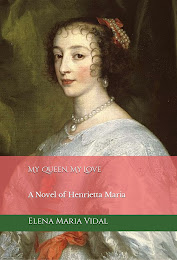
There is mention of Merlin in my new novel, My Queeen, My Love so I was glad to find this article. From The British Library:

Merlin is the central mythical character in the world of King Arthur and the knights of the Round Table. A shadowy and untameable figure who seldom takes a single form for long enough to show us his true nature, he eludes definition today, just as he did a millennium ago, and his origins and fate remain mysterious. His character was probably an amalgam of Myrddin Wyllt, a bard and wild man of the Caledonian forest in Welsh tradition, Ambrosius Aurelianus, a warrior-prophet who was among the last of the Romans in Britain, and possibly a local pagan god whose cult was associated with the Welsh town of Carmarthon (from Caer Myrddin, meaning Merlin’s fort or castle). (Read more.)
Share

A President Betrayed by Bureaucrats

From Jeffrey Tucker at The Brownstone Institute:

Atlas’s book has exposed a scandal for the ages. It is enormously valuable because it fully blows up what seems to be an emerging fake story involving a supposedly Covid-denying president who did nothing vs. heroic scientists in the White House who urged compulsory mitigating measures consistent with prevailing scientific opinion. Not one word of that is true. Atlas’s book, I hope, makes it impossible to tell such tall tales without embarrassment.

Anyone who tells you this fictional story (including Deborah Birx) deserves to have this highly credible treatise tossed in his direction. The book is about the war between real science (and genuine public health), with Atlas as the voice for reason both before and during his time in the White House, vs. the enactment of brutal policies that never stood any chance of controlling the virus while causing tremendous damage to the people, to human liberty, to children in particular, but also to billions of people around the world.

For the reader, the author is our proxy, a reasonable and blunt man trapped in a world of lies, duplicity, backstabbing, opportunism, and fake science. He did his best but could not prevail against a powerful machine that cares nothing for facts, much less outcomes.

If you have heretofore believed that science drives pandemic public policy, this book will shock you. Atlas’s recounting of the unbearably poor thinking on the part of government-based “infectious disease experts” will make your jaw drop (thinking, for example, of Birx’s off-the-cuff theorizing about the relationship between masking and controlling case spreads).

Throughout the book, Atlas points to the enormous cost of the machinery of lockdowns, the preferred method of Anthony Fauci and Deborah Birx: missed cancer screenings, missed surgeries, nearly two years of educational losses, bankrupted small business, depression and drug overdoses, overall citizen demoralization, violations of religious freedom, all while public health massively neglected the actual at-risk population in long-term care facilities. Essentially, they were willing to dismantle everything we called civilization in the name of bludgeoning one pathogen without regard to the consequences.

The fake science of population-wide “models” drove policy instead of following the known information about risk profiles. “The one unusual feature of this virus was the fact that children had an extraordinarily low risk,” writes Atlas. “Yet this positive and reassuring news was never emphasized. Instead, with total disregard of the evidence of selective risk consistent with other respiratory viruses, public health officials recommended draconian isolation of everyone.”

“Restrictions on liberty were also destructive by inflaming class distinctions with their differential impact,” he writes, “exposing essential workers, sacrificing low-income families and kids, destroying single-parent homes, and eviscerating small businesses, while at the same time large companies were bailed out, elites worked from home with barely an interruption, and the ultra-rich got richer, leveraging their bully pulpit to demonize and cancel those who challenged their preferred policy options.”

In the midst of continued chaos, in August 2020, Atlas was called by Trump to help, not as a political appointee, not as a PR man for Trump, not as a DC fixer but as the only person who in nearly a year of unfolding catastrophe had a health-policy focus. He made it clear from the outset that he would only say what he believed to be true; Trump agreed that this was precisely what he wanted and needed. Trump got an earful and gradually came around to a more rational view than that which caused him to wreck the American economy and society with his own hands and against his own instincts.

In Task Force meetings, Atlas was the only person who showed up with studies and on-the-ground information as opposed to mere charts of infections easily downloadable from popular websites. “A bigger surprise was that Fauci did not present scientific research on the pandemic to the group that I witnessed. Likewise, I never heard him speak about his own critical analysis of any published research studies. This was stunning to me. Aside from intermittent status updates about clinical trial enrollments, Fauci served the Task Force by offering an occasional comment or update on vaccine trial participant totals, mostly when the VP would turn to him and ask.” (Read more.)
Share

Wrongfully Convicted

 From The Daily Wire:

A man who spent 16 years in prison for a rape based on a faulty identification and junk science has finally been cleared. Anthony Broadwater was convicted of the 1981 rape of award-winning author Alice Sebold, who detailed the alleged crime in her 1999 memoir, “Lucky.” Sebold had written that she was a first-year student at Syracuse in May 1981 when she was raped. Sebold, who is white, claimed she saw a black man months later and believed he was her attacker.

“He was smiling as he approached. He recognized me. It was a stroll in the park to him; he had met an acquaintance on the street,” Sebold wrote. “‘Hey, girl,’ he said. ‘Don’t I know you from somewhere?’”

She said she said nothing in return.

“I looked directly at him. Knew his face had been the face over me in the tunnel,” she wrote. (Read more.)


Share

The Astonishing Aethelstan

 From History Extra:

Early in the 12th century, a tomb in the abbey of Malmesbury was briefly opened. A monk named William took the chance to inspect the skeleton that lay inside it. The dead man, so he reported, had been of average height and slender build. Not everything in the coffin, though, was bones. Traces of hair were still to be seen – and these too the monk studied attentively. “It had been,” so he recorded later, “blonde in colour, and beautifully twisted into golden braids.” William of Malmesbury had good reason to take an interest in such details. Sent to the abbey as a child, he had grown up with a justifiable pride in its history. More than anyone, he appreciated the significance of the man whose braided hair he had so carefully noted.

Æthelstan, a king who over the course of his reign had brought the whole of Britain to acknowledge him as overlord, had been laid to rest in Malmesbury some two centuries before, in 939. During his lifetime, he had been a formidably generous patron of the abbey. Of all the many shrines to which he had been devoted, “he had honoured none as more holy than Malmesbury”. It was thanks to his generosity that it could boast a particularly awesome relic: a fragment of the True Cross. The monks’ devotion to their long-dead patron was only to be expected.

William’s horizons, though, were far from bound by the limits of his monastery. Fascinated by the past since a child, it was his ambition to write a comprehensive history of England. That one of his parents was actually a Norman did not in any way inhibit him from declaring his motivation to be “love of my country”. The sheer antiquity of the English state, far from being despised by its conquerors, tended instead to be both prized and respected by them – for it added lustre to their rule. A Norman anointed as ‘King of the English’, no matter that his native tongue was French, ruled as the heir of those same kings who had first, long before the slaughter at Hastings, fashioned England and brought it into being.

William, whose sophistication as a historian was profound, was in no doubt as to the scale of what they had achieved. It was not only their victories in war that had laid the foundations of the English state but their concern for justice and their sponsorship of learning. Generous a patron of Malmesbury though Æthelstan had been, there were reasons far more telling why William should portray him as the greatest of England’s kings. “The opinion of the English that he governed them with a greater concern for law and for education than anyone else in their history is a valid one.”

By the time that William wrote this, ‘Englalonde’ had been a term in common use for a century, and its lineaments as a kingdom had come to be taken widely for granted. It was evident as well that the roots of this precociously unitary state, with its single currency, its common language and its intimidating monarchy, reached back in turn a further century – and that the first man who could legitimately be reckoned its king was Æthelstan. “Through God’s grace he ruled all of England alone which before him many kings held among themselves.” (Read more.)


Share