Sunday, September 3, 2017

Goodbye, Scarlett!


There is much to be learned about slavery, and the roles of women, from both the book and film, not at all of which is "genteel." Plus Mammy is one of the strongest female characters to be found in any film or book. It is a shame that censorship is prevailing. From Dennis Michael Lynch:
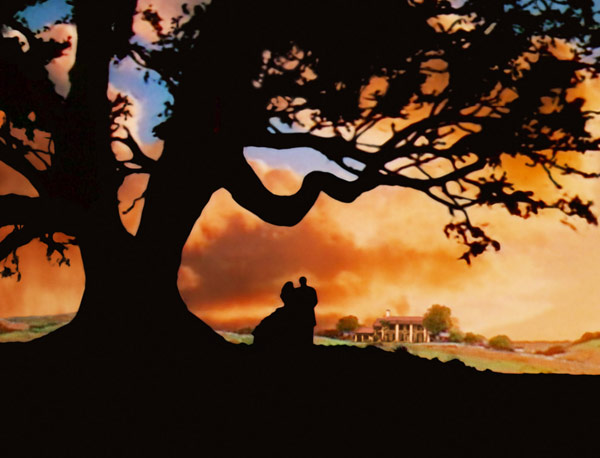
“Gone with the Wind” is a landmark film, one which has been beloved since its record-breaking 1939 release. It is, quite simply, a great story that was translated to film beautifully. Now, the Orpheum Theatre in downtown Memphis has decided to stop showing the film, as, in the words of one citizen, it has somehow been placed in the “tributes to white supremacy” category. The film is based around Scarlett O’Hara, a willful, spirited woman who is both the antagonist and protagonist at different times in the film. It depicts the slave state of the “Old South,” painting it in a genteel light and with a bit of nostalgia, while acknowledging some of the darker aspects of the civil war along with the heroics of those that lived in the South at the time. (Read more.)


Share

Young Catholics and the Old Rite

From The Catholic Herald:
Francis’ remarks are yet another sign of his anxiety over the traditional direction in which young Catholics are carrying the Church. We have seen this before, in the stories he tells about young priests who shout at strangers and play dress-up, unlike the wise, old, compassionate (and liberal) monsignori. Francis has played variations of John Lennon’s Imagine: “We are grandparents called to dream and give our dream to today’s youth: they need it.” Maybe so, but the youth do not seem to want it.

As any young progressive or old traditionalist will tell you, age does not dictate whether one prefers dogma or liberty, ritual or casualness. Yet across much of the Catholic world, young traditionalists are competing against old progressives. Ironies abound, as youths who revere the venerable face off against elders who chase the up-to-date, and progressives who fear the future battle with traditionalists who loathe their immediate forebears.

Anyone who doubts the reality of the conflict should visit a monastery or convent, where young monastics will almost invariably be more traditional than their elders. In France, in 20 years’ time a majority of priests will celebrate exclusively the traditional Latin mass. Wherever one looks, the kids are old rite.

Few have spoken as eloquently about the changes the Church is undergoing as Fr René Dinklo, provincial of the Dutch Dominicans, and the only member of his order from Generation X. One of Fr Dinklo’s earliest memories is of a confessional filled with the drums used by the youth choir. By the time he joined the order in the early 1990s, the Dutch Dominicans had discarded their traditional prayers and come to believe that the order would be transformed into an assembly of laymen. He had reason to think he would be the last priest in a province that had lasted for 500 years. (Read more.)
Share

The Origins of Dysfunctional Education

From Crisis:
Consequently, the word “sin” has utterly disappeared from educational discourse. My colleagues acknowledged that students make mistakes and commit wrongs but only as something unlawful, against the rules, or breaking the social code. Not surprisingly, students themselves put stealing, cheating, driving without a license, burping, promiscuity, and lying all in the same class: behaviors that might be permissible under another set of rules or laws, when they were grown up and free and in college or self-employed.

Finally, the word “love” was missing. The idea of sacrificial self-giving agape, unrequited and unbidden, however, enjoining corporeal and spiritual works of mercy (rejected as meritorious by Luther and Calvin), and the saintliness of “supererogatory acts” have been ridiculed and replaced by the ubiquitous and chilling service requirement: a hundred hours of approved community service, certified by the Student Activities Director, in order to graduate with a stuffed résumé, to look good and virtuous, and, of course, contradictorily, to help our fellow man overcome the ignorance and misfortune of his fate. If love is simply a whimsically determined “swerve” of atoms or the mere infusion of transcendent grace, if the will cannot be trained, charity is accidental and best quantified by a bureaucracy. If all that stands between the human person and evil is “irresistible grace,” then when God also disappears in the culture are we left with what Ivan Karamazov calls “artistic cruelty,” which he imputes to adults but which I heard about in teenagers and about which I was told we could do nothing except punish after the hideous fact: duct taping underclassmen in trees and leaving them for hours, exploding small animals in microwaves, and “pulling trains” of sexual customers for drug money? (Read more.)
Share

Saturday, September 2, 2017

The Father of Modern Chemistry

From Smithsonian:
Lavoisier didn’t think that Priestley was right about phlogiston, prompting a long-running battle. Lavoisier didn’t believe Priestley because of his own groundbreaking approach to chemistry. Lavoisier believed that “matter–identified by weight–would be conserved through any reaction,” writes Chemical History. Today this is known as the law of conservation of mass. What it means is that the same amount of matter that goes into a chemical reaction comes out of it. This central belief led him to study how the gases present in air related to fire and to breathing. Writing for io9, Esther Inglis-Arkell explains how this led Lavoisier to torment the poor rodent. (Read more.)
Share

Darwin and Eugenics

From The Spectator:
This is a story that has often been told, including the carefully stage-managed meeting of the Linnean Society in 1858 when Darwin’s theory was announced alongside that of Alfred Russel Wallace, who had independently come up with a very similar idea and effectively bounced Darwin into claiming it for himself. What Wilson brings to this sequence is a clear-eyed understanding of the ruthless ambition behind Darwin’s gentlemanly pose. For whether or not other living creatures sought personal advantage, Darwin certainly did everything he could to ensure that his theory would elbow its way to the top: a theory that allowed the growing Victorian middle class to convince themselves that their success in life was simply part of the natural order, as inevitable as a dog’s urge to rip apart a nest of rats. 

The picture of Darwin that emerges from this biography is a mixed one. On the one hand, he spent most of his adult life as a martyr to symptoms that ranged from eczema to flatulence, and he was patiently looked after by his wife Emma, or ‘Mammy’ as he liked to call her, as if she hadn’t so much married him as adopted him. On the other hand, he assumed that men like him were naturally superior, not only because of their wealth (an immensely rich father and marriage into the Wedgwood family meant that Darwin never had to earn a living) but also because of their race, expressing his relief that ‘civilised nations are everywhere supplanting barbarous nations’. He was an unsentimental believer in Malthus’s theory of populations regulating themselves through famine and disease, but was devastated when his ten-year old daughter Annie died of tuberculosis. And as his religious faith slowly slipped away, so he developed a theory that would later become a substitute religion for many.  (Read more.)
Share

Cancer Treatment in the 19th Century

From Shannon Selin:
Although cancer was known to the ancients – the oldest known description of the disease is in an Egyptian papyrus from around 1600 B.C. – cancer treatment in the 19th century had not advanced much beyond the methods used during the time of Hippocrates (circa 460-370 BC). These consisted of diet, bloodletting and laxatives. Surgery was also used to treat cancer, but since general anaesthesia was not available until the 1840s, and antiseptics were not broadly introduced until the 1860s, operations were extremely painful and had a poor prognosis. Like today, cures for cancer were often proclaimed, each with their advocates and testimonial (Read more.)
Share

Friday, September 1, 2017

Silver Spoons

From Victoria:
Detailing in spoon bowls and on handles adds to the spoons’ appeal for collectors. Long before the sterling standard was adopted in the late 1880s, silver pieces were generally crafted as “coin silver”—melted coins fashioned into utensils and even serving pieces. The craft was common from early colonial times until well after the Civil War. (Read more.)

Share

The Culture War

From First Things:
Canada’s vulnerability to the culture of death is exacerbated by Canada’s single-payer, i.e. state-funded and state-run, health care system. And the brutal fact is that it's more “cost-effective” to euthanize patients than to treat secondary conditions that could turn lethal (like H’s infection) or to provide palliative end-of-life care. Last year, when I asked a leading Canadian Catholic opponent of euthanasia why a rich country like the “True North strong and free” couldn’t provide palliative end-of-life care for all those with terminal illnesses, relieving the fear of agonized and protracted dying that’s one incentive for euthanasia, he told me that only 30 percent of Canadians had access to such care. When I asked why the heck that was the case, he replied that, despite assurances from governments both conservative and liberal that they’d address this shameful situation, the financial calculus had always won out—from a utilitarian point of view, euthanizing H and others like him was the sounder public policy.

But in Canada, a mature democracy, that utilitarian calculus among government bean-counters wouldn’t survive for long if a similar, cold calculus were not at work in the souls of too many citizens. And that is one reason why the Church must engage the culture war, not only in Canada but in the United States and throughout the West: to warm chilled souls and rebuild a civil society committed to human dignity.

Then there is the civic reason. To reduce a human being to an object whose value is measured by “utility” is to destroy one of the building blocks of the democratic order—the moral truth that the American Declaration of Independence calls the “inalienable” right to “life.” That right is “inalienable”—which means built-in, which means not a gift of the state—because it reflects something even more fundamental: the dignity of the human person.

When we lose sight of that, we are lost as a human community, and democracy is lost. So the culture war must be fought. And a Church that takes social justice seriously must fight it. (Read more.)
Share

Brothers at Arms

From The Post and Courier:
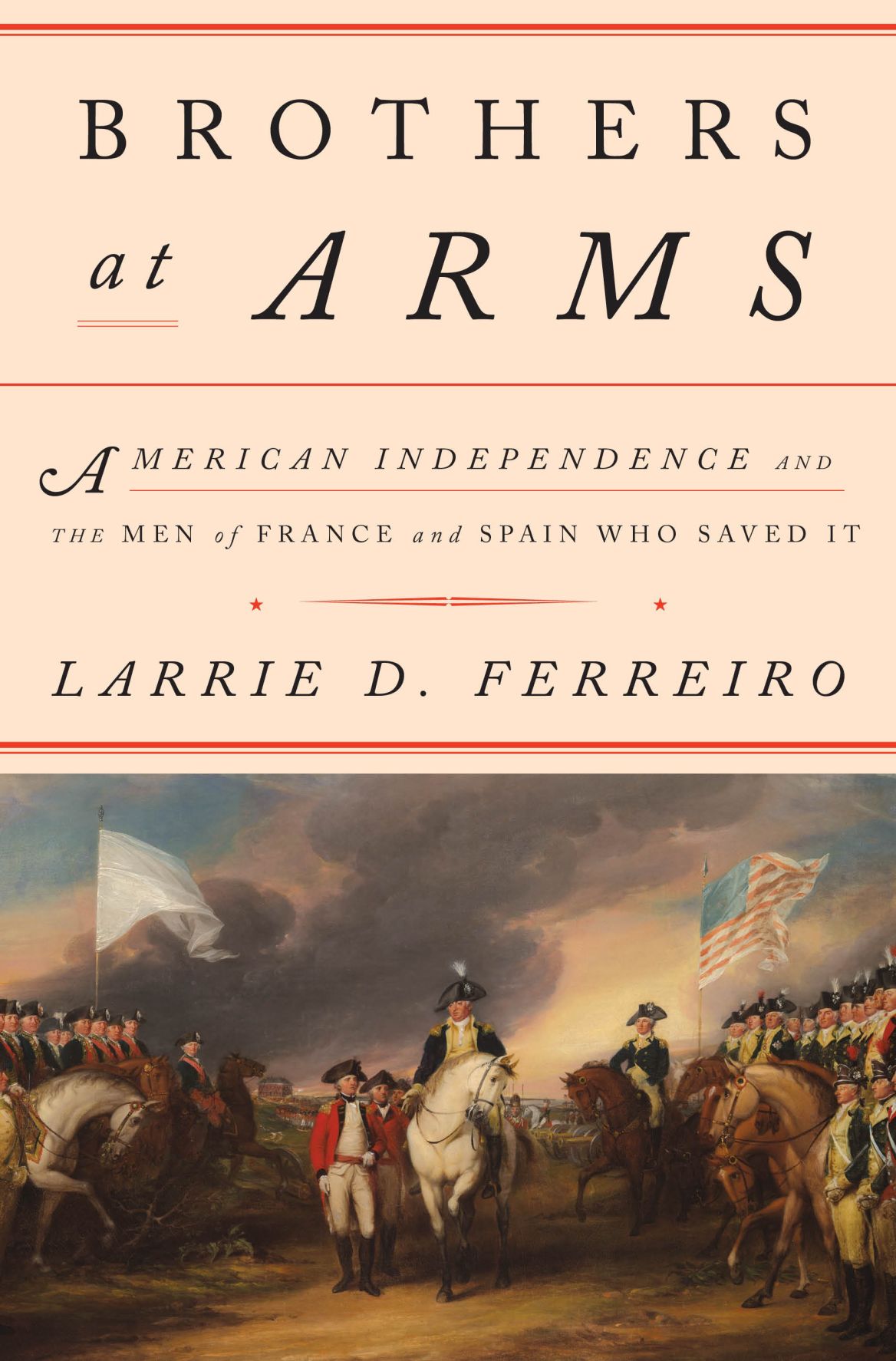
If Benjamin Franklin once called France the father of “this newborn babe,” our beloved country, then Larrie D. Ferreiro couldn't agree more heartily. He gives Spain full credit for helping to pull the British away from prosecuting her war on the Colonies, and the Prussian Baron von Steuben for whipping Washington's troops into an effective fighting force. And he offers polite nods to the contributions of Poles Casimir Pulaski, Tadeusz Kosciusko and others. But it is France that receives his steadiest and sometimes rapturous praise.

Having said that, and keeping in mind what appears to be Ferreiro's personal fondness for the French nation, he maintains throughout this book a laser focus on the political realities that determined the actions of Spain and France. Both had been badly stung by their losses in the Seven Years War (1758-1763) and were itching for revenge against a triumphant England. Spain was obsessed by reacquiring Minorca and Gibraltar, while France feared an upset in the balance of power that the Treaty of Paris had created. (Read more.)

Share