Friday, March 10, 2017

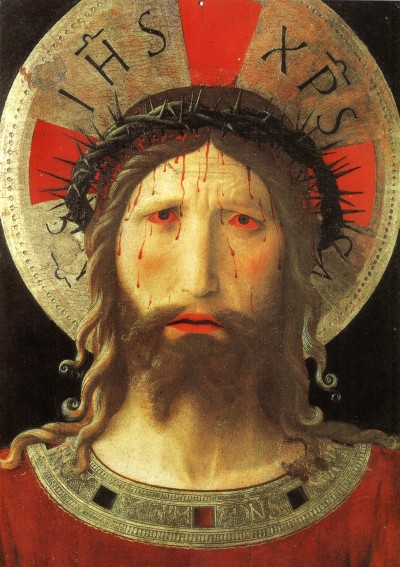
The Crown of Thorns and Mental Illness

From Vultus Christi:
Blessed Mother Teresa of Calcutta is reported to have said that the Crown of Thorns is the emblem of all who suffer from depression, anxiety, or any form of mental illness. Mother Teresa’s observation gives a particular relevance to today’s feast. One hears of saints who suffered from all sorts of physical maladies. Rarely does one hear of saints who suffered mental illness, but they do exist and probably in a much greater number than one would think. The classic reference is, of course, Saint Benedict Joseph Labre who has been variously diagnosed as a social misfit, an eccentric, and even a schizophrenic, but there are many others. I think of the hypersensitive Saint Thérèse who, in her childhood, suffered from “nerves” and, in her final illness, struggled against the temptation to despair. I think of her father, Saint Louis Martin, who was committed to the Bon Sauveur asylum for the mentally ill in Caen, and of her sister Léonie who, after enduring abuse from a family servant, was emotionally fragile all her life. Mental and emotional illness are not an impediment to holiness. (Read more.)
Share

An Insult to Women in Need

From Town Hall:
January was National Slavery and Human Trafficking Prevention Month, funny how the Women’s March attendees never bothered to mention that in their speeches on the Mall in Washington that day. Our State Department offers Tip 101 Training and other resources to help Americans help them report human trafficking in their efforts to end the practice.  How much more uplifting would it have been to hear about what American women can do to stop this scourge instead of the incoherent rants of elitist Hollywood props spewing vile profanity and hate filled screeds?

According to DoSomething.org the average cost of a slave globally is $90.  Nearly 80 percent of the approximately 20 – 30 million slaves held are exploited sexually the remainder are used for hard labor.  The United States State Department reports that 600,000 to 800,000 people are trafficked across international borders every year.

In majority Muslim nations women aren’t nearly as free as American women, and I’m not just referring to forced covering under Sharia Islam.  In Islamic nations, women do not have the right to an education, or have their testimony count equally to that of a man, nor do they have the right to divorce their husbands or even choose whom they will marry in the first place.  In noting these things liberal democrats will respond that those things are tough to hear, but American women have had hard won rights for decades and deserve even more. (Read more.)
From MomZette:
Renaissance women are winners, not whiners; leaders, not followers; and most importantly, victors, not victims. Either you are one or you aren’t. No one can turn you into one because it is a function of self-confidence, an optimistic view of the world, and a refusal to be intimidated, marginalized, ridiculed, or coerced into believing one point of view over another.

I remember years ago debating Gloria Steinem on "The Phil Donohue Show." I learned as a young woman that there was no way I was going to change the mind of this entrenched feminist, who embraced socialist beliefs. So I addressed my concerns to the audience and appealed to them to think for themselves and express their own opinions, separate from these self-appointed spokesmen. I must have hit a nerve with the audience because there was a pile-on against Steinem — and it was later reported that she was furious at Phil Donohue that he did not step in and defend her position.
 
Isn't that rich? Here she is, a veteran TV personality, very much my senior, claiming women are strong and don't need men — yet she whined when one didn't defend her against a young novice who had only done one other TV appearance at that point. (Read more.)
Share

The Unchurched Millennials

From The Federalist:
Many millennials reject church because they don’t hear the message they expected. They see the Christian message a certain way, and don’t hear their version preached from the pulpit. So here’s a question: if you already know so much about the Gospel, what’s the point of church anyway? Is it just a Jesus fan club? Some people see Jesus as more than a super-inspiring guy who cheers you on while you pursue your life goals. And again, if he is just a great life coach, there’s no point spending your Sunday morning in dinged-up church pews. Get on with The Real Business, whatever you think that is. (Read more.)
Share

Thursday, March 9, 2017

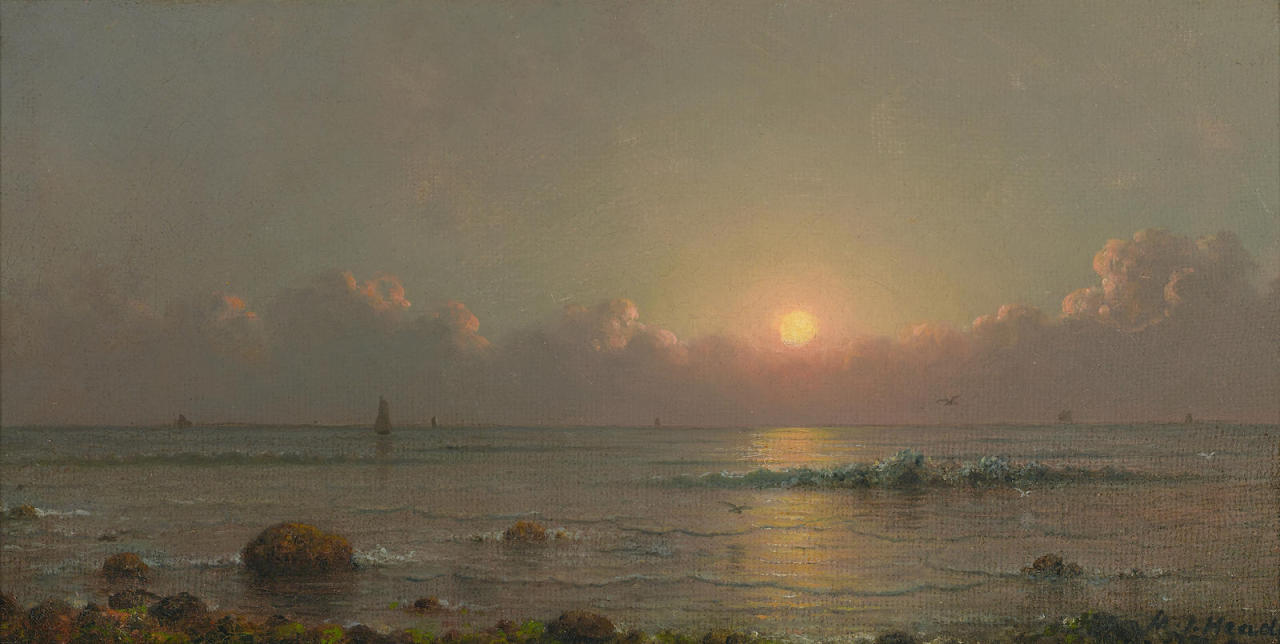
Seascapes

Paintings of the sea.


Share

Hitler Was a Socialist

From Louder with Crowder:
A favorite tactic employed by leftists is to describe the Nazis as “right wing,” with Adolf Hitler, their leader, as the grand leader of this “right wing” movement. Rewriting history is pretty common for leftists, as their history is littered with injustice (the KKK was founded by Democrats, did you know?). Injustices they claim to fight against today. Awkward.

But thanks to this nifty thing called “history” in combination with “the internet,” we can bust this myth once and for all. Thoroughly. Or until a leftist insists on ignoring it. Then we’ll hold them down and tape their eyes open. Just kidding, that’s only what a leftist would do. For those who’d rather watch this column in video form, there’s one below. For those who prefer reading, yuck. But scroll down.

Adolf Hitler wasn’t “right wing.” If you take nothing else from this post, just remember Hitler was a socialist. With terrible facial hair. There’s an easy way to remember it, too. NAZI stands for National Socialist German Workers‘ Party. Associate it with blunt mustaches.

What does National Socialist German Worker’s Party mean? Glad you asked. Is it different from “Democratic socialism”? Only in semantics. A Democracy is mob rule, which is why America is actually a constitutional, representative republic, NOT a democracy. A representative republic protects the minority from the majority, whereas a democracy is the rule of the majority. Leftists get caught up in words, getting tripped up over “National Socialism” as opposed to “Democrat Socialism.” But it’s just that. Semantics. So when Hitler ginned up hatred for the Jews, he could get the mob to agree with him. He could get the mob to believe him. There were no representatives to stop Hitler. He was one man helming the desperation of a majority of people. Spot the difference? (Read more.)
Share

More English Martyrs

From Stephanie Mann:
On March 4, 1590, a Catholic priest and two laymen who had assisted him were executed in London. Father Christopher Bales was hanged, drawn and quartered on Fleet Street; Nicholas Horner was also hanged, drawn, and quartered, but at Smithfield, and Alexander Blake was hanged on Gray’s Inn Lane. Father Bales had just been ordained in March of 1587 and had been arrested soon after his arrival in England in November the next year. Richard Topcliffe, Elizabeth I’s unofficial but very active torturer of priests, supervised the questioning of Father Bales. He was finally tried and found guilty of violating the statute which made his presence as a Catholic priest in England an act of treason. He was then sentenced to the death meted out to traitors.

Father Bales asked a question after his sentencing:

This only do I want to know, whether St. Augustine sent hither by St. Gregory was a traitor or not." They answered that he was not . . . He answered them, "Why then do you condemn me to death as a traitor? I am sent hither by the same see: and for the same purpose as he was. Nothing is charged against me that could not also be charged against the saint.

Judge Anderson answered for the Court that times had changed. Although there was a placard on display when he was executed that condemned him “For treason and favouring foreign invasion”, Father Bales told the spectators that his only treason was that he was a Catholic priest. He was about 26 years old.

The two laymen had been found guilty of the felony of aiding a traitorous Catholic priest. Alexander Blake had given Father Bales lodging at his home. The main evidence against Nicholas Horner was that he had made Bales a jerkin (a sleeveless jacket). Horner had been in trouble with the authorities before for aiding priests. During his imprisonment, one of his legs became infected and had to be amputated. He survived that ordeal and authorities released him. When he was arrested again because of his connection to Father Bales, the authorities had no mercy upon him. There are reports that Horner experienced a vision of a crown resting above his head. With this consolation he was able to bear his agonizing death at Smithfield. (Read more.)
Share

Wednesday, March 8, 2017

Ghost Island of the Atlantic

From The Dark Room:
There is a strip of beach a couple of hours’ trip off the Virgina coast where the Atlantic breaks heavily in storms and subsides to a ripple in calms. But neither rough water nor smooth makes any difference in what has been happening there for a quarter-century. Through a quiet and deadly action of the sea that no man can stop, the land has been, and is being, swallowed up. Hard white sand lies where once was forest shade. Waves march among heaps of bone-white tree trunks whose intricate root systems, preserved in their entirety by the salt, are festooned with sea grass.

A random sagging shanty or two testify to human occupation in the past. The human occupants of the present are a handful of Coast Guardsmen stationed at the channel that separates this island, Hog, from the one directly north, Parramore. The rest of the place belongs to the circling fish hawks above the mosquitoes thick as smoke in the marshes below. Except for one thing there is no hint that a proud and happy community of 250 men, women and children lately thrived here. That thing is the burying-ground of the citizens of Broadwater.

Like the pine forest, the little church around which the graves clustered, stood almost two miles from the beach within living memory. Near it were the half-a-hundred homes, sportman’s club, hotel and other building comprising the only village in America to flourish for a century and then be engulfed by the sea. There was a tall lighthouse, too. Its steel skeleton was firmly lodged on deep-laid concrete on the highest central point in the island. Today its barnacled foundations lie offshore out of reach of any strong swimmers. The shrinking coastline yearly increases the distance.

The encroaching sea was not satisfied to disperse the people and destroy the cultivated land. Now it has opened the vaults of the dead. The low land required shallow interment. The breakers easily washed away the earth, caved in the bricks and exposed many once-beloved remains to the sun. Then, as if ashamed of their work, they reclothed them in vestments of seaweed and sand. The tombstones fell. After a while all will be hidden under the carpet of the sea.

When these islanders, who lived from the sea, are finally returned to it in death, a cycle encompassing three centuries in Virginia history will have come to a close. The first settlement here was far older than the modern Broadwater. It was in 1672 that a group of 22 colonists and their families went to live on Machipongo Island, just a few miles above the entrance to Chesapeake Bay. What became of them is an impenetrable mystery. They disappeared so completely that no descendants are known.

Despite their fate, it remained the consensus that living on the island was good. The sea, the inlets and the marshes teemed with fish and fowl. As for flesh, the natural pastures were ideal for livestock, particularly hogs. There must have been an impressive number of these at one time to cause the romantic-sounding name Machipongo to be dropped in their favor. Not till the Revolution did the second colonization begin. This was the seed of the Broadwater of yesterday.

The people lived truly on the fat of the land. Oysters, clams, crabs and fish or a superiority unchallenged in the rest of the United States were staples. Vegetable gardens yielded two crops a year. The flight of wildfowl darkened the skies. Head-of-the-household income probably never quite touched $1,000 a year, but what of it? Aside from a few necessities like clothing and shelter, nothing required cash. (Read more.)
Share

Pope Francis Calls for Renewal of Liturgical Music

From Vatican Radio:
“Certainly,” said Pope Francis, “the encounter with modernity and the introduction of [vernacular] tongues into the Liturgy stirred up many problems: of musical languages, forms and genres.”

The Holy father went on to say, “Sometimes a certain mediocrity, superficiality and banality have prevailed, to the detriment of the beauty and intensity of liturgical celebrations.”

The Pope encouraged the various actors in the field of liturgical music – from composers, conductors, musicians and choristers, to liturgical animators – to do their best to contribute to the renewal of sacred music and liturgical chant, especially as far as the quality of sacred music is concerned. (Read more.)
More HERE. Share

Art is Not Data

From artist Daniel Mitsui:
New technology impresses this way of thinking even more deeply. Computers have it built into their every function, for they actually cannot heed anything unless it is reduced to a number. And technology imparts its bias to its users. To a man with a hammer, the adage goes, everything looks like a nail; to a man with a computer, everything looks like a datum.

The modern mind has acquired the habit of quantifying, sorting and ranking things that are not inherently numerical: beauty, intelligence, friendship, originality, love. This is, to the modern mind, the only way to prove that they are real. Art is recalcitrant to numerical description; hurrah, I say, for art. The criterion of the modern mind does not need to be met; it needs to be dismissed.

My first advice to anyone who wishes to appreciate or make sacred art is not to treat art like data. Do not rate it with stars; do not make top-ten lists. Real appreciation is gotten by paying serious attention to a work of art, just looking at it for a very long time. It is in the looking that communication through art happens. (Read more.)
Share