Friday, April 4, 2014

The Pelletier Case

Let us pray for Justina to be returned to her family soon. To quote:
This is the case where the Massachusetts Department of Children and Families forcibly took custody from her parents over a year ago of a teenager who had been treated for years for mitochondrial disease (a genetic disorder), when they brought her to Boston Children’s Hospital for consultation about a related gastrointestinal problem and resisted a quickly-made diagnosis by a medical resident and a psychologist there that she instead had a mental problem. Justina has been confined to Children’s Hospital for over a year and then DCF assigned her to a group home and then foster care and a juvenile judge awarded the agency custody of her until she turns eighteen. Justina has written that she feels like a prisoner and she has been denied both schooling and the opportunity to attend Mass or receive Holy Communion—all this, while the hospital and DCF claim they’re “helping” her. Her parents’ have engaged in a protracted legal battle with DCF and now their attorneys have filed a habeas corpus action.

This is not a unique or unusual case. There is nothing more than we’re hearing. Rather, it’s par for the course for the child protective system (CPS) in the U.S., even if especially outrageous. As one who has written about the CPS for over a quarter-century, I can affirm that one aspect of the Pelletier case after another echoes typical CPS practice.
The CPS, by the way, was largely fashioned by the 1974 Child Abuse Prevention and Treatment Act (the Mondale Act), another example of the federal government’s efforts to solve a supposed national crisis, the “epidemic” of child abuse. As I’ve written in Child Abuse, Family Rights, and the Child Protective System and elsewhere, however, the epidemic never existed. In fact, even the government’s own evidence shows that there’s actually less true child abuse and neglect than in the past despite an out-of-control system of false reporting and CPS investigations of parents. Recent HHS statistics show that over 80% of reports of abuse or neglect made to the CPS around the country are unsubstantiated.

In the Pelletier case, the resident—who took it upon himself to reverse the long-standing diagnosis of much more experienced physicians connected with Tufts University Medical Center and started the mess—has remained anonymous. Boston Children’s Hospital has refused to publicly discuss the case, citing the federal HIPAA law. Many, if not most, reports to the CPS are made anonymously with the reporters never held accountable. The HIPAA law was supposed to insure patient privacy, just like the legally mandated “veil of secrecy” over CPS investigations was aimed at protecting families. In fact, these confidentiality requirements are being used to shield the hospital and the agency from adverse publicity—just how the CPS routinely uses them. In fact, the state CPS got the judge in the Pelletier case to impose a gag order, which helps minimize public scrutiny. (Read more.)
Share

Americans Are Spenders, Not Savers

From Amac:
A new survey out this week revealed that more than a third of Americans have less than $1,000 put away for a rainy day.  “It’s a startling revelation, but Americans, even in good times, have been historically lax in saving for the future, at least for three decades. Thirty-odd years ago we were saving at rates of 10, 11 and 12 percent of our incomes.  Today we’re setting aside a little more than four percent, on average, for emergencies and retirement,” Weber added.  “It’s not enough but it’s also not surprising with job creation at unacceptably low levels and unemployment and underemployment rates that have remained consistently high ever since President Obama took office.”

Weber said he believes that there are other reasons people aren’t saving enough money in the U.S.  They range from personal spending choices to a lack of government incentives for low and middle class workers.

For example, he said, a recent report by the Consumer Federation of America notes that only one-third of the U.S. population lives within its means and feels comfortable about the future, one-third are just able to live within their means and another third are struggling.  Meanwhile, an analysis by the Pew Charitable Trusts showed “low income Americans receive less than one percent of so-called federal tax benefits compared with high income earners who receive as much as 70% of tax code benefits.”

“The French and the Irish save as much as 16% and 19% of their incomes, on average, compared to Americans who save less than 4.5% of their earnings.  It’s one area where the U.S. falls dangerously short of the mark as a trend-setter.” (Read more.)
Share

Thursday, April 3, 2014

Desk of Louis XVI

In his study at Versailles. Share

Ukrainian Catholics Flee Crimea

From The Catholic Herald:
Members of the Ukrainian Catholic Church are fleeing Crimea to escape threats of arrest and property seizures, a priest has said.

“The situation remains very serious, and we don’t know what will happen — the new government here is portraying us all as nationalists and extremists,” said Father Mykhailo Milchakovskyi, a parish rector and military chaplain from Kerch, Crimea, who was speaking to the Catholic News Service just four days after Russia finalised the region’s annexation.

He said that officials from Russia’s Federal Security Service, or FSB, had called him in for questioning about his community and to ask whether he “recognised the new order.”
Father Milchakovskyi said that he and his family and at least two-thirds of his parishioners had left Kerch for Ukrainian-controlled territory on the advice of Ukrainian Archbishop Sviatoslav Shevchuk of Kiev-Halych.

“All my parishioners are patriotic Ukrainians who love their Crimean homeland. But Russia is now seeking to drive us out,” he said on Tuesday.
He said Father Mykola Kvych, pastor of the Dormition of the Mother of God Parish in Sevastopol, Crimea, also fled after being detained and beaten by Russian forces, who accused him of “sponsoring extremism and mass unrest.”

“During 10 years in Sevastopol, he never said or did anything against Russians,” Father Milchakovskyi added.

“We’re determined our Church will not close up and abandon its mission, and we hope we’ll be given permits to return. But like others, we’ve had to leave our life and work behind, not knowing when we’ll be back. This is a time of suffering and anxiety.

“For now, this is just a temporary evacuation until conditions are safer, but with tension and pressure now strong, many of us are afraid of being arrested. People want things to stay as they are, with freedom of religion, assembly and speech. But if they’re forced to accept Russian passports, they’ll have little choice. Our only hope lies with God and human goodwill.”

The Ukrainian Catholic Church, a Byzantine rite, was outlawed under Soviet rule from 1946 to 1989, when many clergy were imprisoned and most church properties seized by the state or transferred to Russian Orthodox possession. (Read more.)
Share

Chaste Courtship is Best

The long-term negative consequences of premarital sex. To quote:
Popular ideas are not always good ideas. Rubbing mercury on men's hats to add sheen, blowing in asbestos for insulation and smoking cigarettes were all popular at one time. Unfortunately, handling mercury causes insanity, and both asbestos exposure and smoking cigarettes cause lung cancer.

Sex before marriage, even among those who are not engaged, is clearly popular: Recent surveys have found that nearly 88 percent of young adults (ages 18 to 29) are sexually active before marriage. But is it a good idea? A growing body of research finds that premarital sex undermines the chances for a successful marriage. This is significant, since roughly the same percentage of men and women list a healthy marriage as a life goal. Studies at Cornell University of 600 married couples, at Brigham Young University of 2,035 married couples and researchers at Macquarie University in Australia have all come to the same basic conclusions:

•Sex before marriage can adversely impact the romance and sex lives of couples after they marry.

•The earlier couples began having sex in their relationship, the more it's likely to limit their future growth as a couple. This is especially true if sexual relations begin in the first several months of the relationship. The longer couples, wait the better. Waiting until the wedding night appears to result in the strongest marriages.

•The more sexual partners a person has before marriage, the lower the chances for enjoying romantic feelings after marriage.

The group included in the BYU study was about average regarding premarital sex: 84 percent had sex before marriage; a majority had sex within two months of when they started dating; 16 percent delayed intercourse until marriage.

Dean Busby, who led the study, reported couples who waited to have sex until marriage described the quality of their marital sex life higher (15 percent), the stability of their marriage stronger (22 percent higher) and their overall relationship satisfaction higher (20 percent) than those who did not wait.

The Cornell study explains why: “A strong sexual desire may thwart the development of other key ingredients of a healthy relationship, such as commitment, mutual understanding or shared values.” Moreover, “good sex is sometimes confused with love; some couples overlook problematic aspects of their relationship that ultimately matter more in the long run.” (Read more.)
Share

Wednesday, April 2, 2014

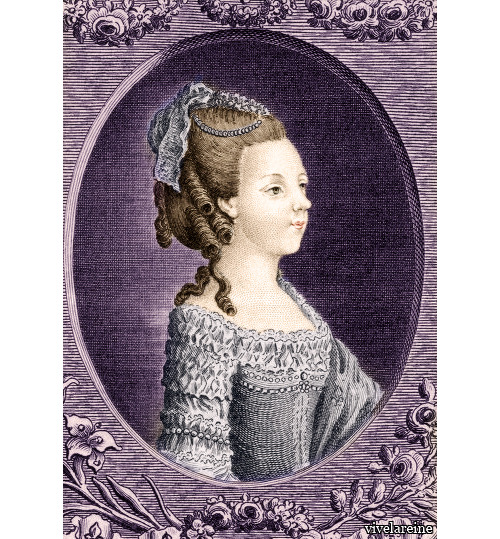
Madame Elisabeth as a Young Girl

The youngest sister of Louis XVI in her teens. (Via Vive la Reine.) Share

The Divorce Revolution

From First Things:
The social scientific bottom line is this: From America to Africa, the divorce revolution has exacted a devastating price on those who can least afford it, namely, children and the poor. So, especially for a pope who has redoubled the Catholic Church’s commitment to social justice in the first year of his papacy, standing up for the integrity of the intact, married family is paramount.

This is not to say that the Catholic Church, or other religious traditions, should not seek new opportunities and approaches to minister to the millions of men, women, and children affected by the fallout of the divorce revolution around the globe. But it is to say that the Catholic Church, as well as other religious traditions that value marital permanence, such as Mormonism, should not simply jettison the teachings and practices that have given their religiously observant members a measure of marital stability in a world where family life has become increasingly fragile. (Read more.)
Share

Tuesday, April 1, 2014

Noah (2014)

I am looking forward to seeing it. From The Catholic World Report:
The big release in movie theaters...is Darren Aronofsky's epic film, Noah, starring Russell Crowe. In a short piece, "The Thing About Noah and the Ark", on the New York Times' site, Aronofsky wrote:

When I asked Russell Crowe to star in “Noah,” I promised him one thing: I would never shoot him standing on the bow of a houseboat with two giraffes sticking up behind him. That’s the image most people have of Noah and the ark and I didn’t want to give audiences what they were expecting. I wanted to break the clichéd preconceptions we have from children’s toys, adverts, 1950s biblical epics and even much of the religious art of the last two millennia: the old man in a robe and sandals with a long white beard preaching in some Judean desert. I wanted Noah’s story to feel fresh, immediate and real. So when my team and I started to imagine how to bring the prediluvian era to life, we threw away all the tropes and returned to the Bible. …

We realized that if we listened to the original text we would find a blueprint for a Noah story that was unique and unexpected. For instance, returning to the ark: When you look in Genesis, you find exact measurements for a big rectangular box, a giant coffin. It makes perfect sense. The ark didn’t need a curved hull of planed wood with a pointed bow and stern. The world was entirely covered with water and there was no need to steer and nowhere to go. So we created the rectangular-shaped ark for the film, biblically accurate down to the last cubit.

I've not seen the movie yet, but I think Aronofsky makes many good—even excellent—points. And it's notable that he appears to take the biblical account quite seriously, yet with an understanding that the early chapters of Genesis were not penned by scientists or modern historians. This, of course, is a sticking point for both some Christians and certain secular-minded folks; both, at times, try to force such literature into boxes it was not intended to fill: the box of "history" as understood by moderns and the box of "fairy tales" as derided by moderns. And, as soon as you say so, some folks will defensively retort: "You're denying the historicity of Genesis!" No, I'm saying, as I think Aronofsky is also stating, that those first chapters of Genesis are narratives produced and eventually written down by folks who had very different perspectives on, well, nearly everything than those of us living in the 21st-century West. That doesn't mean they aren't true; it does mean that they require some hard thinking and a refusal to find false comfort in knee-jerk reactions. (Read more.)
Steve Greydanus offers his reflections, here:
For many pious moviegoers, I suspect some of the film’s more provocative flourishes will be a bridge too far. Less pious viewers, meanwhile, may be put off by the biblical subject matter. Have Aronofsky (raised with a Jewish education) and co-writer Ari Handel made a film that’s too religious for secular viewers and too secular for religious ones? Who is the audience?

Well, I am, to begin with. For a lifelong Bible geek and lover of movie-making and storytelling like me, Noah is a rare gift: a blend of epic spectacle, startling character drama and creative reworking of Scripture and other ancient Jewish and rabbinic writings. It’s a movie with much to look at, much to think about and much to feel; a movie to argue about, and argue with.

It’s certainly not the picture-book story that most of us grow up with, all cheerful ark-building, adorable animals and a gravely pious, white-bearded protagonist. Noah, played by a flinty, authoritative Russell Crowe, is the hero, but that doesn’t make him saintly. Or, if he is saintly, it’s worth recalling that some of the saints could be off-putting, harsh, even ruthless. We want our heroes to be paragons of virtue and enlightenment. Yet when you get down to it, the difference between Moses or David and corrupt Hophni and Phineas is one of degree, not kind. We are all made of the same fallen stuff.

For millennia, Judeo-Christian imagination has been haunted by the idea of the primordial world before the Flood: a world so close to paradise, with Eden itself around some forbidden corner, guarded by cherubim with a flaming sword. Men lived many hundreds of years, Genesis tells us, and chapter 6 suggests that giants walked the earth — offspring, on one interpretation, of human women and fallen angelic beings.

Some of these motifs inspired elements in J.R.R. Tolkien’s tales of the earlier ages of Middle-Earth, an imaginative portrait of the primeval world. Tolkien’s best-known works, The Hobbit and The Lord of the Rings, resound with echoes of this lost world. Aronofsky’s Noah includes imaginative flourishes akin to Tolkien: grim portents, grotesque Entish creatures called Watchers, battles in a Mordor-like blasted waste and a dark family struggle not unlike that of Denethor and his sons.

Yet the story’s biblical framework is taken seriously, even literally. There are glimpses of Eden, Adam and Eve in glory, the serpent, the forbidden fruit and the crime of Cain. Though paradise is lost, the Earth has not yet forgotten it, as Tolkien’s rocks and woods remembered the elves after they had gone. In a key sequence, an echo of Eden bursts forth in a rapturous effect recalling Genesis 2:9–10.

Among the highlights is a recounting of the week of creation, not in a prologue, but strategically positioned at a key moment when characters have reason to look back. This soaring sequence, in which the six days are artfully dovetailed with imagery of the origins of the cosmos and life on earth that would be at home in a nature documentary, is, for me, the film’s theological pinnacle. (Read more.)
 More commentary from Steve, HERE and HERE. He thinks people are overreacting about this movie, and he is probably right.

Rebecca Cusey comments, HERE.

Some theological reflections from The Catholic World Report, HERE.  To quote:
Noah is the work of a filmmaker deeply familiar with the story of the great flood, not only in its canonical form in Genesis, but also in other ancient Jewish texts, from the books of Enoch and Jubilees to rabbinic commentaries and midrashic retellings. In some ways it reflects the influence of our secular age; in offer ways it a bracing challenge to it. It is a divisive film and a divided film, one that seems almost to be arguing with itself, and about which those arguing on all sides may at turns have a point.

“Let me tell you a story,” Russell Crowe’s Noah says to his family in a moment of great crisis and emotion. “The first story my father told me, and the first story I told each of you.” What he recounts are the events of Genesis 1, the creation of the world, and Aronofsky relates them both verbally and visually in a way that bespeaks a confidence in the power of this story to speak to us today: a story still worth telling and retelling.

I don’t know whether Aronofsky (raised with what he describes as a “very, very basic Jewish education”) learned that or other Bible stories as Noah did, from his own father. But watching the film’s visionary recounting of the six days of creation, juxtaposed with time-lapse images of the origins of the cosmos, from the Big Bang to the arrival of man, I remembered that Aronofsky’s father had been a science teacher at a yeshiva school. Here are ancient and modern cosmologies standing side by side, not contrary but complementary.
Share

College is Not for Everyone

From Slate:
I have no desire to punish students or deprive them of opportunity. Quite the contrary. My aim is to stop pretending that high school or college students with very low basic skills have a real shot of earning a college degree—so that they might follow an alternative path that will lead to success. A college graduate will generally outearn a high school graduate, to be sure. But a worker with technical skills will outearn a high school or college dropout with no such skills. That’s the true choice facing many students.

Furthermore, for kids facing the toughest challenges of poverty, it makes sense to think about opportunity over multiple generations. College might catapult prepared low-income kids into the middle class in one fell swoop, but using high-quality career and technical education to give low-income youngsters who are not ready for college a foothold on the ladder to success is a victory as well. If they can escape poverty and all the social ills that come with it, their children have a significantly better shot at the college path. After all, that’s how upward mobility in America has generally worked: Not in one bounce but slowly and surely over decades.

Happily, this sort of common sense is starting to re-enter the conversation (thanks, in part, to the persistence of the folks at Harvard’s Pathways to Prosperity initiative, who called in 2011 for a broader approach to education reform, one that includes high-quality career technical education). In a very important recent Politico piece, Stephanie Simon shows how lawmakers, especially in red states, are starting to worry that the “college for all” ideology is doing material harm to students. Asking all students to pass algebra II makes a ton of sense if you expect all of them to go to college. But when you are willing to acknowledge that that’s a fool’s errand, you start to see such mandates as barriers to opportunity—the opportunity to pursue career and technical programs that are likely to produce better long-term outcomes for young people. (Read more.)

Share