Thursday, February 10, 2011

On "Traditional" Marriage

Writer Eve Tushnet questions using the word "traditional" as a reason for defending holy matrimony. (Via Maggie Gallagher) I think she makes some good points, saying:
Two things have happened to contemporary marriage which all but compel traditionalist rhetoric in a non-traditionalist culture. First, one of marriage’s core purposes has been suppressed in public discourse. Marriage developed in major part to regulate sex between men and women—to regulate it not solely within marriage but before marriage. The idea that marriage as an institution should regulate whether the unmarried have sex used to be obvious. It’s not that everyone actually abstained, as the bawdy songs show! But the cultural expectation was that premarital chastity could be demanded, defended, held up as social necessity and religious virtue, and its opposite punished (as in the sadder bawdy songs) or wryly rejected (as in the funnier ones).

Ten minutes’ conversation with people in their teens or twenties, anywhere from Main Street to Martin Luther King, Jr. Boulevard, will make clear that the exact opposite of this perspective is now as obvious as the older one used to be. Premarital sex is not only practiced but assumed, and often valorized. (You should live together before marriage; don’t be stupid!)
We can debate whether this deregulation has been good for the elite, for the underclass, for men, for women, for children, etc., but I’m not here to ask who lost the sexual revolution. I’m pointing out that when a core purpose of a tradition is still acknowledged in public debate, people don’t defend the tradition for tradition’s sake. They defend it because it serves the core purpose. This approach to tradition is inadequate, for reasons I tried to draw out in my first post, but it’s an obvious rhetorical approach in a pluralist society.

Secondly, the competing authorities that used to combine to make marriage compelling have now been discredited or pitted against one another. Church and state once agreed here, even when they fought elsewhere. Yet the very idea of something simultaneously sacred and legal is now suspect—almost unintelligible, which is one reason so many people I talk to think that the optimal solution to the gay-marriage debate would be for the government to “get out of marriage,” but they think that just isn’t practical.
When a tradition is justified by its support from a beloved authority, people don’t defend the tradition for tradition’s sake. They defend it because it comes from and flows back toward the authority.
The honor and beauty that accumulated around marriage over millennia of liturgy, folk culture, and pain and grace still attract us; yet the necessities, the suffering that marriage sometimes could transform into sacrifice, are often no longer intelligible. So we fall back on a language which is all assumption and allusion. The only word we have left for marriage is “traditional.”
Share

Wednesday, February 9, 2011

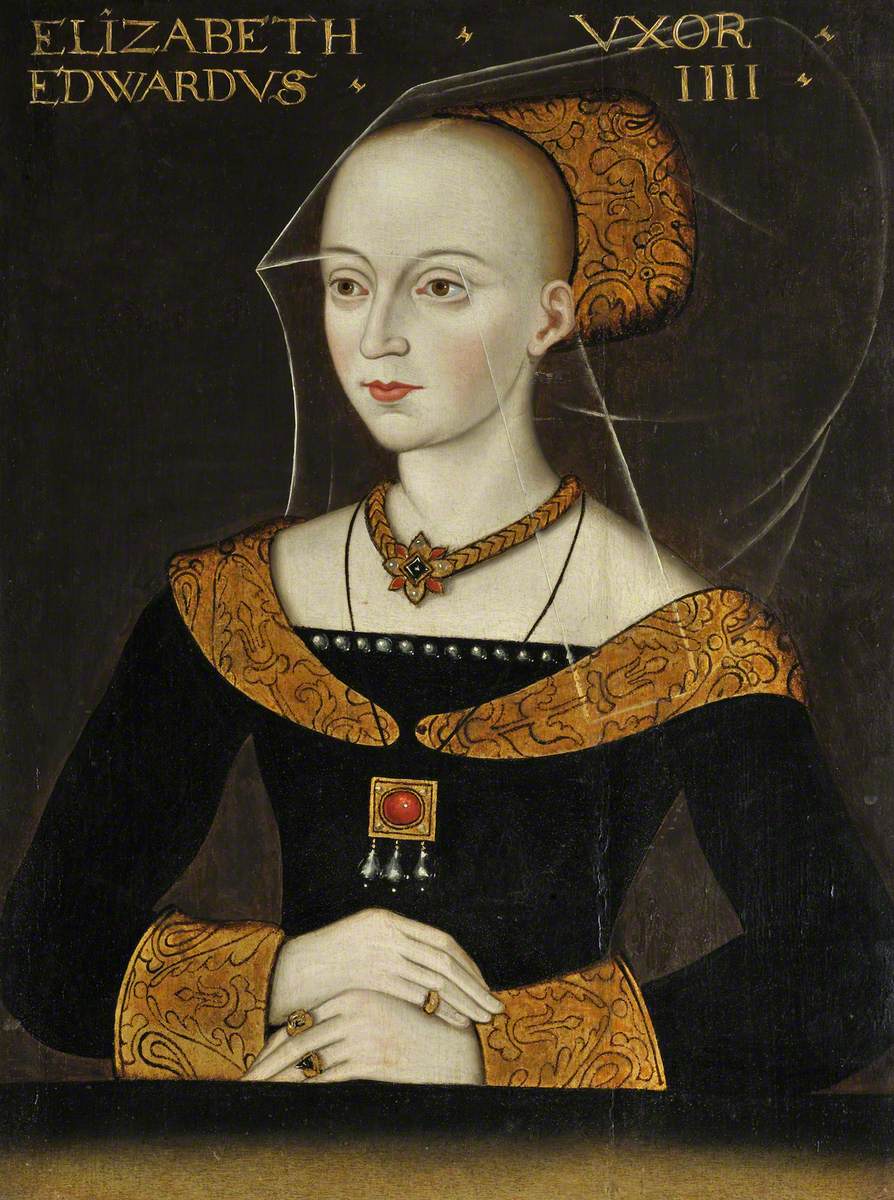
Anne Boleyn and Elizabeth Woodville

Each refused to be a mistress so that they might be a queen, although in Elizabeth's case her king did not already have a wife (at least, not that she knew of).

Share

Stern Advice

Adult children of divorce face extra burdens.
Adult offspring whose parents split up later in life face the usual and expected psychological issues: "They may feel like 'everything I thought was real, isn't,'" says Diana Mercer, an attorney-mediator and author of several books on divorce.

But they also face a series of financial challenges that their cohort with married parents don't have to deal with, Mercer said. Young adult children of divorce may find their college fund ravaged; they may see their family home fall into the hands of Dad's new girlfriend or Mom's new guy. They may feel financially responsible for their parents at an early age, and have to care for single aging parents who won't take care of each other.
And, they may leave their own finances untended. So-called ACODs (Adult Children of Divorce) often exhibit a failure to launch, says Mercer, co-author with Katie Jan Wennechuk of "Making Divorce Work: 8 Essential Keys to Resolving Conflict and Rebuilding Your Life" (Penguin/Perigee 2010). They may fail to complete their education, line up "grown-up" jobs, or feed their own savings.
Share

Tuesday, February 8, 2011

A Royal Likeness

Marie-Antoinette by Madame Tussaud
Amid all the historical fiction about aristocrats and royalty it is interesting to find novels which bring to life the world of trade. Contrary to the widespread misconception, women did indeed "work" long before the feminist revolution of the 1960's and 70's; in fact, there have always been women who ran businesses, working in shops and  at various crafts. Christine Trent's first novel, The Queen's Dollmaker, describes the art of doll-making while her second, A Royal Likeness, ventures into the unique climate of the waxworks museum. Marguerite Ashby, a young widow trying to struggle out of a quicksand of tragic events, finds a new life working with the famous Madame Tussaud, and soon becomes involved in intrigues beyond her wildest dreams.  

A Royal Likeness is exceedingly entertaining for the action-filled and highly romantic storyline as well as the detailed portrayals of early nineteenth century London, Dublin and Edinburgh. The descriptions of what happened on a British warship before, during and after a battle were of great fascination for me; I had no idea that the sailors spread sand on the deck before battle and removed their shoes and boots so they would not slip in the blood. The reader is meticulously led through the particulars of the process of creating a wax image while meeting many of the celebrities of the day. The characters of Lord Nelson and Lady Hamilton are particularly well-drawn. Overall, I was impressed with the amount of research that went into creating A Royal Likeness with minutiae which could only have come from visiting the original venues. Anyone who enjoys learning while being regaled with a colorful tale must read this book.

I also must applaud Christine Trent for creating yet another heroine who is a virtuous woman but by no means boring or stuffy. Marguerite is witty and spirited yet she holds goodness and integrity in high regard. In spite of her sea-sickness and recurring headaches she always finds herself in the midst if the action. Likewise, the hero of the story is a man devoted to duty and protecting the honor of his sweetheart, in the manner of the heroes of the celebrated Miss Austen. I would heartily recommend A Royal Likeness to readers both young and old, with the warning that once you get drawn into the book it is difficult to put it down.

More HERE.

(*NOTE: A Royal Likeness was sent to me by the author in exchange for my honest opinion.)

Share

College Freshmen

They are experiencing record levels of stress. (I can't imagine why....) According to the New York Times:
Every year, women had a less positive view of their emotional health than men, and that gap has widened.
Campus counselors say the survey results are the latest evidence of what they see every day in their offices — students who are depressed, under stress and using psychiatric medication, prescribed even before they came to college.

The economy has only added to the stress, not just because of financial pressures on their parents but also because the students are worried about their own college debt and job prospects when they graduate.
“This fits with what we’re all seeing,” said Brian Van Brunt, director of counseling at Western Kentucky University and president of the American College Counseling Association. “More students are arriving on campus with problems, needing support, and today’s economic factors are putting a lot of extra stress on college students, as they look at their loans and wonder if there will be a career waiting for them on the other side.”
Share

Monday, February 7, 2011

Trashy Clothes for Little Girls

My mother and I went shopping the other day, looking for a blouse as a gift for a little girl  in the 7-14 range. We went into a major department store and found the children's department. We saw loads of cute clothes at first, pretty tops and fluffy dresses, until we realized that we were looking at the clothes for four, five, and six year olds. Finally, we found the section with the size we were looking for.

It was shocking. There were clothes for seven and eight year olds that  a self-respecting hooker would not wear. The colors used were grays, blacks, hot pinks and neon blues. The tops were low cut and covered with cheap glitter and sequins. The slacks were all tight and the skirts exceedingly short. The dresses were garish red or black velvet with ugly gauze-like trim as well as the ever present sequins. Worst of all, there were miniature padded bras and thongs for small girls. I started to feel sick.

With the news full of stories of little girls being raped and abducted, of young teens getting pregnant, of scandal after scandal and horror story after horror story, why would people design clothes which sexualize children? I must say, the boys' clothes were normal, just miniature men's clothes, nothing weird. What then is the obvious obsession with making little girls look like whores? At the very age when girls are beginning to blossom socially and grow into their femininity, why would anyone create garments that are intended to make girls see themselves as sex symbols? What is more, such clothes force others, including little boys, to see girls as toys to be used and abused. What parent would spend money to turn their seven year old into a junior slut? There is something very sick going on and only we consumers can stop it by refusing to buy into what has become a social disease. Share

Slave Auctions

Revisiting the horror. (Via A Momentary Taste of Being.) To quote:
On one of these sale days, I saw a mother lead seven children to the auction block. She knew that some of them would be taken from her; but they took all. The children were sold to a slave-trader, and their mother bought by a man in her own town. Before night her children were all far away. She begged the trader to tell her where he intended to take them; this he refused to do. How could he, when he knew he would sell them, one by one, wherever he could command the highest price? I met that mother in the street, and her wild, haggard face lives to-day in my mind. She wrung her hands in anguish, and exclaimed, “Gone! All gone! Why don’t God kill me?” I had no words wherewith to comfort her. Instances of this kind are of daily, yea, of hourly occurrence.
Share

Sunday, February 6, 2011

The Weather of 1788

The harsh weather triggered the bread shortages in France, making the inflation worse. To quote:
The year 1788 is a notably bad one considering weather in France.  The country was first struck in July as an incredible hailstorm swept through the countryside.  The storm was wide and strong, and the stones destroyed crops across many provinces.  The following harvest was poor, suffering greatly from the loss.


The disappointment of the autumn was followed by an unusually bitter winter at the end of the year.  The severity of the weather took a toll on many areas of the country.

In Provence and Languedoc a third of valuable olive trees were lost.  Of the surviving trees many were thought to be useless until they could repair themselves enough to grow fruit again, a process that had the potential to last two years if ever correcting itself.

Southern France also saw a great number of crops and grain destroyed from what has been described as, severe frost. (make of it what you will!)  And to add to the misfortune many chestnut trees also died.

I consulted The Weather Almanac and Meteorological and Rural Hand-book for 1865 just for fun, and learned the severity of the winter of 1788-9 did not reoccur for forty one years, the winter of 1829!
Louis XVI and Marie-Antoinette responded to the crisis by increasing their charities. Share

Society of the Cincinnati

Here is a fascinating article about an American Order of Chivalry, recognized by King Louis XVI and coveted by French aristocrats in the years before the Revolution of 1789. Share