Thomas Merton on Noise
3 days ago


 It is the book I have been searching for, edited by a reliable Catholic author, Heidi Hess-Saxton. In My Big Book of Catholic Bible Stories, each story is just the right length for reading before bedtime. And I love the way Heidi works in psalms and prayers as well as quotes from the catechism. It is great for our home religion class, too, and can be read into the teen years. The illustrations are helpful in conveying the message to young children, and has already inspired some lively discussions. More information HERE.
ShareWhat I liked about this movie is that it reminds families of the importance of talking — really talking — with their teens, long before the proverbial crap hits the fan. Most parents I know hold themselves (and their children) to high moral standards. In truth, we often expect our children’s moral boundaries to exceed what we observed at their age because NOW we see the dangers of youthful impulses. And yet, wishing doesn’t make those impulses go away. Our kids need to know how to cope with those impulses in a real, adult way — with a full appreciation of how short-term actions can have long-term consequences.
Our job as parents is to help our kids form long-term plans for their future, and to understand how their present actions can help or dash those plans. Our daughters and sons, both. They need to understand how our own dreams were helped or hindered because of the choices we made early in life.
Our daughters need to understand the difference between infatuation (based on strong feelings that pass with time) and true love (based on a lifetime of sacrifice) — in order to understand WHY sex is a gift that is best expressed within marriage. They must understand that the gift of sex, misused, makes it difficult or impossible to think clearly about whether the young man they are dating is the best choice for a lifetime partner.
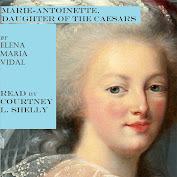
 A young architect explores Marie-Antoinette's Petit Trianon, with some detailed photos the like of which I have never seen, especially those of the grand stair hall and the guard room.
 Share
Share
 Lauren discusses the caps that women and girls always wore in the eighteenth century.
It was typically made of a white gauze or a light muslin fabric, and the edges would curve around the face. Often gathered, with a puffy crown, the edges would be left as ruffles or frill. The tyre or tire was the string or band used to fasten the cap. This term may have come from the Greek tiara or french tirant (purse/boot string). The sides of the cap were left to fall down along the side of the face, and it could be tied under the chin. Another option was to put a straw hat on top of the cap, which could be decorated with feathers, flowers etc.Share
The overall effect of the cap, especially if it were very ruffled, was a soft look about the face. The sides were usually left down and covered much of the face. Believe it or not, these masking qualities left it quite desirable with women who were "conservative or plain." This appeal of the cap kept it popular for many years.
ShareYoung girls are being kidnapped within China and also from neighboring countries (Laos, Cambodia, Vietnam, Myanmar, Thailand) by organized gangs who sell them to families with boys of a similar age. The girls will be raised by the families and given as brides to their sons as soon as they reach marriageable age. Others are shipped to brothels within China for a life as sex slaves.
Needless to say China’s neighbours are not enamored of the growing practice. Diplomatic tensions have risen over the issue and China has had to establish a special police unit to help its neighbours combat the very crime its policy has created.
Even more bizarre crimes have been reported in this patriarchal society where it is believed that a wife is necessary to tend to her husband even after death. A rising practice in some remote areas of China is to dig up the corpses of single women to sell to families whose sons may have recently perished. Posthumous wedding ceremonies are held to ensure the deceased son does not have to endure the next life alone. With higher prices commanded by fresh corpses of young women the practice has led to murders of young girls by some crime gangs looking to capitalize on distraught parents enduring the loss of a young son.
It appears the CASS report has merely touched the tip of the iceberg. But it is interesting that the nation’s top Government think-tank is publicly discussing the matter. Could the public airing of the coming social problems caused by the one-child family policy mean that the Government is ready to repeal the policy? Or has CASS just made a Cassandra prophecy?
Like the prodigal son and Nabucodonosor, Ward McNulty represents those many materialistic souls who lose sight of the eternal in pursuit of the temporal. That’s basically what sin is…choosing the creature over the Creator. Worldly accomplishments can blind us to own faults and lead to a false pride. With that kind of pride, it usually takes quite a cannonade of catastrophes to pound down the outer walls. Only then, if ever, can grace penetrate the defenses. “Recovery”—whether for an addict, an alcoholic, or a professional sinner—often begins in just such a manner. Being “humbled” is nothing more than seeing yourself for who and what you really are; honestly admitting your faults. And then seeing God for Who He is. That’s the beginning of change.Share
Books and legend suggest that medieval Irishmen lived well on dairy products and "corn," what we would call cereal. Herds of sheep, cattle, and goats yielded milk to be drunk sweet or sour or turned into cheeses. One ancient chronicler rhapsodized about the "great daintie" of sour curds called bonnyclabber, which is still enjoyed today. The Irish are prodigal about using dairy products in their cookery, butter, for instance, being used rather than oil. That so many Irish recipes call for buttermilk or sour milk rather than whole milk reminds us that refrigeration was not available to Irish bakers until relatively recent years.
Butter played an important role in the household in earlier times; every household had its churn. Lumps of butter were sometimes thrown into the water through which cattle were driven in order to ward off evil and to keep the cows' milk flowing. Bags of butter have been found in bogs, edible after centuries of burial. Milk was often thought to superstitions developed around dairy products and their attraction to the spirits. One called for a live cinder to be put into the churn to guard the butter from the netherworld's creatures. One prohibited a person from taking live fire out of the house during churning, and another required that if a man rekindled his pipe at the hearth, he had to take a turn at churning to ensure that the butter and churn were preserved from all harm.
Oddly enough, although the Irish today consume more potatoes and dairy products than their fellow Europeans, they consume the least amount of cheese per capita. The irony of this fact is that the Irish were the first Europeans to make cheese. It is said that the Swiss learned to make Appenzel from the advice and knowledge of Irish monks. Cheese too was supposed to be the medium chosen by St. Patrick's would-be assassins to poison him.
Agricultural Ireland was also rich in cereals. Oatmeal was the cornerstone of the Irish diet in pre-potato days. Whether made into bread or, more simply, boiled up as a "stirabout" or porridge, oatmeal was the food of the people. It is said that St. Columcille learned his alphabet by having the letters traced on an oaten cake by his nurse. In medieval times, the manner in which oatmeal was served signaled class distinctions. Royalty's children were nourished with wheaten stirabout flavored with honey and milk; the chieftains' progeny had their stirabout made with fresh milk and flavored with butter; workmen's children were fed oatmeal with buttermilk or water. Oatmeal also served as currency: As late as the 1600's rents were often paid with oaten meal and cakes.
Seafood, lamb, pork, and a variety of vegetables are part of Ireland's dietary history, but the potato is the food most intimately associated with Irish history. The unfortunate turn of events which forced the Irish into dependence on the potato started around the time of James II's defeat at the Battle of the Boyne, June 14, 1690. The two Georges who followed James enacted the Penal Laws which denied Catholics a host of rights. When rebellion inevitably followed repression, two of the rebel groups, the Whiteboys and the Defenders, scorched the land during their campaign of terror against the English. While the above ground crops could not withstand the burning, the potato, cultivated underground, survived to become the peasant mainstay. But the dependence on one type of vegetable left the country vulnerable to the diseases which wiped out the potato in 1845, 1846 and 1847.
Although the popular association of the potato with the Irish has a melancholy history, nevertheless, it could be a treat to stop by a neighbor’s cottage just as she took the boxty out of the oven. This hot loaf, still served today, is a kind of potato bread which, before baking, is always marked with a cross so it can be divided into sections, or farls: Boxty is traditionally eaten in Ireland on Halloween, as is colcannon, mashed potatoes with cabbage and butter. On Halloween, coins are wrapped in foil and buried in colcannon. Children would eat their way to where the coins were hidden. Earlier versions of colcannon began with a mixture of raw white vegetables- white cabbage, parsnips, onions, potatoes- which were seasoned with salt and pepper and layered in a giant saucepan. Champ (mashed potatoes with scallions) is another Irish staple. Leftover mashed potatoes, combined with equal amounts of cabbage and browned butter in a skillet, make a tasty dish called "bubble and squeak."