Tuesday, August 20, 2019

The Technology of Kindness

From Scientific American:
Yet technology, and the Internet in particular, are not inherently antisocial. They can sap our empathy, but used differently, they could become a world-sized magnifying glass for our better angels. Many corners of the Internet already allow people to broaden their empathy and share collective goodwill. Researchers are pinpointing the ingredients of positive technology. If they become the norm, the future of life online will be kinder than its past. Internet platforms must heed this evidence, and their users must demand them to do so. 
People’s ability to connect is the glue that holds our culture together. By thinning out our interactions and splintering our media landscape, the Internet has taken away the common ground we need to understand one another. Each of us is becoming more confident about our own world just as it drifts farther from the worlds of others. Empathy requires us to understand that even people who disagree with us have a lived experience as deep as our own. But in the fractured landscape of social media, we have little choice but to see the other side as obtuse, dishonest or both. Unless we reverse this trend and revive empathy, we have little chance of mending the tears in our social fabric. (Read more.)
Share

Monday, August 19, 2019

Sunflowers in Art

Sunflowers by Monet
Sunflowers by Van Gogh
From Victorian Trading Company Blog:
Arguably best known for his sunflowers, there was one Vincent van Gogh thought better. That painter was Claude Monet. In a letter to his brother, van Gogh wrote: “[Paul] Gauguin was telling me the other day that he had seen a picture by Claude Monet of sunflowers in a large Japanese vase, very fine, but – he likes mine better. I don’t agree.” Will you? For many Victorian artists captured the blooms to canvas and each is as unique as the flowers themselves. (Read more.)
Share

Not Just Epstein


From The Conservative Review:
 Sex trafficking, especially of children, is a diabolical scourge that still affects the modern world, but the depth and scope of this evil are worse than you probably imagine, South African filmmaker and anti-trafficking activist Jaco Booyens told LevinTV host Mark Levin on Sunday night’s episode of Life, Liberty & Levin on Fox News.

Booyens recalled how his sister became a victim of sex trafficking when they were growing up in South Africa, which made the issue very personal for him. “I didn’t jump on a bandwagon by reading a book or a movement that I felt led to,” the filmmaker explained. “It was dire.”

Booyens’ sister — now Ilonka Deaton — was trafficked through corporate South Africa over the course of six years, he explained. He added that while his sister eventually came home, “It was a long, very painful journey that seldom has that outcome.”

“What is the typical outcome?” Levin asked.

“Death. The average lifespan of a child that’s trafficked is seven years. Because with it comes addiction, physical abuse, emotional abuse; suicide rate is through the ceiling, because how do you get out?” Booyens explained.

Shockingly, the United States leads the world with the lowest average age of trafficking victims: 12, Booyens says. He also says notes that an child trafficking victim in the United States will bring a pimp $200,000 to $250,000 per year tax-free: “Now you have a real problem — a real problem. Because now, like I say, the demons come out. Because there’s so many takers.”

And those takers come from all walks of life. While Booyens said that he’s glad that the high-profile arrest of billionaire sex offender Jeffrey Epstein put attention on the issue of sex trafficking, he has a big problem with the what he sees as a widespread assumption that supporting the sex slave market is only a problem among the ultra-wealthy. (Read more.)

Meanwhile, Epstein has died. From The Daily Wire:
"Six days on a suicide watch, prison officials reportedly removed it. Prison officials, guided by who? What self-respecting psychiatrist would say, 'okay, he's no longer suicidal,'" Siegel concluded. "There was evidence on July 23rd that he may have done something to his neck, or someone did ... suddenly six days later he waves his hand, says he's fine, and he's put in an area where ultimately he's unobserved — because as you know, people fall asleep and they falsify records reportedly." (Read more.)
Share

A Secret History of Royal Palaces

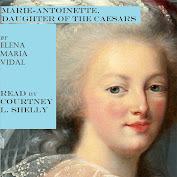
As usual, what they say about Marie-Antoinette is not true. The Queen bathed not once a month but several times a week. She was known for her meticulous cleanliness and she made Louis bathe frequently, too. From History:
A 1675 report offered this assessment of the Louvre Palace in Paris: “On the grand staircases” and “behind the doors and almost everywhere one sees there a mass of excrement, one smells a thousand unbearable stenches caused by calls of nature which everyone goes to do there every day.” 
According to historian Alison Weir, author of Henry VIII: The King and his Court, the fastidious Henry VIII “waged a constant battle against the dirt, dust, and smells that were unavoidable when so many people lived in one establishment,” which was fairly unusual for the time. The king slept on a bed surrounded by furs to keep small creatures and vermin away, and visitors were warned not to “wipe or rub their hands upon none arras [tapestries] of the King’s whereby they might be hurted.” (Read more.)
Share

Sunday, August 18, 2019

The Art of Ilya Repin

From Apollo:
Sofia Alexeyevna ruled Russia as regent with iron hand from 1682 to 1689. After Peter I came of age to take the throne, she withdrew to the Novodevichy Convent; ten years later, when the tsar was absent from the country, members of the Russian military attempted to reinstate her. This historical portrait by Repin depicts the would-be tsarina a year after this rebellion had been crushed, with the corpse of an insurgent suspended in front of Sophia’s window. (Read more.)
Share

Motherhood: The Most Stress-Ridden Career

Sometimes it seems like the whole world has conspired to make it harder for mothers. From Intellectual Takeout:
Not only is the unrealistic expectation to facilitate totally risk-free childhoods wearing mothers out and making them an easy target for spectators. Children are going mad being pent up indoors, enclosed in small backyards, plugged into technology and buckled up in seatbelts. This could even be contributing to the rise in ADHD.

It’s a vicious cycle. When we deny our children “the luxury of being unnoticed, of being left alone,” we surely are heightening the risks of things like childhood obesity, anxiety, screen addictions, depression and loneliness. Creating a restricted, censored and cottonwool-wrapped climate for our children is far more likely to give rise to these things than if we allow a little risk-taking.

Here in Australia, it is illegal across every state to leave a child unattended in a car for any length of time. In Victoria, my home state, penalties range from fines of $3,690 to up to six months jail time. By law, a parent is committing a crime each time he or she leaves their children in the car in order to do something so simple as pay for fuel.

What if it might be the safer option to leave the kids in the car sometimes? Perhaps there’s a busy road to cross to reach the bakery, or the car park’s full of reversing vehicles to navigate small children through. The situation of leaving a child in a car has been catastrophised to such an extreme that responsible mothers making sensible decisions are in danger of being incarcerated.

And we wonder why so many mums flock back to work soon after having a baby. Or why post-natal depression is on the rise. Why should they take on the doomed-to-failure social prescription for their role, and risk being made into social pariahs at every turn? Especially when their monumental efforts in child-raising otherwise goes largely unrecognised? (Read more.)

From Return to Order:
 The Marxists believe this family vision is an illusion. The family is a source of oppression. Thus, Lewis’ deconstruction of the private family turns it into a den for molestation, abuse, depression, humiliation and loneliness. The family is guilty of social crimes that include gender-straitjacketing, racial programming and instilling bourgeois values.

Indeed, Lewis insists upon The Communist Manifesto and its demand for the “abolition of the family.” She believes that pregnant women become “instruments of production” for men, and children become their property. What makes this exploitation possible is the mother-child bond that creates the illusion that children belong to parents. Lewis’ solution is to turn mothers into “gestators.” Surrogate gestation will create collective responsibility for children and dissolve all into a classless society of equality.

People like Lewis understand the true role of the mother and family in an ordered Christian society. They also understand why destroying maternal and familial bonds is so important to further the aims of today’s post-Marxist revolution. (Read more.)
Share

The Walsingham Conspiracy and its Martyrs

Yesterday I posted some information about the Walsingham Conspiracy in 1537, when Cromwell's men came to suppress the priory of Walsingham, a house of Augustinian Canons and to close down the shrine (from British History Online: 'Houses of Austin canons: The priory of Walsingham', in A History of the County of Norfolk: Volume 2, ed. William Page (London, 1906), pp. 394-401.) 
The priory of Walsingham had a special hold on Norfolk, even in places far remote from the town. The concourse of pilgrims from all parts of England, as well as from over the seas, kept Our Lady of Walsingham vividly in mind. . . . (Read more.)
Share

Saturday, August 17, 2019

Amazon's 'Lord of the Rings'

From Engadget:
Amazon's upcoming Lord of the Rings show will stick closely to the canon and history established by Tolkien, a consultant working on the project has revealed. "The Tolkien estate will insist that the main shape of the Second Age is not altered," Tolkien scholar and series supervisor Tom Shippey told the German Tolkien Society. During this period, Sauron tries to reform Middle-earth for the better but falls into evil, becoming a powerful and oppressive ruler. "Sauron invades Eriador, is forced back by a Númenorean expedition, returns to Númenor. There he corrupts the Númenoreans and seduces them to break the ban of the Valar. All this, the course of history, must remain the same." 
Shippey points out that although the broad strokes of the history of the Second Age are established, there are plenty of unanswered questions about the events of the period, such as what Sauron did after the fall of Morgoth. Amazon can take creative license to create its own story within this history, as long as it doesn't contradict Tolkien's writings. 
The Tolkien estate maintains power of veto over any content in the show, Shippey says, and is willing to nix anything that doesn't fit with Tolkien's vision. The First Age and the Third Age of Middle-earth (in which the books are set) are both "off-limits" to the TV show, so don't expect to see hobbits, Gondorians or many familiar faces in the new adaptation. (Read more.)
Share

Not Invited

From Fox News:
Meghan Markle and Prince Harry's friends have "stopped inviting" the couple to dinner parties because they "frown upon their PDAs," insiders have claimed. According to the Mail on Sunday, the Duke and Duchess of Sussex make a point of sitting together at events — even if their host has seated them separately. The paper reports that Duchess Meghan purposefully wants to break long-standing party etiquette as she considers it too "exclusive" and "traditional." Along with ignoring the seating plans, insiders have also claimed that the Duchess is openly affectionate with her husband on these occasions which causes Prince Harry's friends to "roll their eyes" at her "American ways." What's more, Harry's inner circle has "stopped inviting her to dinner" over the "frowned upon" PDAs (public displays of affection) at the dinner table. (Read more.)
Share