Wednesday, January 11, 2023

IRS Overwhelmingly Targeting Low-Income Taxpayers for Audit

From Human Events:

Syracuse University's Transactional Records Access Clearinghouse (TRAC) released data on Wednesday provided by the Internal Revenue Service (IRS) on audits conducted by the IRS in the 2022 fiscal year that found the agency prioritized the harassment of the poorest households. Reason magazine reported that despite receiving additional funding from the Inflation Reduction Act, the data indicated that the IRS primarily focused on auditing low-income taxpayers, while fewer audits were conducted on millionaires and billionaires.

"The taxpayer class with unbelievably high audit rates—five and a half times virtually everyone else—were low-income wage-earners taking the earned income tax credit," reported TRAC, adding that the poorest taxpayers are "easy marks in an era when IRS increasingly relies upon correspondence audits yet doesn't have the resources to assist taxpayers or answer their questions."

"If one ignores the fiction of auditing a millionaire through simply sending a letter through the mail, the odds that millionaires received a regular audit by a revenue agent (1.1%) was actually less than the audit rate of the targeted lowest income wage-earners whose audit rate was 1.27 percent," the TRAC continued. 

The revelation comes six months after Congress passed the so-called Inflation Reduction Act, which allocated $80 billion in funding to the IRS over the next 10 years in order to hire 87,000 new employees. This funding was supposedly intended to allow the IRS to effectively target wealthy individuals who were not paying their fair share of taxes. The bill's supporters in the left-wing media argued that this would not result in an increase in audits for those making less than $400,000 per year, although these assurances were not explicitly stated in the bill. Supporters of the Act also insisted that the increased capacity at the IRS would only be used to target the wealthy. (Read more.)
Share

Unforgivable

 From The Spectator:

I’m just going to say it: I’m Team William. In that scrap that Prince Harry says happened at Nottingham Cottage, where Prince William allegedly lost his rag and pushed Harry to the floor, I’m cheering Will. Everyone who has a brother — I have five — knows they sometimes need a clip round the lughole. And I trust Will made the right decision when he physically reprimanded his little bro. There are many reasons I’m in the Cambridge camp. The Sussexes are just saps, aren’t they? I’m far more shocked that Harry called his therapist after William allegedly attacked him than I am by the incident itself. After having an altercation with his brother? Harry really went from killing radical Islamists in Afghanistan to phoning his life coach because his brother broke his necklace?

If I went to a quack every time I had a blow-up with one of my brothers I’d have spent a lot of my teenage years and 20s on the couch. Thankfully I haven’t fallen under the spell of psychobabble, so I did what all self-respecting blokes do when they row with their brothers: drank, talked, patched things up, moved on. The Cambridges, at least, have some dignity. Harry, the Moaner of Montecito, appears to have misplaced his. Spare, his book that’s causing a storm even before its official publication next week, apparently contains all kinds of sordid details about his life. Like the ‘inglorious’ time he lost his virginity to an ‘older woman’ who ‘liked horses’. Apparently they had sex in ‘a grassy field behind a busy pub’.

For someone who values his privacy, Harry sure does like sharing secrets. There are people I’ve known for decades whose first sexual encounter remains a mystery to me. Thank God. Yet here comes Harry telling me about the time a horsey lady took his virginity and then ‘smacked my rump’. Did Jilly Cooper ghostwrite this? He spills the beans on his own dad and stepmum. He blabs about his and Will’s concern about Charles marrying Camilla. They worried she’d be a Wicked Stepmother. He tells all about Charles’ exasperation with his bickering sons. Apparently he pleaded with them not to make his ‘final years a misery’. Spare is essentially a middle finger to that plea.

Imagine how your father would feel if you wrote a book quoting his most private, mournful thoughts. Mine would go mad. Harry says he wants his dad and brother back in his life. Okay, then maybe don’t write a posh misery memoir in which you expose their failings to the world? Maybe just have a drink with them, and a chat, men to men. No Netflix cameras.

Probably the most grating thing about the Sussexes is their refusal to take responsibility for things. Everything is always someone else’s fault. I suppose it’s entirely coincidental that drama and tension seem to accompany Harry and Meghan everywhere they go. Apparently in Spare Harry even hints that Will and Kate encouraged him to wear that Nazi uniform. Oh grow up, Harry. Own your errors. 

We’re witnessing the Californication of a Prince. The old bantering, streaking fun Harry who later signed up for military service has been replaced by a self-pitying celeb who squeals with glee when he gets a text message from Beyonce. Warring royals once marshalled armies and battled it out in muddy fields; now they write tear-stained tell-alls about their hurt feelings. God help us.

The main reason I’m Team Will is because Harry has actually done something unforgivable: he’s broken the unwritten code that says brothers never gab about their tensions to other people. Of course brothers scrap and argue. Fraternal fighting is as old as time. But you don’t tell everyone about it. This is the most intimate form of conflict, one bound up with all sorts of emotions, including love. You don’t share this. Ever. What happens between brothers stays between brothers. All brothers know this. (Read more.)

Share

Tuesday, January 10, 2023

Restoration of Grey Gardens


Remember Jackie's crazy cousins? Their house has been magnificently restored. From Veranda:

To summon the spirit of the original house, Lange changed its flow as little as possible. While some minor floor plan reconfigurations were necessary for the house to live at today’s standards—opening the kitchen to a breakfast room, adding a back stairwell—other alterations, like punching out attic dormer windows on the street side, were avoided to retain the integrity of the original building. Says Lange: “One of the reasons it still feels like an old house is that we forced ourselves not to make it perfect perfect. The floors still creak a little bit, and they are not entirely level.”

The thoughtful revival of its gardens is but another invocation of the property’s past. Lange worked with landscape architect Deborah Nevins on a thorough overhaul of the grounds, planting new gardens in some places and restoring historic elements in others, and facilitating as much outdoor living as possible. Most notably Nevins restored the walled garden, pergola, and thatched garden hut, which had been added by prominent horticulturalist and author Anna Gilman Hill, the second owner of Grey Gardens (from 1913 to 1924) and the first to describe it as such. When reflecting on the garden spaces, Lange describes a distinctive magic. “There’s almost a quietness and you feel like you don’t even know where you are. It has this strangely magical, peaceful, beautiful atmosphere.” (Read more.)


Share

No Mercy Without Rules

A protestant assesses the legacy of Benedict XVI. From First Things:

Christianity makes it clear that human beings are designed to be a certain kind of creature. We are free and self-determining in a way that other creatures are not: The swallow instinctively builds a nest but we design houses freely and intentionally. Our freedom, however, operates within certain parameters as set by the limits of human nature. I cannot jump off the Empire State Building and fly, for example, or dive into a cauldron of boiling oil and expect to emerge unscathed.

Yet human nature also has a moral shape. It is not simply leaping off high buildings that damages me. There can be moral damage, too. Behaving in certain ways can ruin me, spiritually, physically, and eternally. Perhaps paradoxically, my freedom requires rules, which sometimes run against my instincts. It is thus a mercy that those rules are given to me and, where necessary, enforced by external authority, whether that of family, employer, or church.

Strange to tell, the New York Times itself argued a similar point numerous times during the COVID era, when vaccinations and masking were deemed important rules to follow if we were to show grace and mercy to our neighbors, especially the weak and vulnerable. That the Gray Lady seems to regard the Benedict papacy as somehow less merciful because of its apparent concern for moral rules is therefore a rather odd development. But then again, it is entirely predictable: Those COVID rules conformed with the atomistic individualism that ends up with no shared vision for human existence beyond its mere continuation. Life becomes no more than the avoidance of death.

Christianity, by way of contrast, is not like modern secularism: a religion that merely flees death. It is a religion that pursues God and sees this life as necessarily shaped in relation to the life hereafter. Underlying the Times’s selective attitude to rules and mercy is a deeper anthropological shift: We are now required to see life as the be-all-and-end-all of existence, but we are not allowed to prescribe in what that life might positively consist. To do so would be, well, rather distasteful to the modern palate. (Read more.)


On the resignation of Pope Benedict, HERE.

Share

The Four Virtues of Stoicism

 Even the pagans valued virtue, if only on a natural level. From The Collector:

Questions of the best way to live have been around for at least as long as humans have lived in settled societies. Before that, there was little need or time to think about it. But as civilizations grew into empires more and more people found they had the time and the need to think about how to live well. The Romans were no different. They absorbed a lot of Greek and Hellenistic culture, and while they were not nearly as philosophically minded as the Greeks were in their Athenian heyday, there was one particular philosophy that flourished in Rome – Stoicism. Such was its influence that it scaled the heights of power impacting a Roman Emperor himself and it is partly through his writing that we know so much about Stoicism today. At the core of Roman Stoicism was an ethical system based on the four cardinal virtues that reached back to the Greek philosophical traditions and to Socrates. (Read more.)

Share

Monday, January 9, 2023

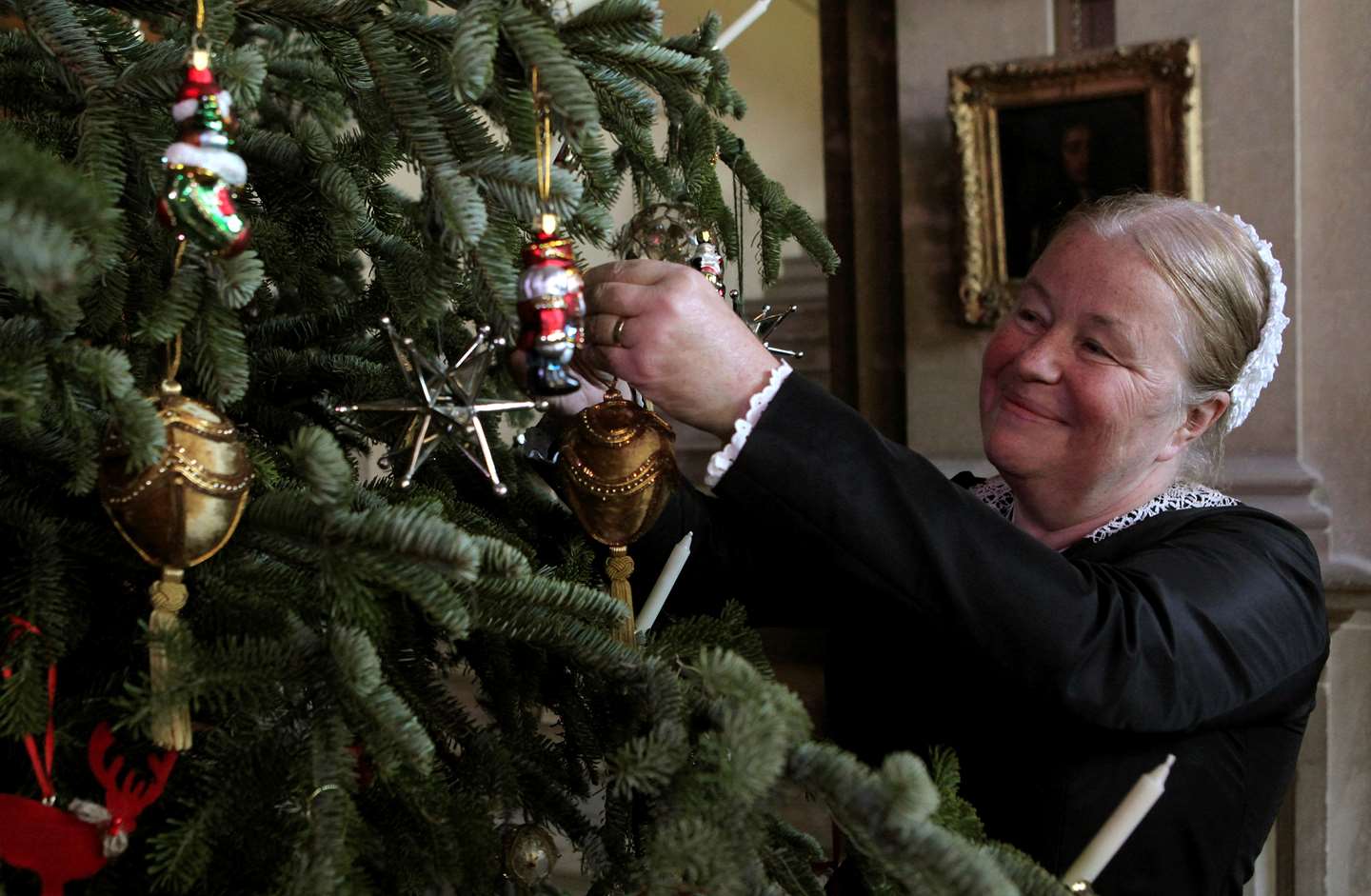
Keep Your Christmas Decorations Up Until 2 February


From English Heritage:
This year, why not do as our medieval ancestors did and leave up your festive adornments until Candlemas on 2 February? The theory that it's bad luck to leave decorations up beyond Twelfth Night (around 6 January) is a modern take on the tradition, but doing so used to be normal practice in the medieval period. Falling exactly 40 days after Christmas, Candlemas (or the Feast of the Purification of the Blessed Virgin Mary) was observed as the official end of Christmas in medieval England. The date itself was a great feast day and is so called because candles intended to be used in churches in the coming year would be blessed on that day. There were also candlelit processions in honour of the feast. Evidence that decorations were kept up until the evening before Candlemas is well documented. To this day, Christmas cribs remain in place in many churches until Candlemas, and their removal is described in an early 17th-century poem:
Ceremony Upon Candlemas Eve, Robert Herrick (1591-1674) 
Down with the rosemary, and so
Down with the bays and misletoe;
Down with the holly, ivy, all
Wherewith ye dress’d the Christmas hall;
That so the superstitious find
No one least branch there left behind;
For look, how many leaves there be
Neglected there, maids, trust to me,
So many goblins you shall see. (Read more.)
Share

C. S. Lewis and His Stepsons

 From First Things:

In a recent interview, Douglas told me that many biographers have misunderstood Lewis’s marriage. Lenten Lands is Douglas’s memoir of his life at The Kilns in Oxford with his brother David, his mother, Lewis, and Lewis’s brother Warnie. A poignant and powerful account of his mother’s death as well as Lewis’s last days, the memoir recounts the intimate details of his childhood, the move from America to England, and the blossoming relationship between Jack and Joy. Contrary to prevailing theories, Douglas says, the marriage was first and foremost a meeting of two magnificent minds. “There wasn’t much in the world that my mother didn’t know about,” he told me. “There wasn’t anyone on the same level as herself until she met Jack. They just sort of clicked together. It was inevitable, I think.” According to the man who knew them best, his mother’s intimidating intelligence was one reason many of Lewis’s friends disliked her. Warnie, on the other hand, adored Joy.

While the relationship between Lewis and Joy Davidman has been a matter of endless fascination to Lewis fans and academics alike, many have ignored the fact that the marriage made Lewis a stepfather. But Davidman’s boys (ages 11 and 12 at the time of the marriage) became Lewis’s stepsons, and these relationships shaped the last decade of his life. Lewis dedicated The Horse and His Boy to Douglas and David Gresham. While Douglas has weighed in with two books—Lenten Lands and a short biography of Lewis—David has virtually vanished from the historical record. In the 1993 film Shadowlands, for example, David Gresham is nonexistent. Even in his brother’s memoir he makes only a handful of brief appearances.

David died several years ago in a secure Swiss mental hospital, and Douglas has finally broken his silence about a hitherto unknown aspect of life at The Kilns. His earliest memories, he told me, were of his brother, who was later diagnosed as schizophrenic. “When I was a small child,” Douglas said, “he was continually trying to get rid of me. This went on into our teen years.” Douglas said he recalls “running like crazy or defending myself from my rather insane brother. . . I would never have said anything to harm him or upset him while he was alive, because oddly enough I still loved him as a brother. In fact, I wept when he died.”

For decades, despite a booming cottage industry of Lewis biographies and endless academic theorizing about the last years of Lewis’s life, Douglas kept to himself the fact that Lewis struggled mightily to help his mentally ill stepson. “We didn’t tell anybody,” he told me. “The only reason I’m releasing it now is because people should know what Jack put up with and what Warnie put up with and how heroic they were to do it at all.” It is time, he added, “that people understand what Jack and Warnie went through. Jack and Warnie didn’t know what the heck to do.”

“Our uncle, my mother’s brother Howard in New York, had allowed David to come and stay with him for awhile,” Douglas told me. “He didn’t know what condition David was born with, but he was a very talented and renowned psychotherapist and psychiatrist in New York.” When David went to stay with Howard, they had difficulties and eventually David left. Years later, Douglas said, he went to visit Howard. “Howard took me aside and said, ‘I think you should know that I did diagnose your brother as being a dangerous paranoid schizophrenic.’” Howard had offered David treatment, and David had refused. David was not welcomed back. (Read more.)

Share

Mud Volcanoes

 From Ars Technica:

Overpressure within the Earth builds up when underground fluids are unable to escape from beneath the weight of overlying sediments. Some of this fluid was trapped within the sediment when it was deposited. Other fluids may migrate in from deeper sediments, while still others may be generated in place by chemical reactions in the sediments. One important type of chemical reaction generates oil and natural gas. Finally, fluids may become overpressured if they are squeezed by tectonic forces during mountain building.

Overpressures are commonly encountered during drilling for oil and gas and are typically planned for. A primary way of dealing with overpressures is to fill the wellbore with dense drilling mud, which has sufficient weight to contain the overpressures.

If the well is drilled with insufficient mud weight, any overpressured fluids can rush up the wellbore to explode out at the surface, leading to a spectacular blowout. Famous examples of blowouts include the 1901 Spindletop gusher in Texas and the more recent 2010 Deepwater Horizon disaster in the Gulf of Mexico. In those cases it was oil, not mud, that burst out of the wells.

In addition to being fascinating in their own right, mud volcanoes are also useful to scientists as windows into conditions deep inside the Earth. Mud volcanoes can involve materials from as deep as 6 miles (10 kilometers) below the Earth’s surface, so their chemistry and temperature can provide useful insights into deep-Earth processes that can’t be obtained in any other way.

For example, analysis of the mud erupting from Lusi has revealed that the water was heated by an underground magma chamber associated with the nearby Arjuno-Welirang volcanic complex. Every mud volcano reveals details about what’s happening underground, allowing scientists to build a more comprehensive 3D view of what’s going on inside the planet. (Read more.)


Share

Sunday, January 8, 2023

Texas Supreme Court Rules Against Father

 From The Post Millennial:

Jeffrey Younger has lost his court case to prevent his ex-wife from taking their son to California, where he could be medically transitioned. Younger has been trying to stop this from happening for years, and said that he has now reached the end of the line.

He wanted the courts to stop his ex-wife from taking the children to California and to protect his boys from medical mutilation at the hands of their mother, who is a pediatrician. The courts prevented him from forcing the mother to bring the boys back from California. Younger has accused her of using the children to help advertise her "inclusive," "gender affirming" practice.

"The Supreme Court of Texas denied my Mandamus, effectively terminating my parental rights. My children are now subject to being chemically castrated in California. Texas is an empire of child abuse, led by Texas judges," he said. (Read more.)


Share