Saturday, August 6, 2022

The Jewelry of Elizabeth Taylor


 From James Ross Jewellers:

Elizabeth Taylor was a style icon in her day and remains legendary for her beauty and class. Almost as famous as the numerous films she starred in is her jewelry collection. It was as extravagant, beautiful and iconic as anything Hollywood could dream up. She bought some legendary pieces at auction as a treat for herself but her most famous jewels were given to her as gifts by husband, Richard Burton. Here are some of her most remarkable pieces. (Read more.)
Share

A Good Guy With a Gun

 From Townhall:

Last weekend, a law-abiding citizen with a gun quickly ended a mass shooting in progress at an Indiana mall as soon as the gunman began firing. Less than three weeks after the state's constitutional carry law took effect, the armed bystander, identified as 22-year-old Elisjsha Dicken, delivered the kill shot that stopped the active shooter who is accused of murdering three victims and wounding two others, including a little girl who suffered minor injuries.

Although it's against Simon Property Group's code of conduct for anyone to carry a weapon inside its shopping centers, local leadership was thankful the young man was "very proficient" with a pistol and took swift action regardless. Greenwood Police Chief Jim Ison told reporters at a news conference that "the real hero of the day is the citizen that was lawfully carrying a firearm in that food court." The city's "grateful" Mayor Mark Myers praised the "good Samaritan" who "saved lives" during the Sunday shooting and prevented "further bloodshed."

"Many people would have died" if not for Dicken responding within two minutes of the assailant opening fire on mall-goers, Ison noted, adding that the young man had no police training or military background. (Read more.)


Share

Immodest Dress at Summer Masses

I remember well when there was no air conditioning in church, and they handed out paper fans with pictures of the Last Supper on them. It was sweltering. But we wore our best clothes to church no matter what. From Catholic Answers:

Communion during the summer can look like a waiting line at Disneyland or a ballgame: a parade of backless dresses, tube-tops, shorts, low-cut tops, strapless tops and dresses, tight skirts and jeggings, miniskirts and flip-flops. And it’s not just the women who dress inappropriately at Mass. Men need to be checked, too. Enough with the torn T-shirts, saggy jeans, chest-baring tank tops, ball caps, flip-flops that expose gnarled toes, swimming trunks, shorts, and hairy legs. Ick.

As a kid, I remember going to church during the summer, when the temperatures were pushing ninety, and I never saw one person at church wearing anything close to beach attire. Church was for wearing your Sunday best. Even on the hottest of Sundays, my mom and my sister and I would wear nice summery dresses; no matter what the temperature, my dad would wear his suit and wingtips. Wearing shorts to church was unheard of. No air-conditioning in the church, either. We got through it. Honestly, when it’s blistering hot, no matter how much you take off, it’s still blistering hot. Wearing appropriate lightweight clothing will keep you just as cool as a tank top and shorts. That’s why the “it’s too hot to wear anything but shorts to church” excuse falls flat.

Immodest dress at Mass is not a comfort problem, but a spiritual problem, rooted in an over-sexed culture whose fashion influences have been trickling down into our parishes for decades. The mentality that “it’s nobody’s business what I wear for Mass—God knows my heart” reflects a lack of humility and a poor understanding of what’s actually happening at Mass. It also shows a lack of respect for others, disregarding how our immodest dress can become an occasion of sin for the opposite sex.

Church is “a house of prayer in which the Eucharist is celebrated and reserved, where the faithful assemble, and where is worshiped the presence of the Son of God our Savior, offered for us on the sacrificial altar for the help and consolation of the faithful” (CCC 1181). Church is not a place where temptation and sin should abound, where sexual distractions should be permitted to compete with our Lord who is present in the sacrament of the altar. When we pray the Lord’s Prayer at Mass, we say, “And lead us not into temptation, but deliver us from evil.” So why are we allowing carnal temptations to be openly present at Mass? Why are we giving the Evil One permission to prowl throughout our sacred places, seeking the ruin of innocent souls?

Immodest dress appeals to the flesh, which, St. Thomas Aquinas says,

tempts man by enticing him away from good. For the spirit on its part would delight always in spiritual things, but the flesh asserting itself puts obstacles in the way of the spirit.

In his 2006 pastoral letter on modesty in dress, especially at Sunday Mass, the Most Rev. John W. Yanta, Bishop of Amarillo (Texas), reminded the faithful, “We can help the devil in many ways, including the way we dress.”

Over the years I’ve had my share of uncomfortable pew experiences where I’ve had to sit behind or next to people with no sense of decency when it comes to attire. On one occasion I sat behind a family whose “physically mature” teenage daughter was wearing a crop top and pants so tight I wondered how she moved. From the looks she got when going up to Communion, clearly I wasn’t the only one who noticed. Both her parents appeared oblivious to the attention she was receiving.

The Church doesn’t bind us to dressing a certain way for Mass, but it certainly sends us plenty of reminders about the value and importance of dressing appropriately for Mass:

We should also come to the sacred liturgy appropriately dressed. As Christians we should dress in a modest manner, wearing clothes that reflect our reverence for God and that manifest our respect for the dignity of the liturgy and for one another (On Preparing to Receive Christ Worthily in the Eucharist).

[Our] bodily demeanor (gestures, clothing) ought to convey the respect, solemnity, and joy of this moment when Christ becomes our guest (CCC 1387).

Our fear of addressing the modesty issue during Mass is often fueled by things we’ve heard repeated over the years, such as “we don’t want anyone to feel judged, or unwelcome in our worship space” or “if we say anything about dress they might stop going to Mass.” Concerning the latter comment, Bishop Yanta said, “If they are looking for an excuse [to miss church], they will find something.” (Read more.)

Share

Friday, August 5, 2022

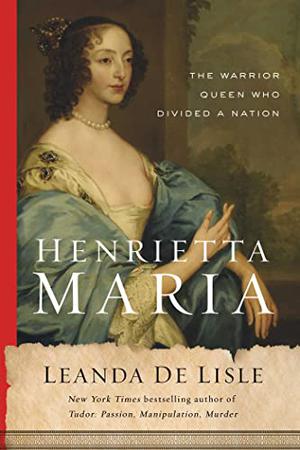
Henrietta Maria: The Warrior Queen Who Divided a Nation

  
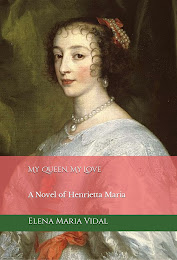
As most readers know, I am working on a fictional trilogy about Henrietta Maria, Queen of Great Britain and Ireland, entitled The Henrietta of France Trilogy. The first installment, My Queen, My Love, is already available. The second volume will deal with the English Civil Wars. I believe that historical fiction demands as much research as non-fiction. Since I have had only a passing familiarity with that epoch, I am engaged in in-depth research even as the manuscript of Part II takes shape. I was delighted to hear that Leanda de Lisle was writing a biography of Henrietta Maria, since her biography of Charles I and her study of the succession of the Stuarts called After Elizabeth were immensely enlightening. Leanda has kindly answered any questions I had while researching my trilogy and gave advice about what to see before my trip to London. 
 
I was happy when the American publisher of the new biography of Henrietta Maria sent me a review copy, which I have gobbled up while scribbling in the margins and taking copious notes. Henrietta Maria: The Warrior Queen Who Divided a Nation builds on the research of many other biographers while adding details, particularly about the Queen's private life and spiritual life, not found in most other books. Henrietta Maria: The Warrior Queen joins Leanda's brilliant companion biography Charles I: The White King in presenting a balanced, non-judgmental view of  a husband and a wife caught in an unprecedented situation in which they fought their best to survive. What I enjoyed most about Leanda's Henrietta Maria is that the myth of the Queen being the "popish brat," whose irrational demands set three kingdoms on fire, is completely exploded. Henrietta Maria's resourcefulness, her courage, her unflinching faith and dedication to her husband and his country are shown repeatedly. I also liked that Henrietta Maria's mother and sisters, who are so often dismissed as simpletons, are depicted as being great queens and princesses as well.
 
The new biography is loaded with insights. To quote from the Preface :
The belief that Protestantism is responsible for the work ethic that built empires and the emergence of democracy are amongst our most treasured national myths. The converse of this is that Henrietta Maria, the popish Catholic, must be responsible for Charles' authoritarianism. We have bought into the deep state conspiracy theories of the seventeenth century. We have also forgotten the complexity and contradictions of the past. Many of those who fought hardest for 'liberty' against Charles denied it to the slaves they shipped from Africa to the Americas, and to the Catholic Irish they cleansed from their lands. There was no monopoly on virtue or sin.
Henrietta's mother Marie de' Medici, is revealed to be the great regent she really was. So often Queen Marie is dismissed as being "stupid" in histories of the time. Henri IV would never have designated Marie to be regent in case of his death if he had thought her hopelessly ignorant and helpless. Queen Marie had great devotion to the Virgin Mary, seeing her role as being like that of the Mother of God, the conduit of power between the king and his people. As regent for her son Louis XIII she was determined to keep France out of wars, especially wars with other Catholic countries. Her older daughters, Elisabeth, Queen of Spain and Christine, Duchess of Savoy, had been brought up with Marian devotion and saw their roles in their adopted countries as being active rather than passive. Henrietta Maria tackled the insurmountable task of converting the British Isles back to Catholicism in the same light.

Warrior Queen also dissolves the rumors of Henrietta Maria's adultery which several other books about the Stuarts have insisted upon. Leanda demonstrates that there is nothing to the myth of the Queen's romance with Henry Jermyn. She actually had a deeper bond with her secret agent Wat Montagu, who later became a Catholic and a Benedictine Abbot. Wat plays an immense role in Warrior Queen as he does in my novels. But the central relationship of Henrietta Maria's life was with her husband, Charles I. While Charles I never converted to Catholicism, his relationship with his devout wife was deeply spiritual, which enhanced the intense physical passion between them. They were happiest together and with their children. Their tragedy is that they were eventually separated by the Civil Wars as their family was scattered. Their two youngest children were captives of the enemy forces. The family was never completely reunited in this world.

 From author Leanda de Lisle at Aspects of History:

Charles was said to have been the only English monarch ever crowned in white. To his enemies, he was now the ‘White King’ of ancient prophecy, a doomed tyrant. To his supporters the white robes would instead become a symbol of his innocence. Today the popular image of Charles is just as extreme. It is of a weak and failed king. The real Charles was resilient and courageous: he would prove a tough enemy to beat in the conflict ahead: with Henrietta’s Maria help.

The Queen was not in Holland simply to save her own skin, but to act as Charles’s   chief diplomat and party leader in Europe, as well as his arms buyer.  It was a formidable task, and in the Dutch republic she faced anti-royalist prejudice. When she tried to sell royal jewels obstacles were put in her way. In one letter she warned Charles, ‘Dear Heart…can you send me a warrant under your hand, which gives me full power to deal with my jewellery, since the merchants say a woman cannot sell jewellery during the lifetime of her husband’. Once they were sold she was confident she could ‘buy gunpowder, arms and cannon here’.

Charles responded quickly and as she began using the money to buy arms, she also deployed her political skills to undermine parliament’s efforts to gain European support for their cause.  In a further letter Henrietta Maria informs the French foreign Minister, that  ‘The English rebels, under the name of Parliament’ had sent an agent to Holland, claiming that ‘the king and I’ wanted to re-establish Catholicism in England: ‘I hear they have also sent an agent to France on the same pretext of religion. Whoever he is I hope he will not be heard nor received, since he comes from rebels against God and against their king’.

There was no profound ethnic or religious hatred amongst the people of England and Wales. The numbers of Catholics were too few. The English civil war a war between Protestants over the nature the Church of England, and where the balance of power between king and parliament should lie. But Charles’s enemies had not given up their narrative of Counter Reformation threat, with Henrietta Maria supposedly paving the way for a Catholic takeover.

The real threat was only to the rebels, and from the success of her diplomacy. In a later letter to the French minster, Henrietta Maria thanked him for ‘the services you give me’.  What kind of services is indicated months later when she expresses her gratitude for his stopping of a shipment of  ‘arms prepared for the rebels’.

The queen returned to England in February 1643 with men, money and arms. After her dangerous landing in Yorkshire she spent months raising royalist moral in the north, eating in sight of the soldiers, and recruiting men. The royalists had gained superiority in Yorkshire by late June when Charles called for her to join him in his war-time capital at Oxford.

Parliament sent cavalry to intercept the queen and her men, but she escaped again, and still en-route to meet Charles, the ‘generalissima’ (as she joking called herself) captured Burton on Trent in a ‘bloody’ and ‘desperate’ battle.

After the war turned against Charles in 1644 Henrietta Maria returned to France, and despite being seriously ill, she continued to raise money and arms. The defeat of the king at Naseby in Northamptonshire in 1645, proved, however, to be a decisive propaganda, as well as military, victory for his enemies. His correspondence was captured and thirty-seven letters between Charles and the queen were carefully   chosen and edited to ‘prove’ that he was the mere vassal of a foreign, Catholic wife.

These letters were published under the title the King’s Cabinet Opened along with a commentary depicting Henrietta Maria as a trans-gender perversion of nature. It pointed to shocking examples of her mannishness, such as when ‘you see she marcheth at the head of an army and calls herself the generalissima’! ‘This’ one parliamentary journalist wrote,  ‘is the Dear Heart which hath cost him almost three Kingdoms’ and the true ‘wearer of the breeches’.

The maxim ‘cherchez la femme’ (seek out the woman), already held true in England when looking for where to cast the blame for failures in male leadership.  Margaret of Anjou had ridden with armies in defense of her mentally ill husband, Henry VI, during the Wars of the Roses. After he died he was judged a saint, while she was blamed for the wars and condemned by Shakespeare as a ‘she wolf of France’.

After Charles’s kingdoms were lost, and he was executed, he too was judged a saint. The title of Charles the Martyr is largely forgotten. Yet Henrietta Maria remains the caricature of parliamentary propaganda: the victim of our continued and unacknowledged sexual prejudices. Her real fault, as, Charles acknowledged, was merely ‘that she is my wife’. (Read more.)


I encourage everyone with an interest in the Stuarts and English history to read this beautifully-written, meticulously researched biography of a greatly misunderstood Queen.

Charles I
 
Young Henrietta Maria                                                                                                          

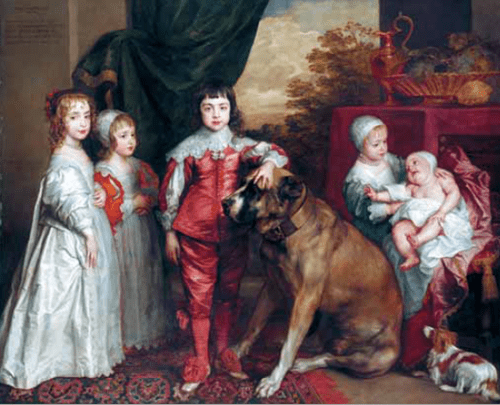
Mary the Princess Royal, James Duke of York, Charles Prince of Wales, Princess Elizabeth and Princess Anne


 Henry Duke of Gloucester, Princess Elizabeth, and James Duke of York in captivity
 

Anne of Austria presents her sons Philippe and Louis XIV to their aunt Henrietta Maria after her escape from England

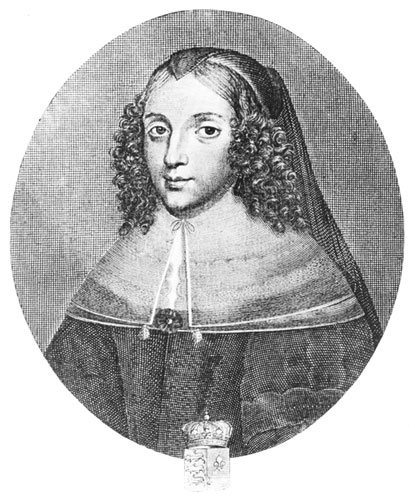
Henrietta Maria as a widow


 NOTE: I received Henrietta Maria: The Warrior Queen Who Divided a Nation by Leanda de Lisle from the publisher in exchange for my honest opinion.


Share

Hate Crimes in America

 From The Daily Mail:

Two black teenage girls responsible for attacking a woman on a Queens MTA bus were arrested and charged with hate crimes, police say. The unidentified suspects, aged 15 and 16, were arrested on Tuesday morning after bonking a 57-year-old on the head on July 9 after she said she's a big fan of former President Donald Trump. A third individual was involved in the incident, but it's unclear whether another arrest will be made soon.

The three teenagers were on the southbound Q52 MTA bus in Woodhaven, a neighborhood in the New York City borough of Queens, earlier this month at around 7.00pm when they approached the female passenger and slammed her on the head while making 'anti-white statements.' Before the arrests, the NYPD shared a video of the three suspects walking down a street in broad daylight. Two of the suspects had green-colored hair while another had light pink. The girls were wearing shorts with crop tops and sneakers while holding various items. (Read more.)

Share

Prairie Madness

 From Atlas Obscura:

In the 1800s, as American settlers pushed westward into the Great Plains, stories began to emerge of formerly stable people becoming depressed, anxious, irritable, and even violent with “prairie madness.” And there is some evidence in historical accounts or surveys, which suggested a rise in cases of mental illness in the mid-1800’s to early 1900’s, particularly in the Great Plains. “An alarming amount of insanity occurs in the new prairie States [sic] among farmers and their wives,” wrote journalist Eugene Smalley in The Atlantic in 1893.

Both fictional and historical accounts of this time and place often blame “prairie madness” on the isolation and bleak conditions the settlers encountered. But many also mention something unexpected: the sounds of the prairie. Smalley wrote that during winter “the silence of death rests on the vast landscape.” And a character in Manitoba settler Nellie McClung’s story “The Neutral Fuse” writes a poem about the droning soundtrack of the plains, “I hate the wind with its evil spite, and it hates me with a hate as deep, and hisses and jeers when I try to sleep.” (Read more.)


Share

Thursday, August 4, 2022

How Elizabeth of York Paved the Way


 From Alison Weir at History Extra:

After Richard III fell at the battle of Bosworth in 1485, no one supported Elizabeth’s claim to the throne because she was a woman – her value was purely matrimonial. Parliament had already declared that Henry VII was king. (It was not until the 1530s that their son, Henry VIII, acknowledged that his title had come primarily from his mother.)

But back in 1485, Elizabeth, however, had had other ideas. If we believe a contemporary rhyming chronicle, The Song of Lady Bessy, she declared: “Queen of England I must be.”

On Henry VII’s accession, the courtesy and honour accorded to her must have given her cause to hope that she would soon be queen in her own right and rule jointly with Henry, as Ferdinand and Isabella did in Spain. She may have been disconcerted to learn that, despite Henry having pledged, in 1483, to marry Elizabeth to give legitimacy to his title, he had assumed the style of king in his own name on the battlefield at Bosworth, without any mention of her at all...

Yet Elizabeth was the undisputed heiress of Edward IV. A political poem of 1487 acknowledged that Edward IV's title had “fallen to our sovereign lady, Queen Elizabeth, his eldest daughter; to her is come all the whole monarchy. The crown therefore and sceptre imperial she must have without division.”

Undoubtedly, she had a better claim to the throne than Henry did, yet there is no record of her resenting Henry’s relegation of her to the role of queen consort. Although the Pope himself called her the undoubted heir of Edward IV, and there were those who thought that Henry and Elizabeth should reign as joint sovereigns, no one seriously considered that a woman could rule alone as queen regnant. On the contrary, her throne was the inheritance she brought to her husband. Traditionally, women could transmit the crown – the royal houses of Plantagenet, York and Tudor derived their claim through the female line – but not wield sovereign power.

There was no Salic law in England that barred women from the throne, as there was in France, so there was nothing to prevent a woman from ruling – but memories of female misrule were long. People remembered how, in the 12th century, the haughty, overbearing Empress Matilda’s attempt to pursue her lawful claim to the throne had resulted in a civil war so bloody that it had been said that “God and His saints slept”. That experience had left the English with an enduring prejudice against female rulers.

The notion of a woman wielding dominion over men was seen as unnatural and against the laws of God and Nature. As the Duke of Buckingham bluntly put it: “It was not women’s place to govern the kingdom, but men’s.” Women were regarded as weak, irrational creatures, unfit to lead armies in battle and interfere in affairs of state. In law, they were regarded as infants. Their primary purpose was to be wives and mothers, subordinate to their menfolk, in whose interests their marriages were arranged. Thus no one spoke out in favour of Elizabeth of York ascending the throne in her own right as England’s lawful queen. It would be left to the granddaughter who was named for her, Elizabeth I, to prove that a woman could rule successfully.

Even so, there were those who felt strongly that Henry VII ruled only in right of his wife, and he remained unpopular “for the wrong he did his Queen, that he did not rule in her right”. (Read more.)

Share

China's Purchase of American Land

 From Sara Carter:

Sara Joined ‘Hannity’ to discuss thee concerning information that should terrify all Americans, which is that China has purchased almost 200,000 acres of America farmland; 300 of which is near an Air Force Base which boards “some of the nation’s most sensitive drone technology.”

Sara Joined ‘Hannity’ to discuss thee concerning information that should terrify all Americans, which is that China has purchased almost 200,000 acres of America farmland; 300 of which is near an Air Force Base which boards “some of the nation’s most sensitive drone technology.”

“That should concern every American because I doubt we’re allowed to buy land in China, are we?” Hannity asked Carter. “No, we cannot Sean” which is why the federal government is investigating “massive land grabs by the Chinese.”

Carter explains that as of March, businesses with ties to the Chinese Communist government, had purchased $6.1 billion of land over the 12 months beforehand. Carter gives one specific example of land along the southern border which was purchased by a former Chinese military official which surrounds an Air Base.

But the biggest purchase being discussed was bought in Montana near a nuclear arsenal. (Read more.)


From Just the News:

The resurgence of concern over alleged Chinese espionage through Huawei comes as Congress, the FBI, and the Pentagon warn that the threat posed by China to the U.S. and its allies is growing across the board and could reach a fever pitch in the foreseeable future.

Federal officials quietly killed the construction of a Chinese garden on one of the highest points in Washington, D.C. just two miles from the U.S. Capitol after counterintelligence agents became concerned the $100 million project was a way for China to increase its spying capabilities inside the U.S., according to a new CNN report.

The decision to cancel the garden was part of a sweeping, yearslong U.S. counterintelligence effort to investigate Chinese espionage on American soil — an effort that's found a pattern of attempts to install Chinese-made Huawei equipment atop cell towers near U.S. military bases in the rural Midwest.

According to CNN, the FBI determined this equipment was capable of capturing and disrupting Defense Department communications — including those used by U.S. Strategic Command, which oversees the country's nuclear weapons. (Read more.)

Share

Christendom and Its Defenders

 From Charles Coulombe:

Since it was in France, “the Oldest Daughter of the Church,” that the Revolution began in 1789, it should be no surprise that it was in France that the Counter-Revolution began. In the Vendee, Brittany, Normandy, Auvergne, and throughout the country, heroes and heroines arose to fight the evils unleashed in 1789. But not all the combat was in the field: the Counter-Revolutionaries also fought on the intellectual plain. Such names as de Maistre (who, although French-speaking was actually a Savoyard, as we saw last time), de Bonald, Chateaubriand, Rivarol, Barruel, Ballanche, d’Eckstein, and many others emerged. When Napoleon was banished to St. Helena, the murdered Louis XVI’s younger brother assumed the throne as Louis XVIII. Thus was ushered in the period called The Restoration, in which King Louis played a role analogous to that of Charles II in England’s period of the same name. While attempting to reign in appearance as his fathers had, he was skillful at dealing with the various new powers-that-were.

But the strongest supporters of the Restoration were keen on excising every element of the Revolution from national life; this lead to the rise of two somewhat-linked but distinct organisations that has begun under Bonaparte. These were the more strictly religious Congregation specialising in reviving Church life after the wreck of the Revolution, and the Chevaliers de la foi— the “Knights of the Faith”— acting as a sort of Catholic counter-Masonry in political life. Also aligned with them were the party supporting Louis’ younger brother and heir, the future Charles X; these were called the Ultras.

When Louis died in 1824, his brother came to the throne. Charles X was destined to play James II to Louis’ Charles II. Like the last reigning Stuart King, Charles had had a profligate youth followed by a religious conversion; when he became King he was quite devout, and determined to beat back every element of Jacobinism in the country’s religious, cultural, and political life. The year following his accession, he had a traditional Coronation ceremony at Rheims, where he touched and cured several people suffering from scrofula— the “King’s Evil”— as his medieval ancestors had done.

His policies aroused a great deal of opposition among the Liberal-minded wealthy; the result was his overthrow in the July Revolution of 1830. He abdicated (as did his eldest son, who thus reigned as “Louis XIX” for about twenty minutes), in favour of his grandson, Henri V. This was done on the assurance of their cousin Louis Philippe, the Duke of Orleans, that he would serve as regent for Henri. But even as his father had betrayed Louis XVI— going so far as to vote for his King and cousin’s death in 1793— so it was with Louis Philippe. When Charles X and his family left the country, Louis Philippe convinced the revolutionaries to make him “King of the French”— and so usurped the throne in eerie reminiscence of William of Orange. The supporters of the betrayed Henri would henceforth be called “Legitimists,” as opposed to those of Louis Philippe and his supporters who would be called “Orleanists.”

Louis Philippe encouraged the wealthy to enrich themselves; but the result was the rise of pre-Marxist Socialism. In 1848 he too was overthrown, and was replaced by the Second Republic. But the new entity’s elected president was Napoleon’s nephew, Prince Louis Napoleon Bonaparte. In 1851, he overthrew the republic, proclaimed the Second Empire, and took the title Napoleon III. As with his uncle, the new Monarch was pulled in two directions at once: on the one hand he wanted to be a modern, liberal Monarch; but on the other, he also wanted to be a Catholic and Legitimate Sovereign. This duality arose again and again— most noticeably in his policy toward Italy and Rome. It was under his watch that many Legitimists joined the embattled army of the Papal States in the Pontifical Zouaves. His downfall would come with the 1870-71 Franco-Prussian War. (Read more.)

Share