Thursday, July 28, 2022

Don’t Be Fooled By “Nice”

 From Leila Miller at Crisis:

I fell into the trap that ensnares many souls today: believing that if a person has a pleasing personality, is affable, attentive, and “accepting” (whatever that means), then the person is good. Somewhere along the line, Catholics began making crucial judgments based on feelings rather than reason. We are lulled by a hearty laugh, a twinkling eye, a hug with a knowing smile. We get sucked in by a sense that someone loves us, even though we are being led down a garden path.

The friendly person who accepts us, the one who reaches out to “accompany” and affirm us—that person may not always have our best interests at heart. And sometimes a person who does want the best for us is harming us unknowingly despite his good intentions. We cannot know by outward appearances or our emotions whether or not the other is truly being Christ to us. The only standard we can use to measure another’s advice and guidance is whether or not that advice conforms to objective truth and goodness.

However, because we have been conditioned to use our feelings as a gauge for what is true, discernment has become difficult. The one who laughs at our jokes, is affectionate, and is interested in what we have to say appeals to our senses; we are drawn to him, we like how we feel when we are with him, we want him to like us. We even find it harder to resist or say no to such a person, even when we know we should. (Read more.)
Share

Wednesday, July 27, 2022

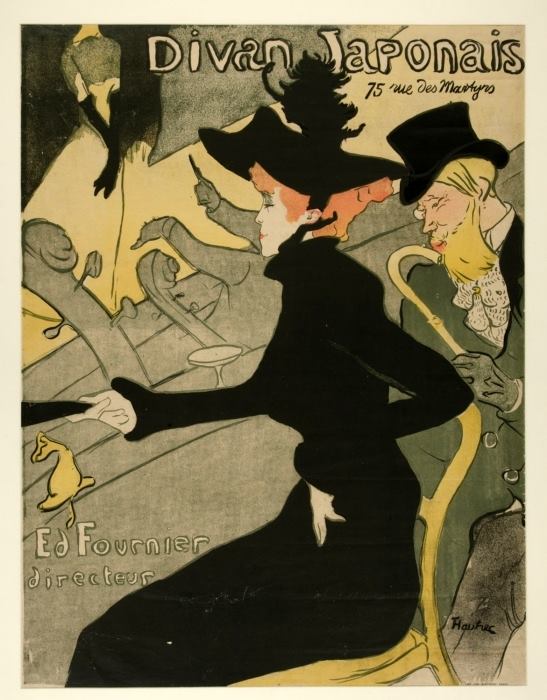
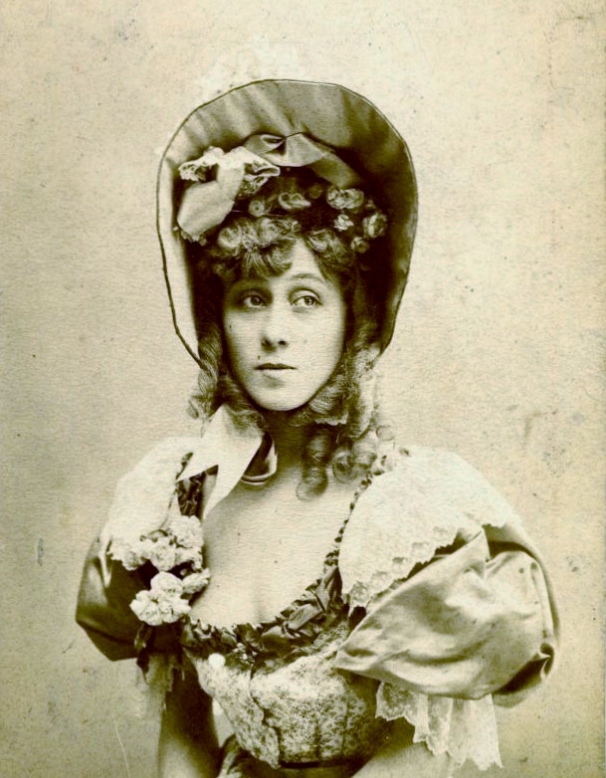
The Real Jane Avril


The star of the Moulin Rouge, immortalized by Toulouse-Lautrec. From Messy Nessy Chic:

Born Jeanne-Louise Beaudon, Avril’s mother was a prostitute and she believed her father to be an Italian marquis who had abandoned them when she was only 2 years old. She was spirited off to a countryside convent by her grandparents in order to escape her mother’s dire influence. As fate would have it, her mother returned her to Paris in 1877 to a life of child prostitution. Jeanne attempted numerous escapes from her mother’s control and eventually at the age of 14, was given refuge at the forbidding Salpêtrière Asylum, a mental institution for women in Paris.

 Within the sanctuary of the Salpêtrière Asylum, Jeanne was diagnosed with a neurotic condition, regarded at the time as a ‘female hysteria’. This was a physical affliction which produced sudden and erratic twitching and thrashing movements of her limbs. There was little understanding of such conditions at the time, far less any known ‘cures’. Fatefully, the institution, perhaps to satisfy the voyeuristic afflictions of its patrons’ fascination with abnormal human conditions, regularly held open day events for governors, staff and patients, known as Le Bal des Folles (‘The Ball of the Mad’). Jeanne soon discovered that dancing was not only therapeutic and aided her condition, but that she was able to move in ways like no other dancer could. Belgian born Parisian architect, author and critic Frantz Jourdain later described her as ‘this exquisite creature, nervous and neurotic, a captivating flower of artistic corruption and sickly grace”. (Read more.)


More HERE. And Zsa Zsa Gabor Gabor played Jane Avril in the 1952 film, HERE.

Share

Climate Emergency?

"This is all an excuse to control your life." From Dennis Prager:

Fly airplanes on wind power? On electric batteries? And you know how electric batteries are made? See our video on electric batteries, on electric cars. See how lithium is used, what it does, where it’s mined. And then tell me that the electric car is really, really environmentally wonderful, a gift. It’s a gift to China.

A new emergency. We just had an emergency of lockdown. That’s what they live for, these people on the left. To lock you down, to control you. The fact that you are free, that you will ride in a car on your own and live where you wish to live, in a house as big as you want. This bothers people on the left. The smaller your house, the happier they are. The less you drive, the happier they are. Get into a train, you sheep! The car is the symbol of independence loathed by the left, which is always, always totalitarian. A state of climate emergency. It’s up there with men menstruate.

So, what will they do? All these emergencies? They all do the same thing. They control more of life in America.

“White House officials are scrambling to advance the president’s environmental agenda after talks with Senator Joe Manchin III stalled. President Biden is considering declaring a national climate emergency as soon as this week, according to three people familiar with the matter. The potential move comes days after Senator Joe Manchin told Democratic leaders he does not support his party’s efforts to advance a sprawling economic package that includes billions of dollars to address global warming.” (Read more.)

Share

A Lesson in Gardening

 From Southern Living:

Dominique Charles knows her way around the garden. The founder of Plots & Pans is known as a garden expert, garden consultant, and even chief executive gardener, but she can't have her hands in the dirt without thinking of her grandmother, who she called by one title: Maw Maw. 

"I think the biggest lesson she taught me about gardening would be to grow what you love or will actually use," says Charles. For her grandmother, that meant lots of okra and tomatoes. "She canned jars and jars of them at the end of the season," she says. "My mom used those jars of okra and tomatoes as an essential element in her gumbo." Charles stands firm in her belief that her mama's gumbo rivaled just about any other version out there, and she thinks it was the okra and tomatoes that were to thank. (Read more.)

Share

Tuesday, July 26, 2022

A Moment for Duck-Egg Blue


 From House and Garden:

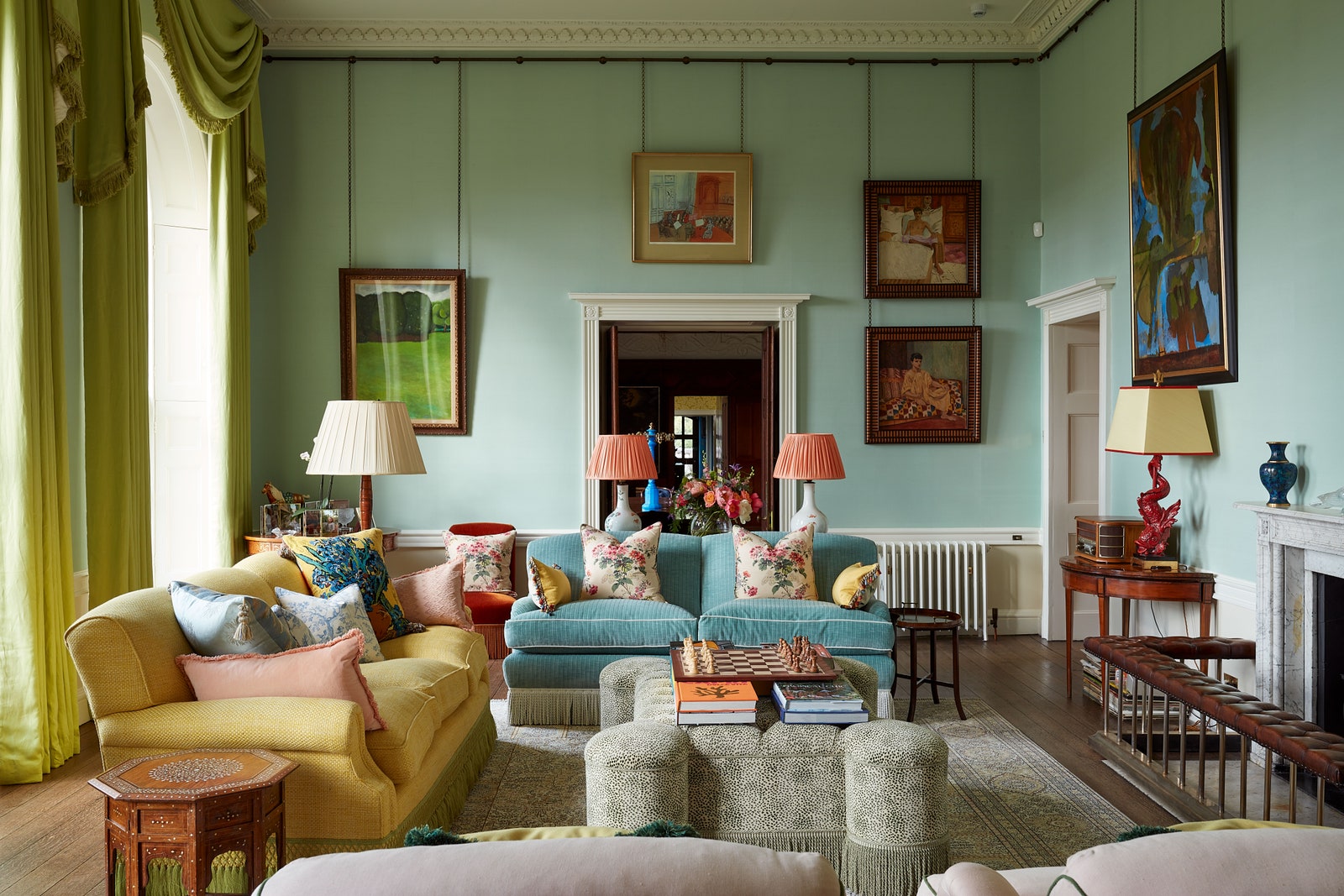
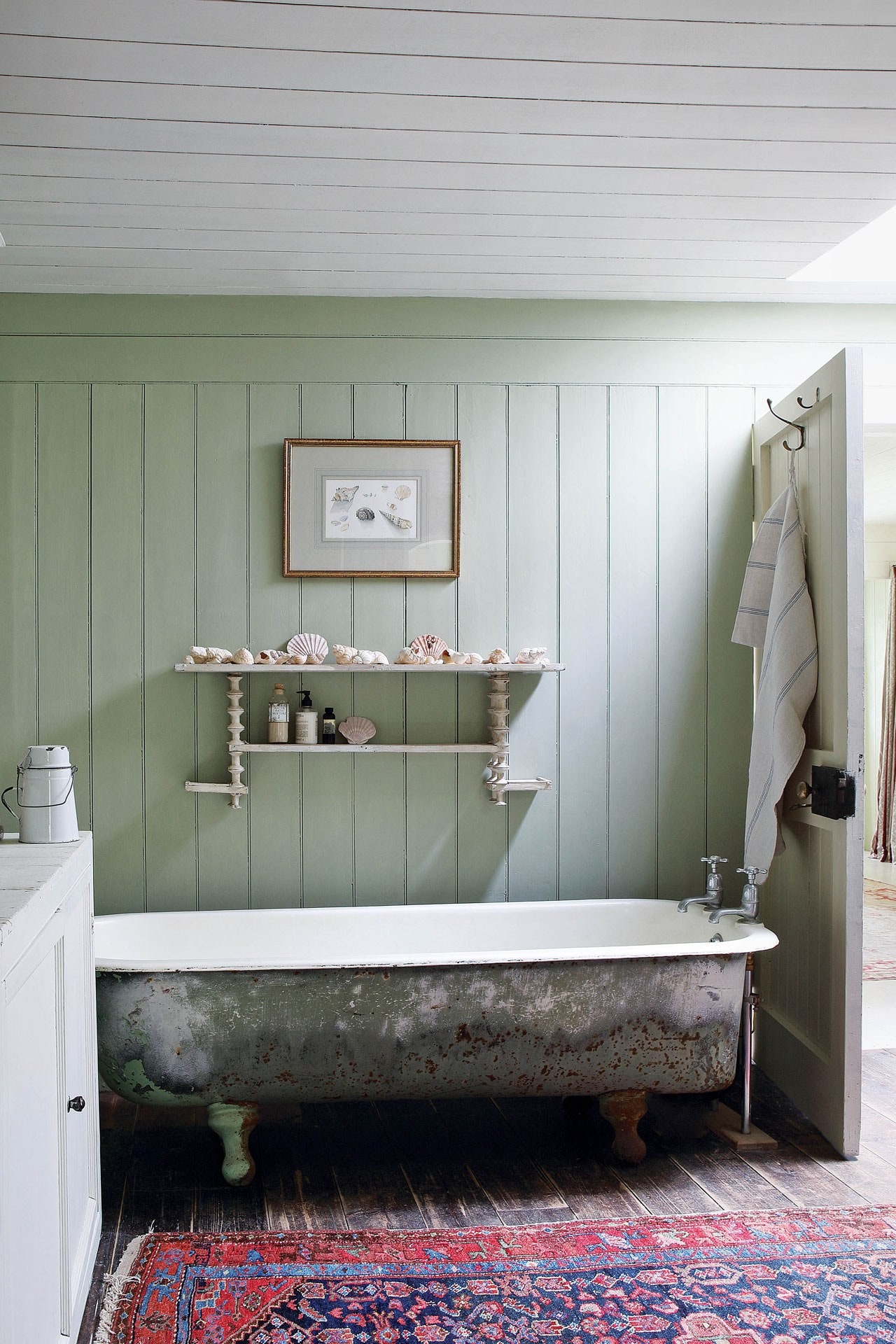
In the restored fishing lodge of Jeanetta Rowan-Hamilton, the bathroom is painted a soft duck egg blue. 'Half La Seine' from Zoffany is a similar shade. It's a colour that suits bathrooms particularly well, as it can be an incredibly soothing colour....Elsewhere in the house, the scheme of a formal sitting room features a combination of soft, sugary tones with walls lined in a de Gournay silk in a delicate duck egg blue, and sofas upholstered in a Pierre Frey yellow linen and a pale blue Lelièvre velvet. The coral on the lampshades is a colour that pairs particularly well with duck egg blue. (Read more.)

Share

The Cathedral as the Allegory of Strength and Beauty

 From The Chivalry Guild Letters:

Of all the wonders achieved by the builders of the Gothic cathedrals, my favorite lesson they teach involves the relationship of strength and beauty, specifically the ennobling of strength by bringing it into the service of beauty. “Architecture is,” as Archbishop Sheen wrote, “a reflection of a philosophy of life.” This connection has unmistakable implications for anyone interested in the code of chivalry.

It’s easy enough to take for granted what the medieval builders achieved and to assume that the Romans and Egyptians and other ancient societies did something comparable. But that is not the case. The great cathedrals followed from an outburst of creative energy unlike anything the world had ever seen. Before them all upward aspirations in architecture were, in the words of Kenneth Clark, “limited by problems of stability and weight.” A building was a load on the ground. You could dress it up with all sorts of fanciness, but it was still a load. Medieval builders wrought something like a miracle in raising structures higher than ever thought possible, making “stone seem weightless."

Engineering innovations enabled this elevation—particularly the pointed arch, ribbed vaulting, and flying buttress. Once upon a time, I assumed these features were nothing more than frills or adornments, put there because people thought they looked cool. That was all I understood aesthetics to be—just about looking cool.

But arches, vaults, and buttresses are anything but frills; they are pure strength. And their make room for beauty, as the walls of the Gothic cathedral draw the eyes ever upward in awe. Not only that, these innovations free the high walls from having to bear weight, which meant that they could be decorated with stained glass windows that tell the stories of the Faith and flood the church with otherworldly glowing light. The overall effect, as Clark says, is to make the visitor feel vibrations in the air.

Beauty depends on strength to create the conditions in which it can flourish—no engineering fortifications means no high walls and no stained glass. And in the service of beauty, the arches, ribbing, and buttresses are ennobled and become strangely beautiful themselves, particularly as part of a larger unity. Beauty and strength fuse in this created order of the cathedral. (Read more.)

Share

The Hobble Skirt

 From Messy Nessy Chic:

Fashion has always had the uncanny ability to mimic the drama of life, there’s no doubt social norms, political shifts and cultural changes are reflected in what we wear. Die-hard fashionistas, sociologists and anthropologists alike tell us clothes are our social armour, they mirror how we choose to interact with the world. Having said that, just be grateful you didn’t have to interact with the world while sporting a suffocating corset, a massive crinoline skirts, the absurdly voluminous gigot sleeves that prevented Victorian women from lifting their arms or the ridiculously restrictive stiff collar of the Elizabethan era. Arguably very few of these outrageous trends, however, can hold a candle to the curiously controversial and wacky, and to say the least, illogical hobble skirt. (Read more.)

Share

Monday, July 25, 2022

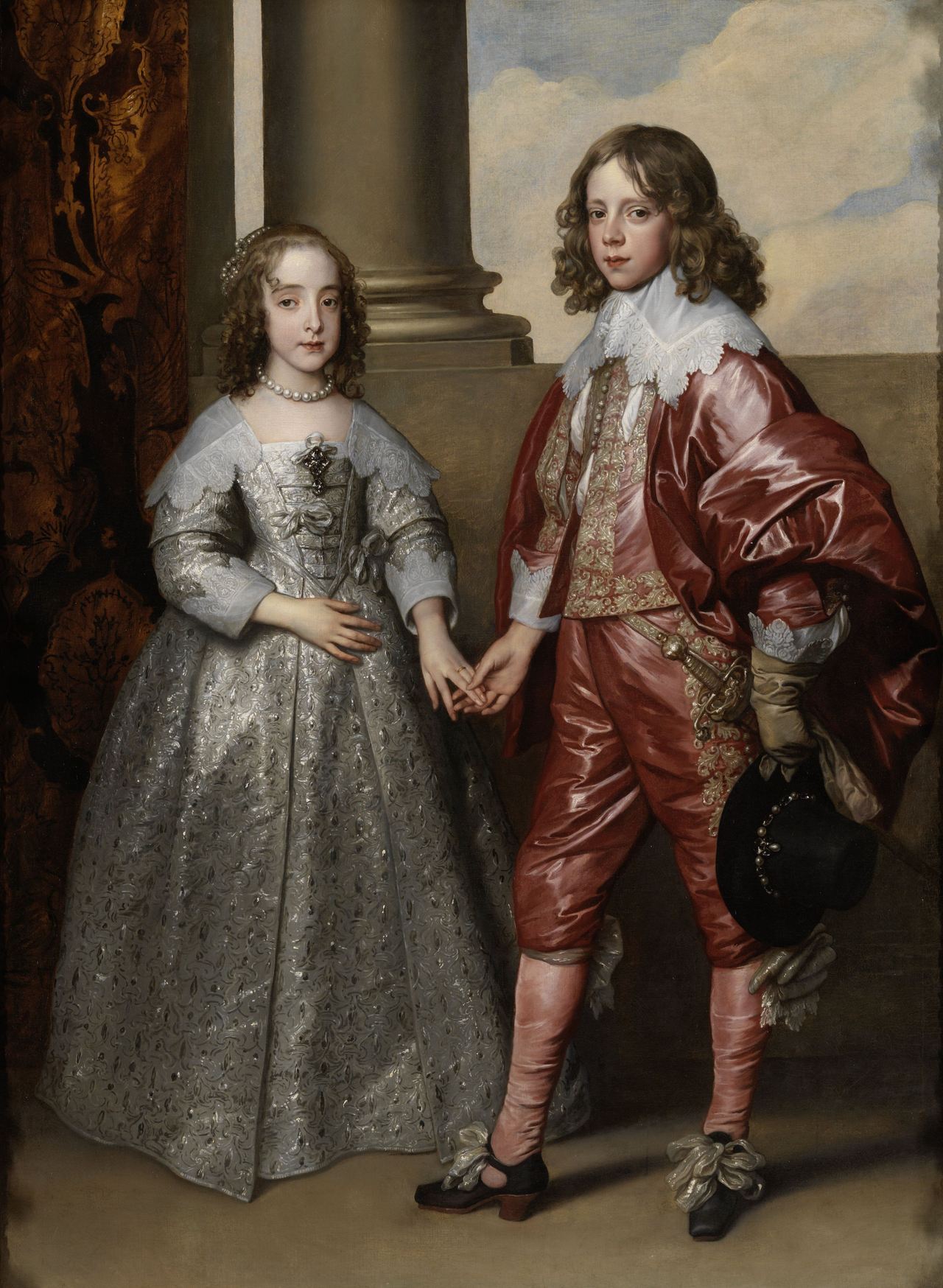
The Marriage of William II, Prince of Orange to Mary, Princess Royal

Mary of Great Britain and Ireland with William of Orange

 Mary, Princess Royal and William of Orange were the parents of the more notorious William of Orange, who also married a Mary Stuart. From Everything I Ever Loved:

On Sunday, May 2, 1641…William and Mary were married at Whitehall. Standing side by side, the two children made a handsome couple: William, with pink-flushed cheeks and long, curly brown hair, was every inch the elegant cavalier with a gold sword at his side; Mary, half a head shorter, was all in white, with ringlets and pearls in her hair; the huge diamond brooch William had given her was clasped on her bodice. There had been no time to prepare the usual grand festivities. Instead, around 2 p.m., the royal family sat down to dinner in the king’s withdrawing chamber, “with the greatest privacy that might be.” That evening, the Dutch ambassadors joined them to “see the married couple bedded together.” For the newlywed children, it was a mere formality, designed to ensure that the marriage could not be annulled; in the half hour they spent in bed together, nothing more was exchanged than a few kisses. Then William spent “the rest of the night in the bedchamber of the king of Great Britain, who looks on him most fondly.” ~A Royal Passion: The Turbulent Marriage of King Charles I of England and Henrietta Maria of France, by Katie Whitaker (Read more.)


From Melanie Clegg:

Back to the royal wedding of 1641, which seems to have had plenty of the drama that all weddings manage to engender. In this case, the bride’s mother, Henrietta Maria was a bit narked that her eldest daughter was being married off to a relatively obscure Dutch princeling, while her father would have preferred her to be married to her cousin, the son of the King of Spain. To add further complications, their nephew, the Prince Palatine, who sounds like a most unpleasant chap and who had none of the famous charm of his mother, Elizabeth of Bohemia or other siblings (which included the heavenly but rather grumpy Prince Rupert), rolled up in the country in a right old sulk because he thought the Princess Mary had been promised to him.

Oh dear. Vivacious Mary herself was nine at the time and appears to have seen nothing wrong with her fifteen year old suitor, who was pretty good looking for a prince if a bit quiet. She was escorted down the aisle of the Chapel Royal by her brothers Charles and James and followed by her watchful governess and an ostentatious troupe of sixteen aristocratic bridesmaids. Her father waited by the altar to give her away, while her mother, sister Princess Elizabeth and grandmother, Marie de Medici watched from behind a curtain at the side. (Read more.)

Mary, Princess Royal, and her husband William of Orange


Share

Habits for a Happy Marriage

 From Dr. Fitzgibbons at CERC:

Excessive anger is one of the major sources of marital and family stress. Couples benefit from knowing that they have basically three options for dealing with anger: denial, expression and forgiveness. Forgiveness is the most effective for diminishing marital anger.

An immediate forgiveness exercise can be used whenever one feels overly angry. Here, a person thinks repeatedly, "Understand and forgive, understand and forgive." This exercise usually diminishes feelings of anger, and only then should one begin to discuss the hurt or disappointment that caused the anger initially.

Likewise, past forgiveness exercises are important to resolve anger from previous hurts in the marriage or in the family background. Here, the spouse might imagine oneself as a child thinking, "I want to understand and forgive the parent who hurt me the most." This forgiveness is essential for marital happiness because most couples bring into their adult life unresolved anger that, under stress, can be misdirected at each other.

Every time a spouse forgives, a certain amount of anger is removed from his or her heart. The virtue of patience is also essential in this process, as it is required to gain mastery over the passion of anger.

Selfishness harms marriages severely because it turns a spouse inward and interferes with cheerful self-giving. The selfish spouse thinks "me" not "we" and regularly overreacts in anger. Selfishness is the major cause of separation and divorce, and many popes have written that selfishness is the major enemy of marital love.

Unfortunately, we live in a culture in which selfishness is epidemic. The use of contraception further intensifies the negative attributes of self-centeredness and mistrust and should be avoided for the good of the marriage.

Instead, a commitment to grow daily in generosity, humility, chastity and temperance is helpful in diminishing this personality conflict. The sacrament of reconciliation is also helpful in resolving selfishness and excessive anger. (Read more.)
Share