Monday, May 9, 2022

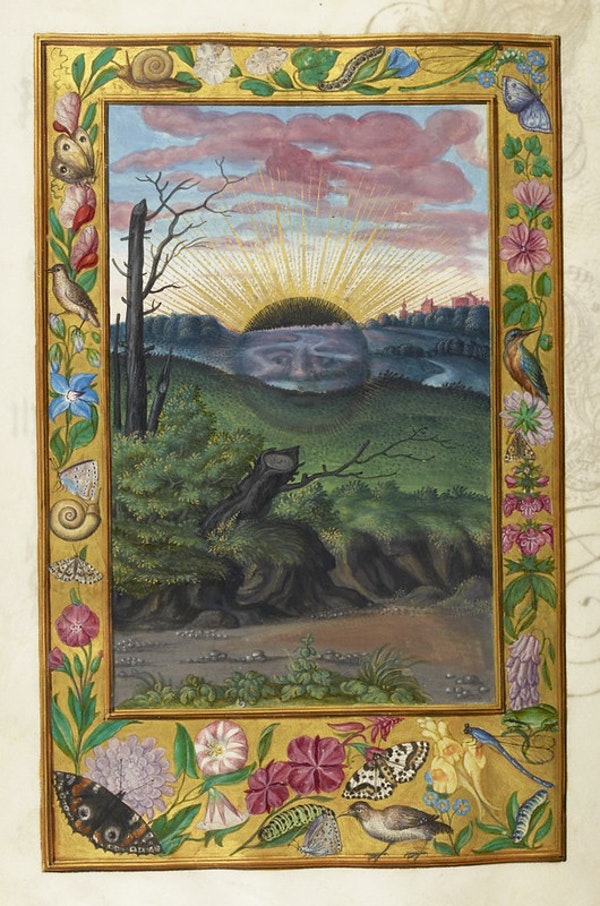
A Gallery of Fantastical Alchemical Drawings


 Alchemy was the science of its day, with lots of overlap with the occult. From Open Culture:

The images are strange, surreal, cryptic, and seem to reference no known reality. They are the inspiration for centuries of occult art and esoteric literature. But each one also had practical intent — to illustrate mysterious, often secretive processes for discovering the foundations of the universe, and profiting from them. If these techniques look nothing like our modern methods for doing the same, that’s for good reason, but it doesn’t mean that alchemy has nothing to do with science. It is, rather, science’s weird distant ancestor (Read more.)

Share

The Infrequency of Infallibility

 From Crisis:

So, what does qualify as an infallible utterance? If each time the pope thinks or speaks it does not automatically follow that here is God himself thinking or speaking, then when does it follow? The answer, of course, is only when what comes out of his mouth is an ex cathedra pronouncement, meaning “from the chair,” and thus invested with the full authority of Almighty God himself.

It has got to be a most solemn and extraordinary utterance indeed; which is to say, on a matter of faith and morals, not on the outcome of an election or the state of the economy. The pope’s views, say, on climate control or immigration policy, may be interesting and worth hearing, but they are hardly infallible, which means it is not obligatory for Catholics to believe them. Unlike the Law and the Prophets, they have not been issued from on high.

And, more to the point, they ought not to be uttered unilaterally, as though the pope were himself the Church and not the chief witness to her faith. The definition laid down at the Council did not authorize the pope to teach apart from or over against the Church but precisely alongside her. Not to believe that had been the extreme ultamontanist position, in which the pope need not consult or take counsel with anybody.(Read more.)
Share

Ancient Greek Masterpieces Were Painted in Dazzling Colors

 Just like the medieval cathedrals. From Greek Reporter:

It is nearly impossible to imagine the sparkling white sculptures of ancient Greece painted in a variety of bright colors. Marveling at the ancient Greek masterpieces today, there is a notion ingrained in our minds that all those magnificent sculptures were originally spotless white marble and time has robbed some of them of their glorious sheen. We tend to think that iconic statues such as Hermes, the Winged Victory, and the Venus de Milo were plain marble sculptures that are just missing some parts, as well as their gleaming white skin. However, it is now certain that ancient Greek sculptors used bright colors, as well as gold and ivory, to further beautify the magnificent structures they created. In fact, most of them were dazzling in their color schemes, which was essential to the overall impact the sculptures were intended to create. (Read more.)
Share

Sunday, May 8, 2022

The Family Who Inspired ‘The Philadelphia Story’

 
From The New York Post:
Helen Hope Montgomery was perfectly suited to a life of excess. She regularly made the best-dressed lists beside Babe Paley and once sang a naughty song to the Duke of Windsor. She won a Charleston contest judged by Josephine Baker.

A legendary bon vivant, she would become the inspiration for Katharine Hepburn’s character Tracy Lord in “The Philadelphia Story” — a spoiled Main Line heiress who remarries her debonair ex-husband, played by Cary Grant.

“She was charming, flirtatious, disciplined, competitive and driven,” writes her granddaughter Janny Scott in her new book “The Beneficiary” (Riverhead Books), out now.

Montgomery grew up on Ardrossan, a storied estate dubbed “The American Downton Abbey” that her father, an investment banker, built during the Gilded Age and named after a Scottish town and castle that supposedly belonged to his ancestors. On a plot of land the size of Central Park, the family compound — which they referred to simply as “The Place” — included farmhouses, stables, barns, kennels, swimming pools, a skating rink, a 50-room mansion and dozens of other homes that at one point housed four generations of the Scott family. (Read more.)


From Mainline Today:

At 368 pages and with over 450 photographs, Ardrossan has generated some buzz. The book’s distributor chose it as one of 18 books to bring to last year’s BookExpo in New York City. “That shocked me to pieces—but thrilled me, too,” says Wren, who’s done local signings at the Acorn Club, Radnor Hunt, the Radnor Historical Society, the Union League and the Athenaeum of Philadelphia.

Ardrossan‘s New York City-based publisher, Bauer and Dean, bills the Montgomerys as real-life American counterparts to the Granthams of Downton Abbey. Bauer and Dean also notes that Philip Barry’s 1939 play, The Philadelphia Story, and the subsequent Hollywood film are based on the family. The latter, however, is “a generic version of the play,” Wren says. “With respect to all who love The Philadelphia Story, the family is a bit over it.” (Read more.) 


More on Helen Hope Montgomery Scott, HERE.
Share

Boarding-school Reckoning

 From Crux Now:

Red Cloud, affiliated with the Catholic Jesuit order, was for generations a boarding school for Lakota children. It’s now a day school incorporating Lakota leadership, language and traditions. Black Elk is guiding a reckoning process that includes archival research and hearing the stories of former students.

Canada underwent a much-publicized Truth and Reconciliation process in recent years. The issue gained unprecedented attention last year after a researcher using ground-penetrating radar reported finding about 200 unmarked probable burial sites at a former school in British Columbia.

That discovery, followed by others across Canada, prompted Haaland to commission her department’s report.

“This history in the United States has not been addressed in the same way it has been addressed in Canada,” Black Elk said. The Interior report “will be an important first step about the work that needs to happen in this country.”

Church leaders are getting ready. The report “will likely bring to light some very troubling information,” said a letter circulated last fall to members of the U.S. Conference of Catholic Bishops from two colleagues who chaired committees related to the issue. The letter urged bishops to build relationships with local Indigenous communities and engage “in a real and honest dialogue about reactions to the report and what steps are needed to go forward together.”

Conditions varied at boarding schools in the United States, with some described as unsafe, unsanitary and scenes of physical or sexual abuse. Other former students recall their school years as positive times of learning, friendship and extracurricular activities.

Indigenous groups note that even the better schools were part of a project to assimilate children into a predominately white, Christian society and break down their tribal identities, customs and languages — what many Indigenous groups call a cultural genocide.

“The very process of boarding schools is violent and damaging,” said Bryan Rindfleisch, an expert in Native American history at Marquette University who is helping Catholics in Oklahoma research their school legacy.

There were at least 367 boarding schools across the United States in the 19th and 20th centuries, according to the National Native American Boarding School Healing Coalition, a Minneapolis-based advocacy group. Most were government-run; many others were run by Catholic and Protestant churches. (Read more.)
Share

Tolstoy’s Conflicts and Contradictions

 From Los Angeles Review of Books:

Zorin’s book achieves the ultimate expectation set by the biography genre — he creates a consistent representation of Tolstoy’s integral personality. To begin with, he does not revisit the familiar dichotomy of Tolstoy the artist versus Tolstoy the thinker. According to this narrative, the writer turned to excessive moralizing after completing War and Peace and Anna Karenina, gradually suffocating his artistic genius. In the colorful words of Tatyana Tolstaya, the writer’s distant descendent and a popular author in her own right, once he turned to preaching the “quill fell out of his hand.” Tolstoy himself was very much aware of this inner conflict and in later life “resolved” it by condemning much of European art and literature, his own fiction included. Whereas many scholars have been all too eager to assimilate this binary paradigm, Zorin writes his biography against that trend. He presents Tolstoy as a sum total of all of his various activities — fiction, nonfiction, correspondence, oral teachings, religious writings, direct action, and even family squabbles — seamlessly integrated into the text of his life. While Tolstoy’s path seems full of unexpected shifts from one extreme to the other (from a dissolute lifestyle to near-chastity, from hunting to vegetarianism, from fiction to preaching, from luxury to asceticism), Zorin’s book shows that every juncture was just another manifestation of the inner logic of his existence. In this light, the spiritual crisis of 1878, when Tolstoy appeared to have rejected nearly all of his former values, was nothing sudden: this “conversion” became a culmination of a lifelong quest for the meaning of life and death, deep self-reflection and religious skepticism.

Preoccupation with sexuality and death are conventional topics of Tolstoy biographies, and the present one fits broadly within this narrative while introducing some nuances. Zorin shows the writer as a sexual predator who hated himself for his own carnality and was at pains to eradicate it. He introduces the theme of Tolstoy’s infatuation with men through lines from the writer’s diary and recalls that, at the very end of his life, his spurned wife Sofia, infamously accused her old husband of having a homoerotic relationship with Chertkov, his closest disciple. As for the theme of death, Zorin shifts the accent from the horror of death to Tolstoy’s awe and fascination with it. While he came in close contact with the death of his relatives and children, which drained him emotionally, Tolstoy saw his own eventual passing as a transcending moment of ultimate revelation and stated his wish to remain conscious while dying, despite possible physical discomfort. This wish was not to be granted. Indeed, the uniqueness and solemnity of the moment was undermined by a scandalous lack of decorum. On October 31, 1910, the writer ran away from home with a small group of companions, but got sick during a train ride and could not continue his barely planned journey. The party disembarked at the small station of Astapovo, where he soon passed away in the stationmaster’s house. The last hours of his earthly existence resembled a tragic farce. The news of his flight and subsequent illness immediately spread not only all over Russia but also reached the most remote corners of the world, from Japan to the Americas. Scores of journalists, photographers, admirers, and random gawkers flocked to Astapovo. Information about Tolstoy’s condition was reported in newspapers all over the world, almost in real time. A victim of his own fame, he was denied privacy when he needed it most. (Read more.)
Share

Saturday, May 7, 2022

A Thatched Cottage in Devon


From Homes and Gardens:

It's the picture-perfect English thatched cottage. Steeped with history and sympathetically renovated inside and out, the 17th-century gem is situated at the heart of an idyllic East Devon village and is one of the oldest properties in the area.

The cottage's historic connections and Grade-II listing would be sufficient in themselves to make this one of the world's best homes, but add to that its characterful French-style décor, and beautifully curated vintage and antique furnishings and this property really is something special.

For the past few years it's been home to seasoned renovators Christina Dickinson and her husband Nigel. The couple weren’t intending to buy a long-term home when they found the thatched cottage. However, as soon as saw it they loved it and recognised its potential – even though it needed a substantial amount of work, as well as a new thatched roof. (Read more.)
Share

Making Beethoven Woke

 From City-Journal:

For decades, opera directors in Europe and the United States have felt licensed to revise operas to conform to their political agendas. They do so through wildly incongruous stagings that update the action to modern times and introduce progressive totems that would have been unfathomable to an opera’s original creators. Such directorial interventions left the libretto intact, however. Now even that cordon sanitaire between the structure of a work and an interpreter’s political preferences has been breached.

Beethoven has been a particular target for textual revision. In February, the Metropolitan Museum of Art in New York City hosted a production of Fidelio, an Enlightenment paean to freedom and to marital love. In Beethoven’s version of the opera, a wife disguises herself as a male prison guard to free her husband from a Spanish fortress; at the Metropolitan Museum of Art, Fidelio became a Black Lives Matter critique of mass incarceration. A BLM activist is writing a doctoral dissertation on the Thirteenth Amendment and investigating corrupt “fascists” in the criminal-justice system. In retaliation, racist cops shoot him, and a racist warden of a supermax prison throws him into solitary confinement. The activist’s wife, unable to persuade any lawyers to take up her husband’s case pro bono, goes undercover as a female correctional officer in her husband’s prison. This change from a male to a female disguise allows for a pleasingly homoerotic revision to the plot. In the original opera, a prison guard’s daughter falls in love with the new “male” employee, echoing Lady Olivia’s fruitless infatuation for the disguised Viola in Shakespeare’s Twelfth Night. In the Met Museum’s Fidelio, produced by Heartbeat Opera, the prison guard’s daughter is a lesbian; her black father encourages his daughter to court the new black female assistant. Of all the production’s revisions, this paternal matchmaking is the most counterfactual, given black working-class attitudes toward homosexuality. (Read more.)
Share

Earliest Evidence of Mayan Divination Calendar

 From LiveScience:

Archaeologists in Guatemala have discovered the oldest evidence of the Maya calendar on record: two mural fragments that, when pieced together, reveal a notation known as "7 deer," a new study finds. The two "7 deer" fragments date to between 300 B.C. and 200 B.C., according to radiocarbon dating done by the research team. This early date indicates that this Maya divination calendar, which was also used by other pre-Columbian cultures in Mesoamerica, such as the Aztecs, has been in continuous use for at least 2,300 years, as it is still followed today by modern Maya, the researchers said. (Notably, this is not the Long Count calendar that some people used to suggest the world was going to end in 2012.)

"It's the one calendar that survives all the conquests and the civil war in Guatemala," the latter of which was waged from 1960 to 1996, study first author David Stuart, the Schele professor of Mesoamerican art and writing at the University of Texas at Austin, told Live Science. "The Maya of today in many communities have kept it as a way of connecting to their ideas of fate and how people relate to the world around them. It's not a revival. It's actually a preservation of the calendar." (Read more.)
Share