Tuesday, July 24, 2018

Mary Shelley (2017)

Mary Godwin (Elle Fanning) writing at her mother's grave

 The Sexual Revolution of the 1960's was not the first time in history that restraint was thrown to the winds. The generation which was born during and immediately after the French Revolution came of age as the era of Romanticism reached full bloom. Romanticism capitalized on the energy of the political revolutions to challenge the mores of Christian civilization. Its adherents sought to live lives based upon raw emotion, free from the hypocrisies of society, while delving into the depths of passion, of horror, of despair, with the occasional moment of ecstasy. Such was the sort of existence that young Mary Wollstonecraft Godwin, born in London on August 30, 1797, thirsted after with all her heart. In Mary Shelley (2017), Mary (Elle Fanning) is shown growing up her father's London bookshop, which the great minds of the age frequented with regularity. The household is rich with ideas and learning but poor as far as money and opportunities.

Mary, being the daughter of two renowned radical intellectuals, William Godwin and feminist Mary Wollstonecraft, loves to write and wants to see the world. It seems natural then for Mary at age sixteen to run away with the poet Percy Bysshe Shelley, her father's student. Percy, a married man, has fallen in love with the teenager, who of course is with enamored with him. Flouting convention, they create a major scandal, and Mary is soon pregnant. Mary's free-thinking father, who is all for open relationships, is horrified and refuses to speak to his daughter for years. Her vivacious stepsister Jane Clairemont alias Claire, joins the naughty pair in their exile from respectable society, which in real life transpired mostly in Italy. In the film, the trio is confined mostly to a dreary garret in London, with an occasional stay in a grand home.

The climax of the film is when Mary, Percy and Claire manage an invitation to stay at a castle in Switzerland with Lord Byron, by whom Claire is pregnant. Byron is played as an utterly narcissistic boor by Tom Sturridge, merrily leading his guests into depravity. By that point in the movie, Mary has become disillusioned with free love and loose living, finding that although she and Percy are free to love each other, he feels himself free to love other women and even encourages her to be with other men, a scenario which disgusts her. Meanwhile, her baby has died, her health is ruined, she has no home, Percy is temperamental and drinks. Instead of the utopia promised her by the new ideas, she has found only monsters, within and without.

It is in Switzerland during a story contest that Mary begins write her novel Frankenstein, based upon recent scientific experiments with electricity and corpses. A young scientist creates a humanoid creature out of corpses, a creature he is unable to control and thus abandons. The creature goes on to wreak havoc and devastation. The novel shows a sophisticated grasp of the forces at work in politics, education, and the sciences, unique for an eighteen year old. Perhaps it is one reason many scholars are convinced the novel was actually written by Percy. However, if Percy had authored the book, there would have been nothing to stop him putting his name on it. As it was, it was only after the book became a best-seller that Mary's name appeared on it. Frankenstein is Mary's rejection of the Enlightenment philosophies embraced by her parents, which had created its own brand of monsters. Interestingly, Dr. Frankenstein's monster is created at the University of Ingoldstadt, home of Adam Weishaupt and the Illuminati who vowed to destroy the throne and the altar. As one article says:

At the time of Frankenstein’s birth, the University of Ingolstadt in Bavaria, Germany, a well-known medical school, would have been equipped to support Victor’s scientific experiments. Not only did Ingolstadt provide the perfect setting as the home of the medical university, but also provided the mystery needed as the home of the Order of the Illuminati.

The Illuminati was reported to be a secret society founded in Ingolstadt, specifically the university. The members, said to be students and faculty, are known to have favored freethinking and radical politics and are allegedly tied to the Jacobins. Specific knowledge about the group is unverified, but the myths that were created around their legends provide sufficient influence for believers and for tho se attracted to the mystery surrounding their existence.  Because of the Illuminati, the city of Ingolstadt itself was known for its "intellectual fervor" and for its "revolutionary reconstruction of European society." (Curran) Despite the failure of such factions, Shelley was very interested in these political stirrings, making her choice of setting unsurprising. (Read more.)
Elle Fanning is a lovely Mary, perhaps more beautiful than the girl she portrays; it seems fated that Douglas Booth's devastatingly handsome Percy will fall in love with her at first sight. The couple declare their love while Percy is behaving blasphemously in a church, which many might find disturbing. The Percy Shelley character is a reprobate as is the Lord Byron character. It will be awhile before I can enjoy either of their poems again.The film does not wade into the topic of the Illuminati or the theme of Revolution, but instead contends that Mary has been emotionally abandoned by her husband, even as Frankenstein abandoned his creature. By the end of the film Percy realizes how he has hurt Mary by his behaviors and begs her forgiveness. Both he and her father proudly proclaim her authorship of the work, which is a spectacular success in intellectual circles as well as with the general public. Critics have claimed the film is too shallow a treatment of the relationship of Percy and Mary Shelley and their works. However, I think it accurately portrays the hardship and heartbreak of Mary's youth, as she navigates the most sordid aspects of society in the name of a great romance and free love. It shows how a young girl's sufferings were channeled into the making of a literary masterpiece, a masterpiece which exposes the disorders which occur when man tries to be like God. Share

Texas to Pass Iraq and Iran in Oil

From Island News:
Don't mess with Texas. It's a global oil superpower. The shale oil boom has brought a gold rush mentality to the Lone Star State, which is home to not one but two massive oilfields. Plunging drilling costs have sparked an explosion of production out of the Permian Basin of West Texas. In fact, Texas is pumping so much oil that it will surpass OPEC members Iran and Iraq next year, HSBC predicted in a recent report. If it were a country, Texas would be the world's No. 3 oil producer, behind only Russia and Saudi Arabia, the investment bank said.

"It's remarkable. The Permian is nothing less than a blessing for the global economy," said Bob McNally, president of Rapidan Energy Group, a consulting firm. The hyper growth out of Texas is needed because oil prices have risen sharply and major players like Saudi Arabia are quickly maxing out their production. Much of the excitement in Texas centers around the Permian Basin. Some oil execs believe the amount of oil in the Permian rivals Saudi Arabia's Ghawar Field, the world's largest conventional oilfield. Rapid technological advances have dramatically brought down the cost of pumping oil everywhere, especially out of the Permian. Wells there can be profitable below $40 a barrel.

"The industry cracked the code on fracking," said McNally.

The rise of Texas, which is also home to the Eagle Ford oilfield in the state's south, shows how the shale oil revolution has reshaped the global energy landscape. The United States is pumping more oil than ever before, making it less reliant on the turbulent Middle East for imports. "It's not going to make the world peaceful, but it will make it less volatile," said McNally, a former White House official.

Scott Sheffield, the chairman of major Permian player Pioneer Natural Resources, told CNNMoney last month that the United States will become the world's biggest oil producer by the fall. The combined output of the Permian and Eagle Ford is expected to rise from just 2.5 million barrels per day in 2014 to 5.6 million barrels per day in 2019, according to HSBC. That means Texas will account for more than half of America's total oil production. By comparison, Iraq's daily production is seen at about 4.8 million barrels, while Iran is projected to pump 3 million. Oil supplies from Iran are likely to plunge due to tough sanctions from the United States.

However, the boom in Texas has been so rapid that growing pains have emerged. The Permian Basin is quickly running out of pipelines to transport oil out of Texas, forcing companies to explore costly and potentially dangerous alternatives like rail and trucks. More pipelines are getting built, but they won't be ready in time to fix the bottlenecks that have formed. Fifty-five percent of executives surveyed by the Dallas Federal Reserve expect the lack of crude oil pipeline capacity will slow activity in the Permian. HSBC called the Permian a "victim of its own success" and predicted that logistical constraints will cause production growth will slow in the future.

The pipeline shortage is already hurting local prices. The price of oil in West Texas recently traded at a $15 discount to Houston prices. Some oil companies are also tapping the brakes. The number of oil rigs in the Permian dropped by five in June even as the overall US rig count was stable, according to the International Energy Agency. "We're not in a hurry to grow it fast against a system that's completely constrained today," ConocoPhillips CEO Ryan Lance reportedly said in May.

Another headache: the rush to pump in the Permian is making it more expensive to pay for supplies and services. The cost to service oilfields has spiked by 10% to 15% for some companies in the Permian, HSBC said. At the same time, oil executives are complaining that it's difficult to find employees. The challenge is magnified by low unemployment in Texas and nationally. (Read more.)
Share

How the 20 Questions Game Came to America

From author Shannon Selin:
The idea that the 20 Questions game was invented in the United States can be traced to a book published in New York in 1882. Twenty Questions: A Short Treatise on the Game – essentially a rule book with some examples of the game for beginners – did not base its claim on strong evidence.
The origin of the game of Twenty Questions, like that of many other things, is lost in the mists of antiquity. Like everything else, it probably had a prototype among the upper Himalayas. The internal evidence, however, is strong from its purely intellectual nature, that in its present form it is a game of New England origin, and was probably invented by some intellectual Pequot, near the mouth of the beautiful river where has long been its chief dwelling point. (1)
In fact, the first references to 20 Questions appeared in Great Britain. In 1829, Scottish teacher William Fordyce Mavor recommended the “Game of Twenty” as a means of agreeably passing a long winter evening. (Read more.)
Share

Monday, July 23, 2018

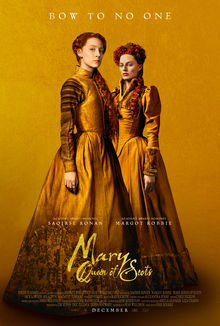
Trailer for New Film about Mary Queen of Scots

From Refinery 29:
Their rivalry was one of Europe's hottest scandals and, now, five centuries later, they're finally getting the film treatment they deserve with Mary Queen of Scots, which stars the incomparable Margot Robbie and Saoirse Ronan. And, judging by the trailer that was released on Thursday, the women — and their fabulously absurd orange-red wigs — are going to give the Academy a run for its money come 2019.
The film follows the tumultuous relationship between Mary and Elizabeth, who constantly competed to be the most powerful and influential ruler in the region — and also the most beautiful. To Elizabeth's dismay, Mary birthed a son, prolonging her family's bloodline. Elizabeth never had children. Of course, that wasn't the only tension in their relationship. Mary, a Catholic, had long eyed the throne in England, knowing she'd have the support of English Catholics. Ultimately, she abdicated the throne in Scotland (it belonged, then, to her son, a literal baby), and went to England to find refuge with Elizabeth. Spoiler: That didn't go so well for her. Elizabeth imprisoned her cousin and, eventually, had her executed after uncovering an assassination plot that Mary (probably) knew about. (Read more.)
The trailer is really more of a teaser, since so little is revealed, but the fleeting glimpses offered  are compelling. I think Saoirse Ronan is a wonderful actress and makes a radiant Queen Mary, showing more grace, innocence and brashness than common sense. I thought at first that Margot Robbie was too pretty to play Queen Elizabeth but I was wrong. She appears to capture all the magnificence and bitterness of the last Tudor queen. Of course, any film produced in the present will have a feminist slant, although being female never held either ruler back from doing what they had to do. Mary even escaped from a coup when she was six months pregnant, riding for many miles in the dead of night. Mary, however, did have to contend with John Knox, who did not think women should rule, especially Catholic women. She also had to face being raped and forced into a marriage to Bothwell. I do not know if that will be portrayed. I love Saoirse's Scots accent. Mary actually did speak Scots Gaelic and spoke French and other languages with a Scots accent although she never really mastered English. The trailer shows Mary and Elizabeth meeting face-to-face, which as far as we know never happened. But it is fascinating to think what might have been said if they had done so, and the film affords such a moment.
Margot Robbie as Elizabeth Tudor
Saoirse Ronan as Mary Stuart

Share

A Gift from Louis XVI

I personally do not see the comparison with Trump. From The Washington Post:
Benjamin Franklin sailed home from France in 1785 carrying an awkward goodbye gift from King Louis XVI: an oval-shaped gold box that held a miniature portrait of the king, surrounded by 408 diamonds. The extravagant box created a dilemma for Franklin. Goodbye presents to diplomats, customary in France, were banned by the United States. Fearful of the corrupting influence of wealthy Europe, the young country had adopted a strict rule: American officials could not accept gifts or second incomes from foreign governments. Careful not to violate the rule, Franklin offered the box to Congress, which let him keep it. (Read more.)
Share

The Mouse That Roared

From Return to Order:
The name of this tiny victorious model is a kirana.And the vibrant market is India’s 1.3 billion people with their rising incomes. Kiranas are small family-run shops and vendors found on every city street in India. They are usually the size of a one-car garage and their walls are lined from top to bottom with an amazing variety of goods. These mom-and-pop wonders control 90 percent of the nation’s retail market. Despite repeated attempts to break their hold, giant retailers have hardly put a dent in their market share.

The secret to the kirana’s success is scale. They cannot compete with the huge economy of scale enjoyed by giant retailers that buy massive amounts of goods cheaply. However, they save money on their smallness. They have little overhead. They employ family members and pay lower wages for other help. Usually there is little or no rent involved since the shopkeepers may own their small properties. Their volume of sales insures they have little or no inventory expenses. Thus, their overhead costs are half that of major supermarkets. With these advantages, kiranas will often undercut the prices of the giant retailers. (Read more.)
Share

Sunday, July 22, 2018

Update on ICE

From Townhall:
Immigration and Customs Enforcement, an agency many Democrats want to abolish, recently conducted a raid in Newark, New Jersey and arrested dozens of illegal aliens. The overwhelming majority have serious criminal records. ICE targeted Illegal aliens who had been incarcerated in the Middlesex County Jail and released into the community by local law enforcement without notice to federal immigration officials. The aliens arrested had ICE detainers that were not honored. Newark is a "sanctuary city."

"Of those arrested, 16 subjects had been previously released by MCJ without honoring the ICE detainer and 78% had prior criminal convictions or pending criminal charges. The individuals arrested as part of the operation were nationals of Brazil, Dominican Republic, Ecuador, El Salvador, Guatemala, Haiti, Honduras, India, Ivory Coast, Mexico, Nigeria, Peru, and Turkey," ICE released Friday. "These individuals range from 21 to 68 years old and all were previously arrested or convicted of a variety of offenses. Some of the arrests and convictions included: aggravated criminal sexual contact, aggravated assault, DUI, hindering apprehension, endangering the welfare of a child, battery, theft, burglary, possession of a weapon, forgery, domestic violence assault, disorderly conduct, and illegal entry." ICE also provided additional details on the individuals released by Middlesex County Jail. Here are a few (bolding is mine):
A 32-year-old citizen of Mexico was arrested by the New Brunswick Police Department on August 12, 2016, in Middlesex County for Aggravated Sexual Assault- Helpless Victim, Aggravated Criminal Sexual Contact, Sexual Assault-Force/Coercion, and Criminal Sexual Contact and booked into the Middlesex County Jail. On August 16, 2016, ICE issued a detainer. On May 18, 2018, he was convicted of Aggravated Criminal Sexual Contact and sentenced to 644 days’ time served, parole supervision for life and registration under Megan’s Law. On May 21, 2018, Middlesex County Jail refused to honor the detainer and he was released.

A 68-year-old citizen of Mexico was arrested by the Perth Amboy Police Department on January 23, 2009, in Middlesex County for the crimes of murder–purposely and hinder prosecution-false info and was booked into the Middlesex County Jail. On June 14, 2011, he was convicted of aggravated manslaughter and hinder own prosecution-false info and was sentenced to 25 years imprisonment in state prison. On May 5, 2015, the subject was transferred from state prison back to the custody of the Middlesex County Jail as he appealed his convictions. On May 5, 2015, ICE issued a detainer to Middlesex County Jail. On May 22, 2018, the original charge was overturned and he was found guilty of a single felony charge of hindering-oneself-give false information and sentenced to time served.  Even though an ICE detainer was previously issued he was released.

A 27-year-old citizen of the Dominican Republic was arrested by the Perth Amboy Police Department on January 25, 2018, in Middlesex County for aggravated assault - significant bodily injury to a victim of domestic violence, criminal restraint – hold victim, possession of a weapon for unlawful purpose, unlawful possession of a weapon and booked into the Middlesex County Jail. On January 30, 2018, ICE issued a detainer, but the detainer was not honored and he was released.
(Read more.)
Share

The Origins of Money

From Intellectual Takeout:
Money has been around for most of human history. From Mesopotamia (or even earlier), all civilizations have employed some kind of medium of exchange to facilitate transactions regardless of their geographical locations, legal and economic systems, religious beliefs or political structures. Have you ever wondered why? In a brief essay entitled "On the Origins of Money," the nineteenth-century Austrian economist Carl Menger provides an answer to this question. Menger argues that money emerged spontaneously in different times and places to overcome the disadvantages of barter and facilitate the expansion of trade. Which disadvantages?

Imagine Sandy, a farmer in the Midwest, produces wheat, which she expects to exchange for barley. Two problems arise at this point. First, she needs to find a barley producer with whom to barter her products. This problem can be easily overcome if Sandy goes to a market where another farmer (let’s call him Billy) sells barley. Since both proucts are harvested during the same time of the year, the exchange would easily take place.

But what if we are dealing with products with different life cycles? In this case, Sandy and Billy could only agree on exchanging their products if Sandy accepted the deferral of the payment until Billy’s products have been harvested. This is what economists call deferred barter. Even though deferred barter solves some problems, it has an important limitation: it can only take place within small communities based on mutual trust due to the risks involved for one of the parties. What if Billy decides not to deliver the promised barley? Thus, the use of deferred barter as a system of exchange prevents the expansion of trade beyond the limits of one’s community.

Barter has a second problem. Billy could refuse to trade barley for wheat. He might prefer exchanging his barley for any other commodity or good that better satisfies his needs. This represents another obstacle for the expansion of trade. How did societies overcome these problems?

They did so by using certain commodities as generally-accepted media of exchange, and more specifically precious metals. But why precious metals and not other commodities? According to Menger, gold or silver possess a high degree of saleableness, which he defined as “the greater or less facility with which they may be disposed of at prices corresponding to the general economic situation”. Today we call this property liquidity.

The relative high degree of saleableness of precious metals in relation to other commodities is fundamentally linked to their durability, divisibility, low transport and storing costs as well as the traditional demand for these goods in most places throughout history. The fact that precious metals are more saleable than other commodities implies that it is easier to exchange them for other goods: even though Sandy doesn’t need gold (she wants barley), she will accept it as payment because she knows she won’t have any problem to trade it for barley.

That’s why most civilizations adopted precious metals as money. Since then, money has gone through many changes, some of them spontaneous (e.g. the emergence of paper money) and some induced by the State (e.g. the replacement of commodity standards for central-bank fiat money). (Read more.)
Share

Saturday, July 21, 2018

One Hundred Years Later

From left to right: Grand Duchess Olga, Grand Duchess Anastasia, Empress Alexandra, Tsarevitch Alexis, Tsar Nicholas II, Grand Duchess Tatiana, Grand Duchess Maria
The Russian Orthodox Church commemorates the murder of the Russian Imperial Family on July 17, 1918. From Metropolitan Hilarion:
The 20th century was a difficult time for Orthodox Christians on the territory of the Russian Empire, which became the USSR after the Great War, the October Revolution and Civil War. But the more the Church endured persecution, the brighter the lanterns of faith and piety shone in the Russian land. From the Tsar and the members of the Royal Family close to him in spirit, from archpastors and simple monastics, priests, deacons to laypersons came forth a powerful spiritual army of the Church Militant. By 1918, the Russian Church showed two sorts of podvig—that of martyrdom and that of confession. Thank God, today we see how the blood of many millions of the host of Martyrs and Confessors who turned the Russian land red became the seeds of salvation for the spiritual rebirth of our people, in the Fatherland and in the diaspora. (Read more.)
A eulogy in honor of the Tsar from Archpriest Andrei Tkachev:
The sovereign emperor has more power today than one hundred years ago. A hundred years ago, propaganda efforts turned him into a monster, personifying the state system, earmarked for ruthless annihilation. Cruelty, indifference, luxury, and debauchery were attributed to the regime. All of this was automatically transferred to the image of the reigning house, and so successfully that yesterday’s “loyalists” silently partook of the murder of the head of state and the whole household.

And today? Today we have been sobered by the events of the previous century. After all, we know that the luxury of the oligarchs exceeds that of the tsars at times, although wholly devoid of any moral justification. The debauchery of today’s global Sodom makes us look at many sinners of former times as at kindergarten students. And the indifference of people to one another in a world where money is the main value is unmatched. As for cruelty, the twentieth century surpassed all. The tongue goes numb here and fingers refuse to type.

The Tsar rises above the age-old lies, appearing before our contemporaries in his human greatness and martyric crown. The question is not in the restoration of the monarchy, but first in the awareness of our past and the improvement of the present. Now, love for the last Tsar is easier and more explainable than at the beginning of the previous century during the treason of some, the indifference of others, and the demonic hatred of others. If at that time he was surrounded by “betrayal, cowardice, and deception,”1 then today, in the world into which he entered with his family, he is surrounded by the fellowship of the saints; more precisely—the triumphant synaxis and the Church of the firstborn, which are written in heaven, and to God the Judge of all, and to the spirits of just men made perfect (Heb. 12:23). Today he truly has much more power and personal freedom.

Death clarifies many things. This is one of its functions. Thus, behind the apparent timidity of Sts. Boris and Gleb was hidden their willing sacrifice and refusal to commit fratricide. Not weakness, but strength of a special kind was soon seen in their deaths. As for the ability to fight, Sts. Boris and Gleb have manifested it from the other world—upon enemies, not upon their brothers.

Something similar has already partially happened and continues to happen with the person of the murdered Nicholas Alexandrovich and his assessment in the historical Russian consciousness. But the question does not concern only the identity of the emperor. There’s a whole range of burning questions involved in the discussion: the guilt of the people, the global deep state, the treason of the elites… Inevitability or accident? The head spins.

The Tsar was alone. Between him and the people was a dense, impenetrable layer of bureaucracy and various local authorities acting on behalf of the Tsar, but, obviously not always for the common good. “The Tsar is good, but the boyars are wolves.” This phrase can also be meaningfully said without a monarchy. (Read more.)

Reflections about the sin of regicide, HERE. Pictures of the last Imperial Family, HERE.A Russian liturgy in Ekaterinburg in honor of the family, HERE. Share