Sunday, December 18, 2016

Florence Ebersole Smith

From War History Online:
Florence Ebersole was born in Santiago, Isabela province, in the Philippines, in 1915. Her mother was a native Filipino woman, and her father was a US Army veteran of the Spanish-American war. After graduating from high school, Florence began working with US Army intelligence in Manila, the capital of the Philippines. Here she met her 1st husband, Chief Electricians Mate Charles Edward Smith, who also worked as a crewman on a PT Boat. They were married on August 19, 1941, only months before the United States and Japan were at war.

When the war was declared on December 8, 1941, Chief Smith reported for duty on board his PT Boat. They joined the fleet to defend the islands from the Japanese who attacked the same day. Their invasion of the Philippines had begun. On December 22, 1941, the main force attacked, quickly smashing through the ill-equipped and untrained American troops on the island. Florence Ebersole Smith was in Manila at the time, with two armies advancing from either side. On the 25th, all Military personnel were ordered to evacuate, and the whole of the Army Intelligence office packed up and left. They knew if they were captured they would likely be subjected to harsh interrogations, and their information was too valuable to lose. Florence, however, stayed. She had to care for her 16-year-old sister, who had no prospects and no protection. (Read more.)
Share

The Secret of Human Identity

From Dr. Anthony Esolen at The Public Discourse:
When I was young, I wanted to know Dante partly because I wanted to know everything, but mainly because I was in love with poetry and wanted to learn the craft from the masters. I was hungry, and it never occurred to me to think that the grandson of coal miners in America could not lay claim to Dante, or Shakespeare, or Caravaggio, or Aristotle, or any artist or thinker or mystical seer, just because they lived long ago, came from another part of the world, spoke a different language, and were nourished in cultures that were so distant from mine. If they wrote in a different language, I might learn that language; if they came from another part of the world, I studied its geography; if other cultures nourished them, I tried to place myself in their midst—tried to walk with Dante along the streets of Florence, that city riven with partisan passions and all too often running with blood. I did not need these works to affirm my identity. I was not even aware I had an identity, other than that I was a certain young man, American by birth, and by the grace of God Roman Catholic and a fan of the Saint Louis Cardinals.

But I have come to see that many of my students now have no such grounding, no such matter-of-course assurance of who and what they are. If the self is nourished by culture, and culture implies deep roots and carefully tended soil, what happens to the self when the topsoil is stripped bare? And stripped bare it has been. Young people have been starved of beauty: the great majority of them do not even recognize the names of the greatest of English poets, of Milton and Wordsworth and Tennyson, let alone know their songs. They have been taught almost nothing of our nearly three-thousand-year-old heritage of art, no classical or sacred music, no folk music, and no popular music older than a generation. Even many of those who regularly attend Mass on Sunday show no deep familiarity with Scripture. For those who do not darken the church doors, the gospels themselves may as well have come from another planet. (Read more.)
The most significant find was the original leather cover that protected the psalter. It was found intact and provided an insight into the origins of the Irish church. The inside of the leather cover “is lined with papyrus, a writing material produced from reeds grown in the eastern Mediterranean, famously in Egypt. The papyrus was probably placed inside the cover to act as a stiffener.”
Some scholars believe the “discovery of Egyptian papyrus represents the first tangible connection between early Irish Christianity and the Middle-Eastern Coptic Church.”
Two pages of the Psalter are currently displayed at the National Museum of Ireland and because they are so sensitive to light, they can only be displayed three months at a time. It is regarded as one of the greatest finds in Ireland since the Ardagh Chalice.
- See more at: http://aleteia.org/2016/11/30/irish-worker-discovers-ancient-manuscript-that-links-irish-church-to-egypt/?utm_campaign=english_page&utm_medium=aleteia_en&utm_source=Facebook#link_time=1480489892
Share

Saturday, December 17, 2016

"Victoria": Exclusive First Look

From Veranda:
Do you miss "Downton Abbey" with every fiber of your period-piece-loving being? Fear not, Victoria is here to ease your suffering. The PBS drama tells the story of a young Queen Victoria as she finds her footing as England's unlikely regina and falls in love with Prince Albert, the most emo man of all time. The show can best be described as stunning, addictive, "why am I not an 18th century English royal?" inducing, and ridiculously romantic — i.e. exactly what you need to get you through this winter. (Read more.)
Share

An American Martyr

From The Catholic Herald:
Fr Rother, born on March 27, 1935, on his family’s farm near Okarche, Oklahoma, was brutally murdered on July 28, 1981, in a Guatemalan village where he ministered to the poor. He went to Santiago Atitlan in 1968 on assignment from the Archdiocese of Oklahoma City. He helped the people there build a small hospital, school and its first Catholic radio station. He was beloved by the locals, who called him “Padre Francisco.” Many priests and religious in Guatemala became targets during the country’s 1960-1996 civil war as government forces cracked down on leftist rebels supported by the rural poor. The bodies of some of Fr Rother’s deacons and parishioners were left in front of his church and soon he received numerous death threats over his opposition to the presence of the Guatemalan military in the area. (Read more.)
Share

Shrine of St. Olaf Discovered

From Live Science:
The Norwegian Institute for Cultural Heritage Research (NIKU) announced Nov. 11 that its researchers had discovered the foundations of a wooden church where the body of King Olaf Haraldsson was taken immediately after he was declared a saint in 1031. St. Olaf, as he is now known, conquered and consolidated Norway in 1016 but held on to rule for a little more than a decade before his power was threatened by Canute I, king of Denmark and England. Olaf died in the Battle of Stiklestad in 1030. Now, archaeologists say they've found a key location in the king's posthumous journey from martyr to Norway's patron saint. (Read more.)
Share

Friday, December 16, 2016

Madame Auguié

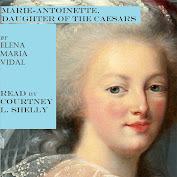
Here is a portrait of the lovely Adélaïde Genet, Madame Auguié, by Anne Vallayer-Coster. She was the younger sister of Madame Campan, Marie-Antoinette's femme de chambre, and was likewise in the Queen's service. Marie-Antoinette called her ma lionne or "my lioness" because of her thick, beautiful hair. Madame Auguié was one of the ladies who saved the Queen from being torn to pieces in her bedroom when the mob broke into Versailles in October, 1789. After the Queen's death, Madame Auguié leaped to her death from a window. One of her daughters was Madame Ney. There is more about Madame Auguié and the Queen's other ladies in Marie-Antoinette, Daughter of the Caesars. Share

Patsy Jefferson and the Nuns

From The National Catholic Register:
There was a period when Thomas Jefferson, John Adams, and Benjamin Franklin were all in Paris at the same time. Franklin was there as our first ambassador to the court of Louis XVI and Marie Antoinette. His job was get funds from France to bankroll the Revolution, and to cement a military alliance so we would win the war. Jefferson and Adams were there as commerce commissioners whose task it was to arrange an import/export trade deal with the French. Being in Catholic France was a new experience for all of them, and we know that the Church made a profound impression on one of Jefferson’s daughters, Patsy, and on one of Adams’ sons, John Quincy.

Polly and Patsy Jefferson were in their early teens when they arrived in Paris, so one of Jefferson’s first tasks was to find a suitable school for his daughters. All of his new French acquaintances recommended an elite convent school, l’Abbaye Royal de Panthemont in the Faubourg Saint-Germain. There the girls studied mathematics, history, geography, and they learned modern languages. It was a splendid education, of a kind that very few girls received back in America. Jefferson’s daughters also learned to play the harpsichord from Claude Balbastre, the organist at the Cathedral of Notre Dame.

In addition to operating a school, the nuns also offered rooms to aristocratic ladies who sought a quiet retreat from their troubles—the lack of a husband, the death of a husband, or the separation from a husband. One of the ladies living at the Panthemont at the same time as Polly and Patsy was Josephine de Beauharnais, the future lover, wife, and empress of Napoleon.

Over time, the life of the nuns made an impression on Patsy Jefferson. On April 18, 1788, Jefferson received a brief note from his daughter: Patsy formally requested her father’s permission to join the nuns at the abbey. Jefferson sent no reply. Instead, he took Patsy shopping, spending more than one thousand francs on new clothes and shoes for her, and 48 francs for a ring. He also permitted her to attend balls and other entertainments. If his aim had been to make his daughter give up her dream of a religious vocation by enticing her with the pleasures of the world, it worked; Patsy abandoned any thought of changing her religion and becoming a nun. Once the problem had resolved, Jefferson had himself driven to the Panthemont, and after a brief conversation with the abbess, withdrew Patsy and Polly from the convent school. (Read more.)
Share

The Forgotten Precepts of the Church

I was taught that there are six. From Church Pop:
Catholics are not supposed to receive the Eucharist in a state of mortal sin, and the Sacrament of Confession is the means by which a person can be cleansed of mortal sin. Since you are required to receive the Eucharist at least once a year (see precept 3), and since the Church is realistic about human sin, you have to go to Confession at least once a year. But that’s just the bare minimum. So that you can receive the Eucharist more often than once a year, and for the salvation of your soul, most Catholics probably need to be going to Confession with some sort of regularity throughout the year. (Read more.)
Share

Thursday, December 15, 2016

Charlemagne and the Saxons

From author Kim Rendfeld:
Neither side is innocent. The Saxons burned churches and killed indiscriminately, the latter perhaps as a thanksgiving to the war god. As for the Franks, in 782, Charles issued a capitulary that among other things called for the death of anyone who didn’t convert to Christianity.

In 789, Alcuin was optimistic about the spread of Christianity and for good reason. The Saxon war leader Widukind had accepted baptism four years before, and the peace thus far held. Alcuin asked a friend how the Saxons took his preaching, and a few months later, he praised Charles for pressuring the Saxons to convert whether it was with rewards or threats.

Three years later, Charles’s wars with the Saxons had restarted. Other contemporary sources complain that the Saxons broke their oaths. The entry in the Lorsch annals invokes Proverbs and compares the Saxons’ reverting to paganism, burning churches, and killing priests “as a dog returns to its vomit.”

Alcuin took a more nuanced approached in 796. Writing to Arno, a former student and bishop of Salzburg, Alcuin advised, “And be a preacher of compassion, not an exactor of tithes … It is tithes, men say, that have destroyed the faith of the Saxons.” (Read more.)
Share