Thursday, December 15, 2016

An English Rose

From English Historical Fiction Authors:
Philippa was the daughter of the future Henry IV, the last child born in his marriage to Mary de Bohun. Philippa’s birth in 1394 led to Mary’s death, and her early childhood must have been rather confusing, what with her father being exiled by Richard II in 1398, only to return in 1399, depose the king, and claim the crown himself. In one fell swoop, Philippa became a princess.

Henry’s usurpation was not welcomed everywhere, testament to which was the plot which had as its goal to murder Henry and his four sons while they were celebrating Twelfth Night at Windsor. Somehow, Henry got wind of the plot (some say due to a kind-hearted whore, some say due to the guilty conscience of one of the would-be plotters) and managed to gather up his brood and flee to the safety of London. While there was never any intention to kill Philippa or her older sister, I imagine these events would have affected a five-year-old. They certainly had a major impact on Henry, who would never feel entirely secure on his throne, not even when Richard II met his timely death some weeks later. (Read more.)
Share

At the Church of the Holy Sepulchre

From EWTN:
An astonishing discovery has been made during repair work to the Edicule -- the ancient chamber housing Jesus' tomb in Jerusalem's Church of the Holy Sepulchre. Scientists have reported extraordinary phemonena that may support the authenticity of the Holy Shroud of Turin.

On October 26, 27 and 28, 2016 a group of scientists and religious authorities oversaw the removal of the marble slab that covers the tomb of Christ. Marie-Armelle Beaulieu, editor-in-chief of Terre Sainte Magazine, reports that some of the measuring instruments used by scientists were altered by electromagnetic disturbances when they were placed directly on the stone in which Christ’s body rested. The scientists reports that their measuring devices either malfunctioned or ceased to work at all. Aleteia reports

The phenomenon was confirmed by one of the scientists authorized to access the tomb. Later, one of the heads of the building and construction team, Antonia Moropoulou, indicated that it is really hard to imagine that someone would be willing to put in danger his or her reputation just because of a “publicity stunt.” Moreover, the journalist testifies to the scientists’ surprise during the opening of the slab: they hoped that the grave would be much lower than it was. Their conclusion: previously performed analyses with the instruments seemed to have been distorted by an electromagnetic disturbance. 

The observation of unusual electromagnetic disturbances at the tomb of Our Lord may support a scientific hypothesis proposed to explain the creation of the mysterious image on the Holy Shroud of Turin. After five years of study and experiments scientists at Italy's National Agency for New Technologies, Energy and Sustainable Economic Development [ENEA] concluded that the Shroud of Turin cannot be a 'medieval fake'.  The ENEA study proposed that the image may have been created by an intense source of light, but no man-made light would produce the required strength. (Read more.)
Share

Wednesday, December 14, 2016

Rescuers of Victorian Art

From The Guardian:
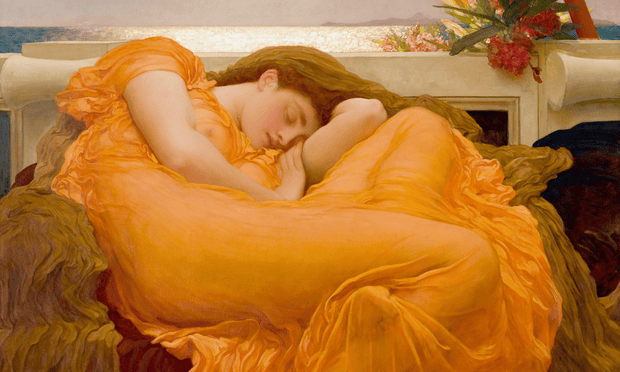
In the early 1960s, Andrew Lloyd Webber, while a pupil at Westminster School, came across an unframed canvas in a shop on the Fulham Road and instantly fell in love with it. The painting, or at least what he could see of it through a thick film of dirt, showed a slumbrous young woman, swathed in diaphanous hot orange, sprawled heavily across a sofa, the sky molten behind her. The owner of the shop – it would be pushing it to call it a gallery – told his young customer that the painting was by a former president of the Royal Academy, Lord Leighton. Schoolboy Lloyd Webber didn’t have the £50 necessary to buy the grubby canvas and his grandmother, when beseeched to cough up the cash, growled: “I will not have Victorian junk in my flat.” Instead, Flaming June went to the Museo de Arte de Ponce in Puerto Rico, from where it was recently granted a rare exeat. In recent weeks it has been making a guest appearance at Leighton House, the grand studio-mansion in Holland Park where Frederic Leighton lived and worked for the last three decades of his life. The painting, long primped back to luminous loveliness, is now worth … well, no one will say exactly, probably because no one really knows, but it must be multiples of millions.

Like any endlessly repeated story, the discovery of Flaming June after 60 years in hiding has acquired the patina of a fairytale, with the painting cast as a princess disguised in dirty rags and Lloyd Webber as the heroic prince who realises her true worth. But he wasn’t the only young knight in that psychedelic decade who embarked on a quest to rescue the despised art of the previous century. Rob Dickins, subsequently chairman of Warner Music UK, was another creative mogul in the making who took to haunting country house sales and obscure provincial auctions in the hope of finding something wonderful buried among the dismal junk. The museum curator turned newspaper critic Richard Dorment was another, as was Richard Ormond, soon to become 19th-century curator at the National Portrait Gallery. (Read more.)
Share

Napoleon and Talleyrand

How Napoleon tried unsuccessfully to shame and humiliate Talleyrand. I love this story. From Nobility:
Napoleon began with a few remarks…to the effect that his…Ministers had no right even to think for themselves, far less to give their thoughts expression. To doubt was for them the beginning of treason, to differ from him was the crime itself. With that he turned upon Talleyrand, who, in a characteristically graceful and negligent attitude, was half leaning against a small table by the fire. For one solid half-hour, without interruption, a steady flow of invective poured from the Emperor’s lips. There was hardly a crime omitted from the indictment, hardly a word of abuse that was not applied. He was told that he had never worthily performed a single duty, that he had deceived everyone with whom he had ever dealt, that he did not believe in God and would sell his own father. He was accused of responsibility for the execution of the Duke of Enghien and for the Peninsular War. Maddened by the impassivity of his victim, the Corsican lost all control and proceeded to taunt him with his lameness and to throw in his face the infidelity of his wife. Finally, shaking his fist and seeming to be upon the point of striking him, he informed his Vice-Grand Elector, in the language of the camp, that he was nothing but so much dung in a silk stocking….Talleyrand never changed his attitude. No spark of color appeared in his pale cheeks. No flicker of an eyelid betrayed the fact that he was conscious of being addressed. (Read more.)
Share

Tuesday, December 13, 2016

The Great Vanderbilt Masquerade Ball

From Messy Nessy Chic:
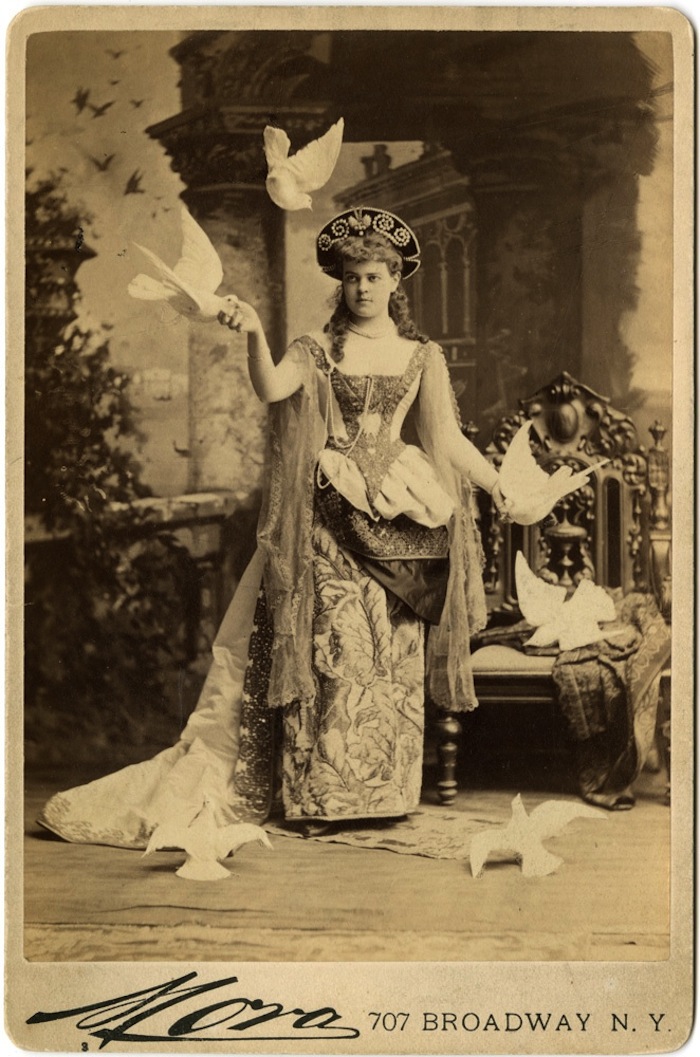
Invites had been hand delivered by uniformed servants and the press had been invited beforehand to take exclusive photographs of the decor and build the hype. The Vanderbilts were trying to flex their muscles for New York’s high society, particularly Mrs. Alva Vanderbilt, the new ambitious wife of William Kissam Vanderbilt, grandson to Cornelius “Commodore” Vanderbilt, the shipping and railroad mogul who had struck it rich after the Industrial Revolution.

To society snobs of the day, such as the Astor family, the Vanderbilts were still “new money”. When an infamous “list of 400” was circulated by Mrs. Astor (aided by social arbiter Ward McAllister), identifying the people who could be counted as members of New York’s “Fashionable Society” amongst the vastly increasing rich families of the Gilded Age, the Vanderbilts were deliberately left off the list.

Mrs. Astor did not receive an invitation to the Vanderbilt ball. Nor did her daughter Carrie Astor, who had been excitedly preparing her costume and dancing skills for weeks. When all their friends received invitations except for them, Mrs. Astor was going to have to do some grovelling.

As the gossip stories go, Alva (pictured above) claimed that since Mrs. Astor had never called on the Vanderbilt home on Fifth Avenue to introduce herself formally, she had no address to send an invite. Mrs. Astor begrudgingly dropped in on the French chateau style mansion that overshadowed all the other luxurious homes on the street and left her visiting card. The following day, the Astor’s received their invite. (Read more.)
Share

How Complaining Rewires Your Brain

From HackSpirit:
Are you a complainer? Do you sometimes feel like anything you do can be complained about? Complaining feels good, like how smoking and eating chocolate feel good. It lets us vent our negativity. Although we know it’s not necessarily good for us but we do it anyway as a guilty pleasure.

Researchers have found that not only does complaining express our negativity, it rewires the brain to focus more on negative ideas. Is this a good thing? Not if you want to be a grumpy old lady that nobody likes. The neurons in your brain start branching out to each other when behaviors have been repeated. So the more you complain the more likely it becomes easier to complain, and you won’t even realize you’re doing it. Soon enough complaining will become your default behavior, making the bonds between the neurons more permanent. As scientists often say, “Neurons that fire together, wire together”. (Read more.)
Share

Monday, December 12, 2016

Cleopatra Unconquered

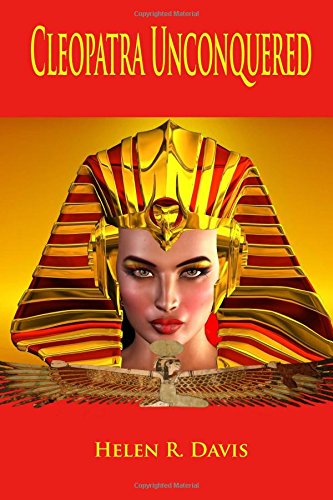
The first in a series, Cleopatra Unconquered by Helen R. Davis is a treat for those fascinated by Egypt and the lost glories of antiquity. The last Queen and ruler of the Egypt of the Pharaohs, Cleopatra VII, known to posterity as a shrewd politician, met her demise through a fatal alliance with Marc Antony of Rome. They were crushed and defeated by Octavian, the future Caesar Augustus. History was set upon a different course after the battle of Actium, which led to Cleopatra's death by suicide, following Antony's own self-inflicted demise. People who admire Cleopatra as a great woman ruler usually lament her tragic end which was also the end of ancient Egypt. The author weaves the fruits of her careful research into a fascinating combination of both the historical fiction and fantasy genres. It gives readers a look into history as it was, as well as into what might have been.

Davis imagines what the world would have been like had there been a different outcome to the Battle of Actium, where Antony was defeated at sea by the forces of Octavian, the adopted son of the great Julius Caesar, former lover and husband of Cleopatra. What if Cleopatra and Antony had triumphed? What if Octavian had foundered in the depths of the sea? Only someone who knows the ins and outs of the actual history can tell us. The novel, written with simple and forthright prose, is full of marvelous insights into the personalities which shaped Cleopatra's world. On the fantasy level, we are occasionally given a glimpse of the "immortals", the goddesses of Egypt, Greece and Rome, Isis, Athena, and Venus, discussing Cleopatra as they watch her life unfold from their otherworldly dimension. Their discussions are humorous but also give background information about the various motivations of the historical characters.

Most compelling is the presentation of the fears, hopes and motivations of the young Cleopatra as she grows to womanhood in a treacherous court, where members of her own family are her worst enemies. The Ptolemaic dynasty, of Greek origins, ruled Egypt for three hundred years and were famous for both incest and murder. Alexander the Great had founded the magnificent city of Alexandria, the capital of the Ptolemies, and was buried there, although his tomb is now lost. Alexandria was renowned for its architectural achievements, especially for the great library. In a palace filled with excess and luxury, the young Cleopatra seeks learning, while struggling for her own survival. Of all of her siblings she proves to be the most clever and capable. Furthermore, she truly loves the traditional Egyptian culture, religion and language, striving to learn all she can about her people and their rich heritage. Among monarchs it cannot be doubted that she is one of most fascinating in world history. It is wonderful to read a book in which she is given another chance.

Here is a television interview with the award-winning author, Helen R. Davis.

(NOTE: This book was sent to me by the author in exchange for my honest opinion.)


Share

Words Are Not Enough

From The Hill:
During the 2003 invasion, Iraqi Christians were often simultaneously viewed as Iraqis by the Americans, and as suspect “co-religionists” of the enemy by their neighbors. Such suspicion resulted in many Christian church bombings, and the kidnapping and murder of priests and lay people alike.

When the U.S. military left Iraq in 2011, the plight of Christians worsened. Al-Qaeda morphed first into the Islamic State of Iraq and then into ISIS. Persecution metastasized into genocide. The country’s Christian population has plummeted to about 200,000 from about 1.5 million in 2003. Now, as the traditional Christian homeland of the Nineveh Plain is being liberated, America may have its last opportunity to support pluralism and minority religious groups in Iraq.

Despite the liberation of their former towns, they cannot return without real security. Even then, there may be no home for them to return to since these towns suffered terrible damage in the fighting. In the best case scenario, rebuilding would take months or years, and enormous amounts of money. (Read more.)
Share

Is Storytelling Becoming Obsolete?

From The Guardian:
The neuroscientist Susan Greenfield has been prominent in arguing that our new digital lives are profoundly altering the structure of our brains. This is undoubtedly the case – but then all human activities impact upon the individual brain as they’re happening; this by no means implies a permanent alteration, let alone a heritable one. After all, so far as we can tell the gross neural anatomy of the human has remained unchanged for hundreds of millennia, while the age of bi-directional digital media only properly dates – in my view – from the inception of wireless broadband in the early 2000s, hardly enough time for natural selection to get to work on the adaptive advantages of … tweeting. Nevertheless, pioneering studies have long since shown that licensed London cab drivers, who’ve completed the exhaustive “Knowledge” (which consists of memorising every street and notable building within a six mile radius of Charing Cross), have considerably enlarged posterior hippocampi.

This is the part of brain concerned with way-finding, but it’s also strongly implicated in memory formation; neuroscientists are now discovering that at the cognitive level all three abilities – memory, location, and narration – are intimately bound up. This, too, is hardly surprising: key for humans, throughout their long pre-history as hunter-gatherers, has been the ability to find food, remember where food is and tell the others about it. It’s strange, of course, to think of Pride and Prejudice or Ulysses as simply elaborations upon our biologically determined inclination to give people directions – but then it’s perhaps stranger still to realise that sustained use of satellite navigation, combined with absorbing all our narrative requirements in pictorial rather written form, may transform us into miserable and disoriented amnesiacs. (Read more.)
Share