Tuesday, December 13, 2016

How Complaining Rewires Your Brain

From HackSpirit:
Are you a complainer? Do you sometimes feel like anything you do can be complained about? Complaining feels good, like how smoking and eating chocolate feel good. It lets us vent our negativity. Although we know it’s not necessarily good for us but we do it anyway as a guilty pleasure.

Researchers have found that not only does complaining express our negativity, it rewires the brain to focus more on negative ideas. Is this a good thing? Not if you want to be a grumpy old lady that nobody likes. The neurons in your brain start branching out to each other when behaviors have been repeated. So the more you complain the more likely it becomes easier to complain, and you won’t even realize you’re doing it. Soon enough complaining will become your default behavior, making the bonds between the neurons more permanent. As scientists often say, “Neurons that fire together, wire together”. (Read more.)
Share

Monday, December 12, 2016

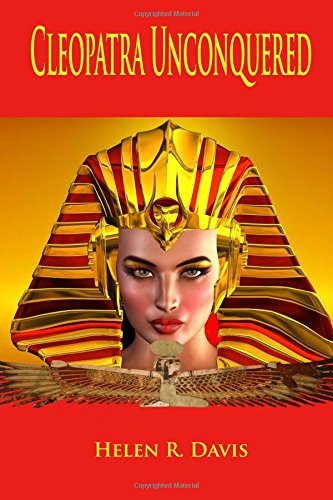
Cleopatra Unconquered

The first in a series, Cleopatra Unconquered by Helen R. Davis is a treat for those fascinated by Egypt and the lost glories of antiquity. The last Queen and ruler of the Egypt of the Pharaohs, Cleopatra VII, known to posterity as a shrewd politician, met her demise through a fatal alliance with Marc Antony of Rome. They were crushed and defeated by Octavian, the future Caesar Augustus. History was set upon a different course after the battle of Actium, which led to Cleopatra's death by suicide, following Antony's own self-inflicted demise. People who admire Cleopatra as a great woman ruler usually lament her tragic end which was also the end of ancient Egypt. The author weaves the fruits of her careful research into a fascinating combination of both the historical fiction and fantasy genres. It gives readers a look into history as it was, as well as into what might have been.

Davis imagines what the world would have been like had there been a different outcome to the Battle of Actium, where Antony was defeated at sea by the forces of Octavian, the adopted son of the great Julius Caesar, former lover and husband of Cleopatra. What if Cleopatra and Antony had triumphed? What if Octavian had foundered in the depths of the sea? Only someone who knows the ins and outs of the actual history can tell us. The novel, written with simple and forthright prose, is full of marvelous insights into the personalities which shaped Cleopatra's world. On the fantasy level, we are occasionally given a glimpse of the "immortals", the goddesses of Egypt, Greece and Rome, Isis, Athena, and Venus, discussing Cleopatra as they watch her life unfold from their otherworldly dimension. Their discussions are humorous but also give background information about the various motivations of the historical characters.

Most compelling is the presentation of the fears, hopes and motivations of the young Cleopatra as she grows to womanhood in a treacherous court, where members of her own family are her worst enemies. The Ptolemaic dynasty, of Greek origins, ruled Egypt for three hundred years and were famous for both incest and murder. Alexander the Great had founded the magnificent city of Alexandria, the capital of the Ptolemies, and was buried there, although his tomb is now lost. Alexandria was renowned for its architectural achievements, especially for the great library. In a palace filled with excess and luxury, the young Cleopatra seeks learning, while struggling for her own survival. Of all of her siblings she proves to be the most clever and capable. Furthermore, she truly loves the traditional Egyptian culture, religion and language, striving to learn all she can about her people and their rich heritage. Among monarchs it cannot be doubted that she is one of most fascinating in world history. It is wonderful to read a book in which she is given another chance.

Here is a television interview with the award-winning author, Helen R. Davis.

(NOTE: This book was sent to me by the author in exchange for my honest opinion.)


Share

Words Are Not Enough

From The Hill:
During the 2003 invasion, Iraqi Christians were often simultaneously viewed as Iraqis by the Americans, and as suspect “co-religionists” of the enemy by their neighbors. Such suspicion resulted in many Christian church bombings, and the kidnapping and murder of priests and lay people alike.

When the U.S. military left Iraq in 2011, the plight of Christians worsened. Al-Qaeda morphed first into the Islamic State of Iraq and then into ISIS. Persecution metastasized into genocide. The country’s Christian population has plummeted to about 200,000 from about 1.5 million in 2003. Now, as the traditional Christian homeland of the Nineveh Plain is being liberated, America may have its last opportunity to support pluralism and minority religious groups in Iraq.

Despite the liberation of their former towns, they cannot return without real security. Even then, there may be no home for them to return to since these towns suffered terrible damage in the fighting. In the best case scenario, rebuilding would take months or years, and enormous amounts of money. (Read more.)
Share

Is Storytelling Becoming Obsolete?

From The Guardian:
The neuroscientist Susan Greenfield has been prominent in arguing that our new digital lives are profoundly altering the structure of our brains. This is undoubtedly the case – but then all human activities impact upon the individual brain as they’re happening; this by no means implies a permanent alteration, let alone a heritable one. After all, so far as we can tell the gross neural anatomy of the human has remained unchanged for hundreds of millennia, while the age of bi-directional digital media only properly dates – in my view – from the inception of wireless broadband in the early 2000s, hardly enough time for natural selection to get to work on the adaptive advantages of … tweeting. Nevertheless, pioneering studies have long since shown that licensed London cab drivers, who’ve completed the exhaustive “Knowledge” (which consists of memorising every street and notable building within a six mile radius of Charing Cross), have considerably enlarged posterior hippocampi.

This is the part of brain concerned with way-finding, but it’s also strongly implicated in memory formation; neuroscientists are now discovering that at the cognitive level all three abilities – memory, location, and narration – are intimately bound up. This, too, is hardly surprising: key for humans, throughout their long pre-history as hunter-gatherers, has been the ability to find food, remember where food is and tell the others about it. It’s strange, of course, to think of Pride and Prejudice or Ulysses as simply elaborations upon our biologically determined inclination to give people directions – but then it’s perhaps stranger still to realise that sustained use of satellite navigation, combined with absorbing all our narrative requirements in pictorial rather written form, may transform us into miserable and disoriented amnesiacs. (Read more.)
Share

Sunday, December 11, 2016

Pierre Gouthière

From Epoch Times:
The craftsmanship of chasing and gilding is a lengthy and complicated procedure (watch video below). Basically, Gouthière would create moulds after an architect’s drawn designs. After the moulds were cast, he would work on the surface of metals by hammering to create all of the textures of the designs, and then he would gild them.

Working like a sculptor and jeweler, Gouthière’s chasing and gilding skills were so high that his pieces sold at prices equal to, or higher than, paintings and sculptures by his contemporaries—Jean-Honoré Fragonard, François Boucher, Étienne Maurice Falconet. Auction houses would always mention Gouthière’s name when selling his neoclassical pieces—rarely the case for other decorative artists.

The neoclassical style of 18th century France, imbuing analytical restraint and moral clarity, can come across as rather cold. Gouthière’s pieces, in contrast, while also lofty and harmonious, are infused with warmth and vitality. (Read more.)
Share

Wanting to Love the Pope

This is a good article although overall I think people nowadays are way too obsessed with the Pope. The Pope has no power to change the laws of God regarding basic morality. He is "just" the Pope. Pray for the Holy Father and keep living your life of Christian discipleship.

Furthermore, I am not going to call the Holy Father a heretic and if that makes me a heretic then so be it. I read Amoris Laetitiae; I did not see anything wrong with it, but then I am not in the habit of reading a papal document like a censor librorum. However, if the cardinals ask the Pope for a clarification in a matter of doctrine, then they have a right to do so, although it is for the Pope to answer at his own discretion. But it does not make the Pope a heretic, and it does not make me a heretic for acknowledging Pope Francis as the Vicar of Christ. The heretics are those who deny the authority of a validly and licitly elected Bishop of Rome. From First Things:
Priorities, personnel, and leadership style always change with a new Holy Father. The times also change, and with them pastoral realities and needs. So in many ways, Pope Francis and the issues that engage him are nothing unusual. But some things in the new regime really are new. All previous recent papal transitions—John XXIII to Paul VI; Paul VI to John Paul II; John Paul II to Benedict XVI—were marked by a continuity of experience that Francis does not share. All these earlier men were directly involved in the hopes and struggles of the Second Vatican Council in way Francis was not. For Francis, collegiality is an inherited idea.

While the Church in the global north stalls and declines, the Church in the global south is expanding rapidly. The center of gravity in the Church is shifting accordingly. As a Latin American, Francis has been formed by legitimate urgencies very different from those that prevail in Europe. His actions reflect this. If he seems to dislike the United States (as rumors suggest), his attitude is hardly unwarranted, given hemispheric history. If he also seems to resent the long European intellectual dominance of the Church (as his behavior suggests), it’s not an unreasonable reaction to northern condescension.

But a pope, unfortunately, can’t afford peevishness. Every word and action has weight. Thus, no matter how well-intended, Francis’s very public decision to live in a Vatican hotel rather than the Apostolic Palace is perceived not merely as a statement of humility and simplicity, but also as a rejection—at considerable financial expense—of his predecessors’ manner of life. (Read more.)
Share

"Grass Widow"

Some etymology from Grammarphobia:
 The term “grass widow” has gone through a lot of changes in its 500-year history. At one time it even inspired a variant spelling, “grace widow,” which took on a life of its own. One thing hasn’t changed, though. Neither has ever meant an actual widow—that is, a woman whose husband is dead, a term we wrote about in 2010.

We’ll take a look first at “grass widow,” which now generally means a woman whose husband is temporarily away or a woman who’s divorced. The phrase made its debut in English writing in the 16th century, several hundred years before “grace widow” appeared on the scene. In the 1500s, a “grass widow” was not a respectable woman. The term meant “an unmarried woman who has cohabited with one or more men,” or “a discarded mistress,” in the words of the Oxford English Dictionary. It also meant an unmarried mother, according to the dictionary’s citations.

The term was first recorded, the OED says, in a 1529 religious treatise by Thomas More, who wrote: “For then had wyuys [wives] ben in his [St. Paul’s] time lytel better than grasse wydowes be now.” These later OED citations show that “grass widows” were often single mothers: “The 31 day was buri’d Marie the daughtr of Elizabeth London graswidow.” (From town records of Stoke-by-Nayland, Suffolk, 1582.)

“A Grass-Widow, one that pretends to have been Married, but never was, yet has Children.” (From a slang collection, A New Dictionary of the Terms Ancient and Modern of the Canting Crew, 1699.) (Read more.)
Share

Saturday, December 10, 2016

General Mattis on the Importance of Reading

From Business Insider:
With [Task Force] 58, I had w/ me Slim’s book, books about the Russian and British experiences in [Afghanistan],  and a couple others. Going into Iraq, “The Siege” (about the Brits’ defeat at Al Kut in WW I) was  req’d reading for field grade officers. I also had Slim’s book; reviewed T.E. Lawrence’s  “Seven Pillars of Wisdom”; a good book about the life of Gertrude Bell (the Brit archaeologist who virtually founded the modern Iraq state in the aftermath of WW I and the fall of the Ottoman empire); and “From Beirut to Jerusalem”. I also went deeply into Liddell Hart’s book on Sherman, and Fuller’s book on Alexander the Great got a lot of my attention (although I never imagined that my HQ would end up only 500 meters from where he lay in state in Babylon). 
 
Ultimately, a real understanding of history means that we face NOTHING new under the sun. (Read more.)
Share

IVF and Infertility

From The Sydney Morning Herald:
Dr Aitken predicted that unless there was a rethink, Australia was well on the way to replicating the Danish experience where one in 15 children were IVF babies. He said the trend to IVF raised equity issues in how much money society should pay helping couples have children and research was revealing previously unsuspected health risks such as increased cancer rates among boys whose fathers – but not mothers – smoked and used assisted conception techniques.

"We should guard against recklessly marching into a future where we use too much assisted conception in order to compensate for our loss of fertility," he said.

"Its an inexorable upward trend. We are taking recourse to IVF in increasing numbers and the thing we have to remember as a society is that the more you use assisted conception in one generation, the more you're going to need it in the next."

Director of the University of Newcastle's large 50-staff Priority Research Centre for Reproductive Science and the 2012 NSW Scientist of the Year, Dr Aitken is world-renown for his work on the largely neglected field of male reproduction.

Delivering a lecture at the BoschInstitute, Human fertility: How Lifestyle, Affluence and the Medical Profession are killing our Species, Professor Aitken criticised the IVF industry for ignoring the fact that failure to conceive stemmed largely from male fertility problems. He said the human male was not a very fertile individual.

"Roughly one in 20 is infertile ... An old lecturer of mine used to say if men were bulls [they would] all be taken out to backyard and shot," Prof Aitken said. Intracytoplasmic Sperm Injection (ICSI) – binding a sperm cell to an egg – was an IVF procedure now being used by many couples. But the reproductive biologist said new ICSI research coming out of Belgium showed there may be a price to pay:

"There is a negative pay-off. If you have a son from this process it is possible that he too will have the same pathology that you had."

Dr Aitken said fertility rates tracked affluence down history. (Read more.)
Share