Tuesday, April 21, 2015

Dealing with Rejection As a Writer

Some wise words from Fiction Factor:
Despite beliefs to the contrary, editors are people. They breathe real air and work at real jobs. They go home to real homes and have real families (sometimes). They have bosses to answer to and they must fulfill job descriptions, like anyone else.

An editor’s job is to purchase manuscripts (be they novels, short stories or articles) for the publishing house who pays the checks on pay day. In order for that editor to keep receiving pay checks, the publishing house must continue to sell enough books (or magazines) to enough readers to guarantee the running costs will be covered for another week.

If the editor purchases manuscripts that do NOT return sufficient profit for the publishing house to remain in business, then everyone loses. The author’s work is STILL rejected, the editor loses his or her job, and thousands of related workers will also join unemployment cues once the publishing house files for bankruptcy and closes its doors.

Now that we all understand that trivial fact, let’s ask the following question:
Why do so many writers feel the need to exact a bloody, dire revenge on an editor who is simply doing his or her job?

Whilst researching for this article, I visited some “Coping with Rejection” sites. One of these sites offers a place for rejected authors to vent their frustration and anger at hapless editors.

On one forum, I happened across the angry rantings of a rejected writer, determined to let the world know that he thought all publishers and all agents were only out to find out ‘how much money that writer can make for [them] anyway.”

I’d like to know who told that unhappy Rejected Author that the industry was ever any different! Let’s be honest. If your book is not popularly liked by the masses (your readers!) then no copies are going to sell. If no copies sell, then the publisher has lost money. The editor has lost money. The bookstore has lost money. The author has lost money – oh wait – the author has to pay back any money that wasn’t covered by sales…

Honestly, the publishing industry is a money and sales oriented business – just like any other. Why try to internalize something that is simply about how many books are going to sell of how many shelves on any day? (Read more.)
Share

Monday, April 20, 2015

Marriage by Proxy: April 19, 1770

The Augustinian Church at the Hofburg in Vienna
April 19, 1770 was the day the Dauphin Louis-Auguste and Marie-Antoinette of Lorraine-Austria officially became husband and wife through a proxy marriage ceremony.


To quote:
On April 19th, 1770, Marie Antoinette and Louis XVI were married by proxy inside the Augustinian Church, which is located next to the Hofburg Palace in Vienna. Many Habsburg weddings had taken place there, including that of Antoinette’s parents 34 years before.

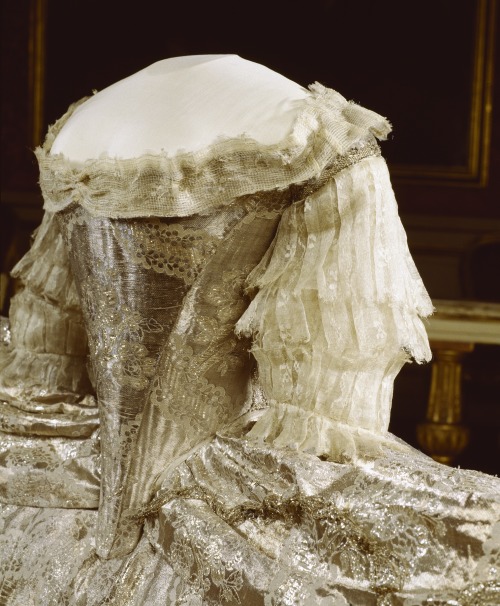
The bride wore a cloth of silver gown, her train carried by Countess Trautmannsdorf as her mother led her up the aisle. Her older brother, Archduke Ferdinand, stood in for the groom.
A cloth of silver gown (Image source.)
Share

Remarkable Beggars

From Spitalfields Life:
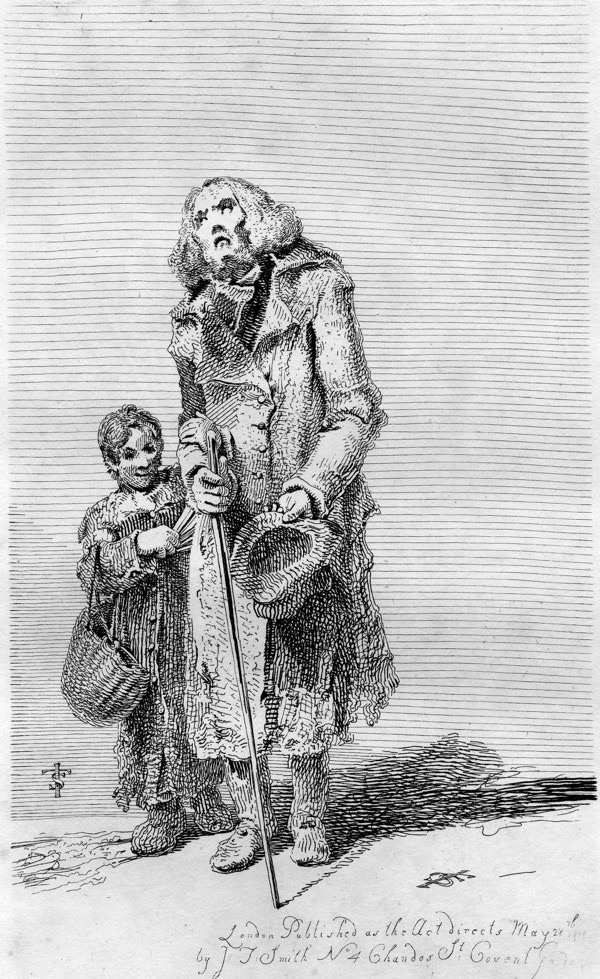
John Thomas Smith drew compassionate portraits of the beggars of London at the beginning of the nineteenth century. He was fascinated by the different ways in which the outcast poor scraped an existence out of little more than resourcefulness in the city streets and there is a dramatic equivocation in his acute portrayals, simultaneously witnessing the need and celebrating the spirit of his subjects. (Read more.)
Share

Five Ways We Hurt People's Feelings

From Seton Magazine:
Those who hurt someone’s feelings thoughtlessly trample on human sensibility with no apologies. They assume that they have not done any harm but simply had a change of mind or encountered complicating circumstances.

They act as if their self-interest demands prudence and they are without guilt or fault. They think that the victim of hurt feelings will easily recover, feel no resentment, and accept disappointment without grief. Nevertheless, these episodes of hurt feelings cause deep wounds, not slight discomforts. (Read more.)
Share

Sunday, April 19, 2015

Madame Victoire de France

From Tiny-Librarian: "A portrait of Madame Victoire playing the harp, done in 1773 by Etienne Aubry." Share

The Vatican and the Armenian Genocide

From Aleteia:
To help understand the true history behind the 1915-16 atrocity, Aleteia interviewed the German historian and author, Dr. Michael Hesemann, who was in Rome for Sunday’s Mass in St. Peter’s Basilica commemorating the 100th anniversary of the genocide, otherwise known as Metz Yeghern [the Great Evil].

The atrocity involved the Ottoman government’s systematic extermination of its minority Armenian subjects inside their historic homeland which lies within the territory constituting present-day Turkey. The total number of people killed in what is also known as the Armenian Holocaust is estimated at between 1 and 1.5 million.

In a new book entitled, The Armenian Genocide [Völkermord an den Armeniern], Hesemann reveals for the first time the content of never-before-published documents on “the greatest crime of World War I,” and how Pope Benedict XV and Vatican diplomacy tried to stop the deportations of the Armenians into the Syrian desert, save the victims and prevent the massacre of an entire people.

In this interview, Hesemann shares his findings, which include evidence of Masonic involvement, and expresses both his admiration for Pope Francis for drawing attention to the genocide of Christians and ethnic minorities, and his disappointment over the absence of the German Ambassador to the Holy See at Sunday’s commemorative Mass. (Read more.)
Share

How to Behave on Social Media

Some wise advice from author Nat Russo:
Understand the medium and the nature of these “attacks” before you do anything. I’m going to use Twitter as an example, but this applies to any social network you participate in.
 
Twitter is about now, not five minutes ago. If you let the negative comments go without responding to them, they’ll be nothing more than a flash in the pan. If you choose to get involved, however, you’ll breathe life into something that would have otherwise died quickly.
 
For Facebook and other social networks where messages have a longer life, it’s even more important that you refrain from getting involved. You’re under no obligation to respond just because someone commented on your post.
 
We can’t control how we feel, but we can control how we behave.
 
If you refrain from responding, the vast majority of your followers won’t even notice the comment was made. If you respond to the attack or negative comment in any way, you dramatically increase the chance the situation will spiral out of control. People will choose sides and you will have sparked an all out social network war. You are your brand. Is this how you want your brand to be perceived? (Read more.)
Share

Saturday, April 18, 2015

"Madame Elisabeth of France" by Joseph Ducreux (1770)

Some thoughts from Anna Gibson:
This portrait of a young Madame Elisabeth by Joseph Ducreux was painted in 1770, the same year that her new sister-in-law, Marie Antoinette, arrived from Vienna. Elisabeth would have been only 5 or 6 at the time of the sitting. Although like many painted children, her face seems more mature than her years, there is still an element of cherubic youthfulness to her face in this portrait. This is exemplified by the simple nature of her headdress, which seems to be hiding a relatively simple and unadorned hairstyle. (Read more.)
Share

The Power of Checklists

From The Art of Manliness:
When you hear the word “checklist” what probably comes to mind is your daily/weekly to-do list. With a to-do list you write out your more urgent tasks, and work your way through them. As you cross some things off, you add new tasks to the list.

To-do lists are definitely awesome for getting things done, but there’s another kind of checklist as well – what I call the “routine checklist.” With a routine checklist, you write down all the steps/tasks needed to complete a certain project or process. The list of tasks never changes. You use the same checklist over and over again, every time you do that particular process/project.

While the checklist may sound, well, awfully routine, it’s a tool that can truly help you survive and thrive in our modern, complex world. Don’t believe me? Here are just two of the many examples surgeon and author Atul Gawande highlights in his book, The Checklist Manifesto, that demonstrate the surprising power of checklists: (Read more.)
Share