Wednesday, July 10, 2013

The Irish Diaspora

From English Historical Fiction Authors:
In the early 1800s, there was already an abundance of Irish manpower on the market in the U.S. It was welcome in the face of the booming industrial period, advancing technological developments, and westward expansion. The labor was utilized in lumbering, the steel industry, and construction in the big cities building canals, roads, and railways. The large numbers of humanity affected by the famine and the mass exodus from their homeland caused another substantial surge in the workforce.

Approaching the midpoint of the century, jobs became scarce, and many advertisements for employment began to specify “No Irish.” But because of their willingness to work cheaply, often at a fraction of the cost of other laborers, wages were driven so low that eventually it became an unwise business decision not to hire them. Fortunately, the industrial revolution experienced a second wave and the economical workforce was put to good use.

Over half of the population that made its way from Ireland to America was female. Aside from the large numbers who sought jobs in factories and mills, many found positions of domestic service in hotels or private households. Although the conditions and wages were better than those offered by factory work, their employers’ attitudes toward them were often disdainful, treating them little better than the slaves they had been hired to replace.

As with many women in similarly dire situations, a large percentage who could not find a respectable way to earn a living turned to plying a more practical trade. They became prostitutes, easy prey for those with sinister intent. In such a dangerous profession, it was not uncommon for them to be assaulted, beaten, or even murdered.

At the same time their fellow countrymen were making their way to America, many dispossessed Irish looked for refuge closer to home. They found their way to the overcrowded and poverty-stricken streets of “Dickensian” London, where they suffered like prejudice and were obligated to take comparably low positions of employment. Girls placed in equally precarious situations sought similar solutions, subjecting themselves to the same perils as their counterparts in the U.S. This happened in the areas of the East End, in particular a certain district called Whitechapel, where a fellow named Jack earned a ghoulish and fitting sobriquet for himself in the months between 1888 and 1891. (Read entire post.)
Share

Tuesday, July 9, 2013

The King's Passage

Here is the private hallway at Versailles used by Louis XVI when visiting Marie-Antoinette's bedchamber. The Dauphin's room can be seen to the right. As soon as the royal couple were moved to the Tuileries they had another private passage built, connecting their apartments. The Queen fled down this passage the night of October 5-6 when the mob was trying to kill her. Share

Democracy in the Middle East

From Eric Margolis:
The real story behind the military coup in Cairo led by General al-Sissi is much more complex than the western media is reporting. Far from a spontaneous uprising by Egyptians, – aka “a people’s revolution” – what really happened was a putsch orchestrated by Egypt’s “deep government” and outside powers – the latest phase of the counter-revolution against the so-called Arab Spring.

A year ago, Egyptians elected Mohammed Morsi president in their first fair democratic election. Morsi came from the ranks of the Muslim Brotherhood, an eight-decade old conservative movement of professionals dedicated to bringing Islamic principals of public welfare, politics, education, justice, piety and fighting corruption.

But the deck was stacked against Morsi and the Brotherhood from day one. The brutal US-backed Mubarak had fallen, but the organs of his 30-year dictatorship, Egypt’s pampered 440,000-man military, judiciary, academia, media, police, intelligence services and bureaucrats, remained in place. Even Morsi’s presidential guard remained under control of the Mubarak forces.

The dictatorship’s old guard – better known as the “deep government” – sought to thwart every move of the Brotherhood. In fact, the stolid, plodding Morsi only became president after more capable colleagues were vetoed by the hard-line Mubarakist courts.

Morsi should have purged the “deep government,” notably the police, secret police, judges, and media who were sabotaging the democratic government. But Morsi was too soft, and the entrenched powers arrayed against him too strong. He never managed to grasp the levers of state. Ironically, after all the media hysteria in North America over the alleged dangers of the Muslim Brotherhood, it turned out to be a dud. (Read entire article.)
Share

Monday, July 8, 2013

Louis XVI's Forge

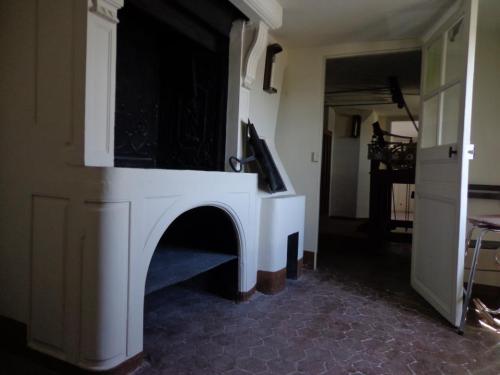
Some pictures of Louis XVI's forge at Versailles.


Louis XVI


Share

Baking in Victorian England

From English Historical Fiction Authors:
In the Victorian period, food was expensive. A middle class family could expect to spend a little more than half their income on food. Their diet, just like with the upper classes, included a half pound of bread daily. A laborer’s diet might include two pounds of bread, with his wife and children getting something over half this amount.

This was often delivered directly to houses by bakers or pastry cooks. There were also street markets, stalls, and shops called such names as pastry shops, pie-shops and confectioners, where families could purchase a variety of baked goods. Families could prepare their own bread in their own oven or have it baked in a bakehouse, too. The family coal budget was one of the issues that led to making these different choices.

In the home, who was making the bread depended on the size of the household. Servants were relatively inexpensive and readily available during this period. Many families could afford to hire a maid-of-all-work. Next up would be families who could afford this and someone to do “heavy work.” Then, you get into larger households, where there might be cooks, kitchen maids, and scullery maids to specialize in food preparation.

Who made the bread outside of the home? According to A.N. Wilson in The Victorians, the baking life was a tough one. It only became worse during the London Season when bread orders increased. Eleven at night was the start of a baker’s day, when he made the dough. He was able to sleep on the job for a couple of hours while the bread rose, then had to do the rest of the physical tasks of preparing rolls and loaves. Kneading was sometimes done with feet, perhaps making for a less-than-clean product. The bakehouse was alarmingly hot as well, up to ninety degrees Fahrenheit. Some bakers had to deliver the bread they made, too. They only had five to ten hours off per day and all but none during the Season. Wilson says statistics show London bakers rarely lived past the age of forty-two. (Read entire post.)
Share

Sunday, July 7, 2013

Louis XVI and Henri IV

A 1790 picture of Louis XVI and Marie-Antoinette with the Dauphin on the Queen's lap. The Queen is gesturing towards a bust of the first Bourbon king, Henri IV. The motto says: "He takes the good Henri for his master and model." (Via Tiny-Librarian.) Share

The Shadow War Against Syria's Christians

From The Christian Post:
On June 23, Catholic Syrian priest Fr. François Murad was murdered in Idlib by rebel militias. How he was killed is not yet known and his superiors "vigorously deny" that he was a victim of beheading, as some news sources are claiming. It is apparent, however, that he was a victim of the shadow war against Christians that is being fought by jihadists alongside the larger Syrian conflict. This is a religious cleansing that has been all but ignored by our policymakers, as they strengthen support for the rebellion.

Affiliated with the Franciscan order that was given custody of the Holy Land sites by Pope Clement VI in 1342, the 49-year-old priest was killed in Gassanieh, in northern Syria, in the convent of the Rosary where he had taken refuge after his monastery was bombed at the outset of the conflict, and where he had been giving support to the few remaining nuns, according to Pierbattista Pizzaballa, the Custos of the Holy Land. The Vatican news agency Fides reports that "The circumstances of the death are not fully understood," but, according to local sources, Fr. Murad's building was attacked by the jihadi group Jabhat al-Nusra.

Fr. Pizzaballa denies that any Franciscans were beheaded last week, as was claimed by several sources. He was quoted in the Italian press, commenting about the video, "it seems like various old news stories have been mixed up." The video was "uploaded by al-Qaeda to terrorize Christians," according to Andrea Avveduto, a writer who works with the Custody of the Holy Land. "The corpse of Murad was intact. The friars in the region exclude [sic] that the priest was one of the people beheaded in the footage." Avveduto also writes that "The friars are apparently alive and are currently in the Franciscan monastery of Latakia, where they arrived a few days ago, to bury the body of their brother, Fr. Murad."

As I testified to Congress last week at a hearing on Syria's minorities chaired by Rep. Chris Smith (R., N.J.): "Though no religious community has been spared egregious suffering, Syria's ancient Christian minority has cause to believe that it confronts an 'existential threat.'"

In fact, this was a finding last December of the U.N. Human Right Council's Commission of Inquiry on Syria. As in Iraq, Syria's two-million-strong Christian community, the largest next to Egypt's Copts in the entire region, is being devastated. Targeted by jihadist militias, they are steadily fleeing Syria, and whether they will be able to return to their ancient homeland is doubtful. (Read entire article.)
Share

Saturday, July 6, 2013

Inside Marie-Antoinette's Farm House

A room of the Queen's cottage at her farm. It looks like it is in the process of being restored. I love the yellow walls.

The Queen's House at Le Petit Hameau
For more pictures of Marie-Antoinette's farm (and it was a working farm), do visit HERE. Share

Light of Faith

Pope Francis and Pope Benedict have given us much to think about in the encyclical Lumen Fidei. To quote:
There is an urgent need, then, to see once again that faith is a light, for once the flame of faith dies out, all other lights begin to dim. The light of faith is unique, since it is capable of illuminating every aspect of human existence. A light this powerful cannot come from ourselves but from a more primordial source: in a word, it must come from God. Faith is born of an encounter with the living God who calls us and reveals his love, a love which precedes us and upon which we can lean for security and for building our lives. Transformed by this love, we gain fresh vision, new eyes to see; we realize that it contains a great promise of fulfillment, and that a vision of the future opens up before us. (Read entire encyclical.)
His Holiness has also consecrated the Vatican to St. Michael the Archangel, together with the Pope Emeritus. (Via Spirit Daily.) They are like Saints Peter and Paul, or Moses and Elias.

 These are the two olive trees, and the two candlesticks, that stand before the Lord of the earth.~Apocalypse 11:4

 But at that time shall Michael rise up, the great prince, who standeth for the children of thy people: and a time shall come such as never was from the time that nations began even until that time. ~Daniel 12:1

Fr. Mark says: "How extraordinary! An encyclical written by one Pope and signed and promulgated by another." I agree. We live in the most extraordinary times. Share