Friday, June 14, 2013

A Letter to Victoria's Secret

From a Father. To quote:
Dear Victoria’s Secret,

I am a father of a three year old girl. She loves princesses, Dora the Explorer, Doc McStuffins and drawing pictures for people. Her favorite foods are peanut butter and jelly, cheese and pistachios.

Even though she is only three, as a parent I have had those thoughts of my daughter growing up and not being the little girl she is now. It is true what they say about kids, they grow up fast. No matter how hard I try I know that she will not be the little ball of energy she is now; one day she will be a rebellious teenager that will more than likely think her dad is a total goof ball and would want to distance herself from my embarrassing presence.

I know that this is far down the line and I try to spend as much time as I can with her making memories of this special time.

But as I read an article today posted on The Black Sphere, it really got me thinking that maybe the culture that we currently find ourselves in is not helping the cause.

Recently I read an article that Victoria’s Secret is launching a line of underwear and bras aimed at middle school aged children. The line will be called “Bright Young Things” and will feature ” lace black cheeksters with the word “Wild” emblazoned on them, green and white polka-dot hipsters screen printed with “Feeling Lucky?” and a lace trim thong with the words, “Call me” on the front.”

As a dad, this makes me sick. (Read entire letter.)
Share

Thursday, June 13, 2013

Farewell, My Queen (2012)


The 2012 French production of Les adieux de la reine or Farewell, My Queen, based upon the novel by Chantal Thomas, is perhaps one of the most damaging of all films to the character of the real Marie-Antoinette. There are stunningly beautiful and atmospheric passages in the novel Farewell, My Queen which capture so perfectly the last tragic summer at Versailles. Some of that atmosphere made it into the film, which realistically shows the dirt and grime of the palace as well as its splendor, glimmering with an especial magnificence in the candlelight. Other than that, the film bears little resemblance to the book. With Diane Kruger's stunning portrayal Marie-Antoinette, more weight is given to the calumnious reports of the Queen as the cold-blooded, calculating, licentious and manipulative consort of a befuddled king. It is regrettable, because a radiant performance like Miss Kruger's could have given the world genuine insight into the real Marie-Antoinette if it had been entirely based upon history.

The movie centers upon a drab fictional character named Sidonie Laborde, who portrays a sort of junior Reader to the Queen during the days following the fall of the Bastille in July 1789. In the novel Les Adieux, Sidonie is a mature woman who goes to daily Mass; in the film she is a young girl, co-dependently fixated upon Marie-Antoinette and the Queen's relationship with Madame de Polignac. It is as if the story were built around Fragonard's painting "La Liseuse" or "A Young Girl Reading" (below) except in the movie the colors are muted and dismal. Sidonie has no life outside of being the Queen's Reader; perhaps this is an attempt of the filmmakers to make a comment upon the nature of monarchy, trying to infer that it robbed people of their personality. However, the film is such a mishmash of unrelated scenes that it is difficult to discern what the message might be, if there is one. One minute Sidonie is passionately kissing the gondolier in the pantry and the next she is gazing with curiosity upon the naked body of a drugged Madame de Polignac. There is little coherency from scene to scene. Similarly, Marie-Antoinette is shown obsessing over Gabrielle de Polignac and later is shown as a devoted wife, frantic about her husband.

Whereas the book mentions the recent death of the Dauphin Louis-Joseph, the movie leaves out the little boy completely. Neither book nor film take into enough account the intense grief which Marie-Antoinette was enduring at the time. She was not morbidly preoccupied with Gabrielle de Polignac, as the film depicts; she was mourning her son. Furthermore, the film hints at a lesbian relationship between the Queen and Madame de Polignac but there is no evidence that Marie-Antoinette had a carnal relationship with anyone but her husband. It is true the queen had a great capacity for friendship, and that she was not always prudent in her choice of companions. In regard to Madame de Polignac, the friendship had early on spilled over into an innocent girlish infatuation of a young inexperienced wife for an older one who was already the mother of a growing family. Louis himself encouraged and cultivated the friendship between his wife and Gabrielle, whose discretion he trusted immensely. No serious biographer of the queen gives the least credence to the scandalous stories; even Lady Antonia Fraser insists in her recent biography that there is not the slightest indication that Marie-Antoinette ever participated in homosexual acts. However, people with promiscuous backgrounds tend to judge others according to their own behavior. The French court, being the French court, was the kind of setting that shadowed the most innocent relationships with tawdry connotations. Marie-Antoinette, with her beauty, naiveté and sentimentality, was the perfect target for every sort of calumny.

I do not care for the portrayal of the Duchesse de Polignac in the film. Although Gabrielle is shown as a swarthy and swaggering strumpet, in reality she had delicate white skin, blue eyes and was known for her gracefulness and charm of manner. In other words, she was a Lady. By July 1789, she was also a grandmother, as well as already being the mother of four children, including a seven and a nine year old. As Governess of the Children of France, she had to be in constant attendance upon the Dauphin. Whatever went on her in her private life was discreet. She would not have ripped off an apron in disdain as she is shown doing in the film; the Queen and her ladies wore aprons at Trianon and Gabrielle is said to have influenced the Queen towards simple, rustic attire.

The film is at its best when it depicts events that really happened, such as the Queen reading her tearful petition to the National Assembly for permission to join the King if he were to be imprisoned, and for the moving farewell of Louis and Marie-Antoinette with their two surviving children at her side. Those scenes are so well done that it is heartbreaking that the rest of the film is such a disjointed and mediocre aberration. The filmmakers obviously hate the very memory of the French monarchy, as well as the long dead Marie-Antoinette. Farewell, My Queen is yet another creative twist of the knife into her reputation. For it is the reputation of Marie-Antoinette which must be destroyed by those who wish to continually justify the violent overturning of society known as the Revolution.

Lea Seydoux as the Young Reader

Fragonard's La Liseuse (Young Girl Reading)


Share

Self-published Ebooks on the Rise

From The Guardian:
Self-published books accounted for more than 20% of crime, science fiction, romance and humour ebooks sold in the UK in 2012, according to newly released statistics. The figures, from Bowker Market Research, show that while self-published books made up a tiny proportion – 2% – of all books purchased last year, this figure increases dramatically, to 12%, when print books are removed from the equation.

When just adult fiction and non-fiction ebooks are looked at, self-publishing's share increases to 14% of the market, and in the crime, science fiction, romance and humour genres, self-publishing took more than 20%, according to Steve Bohme, UK research director at Bowker, which tracks book-purchasing trends by interviewing over 3,000 book-buyers a month. Only 3% of children's ebooks, by contrast, were self-published. (Read entire post.)
Share

Wednesday, June 12, 2013

A Little Boy's Jacket

Louis XVII's blue silk jacket. Share

Rickets and the Medicis

We forget that in past times the children of the wealthy often suffered from diseases caused by vitamin deficiencies, such as rickets. Peasants, due to being outdoors and eating raw foods and coarse grains, were generally healthier. Babies of the well-to-do were sent to peasant women to be nursed. Healthy children of all classes were described as being "healthy as a peasant's child." From The Daily Mail:
Being rich and powerful was little protection to the children of the Medicis who, to the astonishment of scientists, appear to have suffered from rickets. The Medicis were among the most powerful families of the Renaissance, being patrons to Leonardo da Vinci and Michelangelo, but their children still suffered malnutrition, research has indicated. Rickets is closely linked to malnutrition and poverty yet the bones of the remains of nine Medici children analysed by osteoarchaeologists reveal that they also fell victim to the condition....

The Medicis, in common with many other wealthy families, kept their young children indoors which could have prevented them from absorbing enough vitamin D from sunlight.
Swaddling babies was also commonplace and this would also have reduced their expose to sunlight.

The research team wrote: ‘The present study clearly demonstrates how, even in the high social classes, children were at the risk of developing rickets as a result of prolonged breast-feeding and inadequate exposure to sunlight.

 ‘With this prolonged breast-feeding, vitamin D deficiency is highly expected to rise, in particular if the other main risk factor, inadequate sunlight exposition, is associated with this diet based on maternal milk.

‘Two hours per week is the required minimum period of exposure to sunlight for infants if only the face is exposed.

‘During the spring and summer months, infants were likely to be exposed to sufficient sunlight to prevent vitamin D deficiency, but during the colder winter months, they probably spent less time outdoors and were bundled in several layers of protective clothing, especially when they presented frequent health problems.


‘For example, according to historical sources, Filippo was a weak and unhealthy child, suffering from recurrent illness episodes and likely to have been frequently kept indoors.

‘Furthermore, in the Renaissance period, non-ambulant children were swaddled, leaving very little skin exposed.’

Newborn babies should have enough vitamin D from their mothers at birth but, researchers suspect, the mothers may also have suffered from vitamin D deficiency, perhaps as a result of being kept indoors or their practice of wearing thick make-up to prevent them getting a tan.

‘A pale ivory skin was considered a sign of health and elegance, which distinguished noblewomen from peasants engaged in field work,’ the researchers reported in the International Journal of Osteoarchaeology. ‘A white skin was highly desired so that women avoided exposure to sunlight and used white powder to achieve it; one of the most popular and well-known lightening creams was Venetian Ceruse, a white powder obtained by mixing vinegar with lead, which remained popular for about 300 years.’

The Medici women were also likely to have suffered low levels of vitamin D because of repeated childbirth. (Read entire post.)
(Via tiny-librarian.) Share

Tuesday, June 11, 2013

Madame de Lamballe Writing

The Princesse de Lamballe writing at her secrétaire. Perhaps she is writing her famous memoirs. Share

Afternoon Tea

The origins. To quote:
Tea was first introduced to Europe by the Portuguese Jesuit, Father Jasper de Cruz, in 1560, and it was a Portuguese princess, Catherine of Braganza, the wife of Charles II, who introduced it to Britain. In fact, part of her dowry was a chest of tea from China. A lover of tea since her childhood, Queen Catherine brought tea drinking to the Court, helping to set a trend among the aristocracy of seventeenth-century England. From the nobility, tea spread to the gentry and the lower levels of society, quickly becoming a popular and national drink. (Read entire post.)
Share

Monday, June 10, 2013

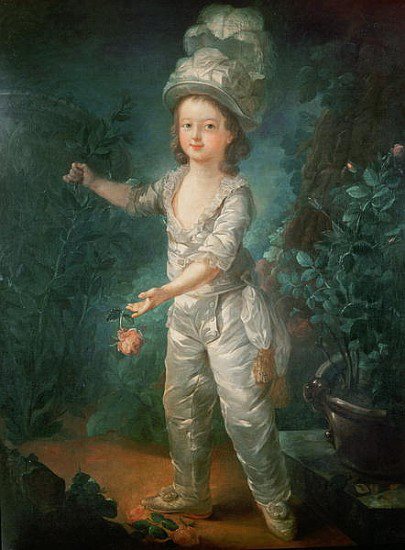
Dauphin Louis-Joseph by Jean-Baptiste André Gautier-Dagoty

.
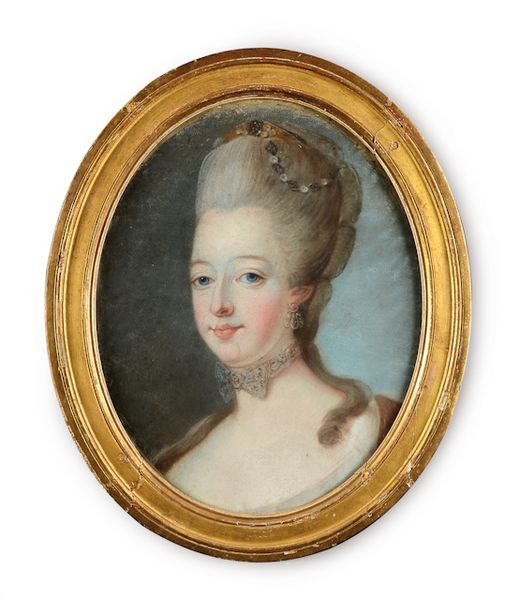
A portrait of the older son of Louis XVI and Marie-Antoinette. This is one of the last portraits by the artist Jean-Baptiste André Gautier-Dagoty, who painted several portraits of Marie-Antoinette and her family It must have been painted when the Dauphin (1781-1789) was about four or five years old, and is perhaps meant to commemorate his transition from skirts to trousers. The artist died in 1786, a year after the death of his acclaimed father, the engraver Jacques Fabien Gautier d'Agoty. Here are some paintings of Marie-Antoinette by the younger Gautier-Dagoty:

1775

1776
1776


Share

The Whistleblower

From The Guardian:
The individual responsible for one of the most significant leaks in US political history is Edward Snowden, a 29-year-old former technical assistant for the CIA and current employee of the defence contractor Booz Allen Hamilton. Snowden has been working at the National Security Agency for the last four years as an employee of various outside contractors, including Booz Allen and Dell.

The Guardian, after several days of interviews, is revealing his identity at his request. From the moment he decided to disclose numerous top-secret documents to the public, he was determined not to opt for the protection of anonymity. "I have no intention of hiding who I am because I know I have done nothing wrong," he said.

Snowden will go down in history as one of America's most consequential whistleblowers, alongside Daniel Ellsberg and Bradley Manning. He is responsible for handing over material from one of the world's most secretive organisations – the NSA.

In a note accompanying the first set of documents he provided, he wrote: "I understand that I will be made to suffer for my actions," but "I will be satisfied if the federation of secret law, unequal pardon and irresistible executive powers that rule the world that I love are revealed even for an instant."

Despite his determination to be publicly unveiled, he repeatedly insisted that he wants to avoid the media spotlight. "I don't want public attention because I don't want the story to be about me. I want it to be about what the US government is doing." (Read entire article.)
Share