Someone wrote me asking about the origins of the word "Dauphin," the title of the heir to the throne of France.
Here is the historical background:
During the feudal period, the County of Viennois, which became later more or less the modern Dauphiné, was not part of the Kingdom of France. In documents, its ruler was named Count (comes) and sometimes Dauphin (delfinus) of Viennois. There was also a Dauphin both in Forez and Auvergne, but the origin of the name is obscure.
In the first half of the 13th century, the Dauphin of Viennois adopted canting arms with a dolphin. This dolphin was a stylized fish with a curved back, a large head and a trunk, and had a spiny dorsal fin. It was also frequently crowned because the dolphin was then considered as the king of fish.
In 1343, Dauphin Humbert II ceded all his possessions to one of the sons or grand-sons of the King of France and received money and a life annuit in exchange. On 16 July 1349, Charles of France, grand-son of Philip VI, became Dauphin du Viennois. Charles used a shield with quartered arms of France and the County of Viennois (D'or au dauphin d'azur, oreillé, crêté et barbé de gueules), and was progressively named the Dauphin
Beginning with Charles VI, the County was given to the eldest son of the King, who was also the putative throne heir. When the heir was not the King's son, he was not called the Dauphin. Dauphin was an abbreviation, the correct title being Premier fils de France et Dauphin du Viennois (First son of France and Dauphin of Viennois). The title of Dauphin de France, popularized during the reign of Louis XV, never existed formally.
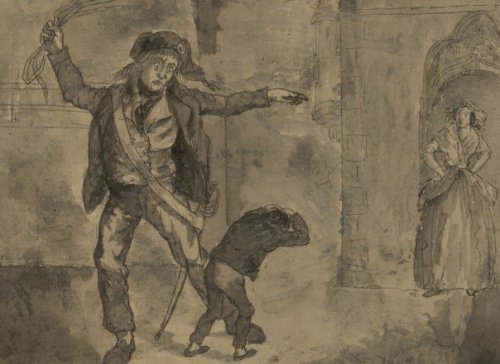
The most famous Dauphin was Louis XVII (1785-1795), the son of Louis XVI, who mysteriously died in captivity during the Revolution. His tragic life motivated several romantic legends about him, and several impostors showed up claiming to be the Dauphin, the most famous of them being Naundorff, a watchmaker of German origin.
The word dauphin is used as a common name in French to designate the putative successor of someone of importance, especially in politics, and to nickname the team ranked second in a championship.
More
HERE.
After the mysterious death of Louis XVII in the Temple Prison, many claimants arose pretending to the identity of the son of Louis XVI and Marie-Antoinette. It was long before the days of DNA testing. An American legend of the Lost Dauphin, mentioned in the novel
Madame Royale
, involves
the saga of Eleazar Williams, retold as follows:
It was at this point that the history of Appleton became interwoven with the life of Eleazar Williams, one of the colorful figures that appear throughout America's early years. Williams was a soldier, a spy, an explorer,a linguist, an Indian leader, a Christian and one of many who claimed to be the Lost Dauphin, or the rightful heir to the throne of France. William's dream of founding a great Indian empire in the western territory led directly-- and accidentally -- to the creation of Appleton.
Eleazar Williams' ancestors have been traced back to the Deerfield Massacre of 1704. In that year, a party of Mohawk Indians and French soldiers raided the small town of Deerfield, Massachusetts, and captured more than 100 people, including the minister, John Williams, his wife, and seven children.Over the following two years, most of those captured were returned, but Eunice Williams (who was seven years old when taken), continued to live with her Indian captors. When grown Eunice married an Indian chief who took the name Williams as his own. Eleazar Williams was their great-grandson.
No one knows for sure when Eleazar Williams was born. He claimed to have no knowledge of his own life before the age of twelve or thirteen.Other sources quote him as saying that he was born in Canada about 1789. It is known, however, that in 1800 Williams was taken to live with relatives in Massachusetts, and that he attended Dartmouth College. By his own account, he served in the War of 1812 as a scout and spy for American forces on the northern border of New York. After the war, he became an Episcopal missionary and was sent to the Oneida Tribe of upper New York State. Heproved to be successful there, converting many of the Oneida to the Episcopal faith. He also translated the prayer book and hymns into the Iroquois language and revised and simplified Mohawk spelling.
With the continued growth of the country, land agents were eager to gain control of the valuable New York Indian reservations. Thomas Ogden, a key man in a powerful New York land corporation, approached Williams with the idea of persuading several tribes -- the Stockbridge, the Munsee, and the Oneida -- to move west, enabling Ogden's company to exploit the Indian's New York land. Williams liked the idea; he envisioned himself as the leader of a vast Indian empire in the unsettled wilderness. He hoped that the U.S. government would support his scheme, as a way of dealing with "the Indian problem," as it was called in those days. Secretary of War John C. Calhoun had no intention of allowing Williams to set up any kind of empire in America's western lands, but Calhoun was happy to encourage Williams in any plan that would remove the Indians from New York. In 1820, Calhoun sent a commissioner to investigate sites in the Fox RiverValley, which was then part of the Michigan Territory.
Also in 1820, with funds supplied by the Ogden Land Company, Williams led a group of Oneida Indians west to see about buying some land. In August of the following year, Williams met with the Winnebago and Menominee chiefs of the Fox River area. The chiefs have been described in some accounts as being rather reluctant to part with any of their land, but, with the support of Michigan Territorial Governor Lewis Cass, Williams persuaded the chiefs to sign a treaty surrendering some of their property. Under the terms of that treaty, Williams and the New York tribes were granted a four mile-wide strip across the Fox River, Just south of Green Bay, with Little Chute in the center. In exchange, the Menominee and Winnebago were paid with goods valued at $3,950.
Back in New York, many of the Oneida opposed the move to Wisconsin and asked the Episcopal Church to remove Williams as their religious leader. However, with the Church and the War Department backing Williams, the Oneida had little say in the matter. With no other choice, the first groups of Oneida and Stockbridge Indians began their long journey to Wisconsin. In 1822, they established a settlement at Duck Creek, about eight miles northwest of Green Bay. In the following years, more New York Indians joined the first group, and the settlement grew. With the influx of these new arrivals,many Menominee and Winnebago came to regret having sold their land.
Ignoring the concerns of the Indians, the U.S. government pressed on, seeking even more land concessions from the Menominee and Winnebago Tribes. At a meeting at Little Lake Buttes des Morts in August, 1827, Governor Cass negotiated a treaty that transferred almost the entire Fox River Valley from the Winnebago, the Menominee, and the former New York Indians, tothe U. S. government. This treaty upset many of the Indians involved, and led to the brief "Winnebago War" of 1827, which consisted of a few isolated raids on white settlers. Governor Cass acted quickly, sending Colonel Henry Dodge and the militia to crush the revolt. Once again the Indians were defeated.
In the mean time, things were not going well for Eleazar Williams. Still seeing himself as the leader of the New York tribes, Williams had made his home in Green Bay. He opened a school for the children of Indians and white settlers, but the school was a failure. In 1823, he married a former student, Madeleine Jourdain, a descendant of both French trappers and Menominee Indians. From her Menominee relatives, Madeleine inherited a large tract of land on the Fox River, near De Pere. It was there that Madeleine and Eleazar built a home and raised their three children.
Despite his new family responsibilities, Williams traveled extensively throughout the midwest, trying to persuade new tribes to join his planned empire. In 1830 he visited Washington, D.C., looking for government support. Instead of support, however, his plans were thoroughly rejected by the government. His dreams of an empire in ruins, Williams returned to Wisconsin to find himself unwanted there as well. In 1824, the Episcopal Church had replaced Williams as the missionary of Green Bay, and by the early 1830s most of the Indian groups, tired of his lies and schemes, refused to have any contact with him. Short on funds, and with few prospects, Williams left his family in Wisconsin and returned to New York.
In 1844, while looking for financial help, Williams contacted Amos Lawrence, an early leader in the New England textile trade and a wealthy Boston philanthropist. Amos Lawrence was willing to work out a loan agreement with Williams, but poor health forced him to turn the arrangements over to his son, Amos A.Lawrence. Mortgaging over 5,000 acres of his wife's property along the Fox River, Williams made two separate loans, one for $1,697.80, the other for $1,800. Unfortunately for Williams, his financial condition did not improve, and he was unable to buy back his wife's property. Years later he would claim that the younger Mr. Lawrence swindled him out of the land.
After that, Williams continued to drift scheme to another. No one is quite sure when he first claimed to be the Lost Dauphin of France, but an editor in Boston heard the story from Williams as early as 1839. Ever since the revolution that overthrew the French monarchy in 1789, rumors had circulated that the Dauphin, or young prince, had escaped from the revolutionary guards. Historians today believe that the Dauphin died in jail shortly after his parents, King Louis XVI and Queen Marie Antoinette,were beheaded. At the time, however, many chose to believe that the Dauphin had been smuggled out of France and taken to America. Williams was aware of his physical resemblance to the French royal family, the Bourbons, and that may explain his decision to claim that he was the Lost Dauphin. Apparently, few people at the time took him seriously.
In 1841, Williams saw a chance to bolster his claim to royal birth. In that year, Prince de Joinville was making a tour of the United States. Prince de Joinville was the younger son of Louis Phillip, the reigning King of France. Keeping his plans a secret, Williams arranged to meet the Prince while he was passing through the Great Lakes, and then to accompany him to Green Bay. Later, Williams would claim that the Prince had come to Green Bay specifically to see him. Further, Williams said that the Prince had offered him a vast estate if only Williams would renounce his claim to the throne. The Prince denied this story as soon as he heard of it, saying that his only interest in Williams was as an Indian missionary. Still, the story did not die. In July, 1849, The United States Magazineand Democratic Review carried an anonymous article stating that Williams truly was the Lost Dauphin. Only after his death was it learned that Williams apparently wrote the article himself. A few years later, in the February 1853, issue of Putnam's Magazine, J.H. Hanson, an Episcopal minister, published an article entitled "Have We A Bourbon Among Us?" That article also supported Williams' claims. Serious historians immediately refuted Hanson's speculations, but many others believed him and, for a while, Williams was something of a minor celebrity.
Despite that brief flurry of attention, Williams remained unsettled until 1850, when he accepted a position to preach to the St. Regis Indians of Hogansberg, New York. There he remained, living in quiet obscurity until his death in 1858. He was originally buried in New York, but in 1947 his remains were moved to the Holy Apostle Cemetery at Oneida, on land he had once hoped would be part of his great Indian empire. Williams' widow, Madeleine, continued to live in her house on the Fox River until her death in 1886. The papers of the Williams family are currently maintained at the Neville Museum in Green Bay. (Read more.)
Share